
Logical thinking development Science Worksheets for Ages 6-7
3 filtered results
Difficulty Level
Grade
Age
-
From - To
Subject
Activity
Standards
Unlock your child’s potential with our engaging Logical Thinking Development Science Worksheets for ages 6-7! Designed to foster critical thinking and problem-solving skills, these worksheets combine fun activities with essential science concepts. Children will enhance their reasoning abilities through puzzles, matching games, and thought-provoking exercises tailored to the learning level of young thinkers. Engaging illustrations and colorful designs make learning enjoyable, capturing your child’s attention while they explore classroom-ready topics. Perfect for homeschooling or supplementary learning, these worksheets aim to cultivate a strong foundation in logical reasoning that will benefit your child in all areas of education. Start their journey today!
Favorites
With answer key
Interactive
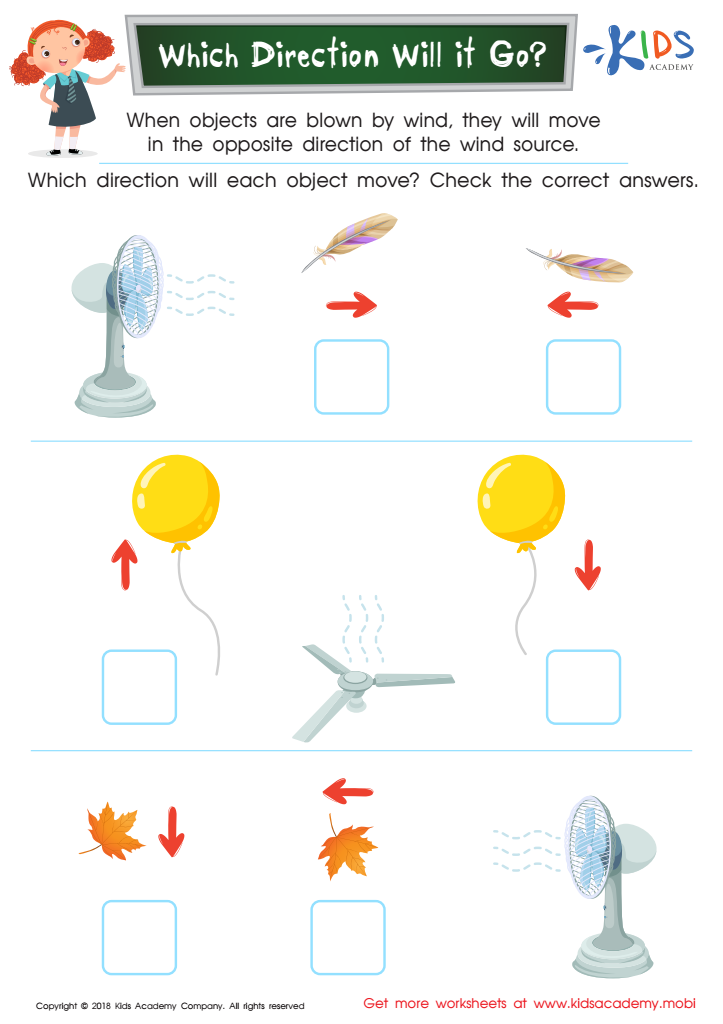
Which Direction Will it Go? Worksheet
Explain to your students: when objects are blown by wind, they will move in the opposite direction. In the worksheet, there are pictures of wind sources and objects being blown by the wind. Ask your child to identify and check the direction each object will move.
 Assign to My Students
Which Direction Will it Go? Worksheet
Worksheet
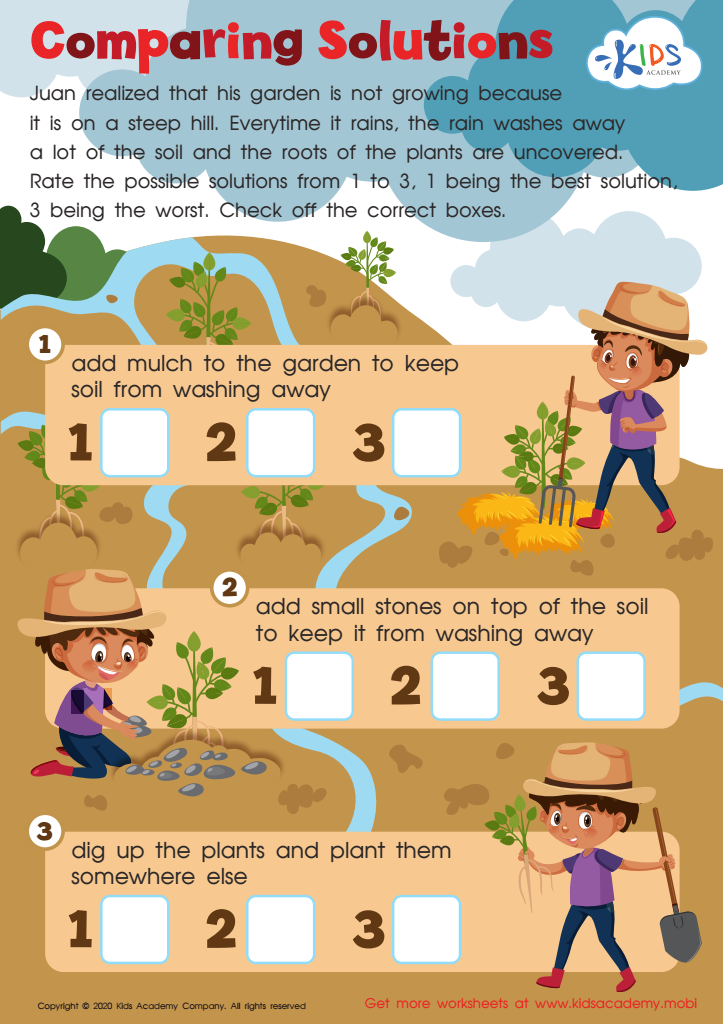
Comparing Solutions Worksheet
Juan can't get his veg garden growing as he'd like, planted on a steep hill. Help your child practice problem-solving by comparing solutions and rating them from most to least effective. With this thought-provoking worksheet, learners can hone the important skill of finding the best solution from a range of options.
Comparing Solutions Worksheet
Worksheet
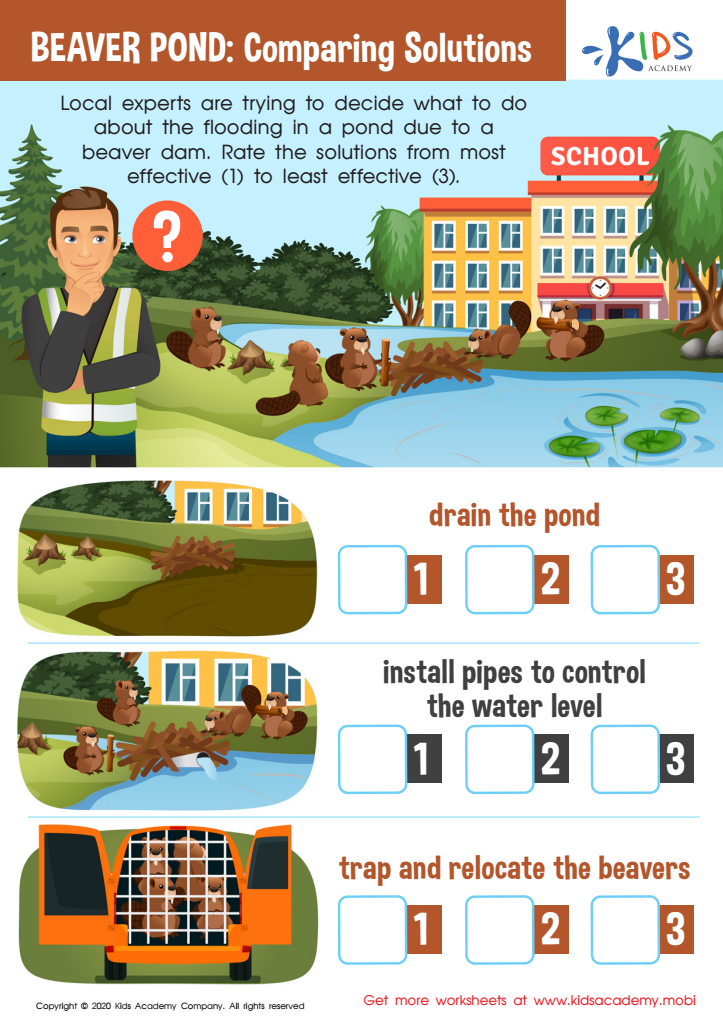
Beaver Pond: Comparing Solutions Worksheet
Got a problem? This science worksheet is great for helping your child compare solutions and pick the best one. Kids get to rate each option's effectiveness by ticking off boxes, from most to least. It's a great way to encourage problem-solving skills, while having fun!
Beaver Pond: Comparing Solutions Worksheet
Worksheet
Join Kids Academy for Free
Who is primarily going to use this learning content?








Parents and teachers should care about developing logical thinking skills in children aged 6-7 because this foundational ability enhances problem-solving, decision-making, and analytical skills crucial for lifelong learning. At this age, children's cognitive abilities are rapidly developing, making it an ideal time to foster logical reasoning that will support their understanding of scientific concepts.
Engaging children in scientific exploration helps nurture curiosity, encouraging them to ask questions and seek explanations about the world around them. Logical thinking allows children to connect ideas, identify patterns, and make inferences, which are essential skills in both science and everyday contexts. For example, when children learn about the scientific method, they are practicing logical reasoning by formulating hypotheses, conducting experiments, and drawing conclusions.
Moreover, developing these skills early can increase academic performance and boost confidence as children grasp complex concepts more easily. Logical thinking also fosters creativity, allowing children to devise innovative solutions to challenges. By focusing on logical reasoning and scientific inquiry, parents and teachers equip children with essential tools that promote intellectual growth and a lifelong love for learning, ultimately preparing them for future academic success and an increasingly complex world.







