Shape Recognition Science Worksheets for Ages 6-7
5 filtered results
-
From - To
Nurture your child's love for learning with our engaging Shape Recognition Science Worksheets, perfect for ages 6-7! Carefully designed by educational experts, these printable worksheets help young learners identify, classify, and explore various shapes through fun and interactive activities. Enhance their cognitive and observational skills while building a solid foundation in geometry and spatial awareness. Ideal for both classroom and home use, our worksheets combine visual stimulation and hands-on practice, making shape learning an exciting and meaningful adventure for early grade students. Boost their confidence in recognizing shapes and set the stage for future mathematical success.
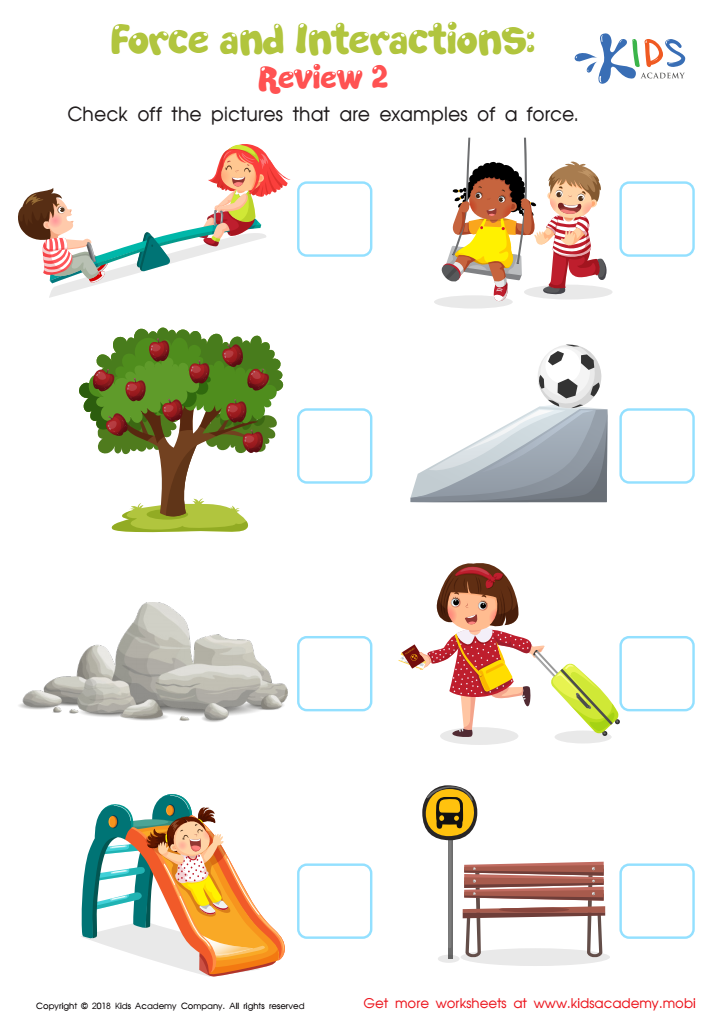
Force and Interactions: Review 2 Worksheet
 Assign to My Students
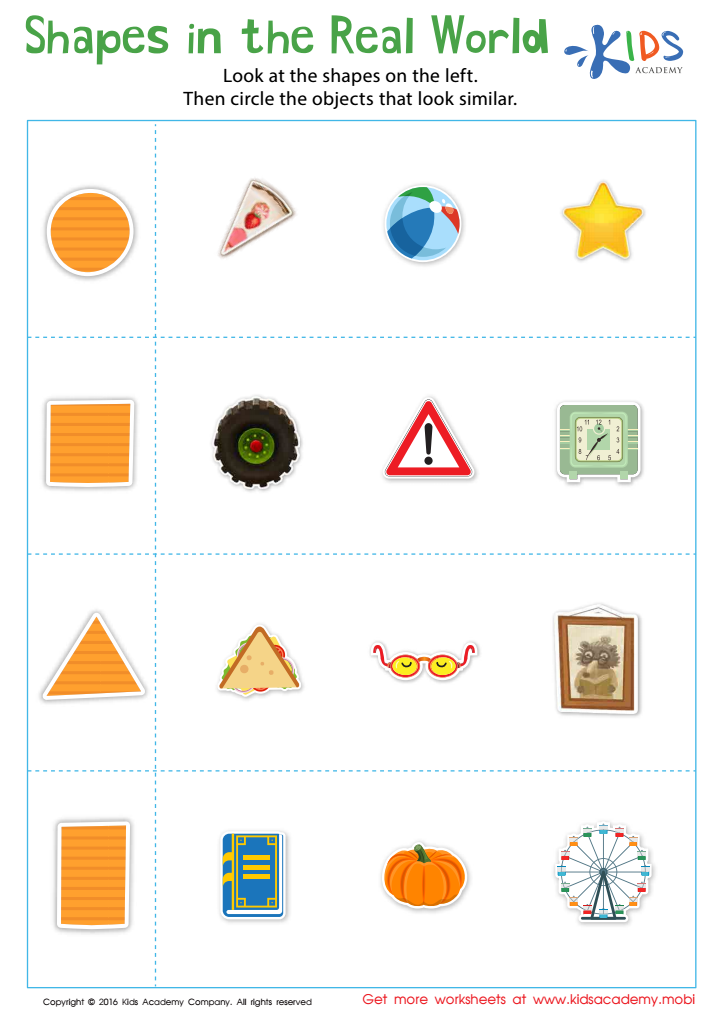
Shapes in the Real World Worksheet
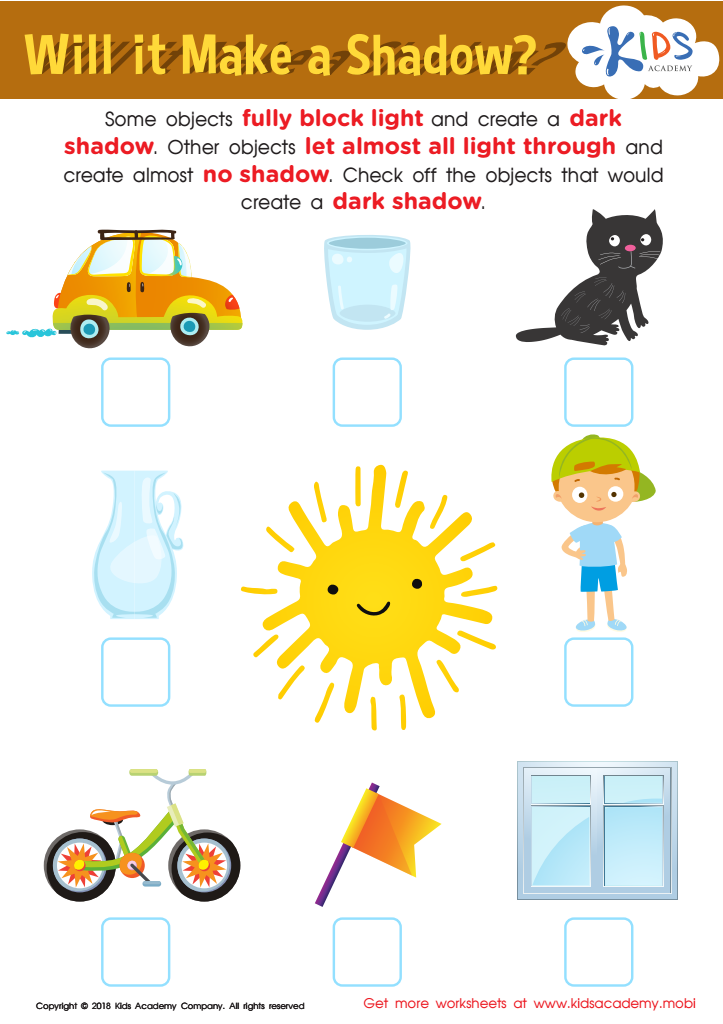
Will It Make a Shadow? Worksheet
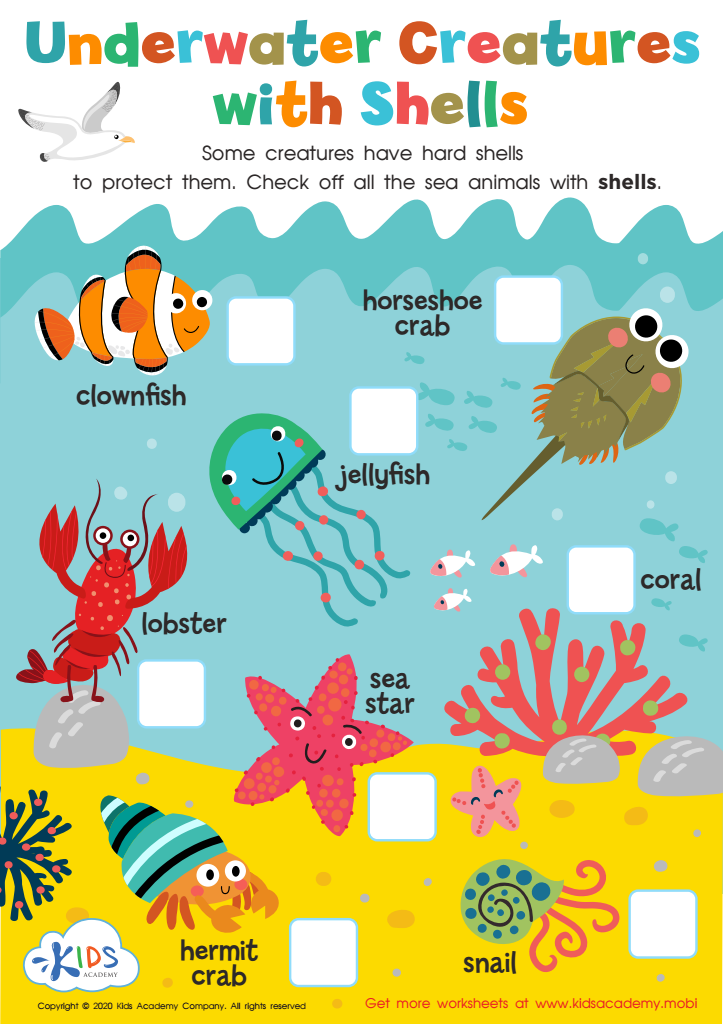
Underwater Creatures with Shells Worksheet
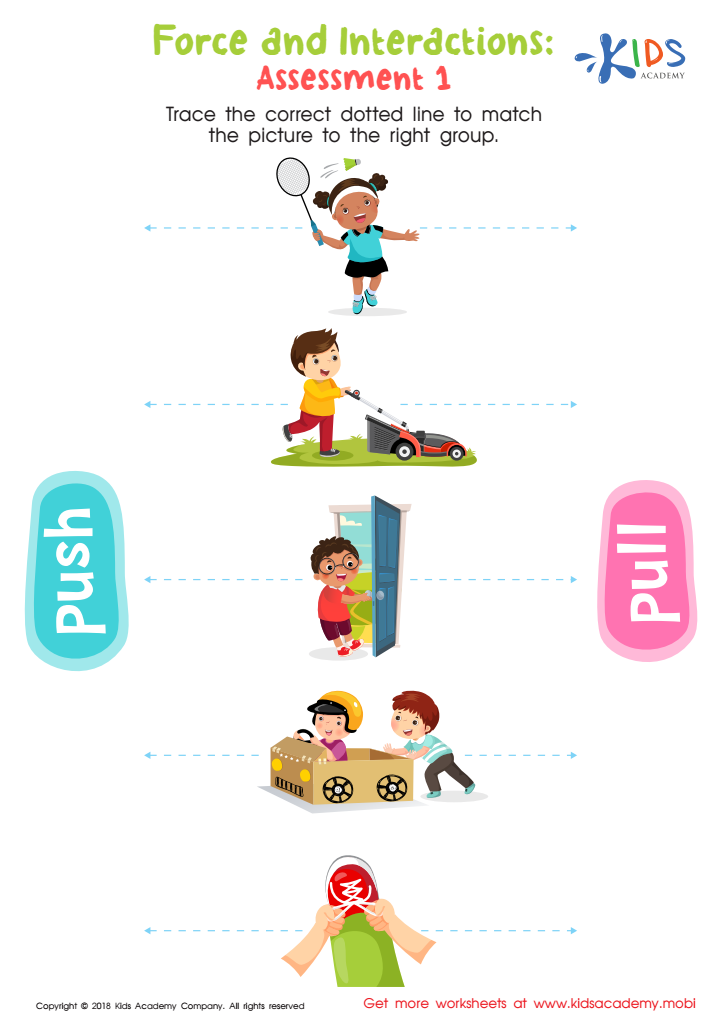
Force and Interactions: Assessment 2 Worksheet








Understanding shape recognition science is vital for children aged 6-7 as it lays the groundwork for more complex cognitive and mathematical skills. At this developmental stage, kids are honing their ability to differentiate and categorize the world around them. By recognizing and naming shapes, they also develop spatial awareness, which is essential for tasks such as reading, writing, and mathematics.
Shape recognition helps children to better understand geometry by identifying patterns, leading to improved problem-solving skills. Shapes are not just abstract concepts; they appear everywhere in the environment. Recognizing them helps kids to make connections between what they see and mathematical concepts, reinforcing learning through tangible experiences.
Moreover, these skills foster fine motor development. Activities like drawing shapes or constructing with building blocks require precision and coordination, which enhances their handwriting and art skills. Understanding shapes also improves language skills as children learn to describe and compare different forms, extending their vocabulary with words like "circle," "rectangle," and "triangle."
Parents and teachers who emphasize shape recognition early on promote a child's confidence in learning. They provide a foundation for future success not only in math but also in science, technology, and beyond. This foundational knowledge opens pathways to more advanced conceptual learning, proving invaluable in their educational journey.







