Understanding photosynthesis Science Worksheets for Ages 6-7
3 filtered results
-
From - To
Explore the wonders of photosynthesis with our engaging science worksheets designed for children ages 6-7! These thoughtfully crafted resources aim to introduce young learners to the vital process that allows plants to make their own food using sunlight, water, and carbon dioxide. Through colorful illustrations and interactive activities, kids will grasp essential concepts of this natural phenomenon while developing their critical thinking and observation skills. Perfect for classroom or home use, our worksheets offer a fun and educational way to inspire curiosity about the environment and the science behind plant life. Dive into the world of photosynthesis today!
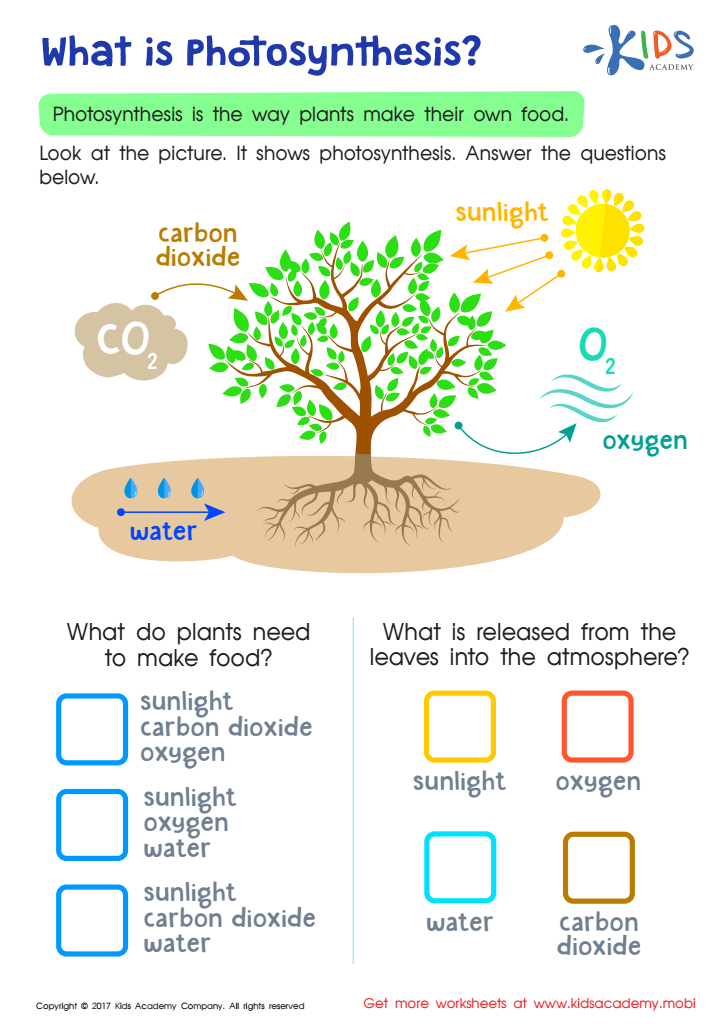
What is Photosynthesis Printable
 Assign to My Students
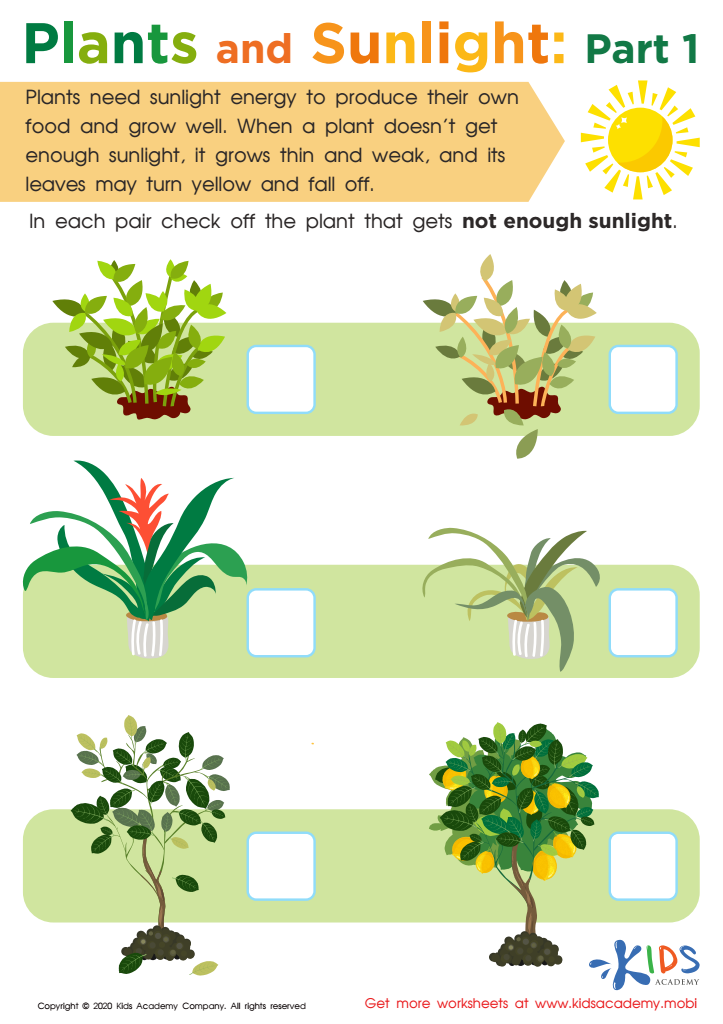
Plants and Sunlight: Part 1 Worksheet
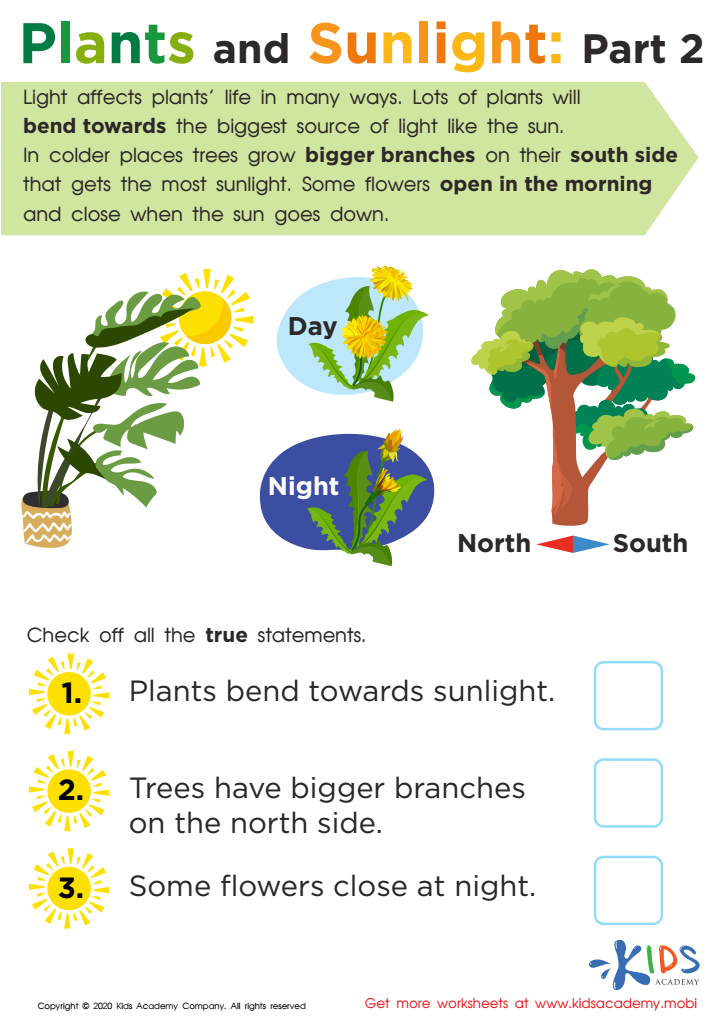
Plants and Sunlight: Part 2 Worksheet







Understanding photosynthesis is crucial for children aged 6-7 as it helps them grasp essential concepts about life and nature. At this age, children are naturally curious about their environment, and learning about photosynthesis provides them with a fun and engaging way to explore how plants produce their own food using sunlight, carbon dioxide, and water. This knowledge lays the foundation for broader scientific concepts, fostering critical thinking and inquiry skills.
For parents and teachers, teaching photosynthesis encourages an appreciation for environmental stewardship. By understanding how plants contribute to the atmosphere and it is vital for creating breathable air, children can develop a sense of responsibility towards nature. This early exposure can instill values of conservation and sustainability as they grow.
Additionally, visualizing photosynthesis through hands-on activities, like growing plants or engaging in simple experiments, enhances children's learning experiences and aids retention of information. It also fosters creativity, observation skills, and collaboration when done in groups. Therefore, caregivers should prioritize teaching photosynthesis to empower students, enhance their curiosity about science, and nurture a lifelong passion for learning and caring for the environment. This knowledge will serve as a building block for future scientific inquiries.







