Map reading skills Our Planet and Environment Worksheets for Ages 6-7
1 filtered results
-
From - To
Introduce your 6-7-year-olds to the exciting world of cartography with our "Map Reading Skills" worksheets! These engaging activities help kids develop essential abilities to read and understand maps while enhancing their knowledge of our planet and environment. Each worksheet is designed to be fun and educational, offering exercises that focus on key skills like recognizing symbols, understanding directions, and identifying map features. Perfect for young explorers, our exercises encourage curiosity and geographical awareness, providing a solid foundation in early learning. Dive into the adventure of map reading and watch your child's confidence and knowledge grow!
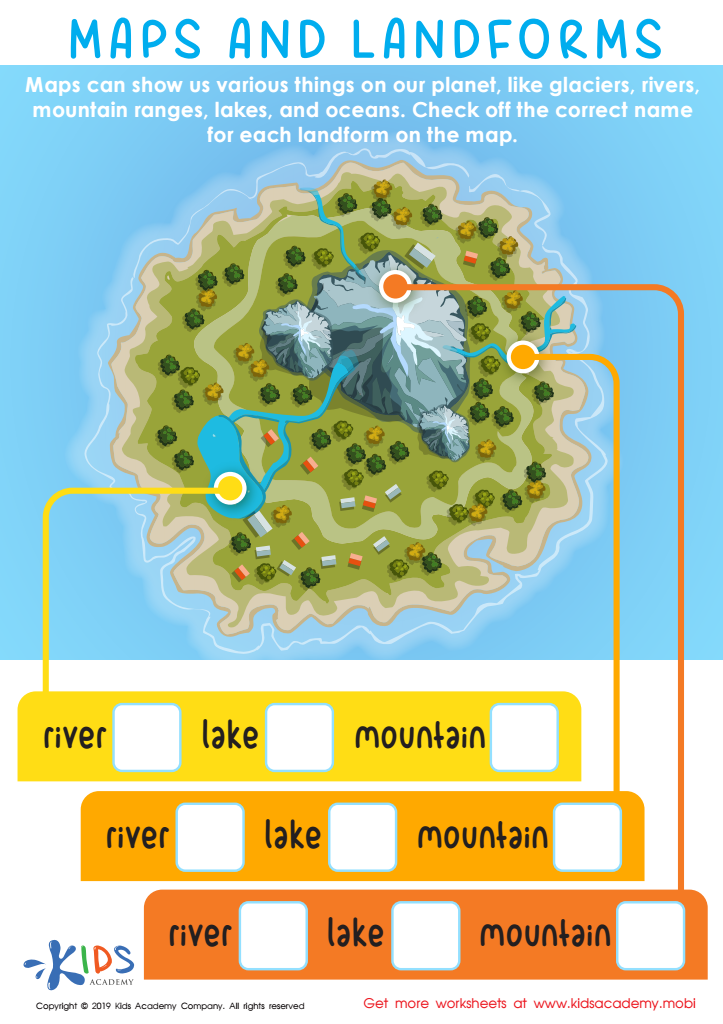
Maps and Landforms Worksheet
 Assign to My Students




Map reading skills are essential for young children, ages 6-7, as they lay the groundwork for key cognitive, social, and environmental insights. At this impressionable age, children's brains are like sponges, rapidly absorbing new information and forming critical connections. Introducing map reading helps enhance their spatial reasoning skills, which are vital for understanding and interpreting the world around them. This early exposure also cultivates problem-solving abilities and critical thinking as children learn to decipher symbols, directions, and scales.
Moreover, map reading fosters a deeper understanding of our planet and environment. As children learn about different terrains, weather patterns, and geographical locations, they develop a sense of curiosity and appreciation for the natural world. This early education can instill values of environmental stewardship, encouraging children to respect and protect our planet.
In addition, map reading ties into subjects like math, science, and social studies, reinforcing interdisciplinary learning. It also improves socio-cultural awareness as children explore diverse regions, cultures, and communities. Engaged parents or teachers can use maps as interactive tools to make learning dynamic and enjoyable, setting a strong foundation for comprehensive knowledge and lifelong learning enthusiasm. By prioritizing map reading skills, we empower children to navigate and cherish their environment more effectively.







