
Spatial awareness Space Worksheets for Ages 6-7
3 filtered results
Difficulty Level
Grade
Age
-
From - To
Subject
Activity
Standards
Enhance your child's spatial awareness with our engaging Space Worksheets, specially designed for ages 6-7. These fun and educational resources help young learners develop critical skills such as understanding distances, shapes, and directions through interactive space-themed activities. As children solve puzzles and complete exciting exercises, they will gain a stronger sense of how objects relate to one another in their environment. Our worksheets ignite imagination while promoting essential cognitive skills that lay a foundation for future learning, especially in science and math. Download our Spatial Awareness Space Worksheets today to inspire curiosity and confidence in young explorers!
Favorites
With answer key
Interactive
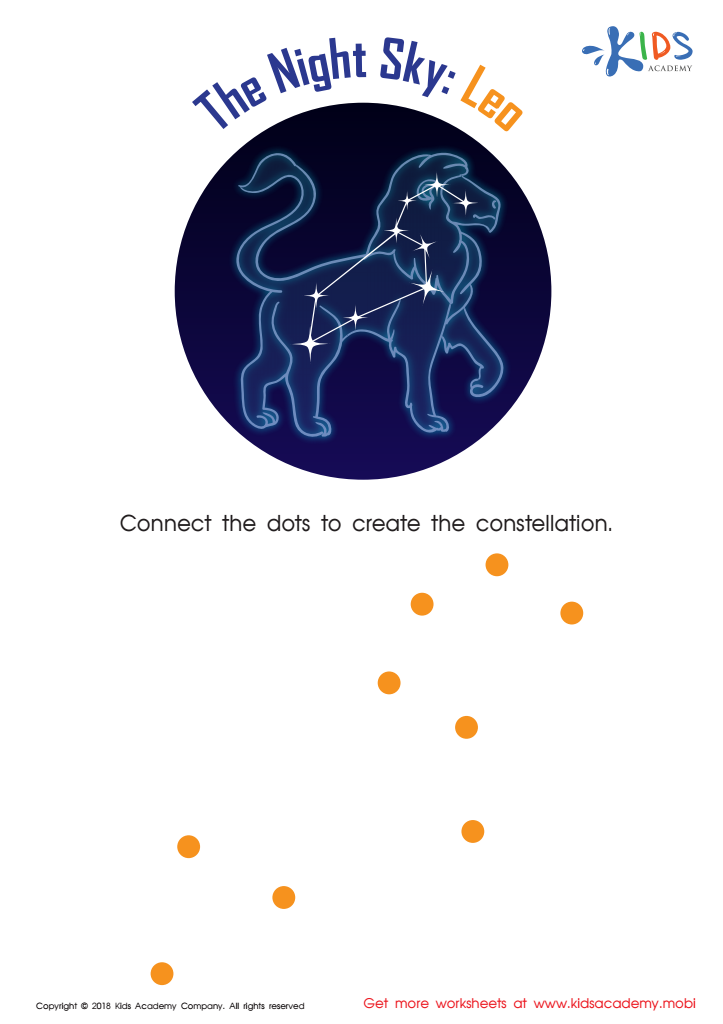
The Night Sky: Leo Worksheet
Let your kids explore the wonders of the stars with this fun worksheet! They'll connect the dots to create the constellation Leo. Night gazing instruments, a telescope or this printout can help your kids learn about constellations and horoscopes. Download the worksheet and let the star watching begin!
 Assign to My Students
The Night Sky: Leo Worksheet
Worksheet
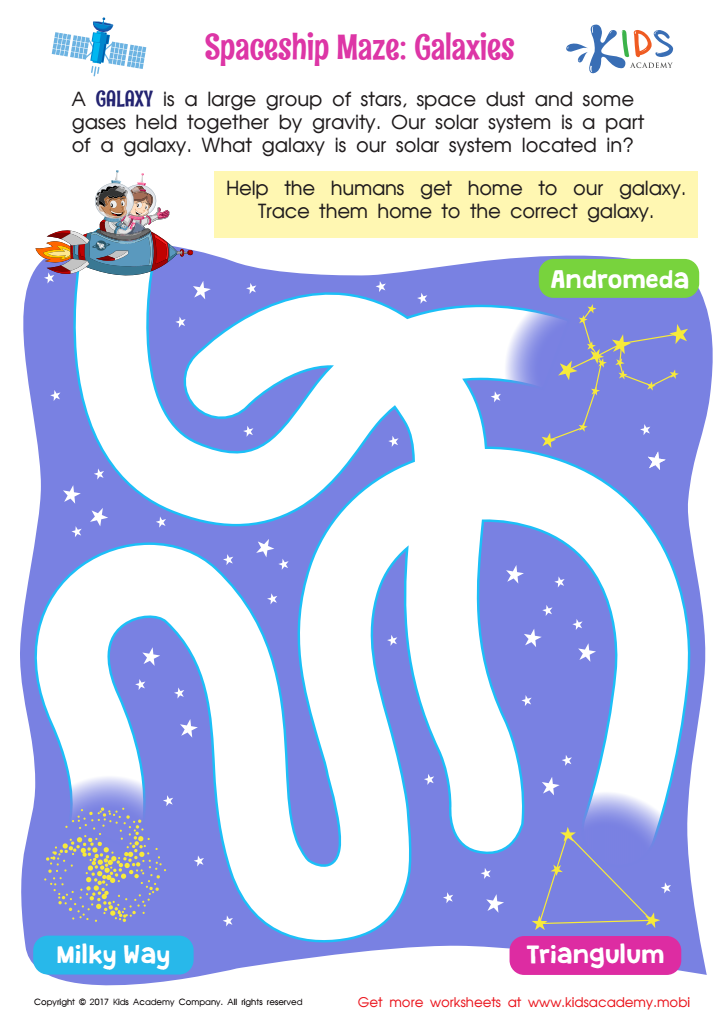
Spaceship Maze: Galaxies Worksheet
Guide lost humans home with this fun space maze: Galaxies! Once the journey is complete, kids can discover the name of our galaxy: the Milky Way! An exciting way to teach kids about space and help humans find their way back home.
Spaceship Maze: Galaxies Worksheet
Worksheet
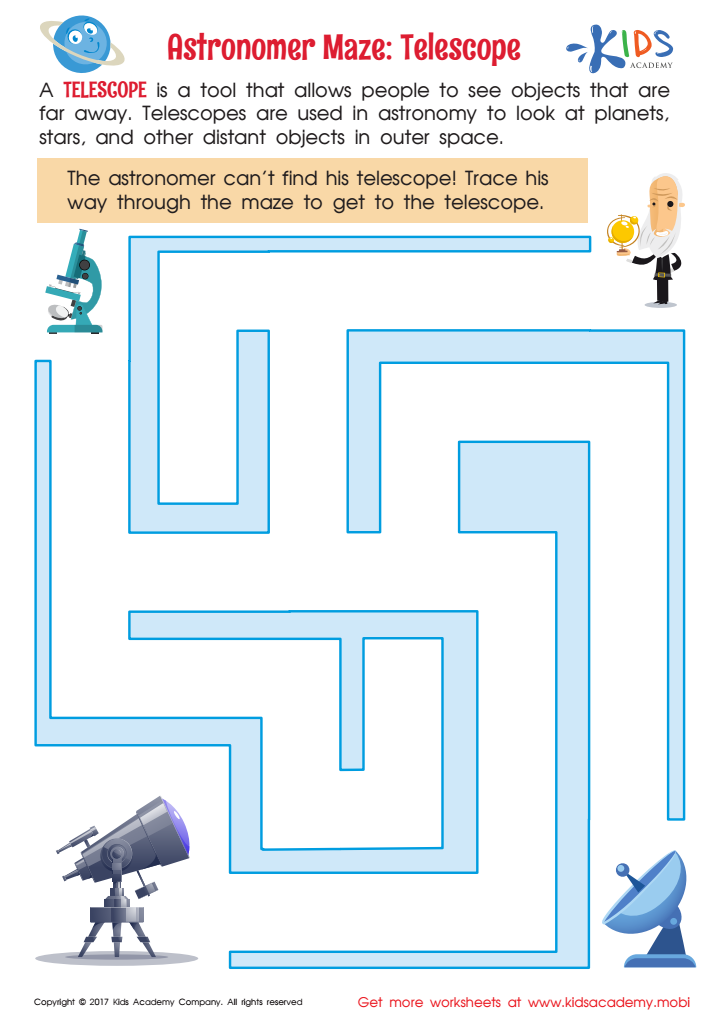
Astronomer Maze: Telescope Worksheet
Let your mini astronomer explore the galaxy with this fun and puzzling space maze worksheet – Telescope! Your child will have a great time navigating the maze, while learning how telescopes help scientists study the stars.
Astronomer Maze: Telescope Worksheet
Worksheet
Join Kids Academy for Free
Who is primarily going to use this learning content?







Spatial awareness is a crucial skill for children aged 6-7, as it forms the foundation for various cognitive, social, and physical abilities. At this stage, children are beginning to understand their place in the world, how to navigate their environments, and the relationships between different objects. This awareness supports their ability to follow instructions, complete tasks, and engage in cooperative play.
Parents and teachers should prioritize spatial awareness because it affects academic performance in subjects like math and science. For instance, understanding shapes and measurements directly influences a child's ability to grasp geometry. Moreover, spatial skills enhance critical thinking and problem-solving abilities, fundamental for lifelong learning.
Socially, improved spatial awareness aids in teamwork and collaboration as children learn to negotiate space while playing games. It also encourages physical development; for example, activities such as dancing, sports, or even simple obstacle courses refine motor skills and coordination.
By involving children in games and activities that promote spatial awareness—like puzzles, construction toys, or outdoor exploration—adults can foster a love for learning and support essential developmental processes. Overall, investing in spatial awareness is an investment in a child's holistic growth.







