Critical Thinking Community Worksheets for Ages 6-7
6 filtered results
-
From - To
Explore our engaging "Critical Thinking Community Worksheets for Ages 6-7," designed to foster essential thinking skills in young learners. These interactive worksheets encourage children to analyze, evaluate, and problem-solve within their communities. Through fun activities, kids will enhance their reasoning and decision-making abilities while learning about the importance of community connections. Ideal for at home or in the classroom, our worksheets promote creativity and support social studies learning objectives. Nurture your child's adventurous spirit as they embark on critical thinking challenges, empowering them to be thoughtful and informed members of their community. Start building a strong foundation for lifelong learning today!
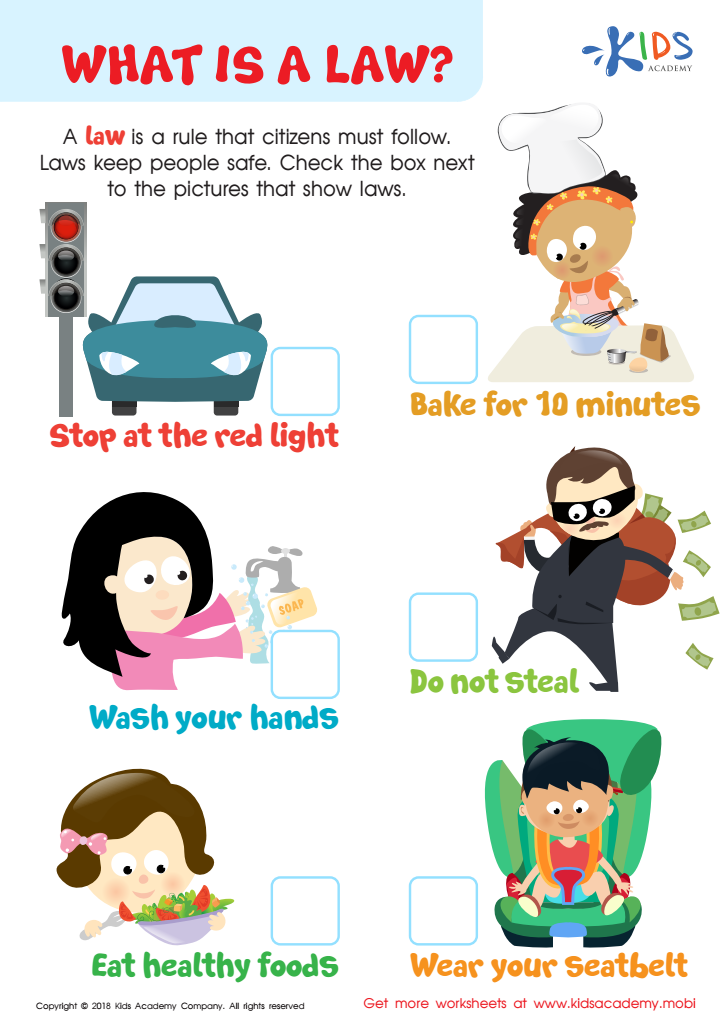
What is a Law? Worksheet
 Assign to My Students
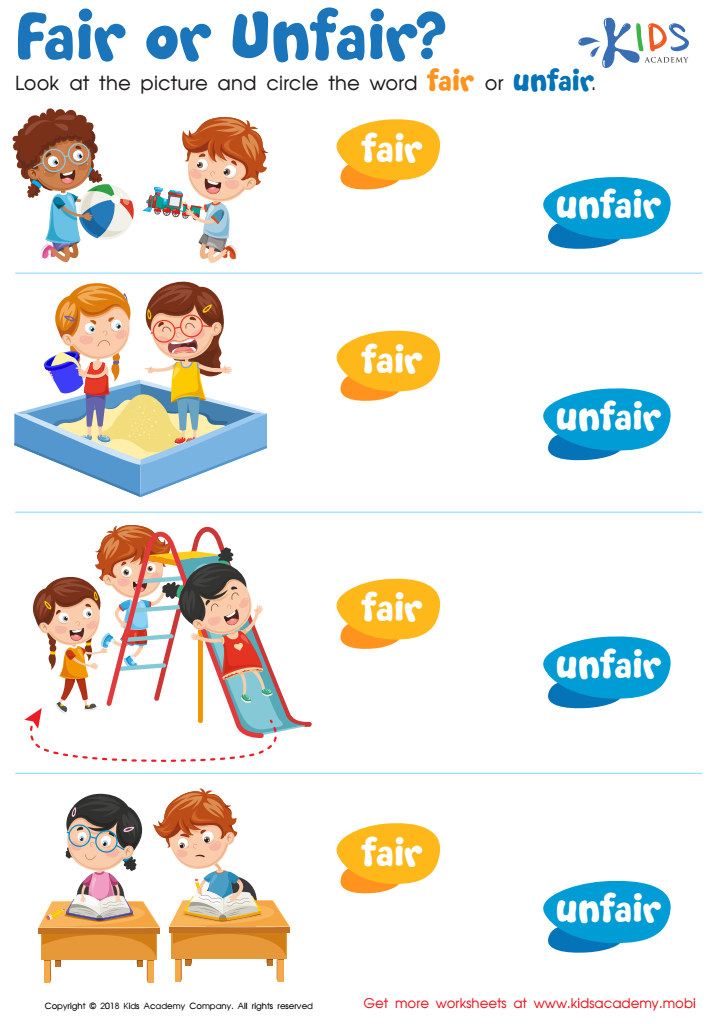
Fair or Unfair Worksheet
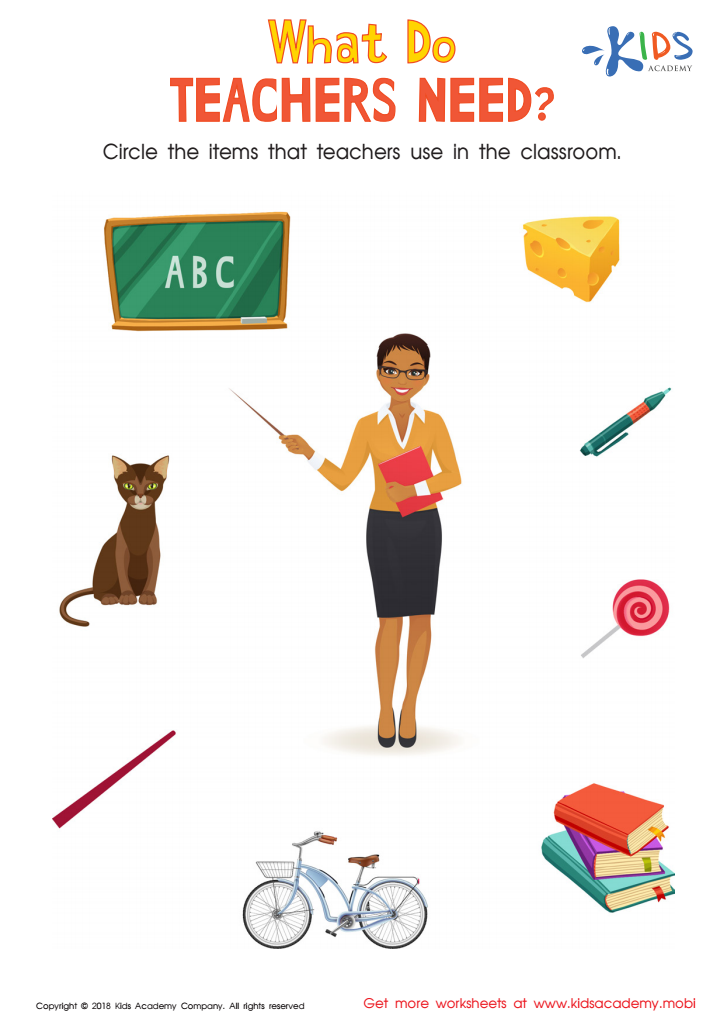
What Do Teachers Need Worksheet
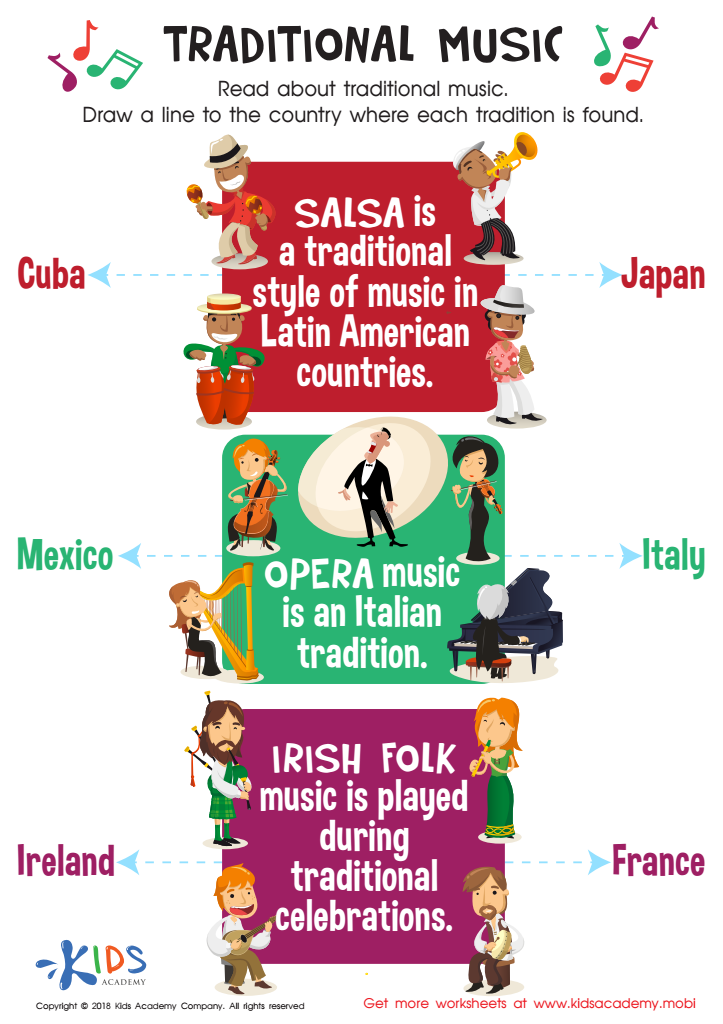
Traditional Music Worksheet
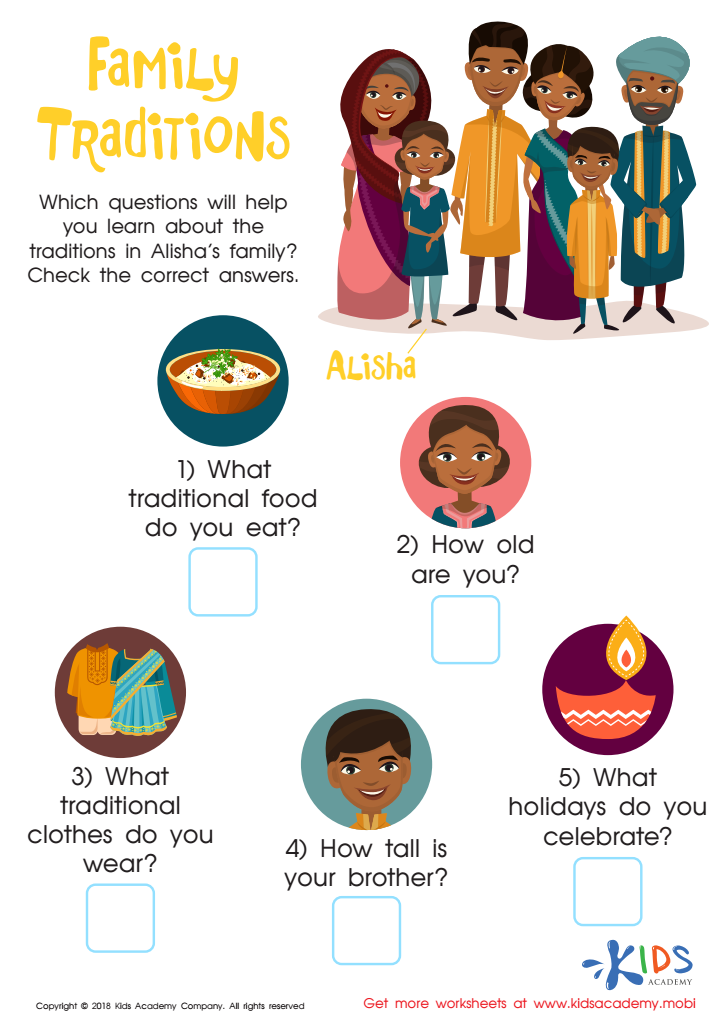
Family Traditions Worksheet
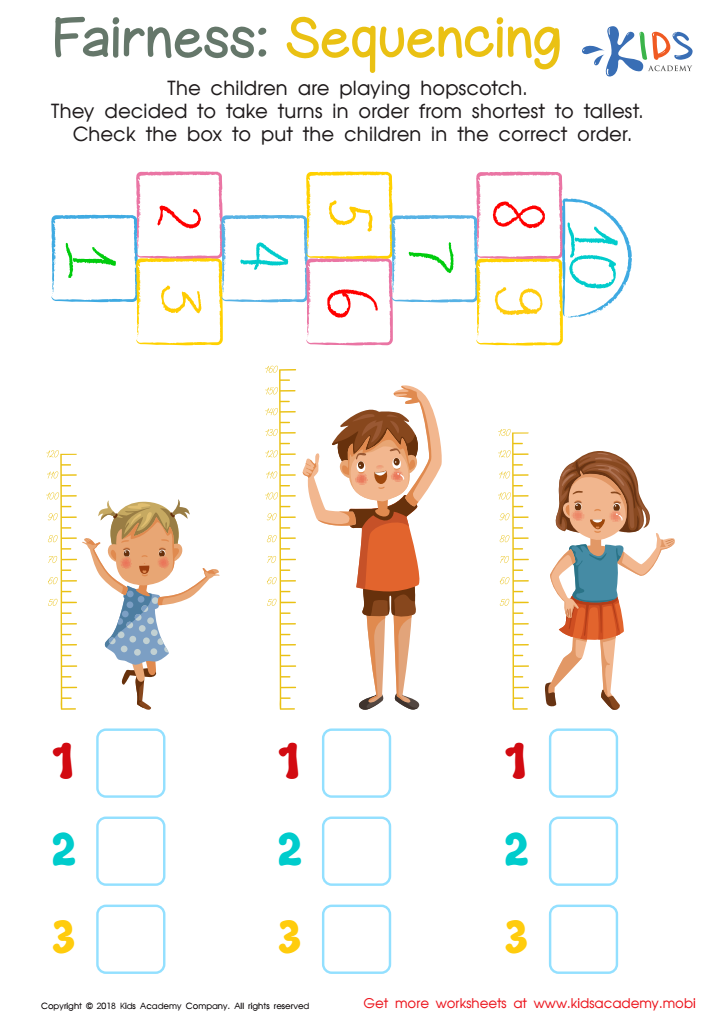
Fairness: Sequencing Worksheet







Parents and teachers should care about the Critical Thinking Community for Ages 6-7 because it fosters essential skills that are foundational for lifelong learning. At this age, children are naturally curious and eager to understand the world around them. By engaging in critical thinking activities, they learn to analyze information, evaluate evidence, and make informed decisions. These skills not only enhance their academic performance but also promote creativity and problem-solving abilities.
Moreover, critical thinking encourages children to question assumptions and explore diverse perspectives. This is crucial in developing respectful dialogues and nurturing empathy, especially in today’s increasingly interconnected world. The Critical Thinking Community provides structured resources and engaging content tailored to young learners, making it easier for parents and teachers to facilitate discussions and activities that challenge thinking patterns.
Additionally, children who practice critical thinking are better prepared for future educational challenges. They develop the ability to articulate their ideas clearly and defend their viewpoints. As parents and educators, investing time in fostering critical thinking in young children cultivates a generation of motivated, independent learners who are capable of navigating complexity and uncertainty in the world, ultimately leading to informed, responsible citizenship.








