Enhancing observation skills Social Studies Worksheets for Ages 6-7
3 filtered results
Difficulty Level
Grade
Age
-
From - To
Subject
Activity
Standards
Enhance your child’s observation skills with our engaging Social Studies worksheets designed specifically for ages 6-7. These expertly crafted resources help young learners sharpen their ability to notice and interpret details within various social and historical contexts. Each worksheet encourages curiosity and critical thinking, making learning fun and interactive. Through colorful images and thought-provoking activities, children will develop essential skills that are fundamental for understanding and exploring the world around them. Perfect for both classroom use and at-home enrichment, these worksheets support a foundational step in your child's educational journey. Explore now to foster keen observation and a love for learning!
Favorites
With answer key
Interactive
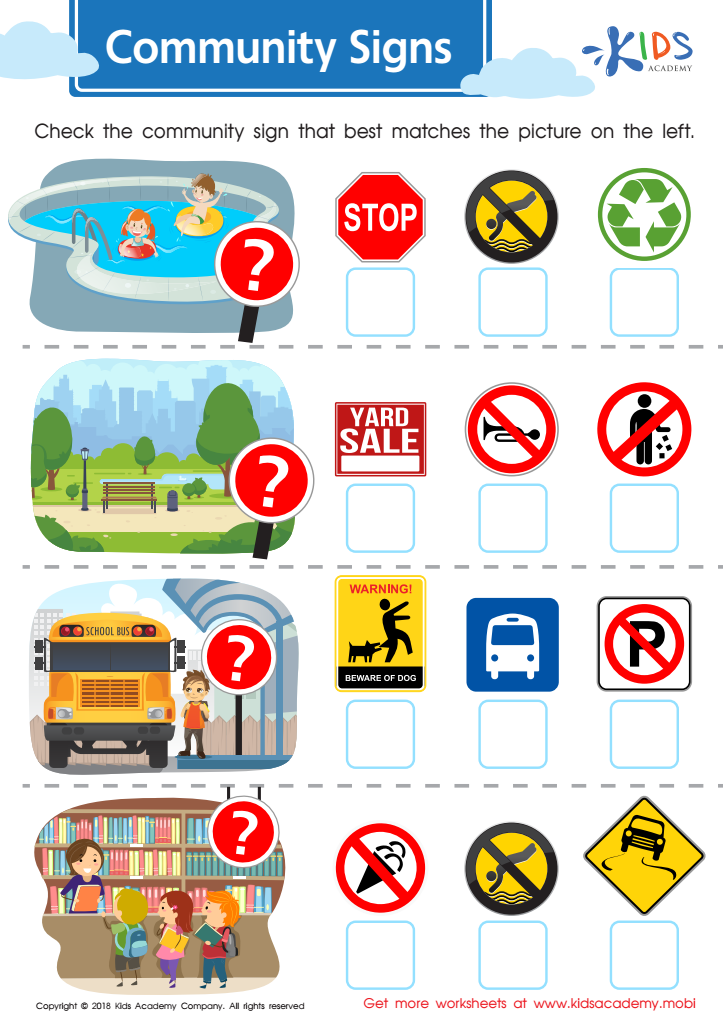
Community Signs Worksheet
To stay safe, our kids need to know community signs. Ask them to name signs at the pool, park, etc. Then, have them check the worksheet for the picture that matches the community signs.
 Assign to My Students
Community Signs Worksheet
Worksheet
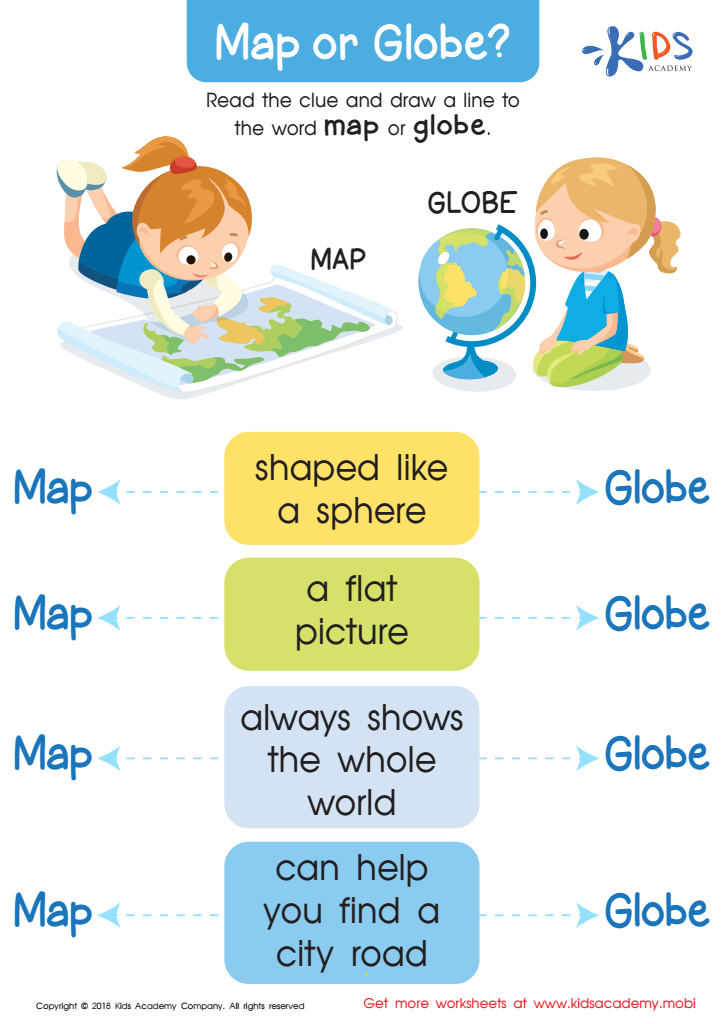
Map or Globe? Worksheet
Learning the difference between maps and globes can be difficult for young children. Get this free worksheet to help them! It offers word and picture clues for them to practice matching. They'll also get to use their fine motor skills as they trace the lines to find the answers.
Map or Globe? Worksheet
Worksheet
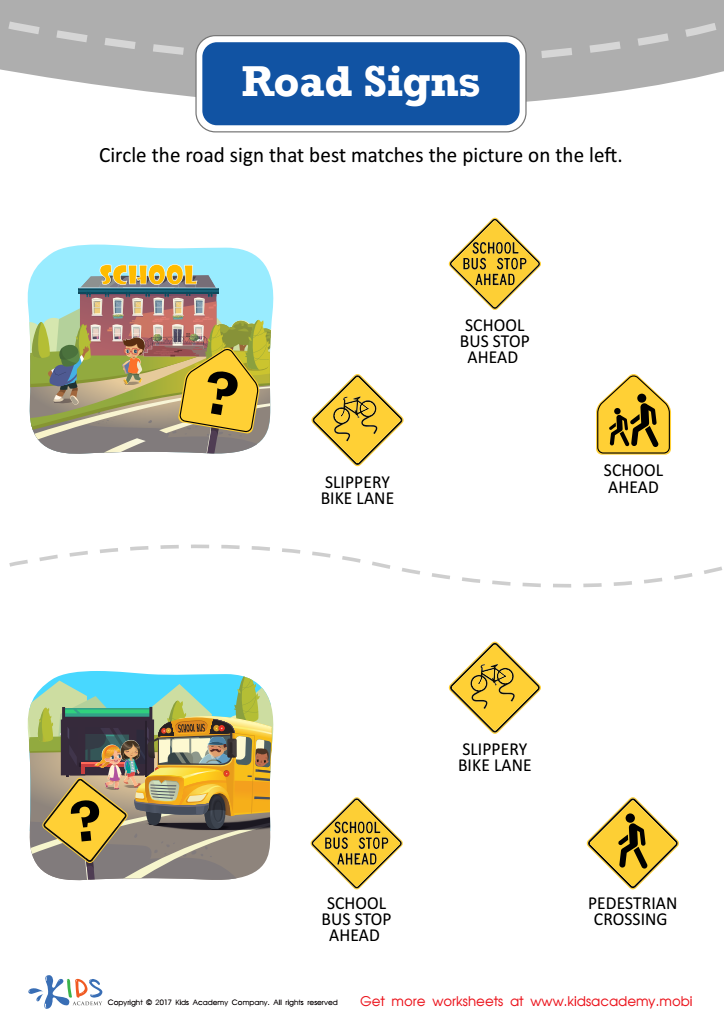
Road Signs (Part 1) Worksheet
Kids are exposed to danger near roads, so help them recognize traffic signs with this printable. It'll foster their reading comprehension and symbol recognition, while keeping them safe.
Road Signs (Part 1) Worksheet
Worksheet
Join Kids Academy for Free
Who is primarily going to use this learning content?







Enhancing observation skills in Social Studies for children aged 6-7 is crucial for several reasons. At this age, kids are naturally curious and perceptive about the world around them. Nurturing these skills allows children to become more aware of their environment and fosters critical thinking. When students observe, they learn to notice details, patterns, and relationships, which are foundational for understanding complex social systems and historical developments in later years.
Observation skills also improve students' ability to gather and interpret information, a key component of social studies. For example, understanding community roles, recognizing cultural symbols, or noticing environmental changes require keen observational abilities. By honing these skills early on, children can better grasp broader social concepts and cultivate a sense of empathy and cultural awareness, crucial for growing into informed, considerate members of society.
Moreover, enhancing observational skills contributes to overall cognitive development. These skills strengthen focus, memory, and analytical thinking, aiding children academically across subjects. For parents and teachers, prioritizing observation in social studies not only aligns with educational goals but also supports holistic child development, equipping young learners with the tools they'll need for lifelong learning and citizenship.