Filters

6 filtered results

Clear all filters
Favorites
With answer key
Interactive

6 filtered results

Difficulty Level

Grade


Enhance your child’s handwriting skills with our engaging Letter Tracing Practice Alphabet Worksheets designed for ages 6-8. These worksheets provide young learners with a fun and interactive way to master both uppercase and lowercase letters while improving their fine motor coordination. Perfect for kids just beginning their writing journey, each sheet is filled with tracing exercises that promote muscle memory, proper letter formation, and confidence. Join the many parents and educators who trust Kids Academy to support effective early learning. Marvel as your child's writing skills soar with consistent practice and guidance!

Check out this FREE Trial Lesson on Alphabet for age 6-8!

F

Favorites
With answer key
Interactive
  • 6-8
  • Letter Tracing Practice
  • Alphabet
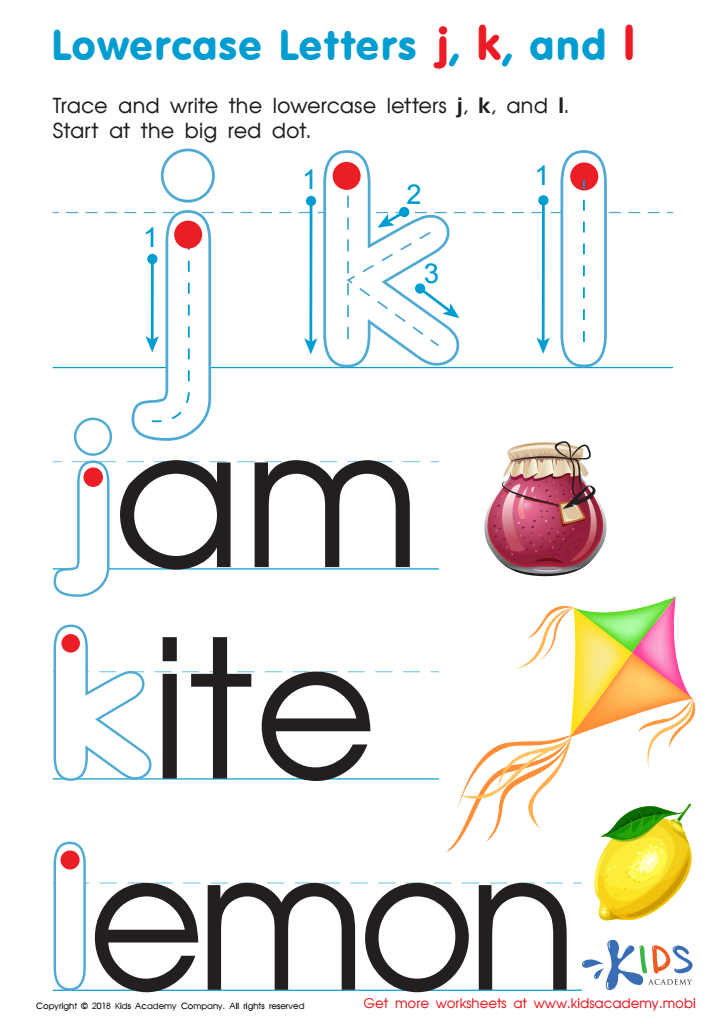
Lowercase Letters j k l Worksheet

Lowercase Letters j k l Worksheet

Teach your child the difference between uppercase and lowercase letters. Have them trace and write the lowercase letters j, k, and l, starting at the red dot. Guide your child's hand to form the letters correctly.
Lowercase Letters j k l Worksheet
Worksheet
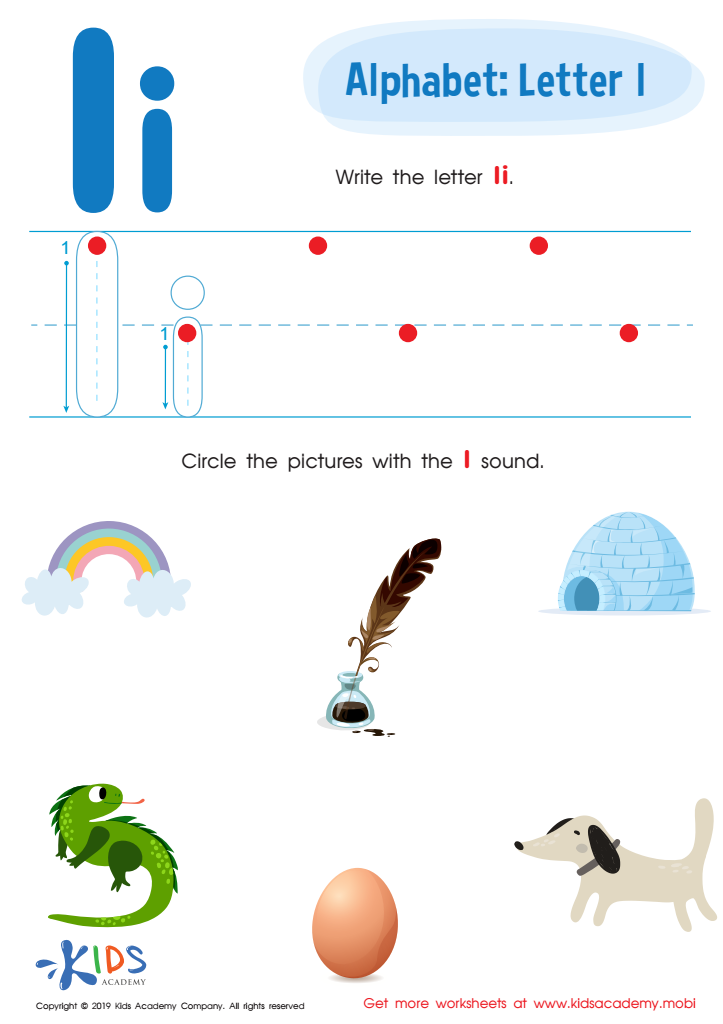
Letter I Tracing Worksheet Preview

Letter I Tracing Worksheet

Kids can hone tracing, writing and identifying skills for the letter 'I' with this worksheet. Whether visual or reading/writing learners, every child can benefit from the tasks - tracing, writing and circling objects beginning with 'I'. This free sheet will soon get preschoolers confident with the 'I' letter!
Letter I Tracing Worksheet
Worksheet
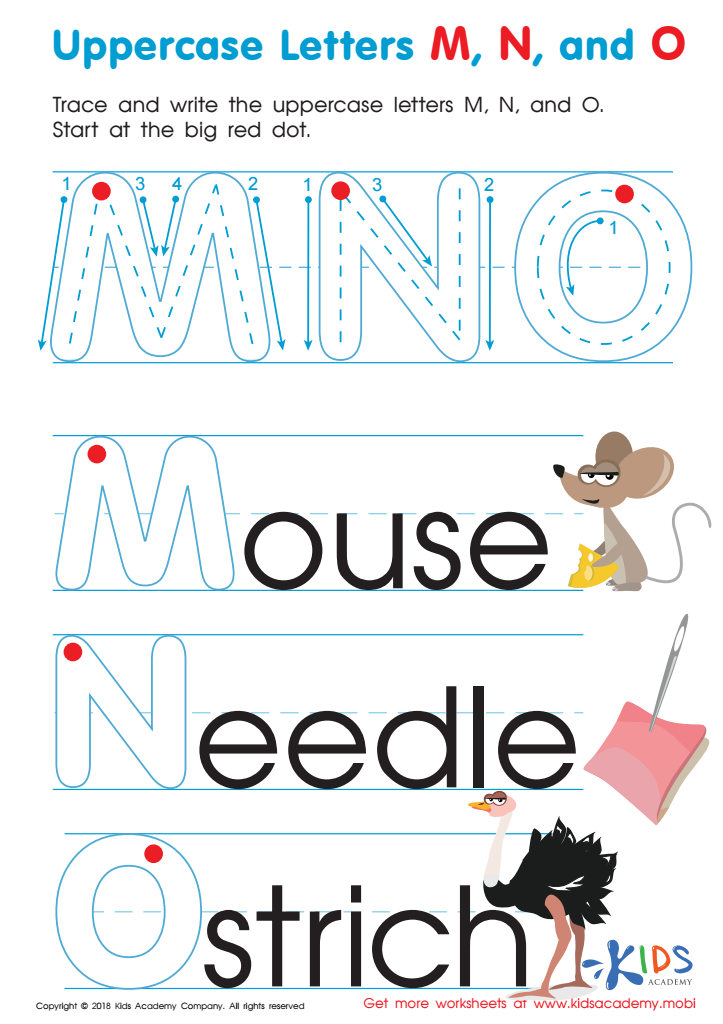
Uppercase Letters M, N, and O Worksheet Preview

Uppercase Letters M, N, and O Worksheet

Download our easy-to-understand worksheet to help kids write M and N with ease! They'll trace dotted lines and follow arrows as they fill in the letters using a big red dot as a guide. The cute graphics will help them remember sounds too! Get your child writing quickly and confidently with this fun activity.
Uppercase Letters M, N, and O Worksheet
Worksheet
Uppercase Letters P, Q, and R Worksheet Preview

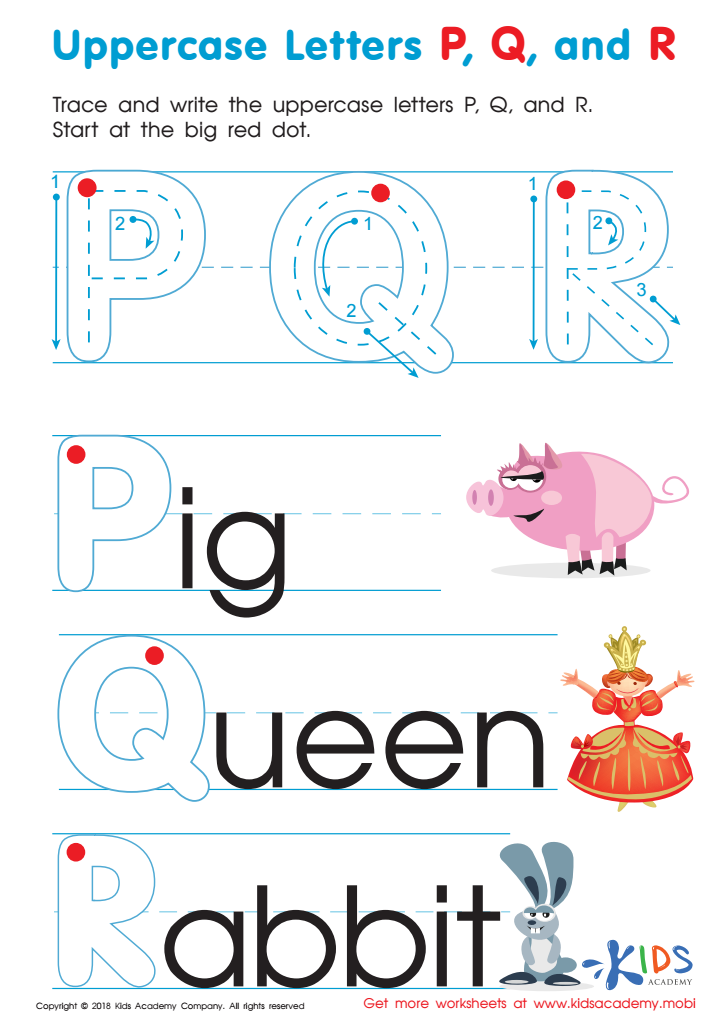
Uppercase Letters P, Q, and R Worksheet

Cute images of a pig, queen and rabbit make it fun to learn letter sounds. Follow the arrows to learn the strokes, then trace each letter from the big red dot. Perfect for kids to learn how to read and write P, Q, and R!
Uppercase Letters P, Q, and R Worksheet
Worksheet
Letter A Coloring Page

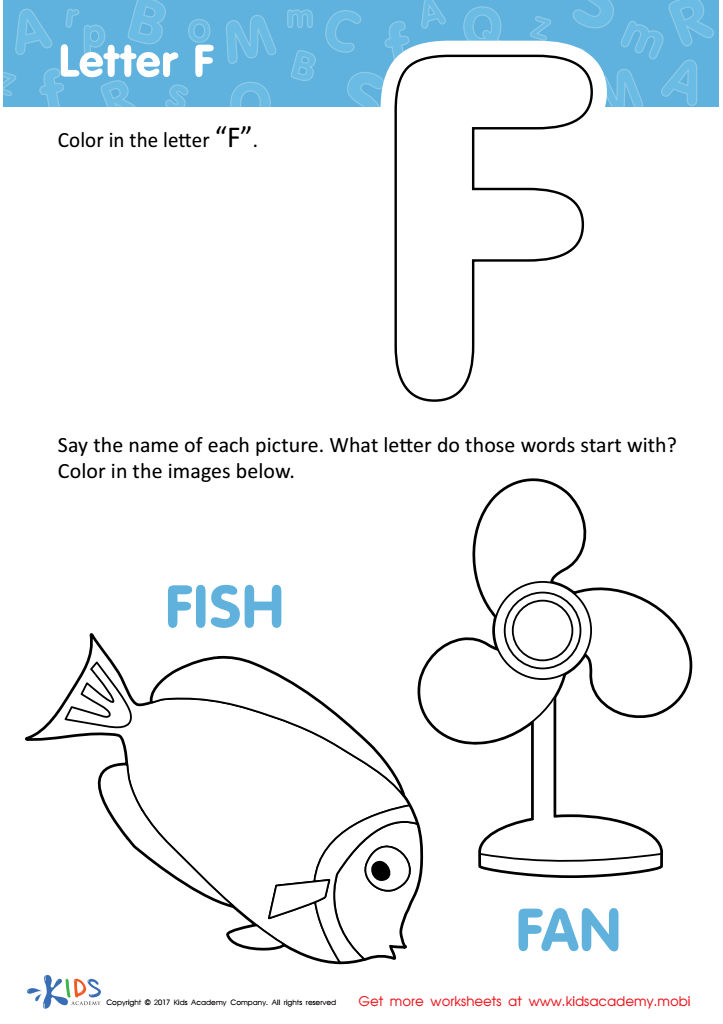
Letter F Coloring Sheet

Coloring pages help kids learn to recognize letters and sounds. Our "F" page has kids color a fish and a fan. It's a great way to introduce them to the letter "F" using words they already know.
Download (PDF)
Assign to My Students
Letter F Coloring Sheet
Worksheet
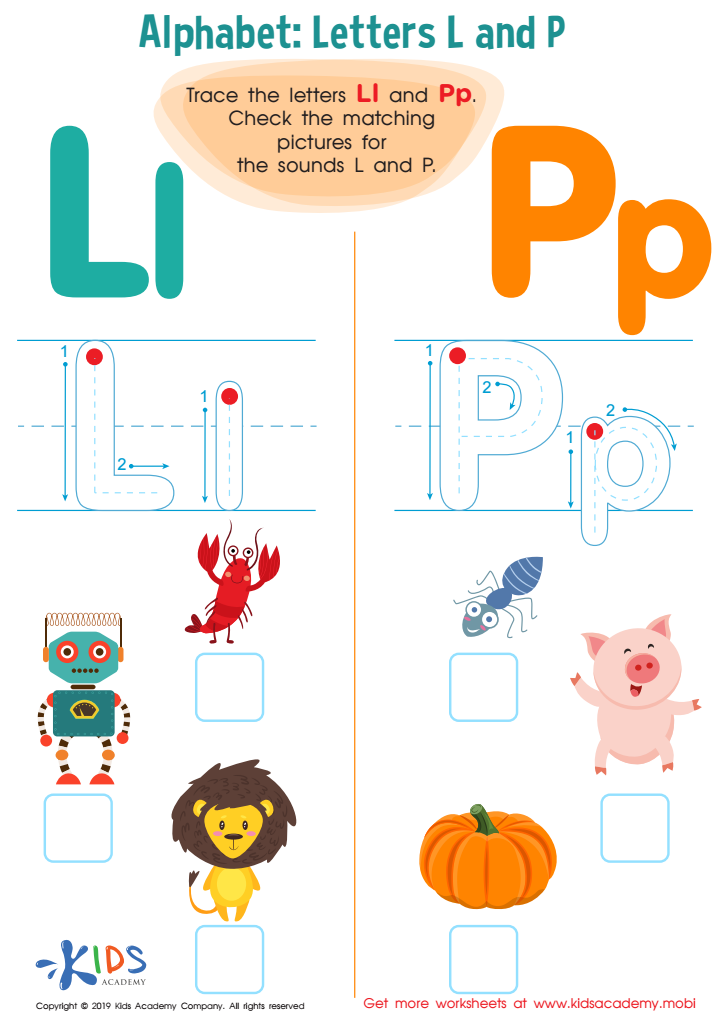
Letter L and P Tracing Worksheet Preview


Letter L and P Tracing Worksheet

This traceable worksheet can motivate your students to learn and practice core skills. They'll trace the letters 'L' and 'P' and identify the pictures next to them. With this exercise, they'll unlock their learning abilities and excel in the subject!
Letter L and P Tracing Worksheet
Worksheet


Letter tracing practices for children ages 6-8 are crucial for laying a solid foundation in early literacy and developing essential fine motor skills. At this age, many children are transitioning from preschool to elementary school, where proficient reading and writing become fundamental to their overall academic success. Letter tracing aids in this transition by helping children recognize and form letters correctly, which is the cornerstone of reading and writing.

Parents and teachers should care about letter tracing practice because it reinforces letter shape recognition, spacing, and consistency. Mastery of these skills ensures that a child's writing is legible, which boosts confidence and reduces frustration. Tracing letters can also make learning interactive and fun, turning it into a creative and tactile activity rather than a mundane task.

Furthermore, these exercises help enhance hand-eye coordination and fine motor control, critical for overall developmental growth, such as buttoning a shirt or using scissors. By investing time in letter tracing, parents and teachers set children up for success, instilling a love for learning and building a strong educational foundation that supports all other academic endeavors. Encouraging regular practice ensures that children are well-equipped for the increasing writing demands of later schooling years.