Upper & Lowercase Letters Worksheets for Ages 6-8 - Page 3
49 filtered results
-
From - To
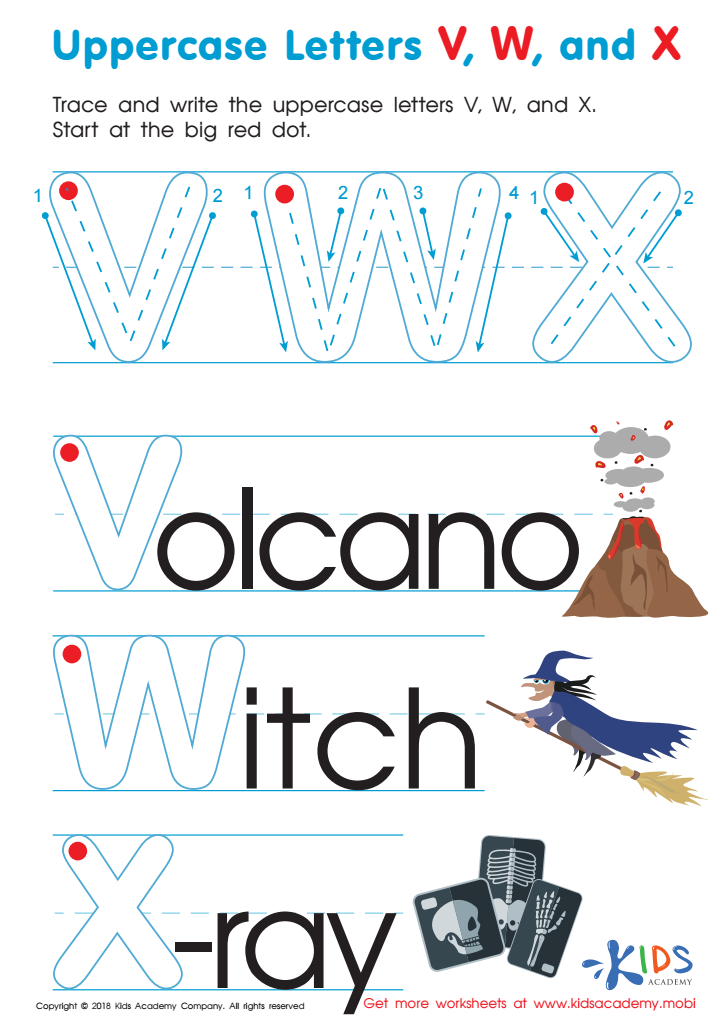
Uppercase Letters V, W, and X Worksheet
 Assign to My Students








Understanding uppercase and lowercase letters is crucial for children aged 6-8 as it forms the foundation for reading and writing skills, often key to their academic success. Recognizing the differences between uppercase and lowercase letters enhances word recognition and comprehension, making it easier for children to read sentences, stories, and books with greater fluency and confidence. As students transition from understanding single letters to reading and writing whole words and sentences, knowing when to use capital versus small letters becomes integral.
For instance, uppercase letters are used at the beginning of sentences and for proper nouns, helping kids distinguish main elements in writing. In contrast, lowercase letters predominantly shape the rest of the text, emphasizing their importance in forming coherent, readable text blocks. Consistent practice with both case types aids handwriting development, improves spelling skills through visual memorization, and reduces confusion between similarly-shaped letters (e.g., 'b' and 'D').
Moreover, educators and parents engaging with children over these basics instill good literacy habits, reinforce language rules, and boost children’s confidence in their academic capabilities. Supporting this aspect of learning early on equips children with the necessary tools to excel in future, more complex language tasks and subjects.







