Enhancing problem-solving skills Chess Worksheets for Ages 6-8
3 filtered results
-
From - To
Discover our "Enhancing Problem-Solving Skills: Chess Worksheets for Ages 6-8" designed to ignite young minds with the strategic world of chess. Our expertly crafted printable worksheets offer engaging activities that sharpen problem-solving abilities, build critical thinking, and enhance cognitive development. Perfect for beginners, these worksheets guide children through the fundamentals of moves and strategies, making learning fun and interactive. Ideal for parents and teachers looking to support children's educational journey, our chess worksheets are a fantastic tool to foster patience, perseverance, and analytical skills in young learners. Start their chess adventure today!
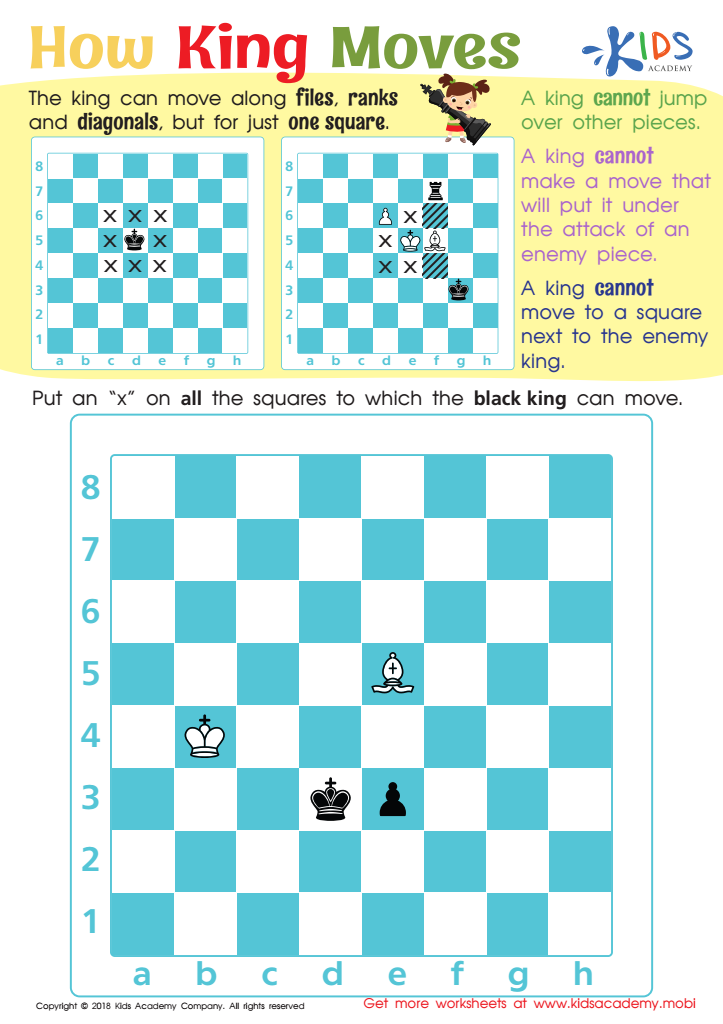
How King Moves Worksheet
 Assign to My Students
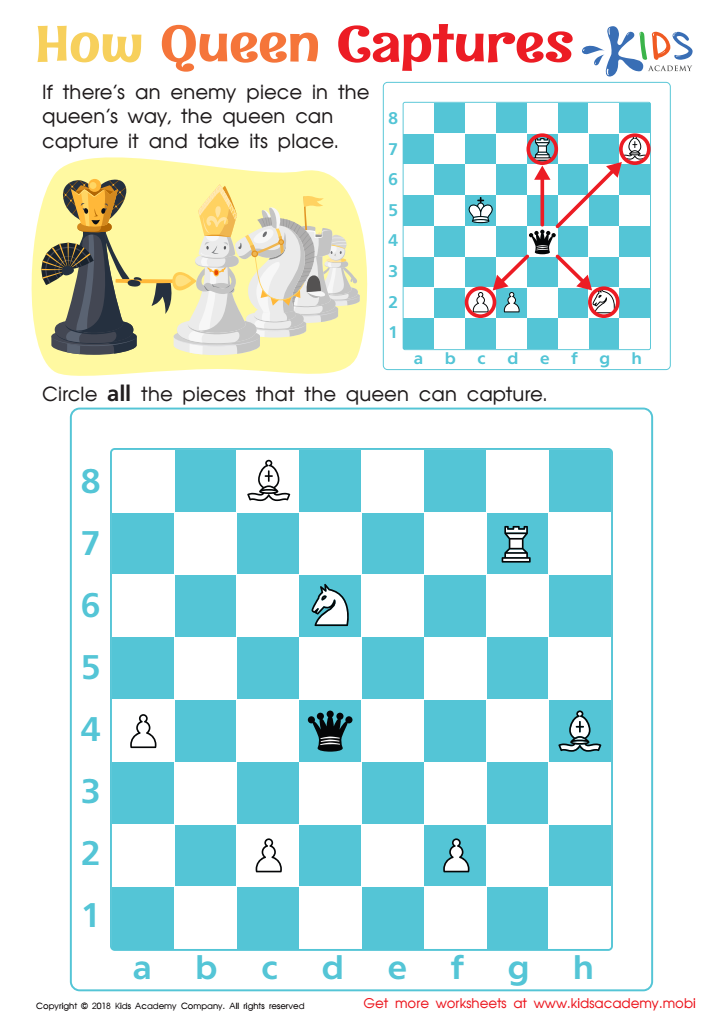
How Queen Captures Worksheet
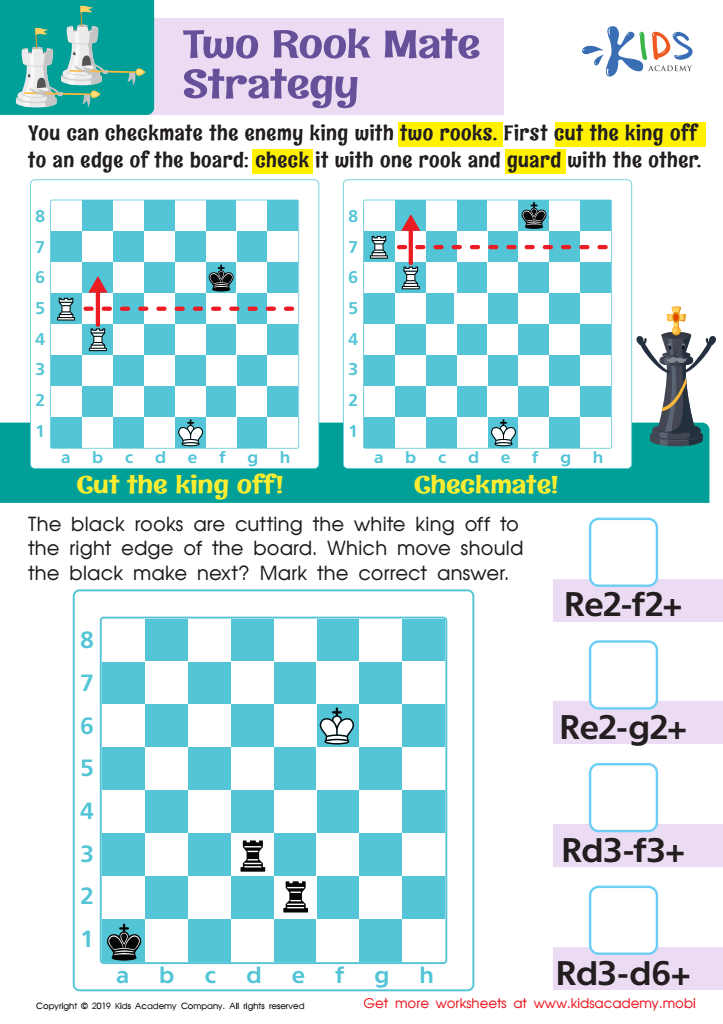
Two Rook Mate Strategy Worksheet






Enhancing problem-solving skills through chess for children ages 6-8 is highly beneficial for their cognitive and social development. Chess is more than a game; it acts as a profound educational tool that sharpens young minds. At this developmental stage, children's brains are highly malleable, and engaging them in chess can foster critical thinking, strategic planning, and analytical skills.
Problem-solving is a core component of chess. Each move requires contemplation of immediate repercussions and long-term strategies. Children learn to foresee outcomes, adapt to new situations, and remain patient—skills that are transferable to academic and real-life scenarios.
Moreover, chess teaches discipline and concentration. Kids must focus intently for prolonged periods, enhancing their attention span and persistence. It also nurtures creativity, as it encourages thinking outside the box to devise unique solutions.
Socially, playing chess can bolster children’s confidence and communication skills. It provides a platform for interacting with peers in a competitive yet respectful context, fostering sportsmanship and collaboration.
Thus, parents and teachers should champion chess as it cultivates a well-rounded skill set, encourages a growth mindset, and lays a solid foundation for future learning and personal development. Advocacy for chess at this age can deeply enrich children's educational journeys and life skills.