Comparing shapes Worksheets for Ages 6-8
6 filtered results
-
From - To
Unlock your child's potential with our engaging "Comparing Shapes Worksheets" designed for ages 6-8! These fun and interactive worksheets help young learners develop critical thinking skills as they identify and compare various shapes. With colorful illustrations and age-appropriate activities, children will enjoy sorting, matching, and differentiating between shapes like circles, squares, triangles, and more. Tailored to support early math concepts, our worksheets provide valuable practice to enhance shape recognition and understanding. Perfect for classroom use or at-home learning, these resources make learning about shapes enjoyable and effective. Discover the joy of shape learning today!
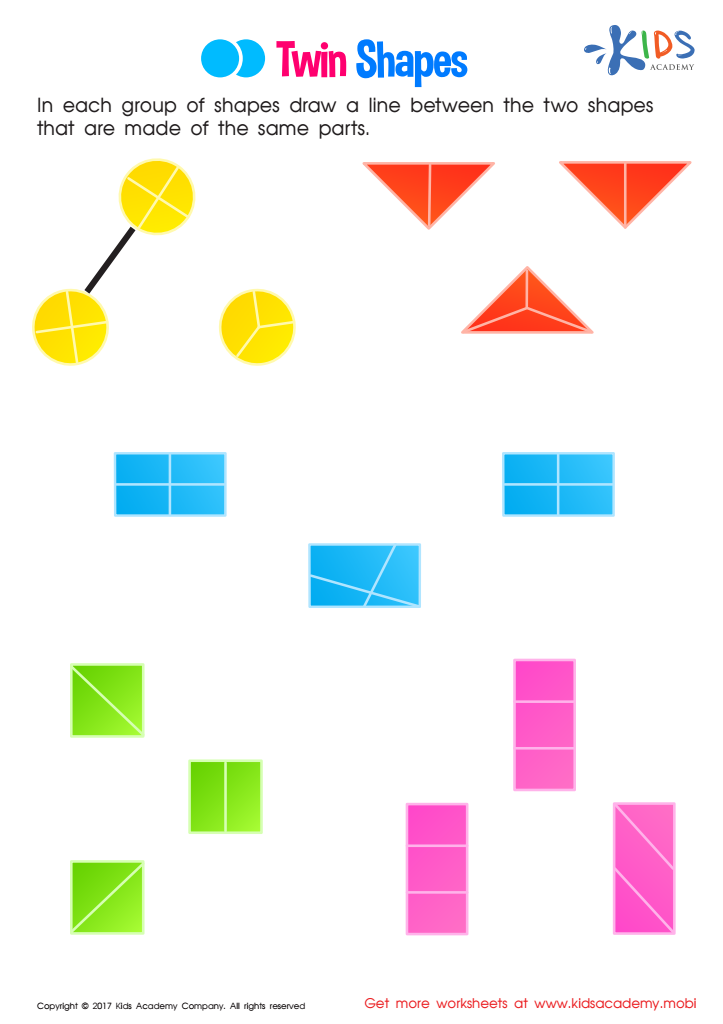
Twin Shapes Worksheet
 Assign to My Students
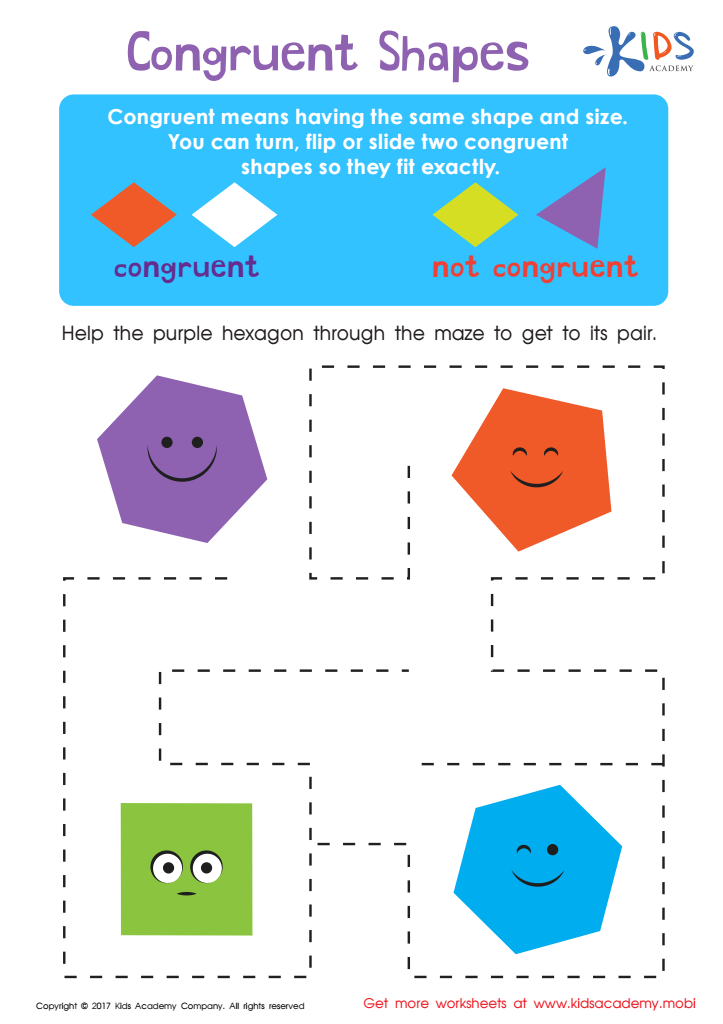
Congruent Shapes Worksheet
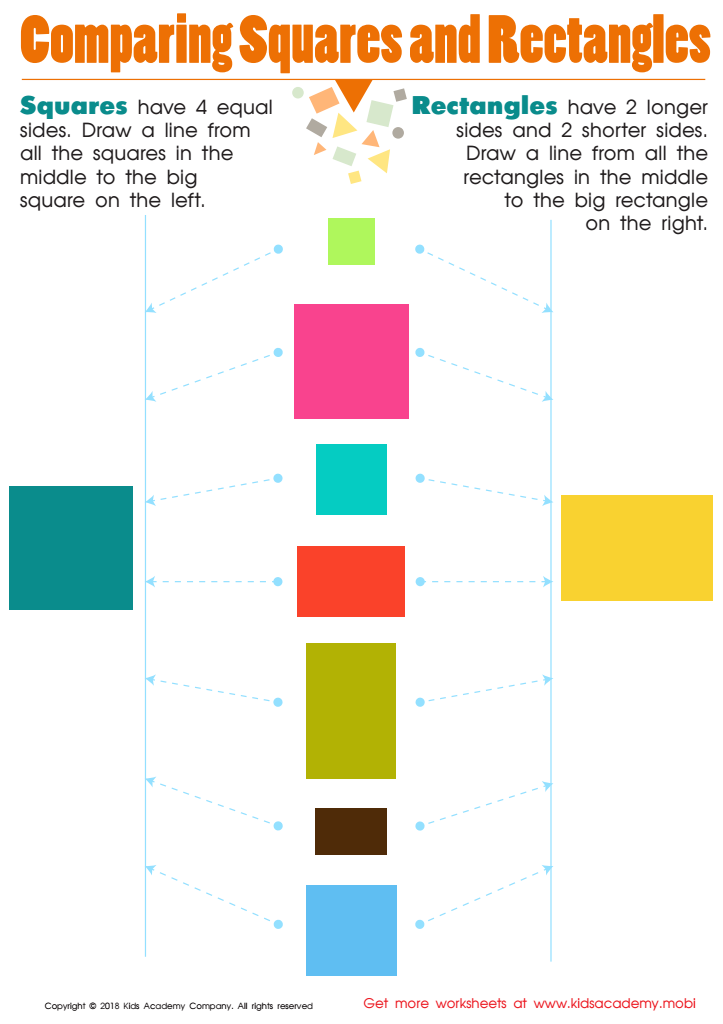
Comparing Squares Rectangles Worksheet
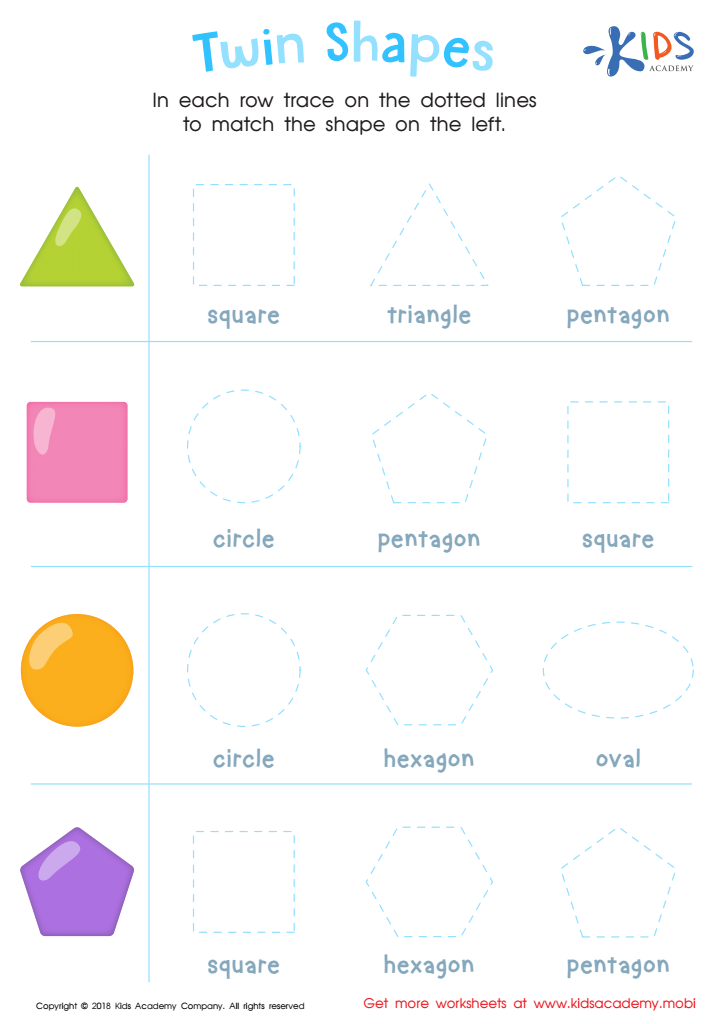
Twin Shapes Dot-to-Dot Worksheet






Comparing shapes is a fundamental skill for children aged 6-8, serving as a crucial building block in their mathematical development. Parents and teachers should care about this concept because it helps children develop essential cognitive skills, such as critical thinking and problem-solving. Through comparing shapes, children learn to identify, classify, and organize objects based on their attributes, which enhances their ability to categorize information in other areas of learning.
Moreover, comparing shapes fosters spatial awareness and visual perception. As children explore various shapes—like circles, squares, and triangles—they begin to recognize similarities and differences, laying the groundwork for more complex mathematical concepts, such as geometry. Engaging with shapes also supports language development, as children learn to use descriptive vocabulary to communicate their observations.
Additionally, this activity encourages hands-on learning, making it interactive and enjoyable. Children can participate in games, puzzles, and real-world applications, which help cement these concepts in their minds. By prioritizing shape comparison, parents and teachers empower children to build a strong mathematical foundation that will support their academic journey and everyday problem-solving skills in the future. Understanding shapes is not just about math; it’s about developing a rich understanding of the world around them.








