
Developing analytical skills Worksheets for Ages 6-8
14 filtered results
Difficulty Level
Grade
Age
-
From - To
Subject
Activity
Standards
Discover our engaging "Developing Analytical Skills Worksheets" designed specifically for children ages 6-8. These worksheets aim to foster critical thinking, problem-solving, and reasoning abilities in young learners. Through fun activities that include puzzles, pattern recognition, and logic games, children will enhance their analytical skills in an enjoyable way. Each worksheet is carefully crafted to support cognitive development while aligning with early learning standards. Perfect for teachers and parents seeking to enrich their child's educational experience, these resources promote independent thinking and creativity. Empower your child’s learning journey with our interactive and stimulating analytical skills worksheets today!
Favorites
With answer key
Interactive
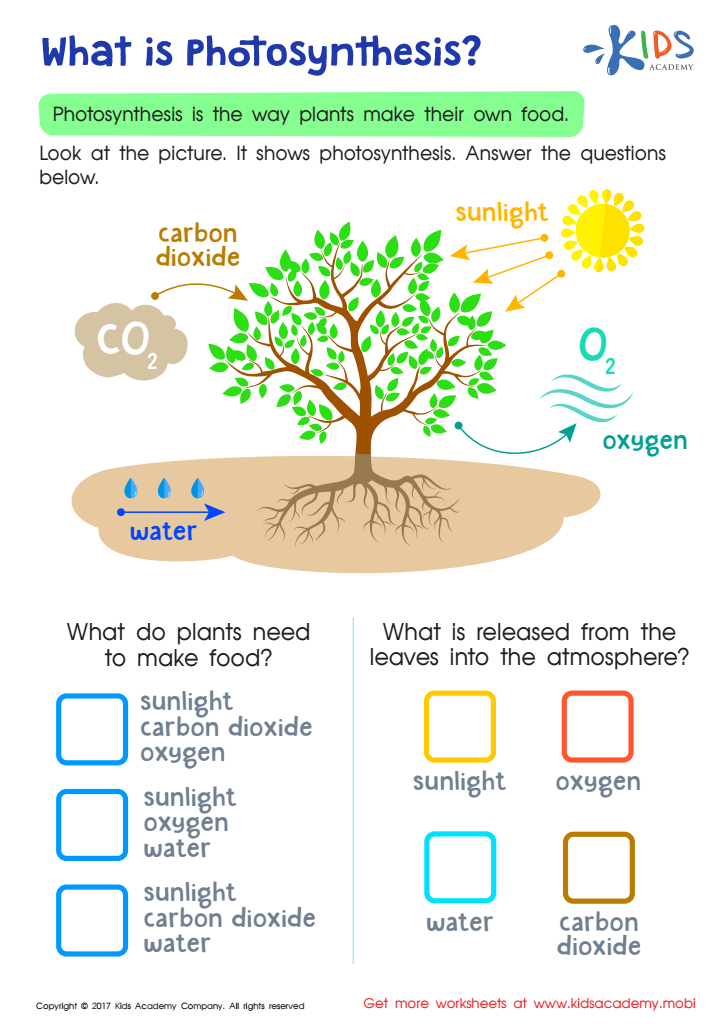
What is Photosynthesis Printable
Plants need to eat too; they make their own food from the air. Introduce them to photosynthesis with this fun worksheet!
 Assign to My Students
What is Photosynthesis Printable
Worksheet
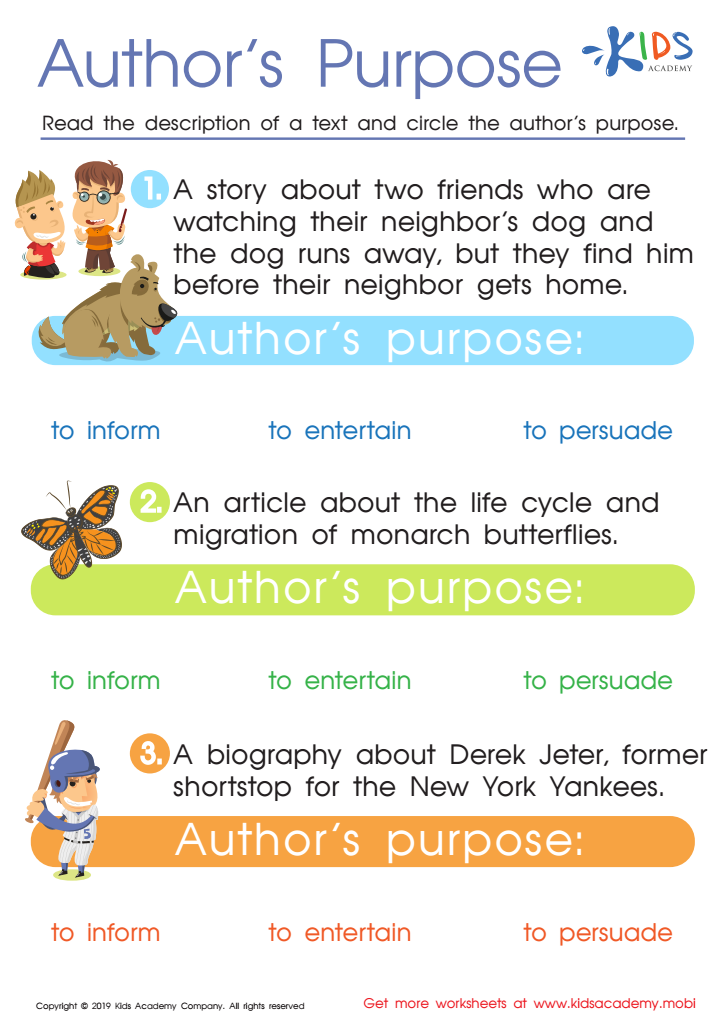
Author's Purpose Worksheet
Help your kids figure out the author's purpose when they read something. In this worksheet, there are three descriptions; they must identify the author's purpose and circle it from the options provided. Doing this will help them to get correct information from what they read.
Author's Purpose Worksheet
Worksheet
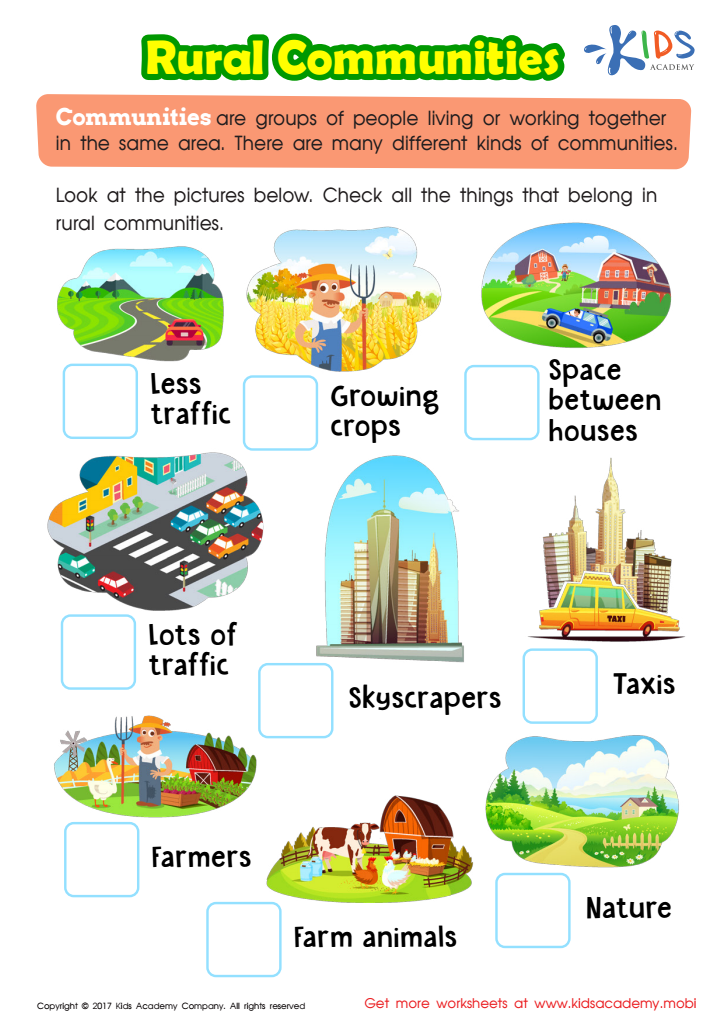
Rural Communities Printable
Help your child explore the contrast between city and rural living with this worksheet. They'll learn to recognize the buildings and transportation in urban settings, as well as how rural life can differ. Then, discuss the differences between city and rural living, and why life is different for people living in each.
Rural Communities Printable
Worksheet
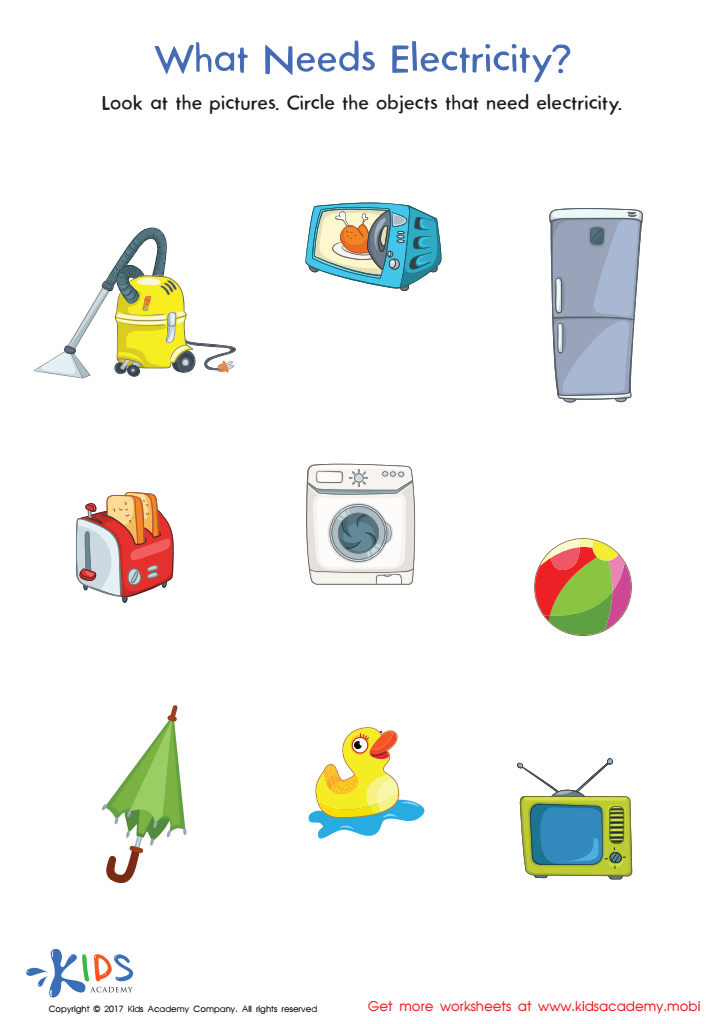
What Needs Electricity Printable
Up to 80 words: This worksheet will help your child use sorting skills to find the right objects that need electricity, strengthen problem solving skills, and learn more about electricity and electrical appliances. Let this fascinating science topic teach your little learner about the objects in their lives that need electricity!
What Needs Electricity Printable
Worksheet
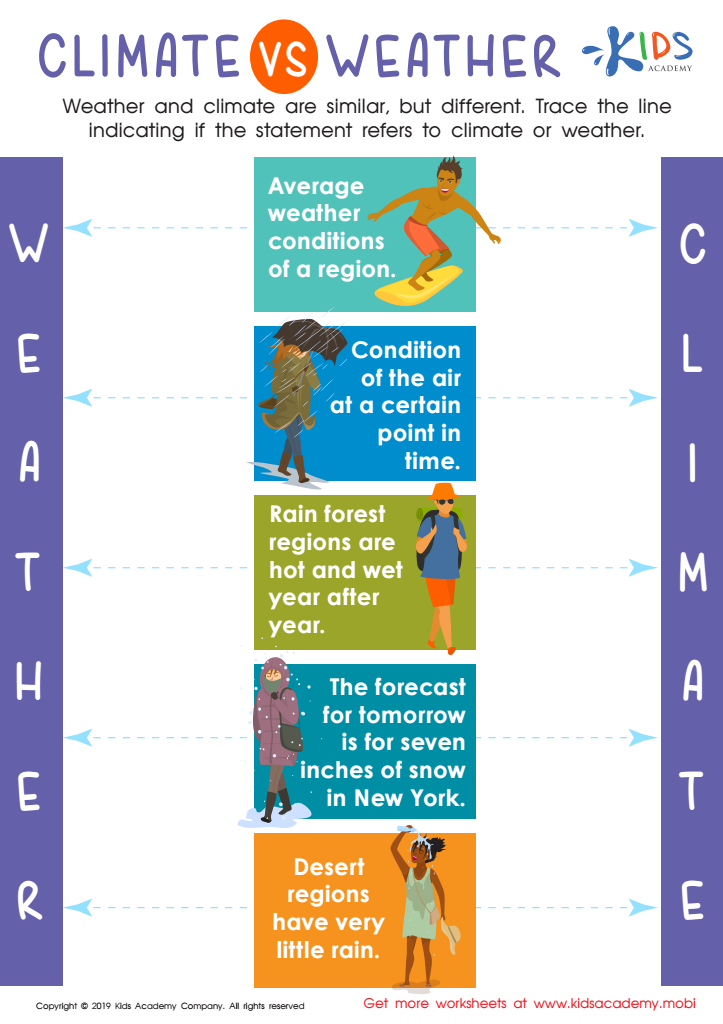
Climate vs Weather Worksheet
Weather and climate might sound similar, but they're different! Kids can discover the difference with this free, factual worksheet. Weather is the air's condition at one moment, while climate is an area's average weather. Kids can draw lines to connect factoids to either one. An interesting and educational activity!
Climate vs Weather Worksheet
Worksheet
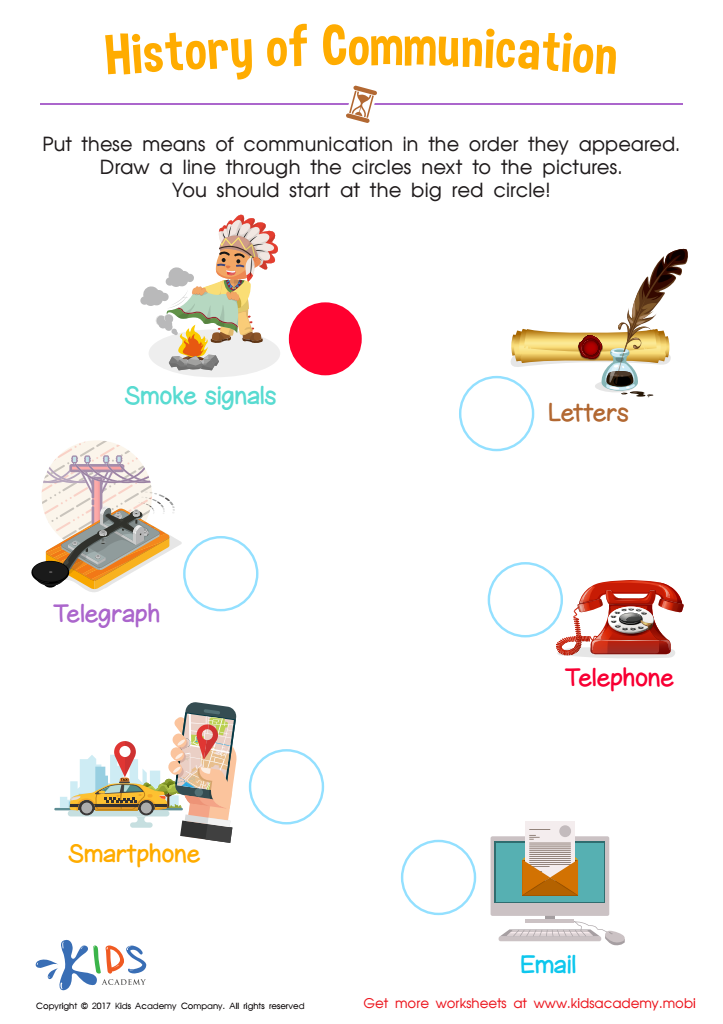
History of Communication Worksheet
Help your child understand history's communication evolution! With this worksheet, your child will learn about the various ways people communicated over time, and how that compares to today. It'll also foster an interest in history and bring the past to life!
History of Communication Worksheet
Worksheet
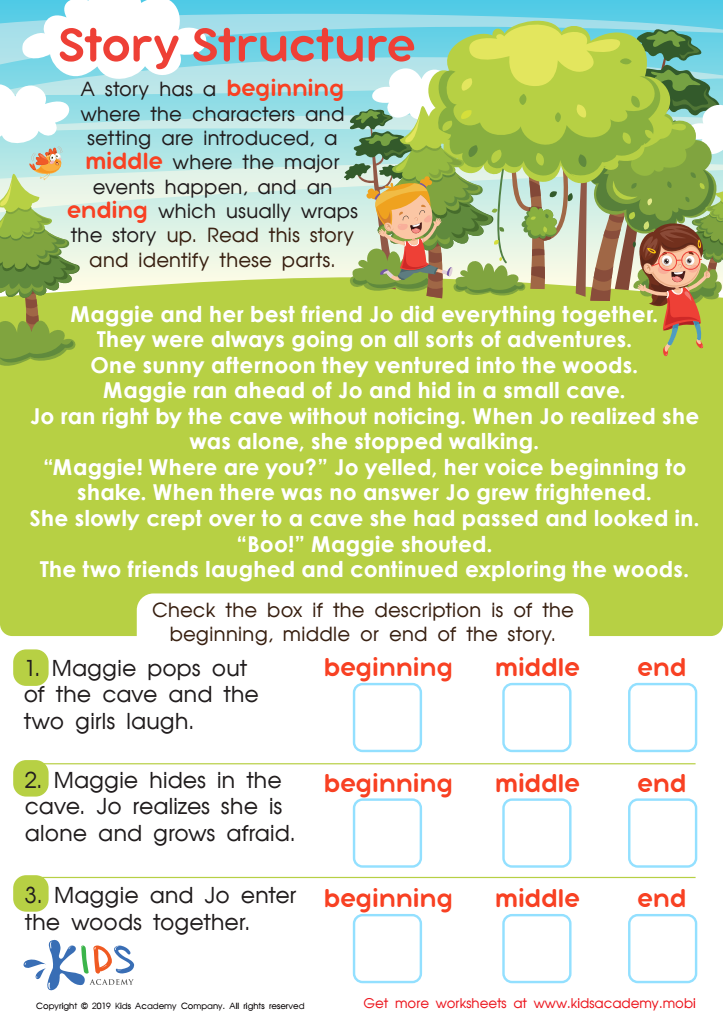
Story Structure Worksheet
Help your students read and identify the parts of the story in this worksheet: the beginning (characters and setting), middle (major events), and ending (events are resolved). Show them how to structure a story for clarity.
Story Structure Worksheet
Worksheet
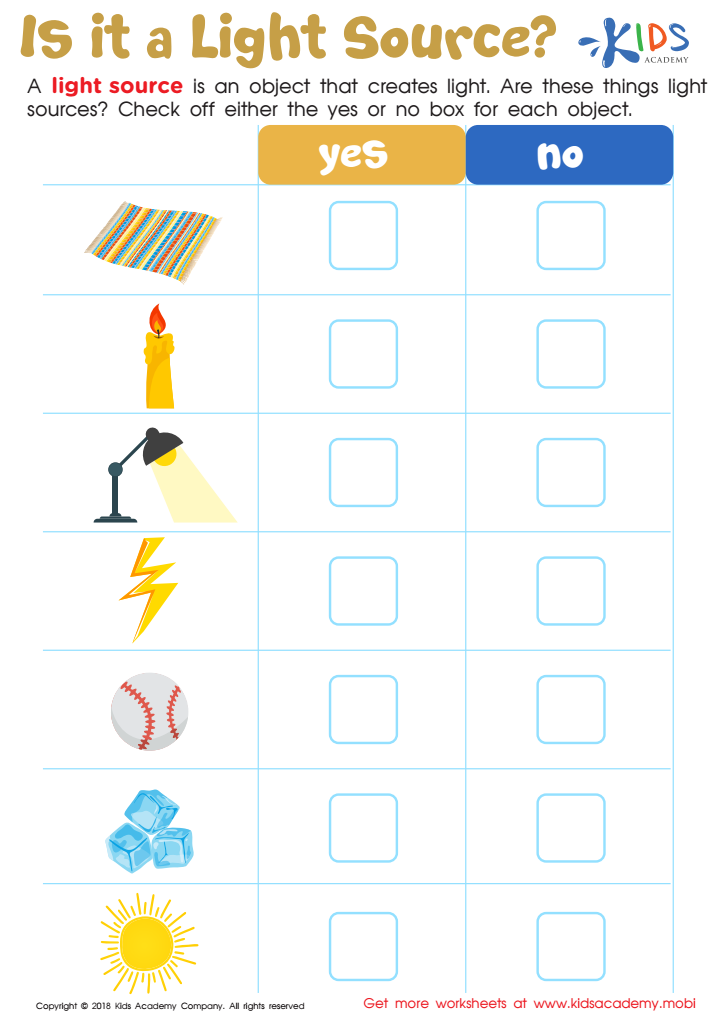
Is It a Light Source? Worksheet
This worksheet is a fun way to teach kids about light sources. Children must identify natural sources like the sun and lightning, and man-made sources such as candles and lamps. Ask them to look at each object and check the box to indicate if it's a light source or not.
Is It a Light Source? Worksheet
Worksheet
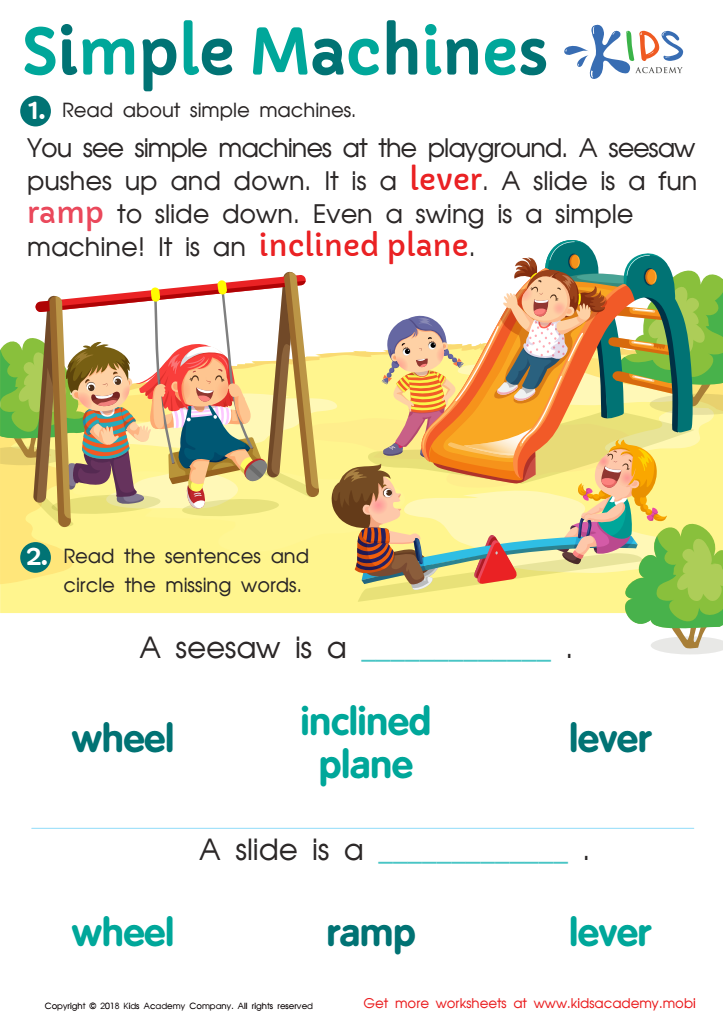
Simple Machines Worksheet
At the playground, your kids likely love to play and swing. Swings are simple machines – they work by using force to move something. Read the following sentences to them, with some words missing - help them fill in the blanks. Simple machines make work easier by __changing__ the size or __direction__ of a force. Swings use a _fulcrum_ and a _lever_ to move.
Simple Machines Worksheet
Worksheet
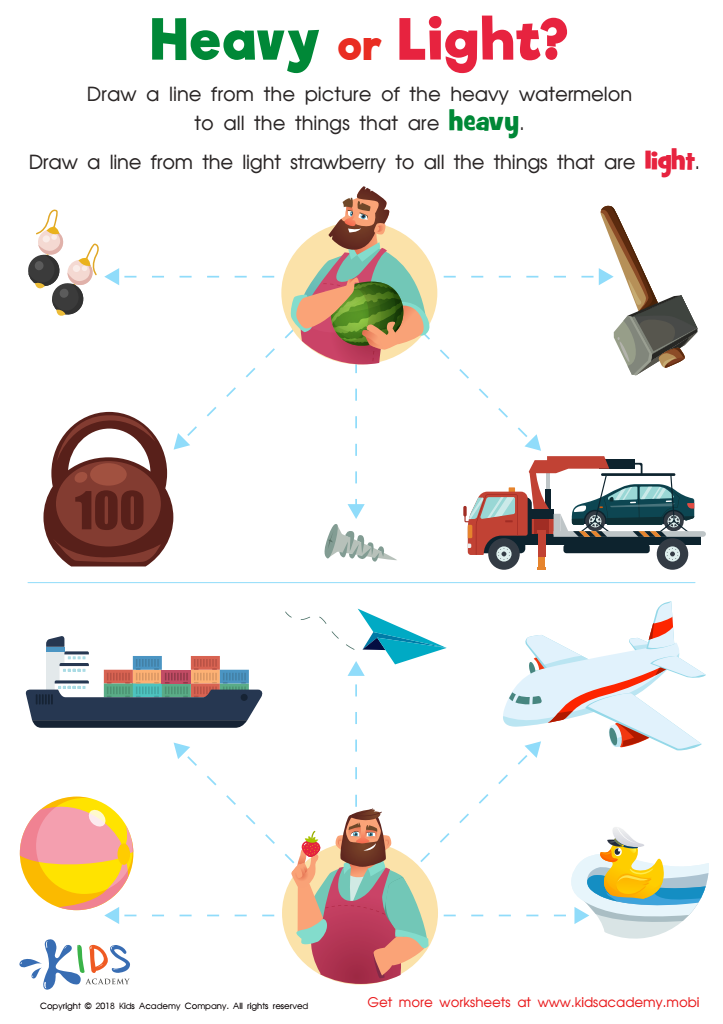
Heavy or Light? Worksheet
This fun, free worksheet helps kids build measurement skills and reinforce concepts of 'heavy' and 'light', while also improving their fine motor skills. Kids use traceable lines to connect the gentleman to objects they know, giving them a strong foundation for understanding weight.
Heavy or Light? Worksheet
Worksheet
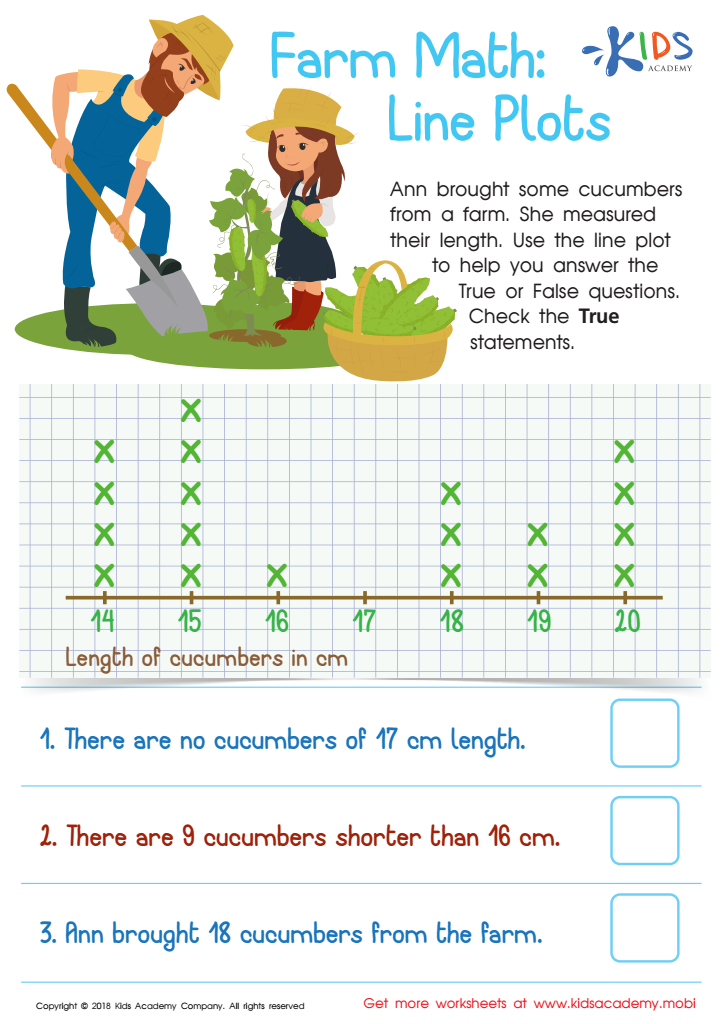
Farm Math: Line Plots Worksheet
Ann brought cucumbers from a farm and measured their length. She drew a line plot for your students to use to answer True/False questions about the number and length of the cucumbers. Ask your students to check only the True statements. (80 words)
Farm Math: Line Plots Worksheet
Worksheet
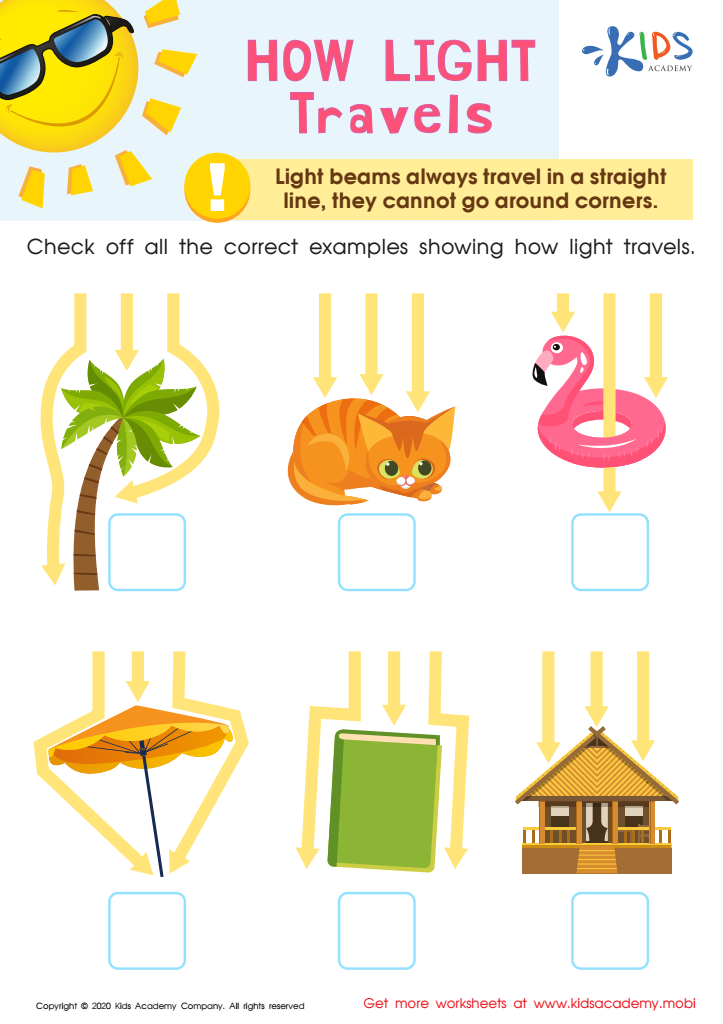
How Light Travels Worksheet
This colorful worksheet teaches students about light travel: beams move in a straight line and can't go around corners. Students view pictures and check off all the correct examples.
How Light Travels Worksheet
Worksheet
Learning Skills
Developing analytical skills
Enhancing Reading Comprehension
Learning scientific vocabulary
Understanding photosynthesis
Identifying authors' purpose
Understanding text content
Understanding rural communities
Learning community characteristics
Understanding electricity usage
Identifying electrical appliances
Join Kids Academy for Free
Who is primarily going to use this learning content?







Developing analytical skills in children aged 6-8 is crucial for their future success and overall cognitive development. During these formative years, children are naturally curious and eager to explore the world around them. By nurturing and enhancing their analytical abilities, parents and teachers can help them learn how to think critically and solve problems effectively.
Analytical skills enable children to break down complex information, recognize patterns, and make informed decisions, which are essential skills in today’s fast-paced and information-rich environment. For instance, promoting skills such as identifying cause-and-effect relationships, making comparisons, and asking relevant questions prepares them to tackle real-life challenges.
Additionally, fostering these skills encourages independent thinking and boosts self-confidence. When children are encouraged to analyze situations and formulate their conclusions, they learn to trust their judgment and perspectives. This empowerment fosters a love for learning, encouraging a mindset that seeks knowledge and growth.
Ultimately, investing in analytical skills at this young age lays a strong foundation for essential life skills, future academic achievements, and adaptability in an ever-evolving world. Parents and teachers play a pivotal role in guiding children through engaging activities and supportive conversations that develop these skills.








