Mental math improvement Worksheets for Ages 6-8
8 filtered results
-
From - To
Unlock the potential of your child’s mental math abilities with our engaging and interactive worksheets designed for ages 6-8. These worksheets from Kids Academy focus on enhancing crucial math skills like addition, subtraction, multiplication, and division through fun activities and exercises. Tailored to suit young learners, our printable resources aim to boost their confidence and speed in solving math problems mentally. The vibrant and kid-friendly design ensures an enjoyable learning experience, making it easier for children to grasp complex concepts. Empower your child to excel in math with our expertly crafted mental math improvement worksheets. Download and start learning today!
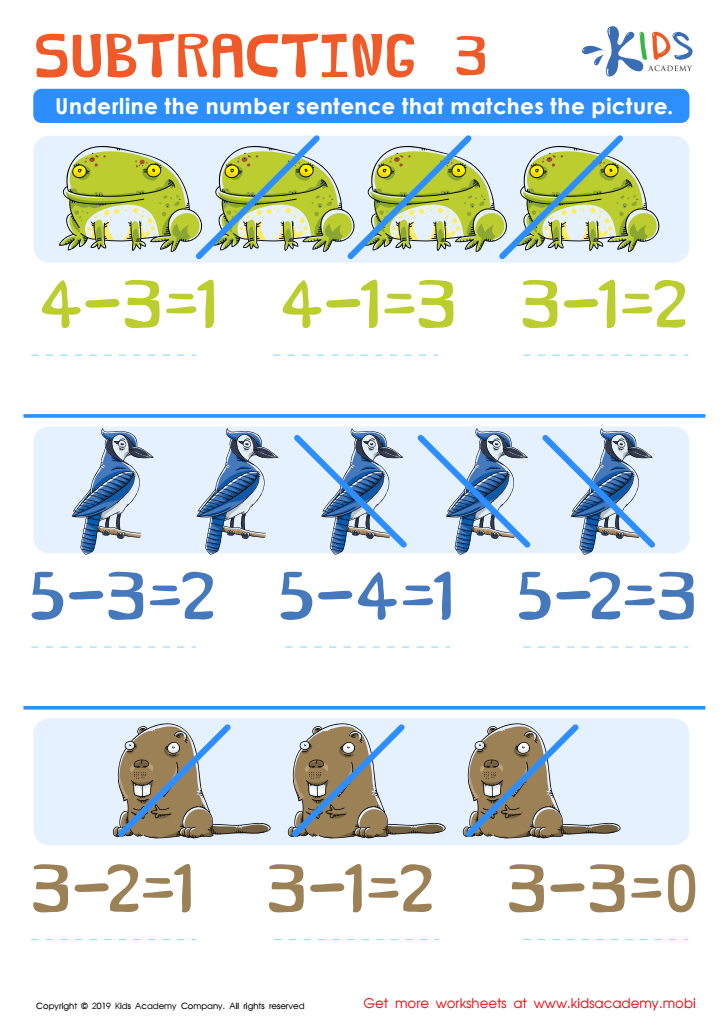
Subtracting 3 Worksheet
 Assign to My Students
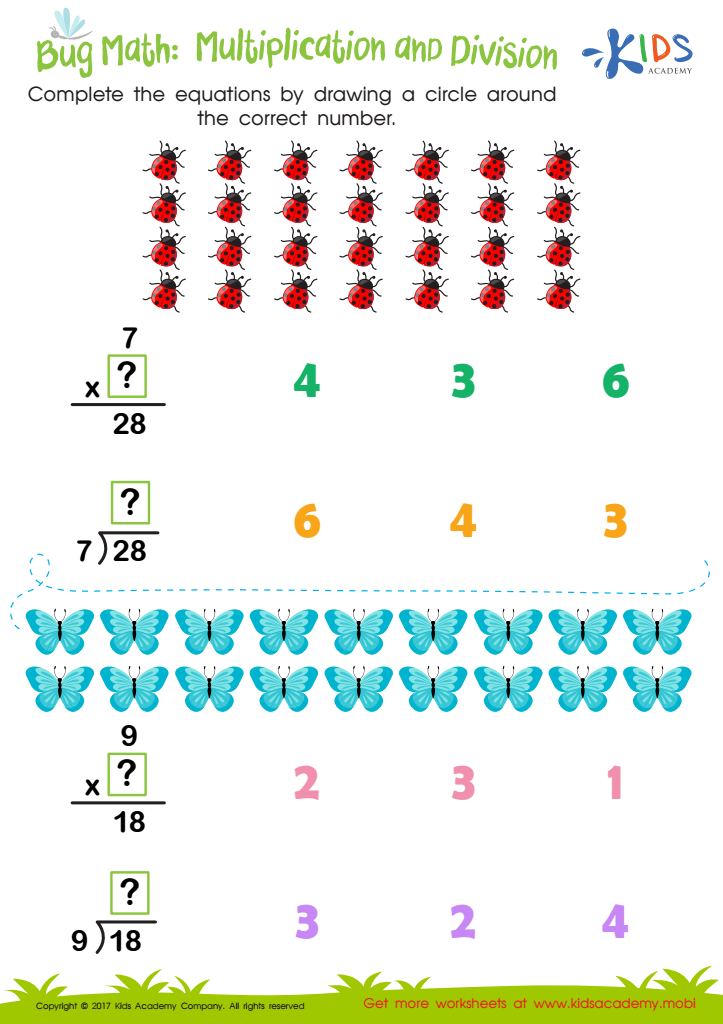
Multiplication and Division Worksheet
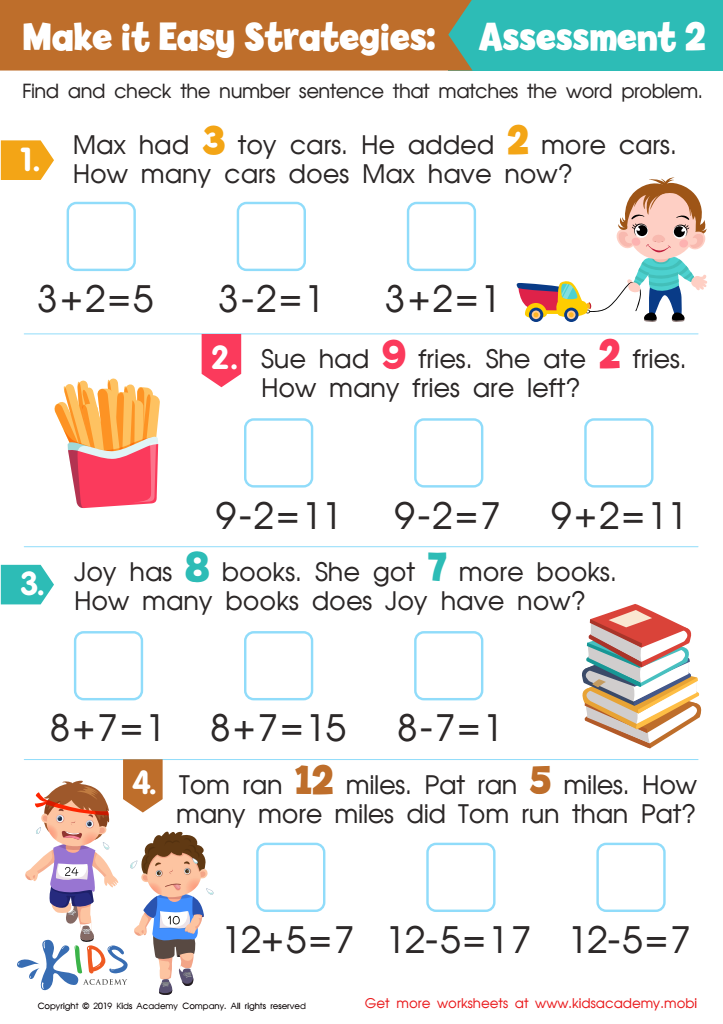
Make it Easy Strategies: Assessment 2 Worksheet
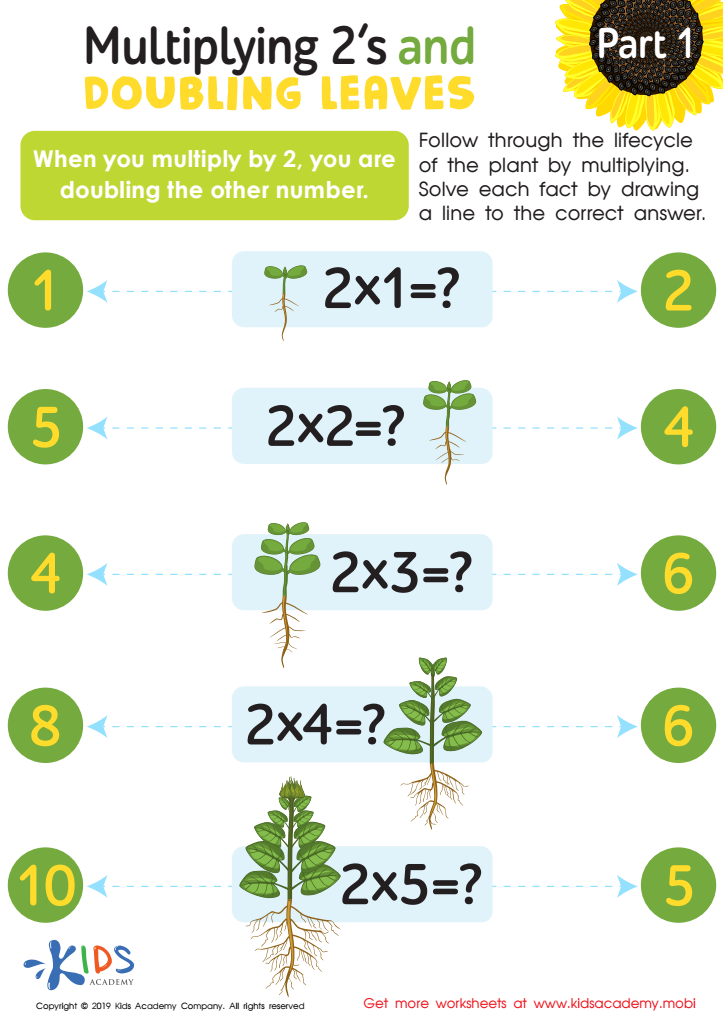
Multiplying 2’s and Doubling Leaves Part 1 Worksheet
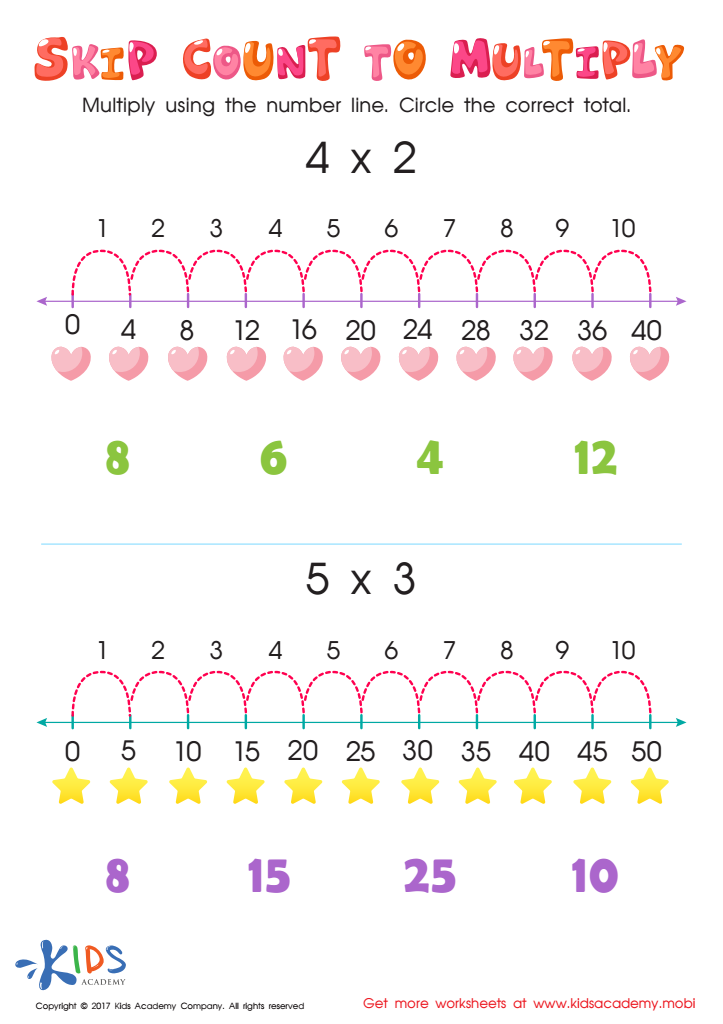
Skip Count Multiplication Worksheet
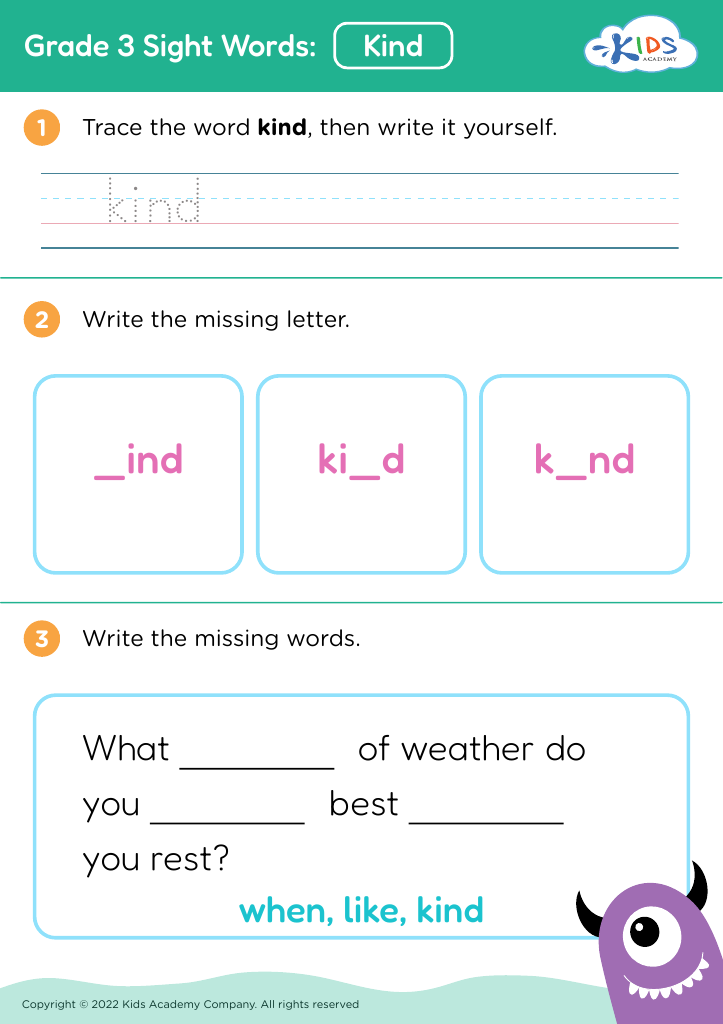
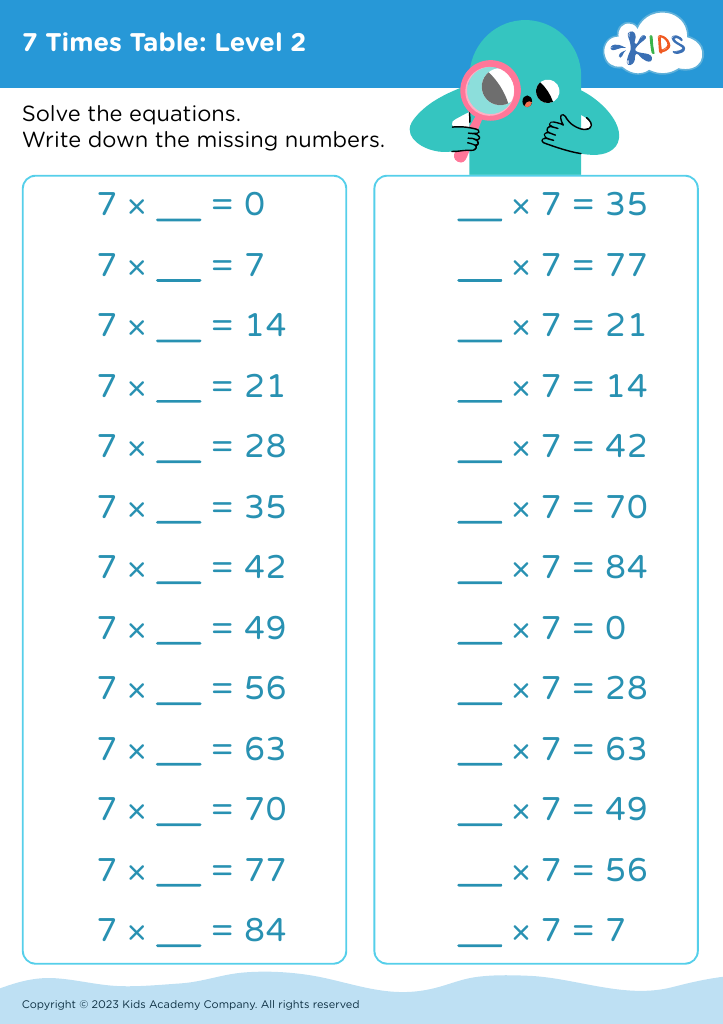
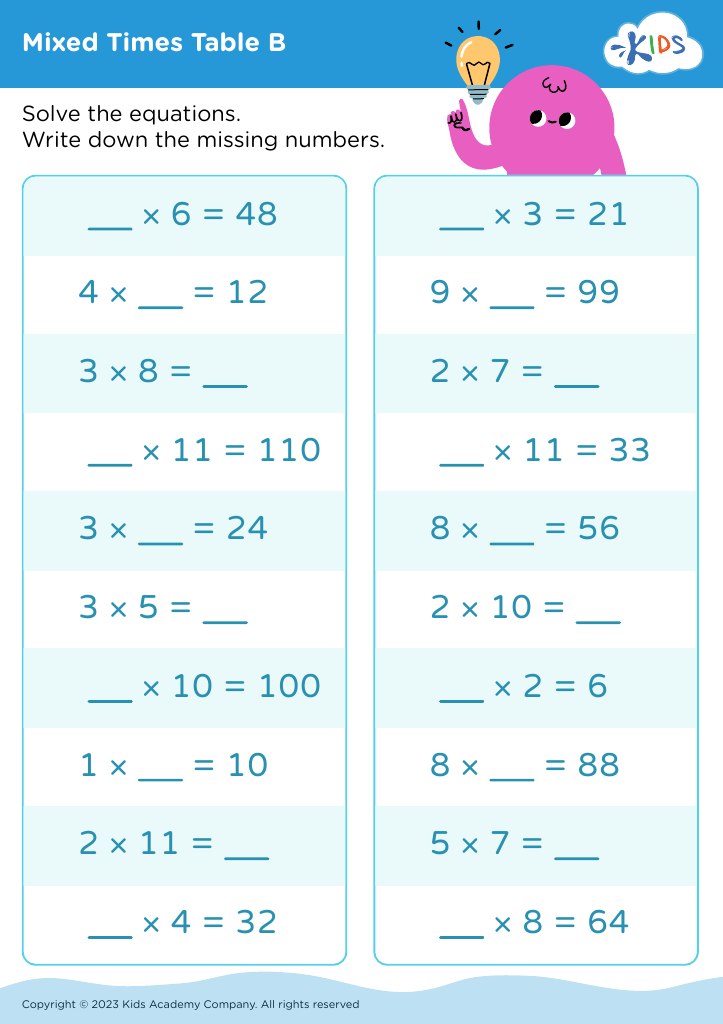




.jpg)


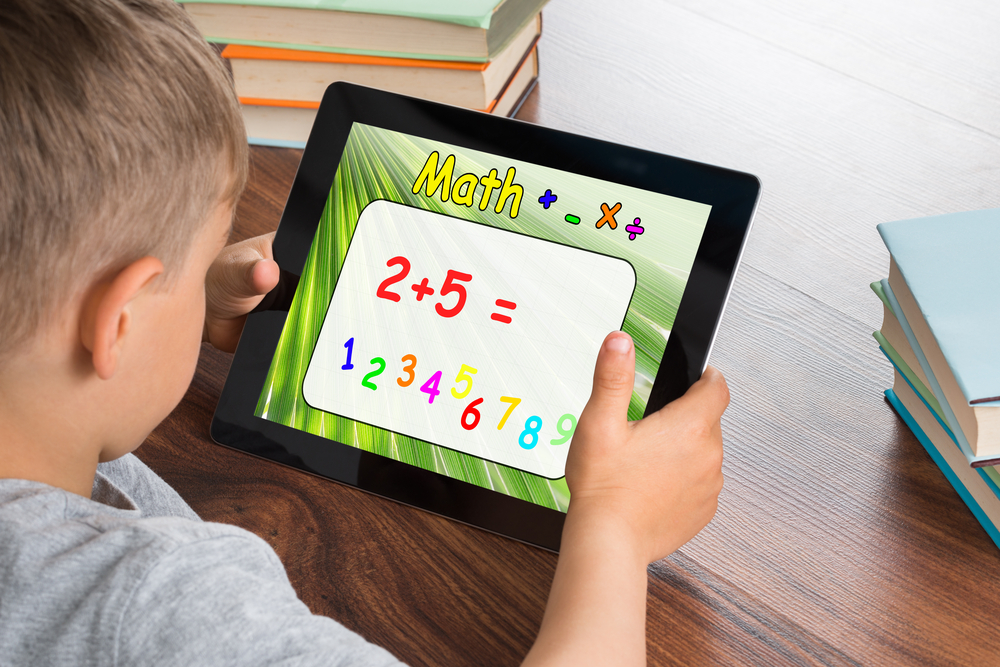
Parents and teachers should prioritize mental math improvement for children aged 6-8 because it forms a crucial foundation for future success in mathematics and other academic areas. During these formative years, children's brains are highly receptive to learning new concepts. Mental math enhances cognitive abilities like memory, logical reasoning, and problem-solving skills. By developing strong mental math skills early on, children gain confidence in their mathematical abilities, which can significantly reduce math anxiety and foster a positive attitude towards the subject.
Moreover, mental math is not just about numbers; it improves overall cognitive function. It encourages children to think critically and make quick, accurate decisions—skills that are transferable to all areas of learning and everyday life. For instance, simple daily activities like calculating the total cost of items or dividing treats among friends become manageable and error-free, boosting their practical, real-world skills.
Furthermore, engaging in mental math exercises helps build concentration and attention to detail. These key skills can benefit children across all subjects in school, leading to better academic performance overall. Ultimately, investing in mental math development for young children lays the groundwork for a lifelong ability to approach problems methodically and efficiently, setting them up for long-term success.








