Recognizing shapes Worksheets for Ages 6-8 - Page 2
45 filtered results
-
From - To
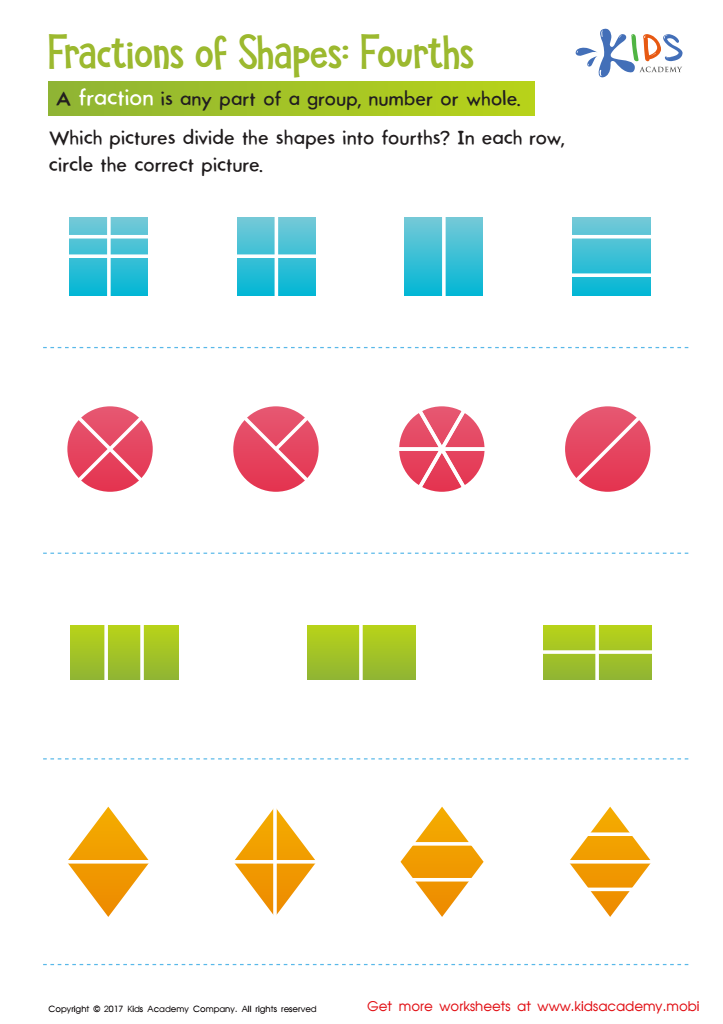
Fractions of Shapes Worksheet
 Assign to My Students
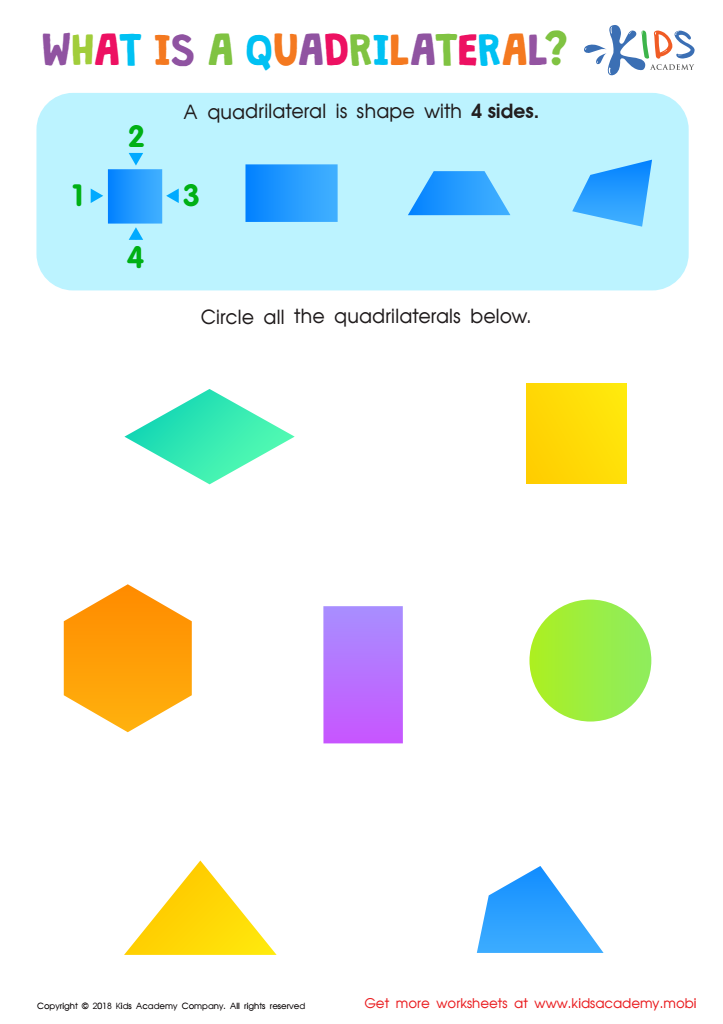
What Is a Quadrilateral? Worksheet







.jpg)
Recognizing shapes is a fundamental skill that plays a crucial role in the cognitive development of children aged 6 to 8. At this stage, children are expanding their understanding of the world, and shapes serve as a key element in that exploration. By learning to identify and categorize shapes, children develop critical thinking skills that help them make sense of more complex concepts later in life, such as geometry, architecture, and art.
Furthermore, recognizing shapes enhances spatial awareness, supporting skills in both mathematics and physical activities. Parents and teachers can provide enriching experiences by incorporating shape-related activities, such as art projects, games, and puzzles. This makes learning engaging and fun, ultimately fostering a positive attitude toward education.
Moreover, shape recognition has practical applications in everyday life. It aids in problem-solving and decision-making—skills necessary for navigating diverse environments. For instance, recognizing shapes is helpful in activities ranging from organizing play spaces to following instructions in crafting projects. By nurturing shape recognition, parents and teachers equip children with essential tools for academic success and everyday living, reinforcing the importance of shapes in reinforcing curiosity, creativity, and analytical skills that will benefit them throughout their lives.








