
Sound-letter association Worksheets for Ages 6-8
6 filtered results
Difficulty Level
Grade
Age
-
From - To
Subject
Activity
Standards
Unlock the magic of reading with our Sound-Letter Association Worksheets for ages 6-8! These expertly designed activities help young learners connect letters with their corresponding sounds, boosting phonemic awareness and early reading skills. Kids will enjoy engaging tasks like matching letters to images, blending sounds to form words, and interactive exercises that make learning fun. Ideal for early readers, our worksheets provide an excellent foundation for reading fluency and confidence. Start your child's reading journey today with our comprehensive collection that turns learning into an adventure!
Favorites
With answer key
Interactive
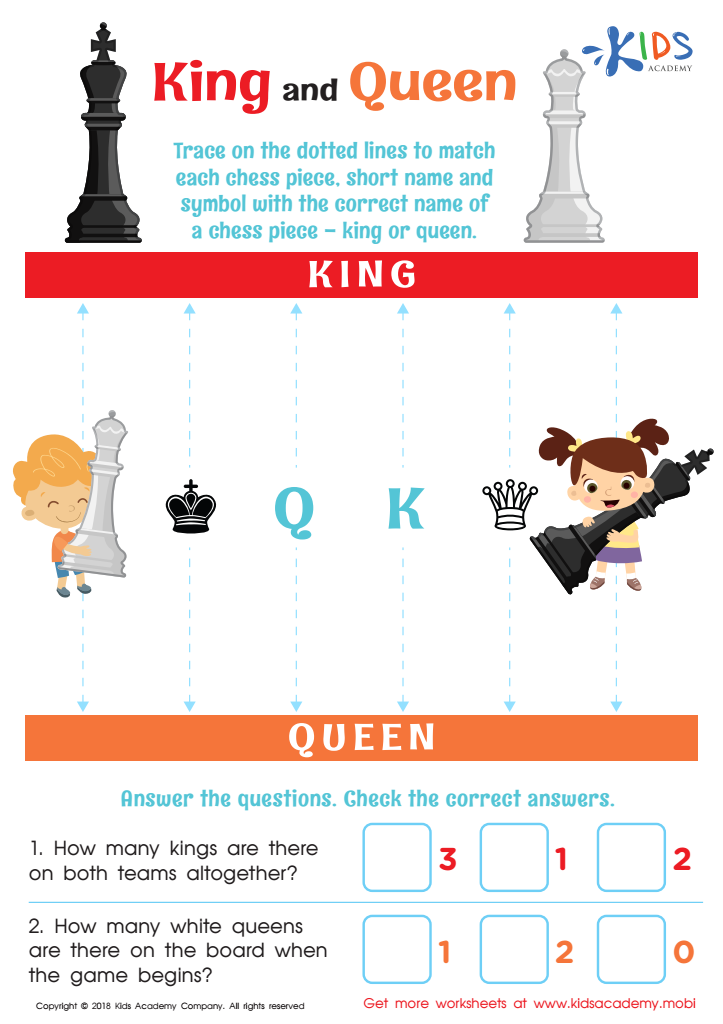
King and Queen Worksheet
Instruct your kids to trace the dotted lines to match each chess piece, short name, and symbol with either king or queen.Answer the questions at the bottom and check the answers. This exercise will help your children to differentiate between a king and queen chess piece and know their symbols.
King and Queen Worksheet
Worksheet
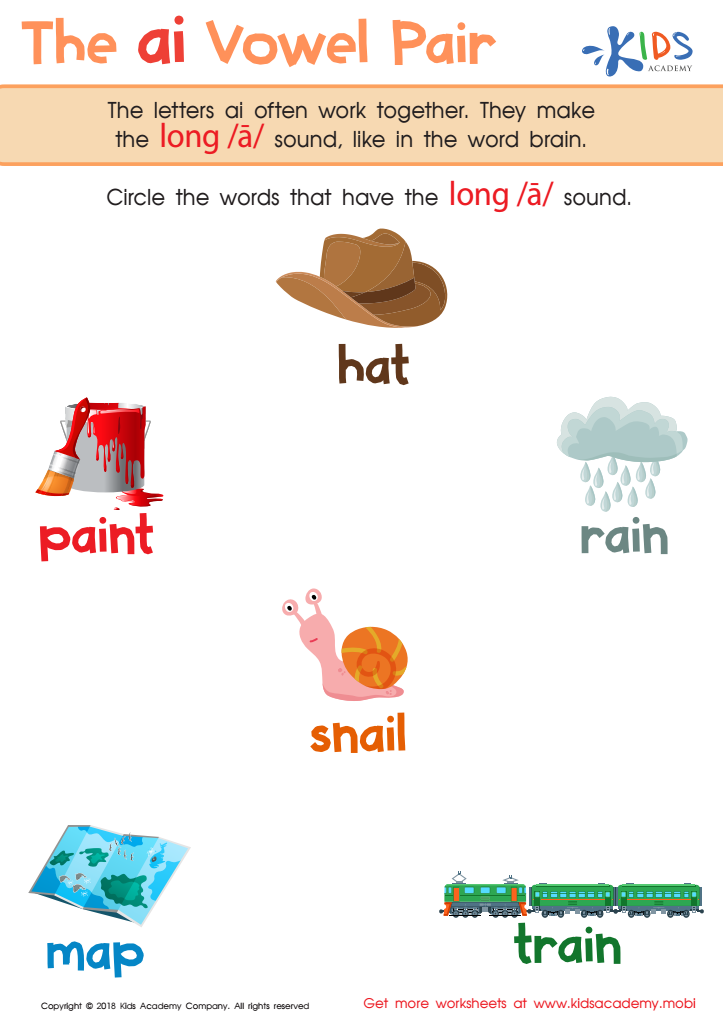
The AI Vowel Pair Worksheet
Vowel pairs make different sounds than individual letters. The 'ai' combination often forms the long /a/ sound, like in 'brain' and 'strain'. Get your kids to look at the pictures in the worksheet, identify each and say the name aloud. Help them circle the words with the long /a/ sound.
The AI Vowel Pair Worksheet
Worksheet
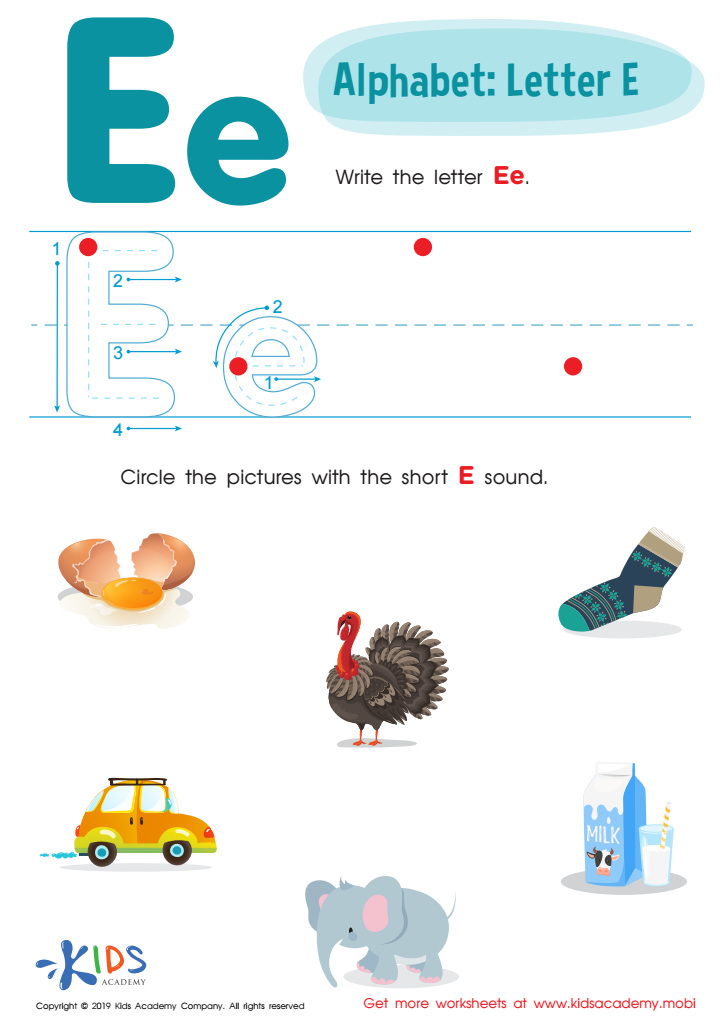
Letter E Tracing Worksheet
Students trace and write uppercase and lowercase letter E. They sound out "E" words, choosing those with short "E" sounds. Preschoolers identify the difference between the 'E' sounds in words like "egg" and "turkey." A tracing sheet helps them to understand.
Letter E Tracing Worksheet
Worksheet
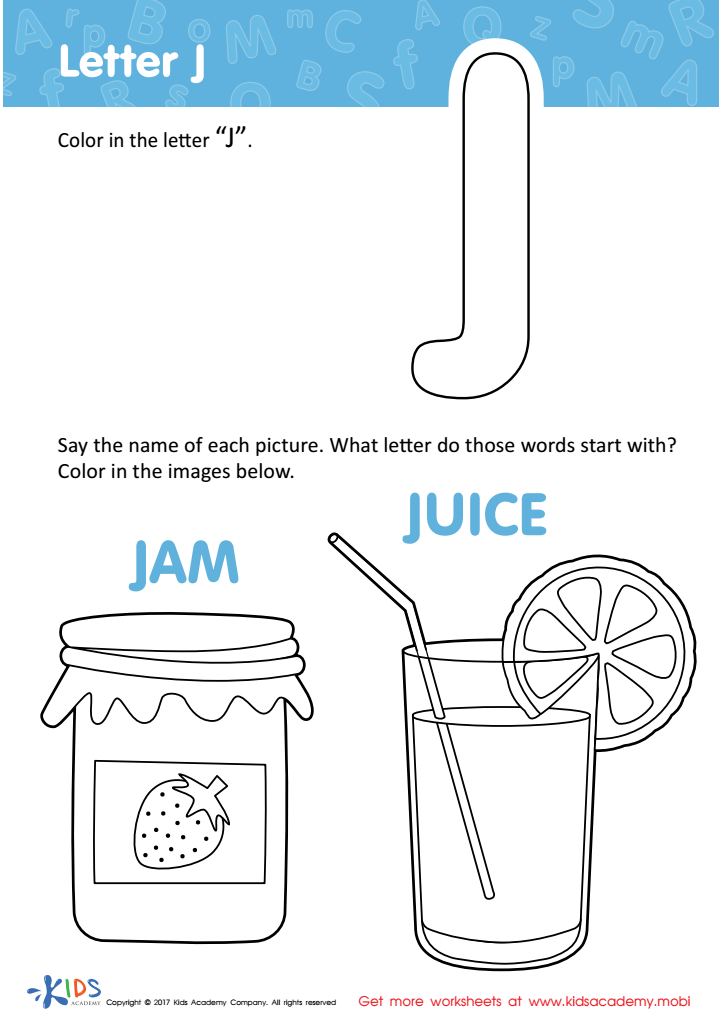
Letter J Coloring Sheet
Practice the letter 'J' with your little one with this fun coloring page! Pictures of jar, juice, jam and jelly make it an enjoyable experience for kids. Learning the letter and coloring is fun for even the youngest learners.
Download (PDF)
 Assign to My Students
Assign to My Students
Letter J Coloring Sheet
Worksheet
Join Kids Academy for Free
Who is primarily going to use this learning content?







Parents and teachers should care about sound-letter associations for children aged 6-8 because this foundational skill directly influences their reading and writing abilities. At this developmental stage, children transition from recognizing simple letters to understanding how letters combine to represent sounds and form words, thereby facilitating literacy. Sound-letter association, or phonics, is crucial as it enables children to decode new words independently, boosting their reading fluency and comprehension.
When children grasp these associations, they develop confidence in their reading abilities, setting a positive trajectory for their educational journey. Conversely, struggling with phonics can lead to frustration, slower progress, and potential long-term challenges in literacy and academic achievement.
Additionally, effective sound-letter association instruction can also support diverse learning needs. For example, children with dyslexia benefit greatly from explicit phonics instruction. Implementing engaging, multisensory activities— such as games or tactile experiences—in teaching these connections helps in short-term retention and makes learning enjoyable.
Ultimately, prioritizing the mastery of sound-letter associations helps build a solid literacy foundation, vital for all subsequent learning and critical in laying the groundwork for future success in both academic and everyday contexts. Therefore, this investment in early education significantly benefits the child’s cognitive development and love for learning.








