Time recognition Worksheets for Ages 6-8
6 filtered results
-
From - To
Discover our engaging "Time Recognition Worksheets for Ages 6-8" specially designed to support young learners in mastering the essential skill of telling time. Our worksheets provide fun, hands-on activities that simplify complex concepts like reading analog and digital clocks. Developed by educational experts, these resources will help your child understand hours, minutes, and concepts such as "quarter past" and "half past" with ease. Perfect for reinforcing classroom learning or homeschooling, these printable worksheets encourage independent practice and boost confidence in time-reading skills. Lay a strong foundation for your child's future success with our interactive time recognition exercises today!
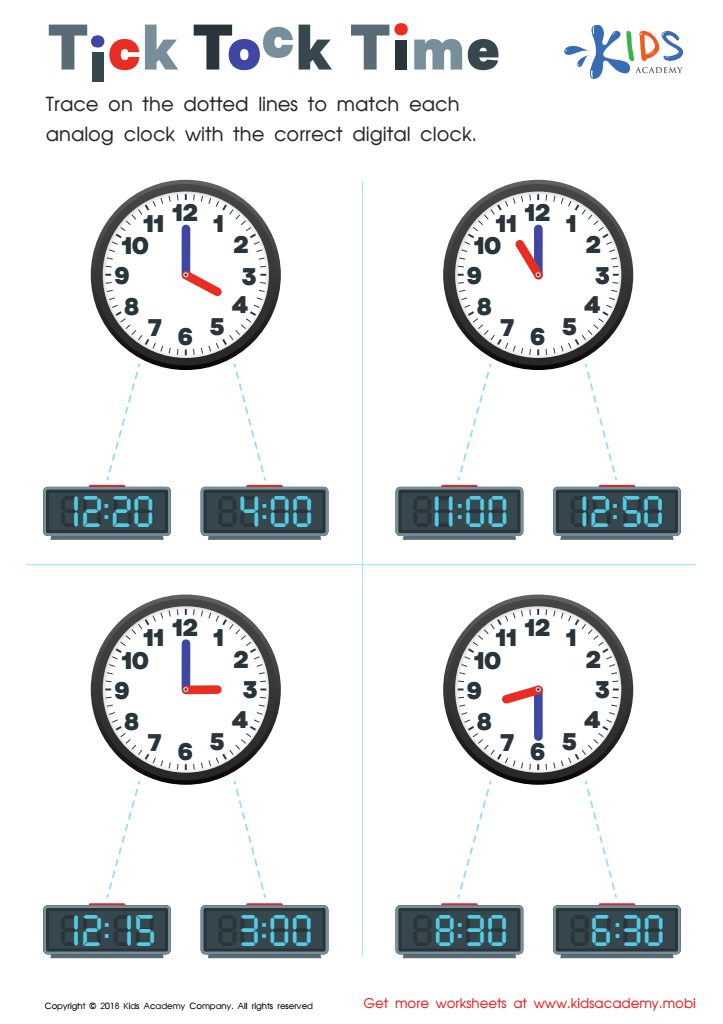
Tick Tock Time Worksheet
 Assign to My Students
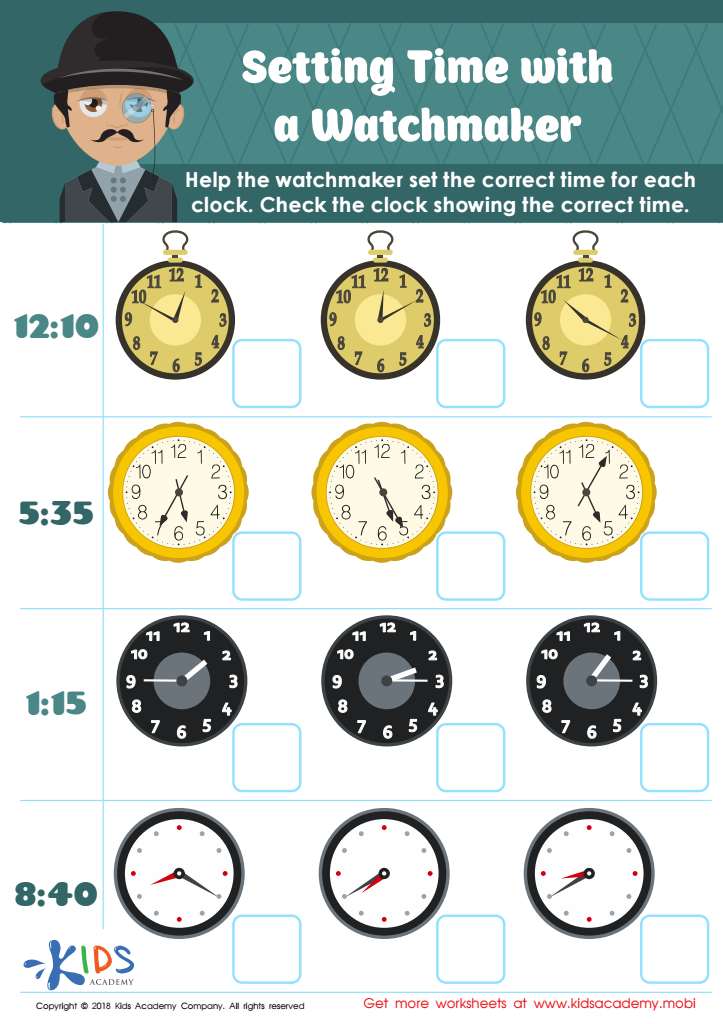
Setting Time with Watchmaker Worksheet
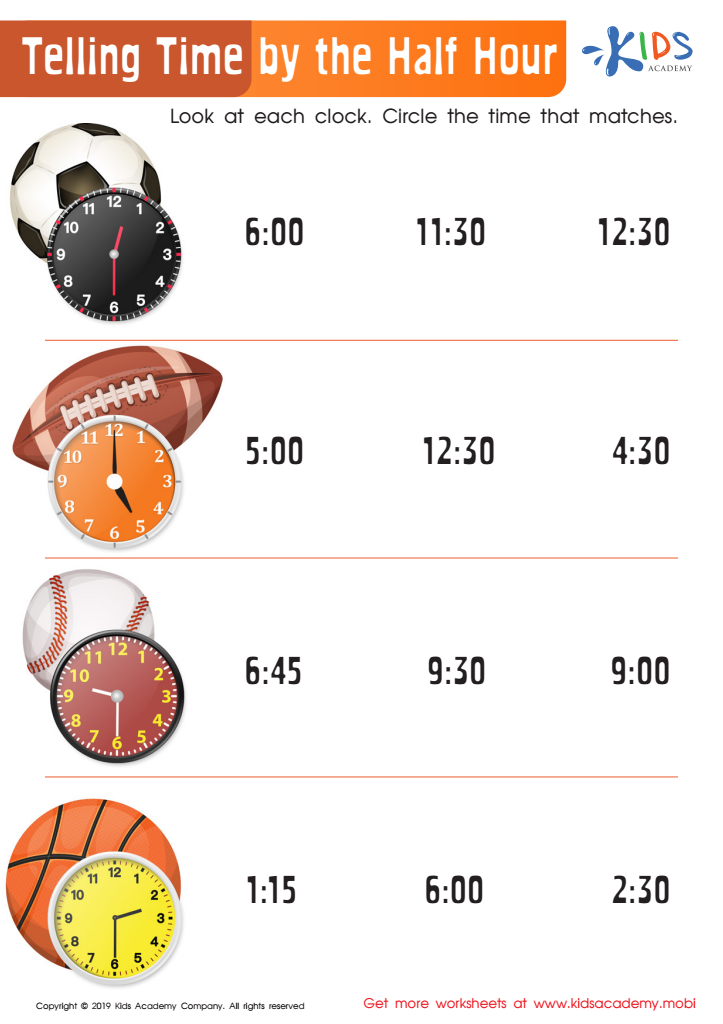
Telling Time by the Half Hour Worksheet
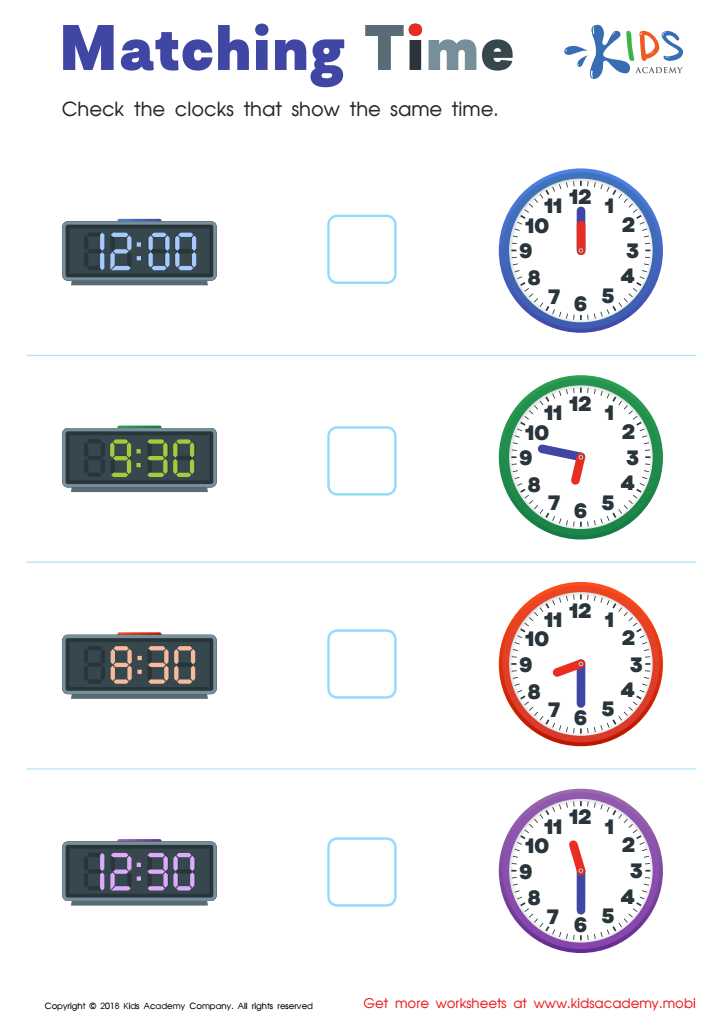
Matching Time Worksheet
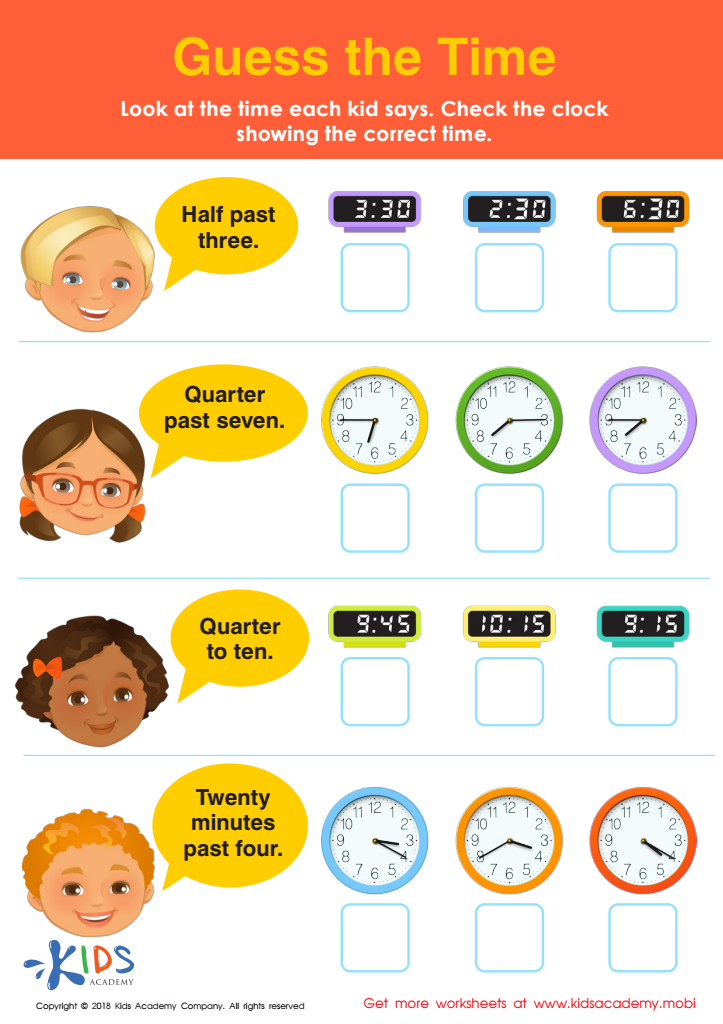
Guess the Time Worksheet
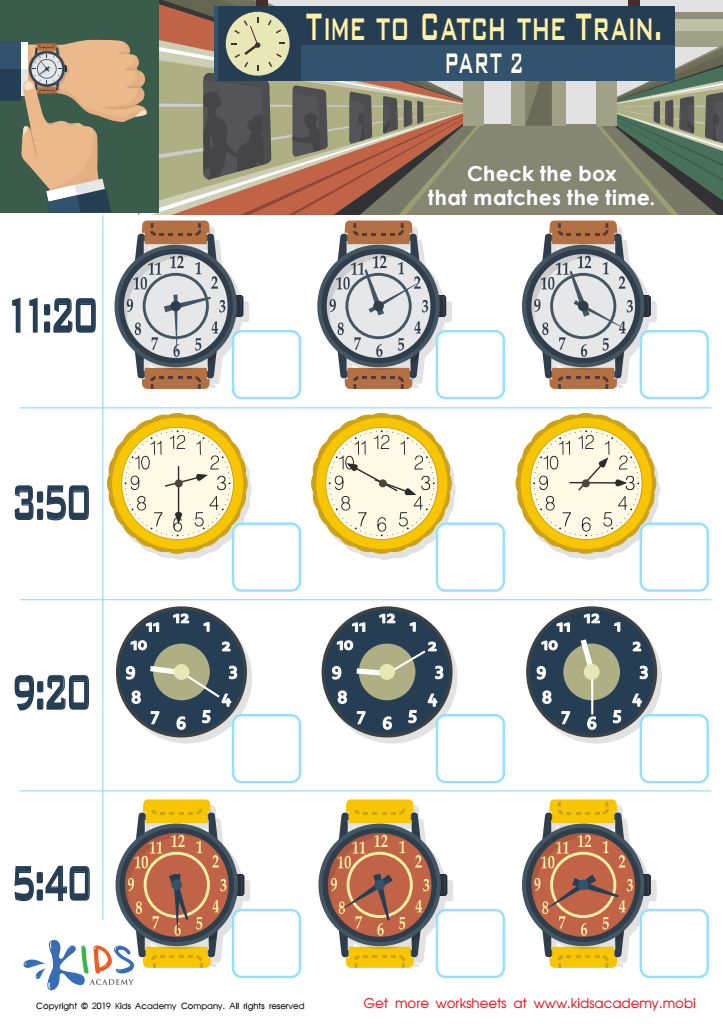
Time to Catch the Train Part 2 Worksheet








Time recognition is a fundamental skill for children aged 6-8 and significantly influences their daily lives, learning processes, and long-term development. For parents and teachers, understanding the importance of this skill can help create structured and effective learning experiences.
First, learning to tell time fosters a sense of responsibility and independence in children. They begin to understand daily routines and responsibilities, such as getting ready in the morning, adhering to school schedules, and understanding the concept of deadlines for homework or activities. This knowledge builds a foundation for time management skills that are essential in later life.
Second, time recognition enhances mathematical understanding. Telling time involves counting, sequencing, and understanding fractions (e.g., half-past or quarter-to). These concepts complement other areas of math learning, reinforcing a child’s overall numeracy skills.
Third, effective time management enables children to cope better with transitions between activities, reducing anxiety and increasing adaptability. They learn the value of punctuality and gain an awareness of the passing of time, which is crucial for developing patience and the ability to plan ahead.
By supporting time recognition in young children, parents and teachers not only aid in immediate practical skills but also nurture essential life skills, contributing to the child’s holistic growth and success.








