Understanding measurements Worksheets for Ages 6-8
28 filtered results
-
From - To
Welcome to our "Understanding Measurements Worksheets for Ages 6-8" page! These engaging worksheets are designed to help young learners grasp essential measurement concepts essential for their academic success. Tailored for children aged 6 to 8, our activities introduce topics such as length, weight, and volume through fun and interactive exercises. Kids will explore measurements using real-life objects, enhancing their critical thinking and problem-solving skills. With colorful illustrations and easy-to-follow instructions, these worksheets make learning enjoyable and effective. Download them today to provide your child with a solid foundation in measurements, setting them up for future mathematical achievements!
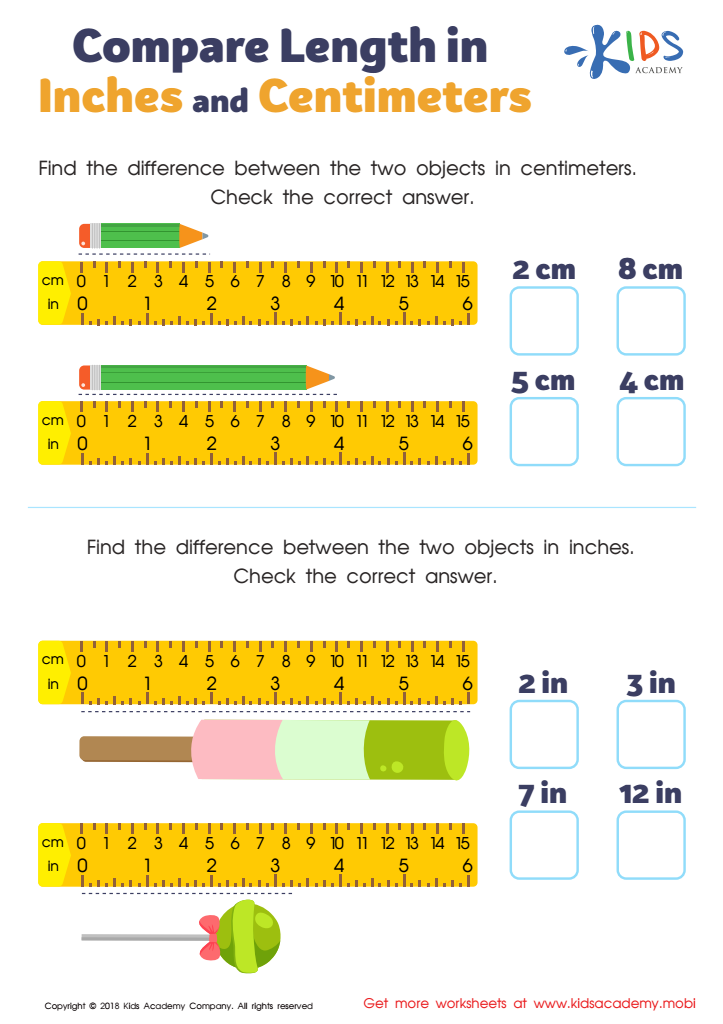
Compare Length in Inches and Centimeters Worksheet
 Assign to My Students
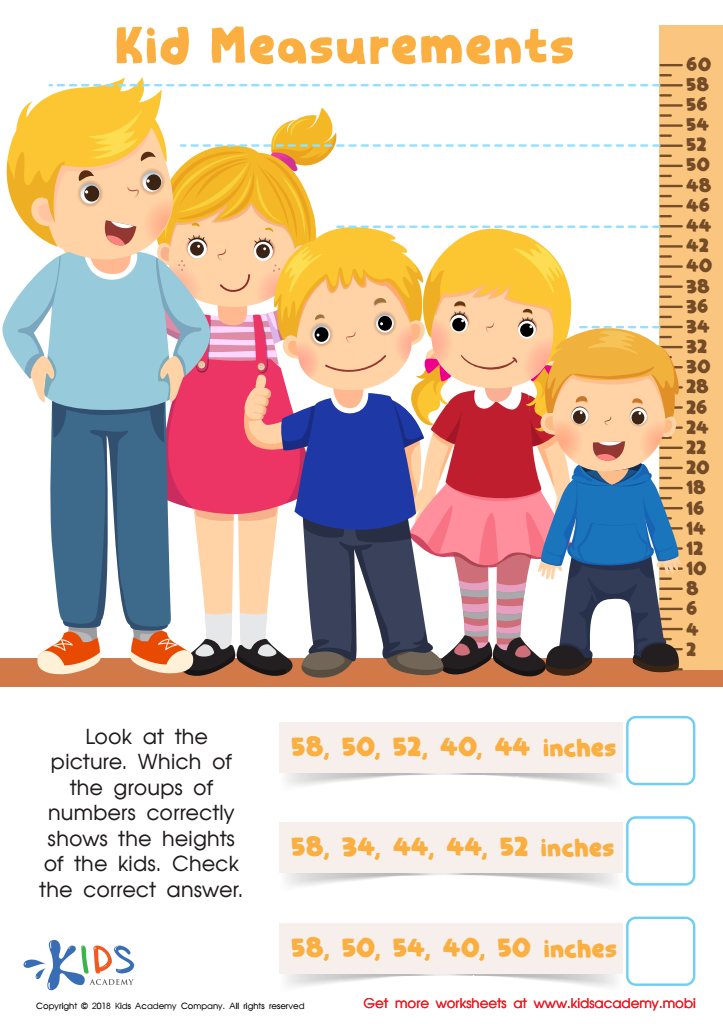
Kids Measurements Worksheet
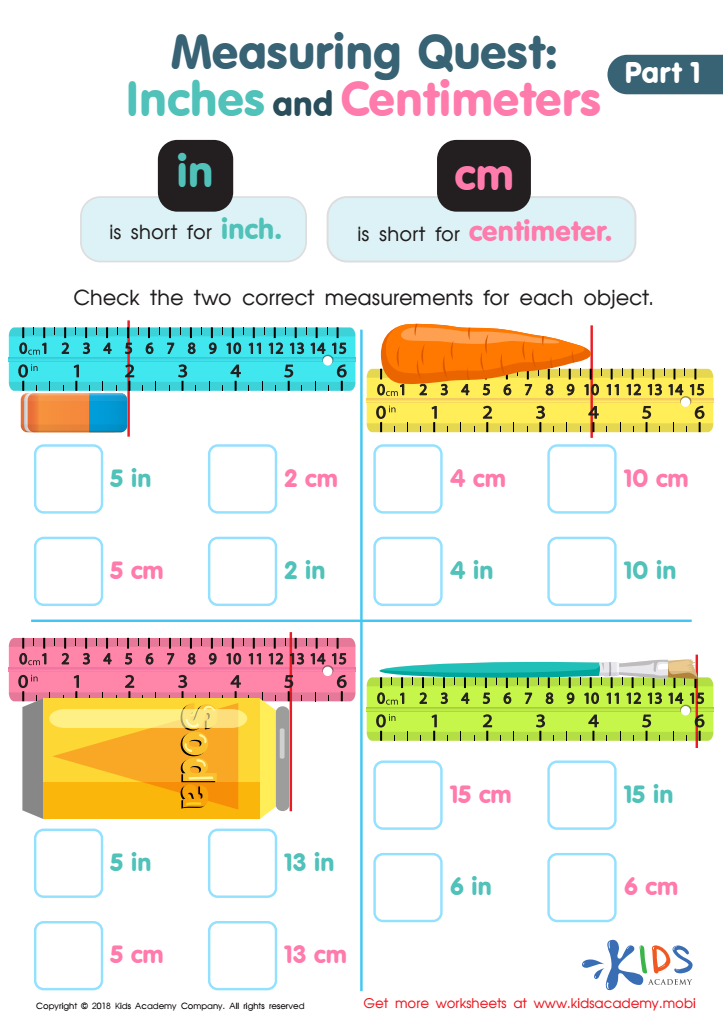
Measuring Quest: Inches and Centimeters Worksheet
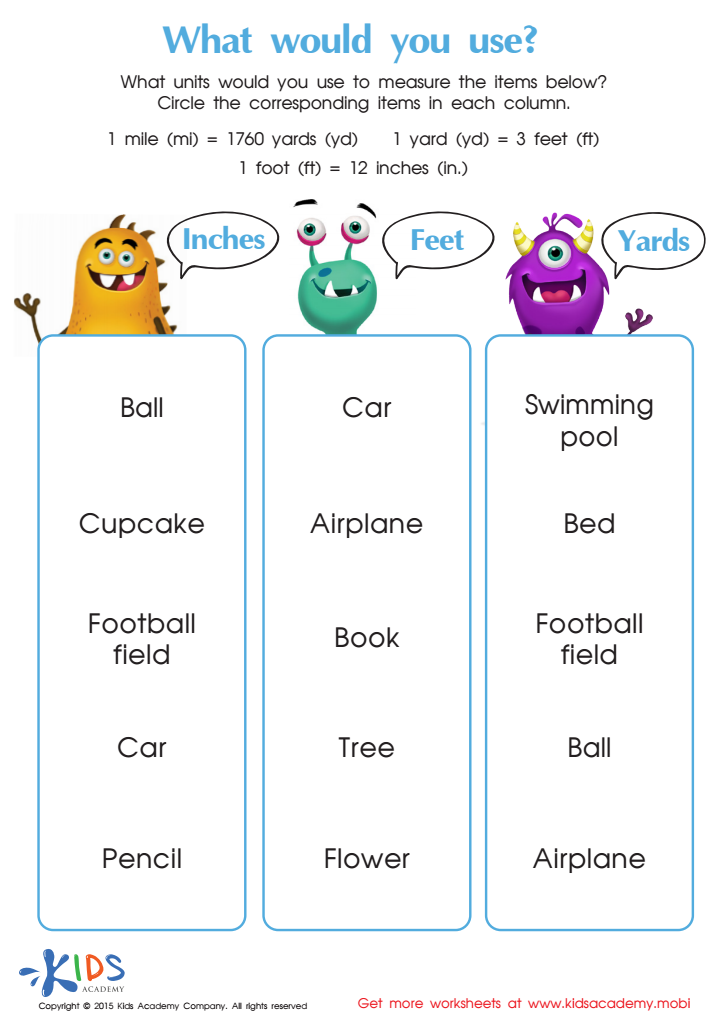
Learning about measuring objects in inches, feet and yards Worksheet
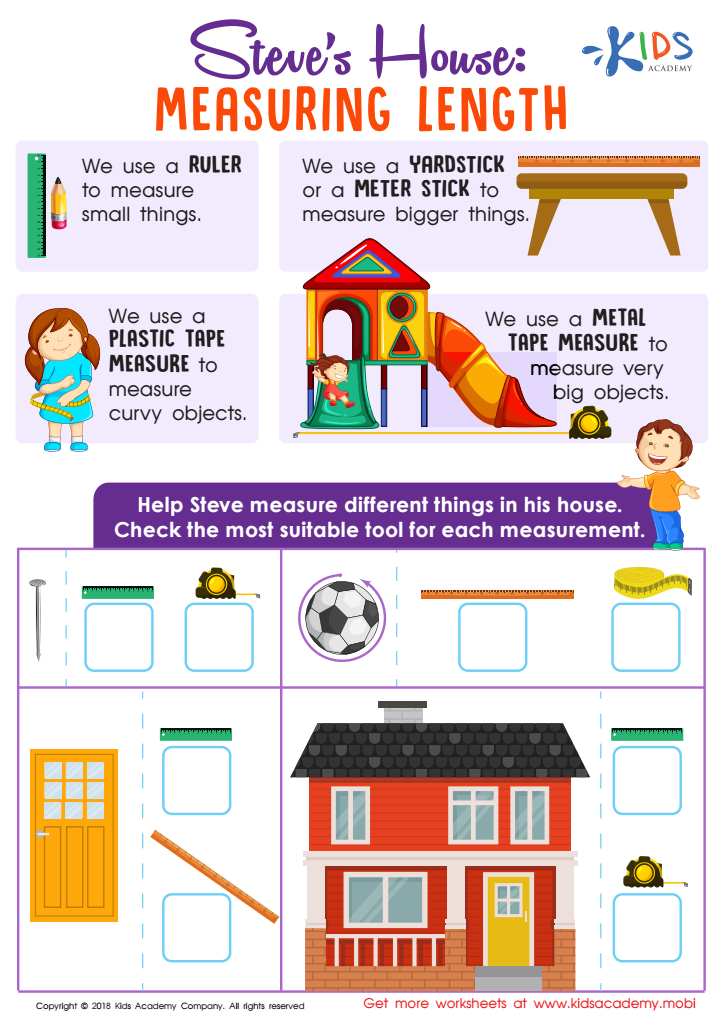
Steve's House: Measuring Length Worksheet
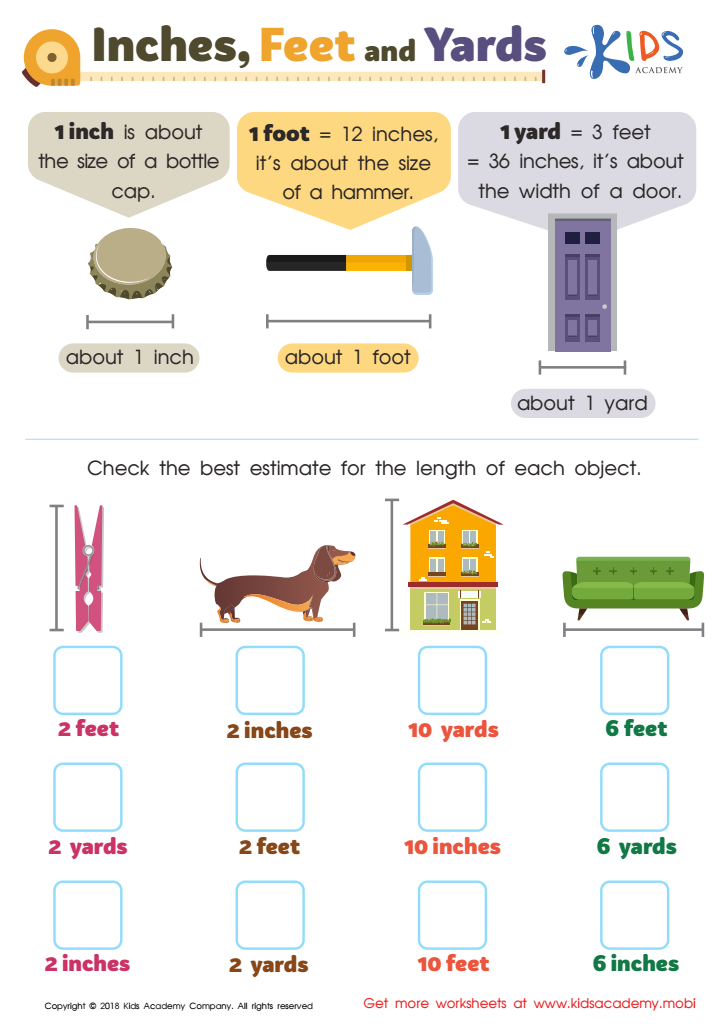
Inches, Feet and Yards Worksheet
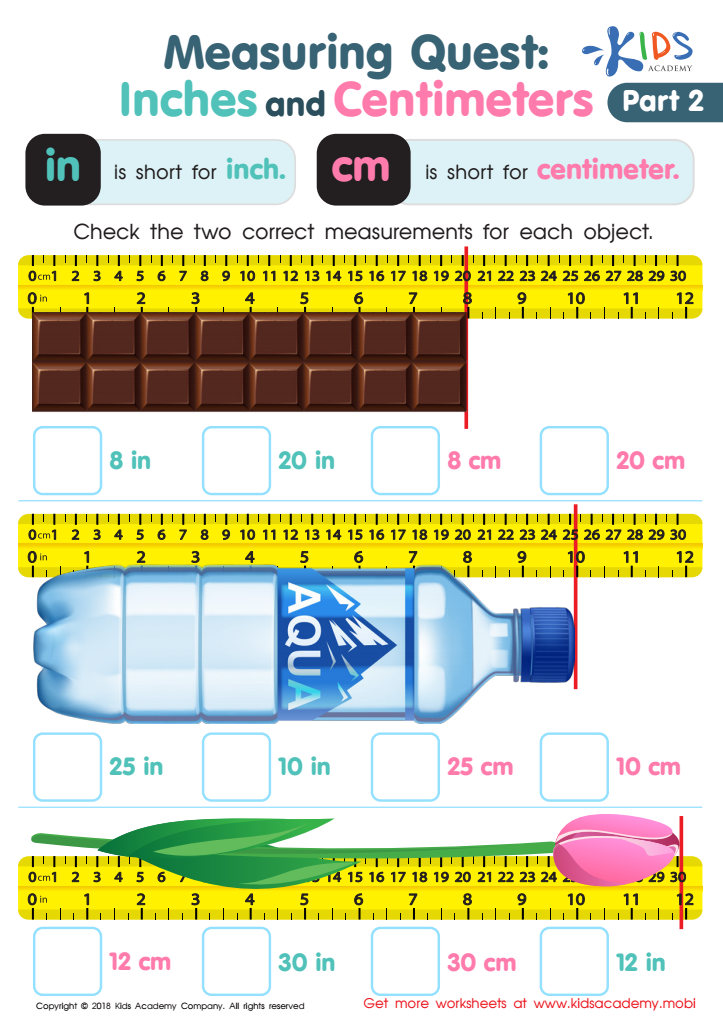
Measuring Quest: Inches and Centimeters - Part 2 Worksheet
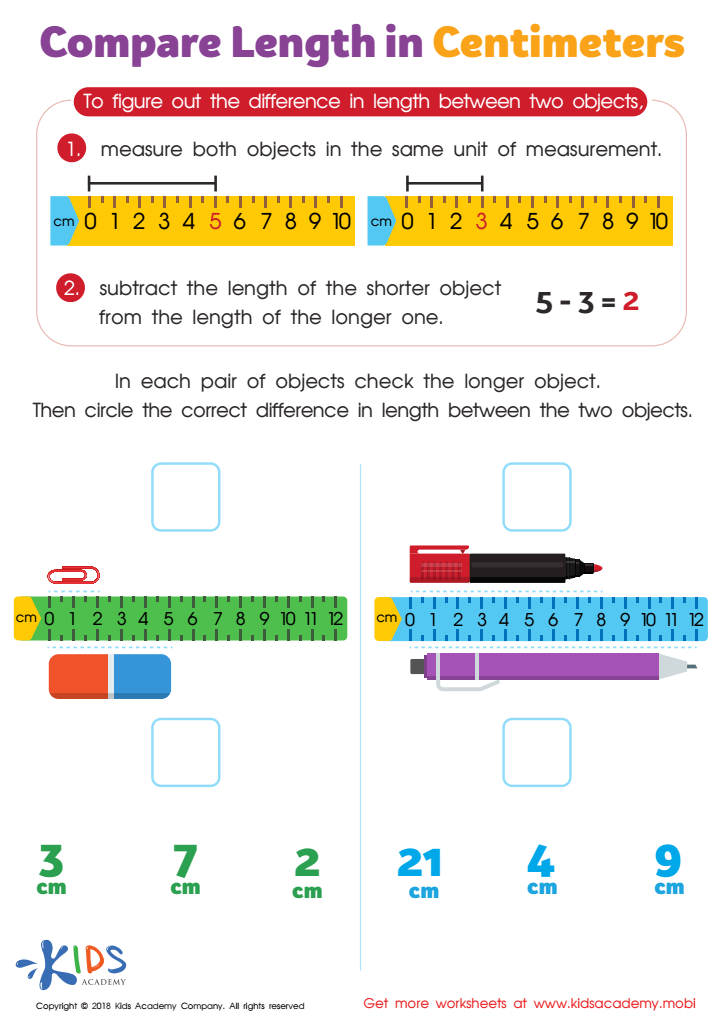
Compare Length in Centimeters Worksheet
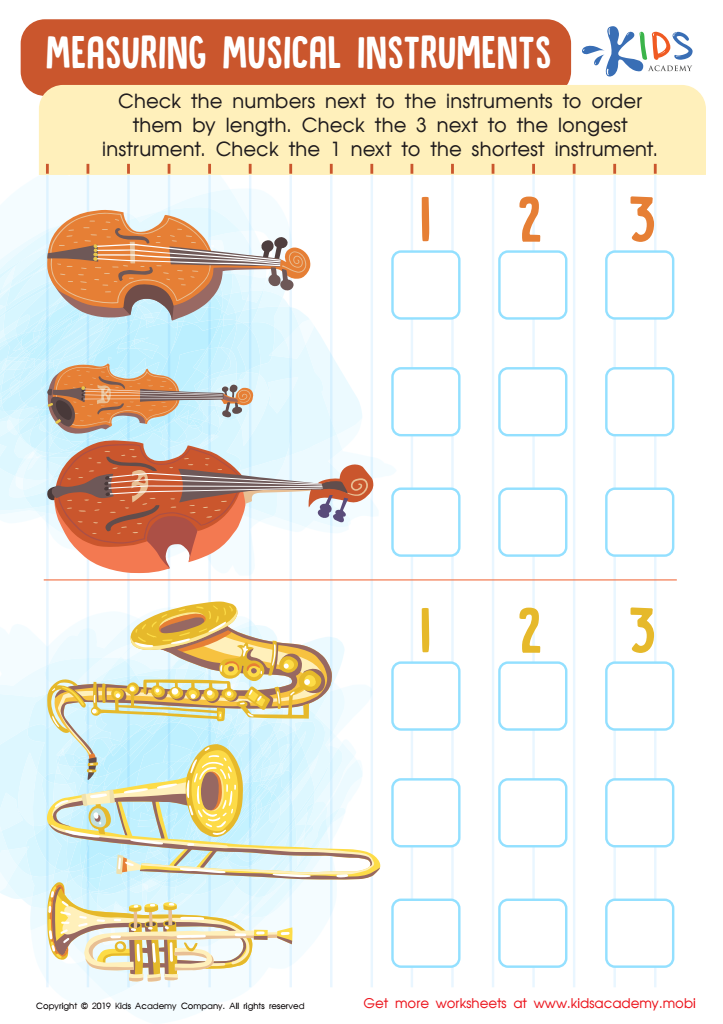
Measuring Musical Instruments Worksheet
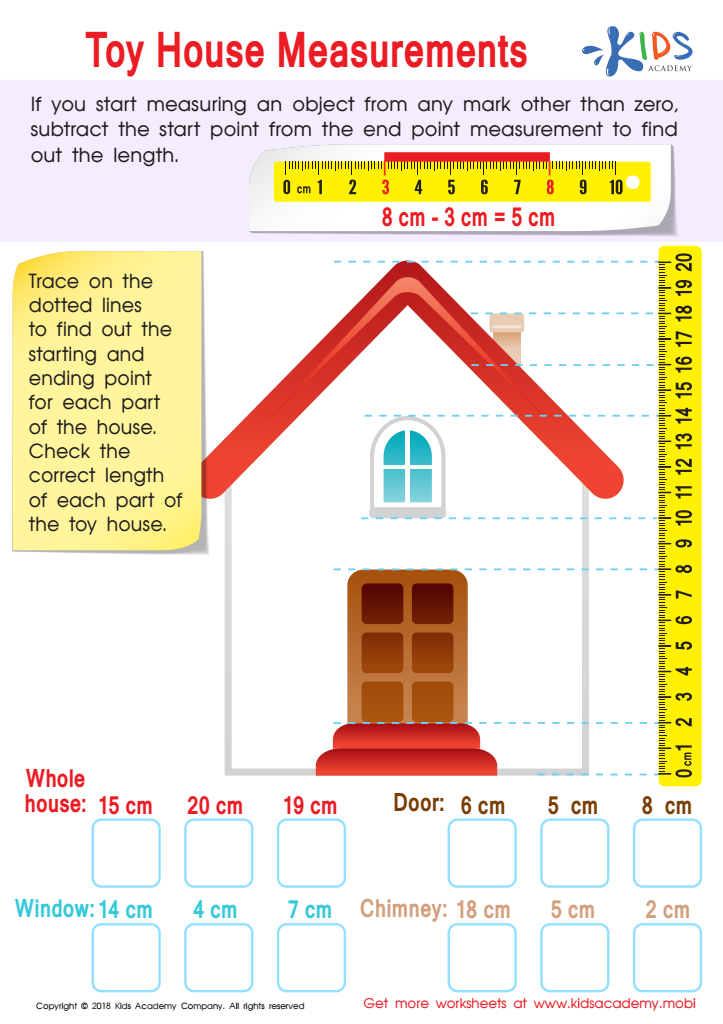
Toy House Measurements Worksheet
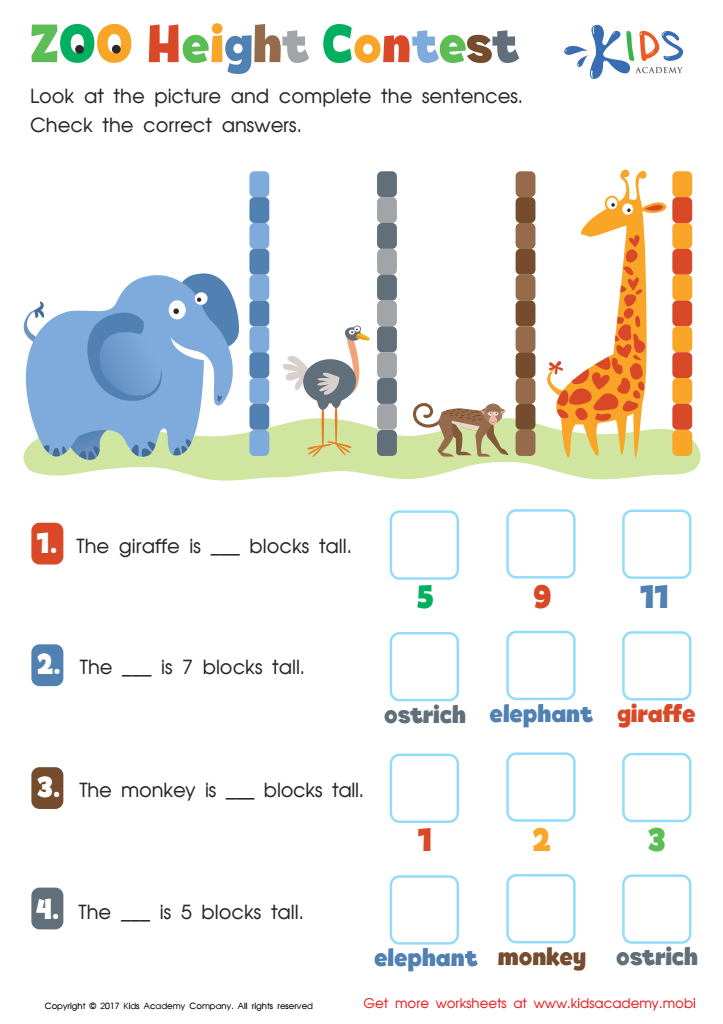
Zoo Height Contest Worksheet
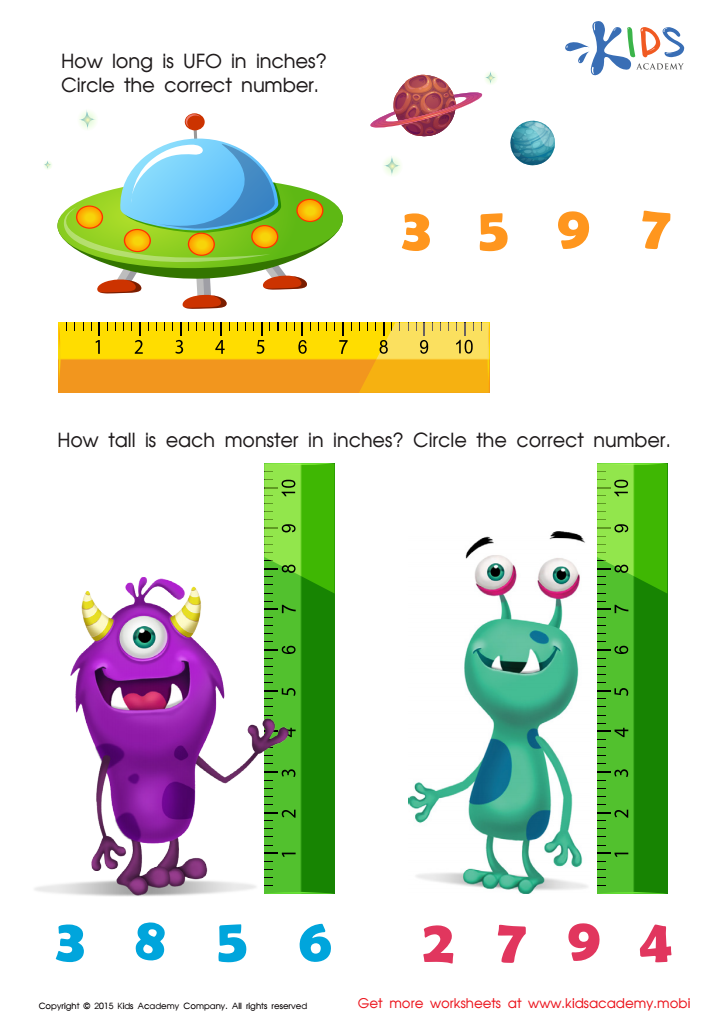
Measuring in Inches Worksheet
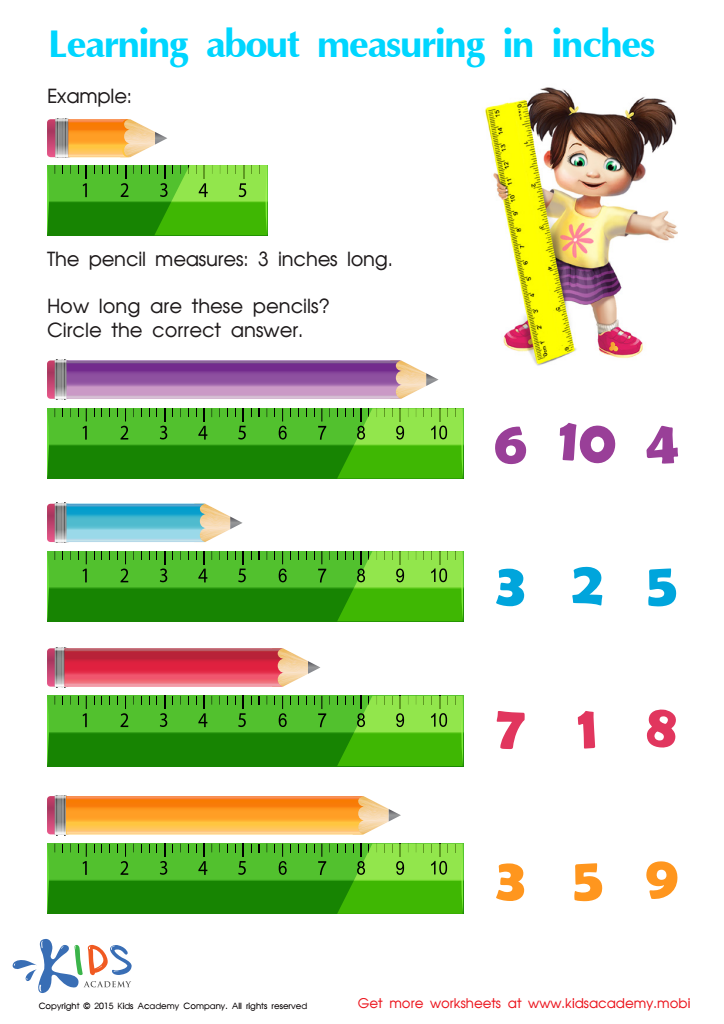
Learning About Measuring In Inches Printable
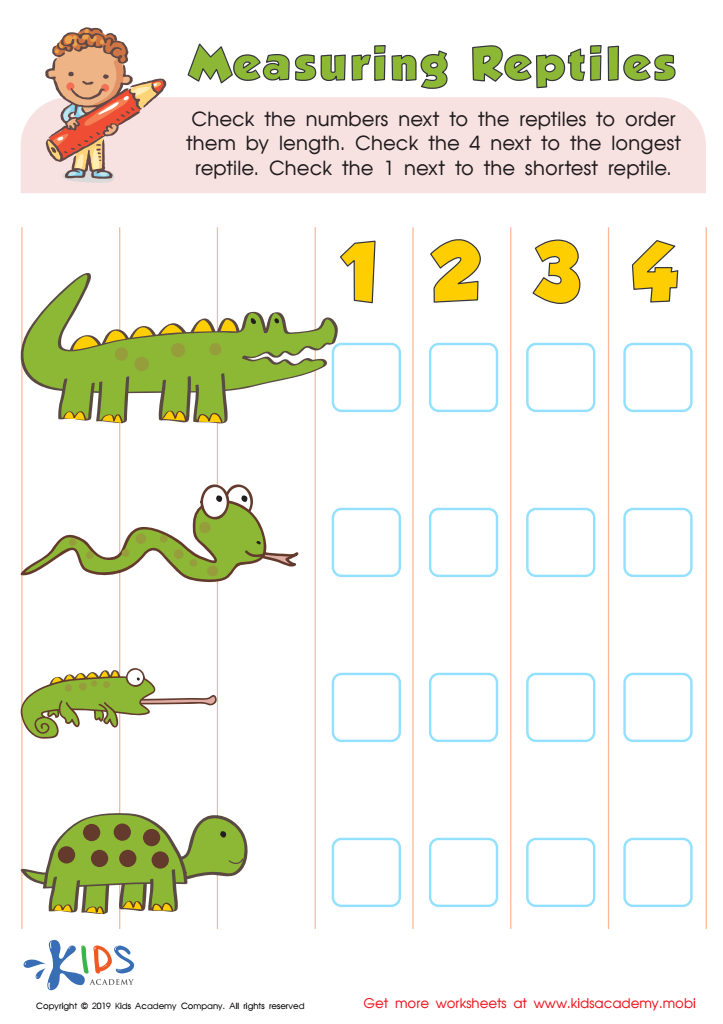
Measuring Reptiles Worksheet
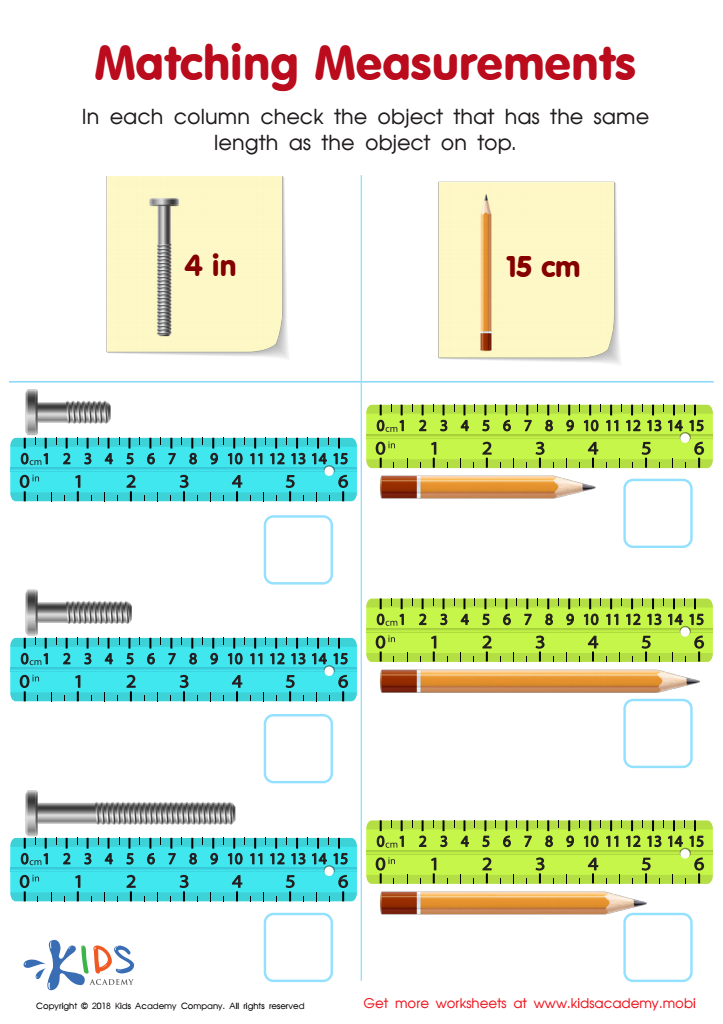
Matching Measurements Worksheet
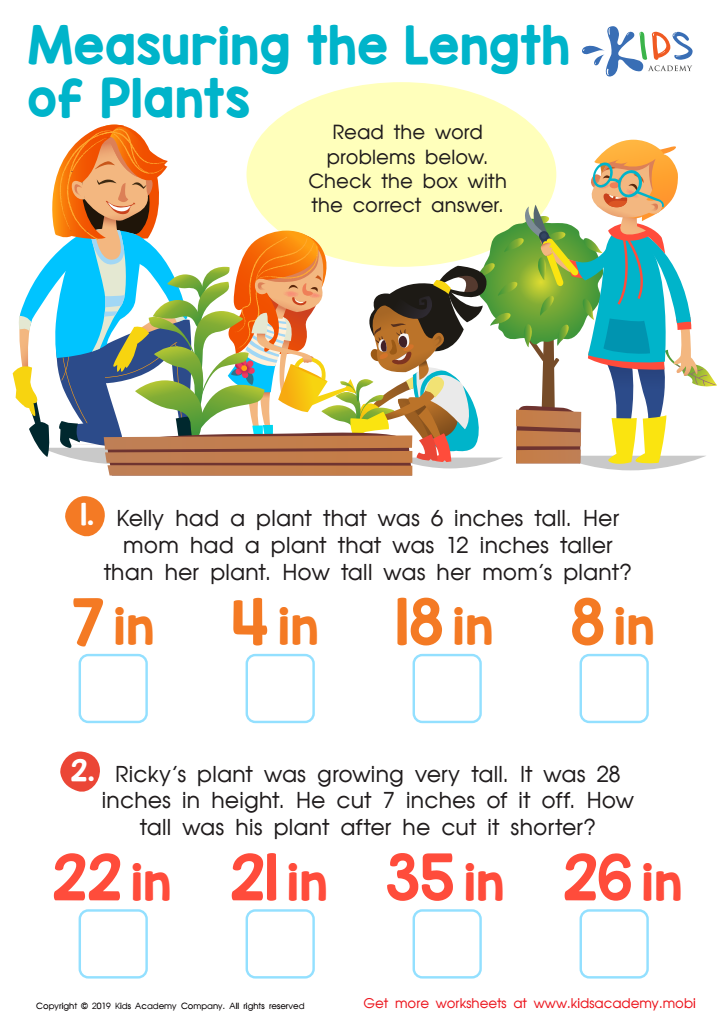
Measuring the Length of Plants Worksheet
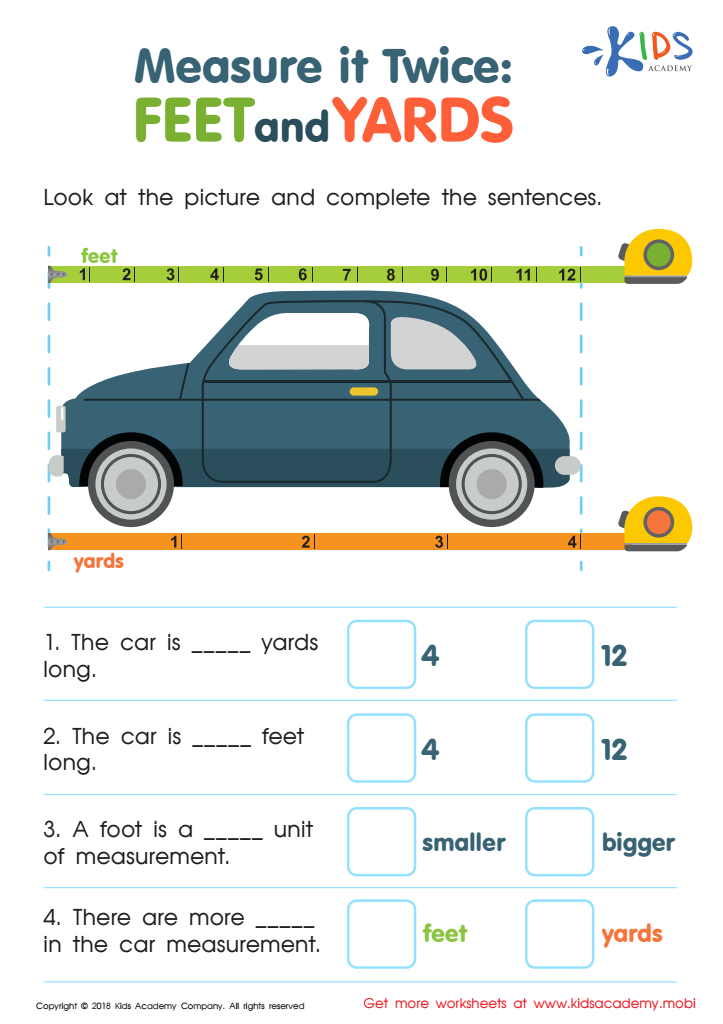
Measure It Twice: Feet and Yards Worksheet
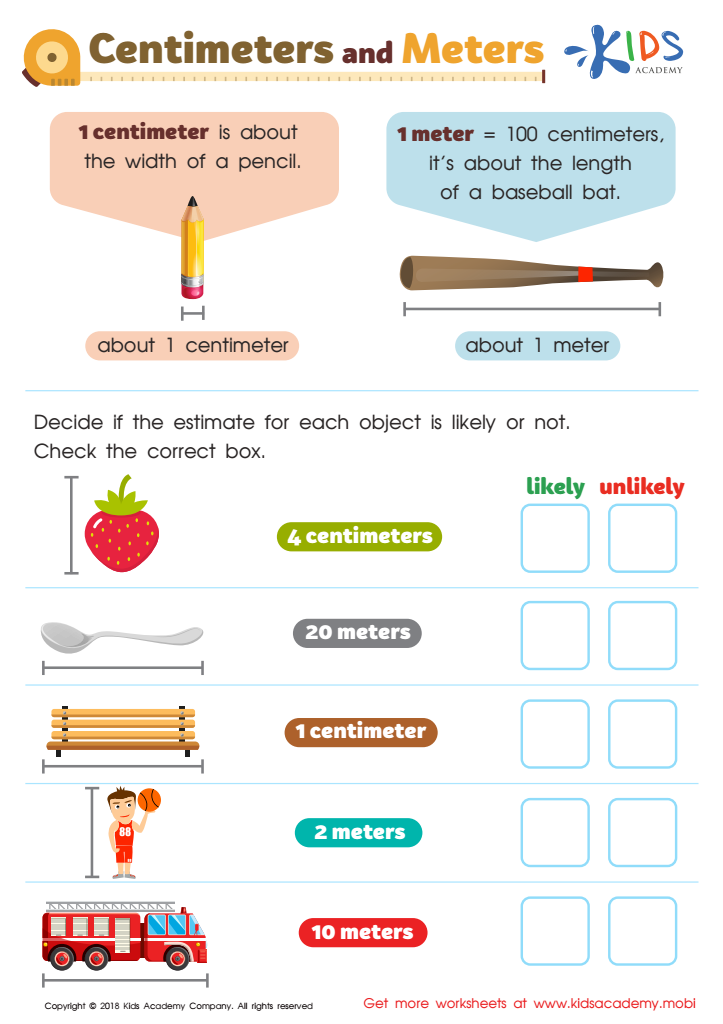
Centimeters and Meters Worksheet
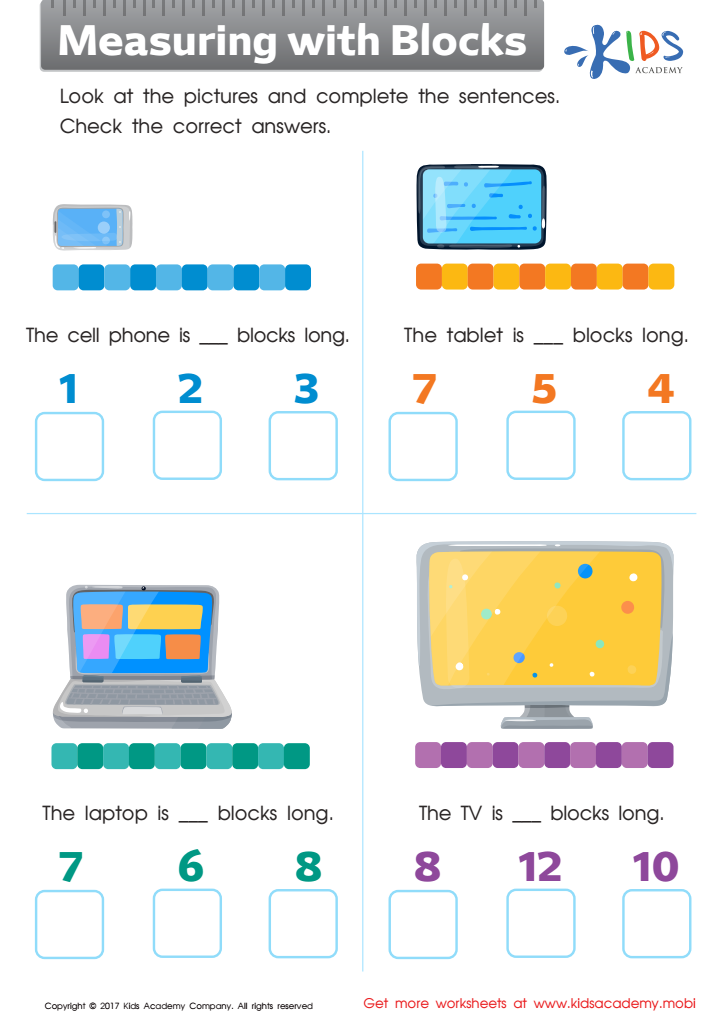
Measuring with Blocks Worksheet
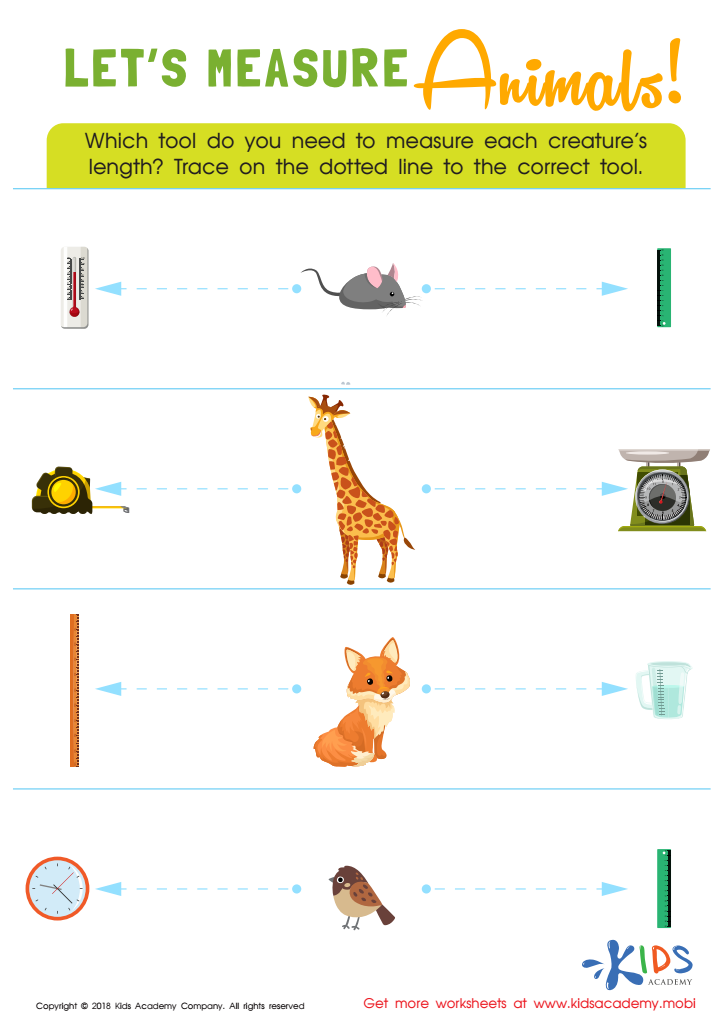
Let's Measure Animals! Worksheet
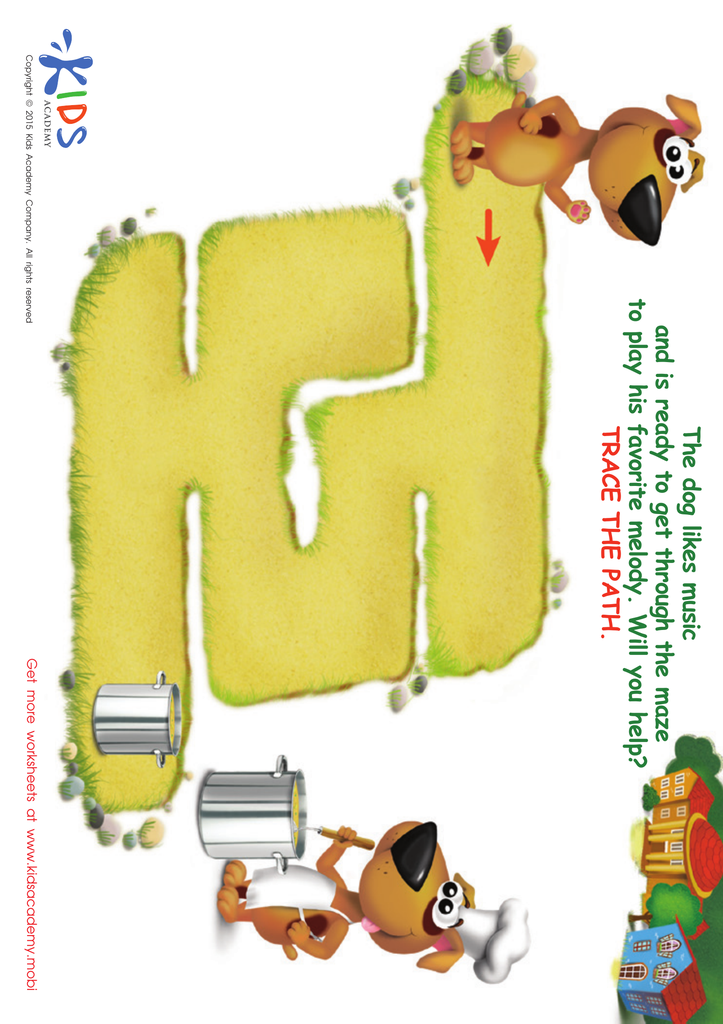
Cook Maze Worksheet
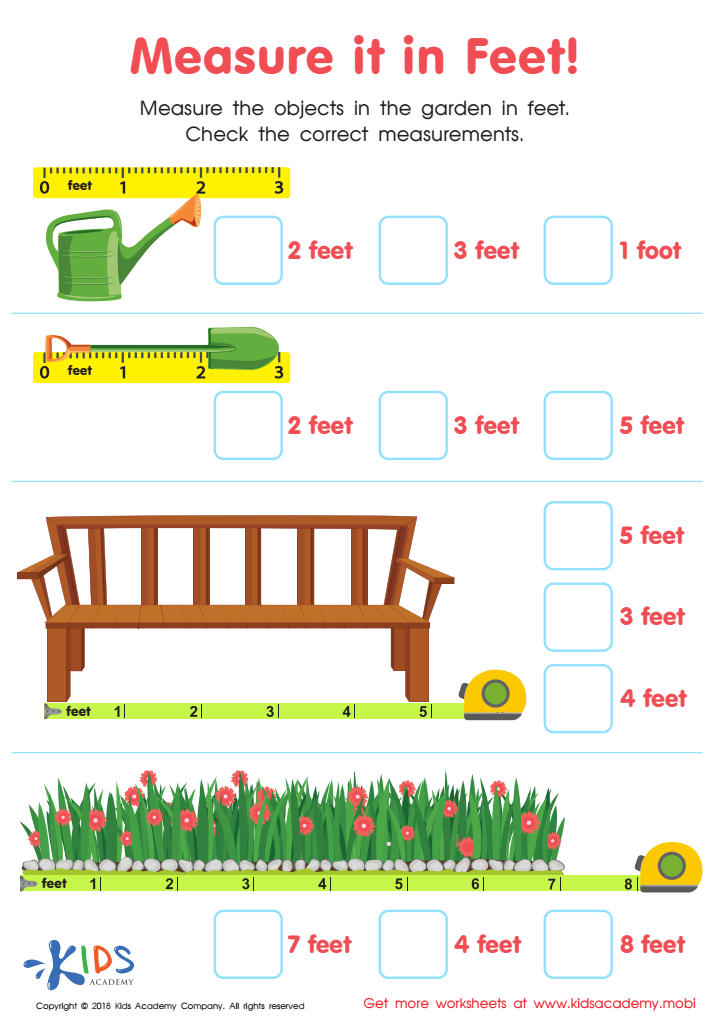
Measure it in Feet Worksheet







Understanding measurements is crucial for children aged 6-8, as it lays the foundation for essential life skills and mathematical concepts. At this age, children are naturally curious and engage in hands-on activities; thus, introducing them to measurements through real-world experiences makes learning effective and enjoyable.
First, mastering measurements enhances critical thinking and problem-solving skills. Children learn to estimate lengths, weights, and volumes, fostering their ability to make informed decisions in daily life, like cooking or planning activities. This early exposure also nurtures their spatial awareness, helping them understand shapes and sizes, which are fundamental concepts in geometry.
Moreover, measurements are key in other subjects beyond math. For instance, science experiments often require precise measurements, encouraging children to practice observation and hypothesis testing. As they progress in school, these skills become increasingly important in more advanced math topics and when engaging with data and graphs.
Finally, involving parents and teachers in lessons about measurements can promote stronger student engagement and motivation. When caregivers actively participate, children see the practical value of what they learn, fostering a positive attitude towards education. By caring about these foundational skills, parents and teachers can support children's holistic development and preparedness for future learning challenges.








