Visual representation of fractions Worksheets for Ages 6-8
7 filtered results
-
From - To
Discover the perfect resource for teaching young children about fractions with our Visual Representation of Fractions Worksheets for Ages 6-8. Designed to engage and educate, these printable worksheets use colorful visuals and simple, easy-to-understand diagrams to help kids grasp the concept of fractions. From halves and quarters to more complex fractions, our worksheets gradually build understanding and confidence. Ideal for classroom use or at-home practice, these activities make learning fractions fun and interactive. Boost your child's mathematical skills today with our expertly crafted educational materials from Kids Academy!
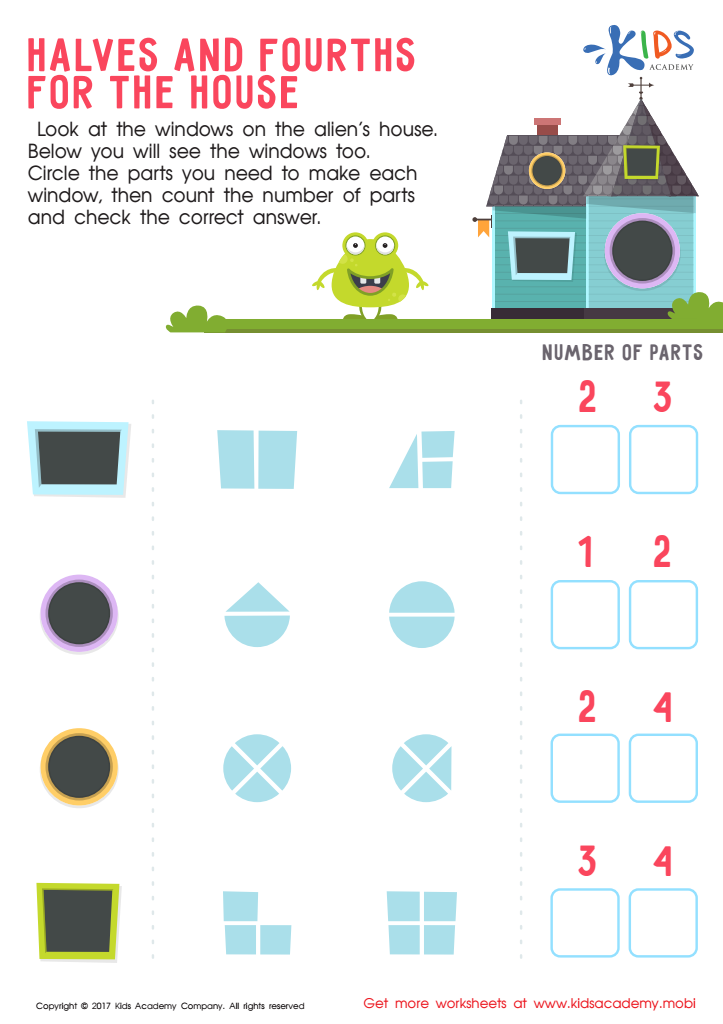
Halves and Fourths for the House Worksheet
 Assign to My Students
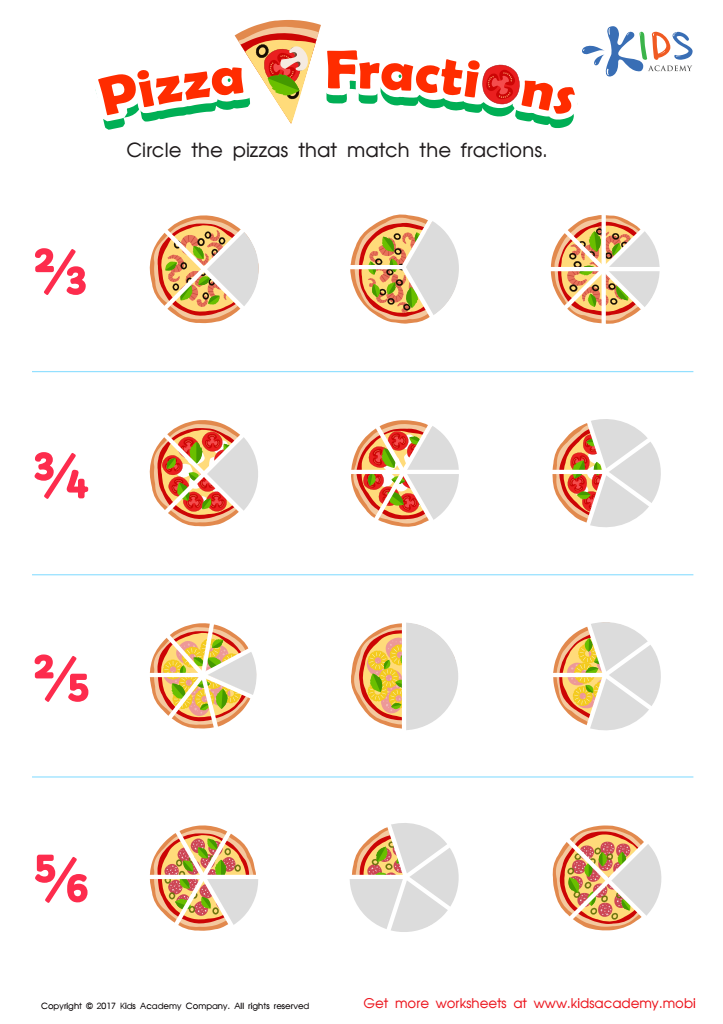
Fractions: Pizza Printable
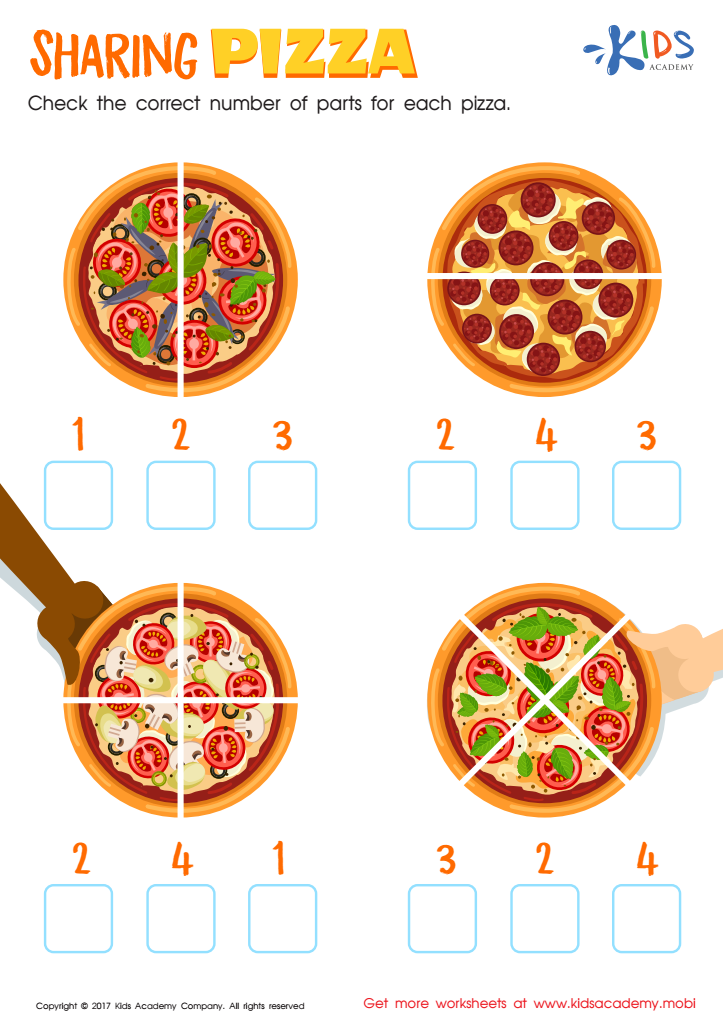
Sharing Pizza Worksheet
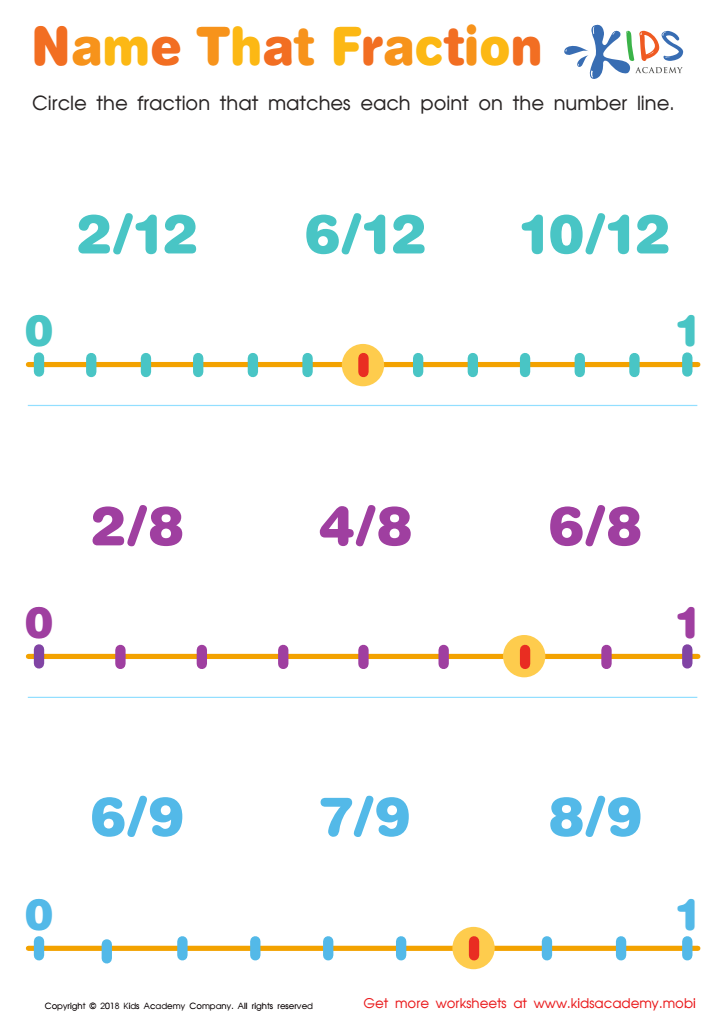
Name That Fraction Worksheet



.jpg)


Visual representation of fractions is crucial for young learners aged 6-8 because it builds a strong foundation for understanding math concepts. At this stage, children are typically concrete thinkers; they grasp ideas more easily when they can see them in action. Visual aids like pie charts, fraction bars, and number lines transform abstract numerical fractions into understandable segments. This method not only helps in clarifying the idea of parts of a whole but also aids in developing critical thinking skills.
For parents and teachers, investing time in these visual tools can significantly benefit students. First, it promotes deeper comprehension rather than rote learning, which is essential for long-term academic success. Second, a good understanding of fractions lays the groundwork for more complex math topics kids will encounter later, like decimal operations and algebra. Lastly, visual learning engages and motivates students, making math a more enjoyable and less intimidating subject. By fostering a positive early experience with fractions through visual representation, parents and teachers nurture a child's capability to tackle sophisticated math problems and boost their overall confidence in learning.
In summary, visualizing fractions transforms difficulty into delight, setting up students not just for academic excellence, but for a lifelong love of learning.








