Shape Recognition 2D Shapes Worksheets for Ages 6-8 - Page 2
35 filtered results
-
From - To
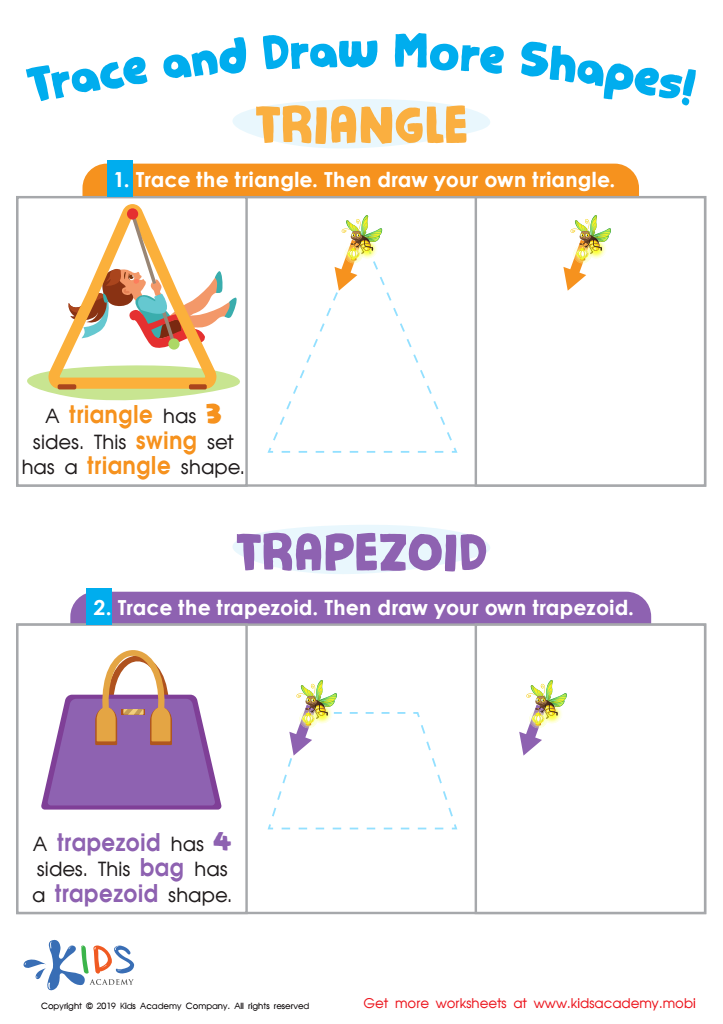
Trace and Draw More Shapes Worksheet
 Assign to My Students











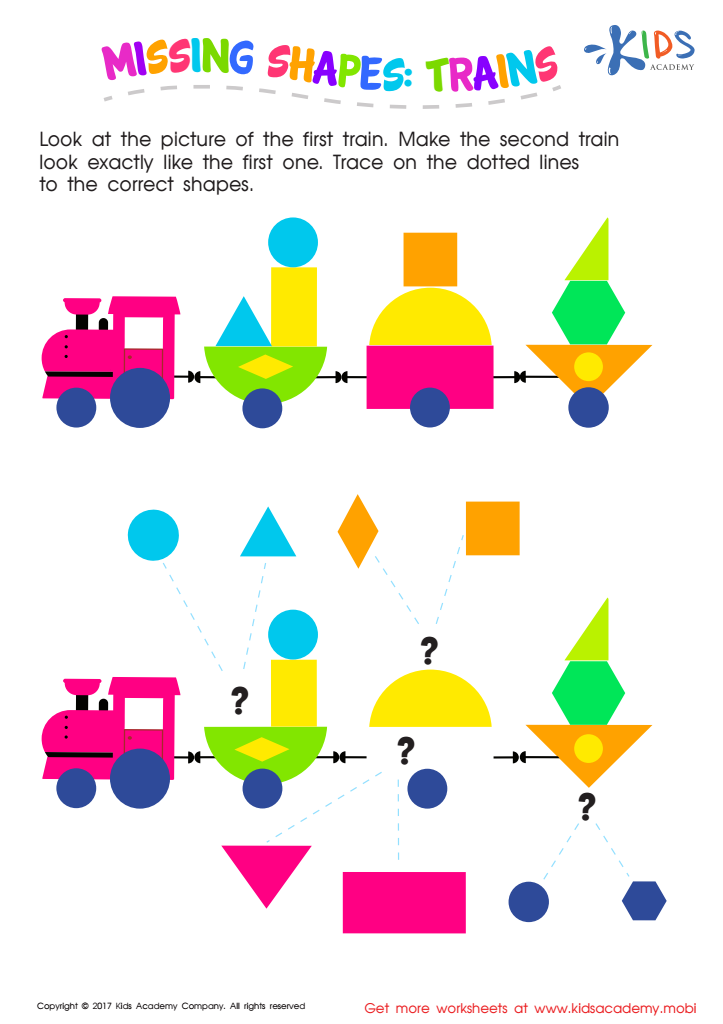
Missing Shapes: Trains Worksheet
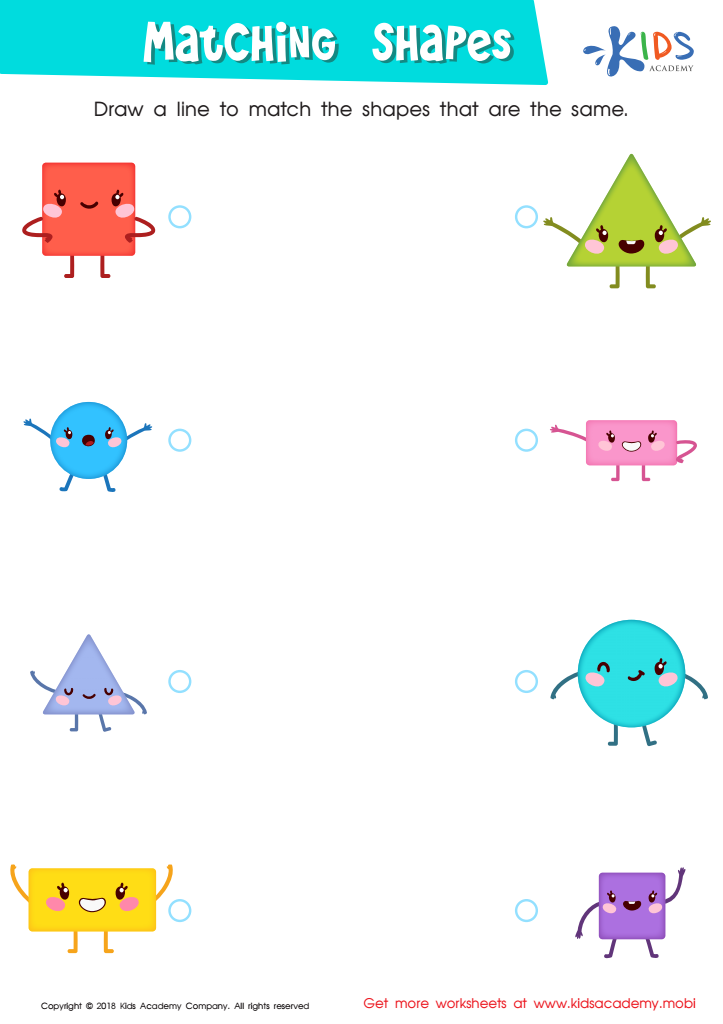
Matching Shapes Worksheet
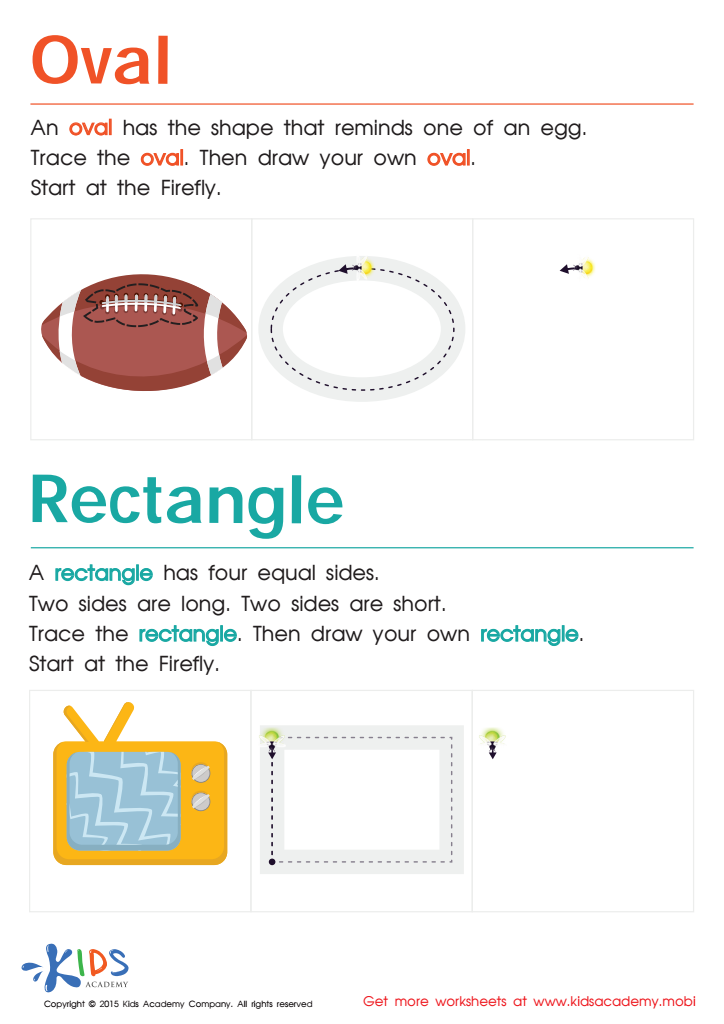
Easy Drawing of Ovals And Rectangles Worksheet
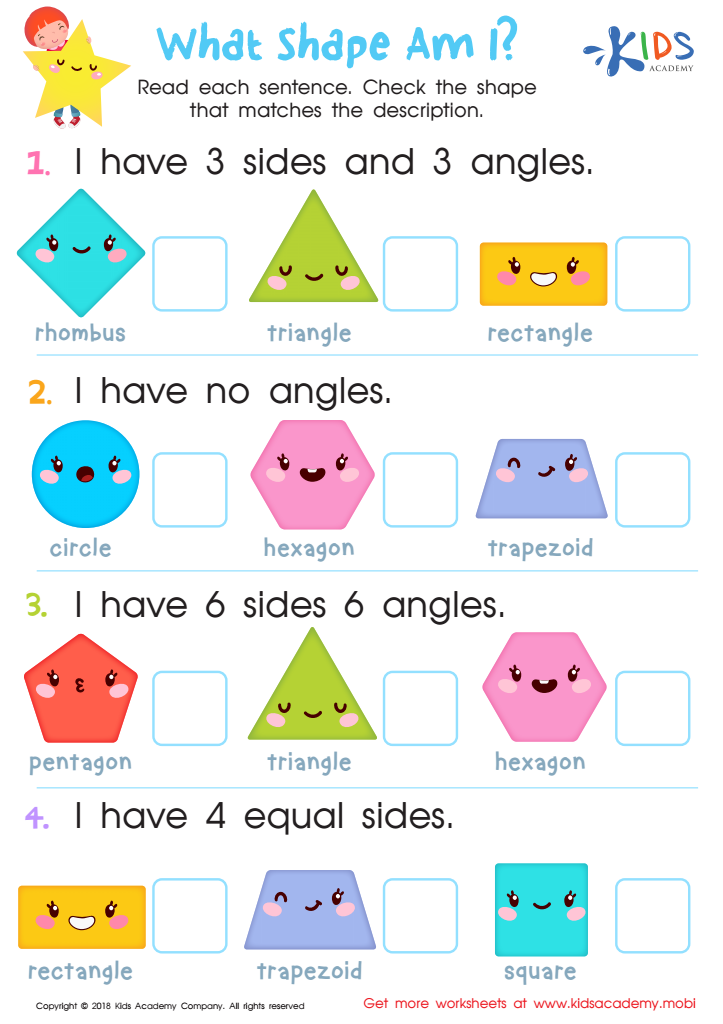
What Shape Am I? Worksheet
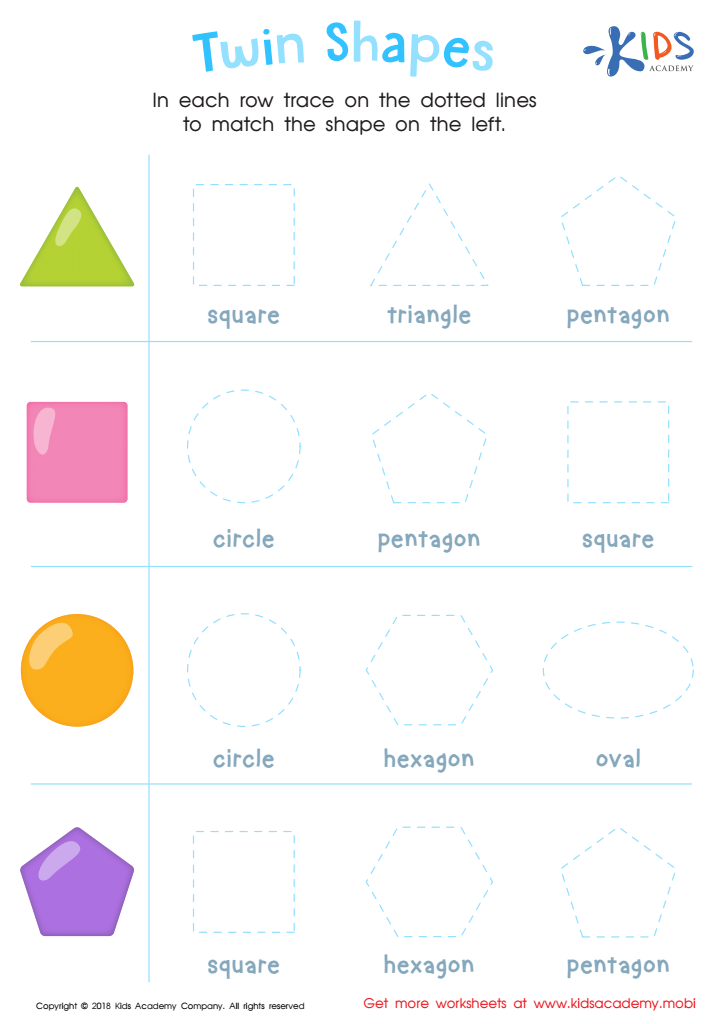
Twin Shapes Dot-to-Dot Worksheet
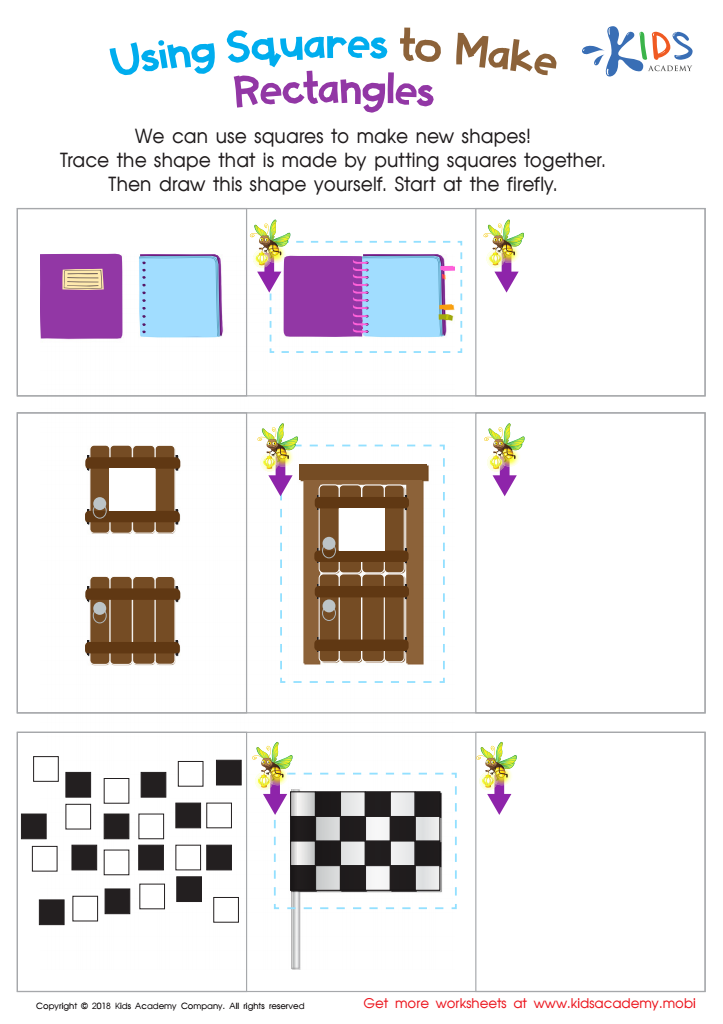
Using Squares to Make Rectangles Worksheet
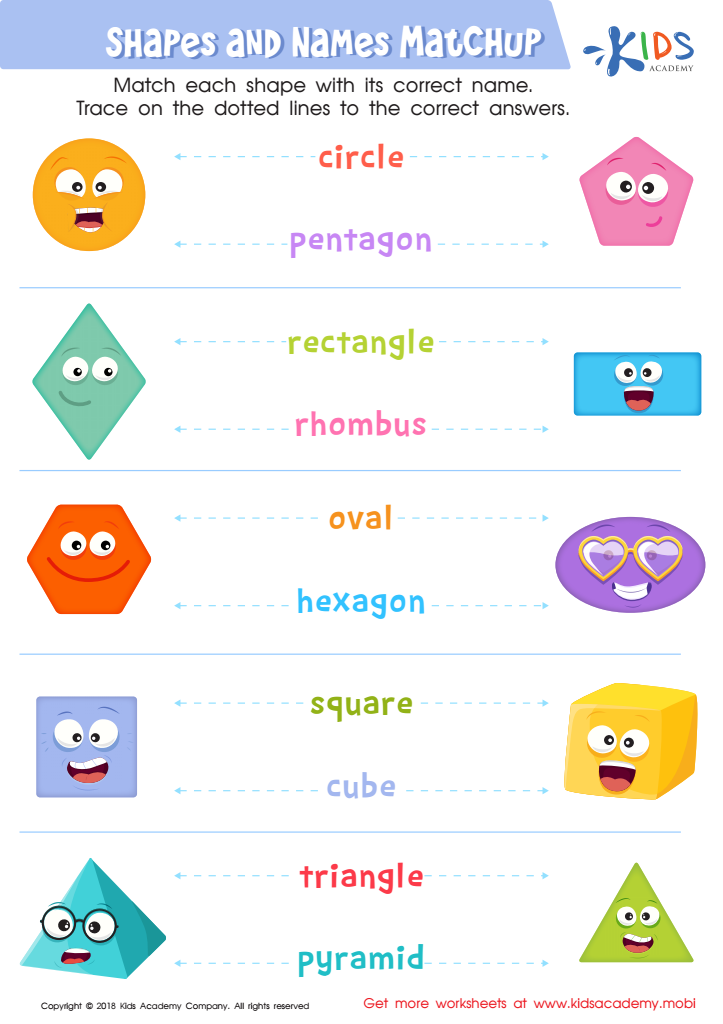
Shapes and Names Matchup Worksheet
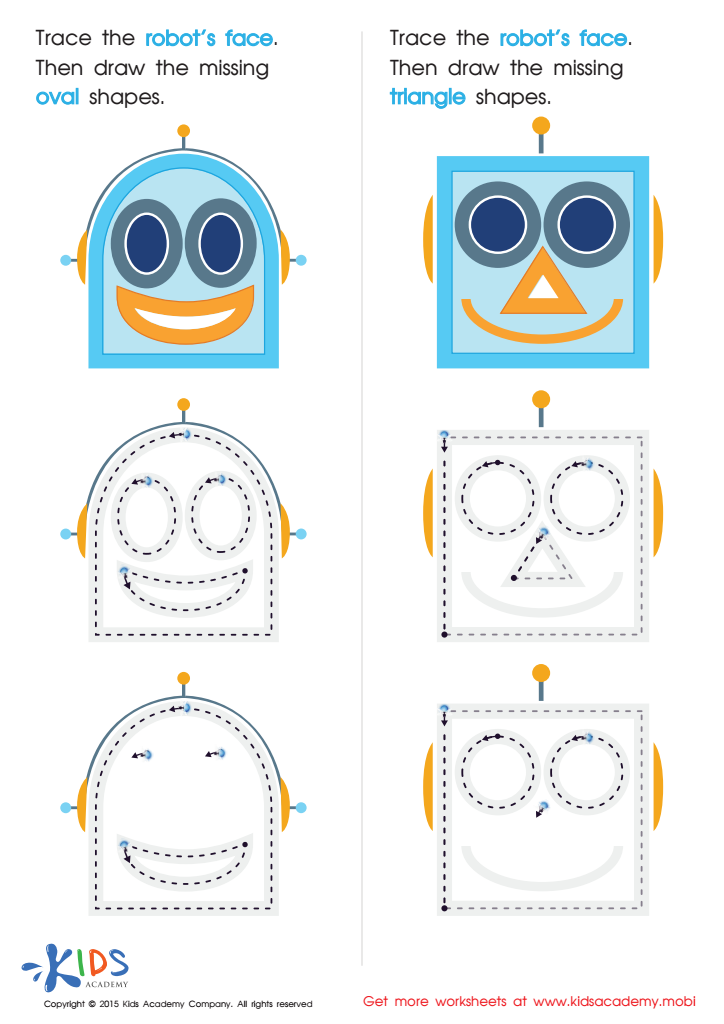
Drawing Ovals And Triangles with Fun Printable
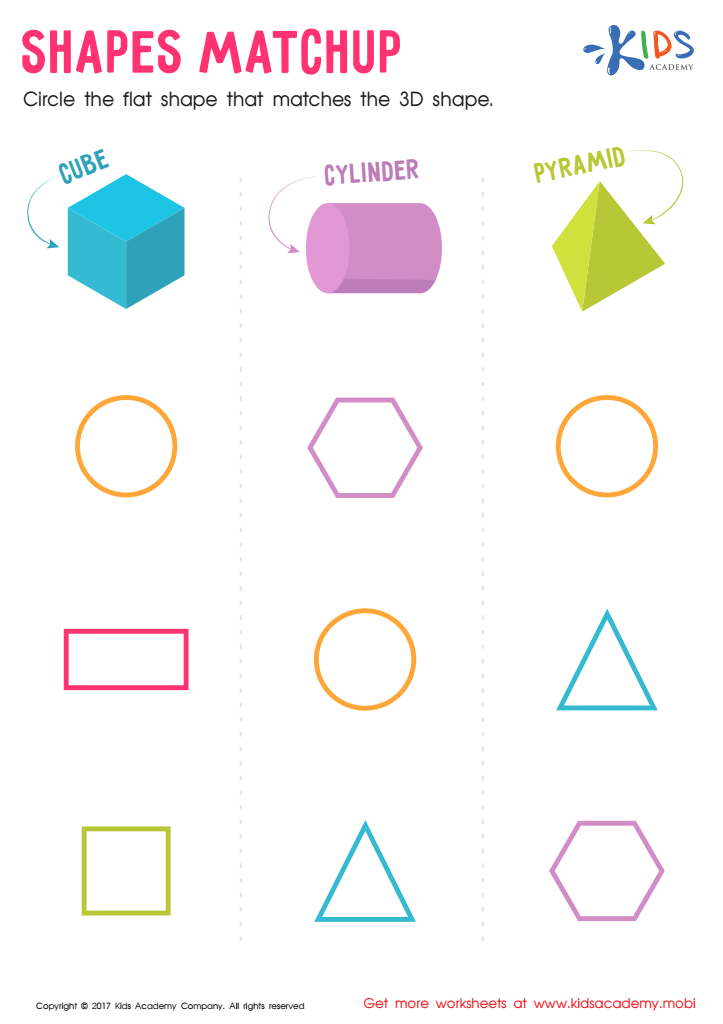
Shapes Matchup Worksheet
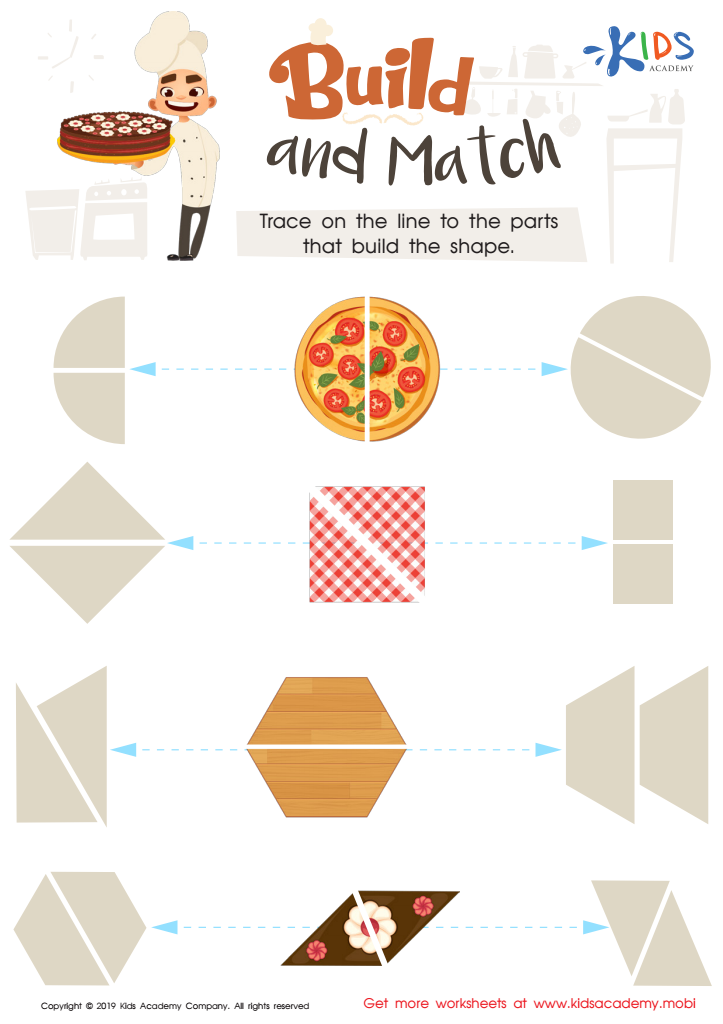
Build and Match Worksheet








Shape recognition, particularly the understanding of 2D shapes, is crucial in the developmental stages for children aged 6-8 as it lays the foundational stones for complex cognitive skills. For parents and teachers, nurturing this skill is important for several reasons. Firstly, it enhances spatial awareness, helping children understand how objects fit together in space, which is a precursor to more advanced topics like geometry and engineering.
Secondly, recognizing and differentiating shapes aids in developing early mathematical skills. It helps children learn to categorically sort and organize visual information, which is essential in reading and interpreting basic mathematics diagrams, pattern recognition, and problem-solving. Furthermore, this ability transfers to everyday tasks like reading maps or navigating space effectively.
Moreover, engaging with 2D shapes fosters fine motor skills through activities such as drawing or cutting shapes, further aiding overall hand-eye coordination. Emotional and social skills also benefit as children often work together on shape-based activities, promoting communication and collaborative play.
Hence, incorporating shape recognition into learning encourages cognitive, physical, and social development, establishing a robust educational foundation. Understanding shapes opens the door to numerous academic and real-world applications, making it an indispensable component of early education.








