Filters

34 filtered results

Clear all filters
Favorites
With answer key
Interactive

34 filtered results

Difficulty Level

Grade


Check out this FREE Trial Lesson on Addition & Subtraction for age 6-8!

Making 19

Favorites
With answer key
Interactive
  • 6-8
  • Basic Addition Skills
  • Addition & Subtraction
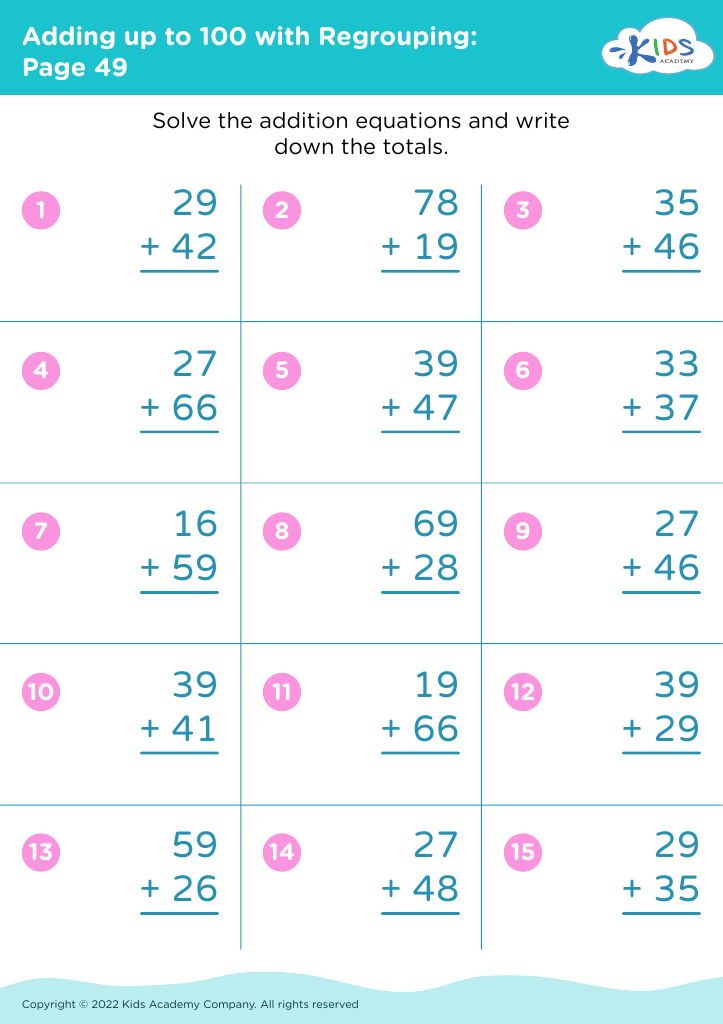
Adding up to 100 with Regrouping: Page 49
Worksheet
1st Grade Add and Subtract Printable Worksheet

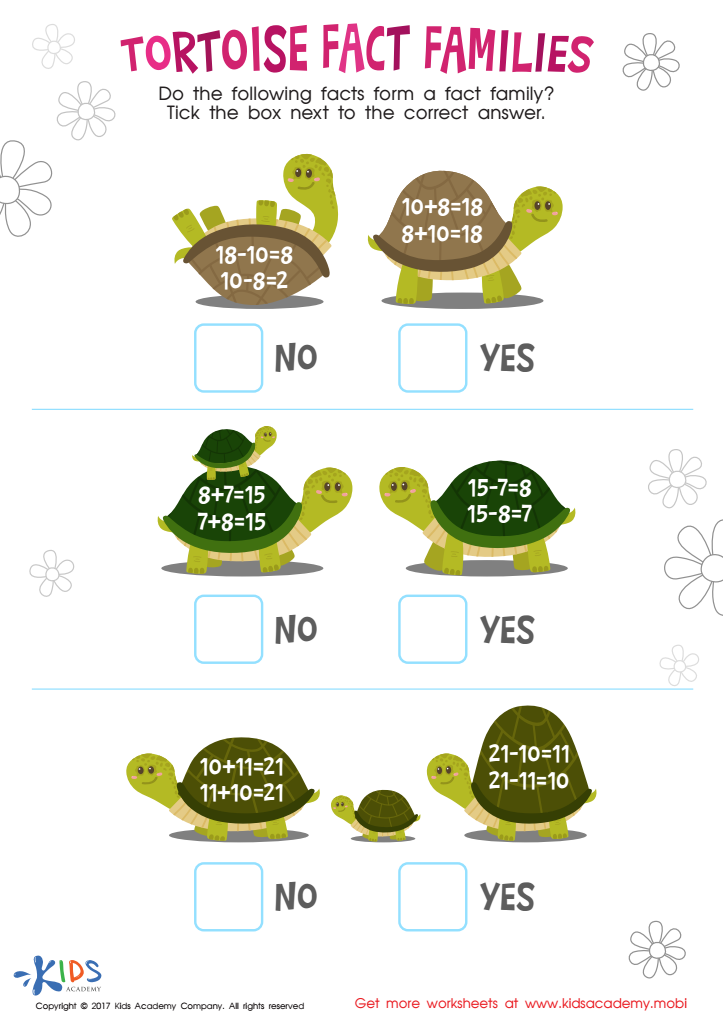
Tortoise Fact Families Printable

With 1st grade add & subtract tortoises, kids can improve their math understanding and skills. Enjoy fun, hands-on practice with fact families and strengthen logical reasoning and critical thinking!
Tortoise Fact Families Printable
Worksheet
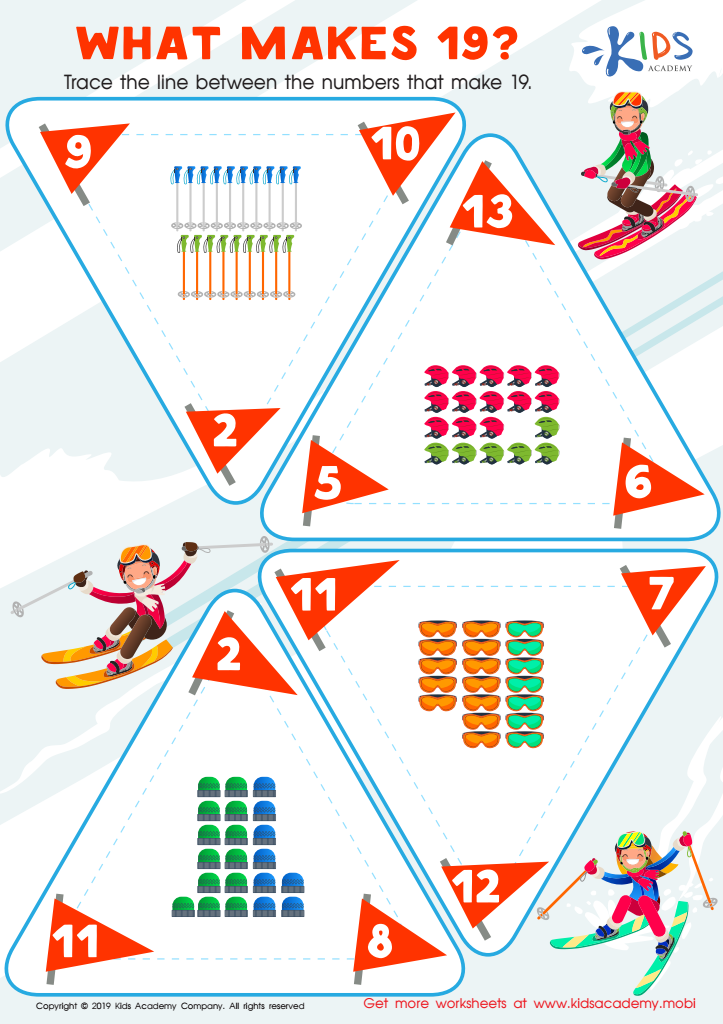
What Makes 19? Worksheet

What Makes 19? Worksheet

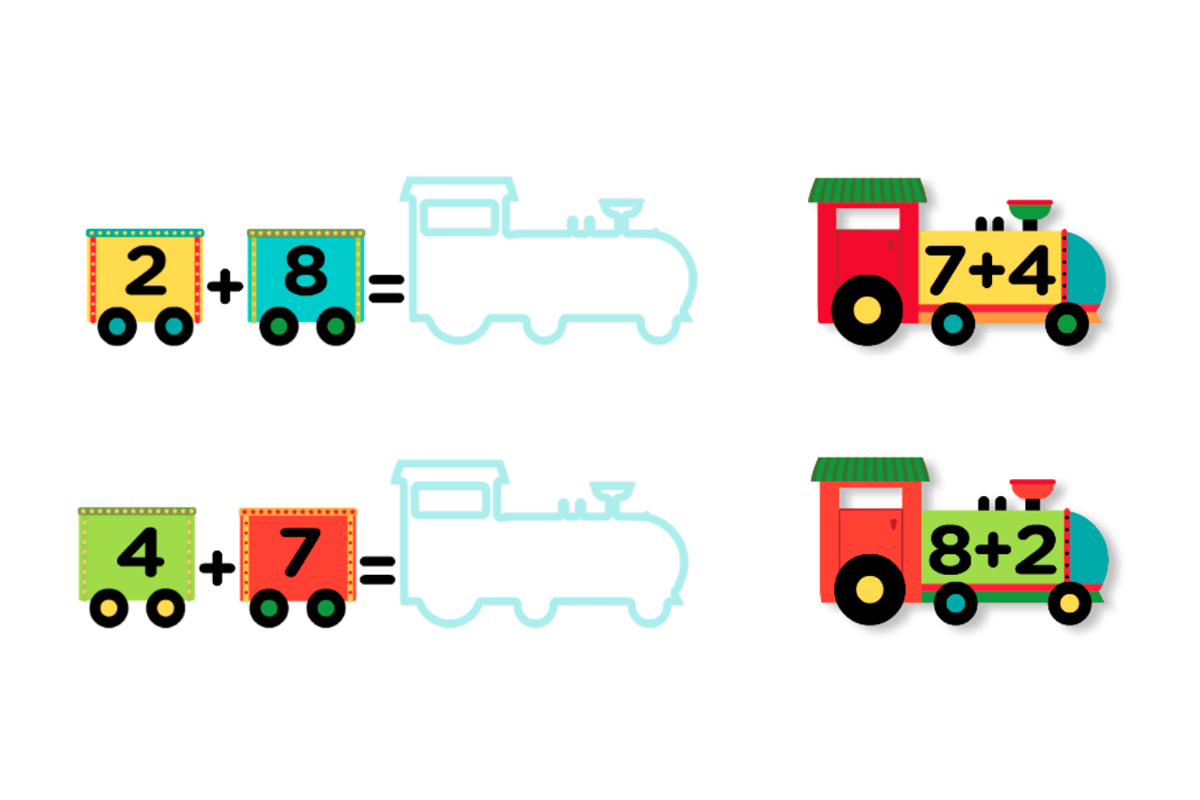
As a parent, it's your responsibility to help your kids learn. Put on the teacher hat and use this worksheet to teach them addition tricks. Help them count and add the objects, trace a line between the numbers that make 19, and take their learning a step further.
What Makes 19? Worksheet
Worksheet
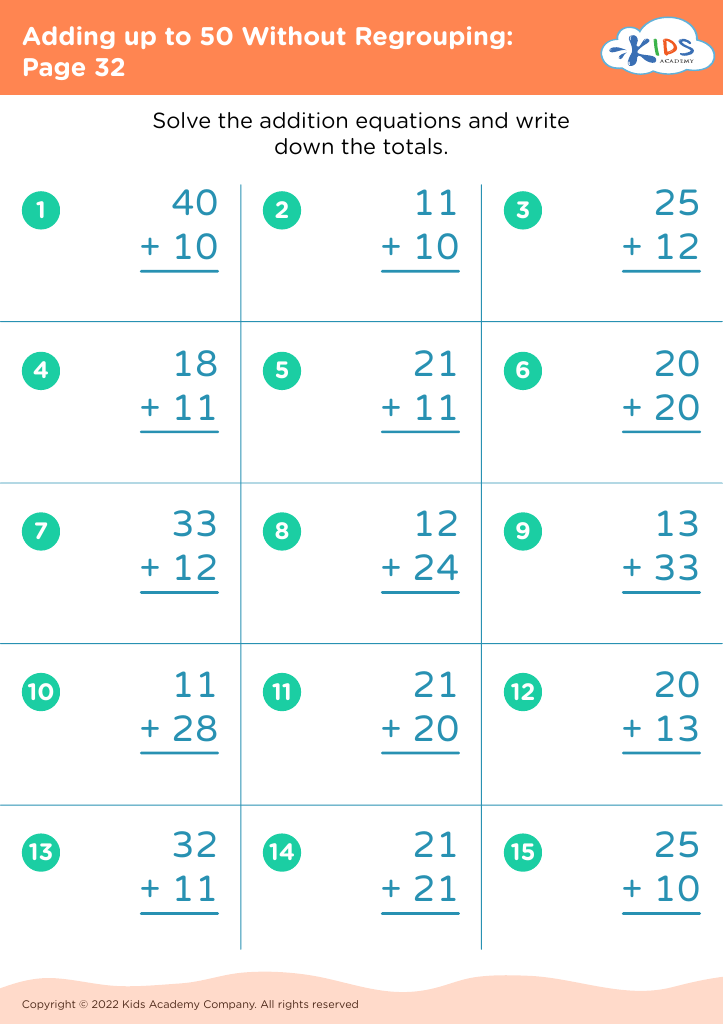
Adding up to 50 Without Regrouping: Page 32
Worksheet
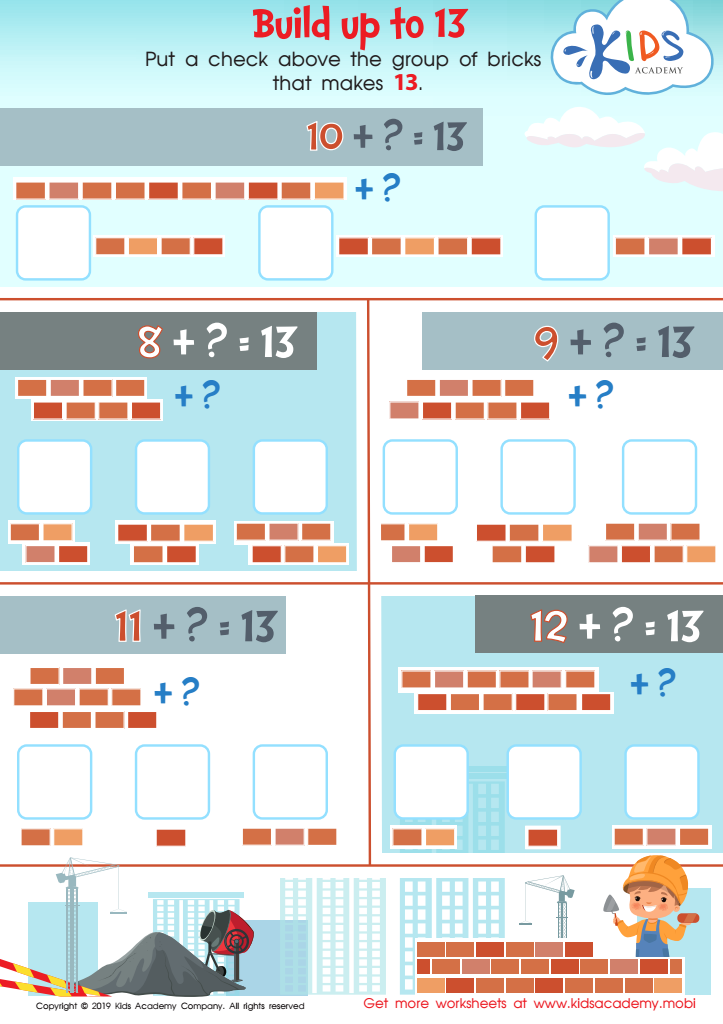
Build up to 13 Worksheet

Build up to 13 Worksheet

Help your kids master addition and subtraction with this worksheet! It'll help clear up any confusion they may have with adding different numbers. Have them add up the simple equations and mark the group of bricks that makes 13. It's a great way for them to get familiar with the basics.
Build up to 13 Worksheet
Worksheet
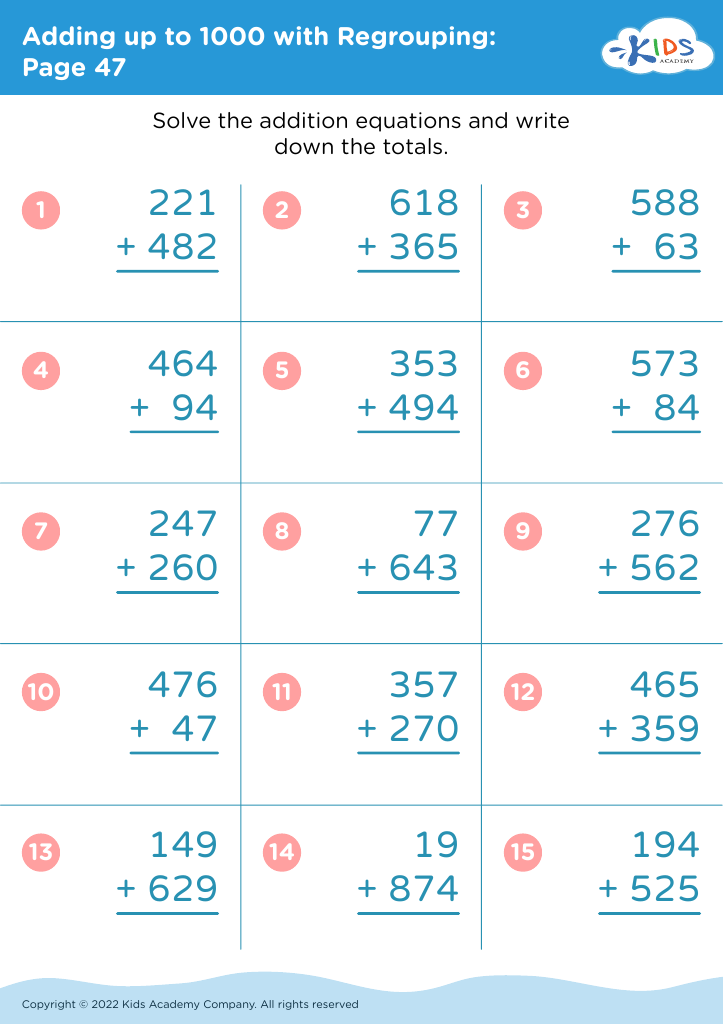
Adding up to 1000 with Regrouping: Page 47
Worksheet
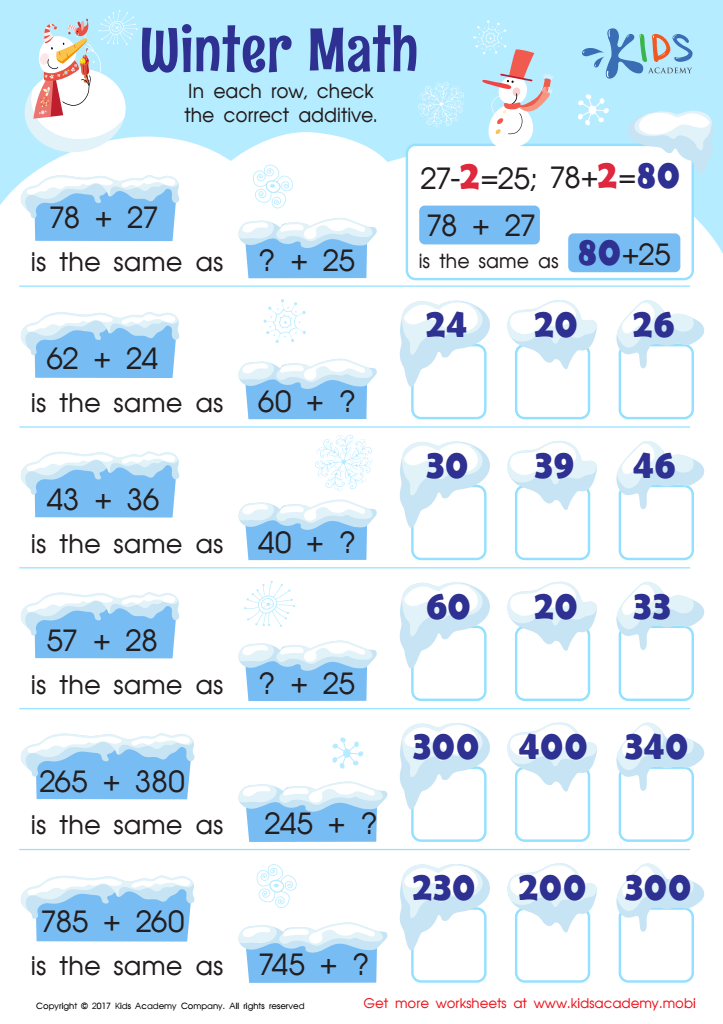
Free addition PDF worksheet for 3rd grade

Free Addition Worksheet

Perfect for a wintry day, challenge your 3rd grader to compare addition equations and fill in the missing numbers in the PDF. This winter-themed worksheet is sure to bring a smile while your 3rd grader practices their addition skills. Perfect for a blustery day, challenge your child to compare addition equations and complete the missing numbers in the PDF.
Free Addition Worksheet
Worksheet
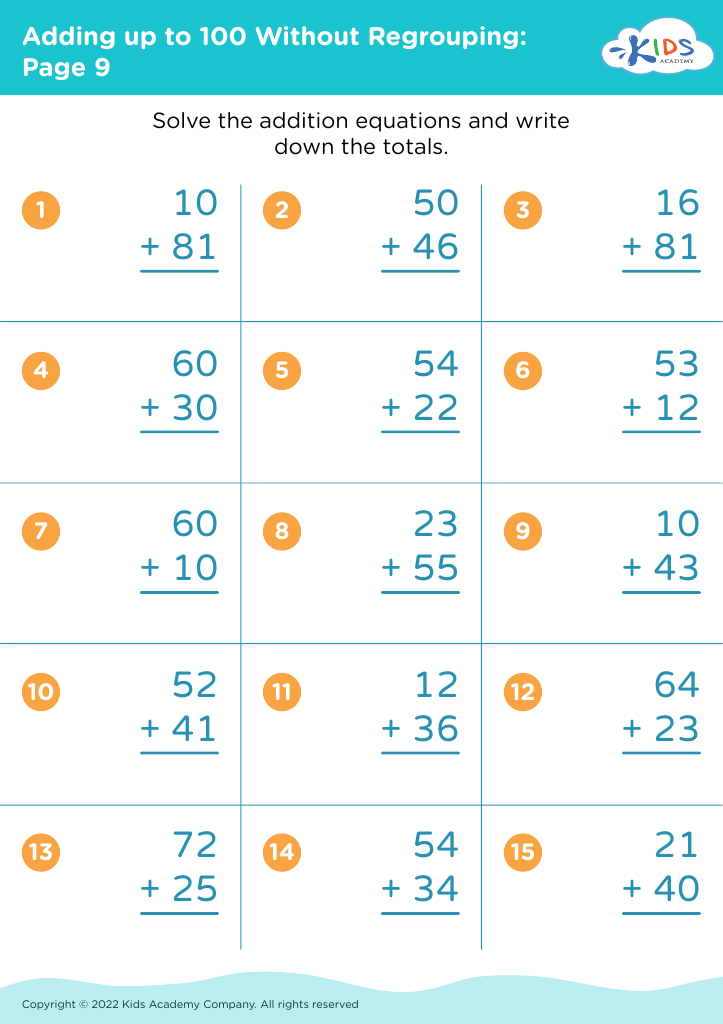
Adding up to 100 Without Regrouping: Page 9
Worksheet
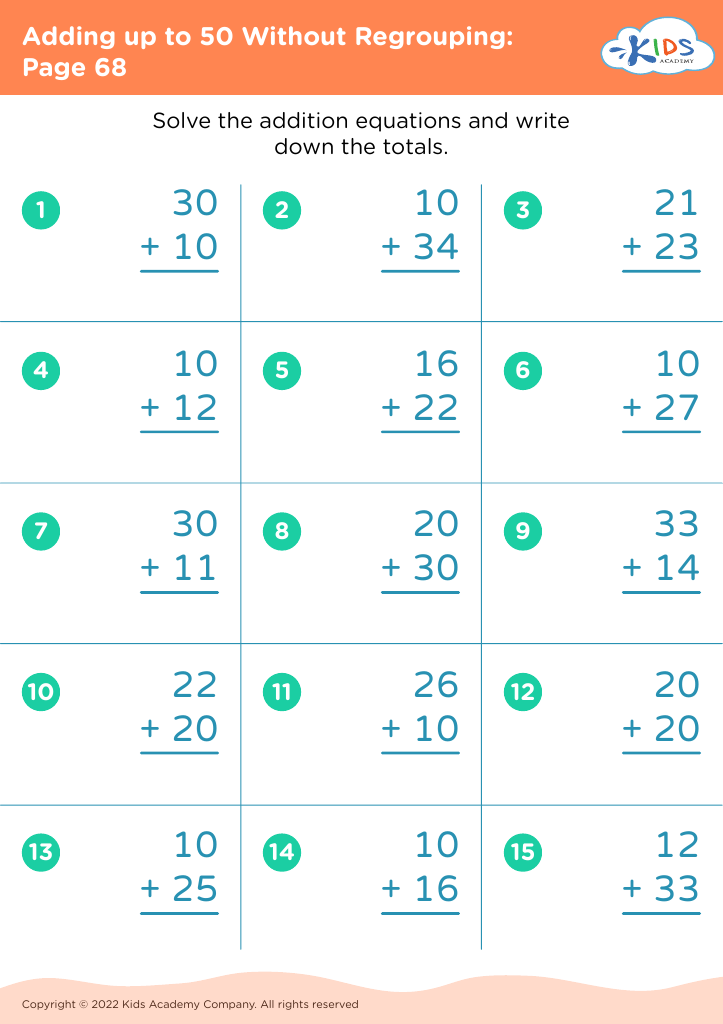
Adding up to 50 Without Regrouping: Page 68
Worksheet
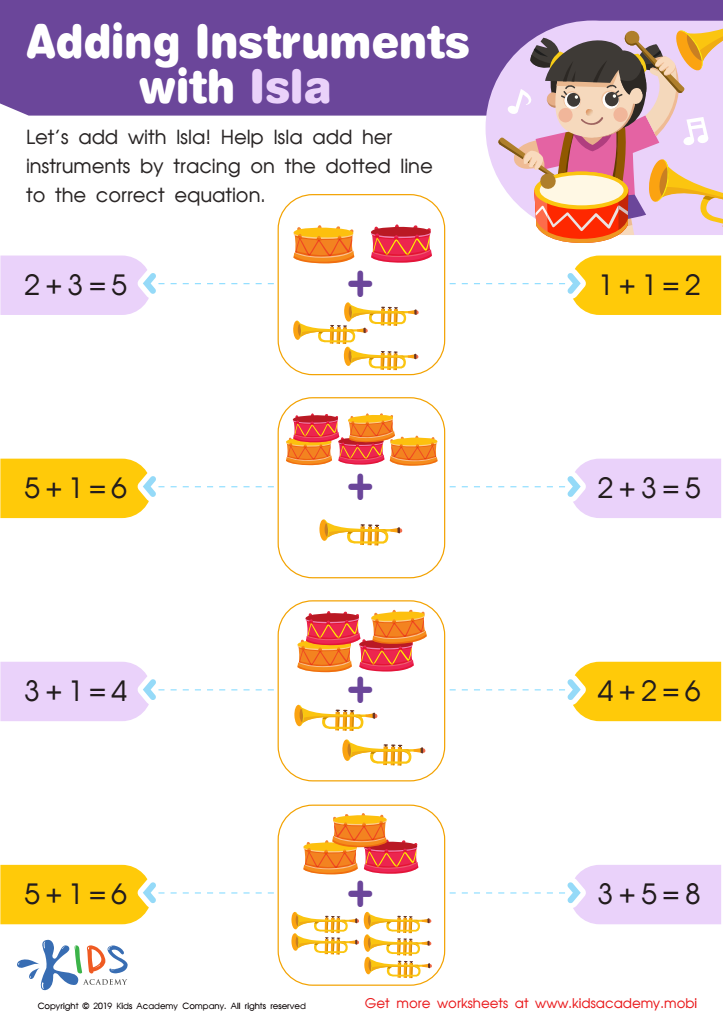
Adding Instruments with Isla Worksheet


Adding Instruments with Isla Worksheet
Your kids can have fun helping Isla add her musical instruments. With colorful pics and one-to-one representation, they can pick the correct addition sentence. They can connect each pic with traceable lines and get to the right sum up to 10.
Adding Instruments with Isla Worksheet

Worksheet


Parents and teachers should care deeply about basic addition and subtraction skills for children aged 6-8 because these are foundational skills critical for their future academic success and everyday life. At this age, children are in a crucial developmental stage where their cognitive abilities are rapidly expanding, making it the perfect time to instill essential mathematical concepts.

Mastery of basic addition and subtraction lays the groundwork for more complex math concepts such as multiplication, division, fractions, and algebra. If children fail to grasp these early skills, they may struggle with more advanced math problems later on, which can lead to frustration, decreased confidence, and a negative attitude toward mathematics overall.

Additionally, early proficiency in math is linked to better problem-solving abilities, improved analytical thinking, and strong logical reasoning, which are skills valuable in a multitude of life scenarios beyond the classroom. Being comfortable with numbers aids in daily activities like shopping, cooking, and time management, making life simpler and more manageable.

Nurturing these skills also promotes a growth mindset in children, teaching them that challenges can be overcome through practice and persistence. By investing time and effort in developing these skills at a young age, parents and teachers help set children on a path toward success and a lifelong appreciation for learning.