Basic Math Skills Addition & Subtraction Worksheets for Ages 6-8 - Page 3
76 filtered results
-
From - To
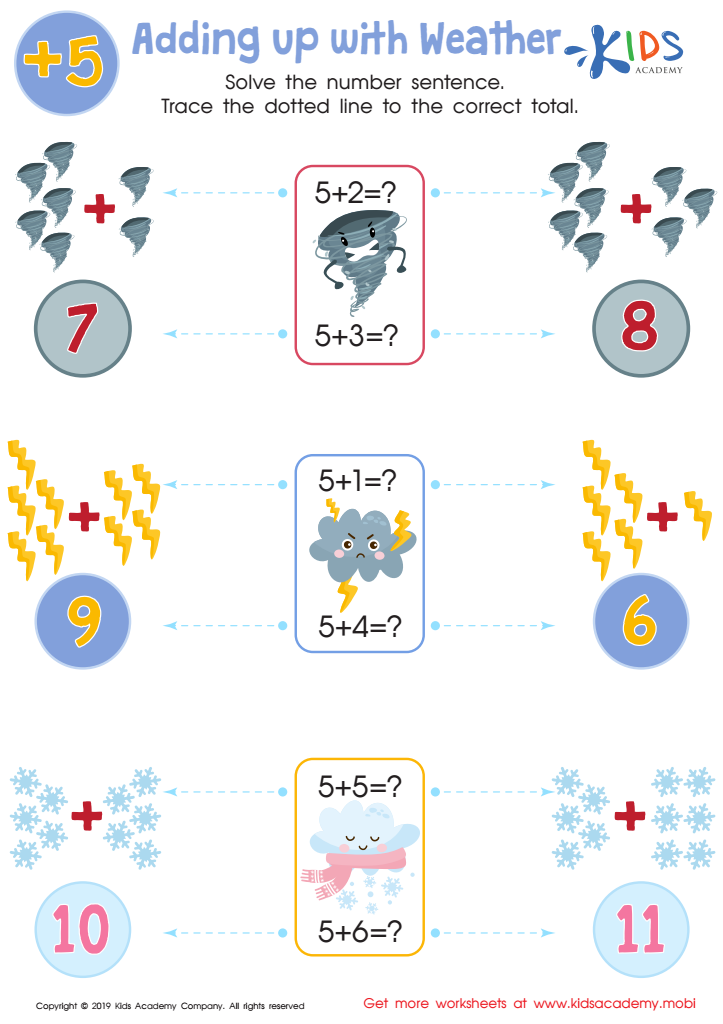
Adding up With Water Worksheet
 Assign to My Students
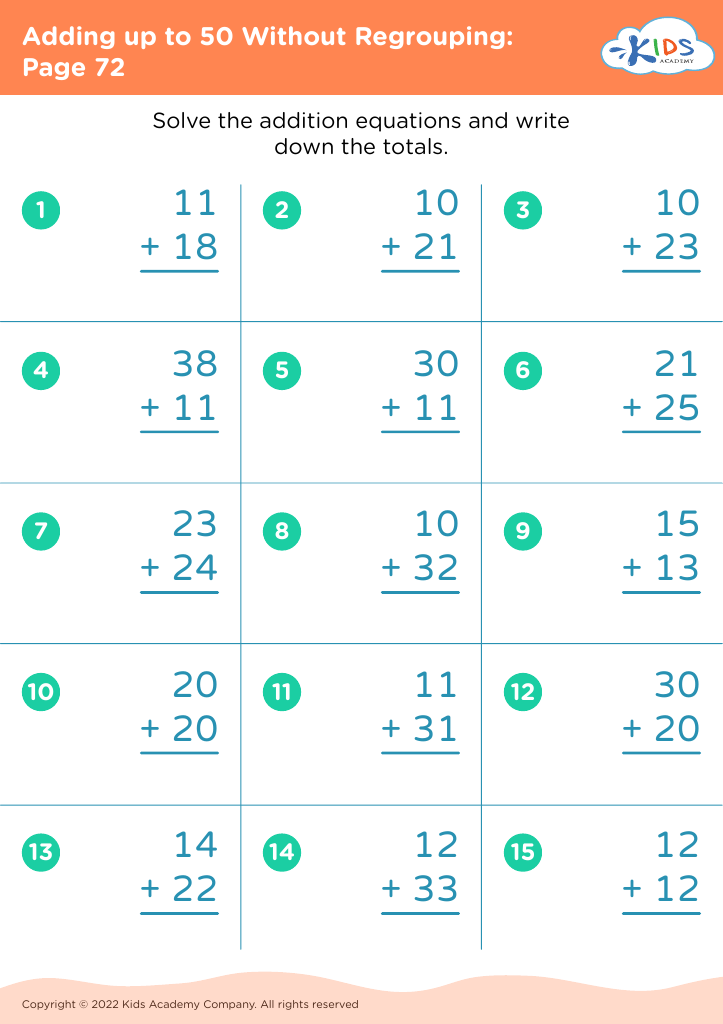
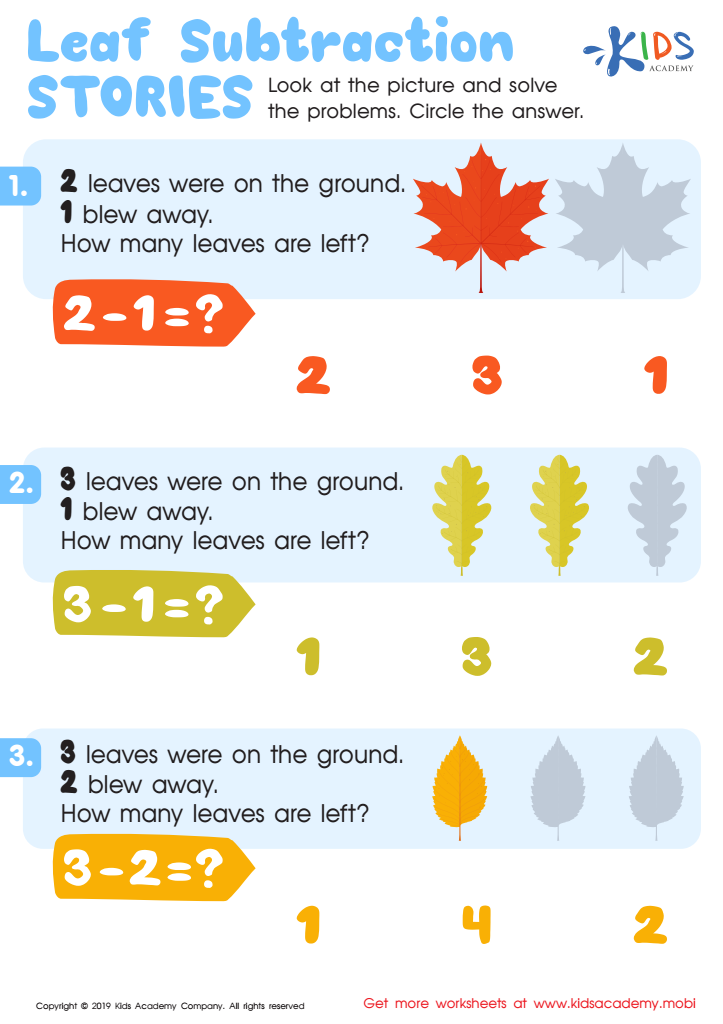
Leaf Subtraction Stories Worksheet
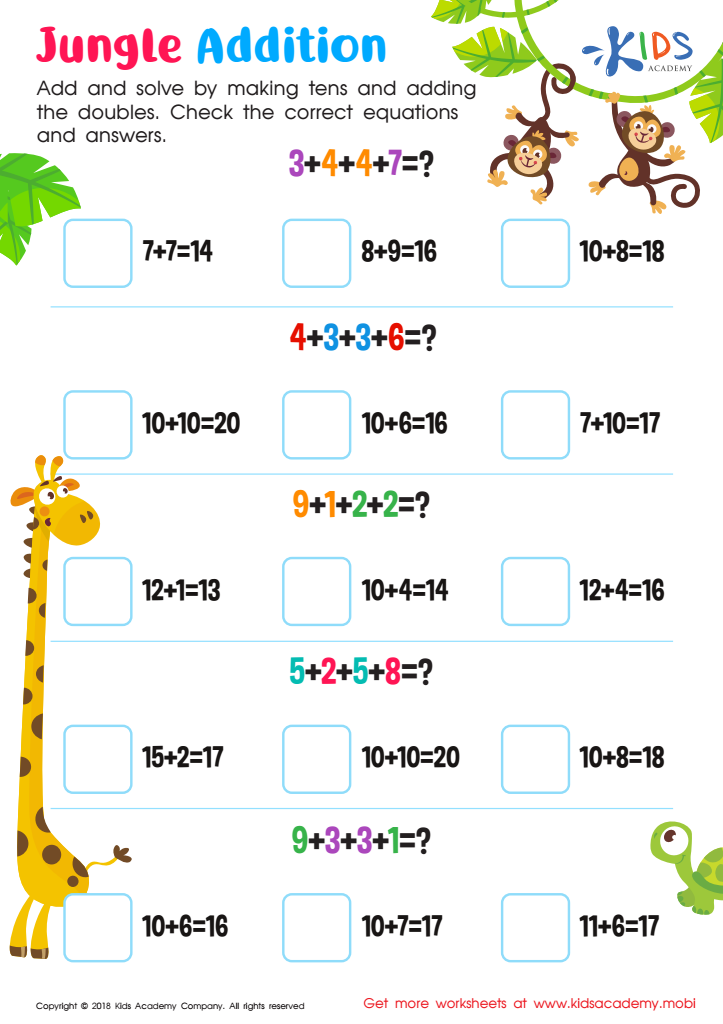
Jungle Addition Worksheet
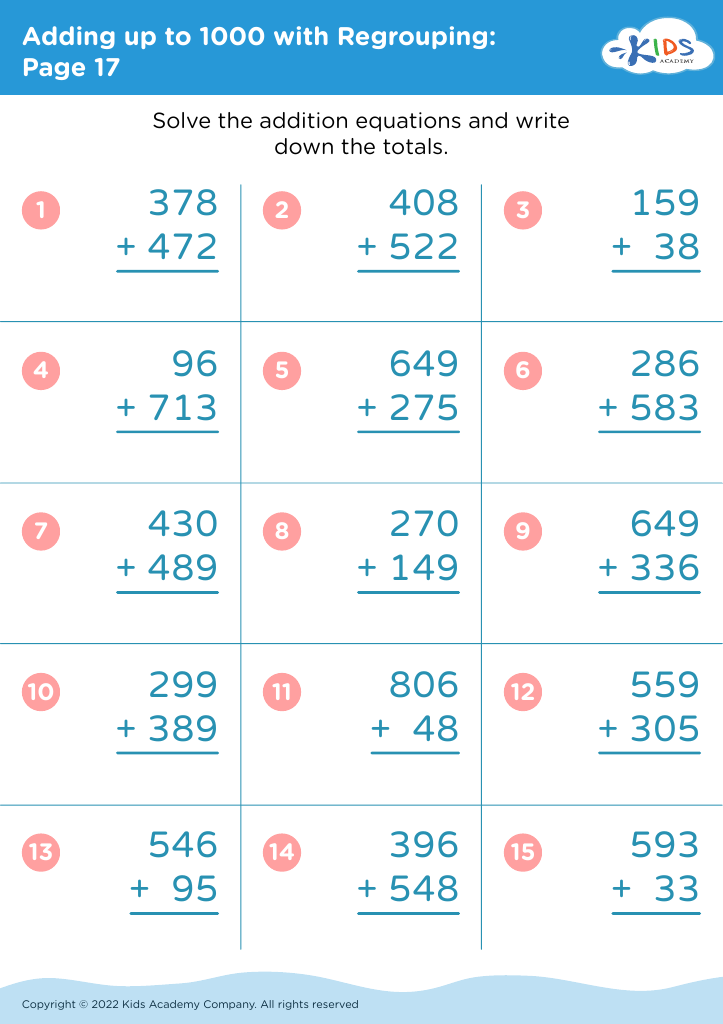
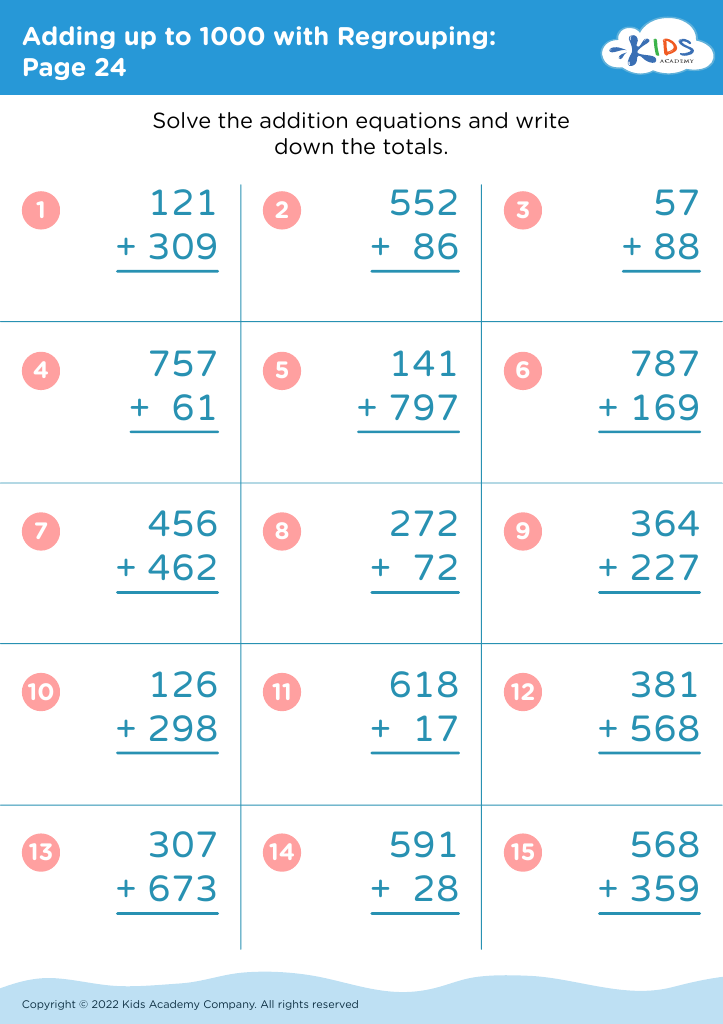
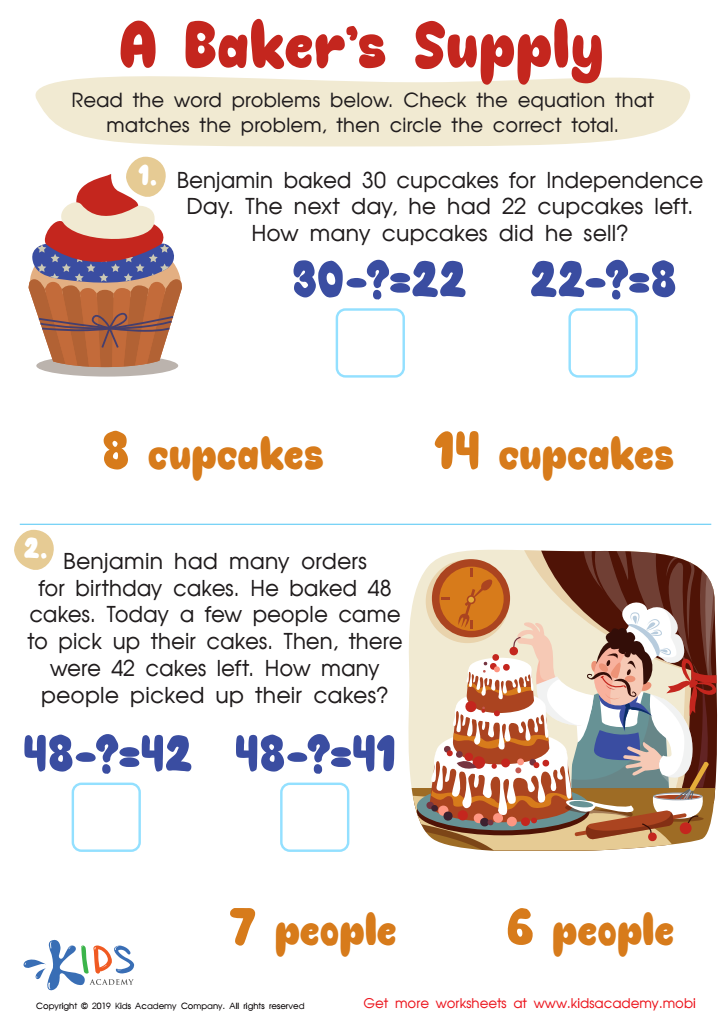
A Baker's Supply Worksheet
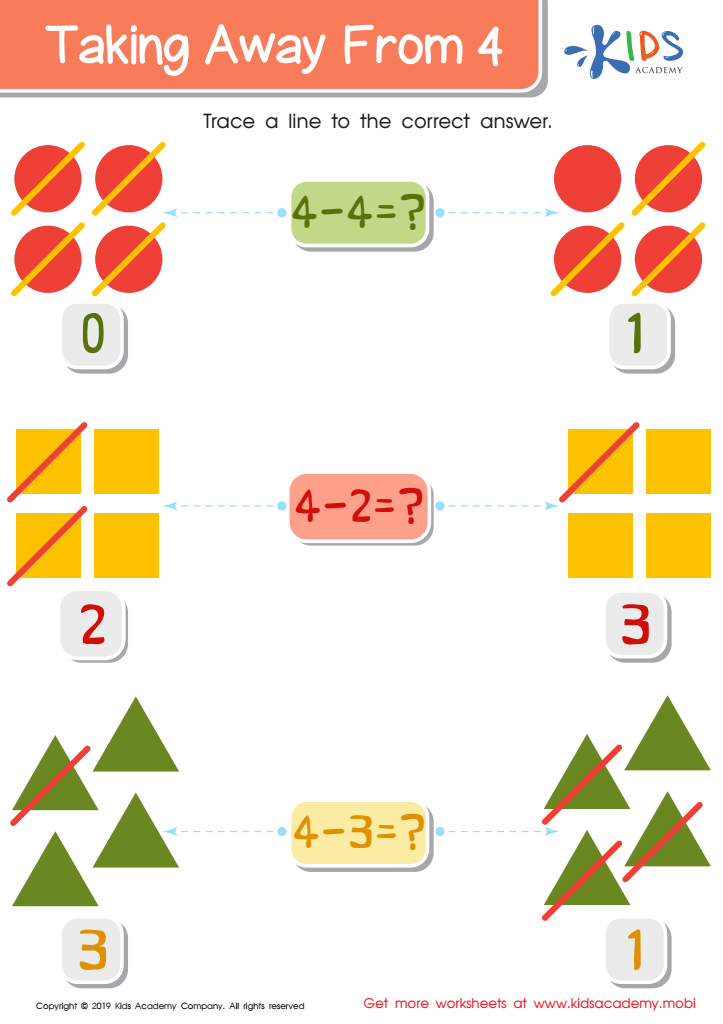
Taking Away from 4 Worksheet
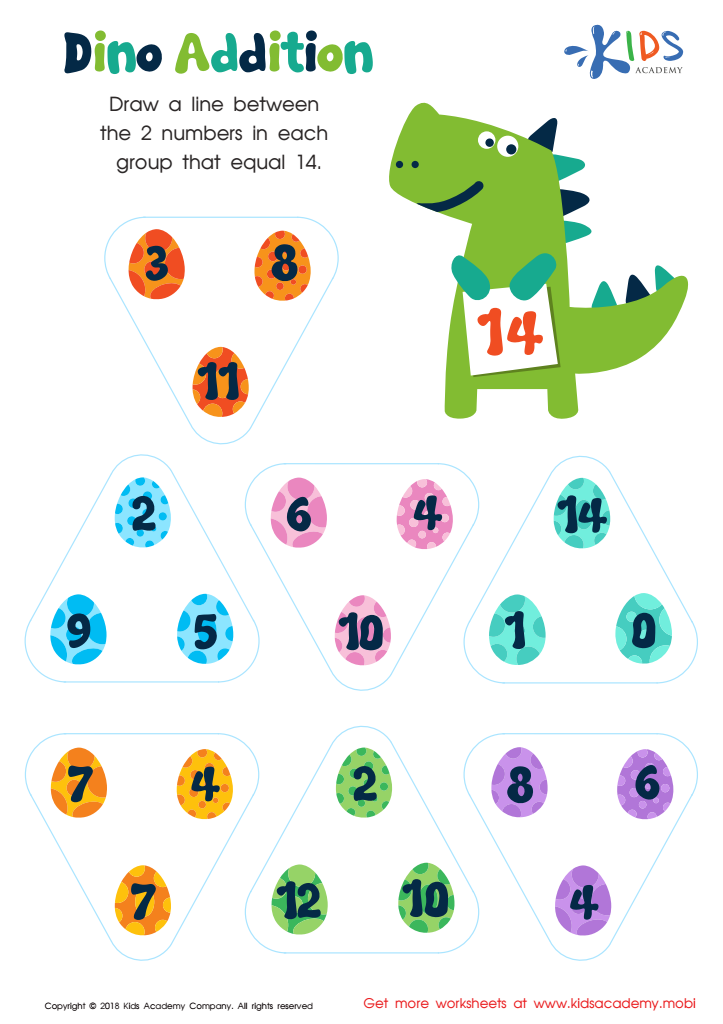
Dino Addition Worksheet
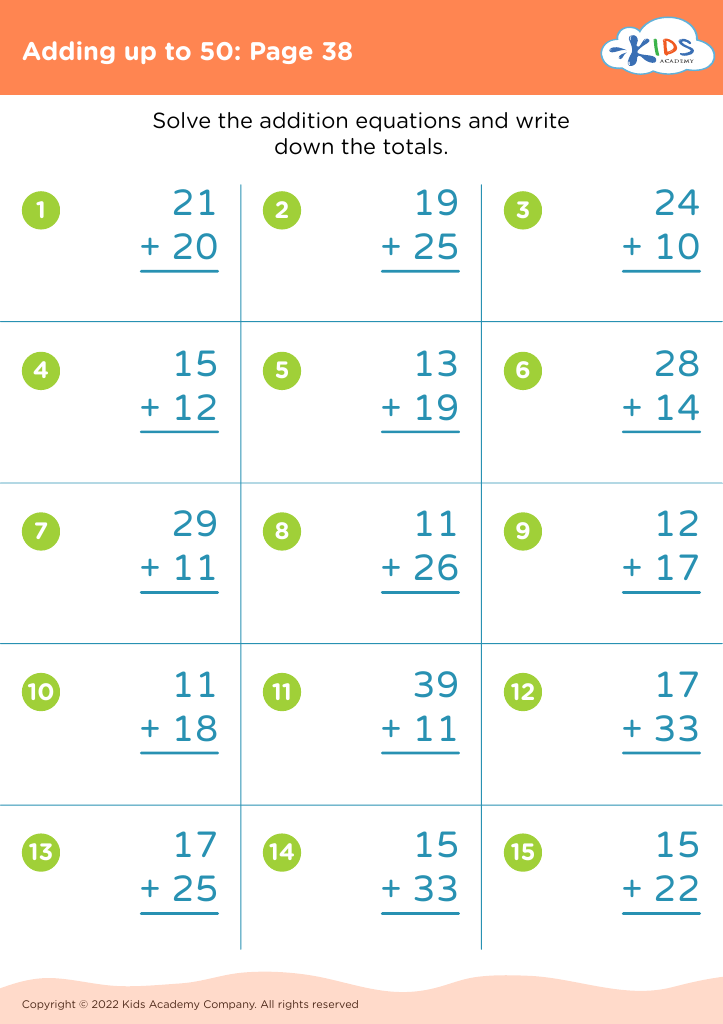
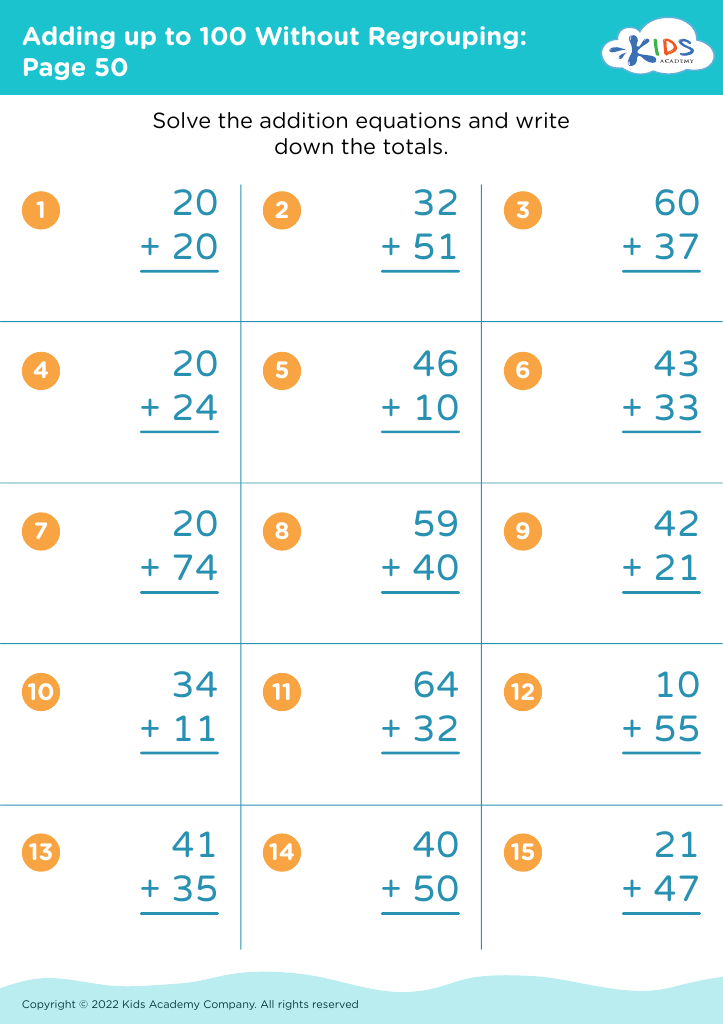
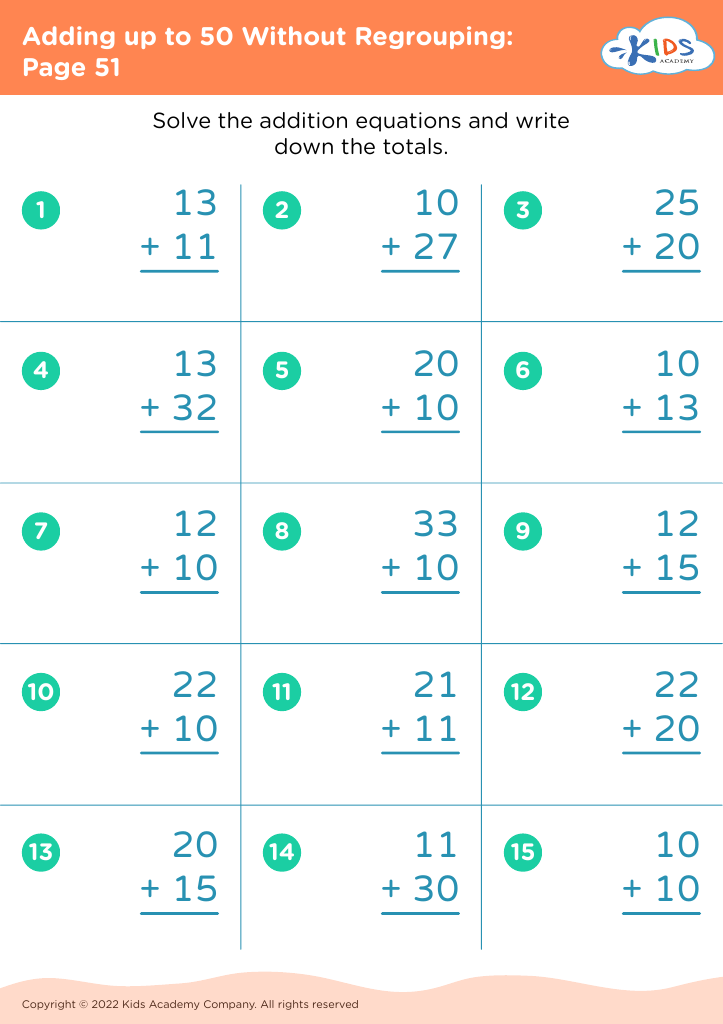
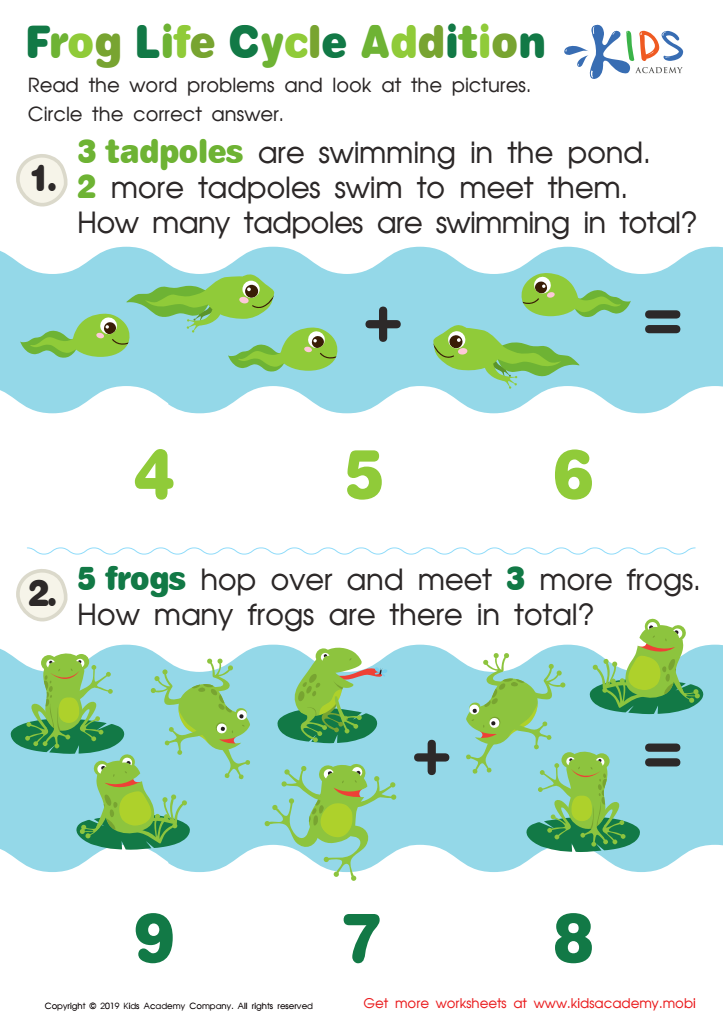
Frog Life Cycle Addition Worksheet
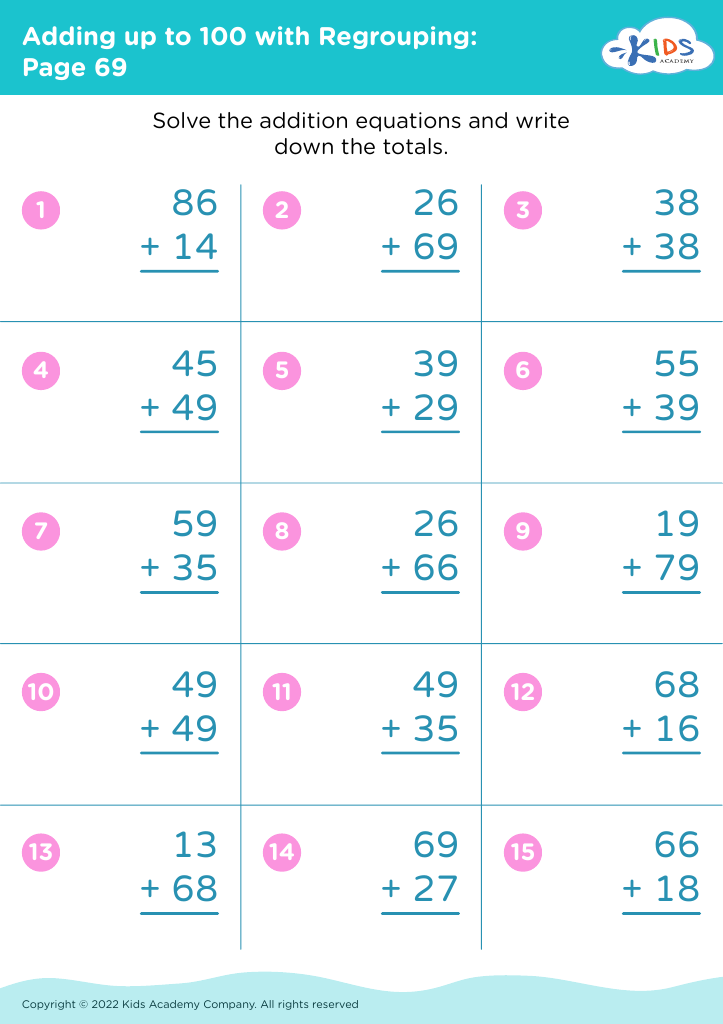
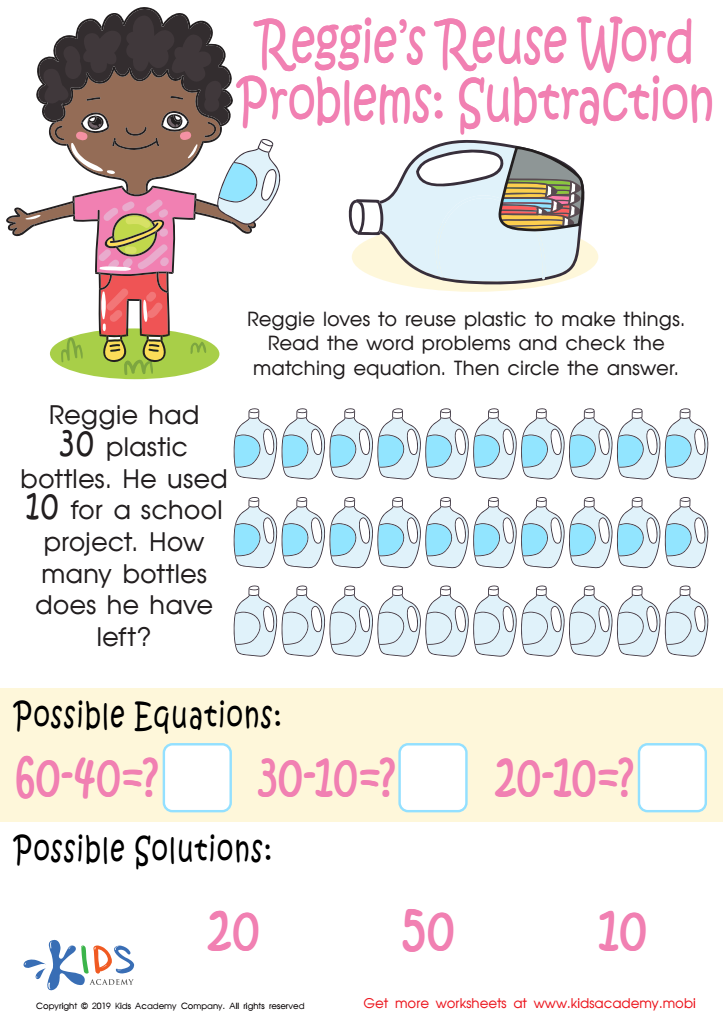
Reggie's Reuse Word Problems: Subtraction Worksheet
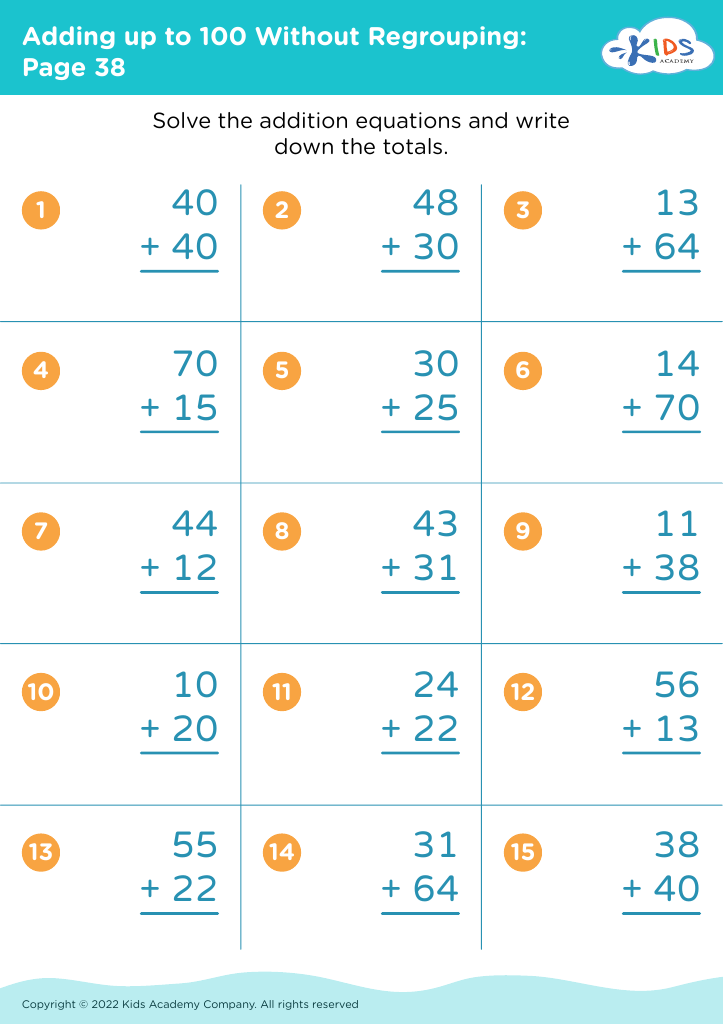
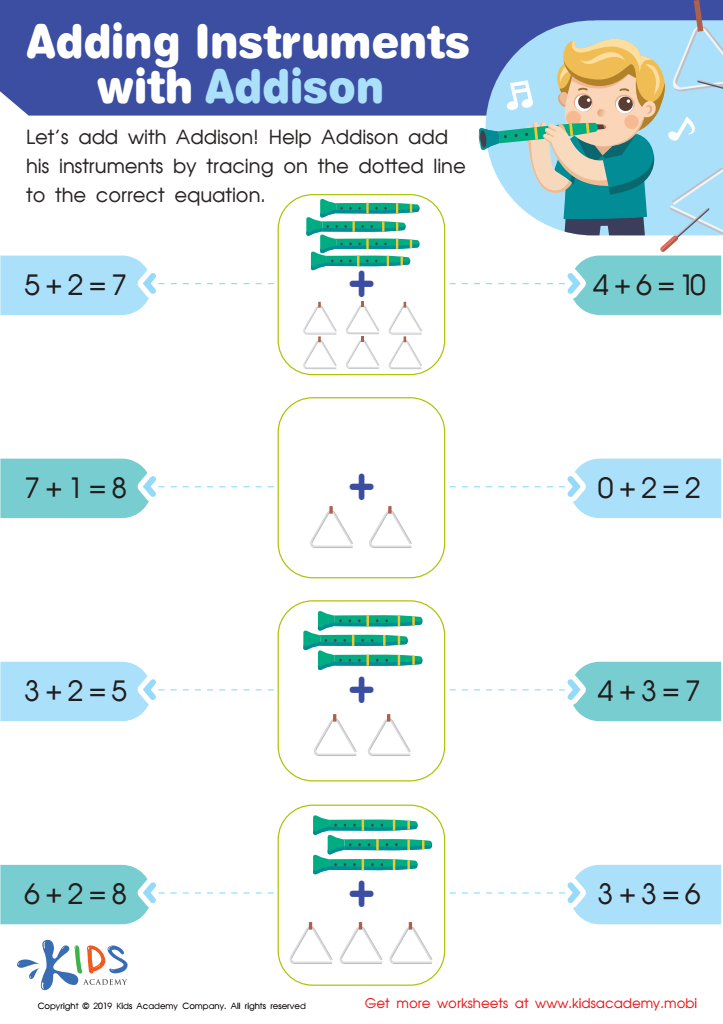
Adding Instruments with Addison Worksheet
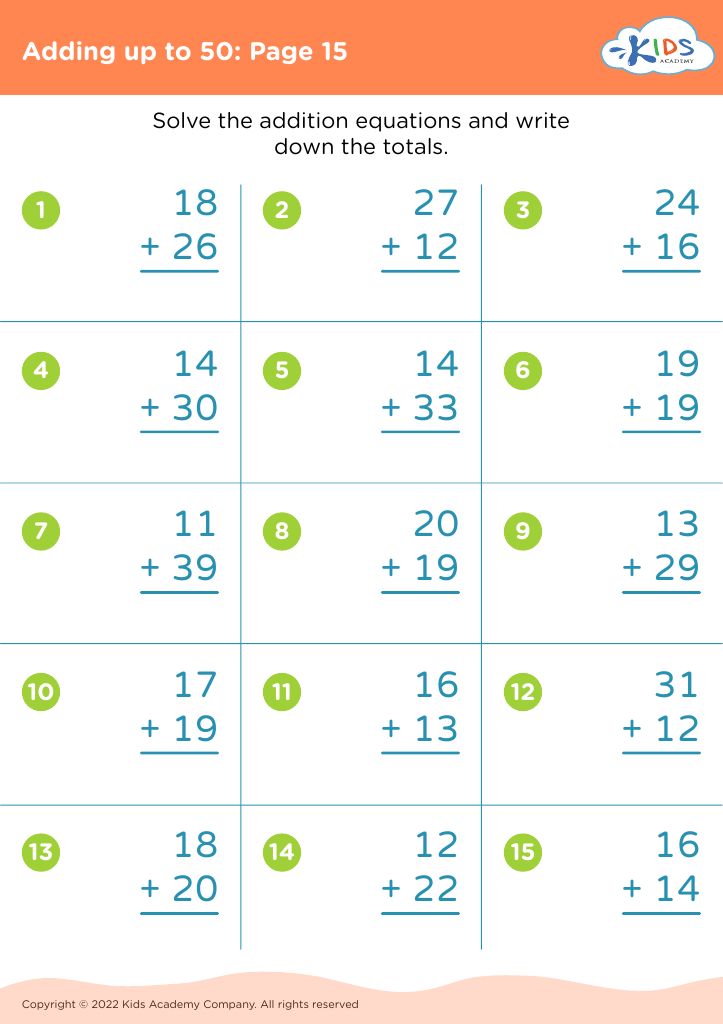
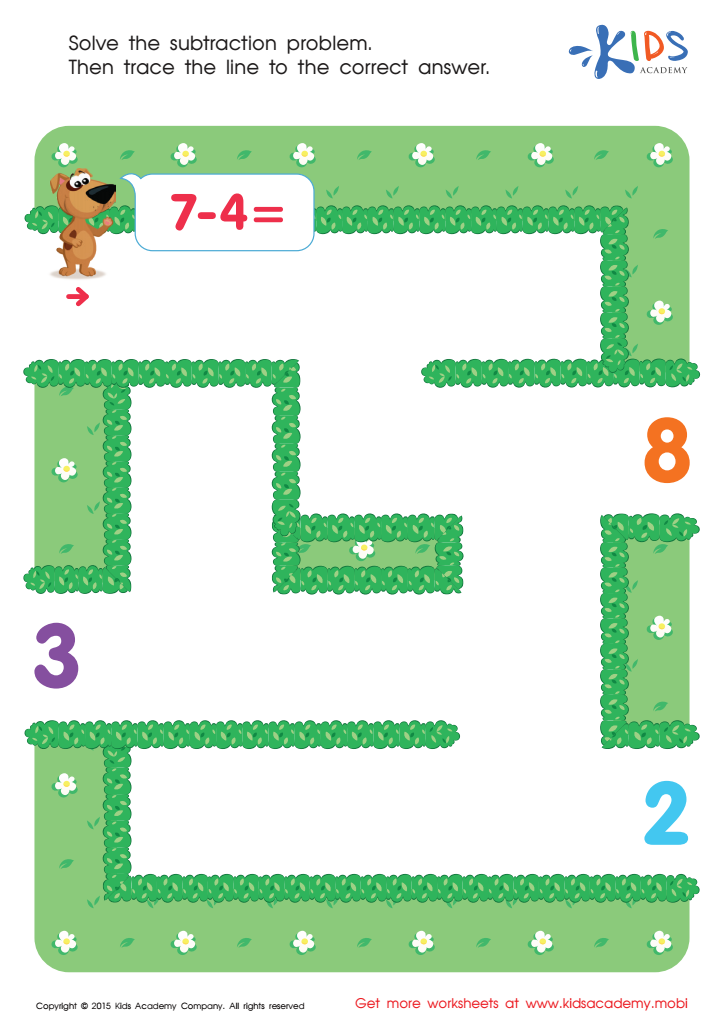
Subtraction Seven Minus Four Worksheet
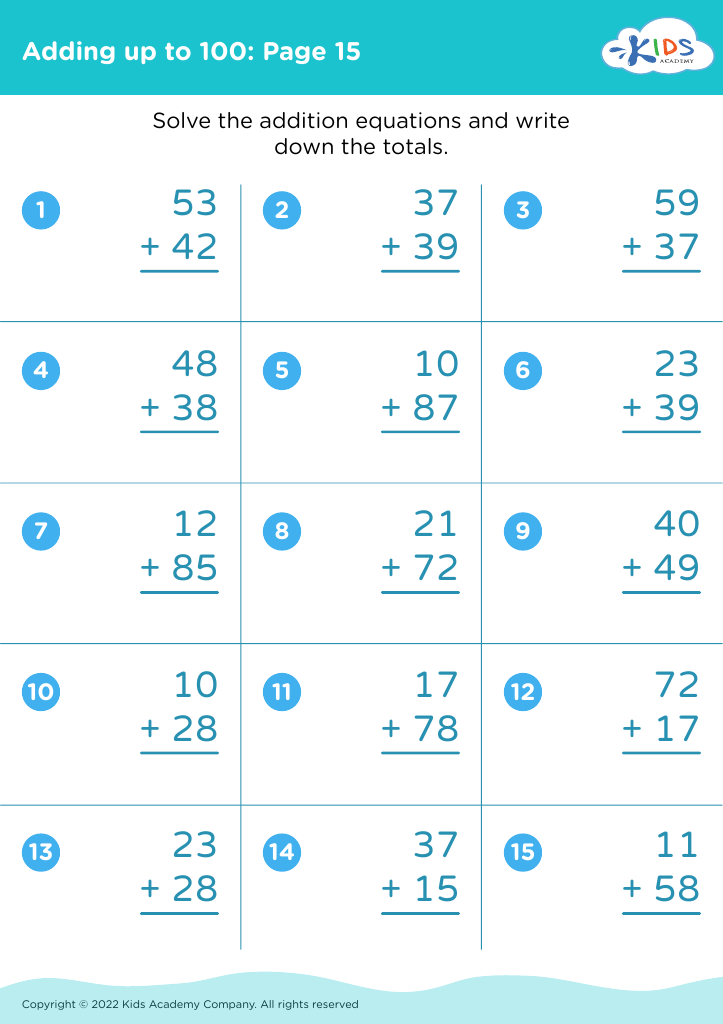
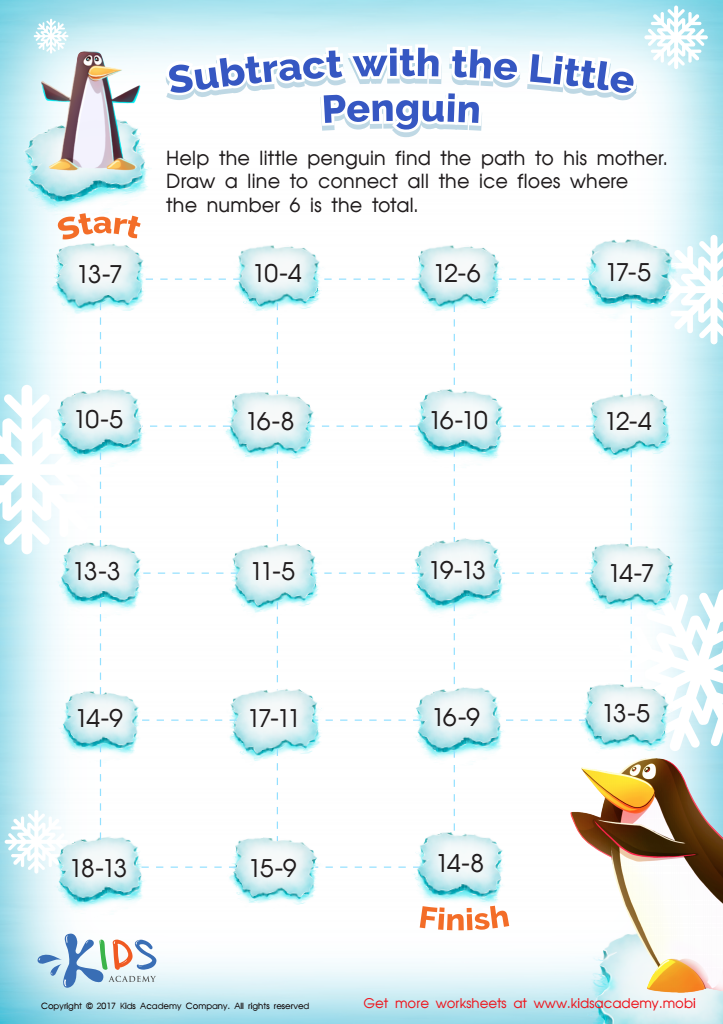
Subtract With The Little Penguin Substraction Worksheet
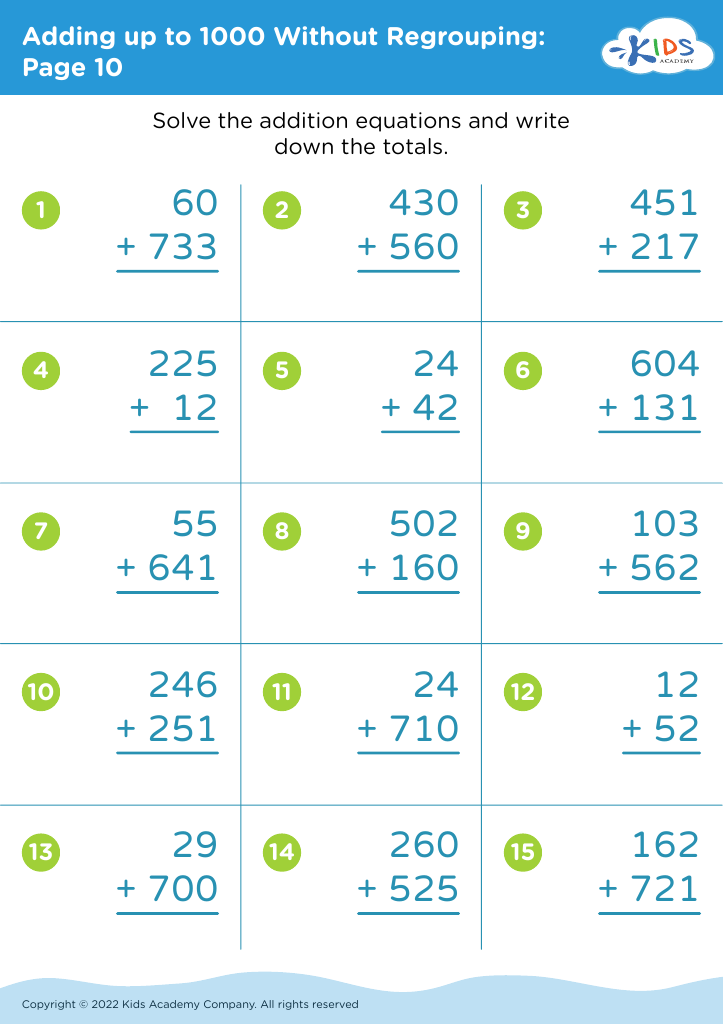
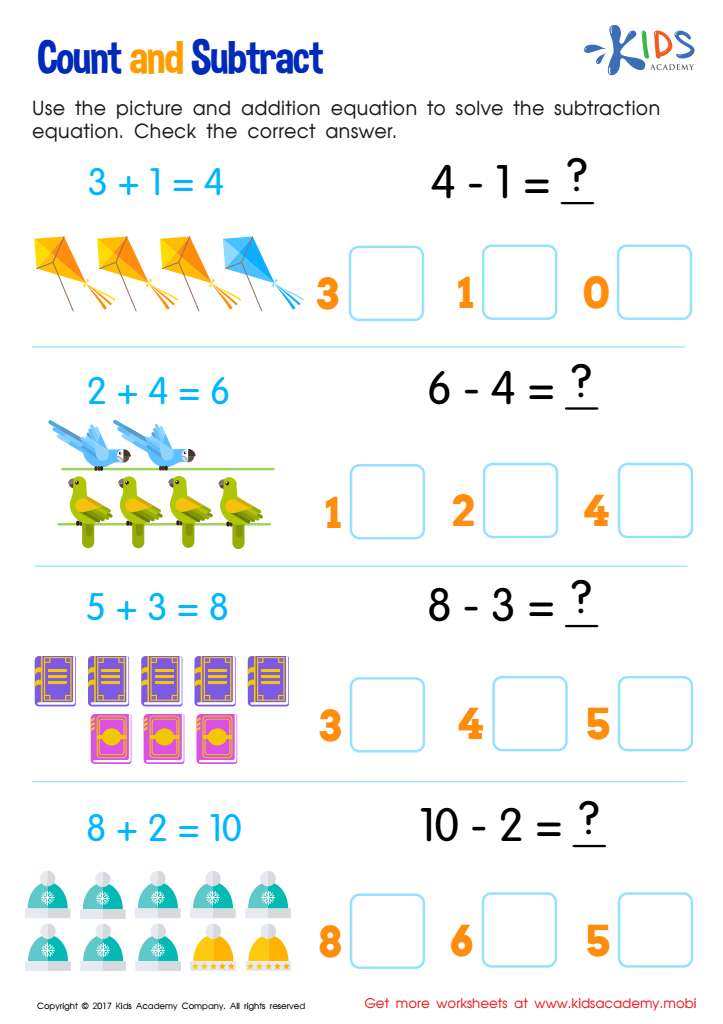
Count and Subtract Worksheet
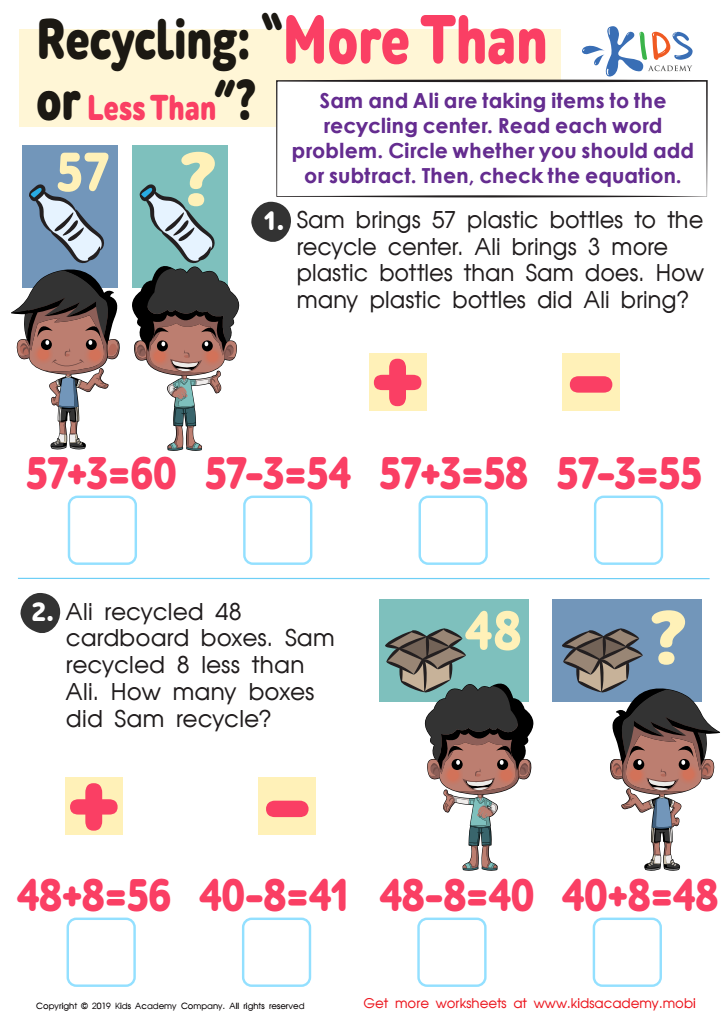
Recycling - More or Less Worksheet








Parents and teachers should prioritize basic math skills like addition and subtraction for children ages 6-8 because these skills form the foundational bedrock of all future mathematical learning. At this critical developmental stage, children are transitioning from concrete to more abstract thinking, making it essential to grasp these fundamental concepts to facilitate their cognitive growth.
Learning addition and subtraction at an early age helps children enhance their problem-solving skills, fostering logical reasoning and analytical thinking. These basic operations are not only crucial for higher-level math subjects like multiplication, division, and fractions but also for everyday activities, such as telling time and handling money.
Mastering addition and subtraction boosts a child's confidence, providing a sense of achievement that motivates further learning. This early proficiency reduces mathematical anxiety, setting a positive trajectory for their entire educational journey. Additionally, math skills are integral in developing strong critical thinking abilities that are applicable across subjects, from science to social studies.
Furthermore, encouraging children to practice and understand these basic operations early on can help identify any learning difficulties, enabling timely interventions. Therefore, by emphasizing the importance of addition and subtraction, parents and teachers invest in a child’s long-term academic success and overall cognitive development.








