Money management skills Addition & Subtraction Worksheets for Ages 6-8
3 filtered results
-
From - To
Enhance your child's financial literacy with our engaging Money Management Skills Addition & Subtraction Worksheets, designed especially for ages 6 to 8! These fun and interactive worksheets help young learners practice essential math operations while tackling real-life money scenarios. By blending fundamental addition and subtraction exercises with money-based problems, children develop critical thinking skills alongside their numerical abilities. Our thoughtfully crafted activities encourage counting coins, making change, and understanding value, laying a strong foundation for responsible money management. Download and print these worksheets to foster your child's confidence and competence in handling finances, preparing them for a successful future!
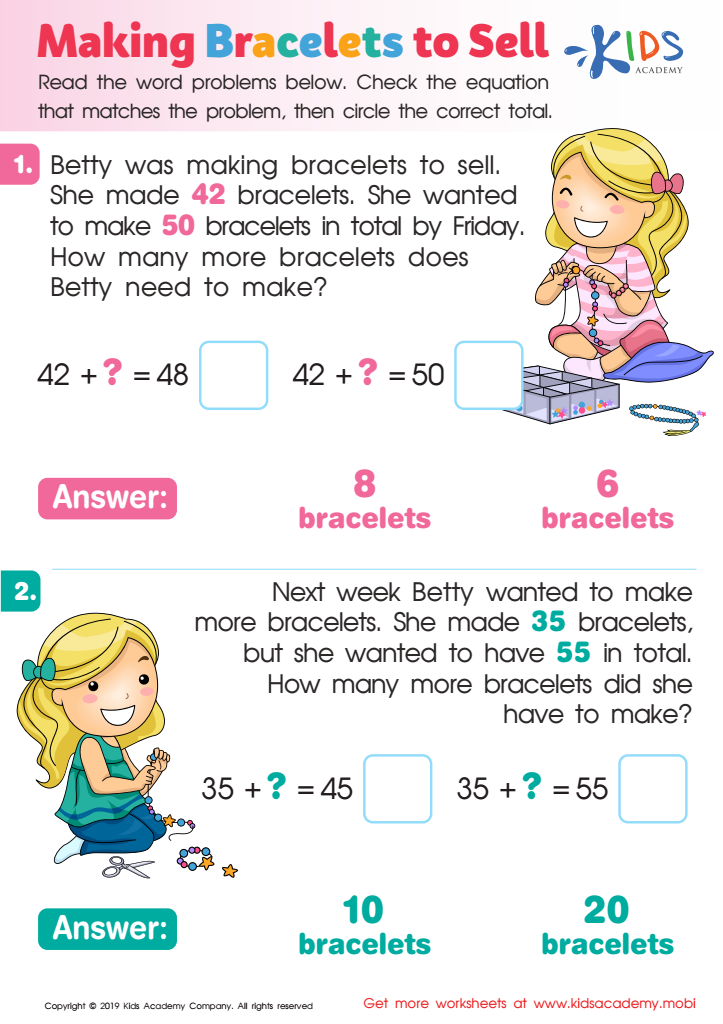
Making Bracelets to Sell Worksheet
 Assign to My Students
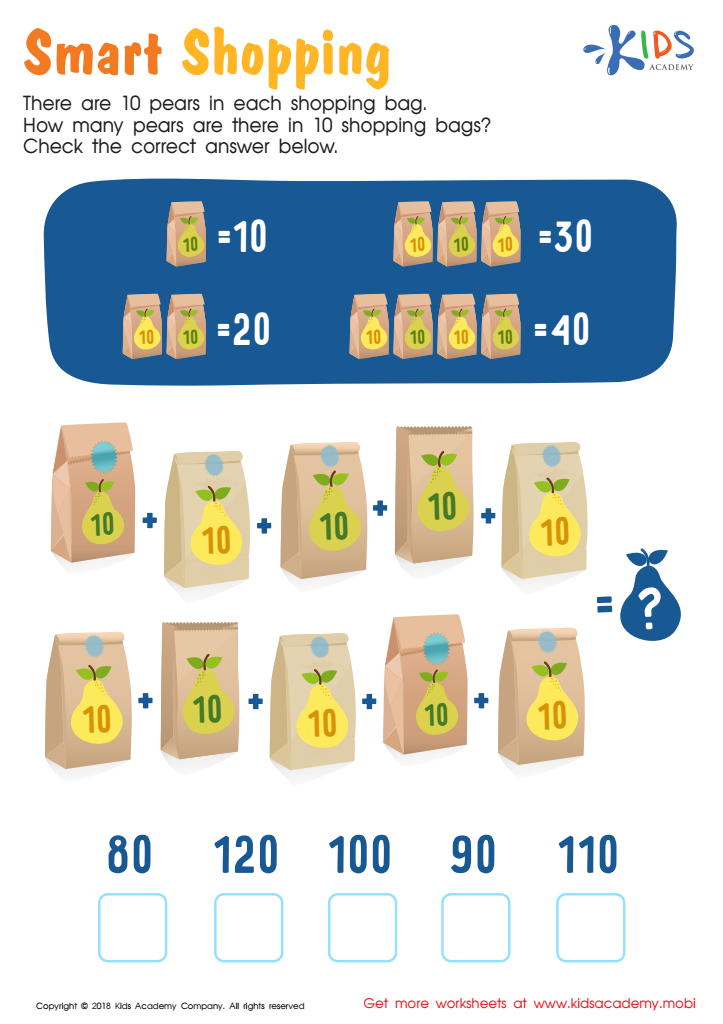
Smart Shopping: Trade Tens for a Hundred Worksheet
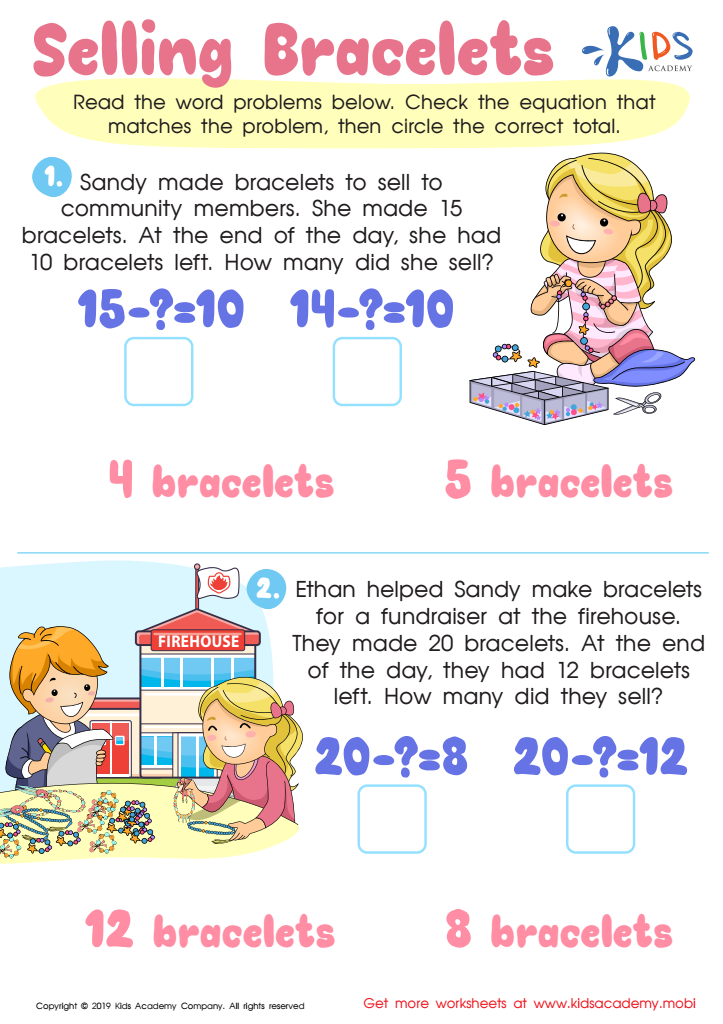
Selling the Bracelets Worksheet








Money management skills, particularly in addition and subtraction, are critical for children aged 6-8 as they lay the foundational understanding of financial literacy. At this age, children begin to grasp the value of money and the basics of spending and saving. Learning to add and subtract using money helps them develop essential math skills while also fostering a sense of personal responsibility.
When parents and teachers prioritize these money management skills, they equip children with tools to navigate daily life. For instance, understanding how to calculate the total cost while shopping or determining change fosters confidence and independence. These early experiences create a real-world application for mathematical concepts, making learning engaging and practical.
Moreover, instilling good money habits early on can lead to positive lifelong financial behaviors. Children learn the importance of budgeting, saving, and making informed choices about spending. As they engage in activities such as playing store or using real money in class, they build essential cognitive and emotional skills, including decision-making and critical thinking.
In essence, this foundation not only aids academic success in mathematics but also prepares children for adulthood by cultivating financially responsible citizens. Prioritizing money management education is an investment in future well-being and competence.








