Number Sequencing Addition & Subtraction Worksheets for Ages 6-8
17 filtered results
-
From - To
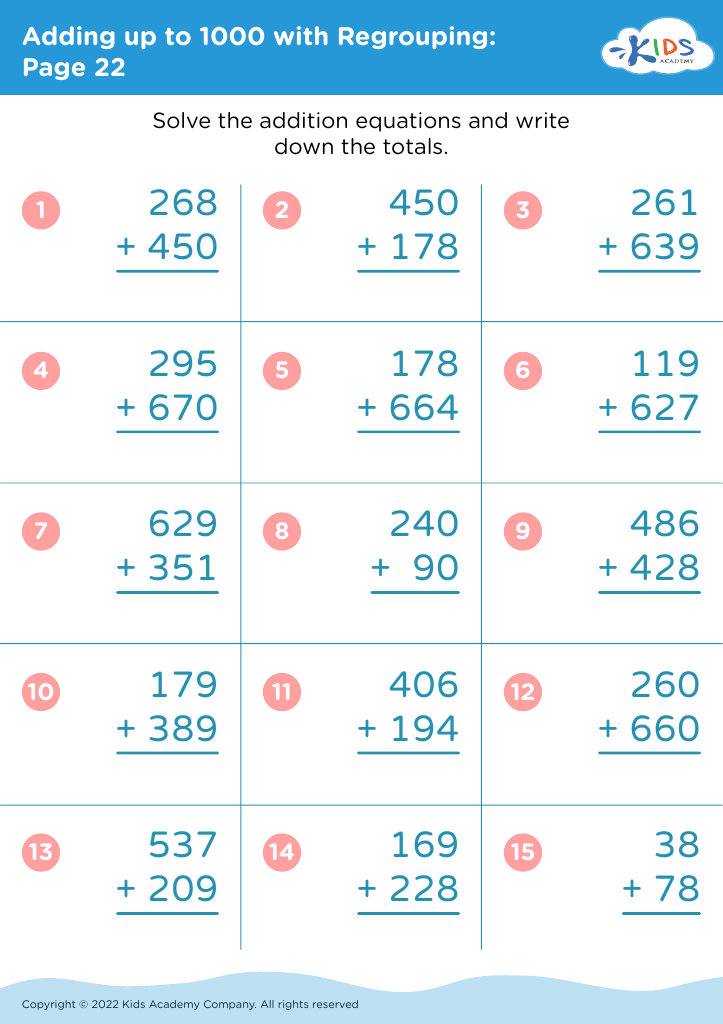
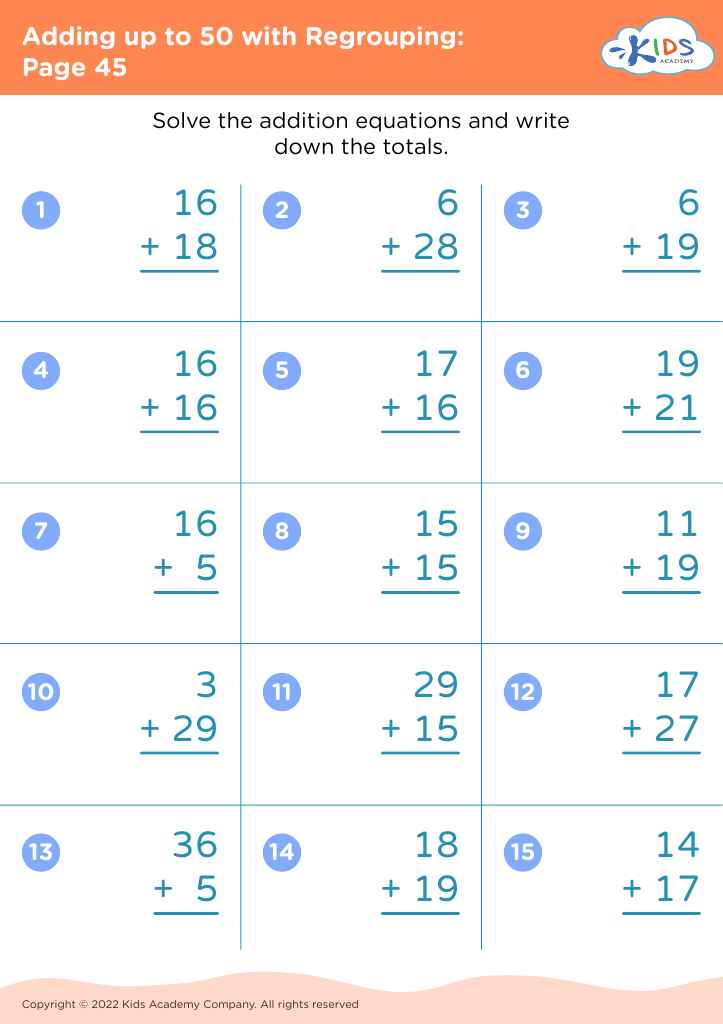
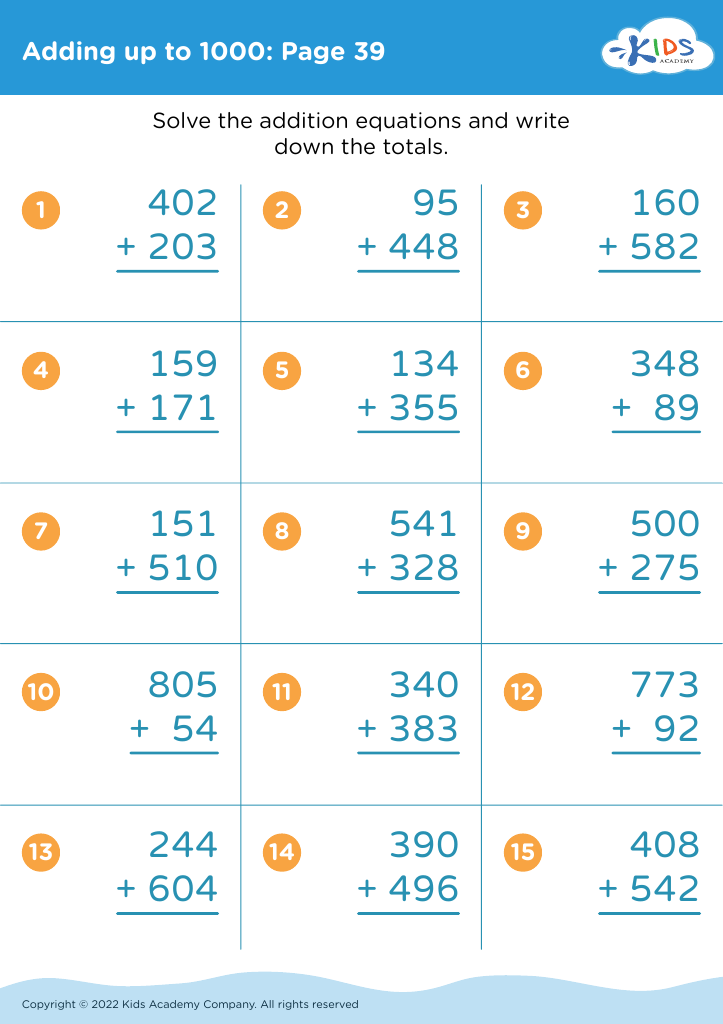
Our "Number Sequencing Addition & Subtraction Worksheets for Ages 6-8" are designed to enhance young learners' mathematical abilities through engaging exercises. These worksheets help children master number sequences and foundational operations like addition and subtraction in a fun, interactive manner. Perfect for early grade students, the activities encourage critical thinking and problem-solving skills. The carefully crafted worksheets support classroom learning or at-home practice, ensuring that your kids develop a strong mathematical foundation. With a variety of colorful and challenging tasks, they keep young minds stimulated and eager to learn more. Equip your child with essential math skills today!
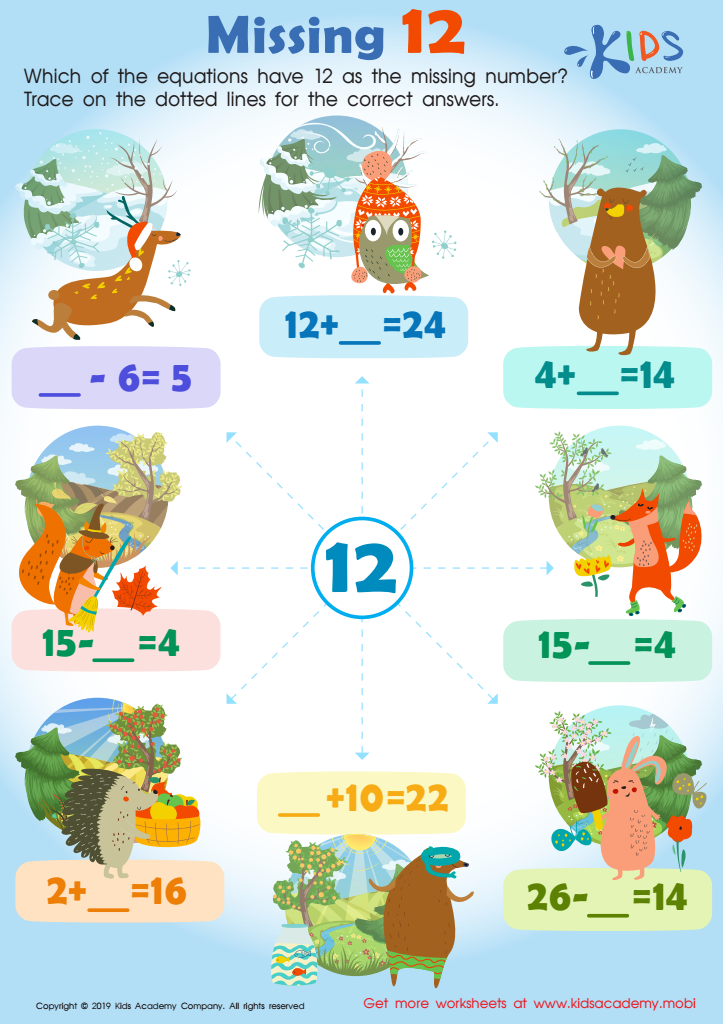
Missing 12 Worksheet
 Assign to My Students
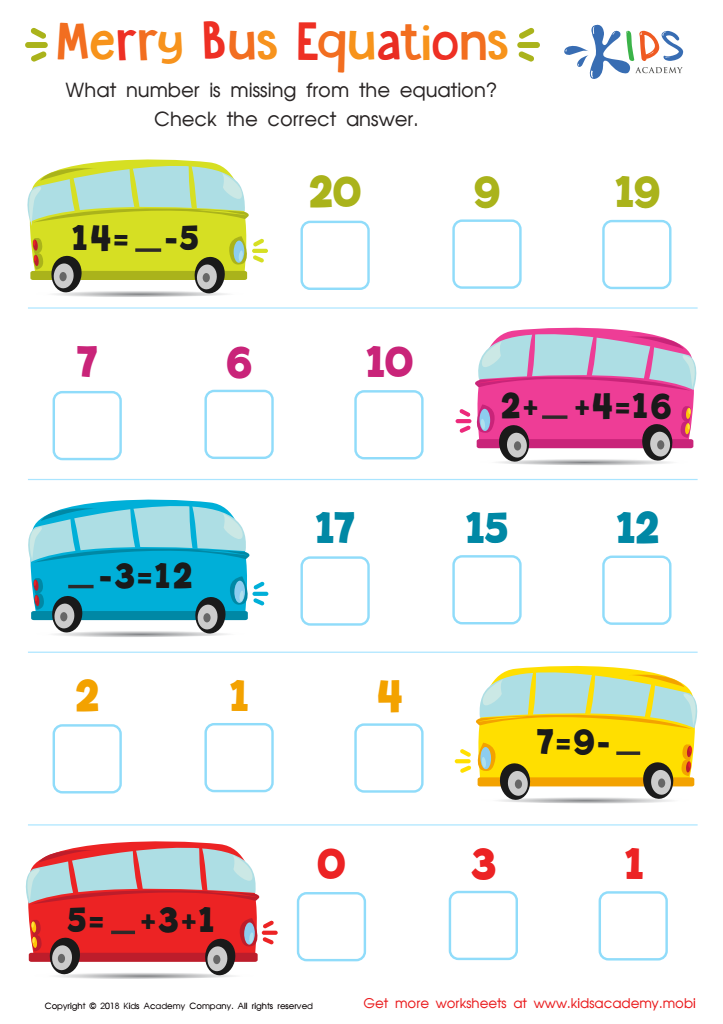
Merry Bus Equations Worksheet
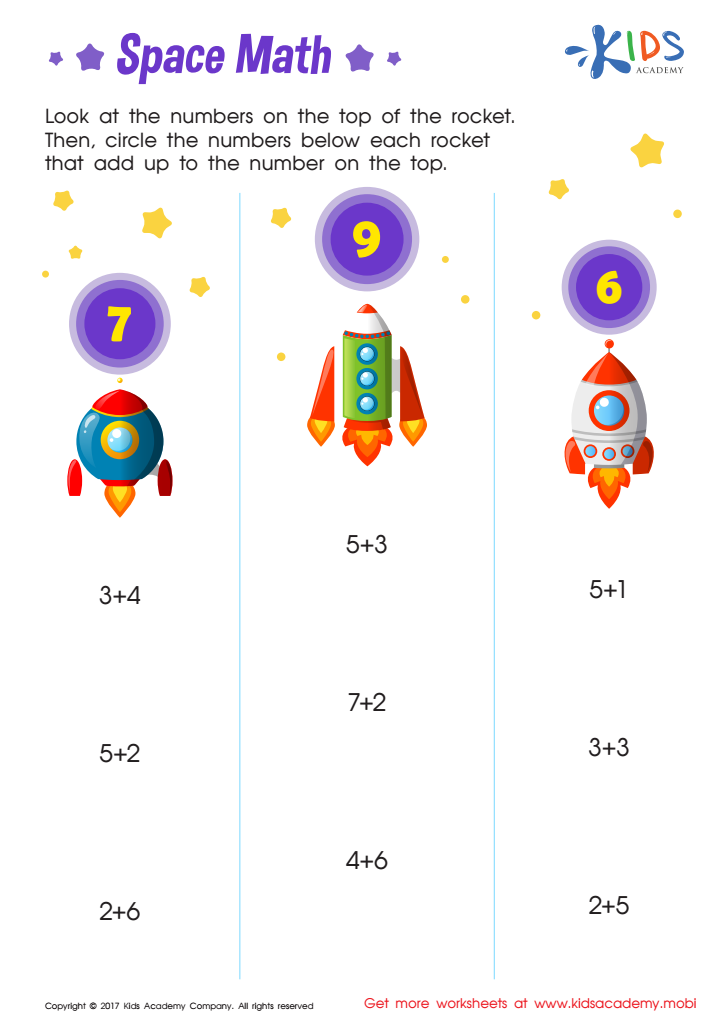
Addition: Space Math Worksheet
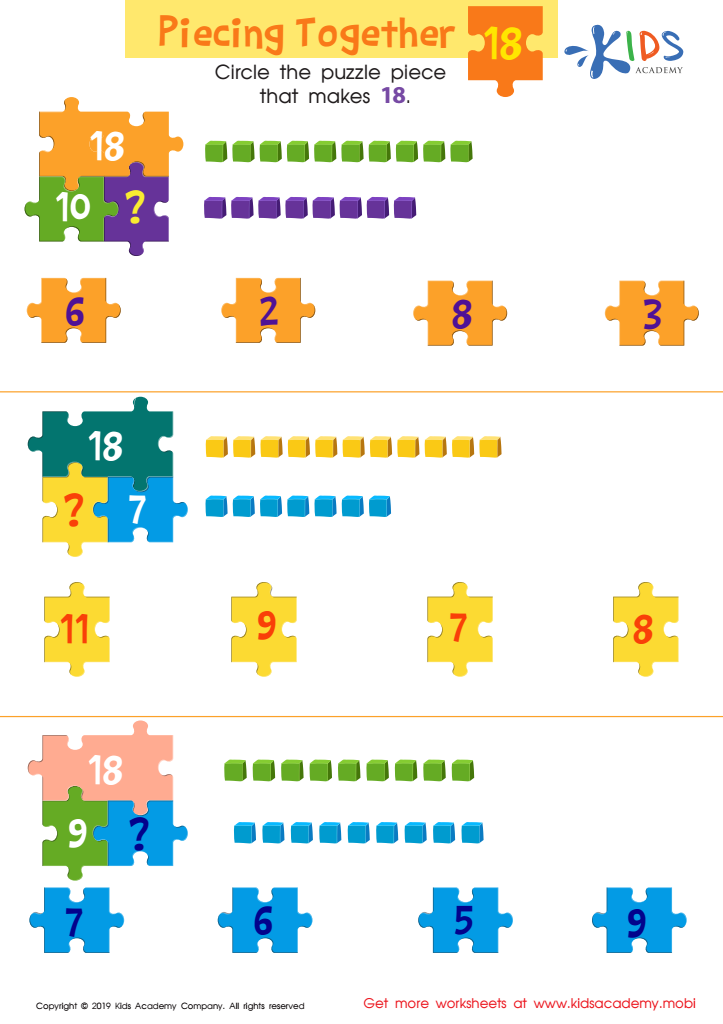
Piecing Together 18 Worksheet
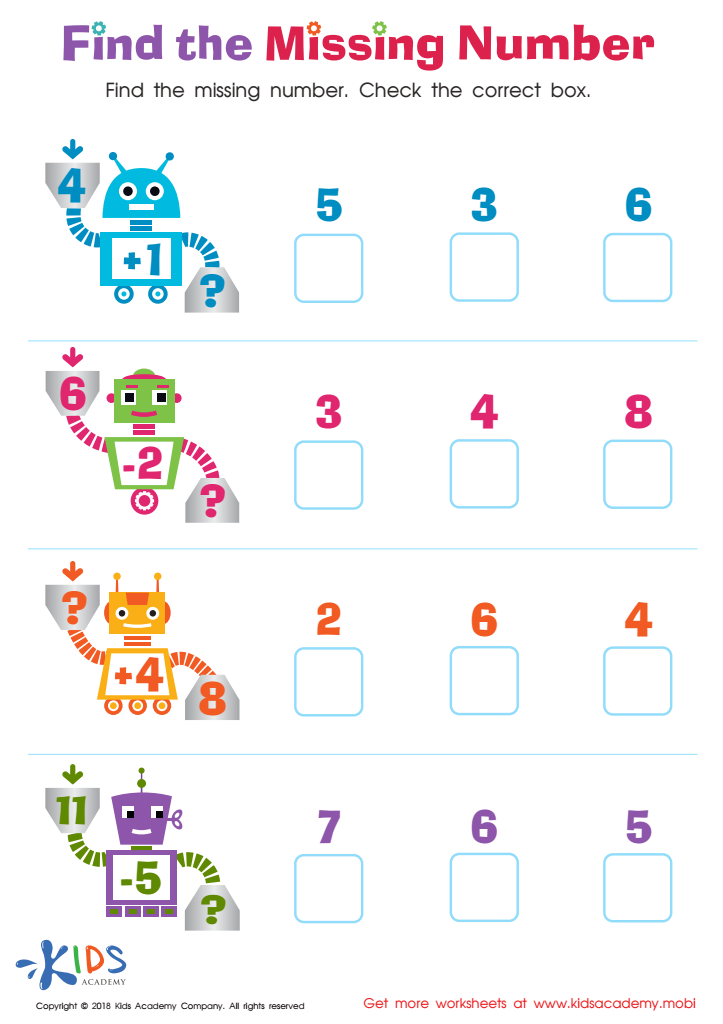
Find the Missing Number Worksheet
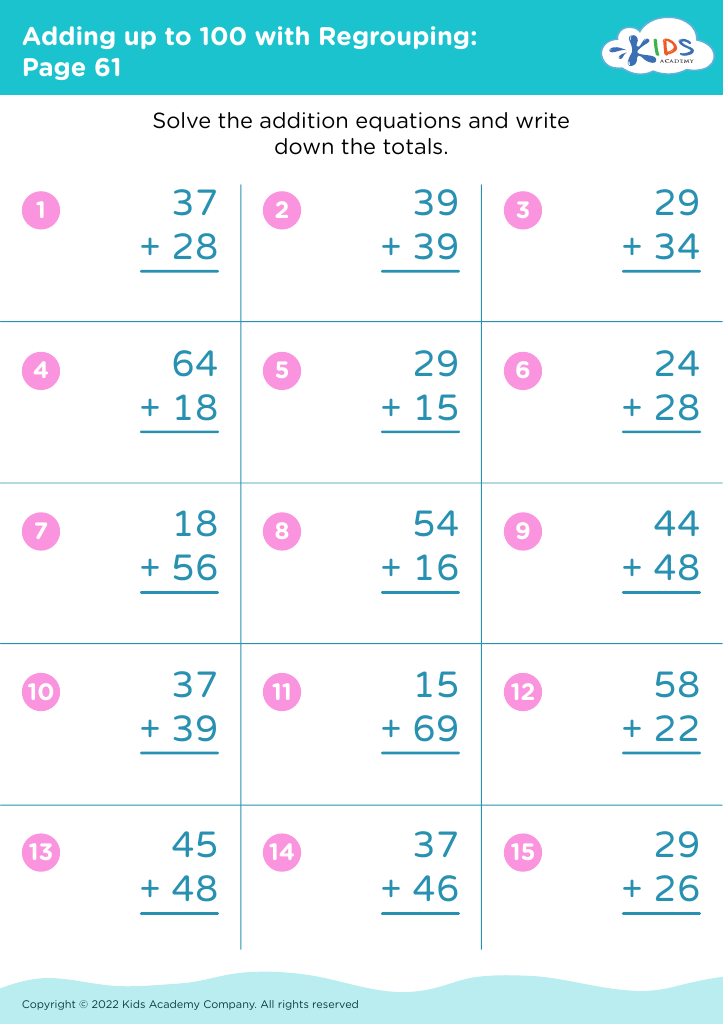
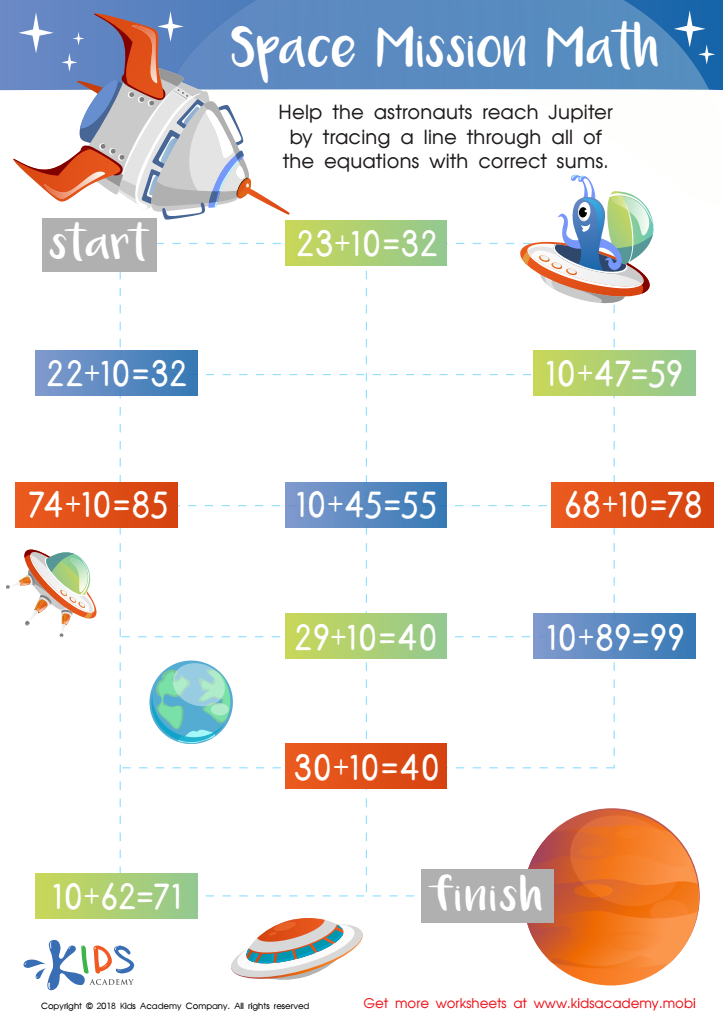
Space Mission Math Worksheet
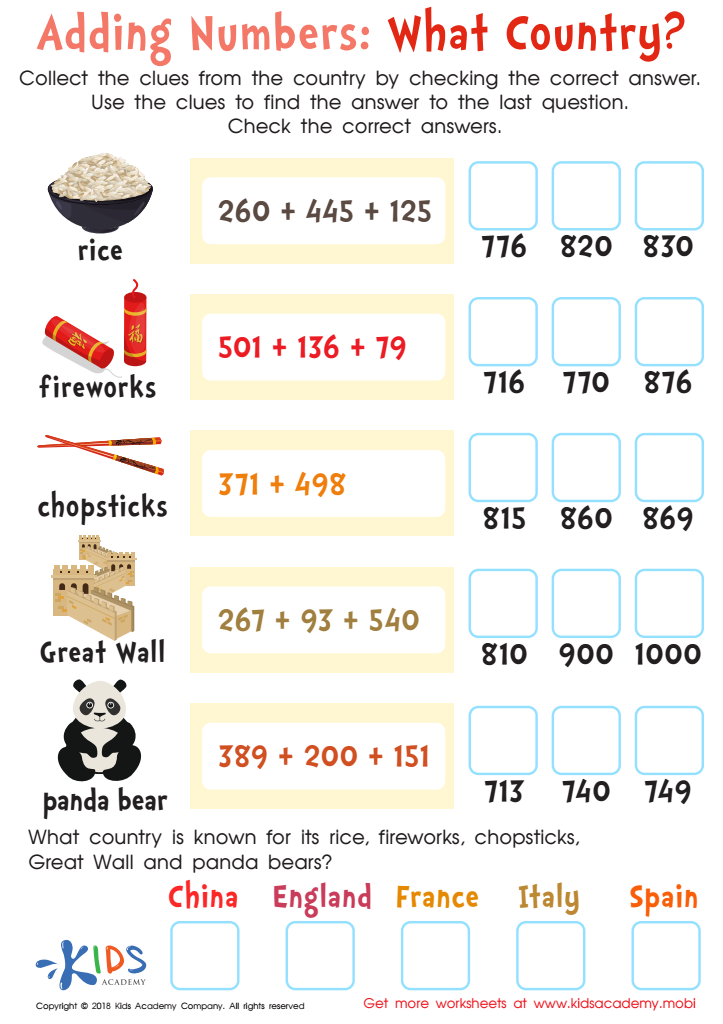
Adding Numbers: What Country Worksheet
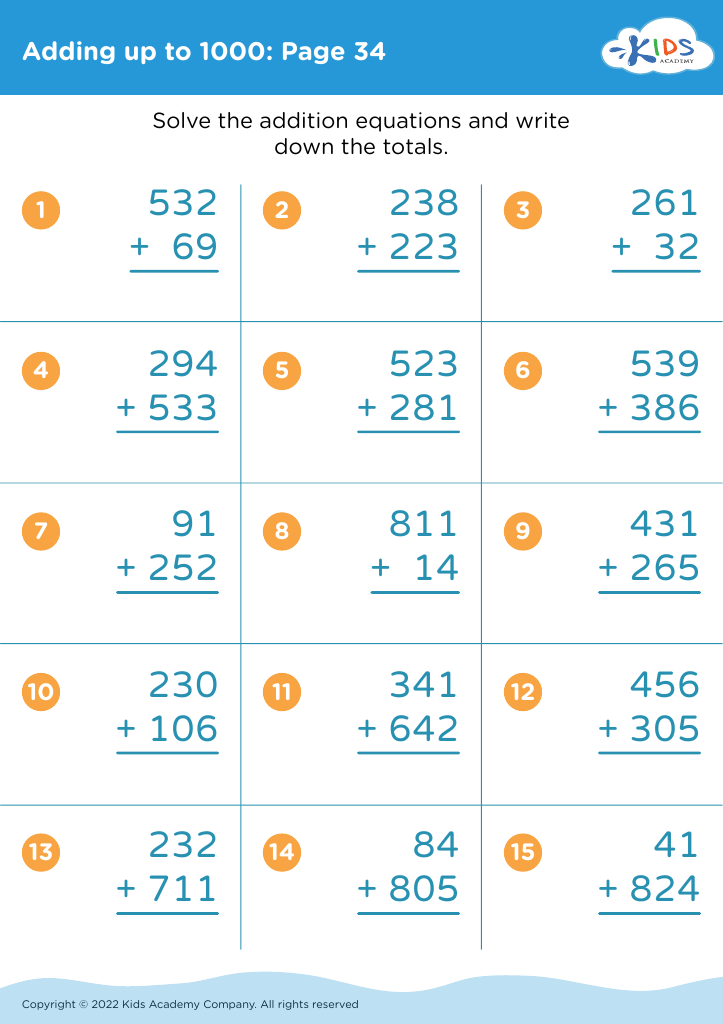
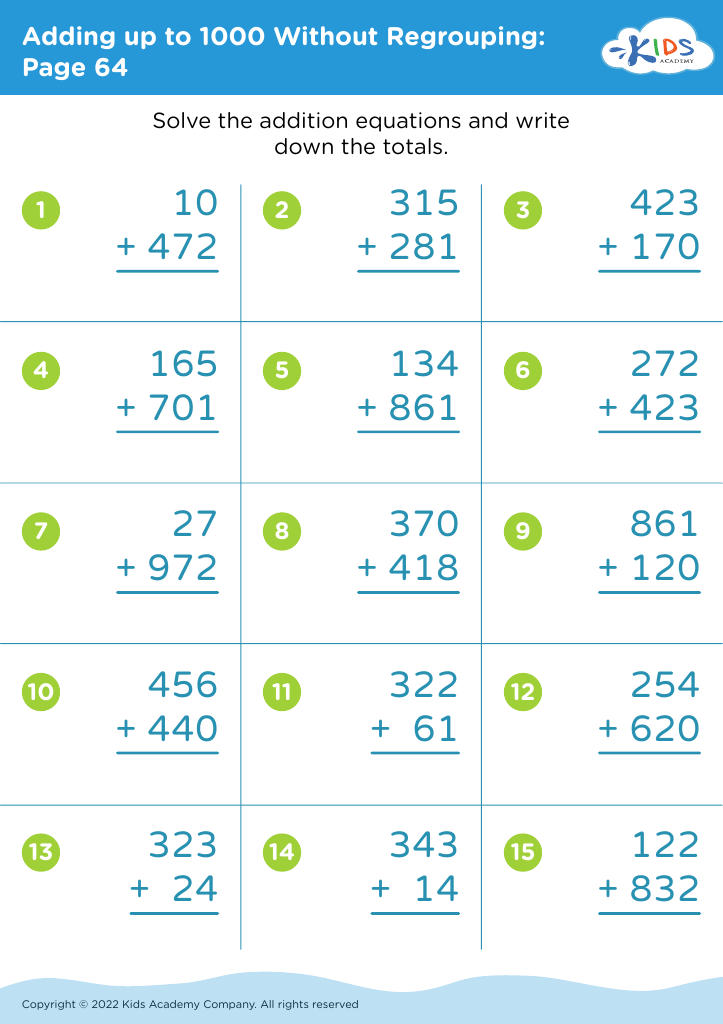
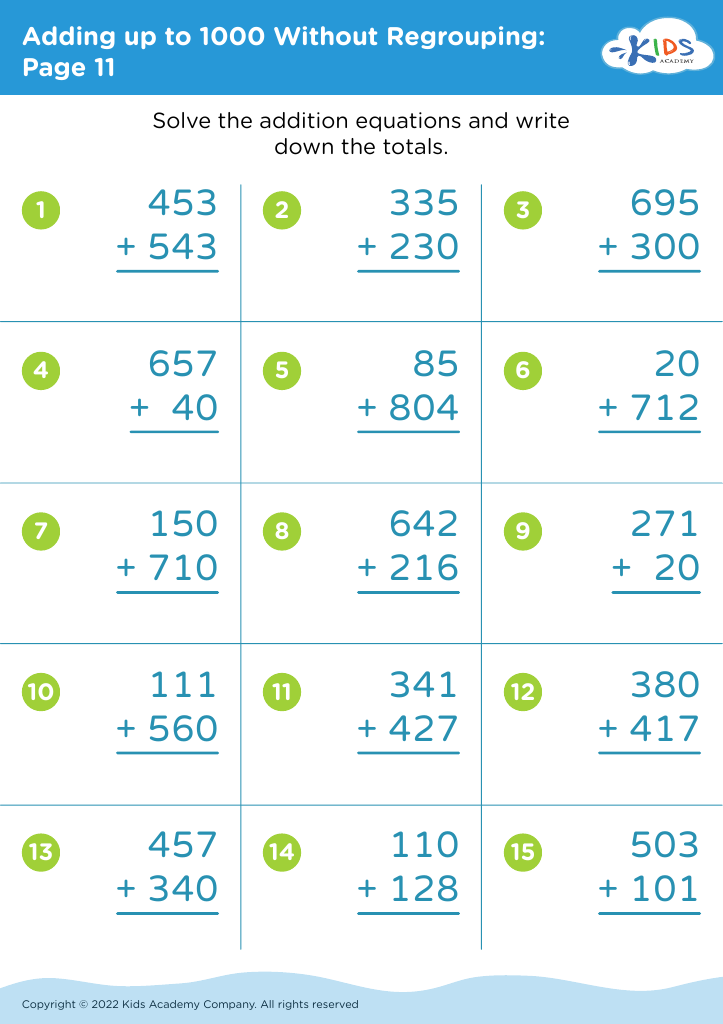
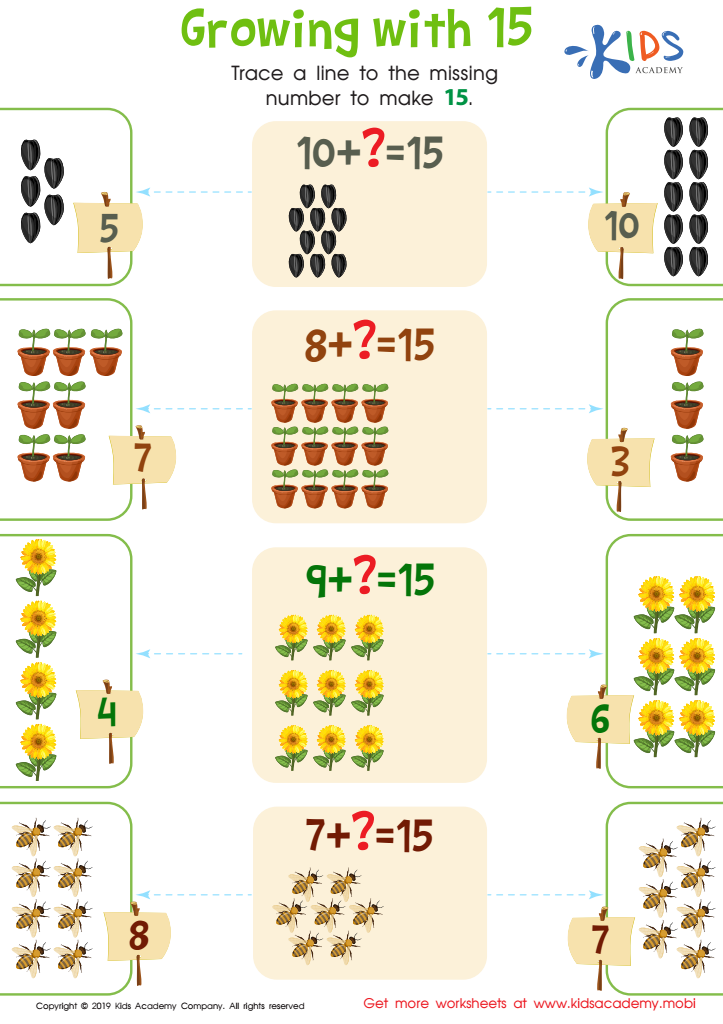
Growing with 15 Worksheet








Number sequencing, addition, and subtraction are foundational mathematical skills critical for children aged 6-8. Mastering these concepts early sets the stage for future success in more complex math areas and everyday life.
Firstly, number sequencing helps children understand the order and value of numbers, fostering numerical literacy. This skill is essential for counting, recognizing patterns, and solving problems, all of which are fundamental in math. Moreover, a good grasp of number sequences aids in developing logical thinking and arrangement skills, important for understanding timelines, instructions, and organizing tasks.
Secondly, addition and subtraction are the building blocks of arithmetic. These operations are the foundation upon which future math concepts such as multiplication, division, fractions, and algebra are built. Understanding these basic operations boosts a child’s confidence in handling numbers, reducing anxiety around math. Practicing these skills also enhances memory, attention to detail, and problem-solving capabilities.
Encouraging mastery of number sequencing, addition, and subtraction at a young age can lead to a lifelong appreciation for math. It provides children with the tools needed for academic success and practical life skills like budgeting or measurement. Parents and teachers must prioritize these fundamental skills to ensure a strong mathematical foundation for their children’s futures.








