Vocabulary development Addition & Subtraction Worksheets for Ages 6-8
8 filtered results
-
From - To
Enhance your child’s math and language skills with our Vocabulary Development Addition & Subtraction Worksheets for ages 6-8. Designed to build a strong foundation in math and vocabulary, these worksheets help young learners master key addition and subtraction concepts while expanding their mathematical vocabulary. Each activity is crafted to be engaging and educational, ensuring that learning math terms becomes a fun and interactive process. Ideal for nurturing academic confidence, these printable worksheets support classroom learning and provide excellent practice for home. Give your child the tools they need to succeed in math with our expertly designed resources. Explore now!
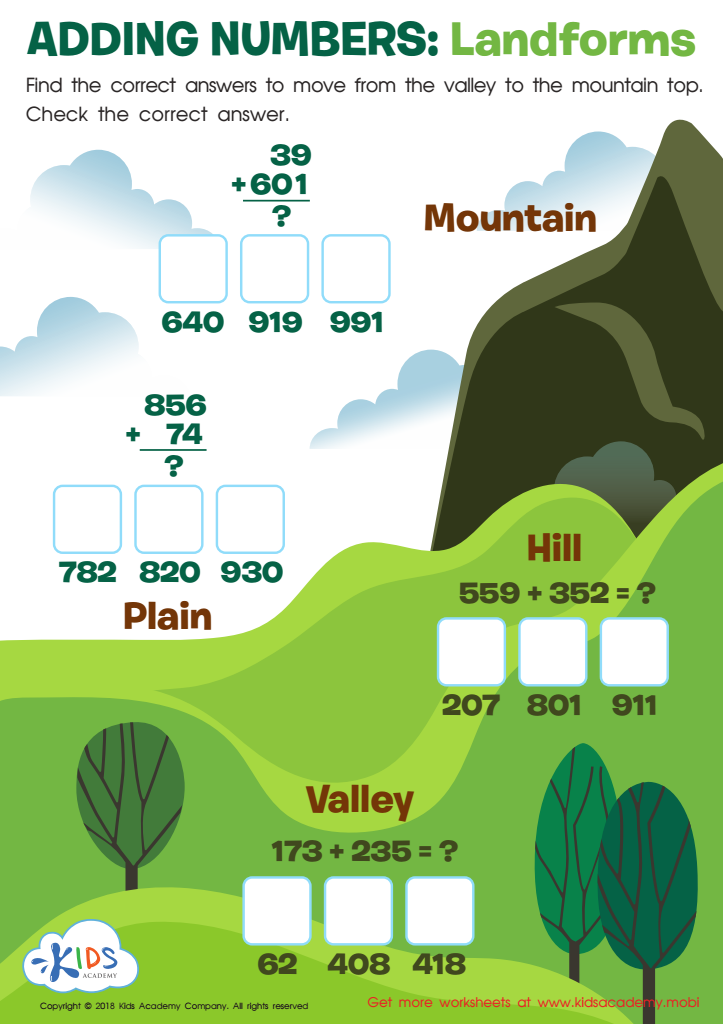
Adding Numbers: Landforms Worksheet
 Assign to My Students
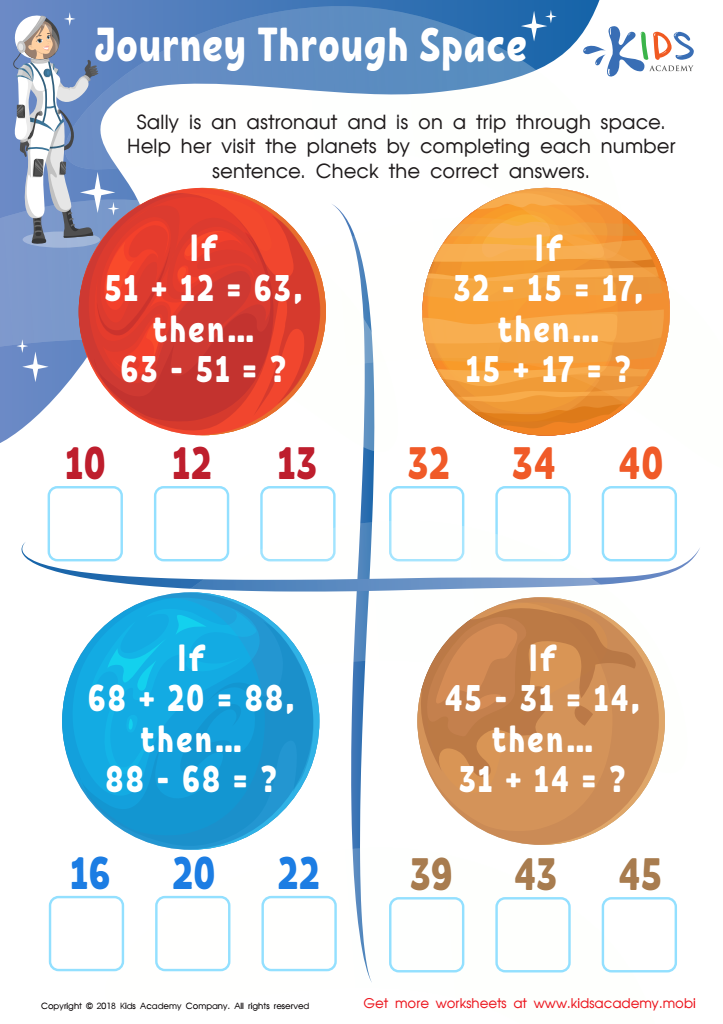
Journey Through Space Worksheet
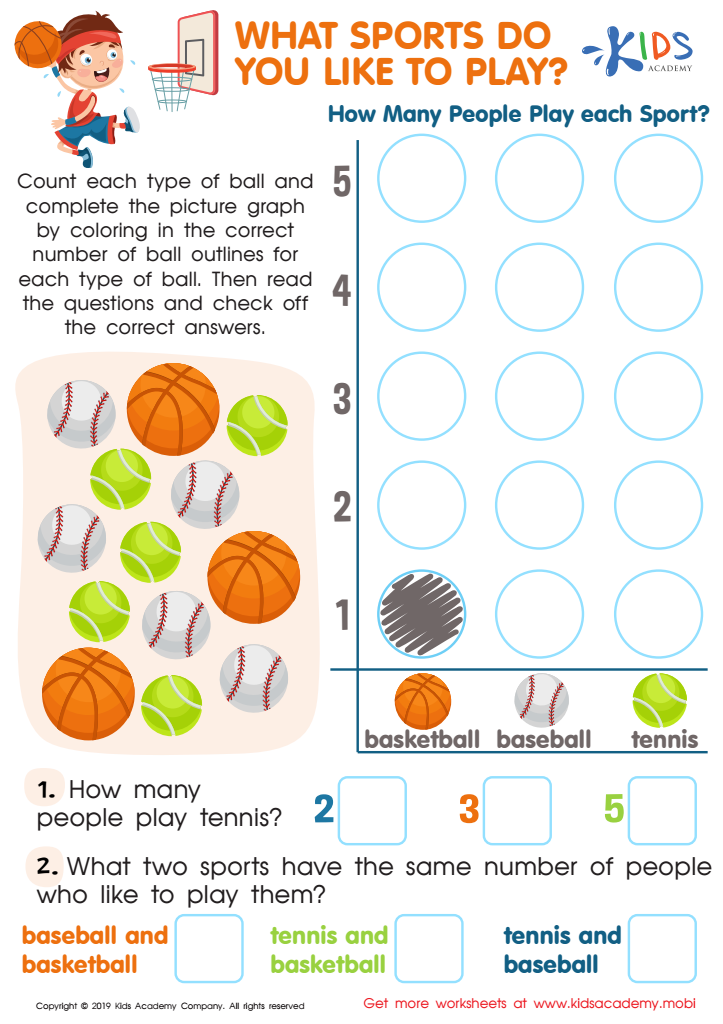
What Sports Do You Like to Play Worksheet








Vocabulary development in the context of addition and subtraction for ages 6-8 plays a crucial role in fostering mathematical understanding and cognitive growth. At this formative stage, children are developing foundational skills that serve as building blocks for more complex mathematical concepts.
Parents and teachers should prioritize this aspect of education because mathematical vocabulary helps children understand and verbalize their thought processes. When kids grasp terms like "sum," "difference," "more than," and "less than," they can solve problems more confidently and communicate their strategies clearly. This linguistic clarity enhances their ability to share and receive problem-solving techniques, thereby boosting their overall mathematical proficiency.
Additionally, mastering these fundamental operations strengthens a child’s numerical fluency, paves the way for higher arithmetic skills, and promotes logical reasoning. Understanding addition and subtraction concepts enables children to perform everyday tasks, like counting money or telling time, with greater ease.
Equipping children with this vocabulary enriches their classroom participation, leading to better educational outcomes. It also bridges the communication gap between home and school, allowing parents to actively support their child's learning journey. Overall, strong vocabulary in addition and subtraction prepares children not just for academic success, but for practical problem-solving in life.








