Filters

865 filtered results

Clear all filters
Favorites
With answer key
Interactive

865 filtered results

Difficulty Level

Grade


Subject

    Check out this FREE Trial Lesson on Addition for age 6-8!

    2 Step Addition Word Problems Using Drawings to Write Equations

    Favorites
    With answer key
    Interactive
    • 6-8
    • Addition
    Adding 2-digit Numbers: Page 61
    Adding 2-digit Numbers: Page 61

    Adding 2-digit Numbers: Page 61

    Adding 2-digit Numbers: Page 61
    Worksheet
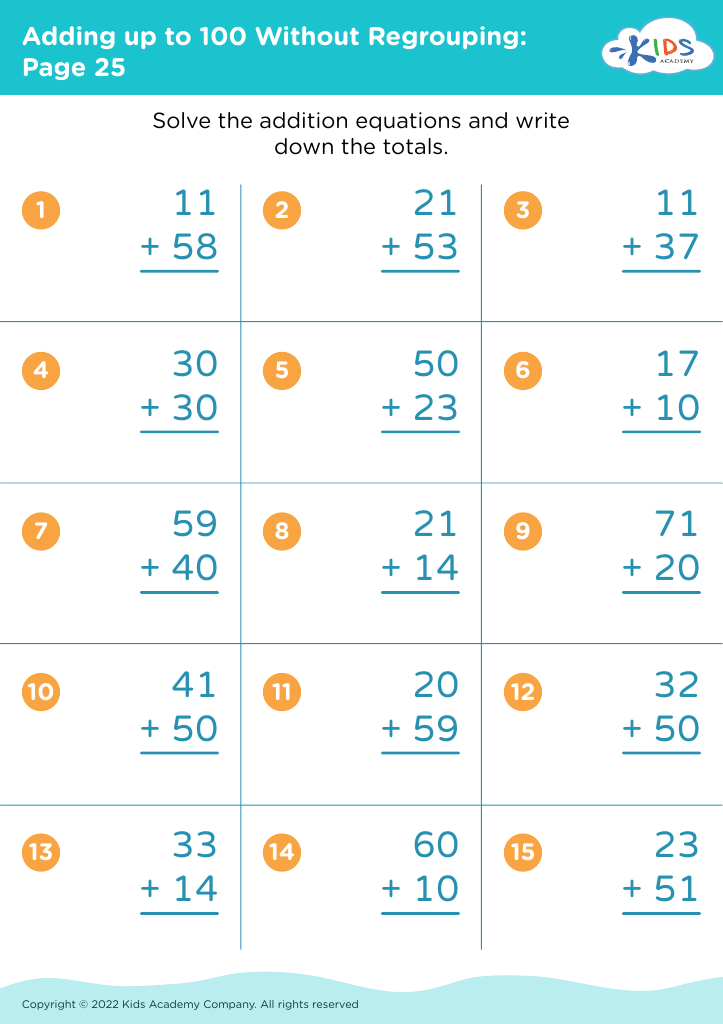
    Adding up to 100 Without Regrouping: Page 25
    Adding up to 100 Without Regrouping: Page 25
    Adding up to 100 Without Regrouping: Page 25
    Worksheet
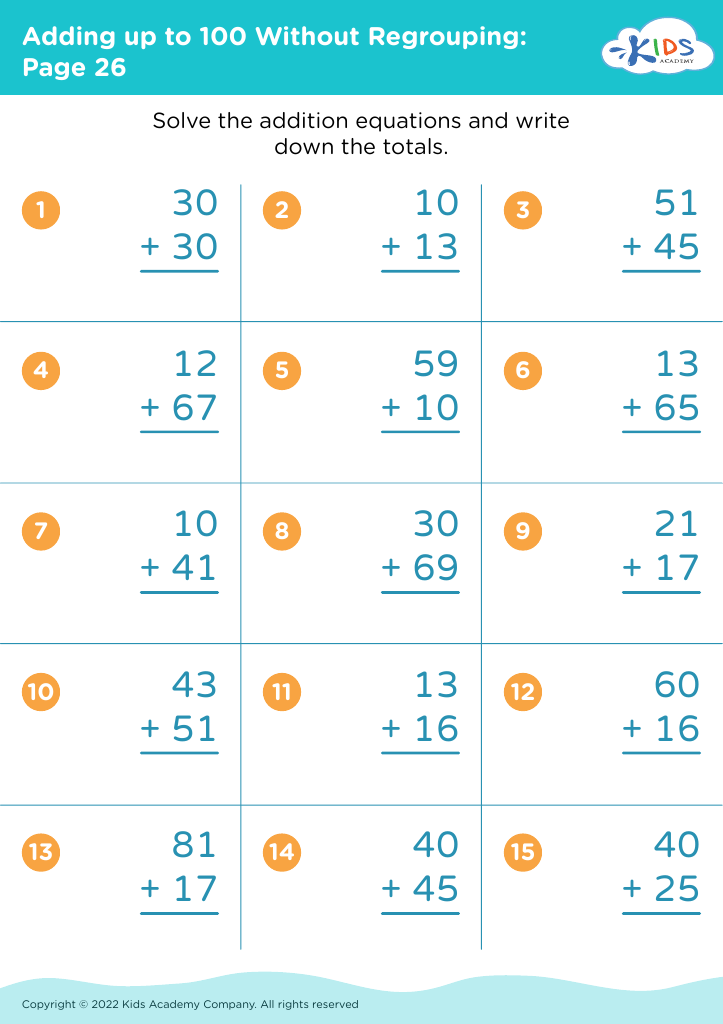
    Adding up to 100 Without Regrouping: Page 26
    Adding up to 100 Without Regrouping: Page 26
    Adding up to 100 Without Regrouping: Page 26
    Worksheet
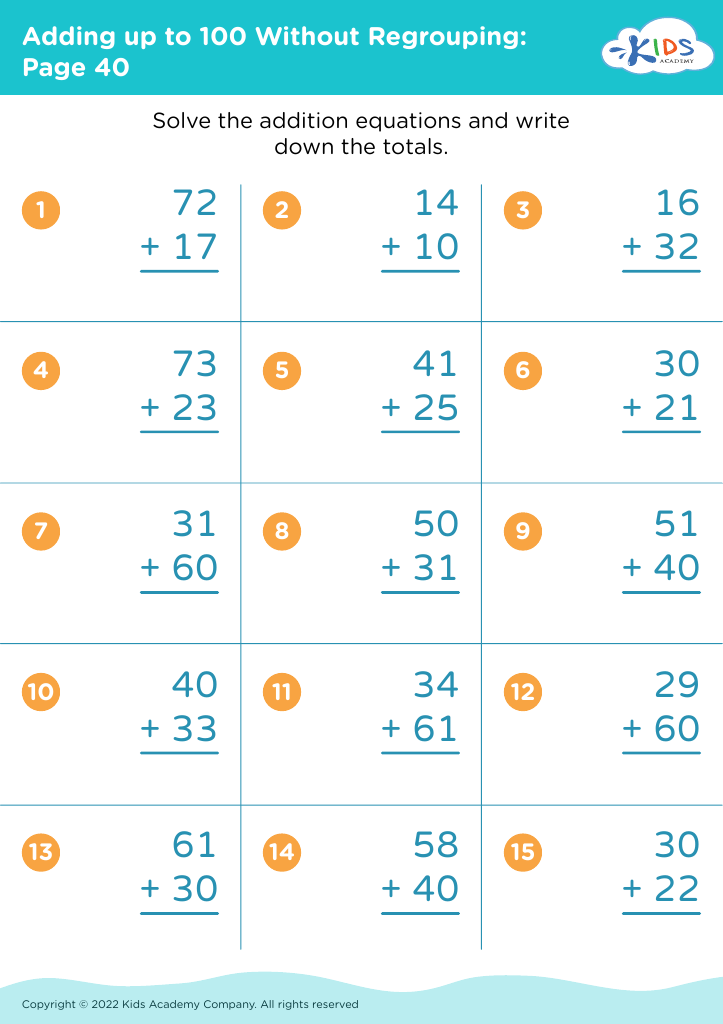
    Adding up to 100 Without Regrouping: Page 40
    Adding up to 100 Without Regrouping: Page 40
    Adding up to 100 Without Regrouping: Page 40
    Worksheet
    Adding Flower Petals Worksheet
    Adding Flower Petals Worksheet

    Adding Flower Petals Worksheet

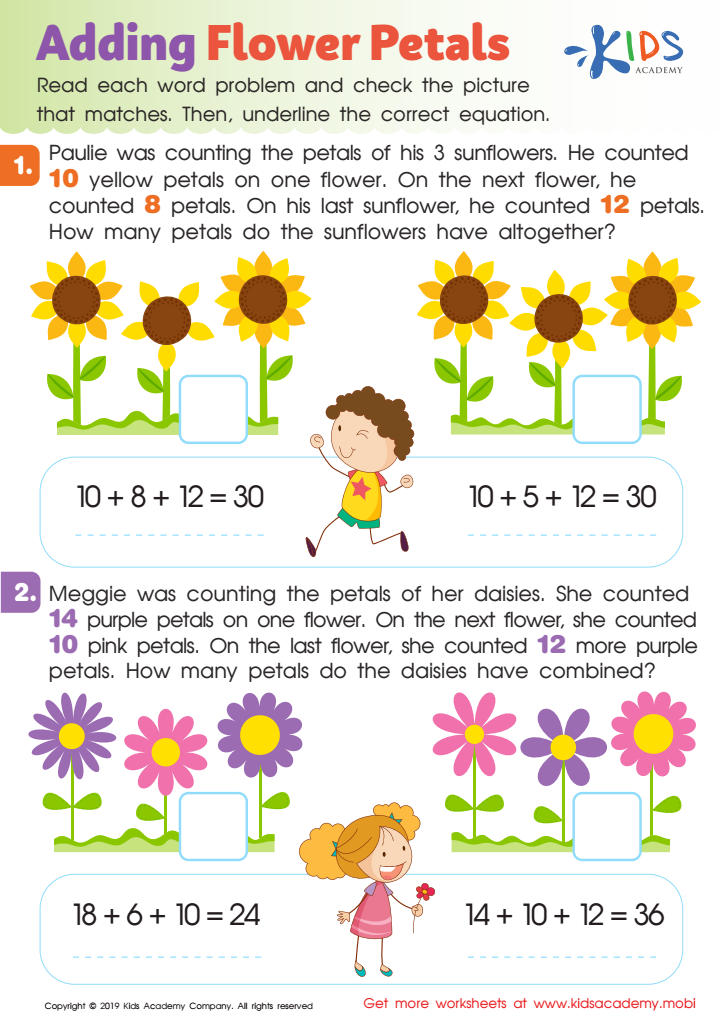
    This free worksheet helps little mathematicians learn to understand word problems. They'll read each one and match it to the corresponding picture. Important info is highlighted, teaching kids to look for key info when solving problems. Then they'll underline the correct number equation that matches the picture. A great way to practice problem-solving skills!
    Adding Flower Petals Worksheet
    Worksheet
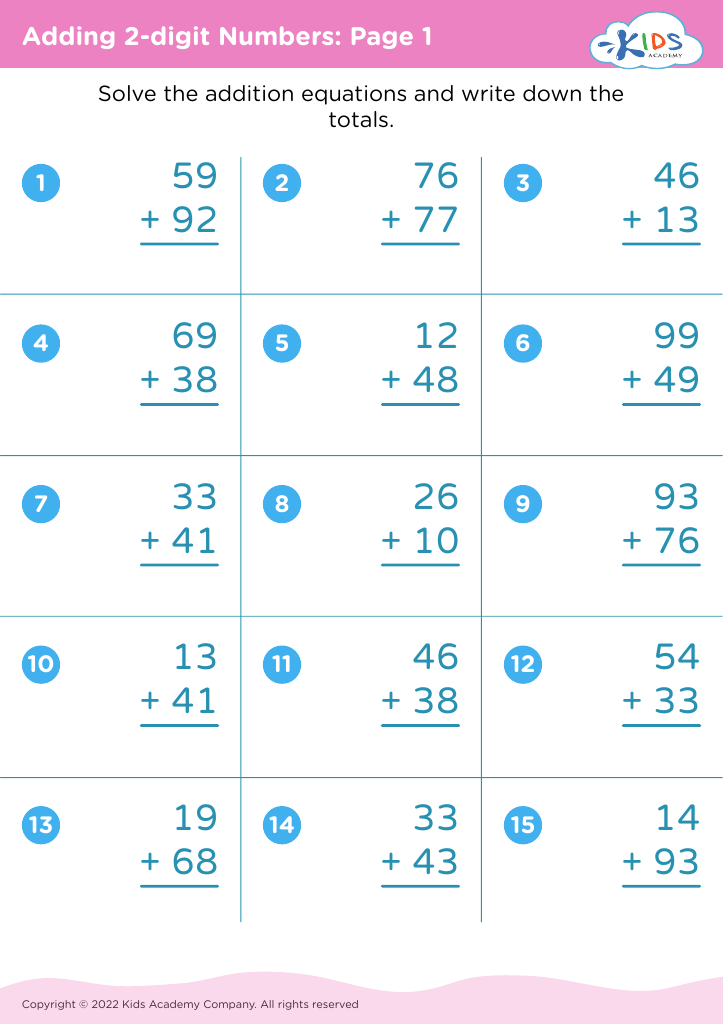
    Adding 2-digit Numbers: Page 1
    Adding 2-digit Numbers: Page 1

    Adding 2-digit Numbers: Page 1

    Adding 2-digit Numbers: Page 1
    Worksheet
    Adding Numbers: Conservation Worksheet
    Adding Numbers: Conservation Worksheet
    Adding Numbers: Conservation Worksheet
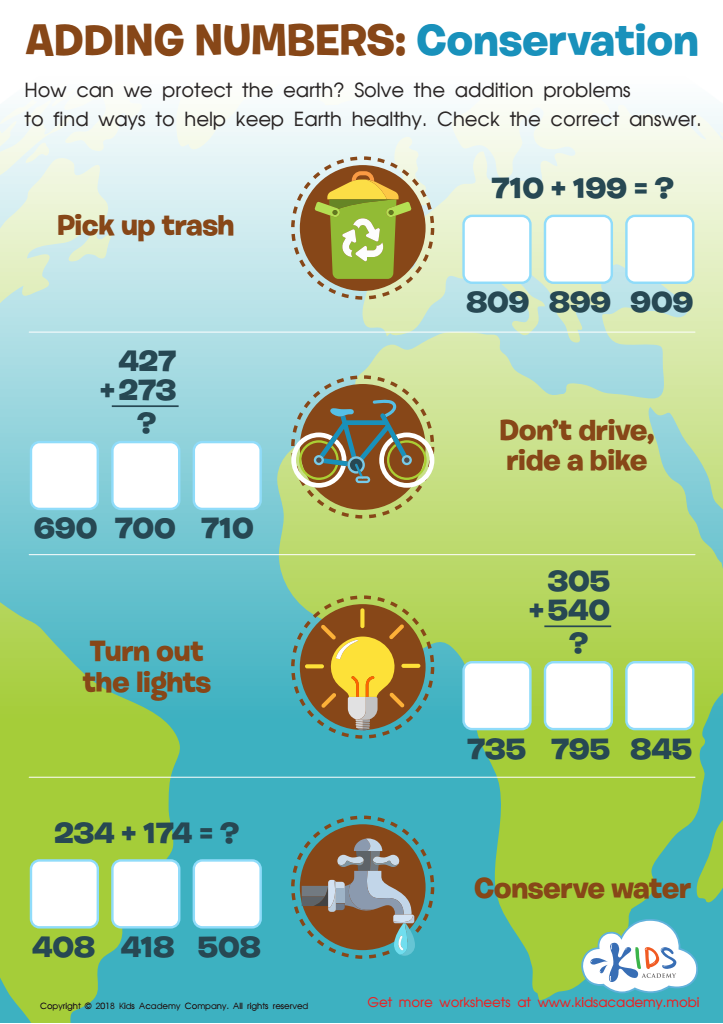
    We all live on the Earth, which provides us with the vital necessities for survival. Unfortunately, we too often take advantage of this, causing pollution, water wastage and global warming. Help teach your kids how we can protect our planet - ask them to come up with good ideas and work together to find solutions. Challenge them to solve the subtraction problems to see what they can do to help keep the Earth healthy.
    Adding Numbers: Conservation Worksheet
    Worksheet
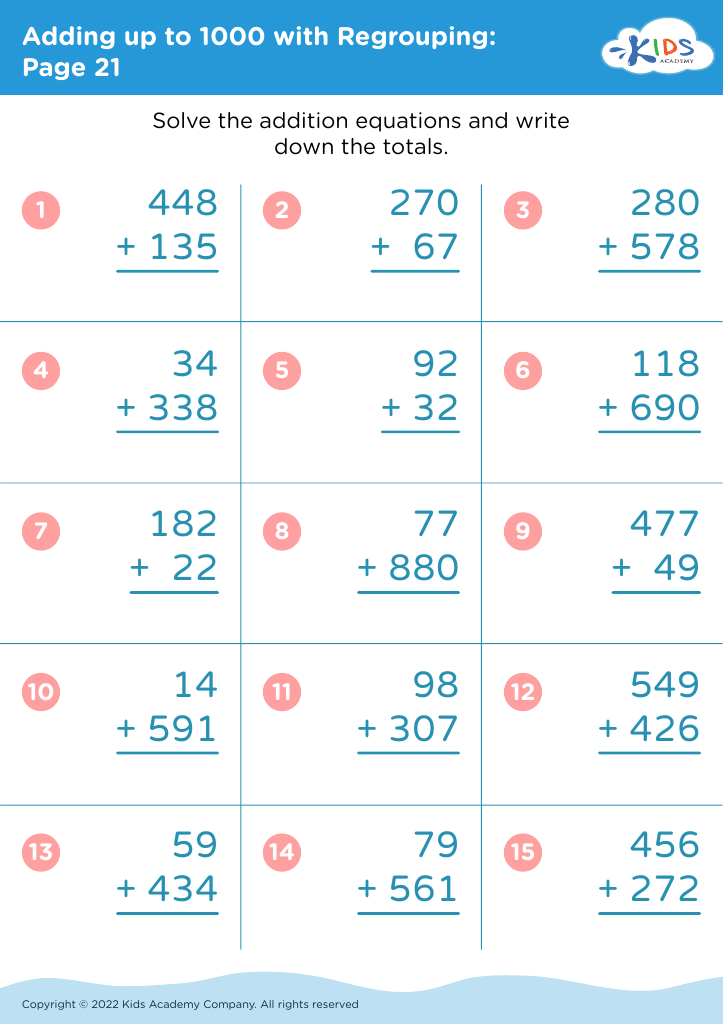
    Adding up to 1000 with Regrouping: Page 21
    Adding up to 1000 with Regrouping: Page 21
    Adding up to 1000 with Regrouping: Page 21
    Worksheet
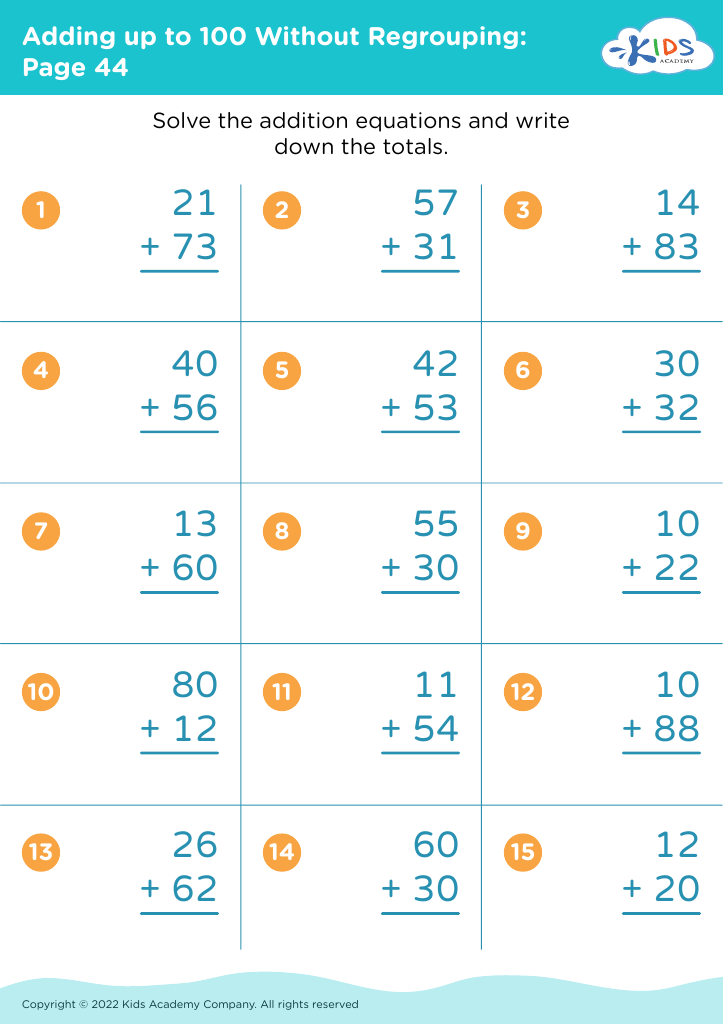
    Adding up to 100 Without Regrouping: Page 44
    Adding up to 100 Without Regrouping: Page 44
    Adding up to 100 Without Regrouping: Page 44
    Worksheet
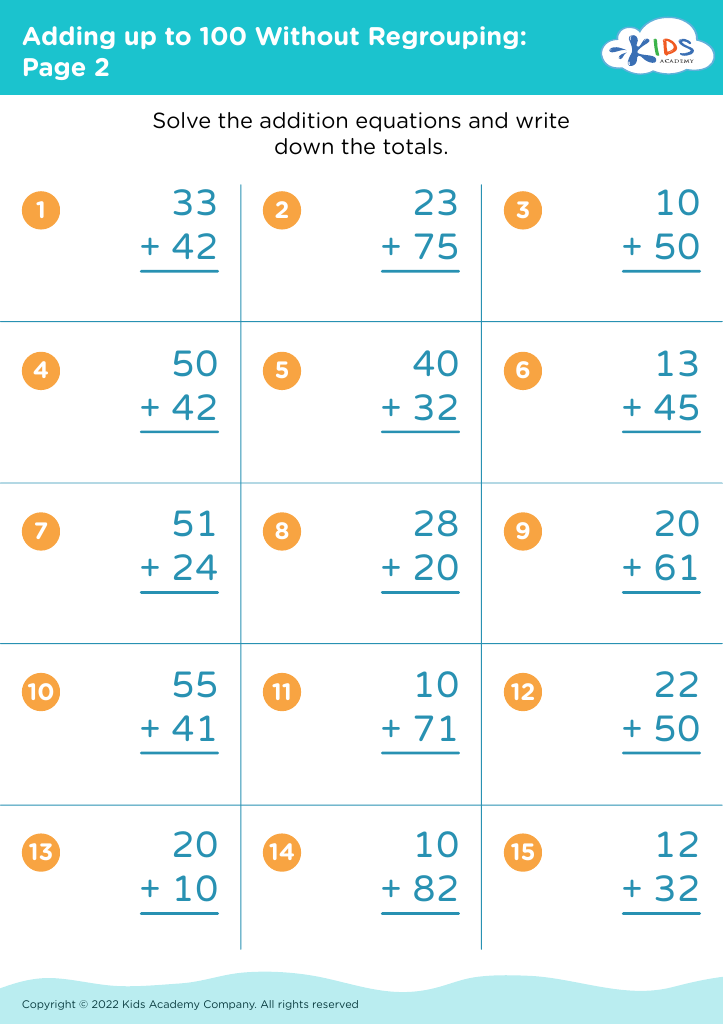
    Adding up to 100 Without Regrouping: Page 2
    Adding up to 100 Without Regrouping: Page 2
    Adding up to 100 Without Regrouping: Page 2
    Worksheet
    Adding up to 100: Page 55
    Adding up to 100: Page 55

    Adding up to 100: Page 55

    Adding up to 100: Page 55
    Worksheet
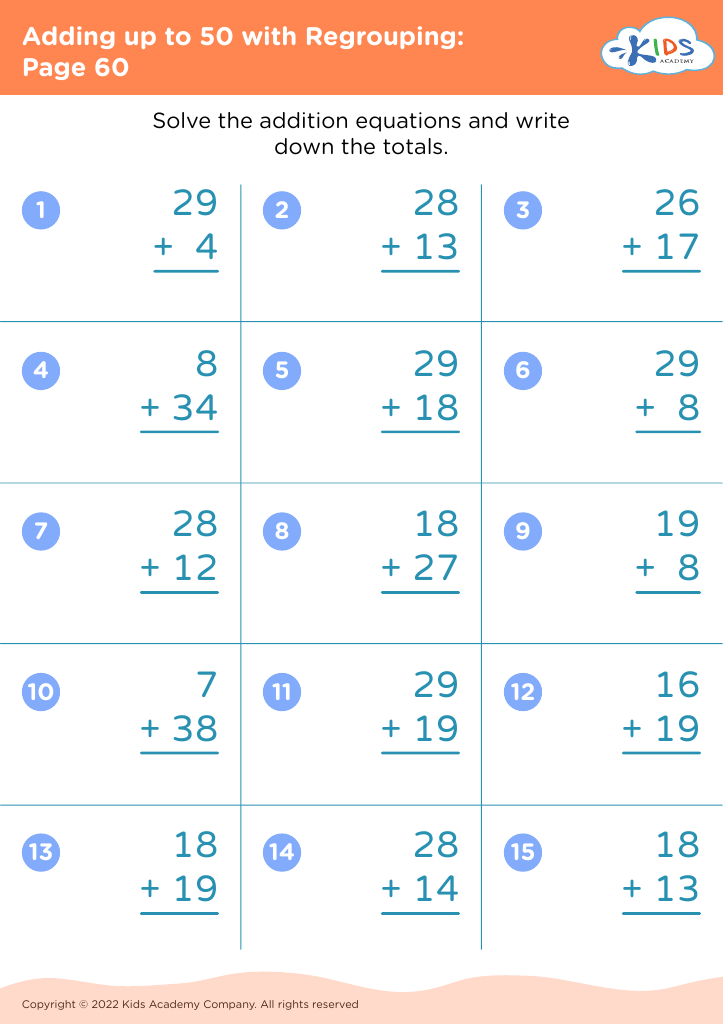
    Adding up to 50 with Regrouping: Page 60
    Adding up to 50 with Regrouping: Page 60
    Adding up to 50 with Regrouping: Page 60
    Worksheet
    Adding up to 50 with Regrouping: Page 62
    Adding up to 50 with Regrouping: Page 62
    Adding up to 50 with Regrouping: Page 62
    Worksheet
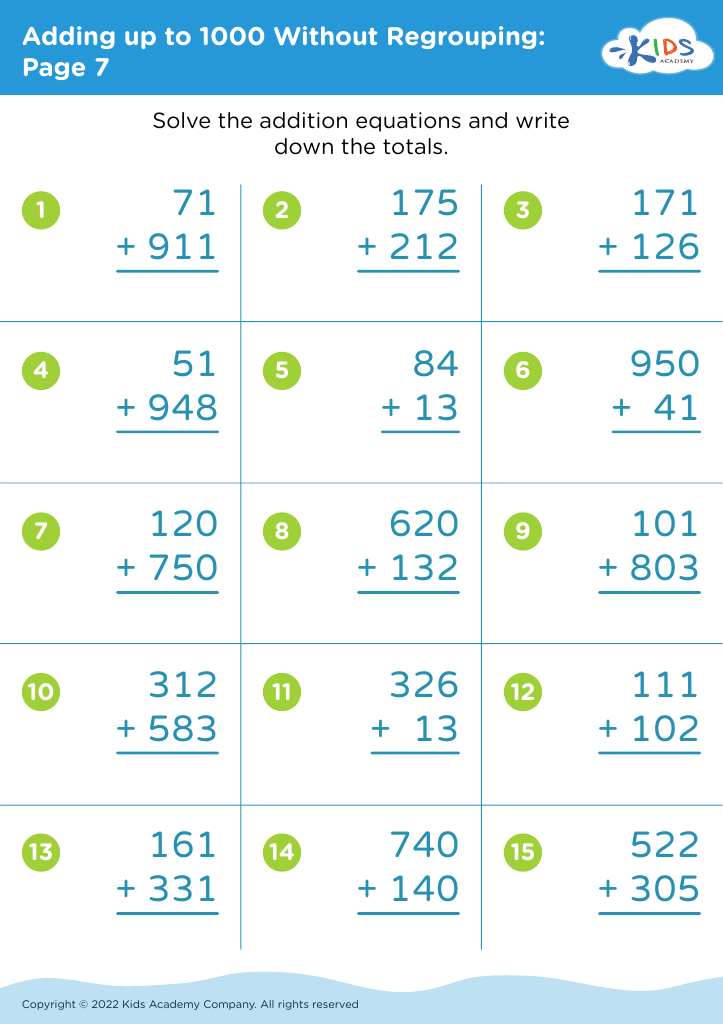
    Adding up to 1000 Without Regrouping: Page 7
    Adding up to 1000 Without Regrouping: Page 7
    Adding up to 1000 Without Regrouping: Page 7
    Worksheet
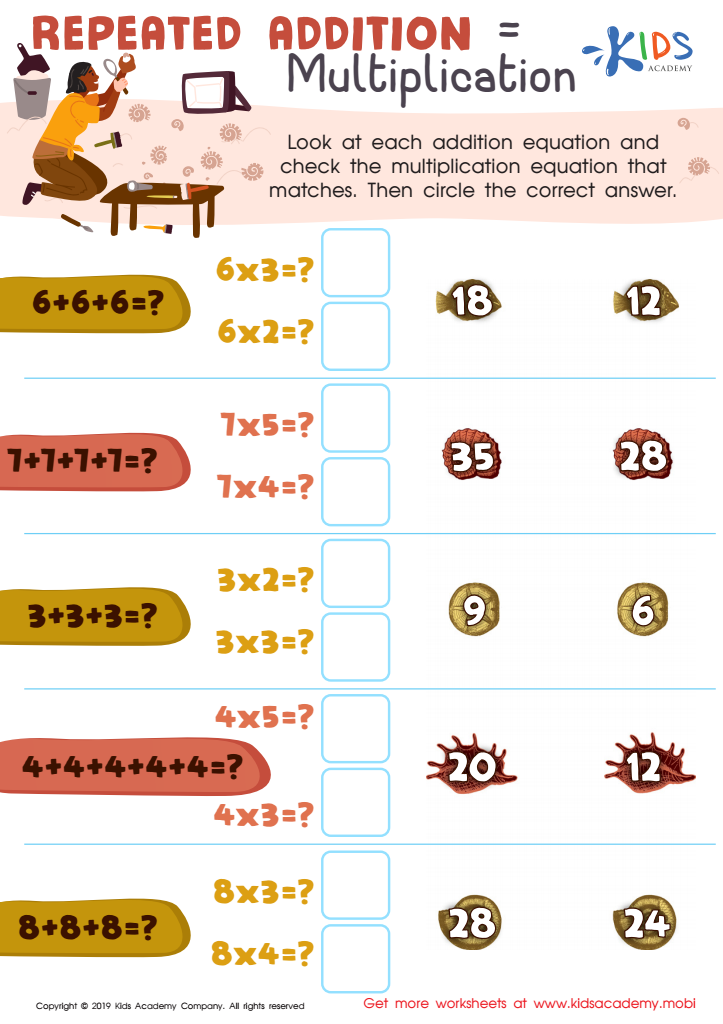
    Repeated Addition = Multiplication Worksheet
    Repeated Addition = Multiplication Worksheet
    Repeated Addition = Multiplication Worksheet
    If your child is having trouble with math, worksheets like this can help them get more practice. Addition, subtraction, and multiplication go together. Look over each addition equation and pick the matching multiplication equation, then circle the correct answer. This can give your child the necessary practice to understand mathematics better.
    Repeated Addition = Multiplication Worksheet
    Worksheet
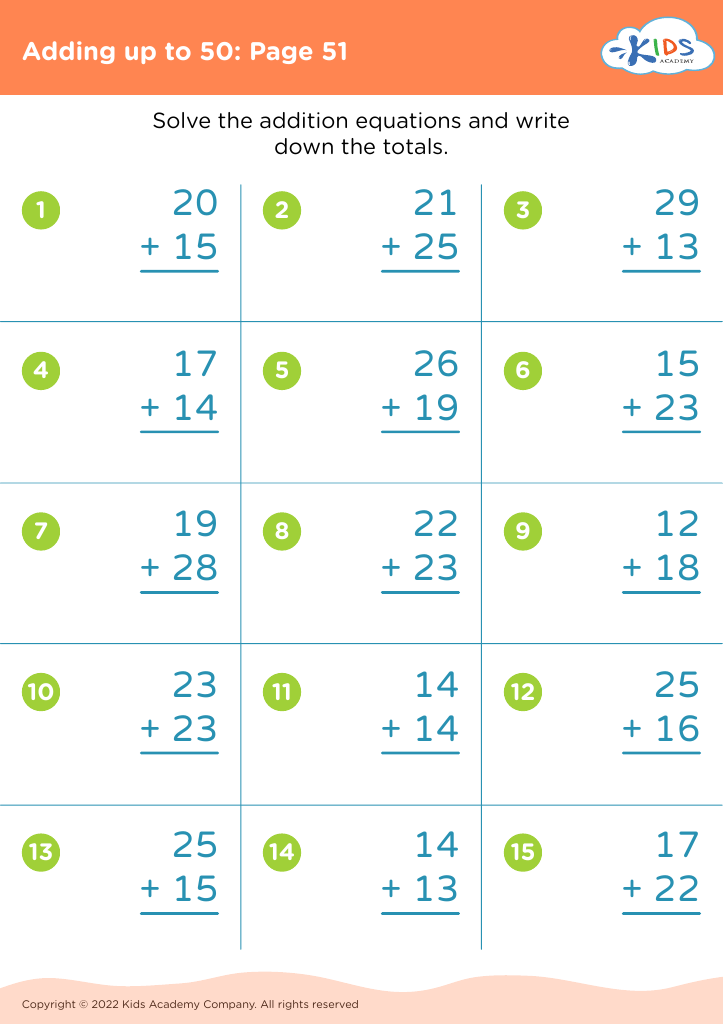
    Adding up to 50: Page 51
    Adding up to 50: Page 51

    Adding up to 50: Page 51

    Adding up to 50: Page 51
    Worksheet
    Identity Property of Addition Worksheet
    Identity Property of Addition Worksheet
    Identity Property of Addition Worksheet
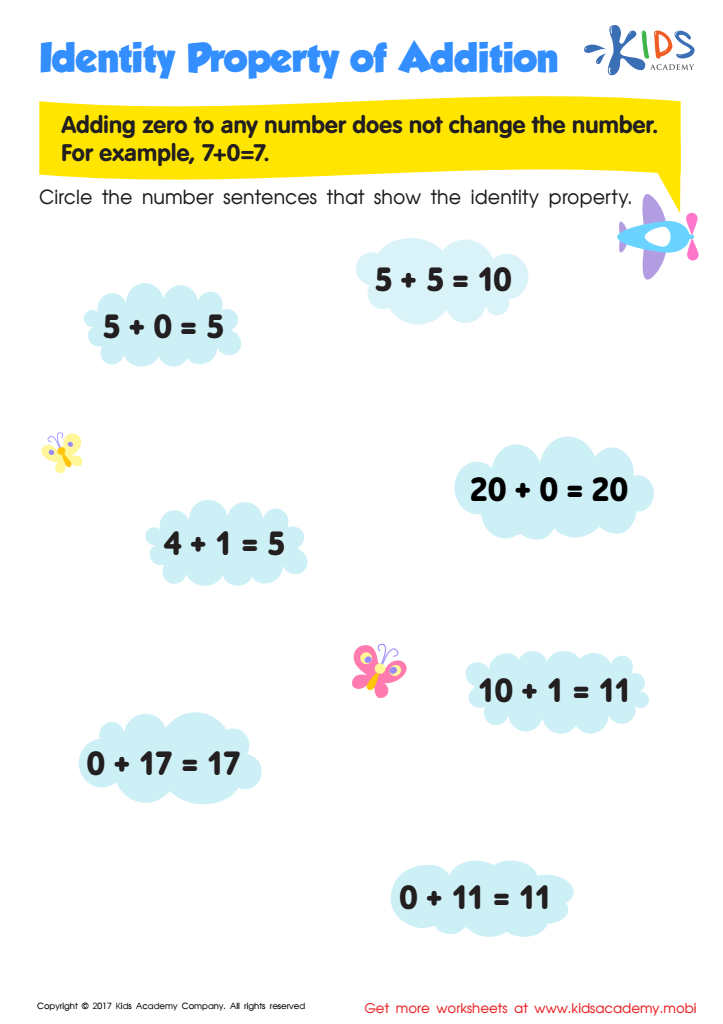
    Kids must learn the identity property of addition in math. It states that adding zero to an equation does not change the number. A great way to help kids understand this concept is with a Kids Academy worksheet. It encourages kids to identify which number sentences demonstrate the identity property of addition. Doing so builds vital mental math skills for fast addition.
    Identity Property of Addition Worksheet
    Worksheet
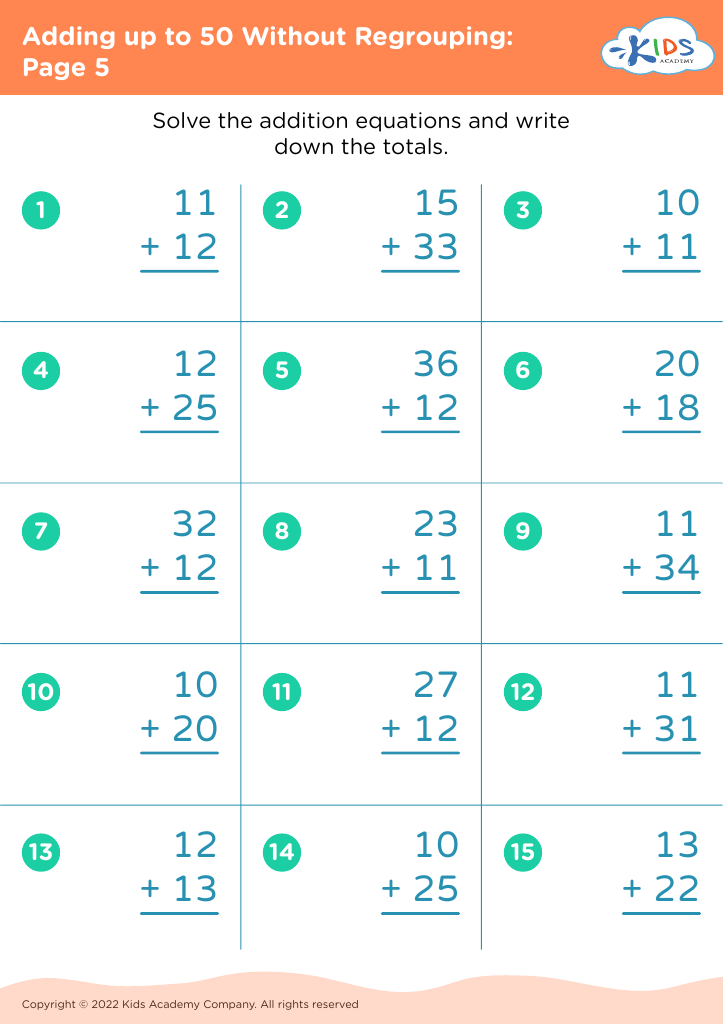
    Adding up to 50 Without Regrouping: Page 5
    Adding up to 50 Without Regrouping: Page 5
    Adding up to 50 Without Regrouping: Page 5
    Worksheet
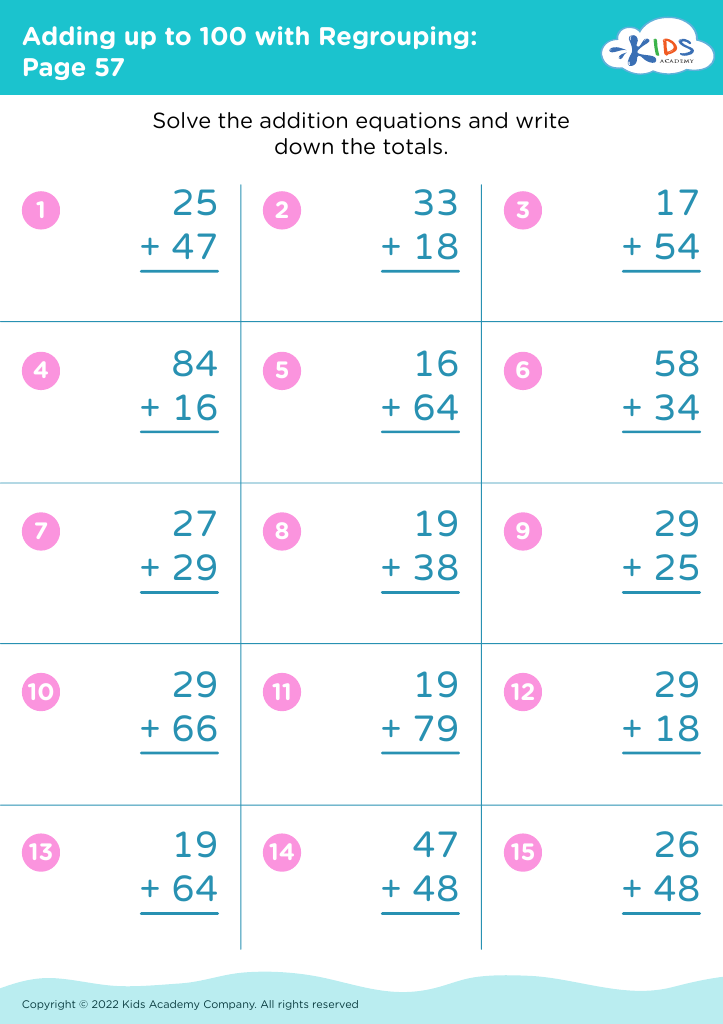
    Adding up to 100 with Regrouping: Page 57
    Adding up to 100 with Regrouping: Page 57
    Adding up to 100 with Regrouping: Page 57
    Worksheet
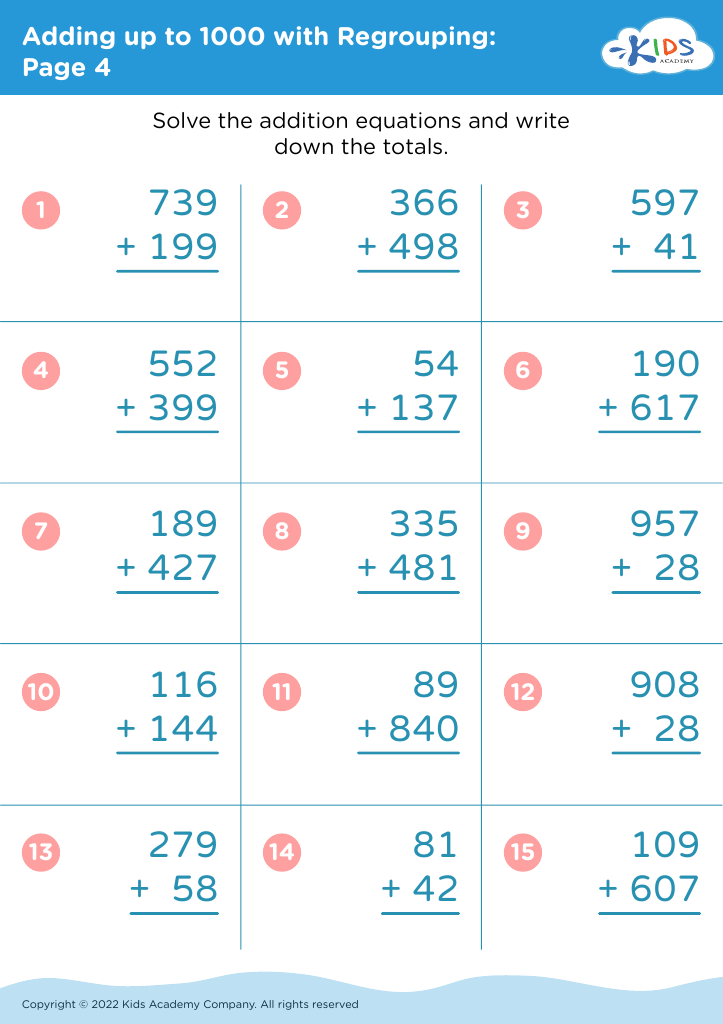
    Adding up to 1000 with Regrouping: Page 4
    Adding up to 1000 with Regrouping: Page 4
    Adding up to 1000 with Regrouping: Page 4
    Worksheet
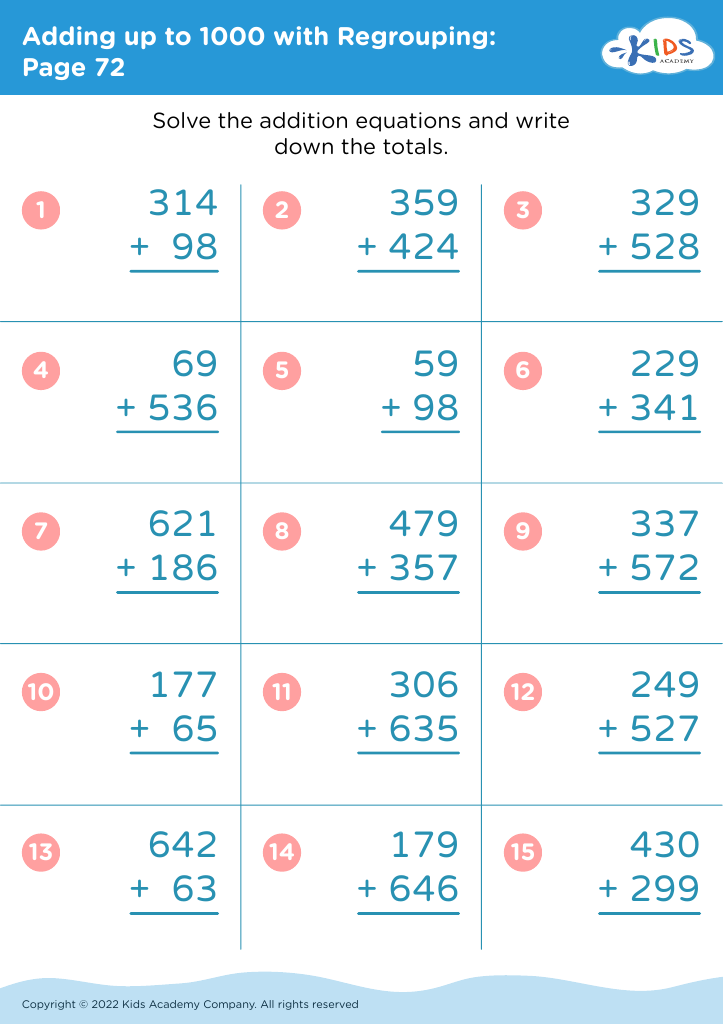
    Adding up to 1000 with Regrouping: Page 72
    Adding up to 1000 with Regrouping: Page 72
    Adding up to 1000 with Regrouping: Page 72
    Worksheet
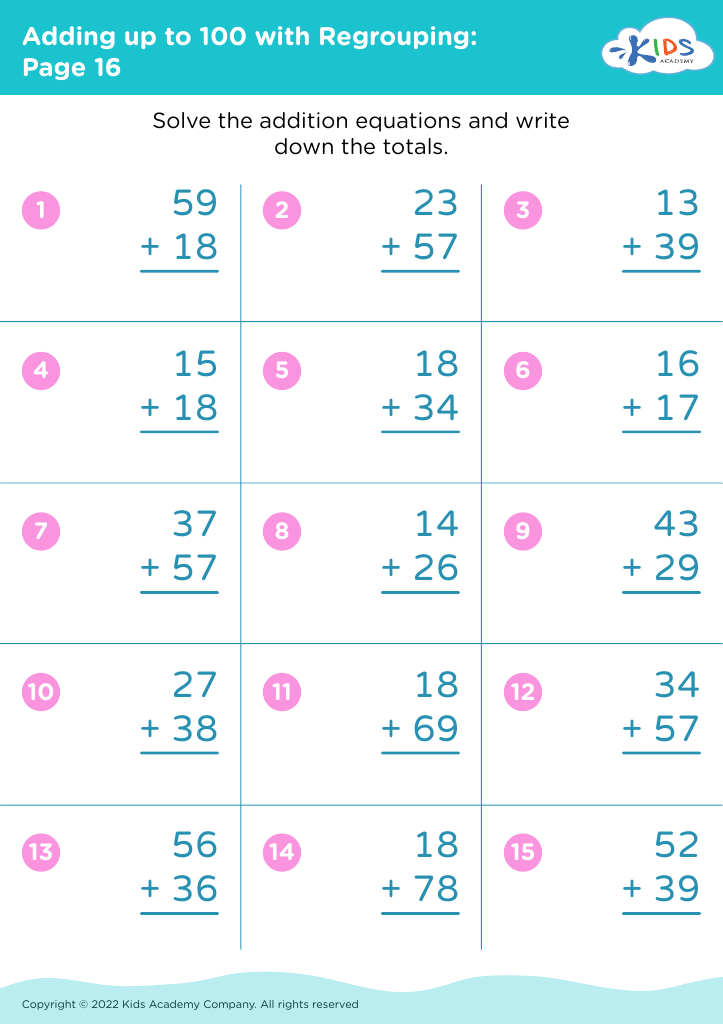
    Adding up to 100 with Regrouping: Page 16
    Adding up to 100 with Regrouping: Page 16
    Adding up to 100 with Regrouping: Page 16
    Worksheet
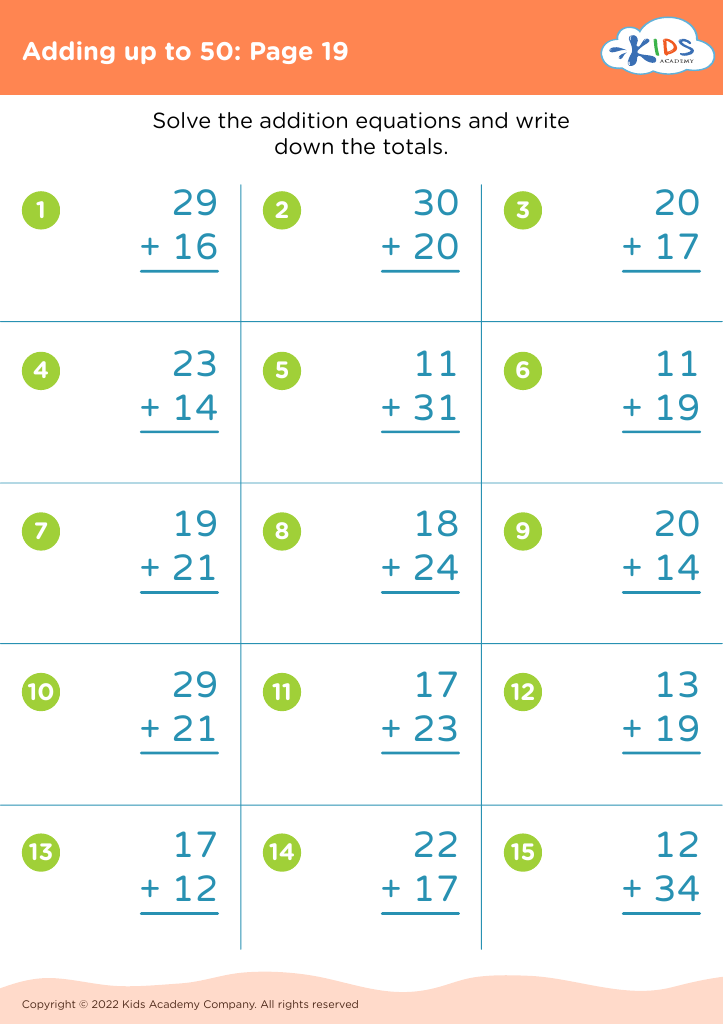
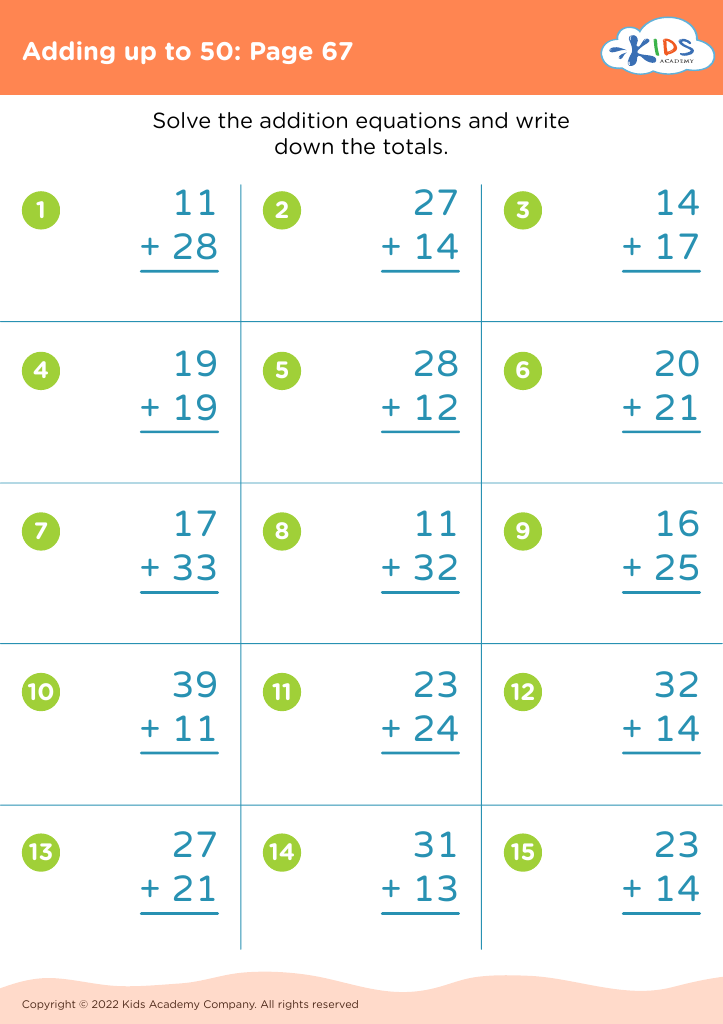
    Adding up to 50: Page 67
    Adding up to 50: Page 67

    Adding up to 50: Page 67

    Adding up to 50: Page 67
    Worksheet
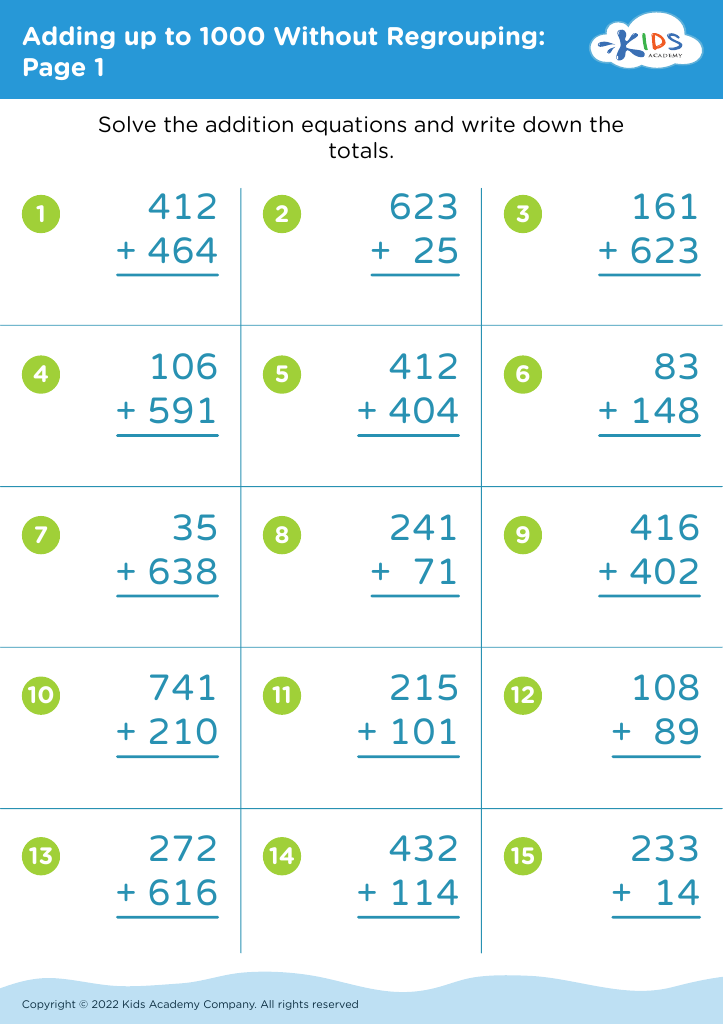
    Adding up to 1000 Without Regrouping: Page 1
    Adding up to 1000 Without Regrouping: Page 1
    Adding up to 1000 Without Regrouping: Page 1
    Worksheet


    Understanding addition is a cornerstone of early mathematical development for children aged 6-8. It lays the foundation for more complex math topics they will encounter in later years, such as multiplication, division, fractions, and algebra. At this young age, children's brains are highly receptive to learning numerical and logical concepts. Engaging with addition helps boost their cognitive development, enhancing problem-solving skills, memory, and critical thinking.

    Moreover, mastering addition has practical life implications. Whether it's counting money, telling time, or sharing toys, addition is a part of everyday activities. A strong grasp of addition aids in building confidence and independence in children, allowing them to navigate daily tasks more effectively.

    For parents and teachers, fostering a solid comprehension of addition during these formative years also promotes a positive attitude toward learning math, reducing anxiety and encouraging a growth mindset. When children see math as enjoyable and accessible, they are more likely to take on academic challenges in the future.

    Incorporating games, interactive activities, and real-world examples makes learning addition fun and meaningful. By investing time and effort in teaching addition, parents and teachers can give children a significant advantage in their educational journey and daily lives.