Filters

865 filtered results

Clear all filters
Favorites
With answer key
Interactive

865 filtered results

Difficulty Level

Grade


Subject

    Check out this FREE Trial Lesson on Addition for age 6-8!

    Use Mental Strategies -Counting

    Favorites
    With answer key
    Interactive
    • 6-8
    • Addition
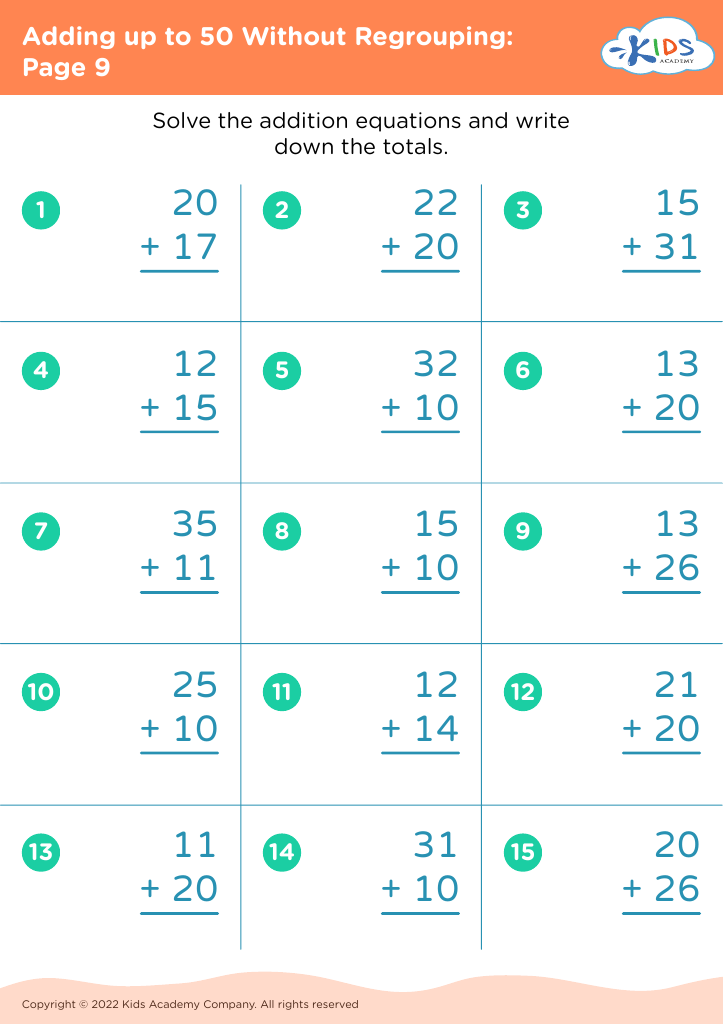
    Adding up to 50 Without Regrouping: Page 9
    Adding up to 50 Without Regrouping: Page 9
    Adding up to 50 Without Regrouping: Page 9
    Worksheet
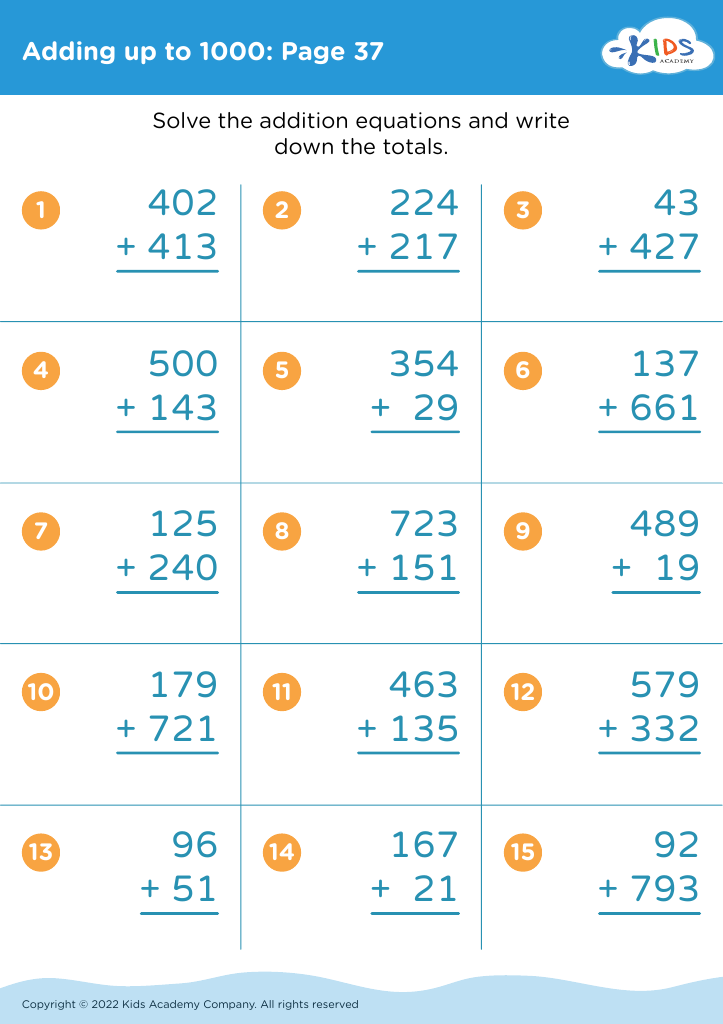
    Adding up to 1000: Page 37
    Adding up to 1000: Page 37

    Adding up to 1000: Page 37

    Adding up to 1000: Page 37
    Worksheet
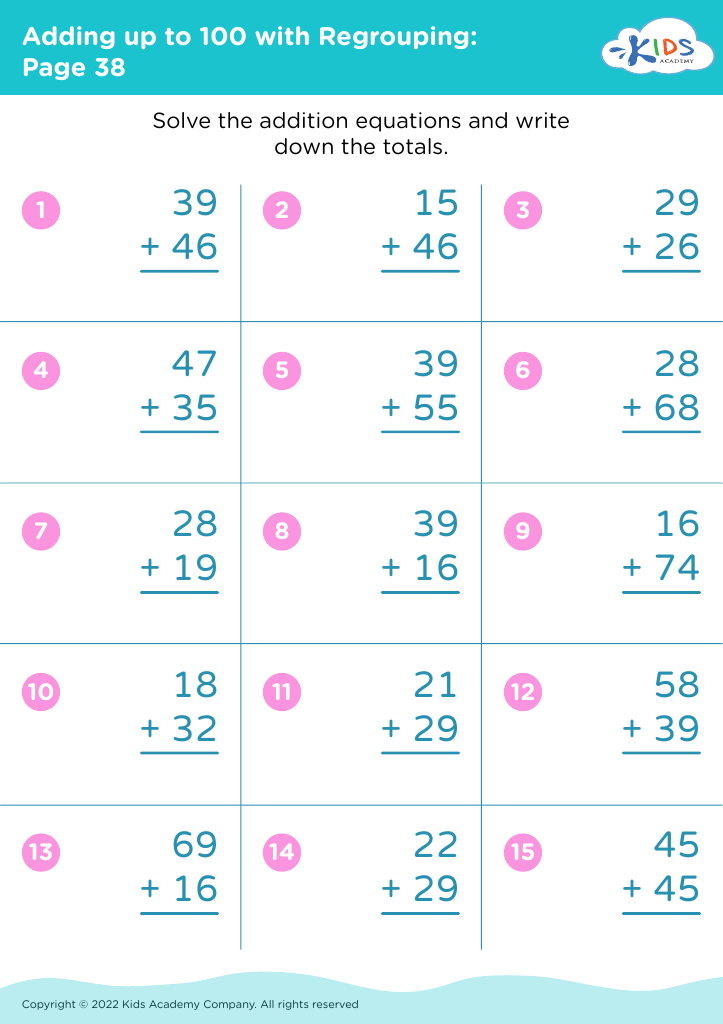
    Adding up to 100 with Regrouping: Page 38
    Adding up to 100 with Regrouping: Page 38
    Adding up to 100 with Regrouping: Page 38
    Worksheet
    Count in the School of Magic Worksheet
    Count in the School of Magic Worksheet

    Count in the School of Magic Worksheet

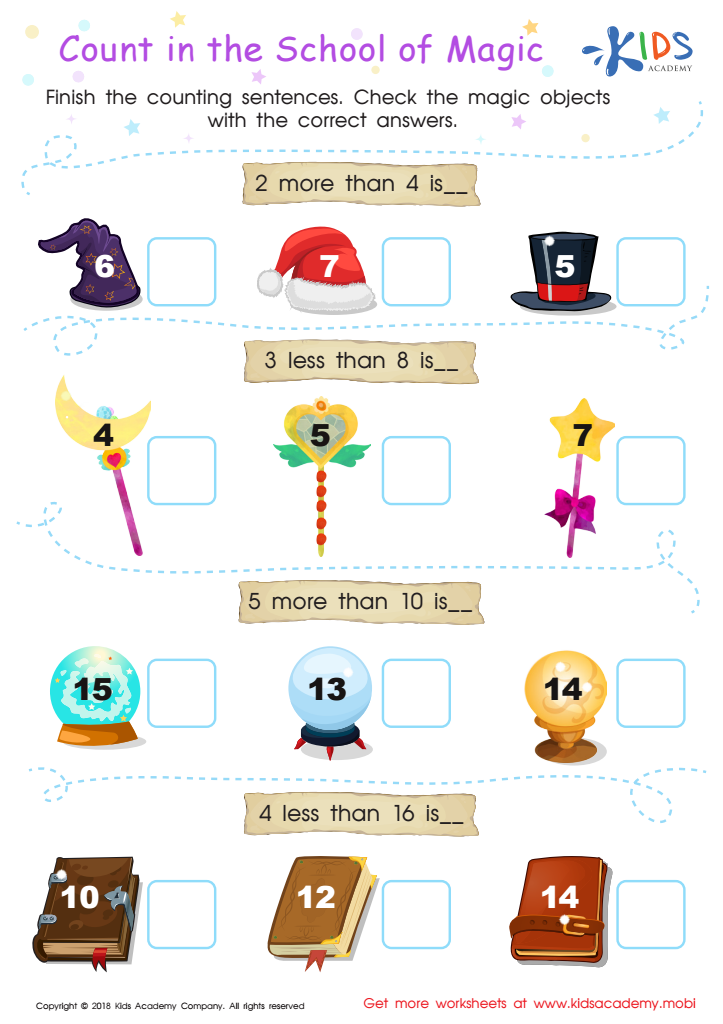
    Your math learners can explore the School of Magic with this worksheet. They'll read equations with addition and subtraction numbers under 20, count back and forth to find the answer, then complete the counting sentences. Fun pictures and easy accuracy make it an enjoyable and successful learning experience.
    Count in the School of Magic Worksheet
    Worksheet
    Missing Number: Ferris Wheel Math Worksheet
    Missing Number: Ferris Wheel Math Worksheet
    Missing Number: Ferris Wheel Math Worksheet
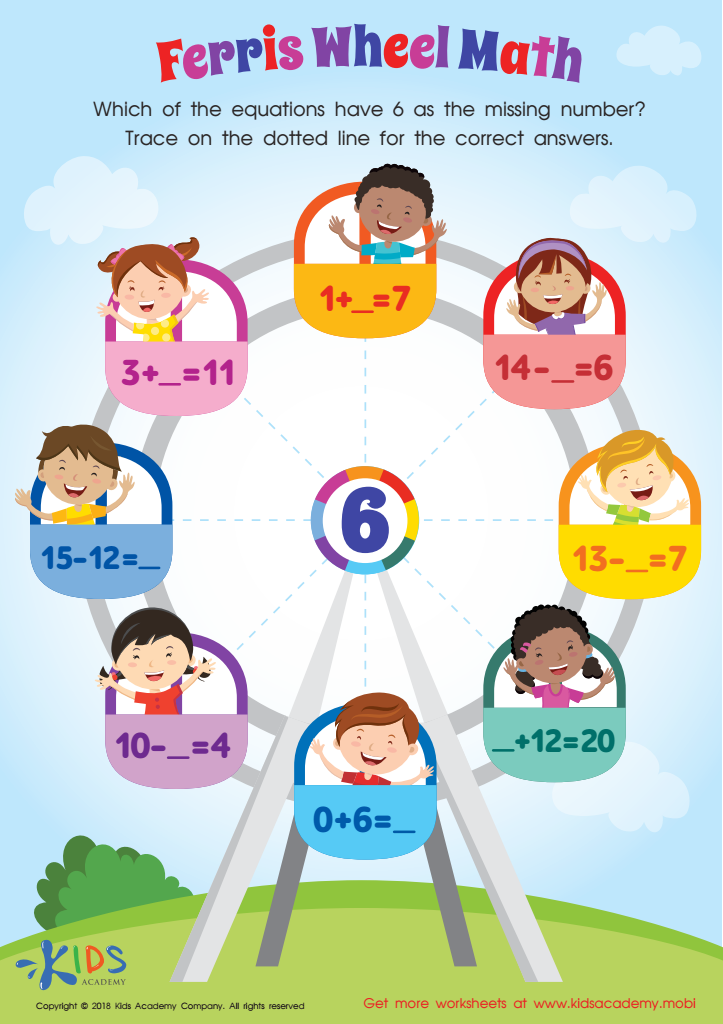
    Hop on the Ferris wheel and solve the equations in the baskets! If the missing number is 6, draw a line from the basket to the middle of the wheel. Kids Academy's addition worksheet will not only help practice pre-algebra but also keep kids entertained with its vibrant illustrations. So, go round and round and have fun with math!
    Missing Number: Ferris Wheel Math Worksheet
    Worksheet
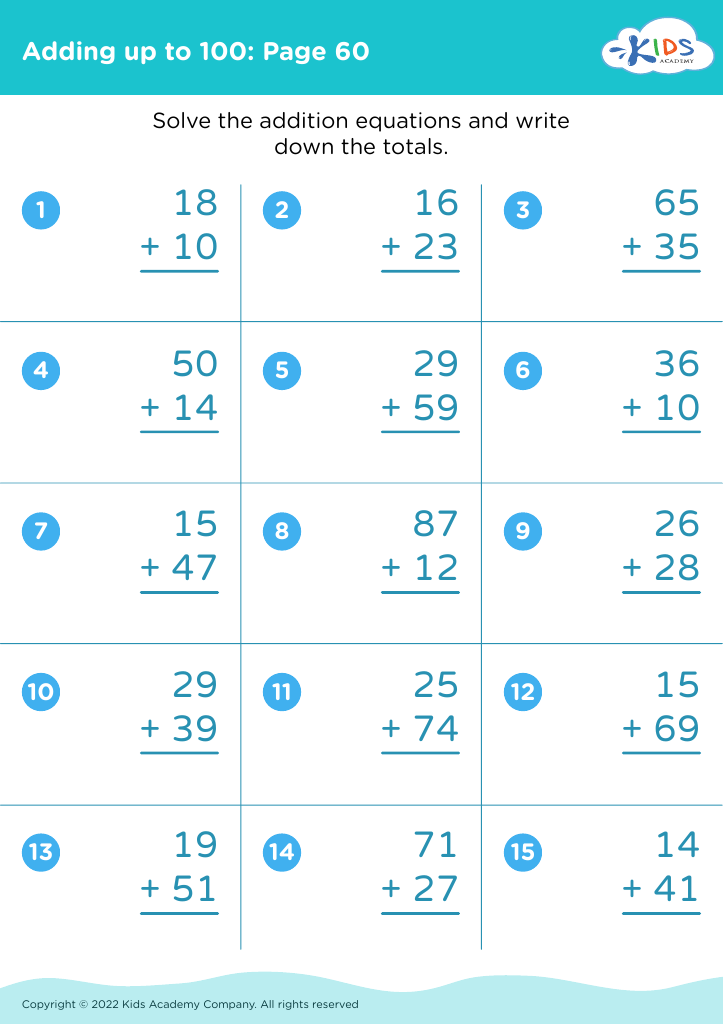
    Adding up to 100: Page 60
    Adding up to 100: Page 60

    Adding up to 100: Page 60

    Adding up to 100: Page 60
    Worksheet
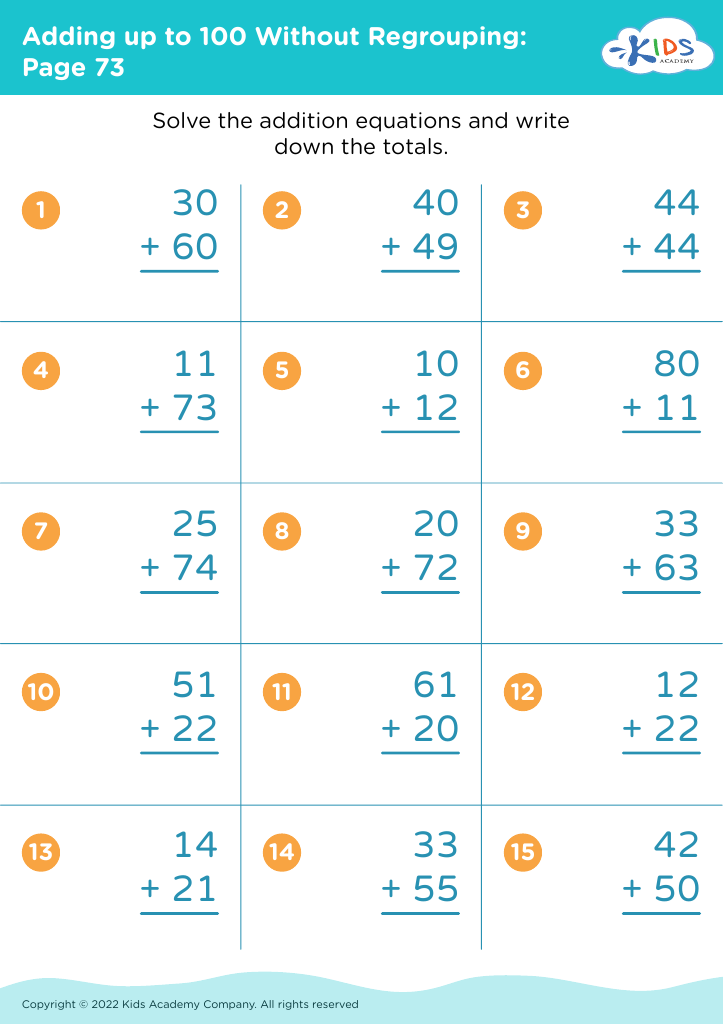
    Adding up to 100 Without Regrouping: Page 73
    Adding up to 100 Without Regrouping: Page 73
    Adding up to 100 Without Regrouping: Page 73
    Worksheet
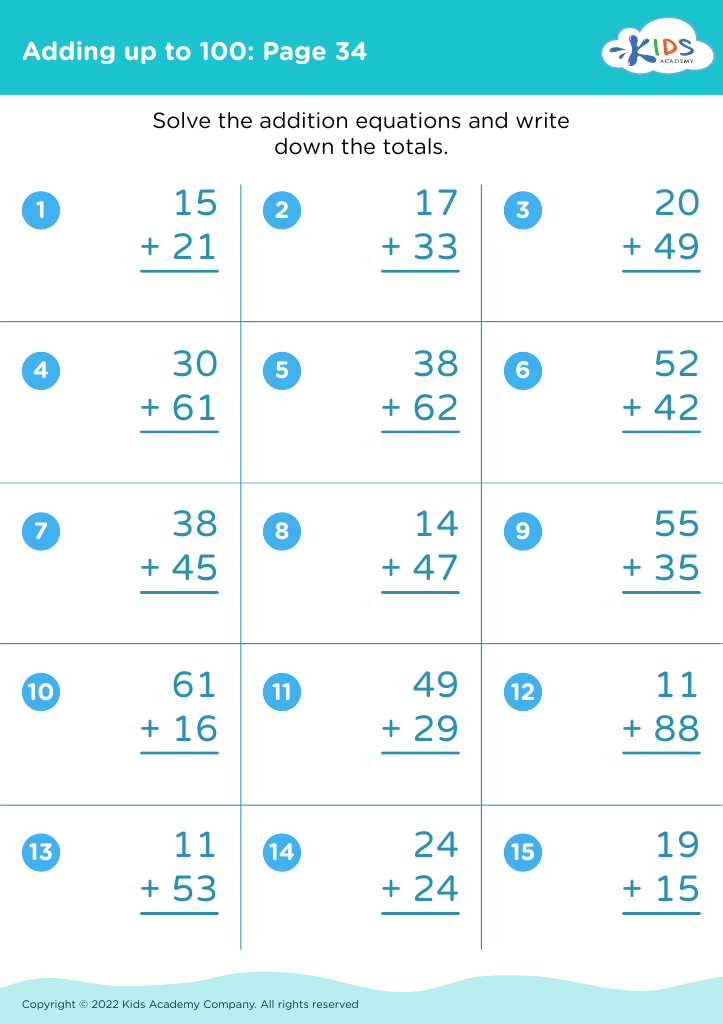
    Adding up to 100: Page 34
    Adding up to 100: Page 34

    Adding up to 100: Page 34

    Adding up to 100: Page 34
    Worksheet
    Adding up to 1000: Page 64
    Adding up to 1000: Page 64

    Adding up to 1000: Page 64

    Adding up to 1000: Page 64
    Worksheet
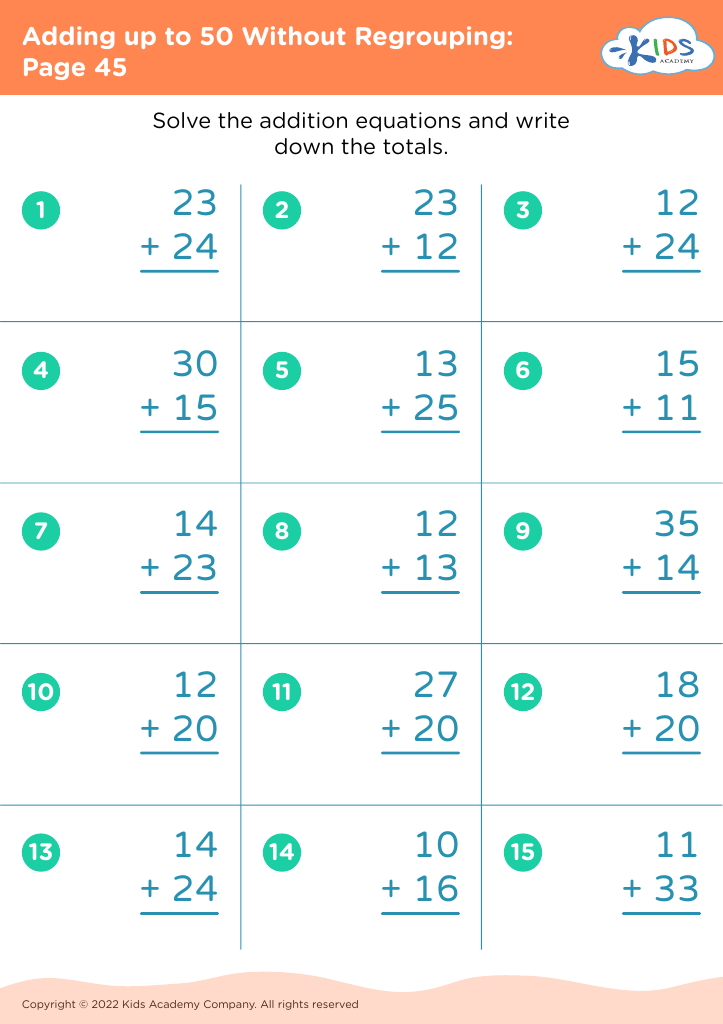
    Adding up to 50 Without Regrouping: Page 45
    Adding up to 50 Without Regrouping: Page 45
    Adding up to 50 Without Regrouping: Page 45
    Worksheet
    Adding up to 50 with Regrouping: Page 68
    Adding up to 50 with Regrouping: Page 68
    Adding up to 50 with Regrouping: Page 68
    Worksheet
    Adding 2-digit Numbers: Page 8
    Adding 2-digit Numbers: Page 8

    Adding 2-digit Numbers: Page 8

    Adding 2-digit Numbers: Page 8
    Worksheet
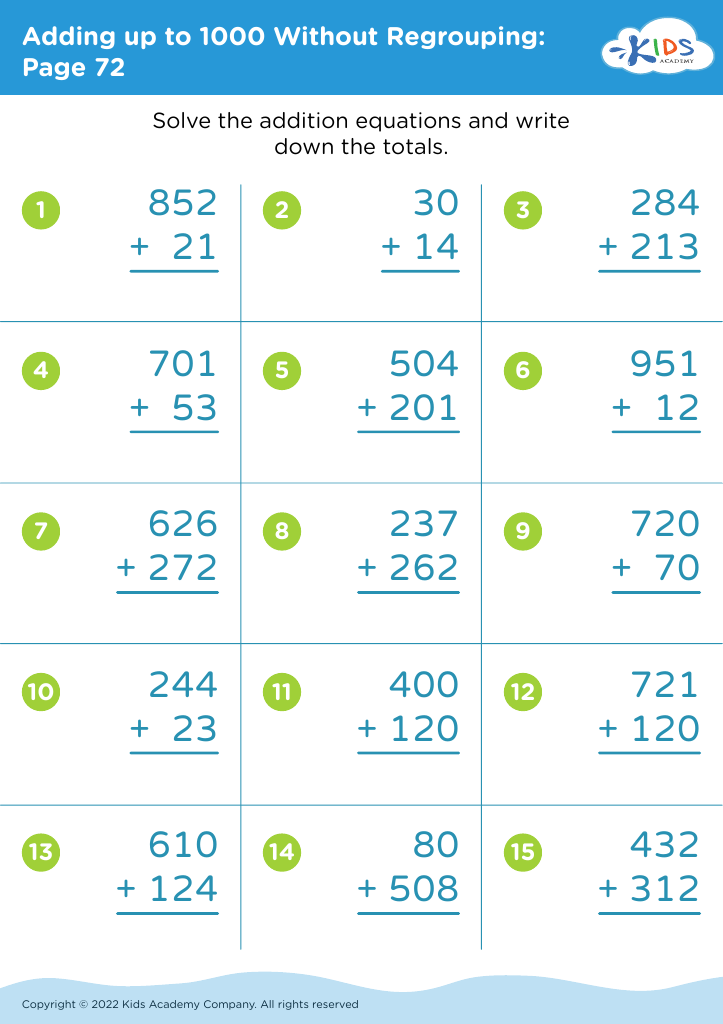
    Adding up to 1000 Without Regrouping: Page 72
    Adding up to 1000 Without Regrouping: Page 72
    Adding up to 1000 Without Regrouping: Page 72
    Worksheet
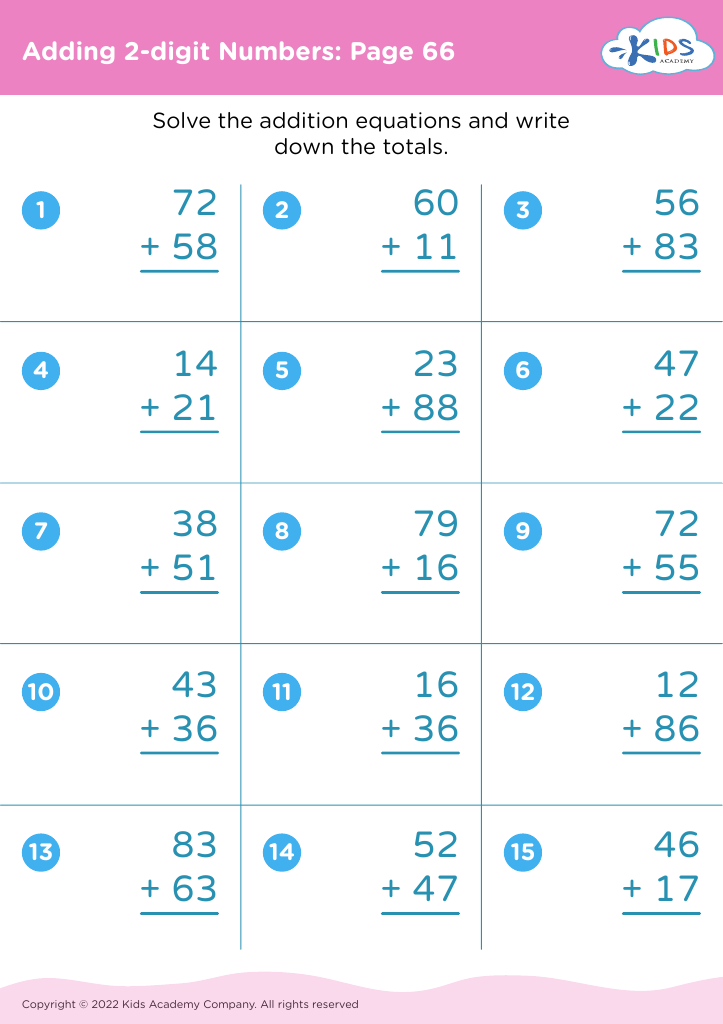
    Adding 2-digit Numbers: Page 66
    Adding 2-digit Numbers: Page 66

    Adding 2-digit Numbers: Page 66

    Adding 2-digit Numbers: Page 66
    Worksheet
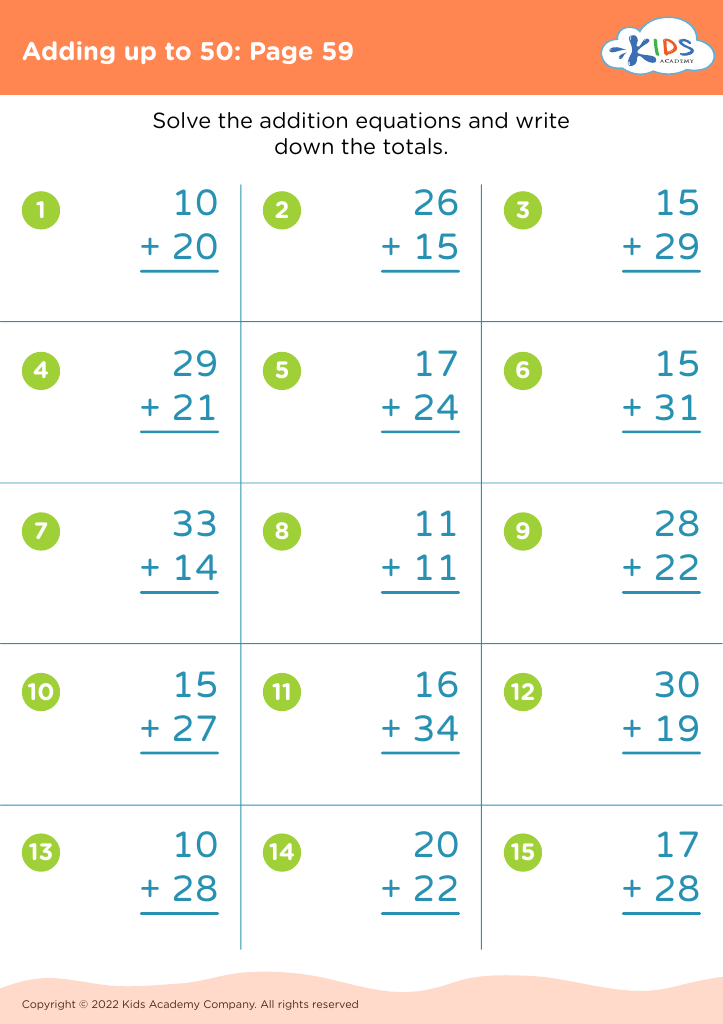
    Adding up to 50: Page 59
    Adding up to 50: Page 59

    Adding up to 50: Page 59

    Adding up to 50: Page 59
    Worksheet
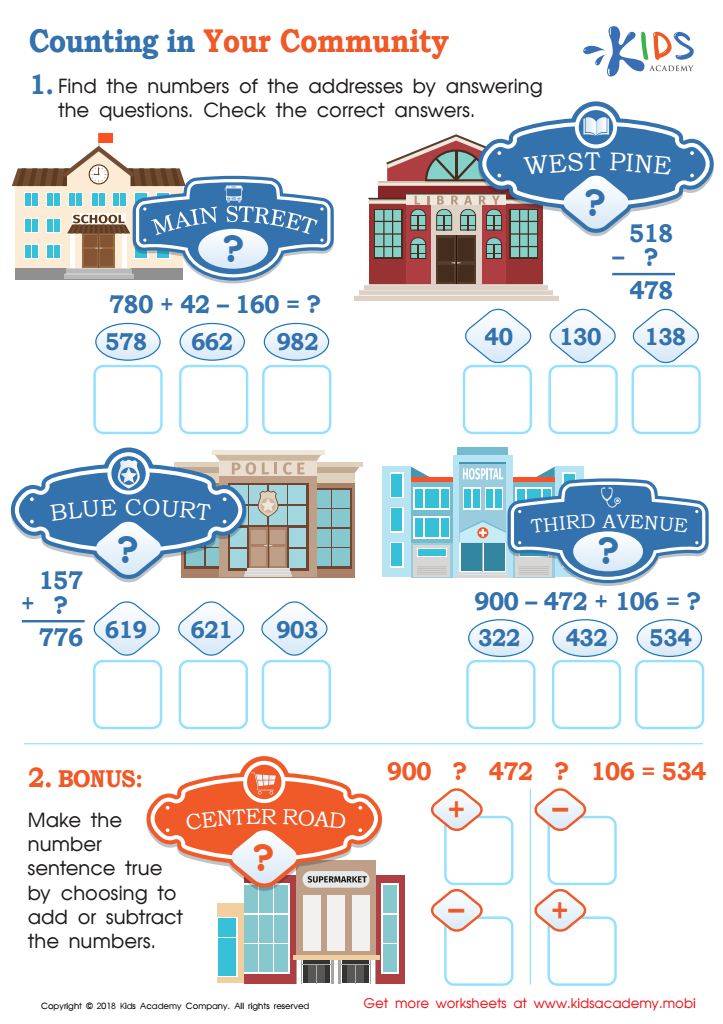
    Counting in Your Community Worksheet
    Counting in Your Community Worksheet
    Counting in Your Community Worksheet
    Introduce your kids to the idea of a community, where different people and buildings co-exist, each playing their part for the community's progress. Ask them to name the buildings they see in their community. Then work through this worksheet to find the numbers of the addresses by answering the questions. Check the answers once they've solved the equations.
    Counting in Your Community Worksheet
    Worksheet
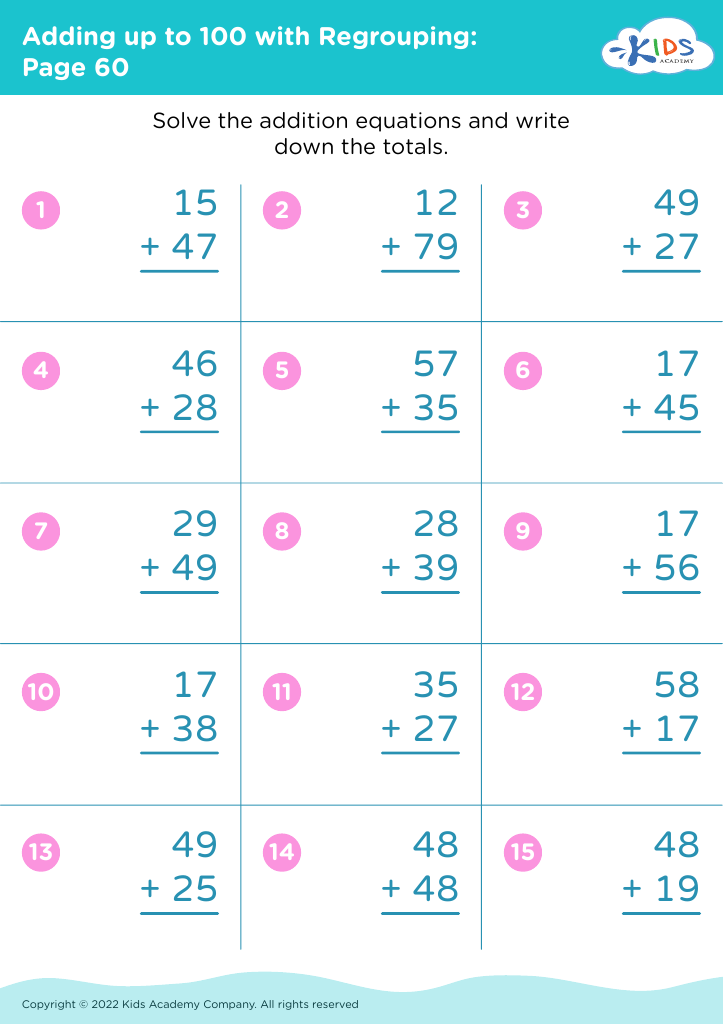
    Adding up to 100 with Regrouping: Page 60
    Adding up to 100 with Regrouping: Page 60
    Adding up to 100 with Regrouping: Page 60
    Worksheet
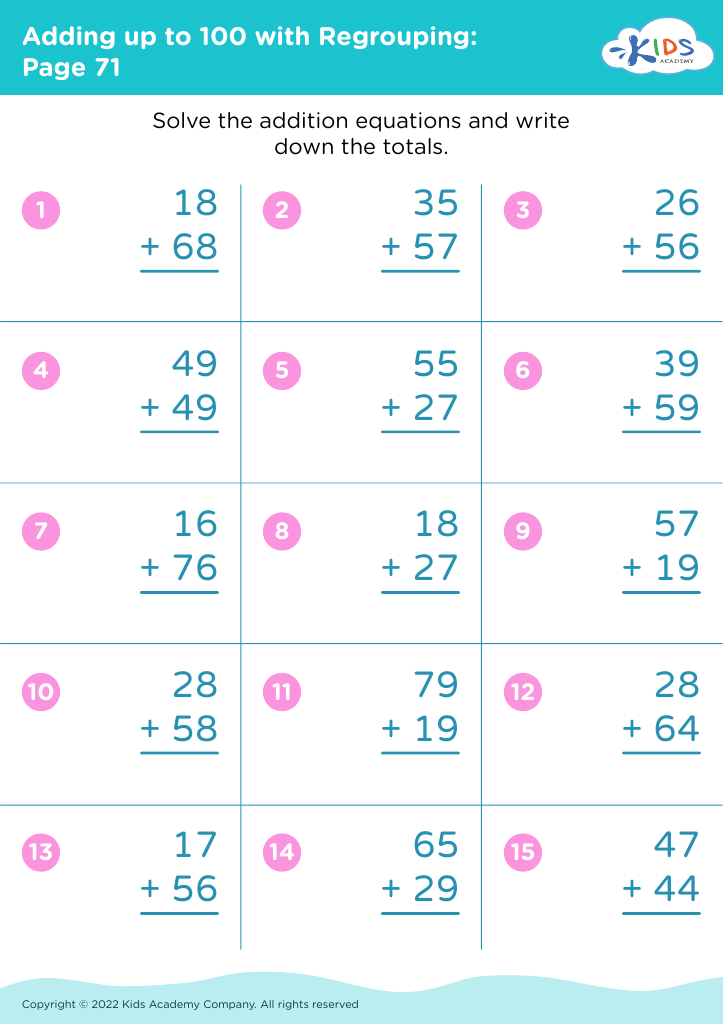
    Adding up to 100 with Regrouping: Page 71
    Adding up to 100 with Regrouping: Page 71
    Adding up to 100 with Regrouping: Page 71
    Worksheet
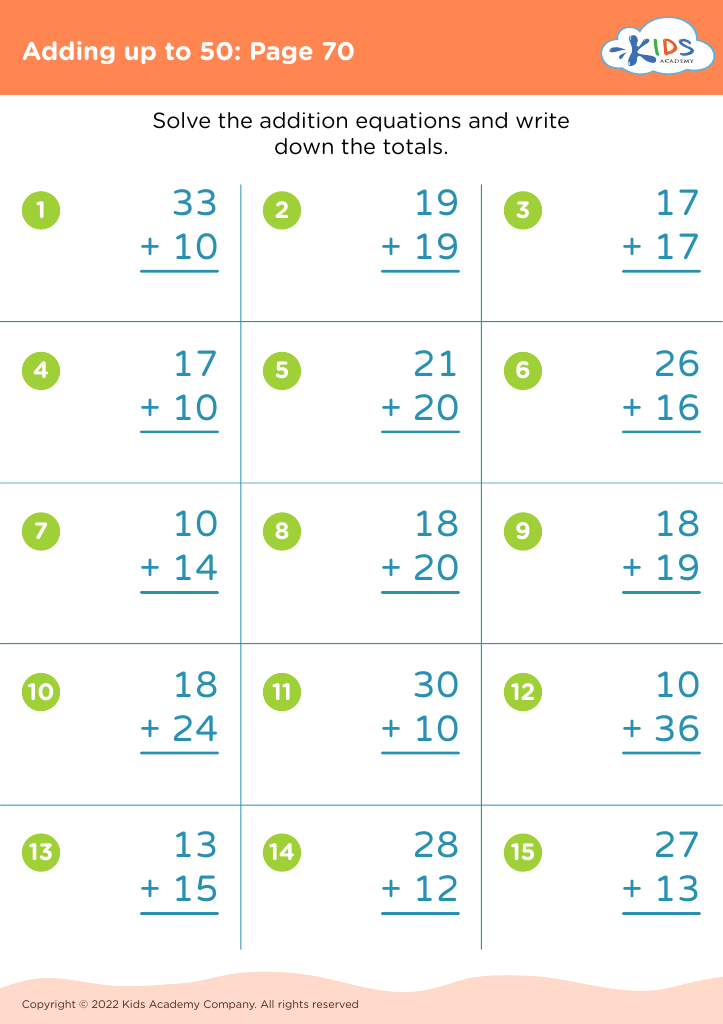
    Adding up to 50: Page 70
    Adding up to 50: Page 70

    Adding up to 50: Page 70

    Adding up to 50: Page 70
    Worksheet
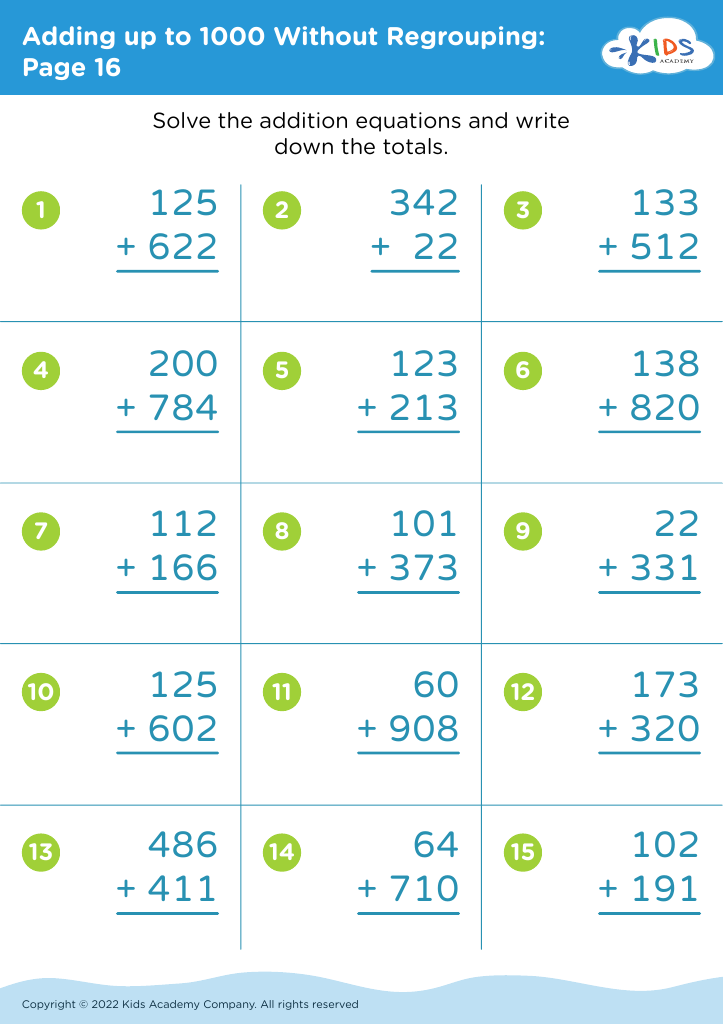
    Adding up to 1000 Without Regrouping: Page 16
    Adding up to 1000 Without Regrouping: Page 16
    Adding up to 1000 Without Regrouping: Page 16
    Worksheet
    Add it Up Worksheet
    Add it Up Worksheet
    Add it Up Worksheet

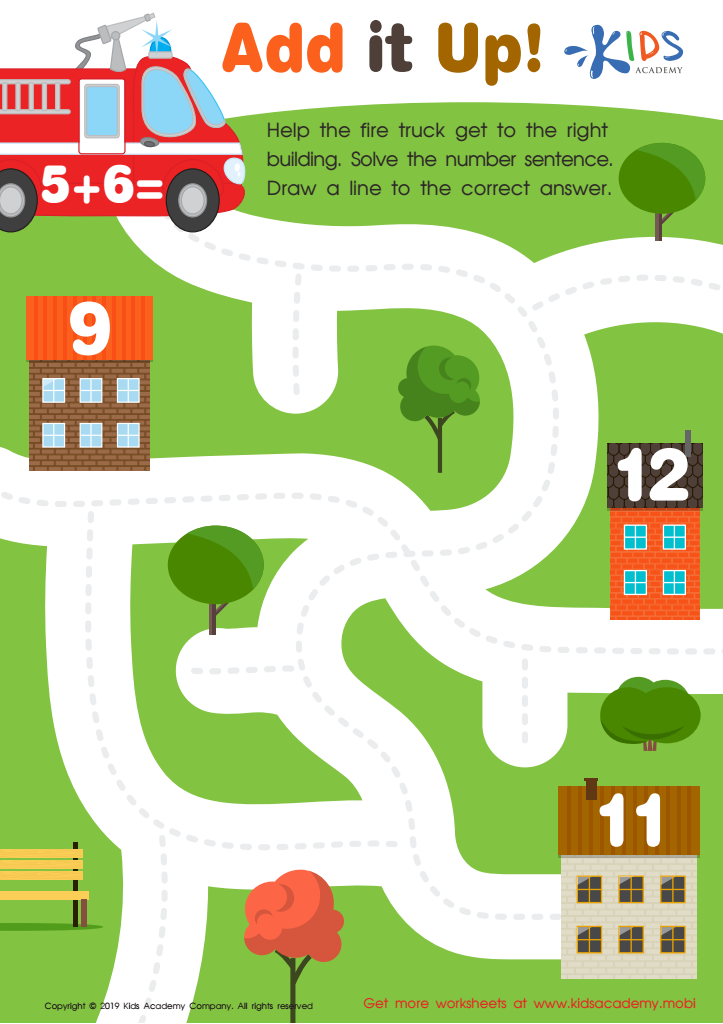
    The fire service is the right number to call in case of a fire. Test your children's safety knowledge by asking them other emergency numbers. Have them identify the fire truck in the worksheet and solve the number sentences. Guide them in drawing a line to the right answer.
    Add it Up Worksheet
    Worksheet
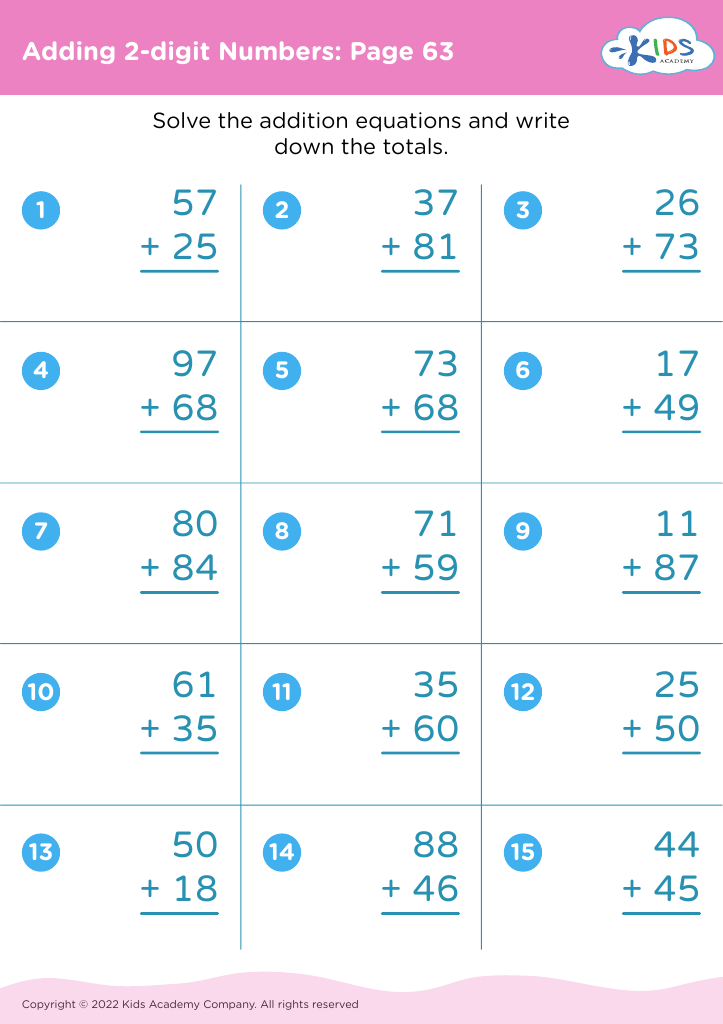
    Adding 2-digit Numbers: Page 63
    Adding 2-digit Numbers: Page 63

    Adding 2-digit Numbers: Page 63

    Adding 2-digit Numbers: Page 63
    Worksheet
    Adding up to 50: Page 17
    Adding up to 50: Page 17

    Adding up to 50: Page 17

    Adding up to 50: Page 17
    Worksheet
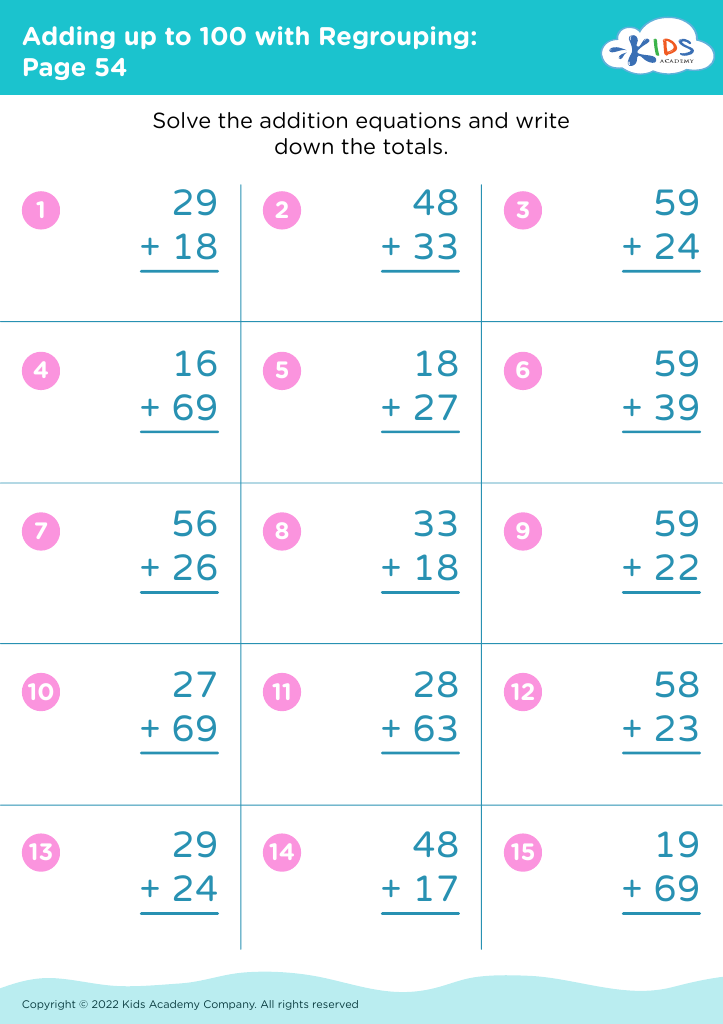
    Adding up to 100 with Regrouping: Page 54
    Adding up to 100 with Regrouping: Page 54
    Adding up to 100 with Regrouping: Page 54
    Worksheet


    Understanding addition is a cornerstone of early mathematical development for children aged 6-8. It lays the foundation for more complex math topics they will encounter in later years, such as multiplication, division, fractions, and algebra. At this young age, children's brains are highly receptive to learning numerical and logical concepts. Engaging with addition helps boost their cognitive development, enhancing problem-solving skills, memory, and critical thinking.

    Moreover, mastering addition has practical life implications. Whether it's counting money, telling time, or sharing toys, addition is a part of everyday activities. A strong grasp of addition aids in building confidence and independence in children, allowing them to navigate daily tasks more effectively.

    For parents and teachers, fostering a solid comprehension of addition during these formative years also promotes a positive attitude toward learning math, reducing anxiety and encouraging a growth mindset. When children see math as enjoyable and accessible, they are more likely to take on academic challenges in the future.

    Incorporating games, interactive activities, and real-world examples makes learning addition fun and meaningful. By investing time and effort in teaching addition, parents and teachers can give children a significant advantage in their educational journey and daily lives.