Hand-eye Coordination Addition Worksheets for Ages 6-8
10 filtered results
-
From - To
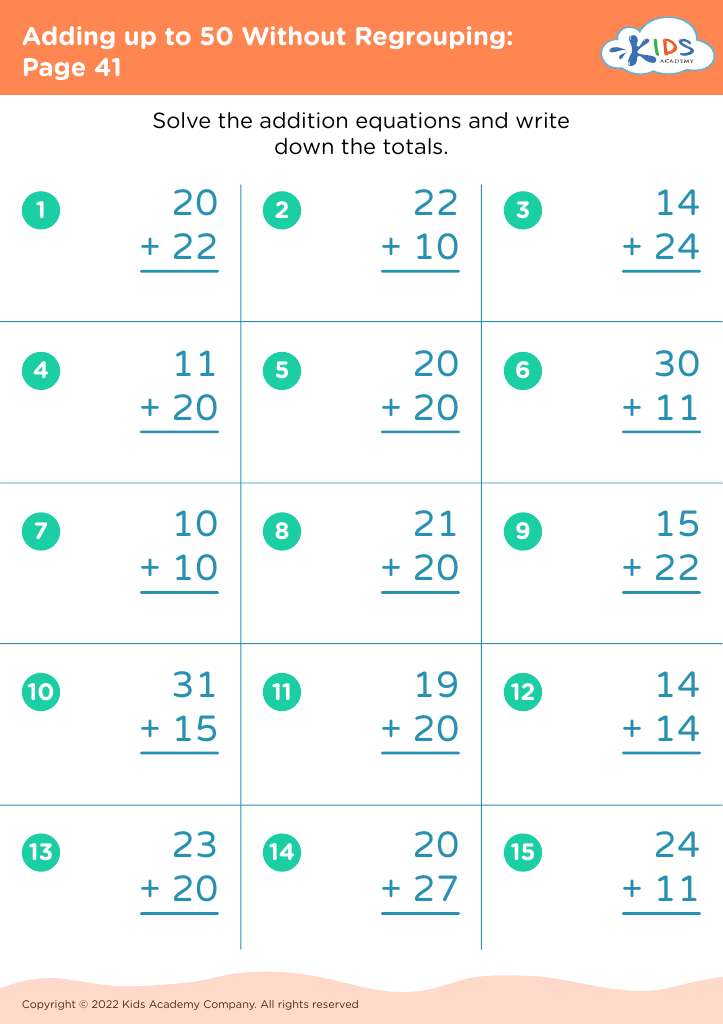
Enhance your child's hand-eye coordination and math skills with our engaging hand-eye coordination addition worksheets tailored for ages 6-8. These printable resources combine playful activities with foundational math concepts, fostering an enjoyable learning experience. By integrating physical movement with addition tasks, children develop not only their math abilities but also fine motor skills and coordination. Each worksheet features vibrant illustrations and interactive elements designed to keep young learners enthusiastic and motivated. Perfect for home or classroom use, these worksheets offer a fun approach to mastering addition while building essential coordination skills. Download now to inspire a love of learning in your child!
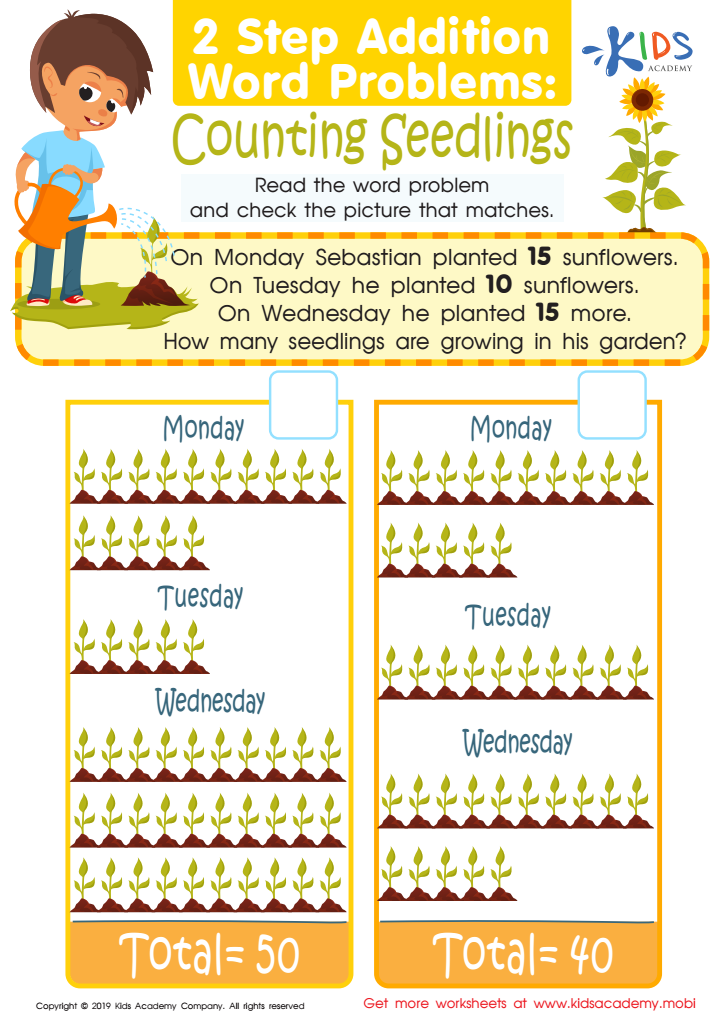
Counting Seedlings Worksheet
 Assign to My Students
Adding up With Water Worksheet
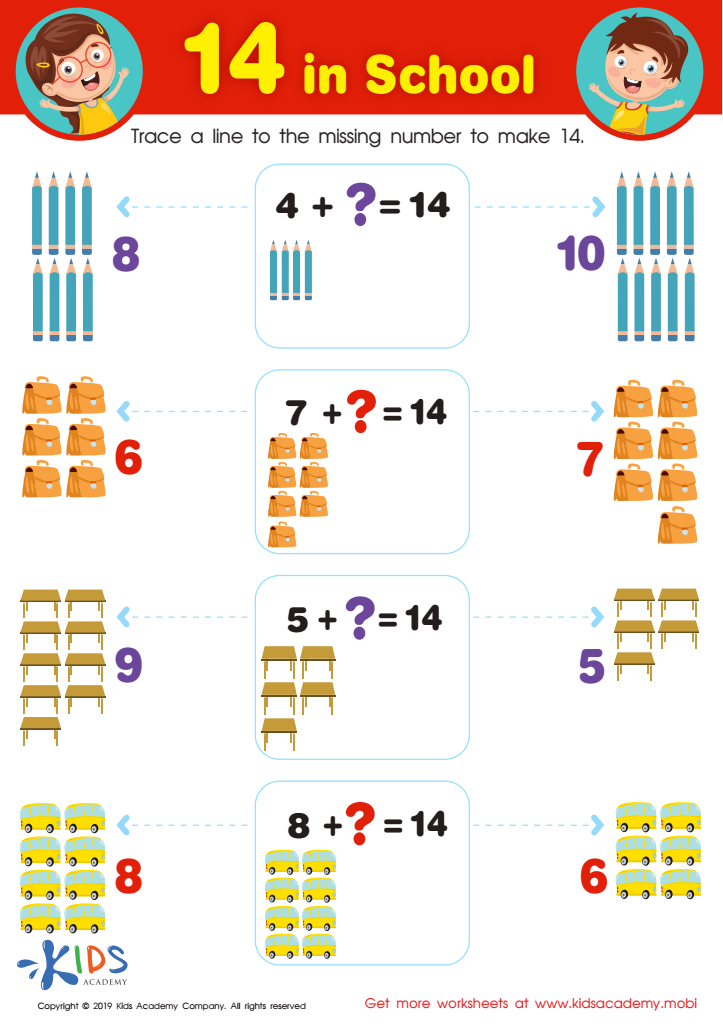
14 in School Worksheet








Hand-eye coordination is a critical skill for children aged 6-8, as it lays the foundation for numerous developmental milestones. Parents and teachers should care about fostering this ability because it directly impacts a child's everyday activities, including writing, sports, and even basic tasks like buttoning a shirt. During this age, children are also refining their motor skills, and improved hand-eye coordination can boost their confidence and competence in both academic and social settings.
Engaging in hand-eye coordination activities—such as building with blocks, drawing, or playing ball games—can significantly enhance a child's fine motor skills and cognitive function. Additionally, these activities encourage concentration, focus, and problem-solving, essential skills in the classroom and beyond. Through fun and interactive exercises, educators and parents can motivate children, making learning enjoyable.
Moreover, hand-eye coordination has long-term implications. Children who develop strong coordination skills early on often have better performance in physical activities and academic tasks as they grow. By recognizing its importance, parents and teachers can create supportive environments that prioritize the development of hand-eye coordination, nurturing well-rounded, confident children ready to tackle future challenges.








