Filters

32 filtered results

Clear all filters
Favorites
With answer key
Interactive

32 filtered results

Difficulty Level

Grade


Discover our engaging Shape Recognition Addition Worksheets designed specifically for children aged 6-8! These worksheets seamlessly blend math and geometry, helping young learners enhance their addition skills while identifying various shapes. With colorful visuals and interactive exercises, children will enjoy practicing addition using shapes such as circles, triangles, and squares. These activities not only strengthen their math abilities but also improve their shape recognition and cognitive skills. Perfect for home or classroom use, our worksheets provide a fun and educational way to explore math and geometry. Help your child build confidence and excitement in learning with our Shape Recognition Addition Worksheets today!
Check out this FREE Trial Lesson on Addition for age 6-8!

H

Favorites
With answer key
Interactive
  • 6-8
  • Shape Recognition
  • Addition
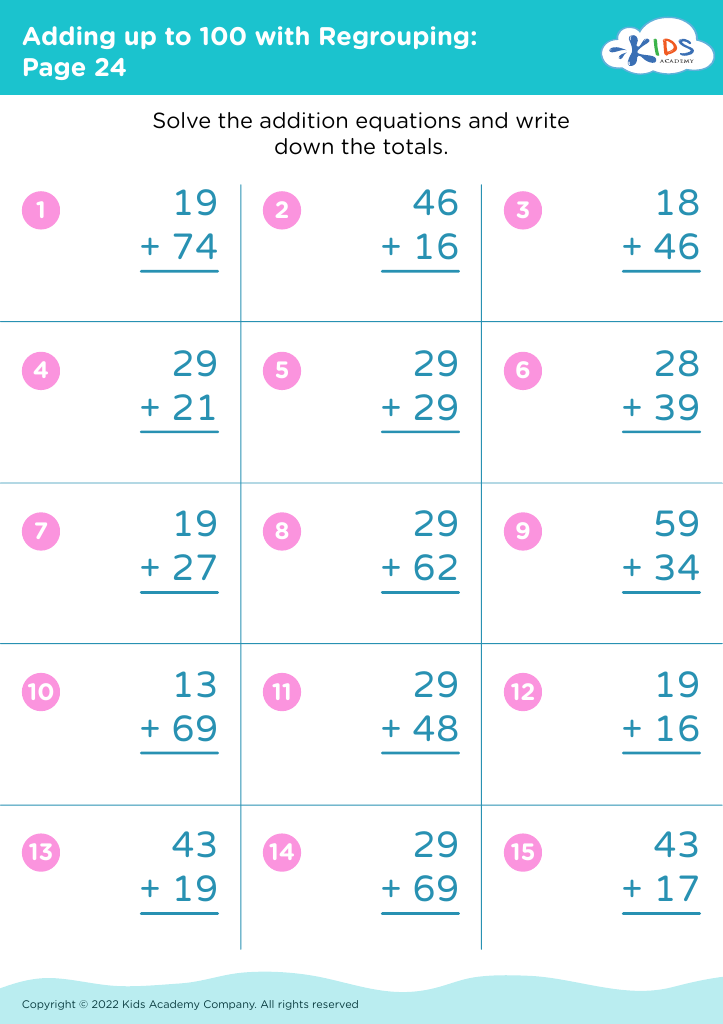
Adding up to 100 with Regrouping: Page 24
Worksheet
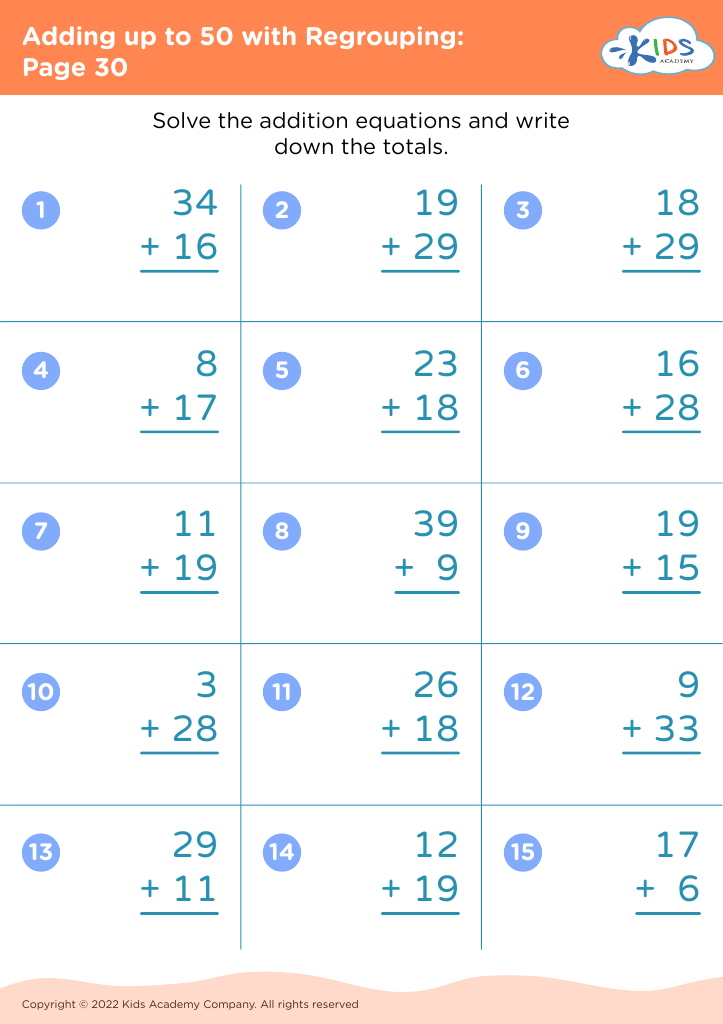
Adding up to 50 with Regrouping: Page 30
Worksheet
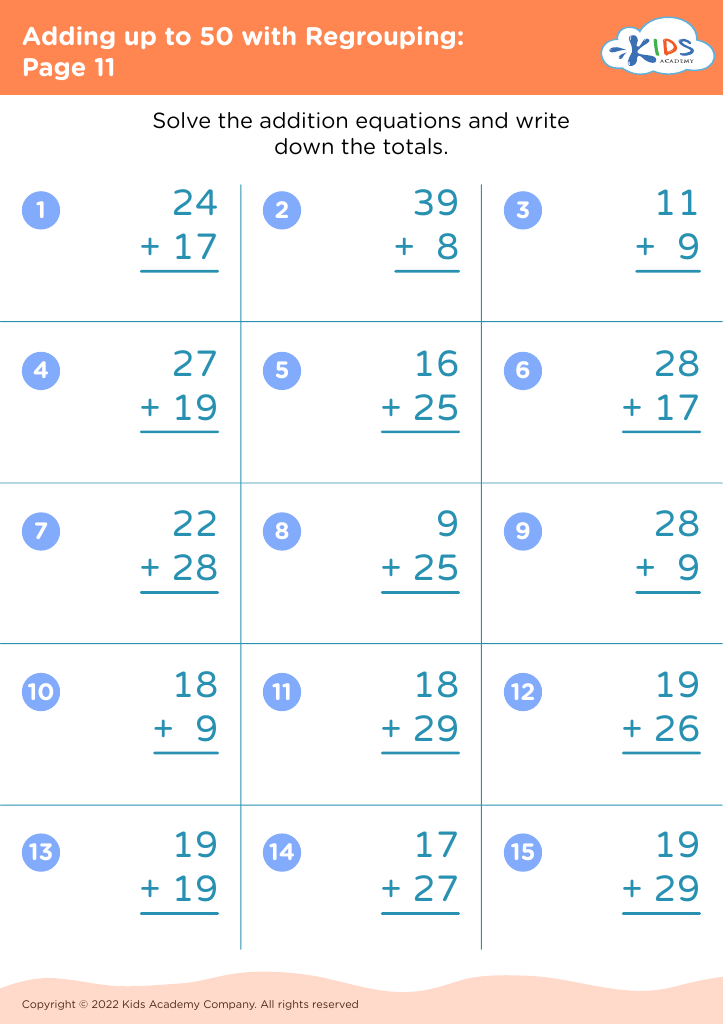
Adding up to 50 with Regrouping: Page 11
Worksheet
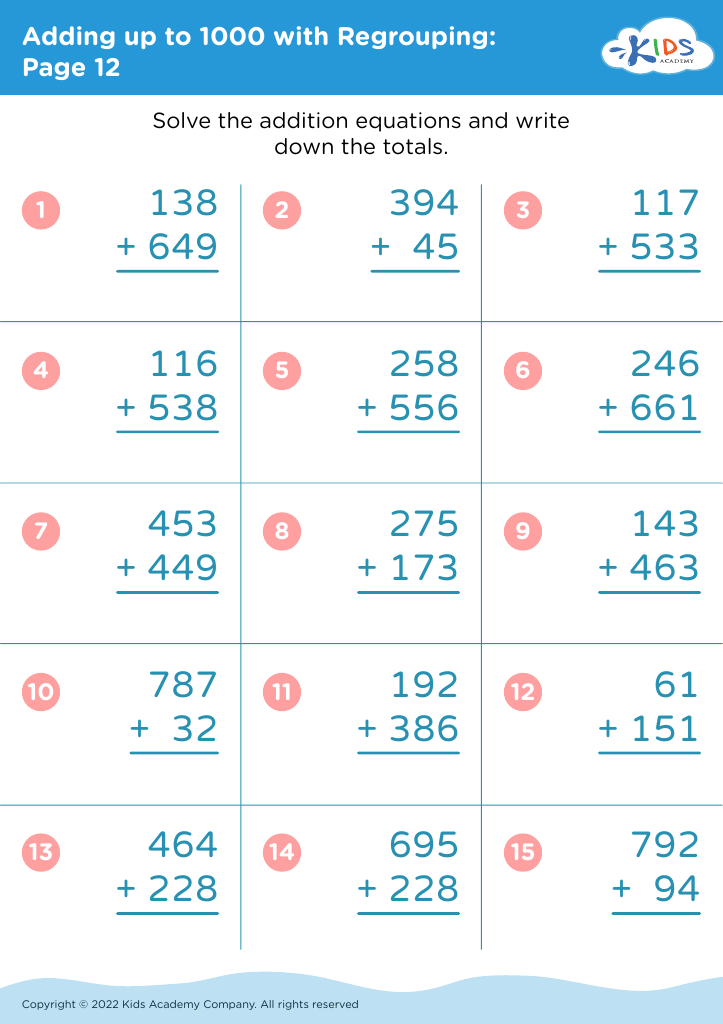
Adding up to 1000 with Regrouping: Page 12
Worksheet
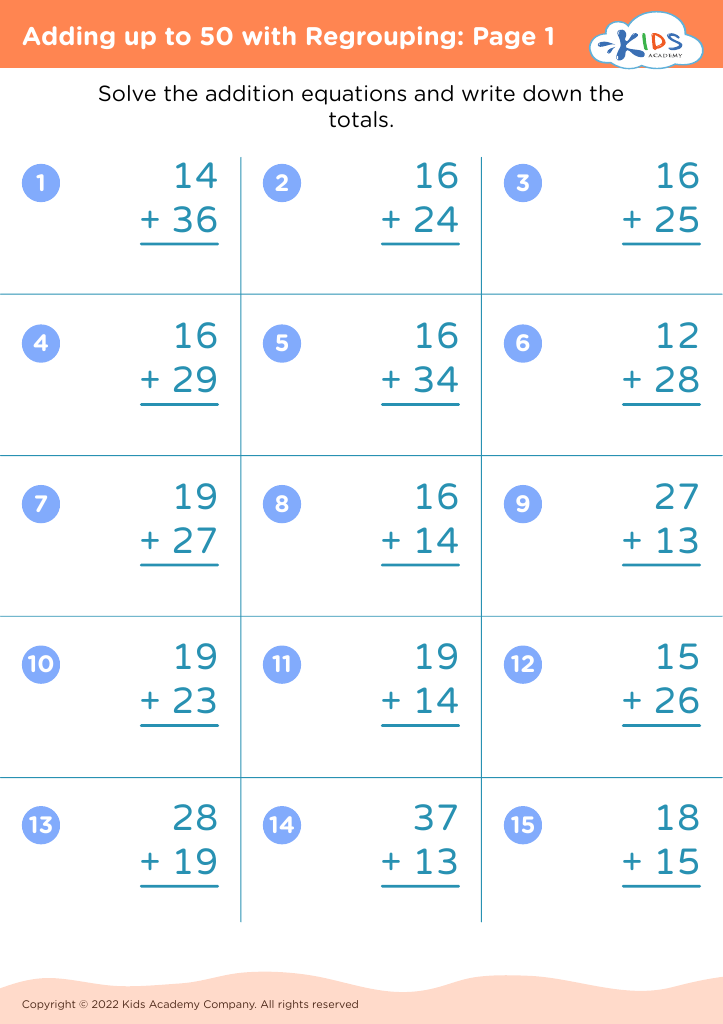
Adding up to 50 with Regrouping: Page 1
Worksheet
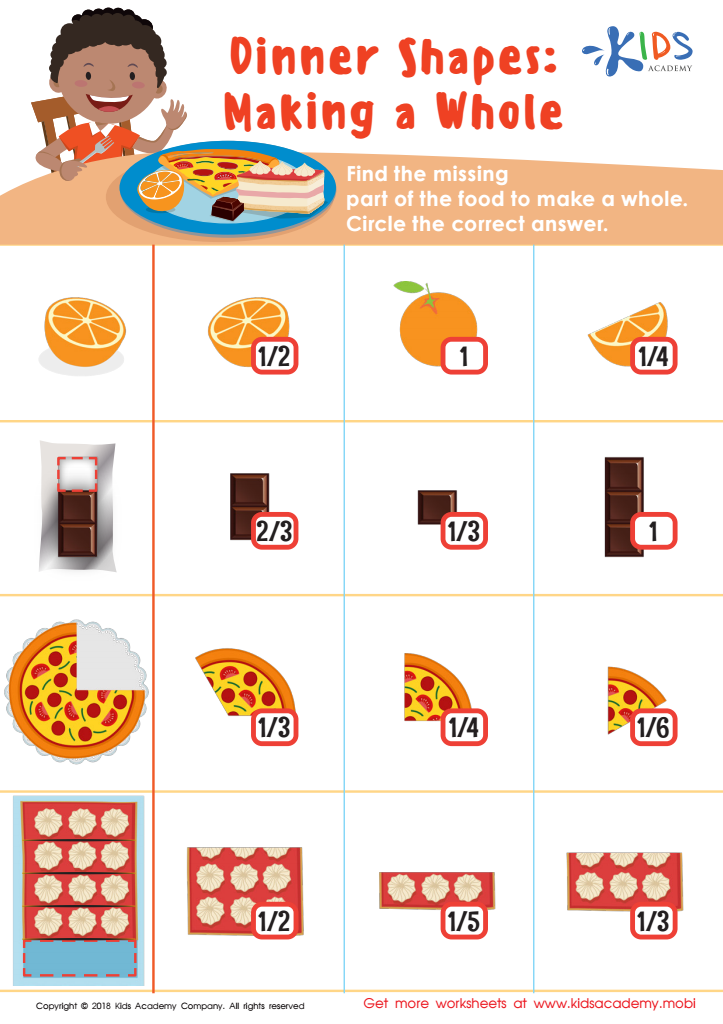
Dinner Shapes: Making a Whole Worksheet

Dinner Shapes: Making a Whole Worksheet

Using food and snacks to stimulate learning and interest in topics is a great strategy. Fractions can prove tricky, but this worksheet can help your child become an expert. Have them look for the missing parts of the food to make a whole, then circle the answer.
Dinner Shapes: Making a Whole Worksheet
Worksheet
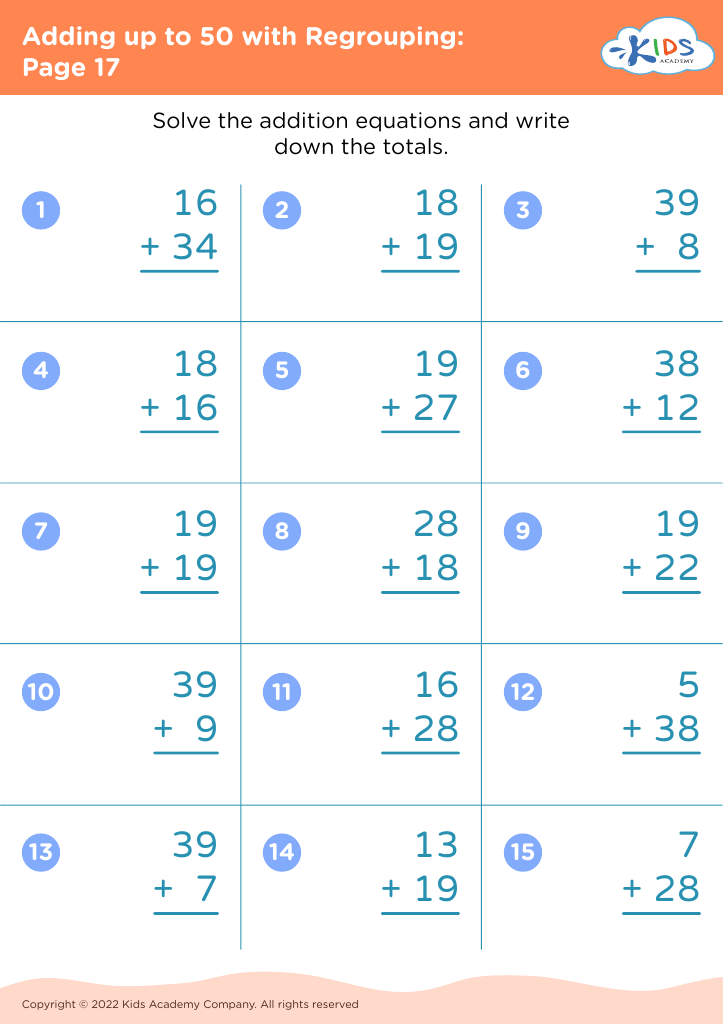
Adding up to 50 with Regrouping: Page 17
Worksheet
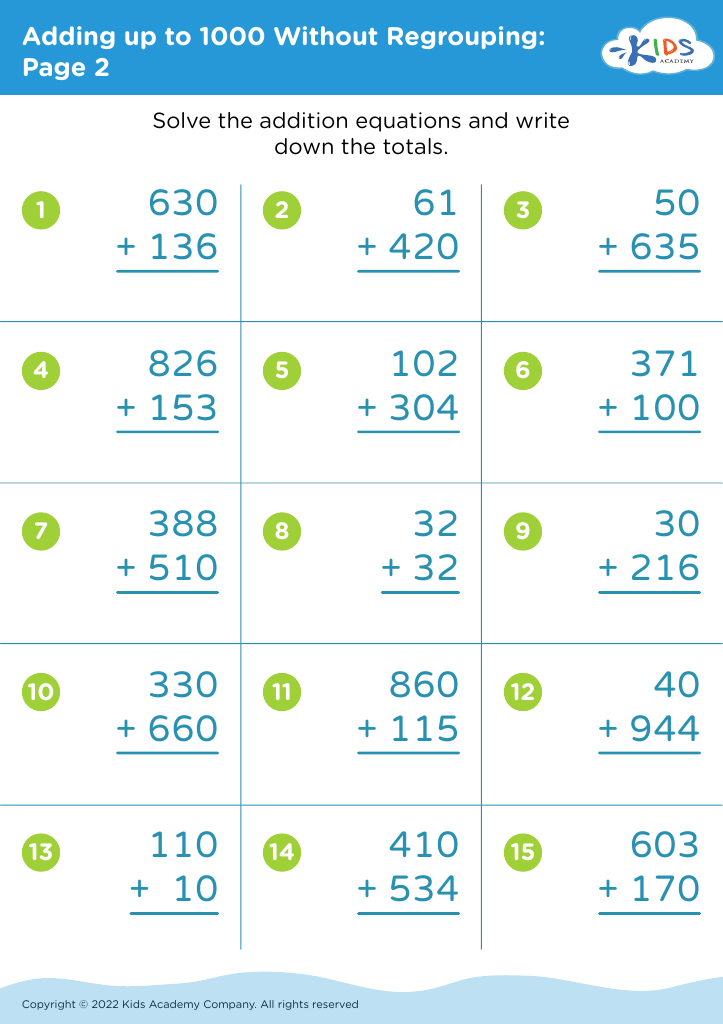
Adding up to 1000 Without Regrouping: Page 2
Worksheet
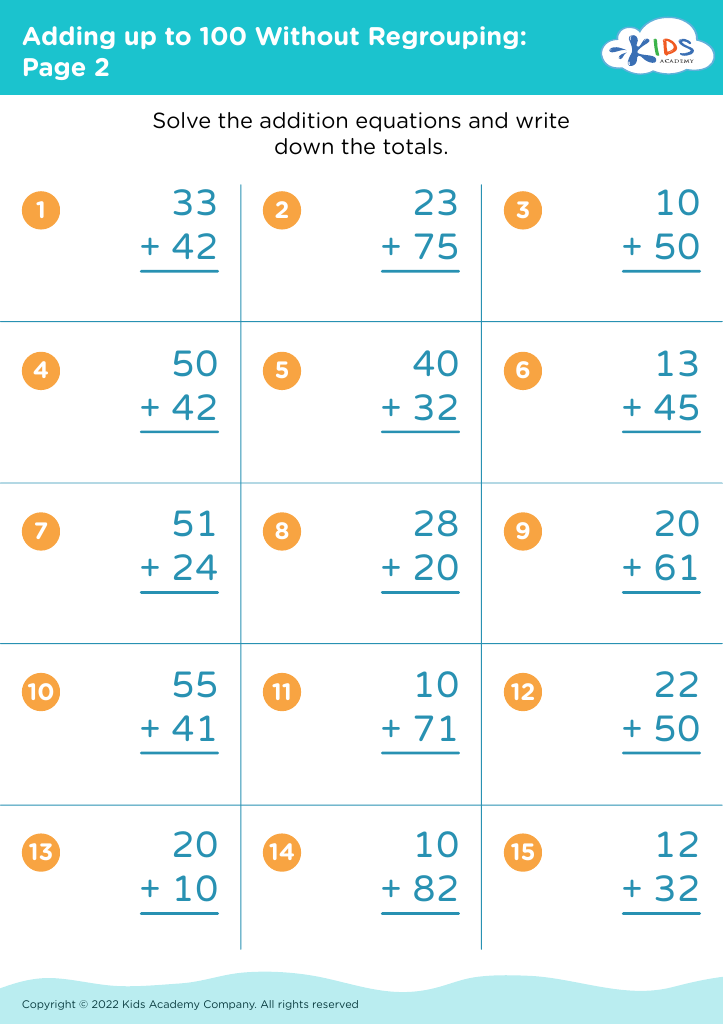
Adding up to 100 Without Regrouping: Page 2
Worksheet
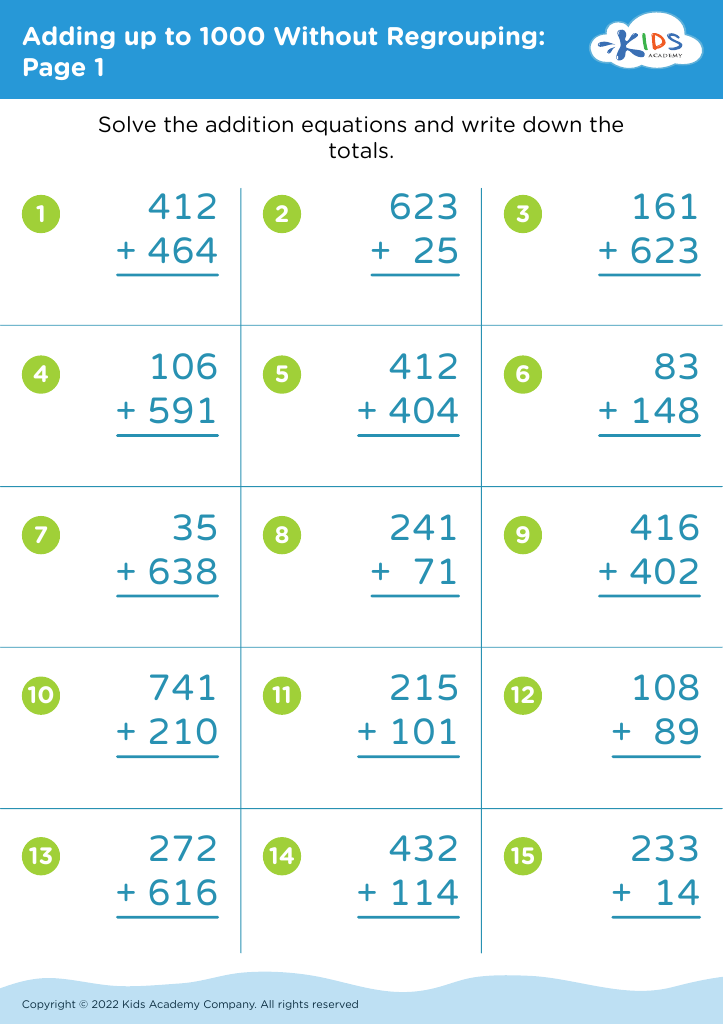
Adding up to 1000 Without Regrouping: Page 1
Worksheet
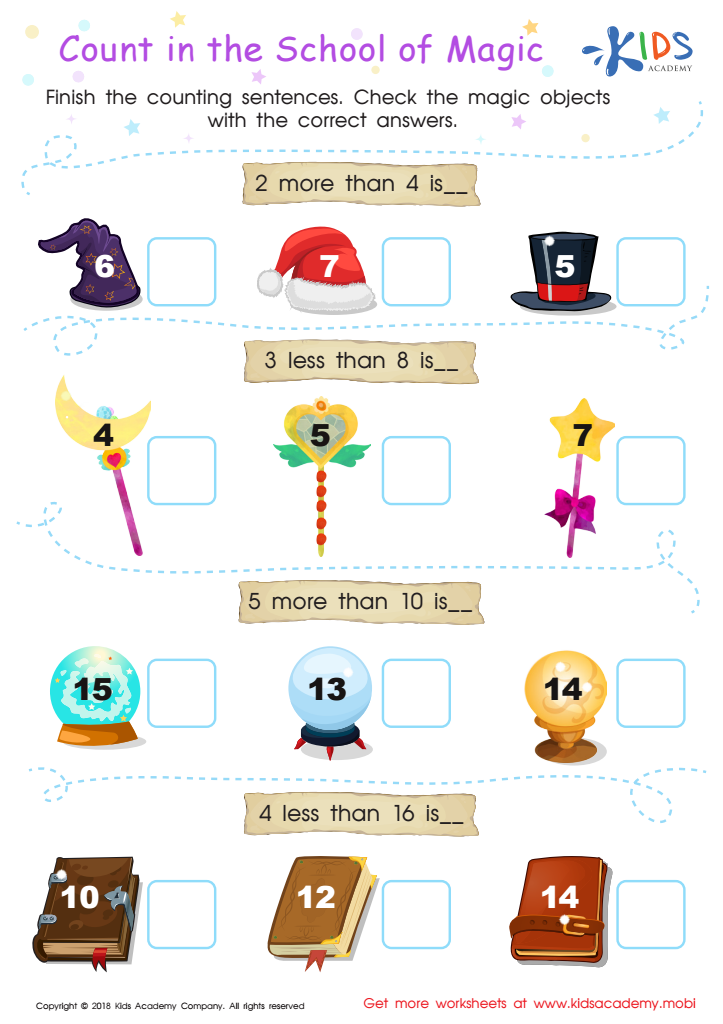
Count in the School of Magic Worksheet
Count in the School of Magic Worksheet
Your math learners can explore the School of Magic with this worksheet. They'll read equations with addition and subtraction numbers under 20, count back and forth to find the answer, then complete the counting sentences. Fun pictures and easy accuracy make it an enjoyable and successful learning experience.
Count in the School of Magic Worksheet
Worksheet
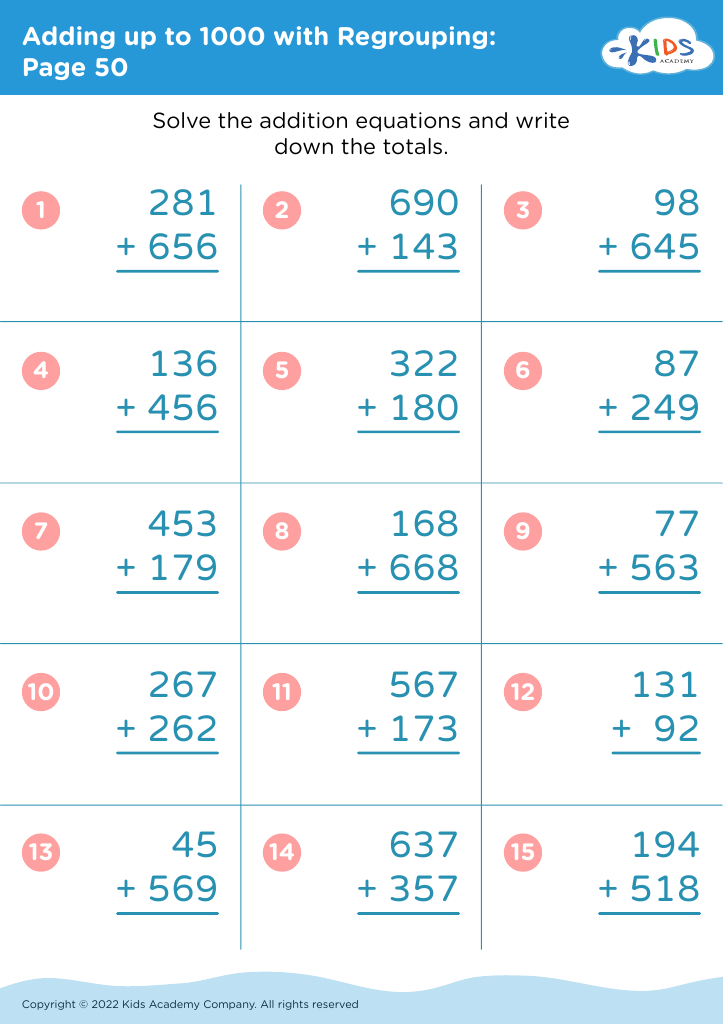
Adding up to 1000 with Regrouping: Page 50
Worksheet
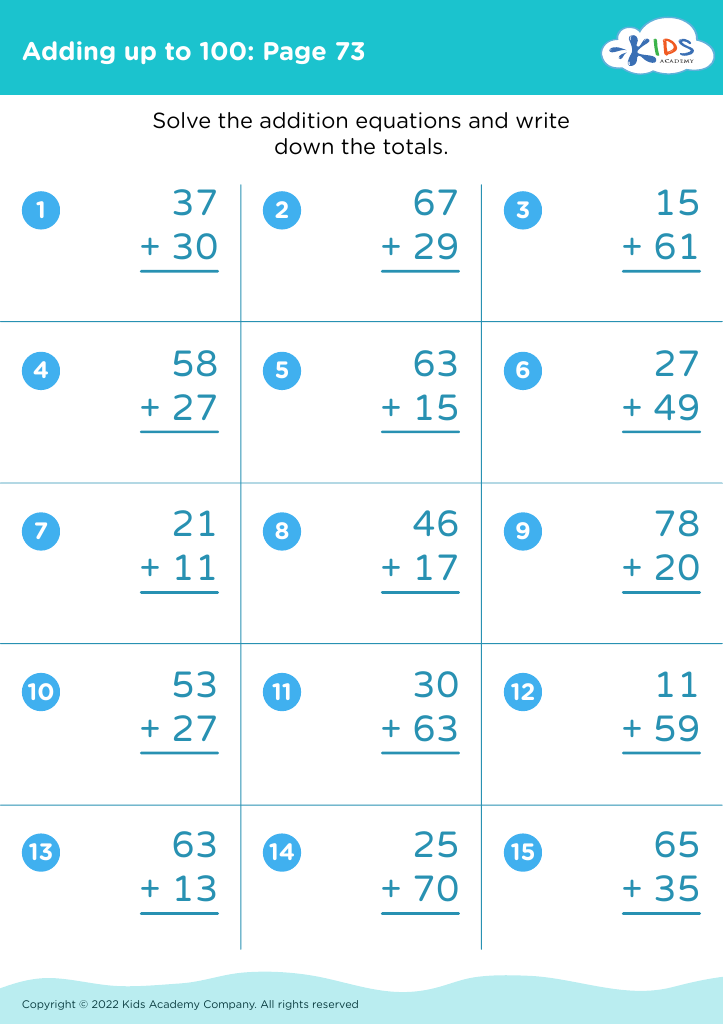
Adding up to 100: Page 73

Adding up to 100: Page 73

Adding up to 100: Page 73
Worksheet
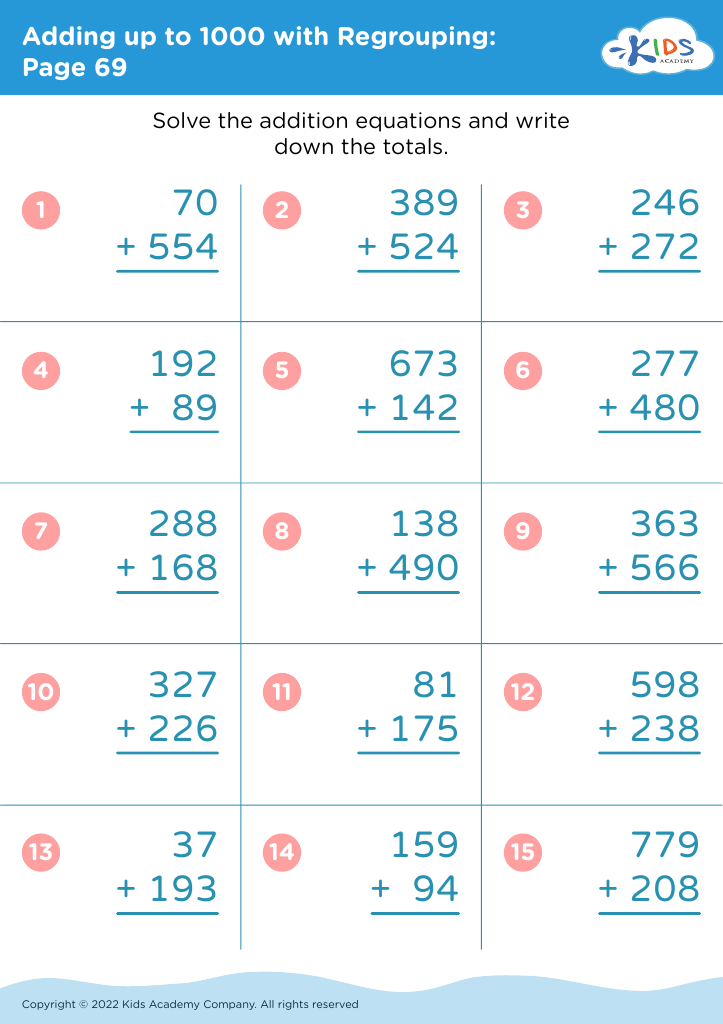
Adding up to 1000 with Regrouping: Page 69
Worksheet
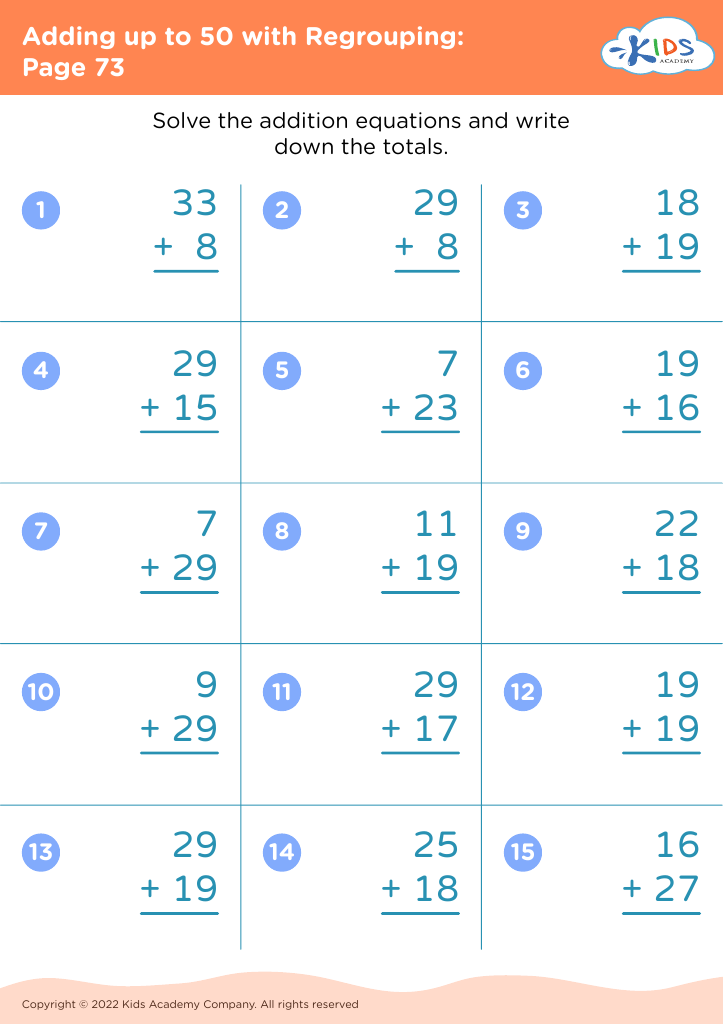
Adding up to 50 with Regrouping: Page 73
Worksheet
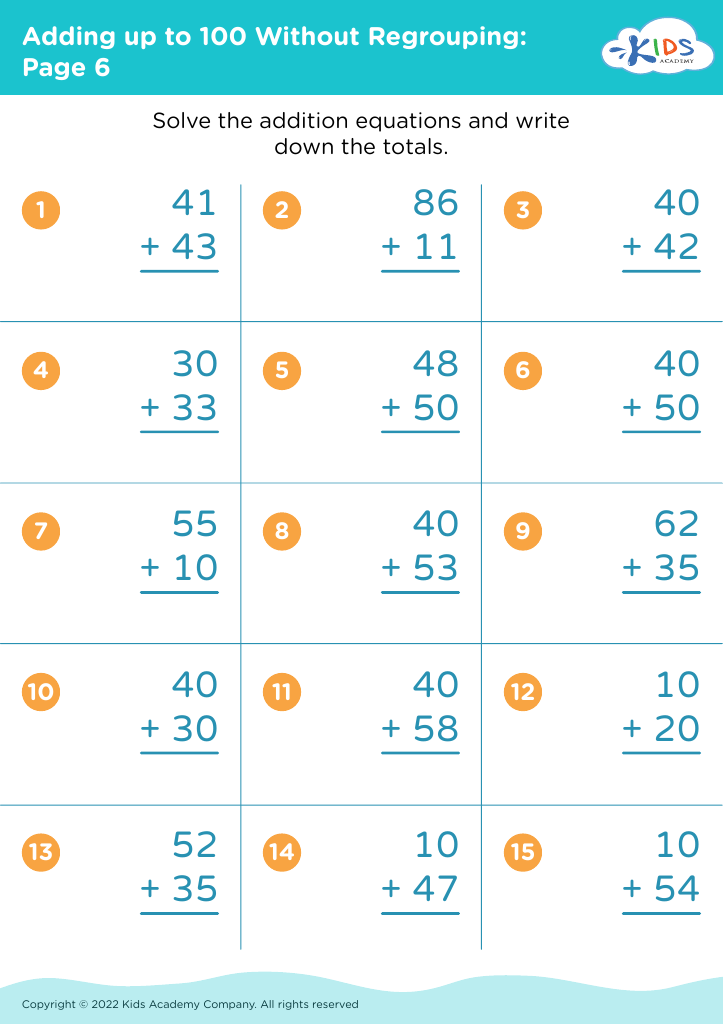
Adding up to 100 Without Regrouping: Page 6
Worksheet
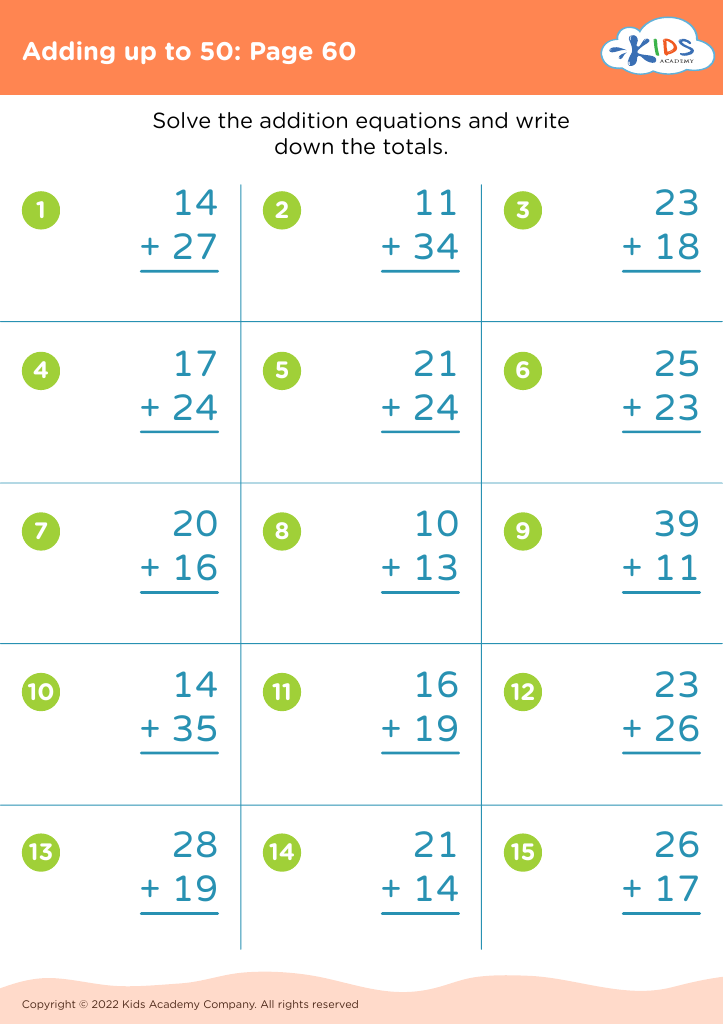
Adding up to 50: Page 60

Adding up to 50: Page 60

Adding up to 50: Page 60
Worksheet
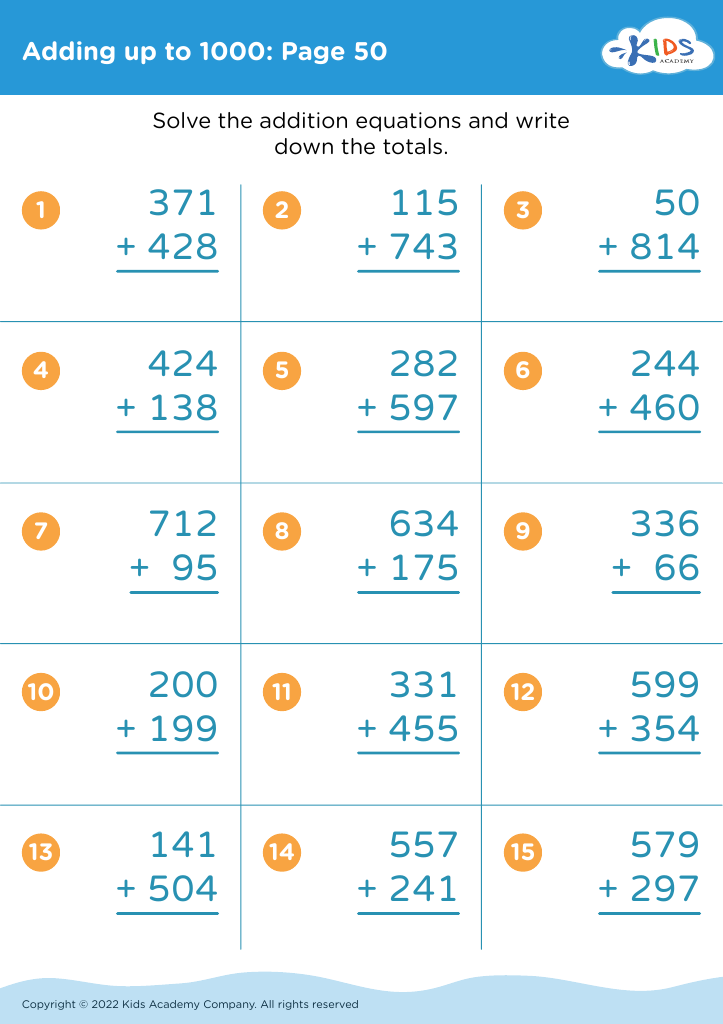
Adding up to 1000: Page 50

Adding up to 1000: Page 50

Adding up to 1000: Page 50
Worksheet
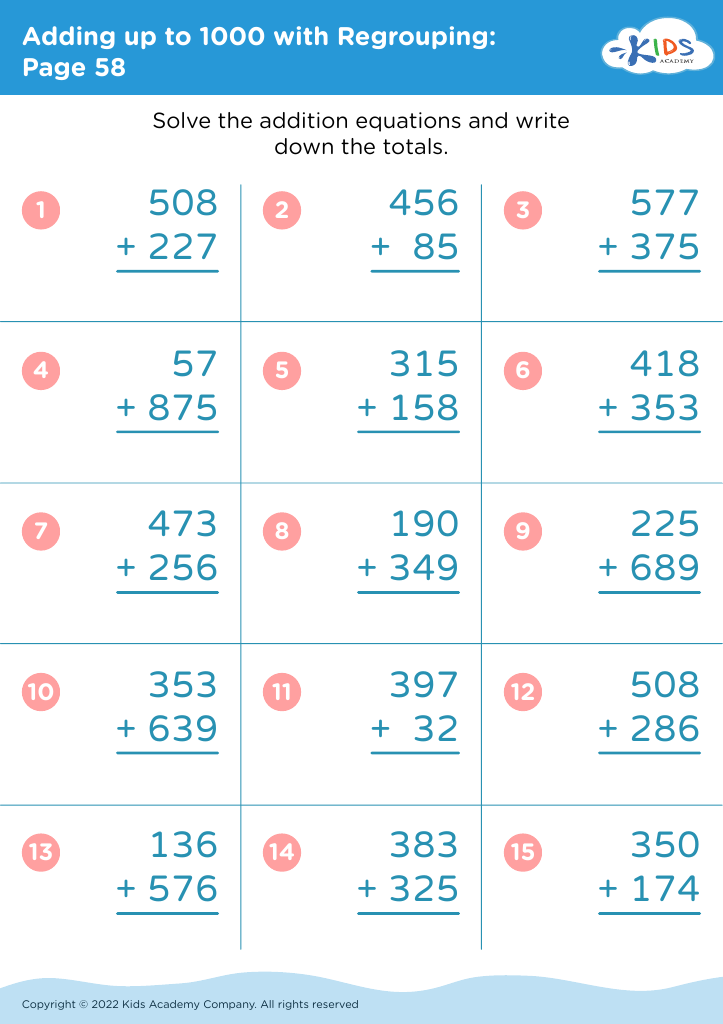
Adding up to 1000 with Regrouping: Page 58
Worksheet
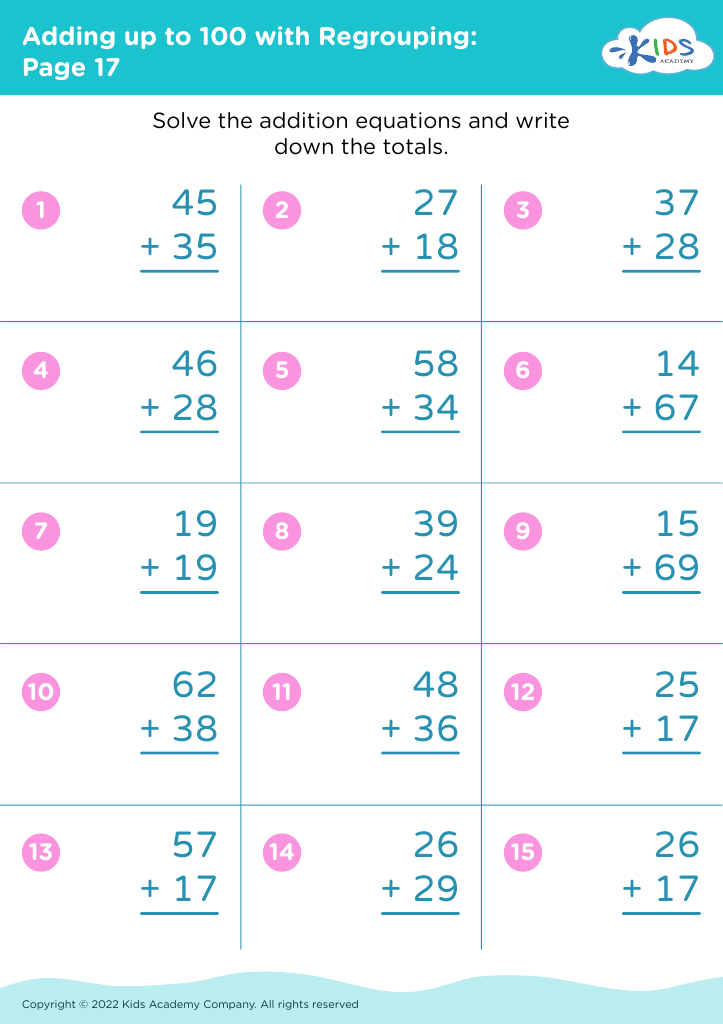
Adding up to 100 with Regrouping: Page 17
Worksheet
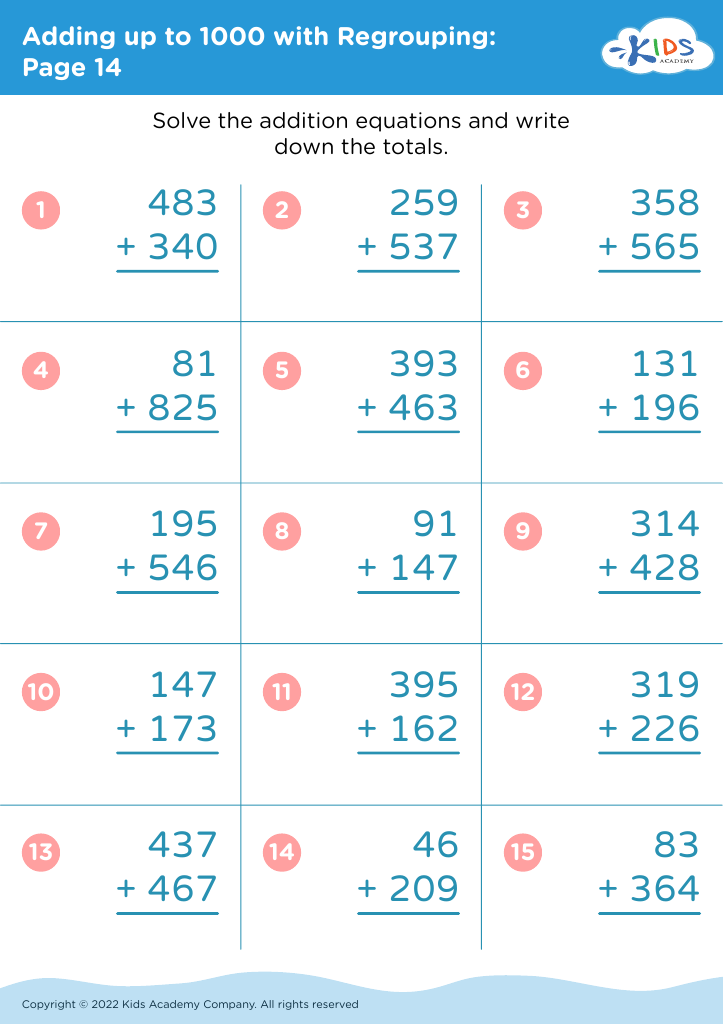
Adding up to 1000 with Regrouping: Page 14
Worksheet
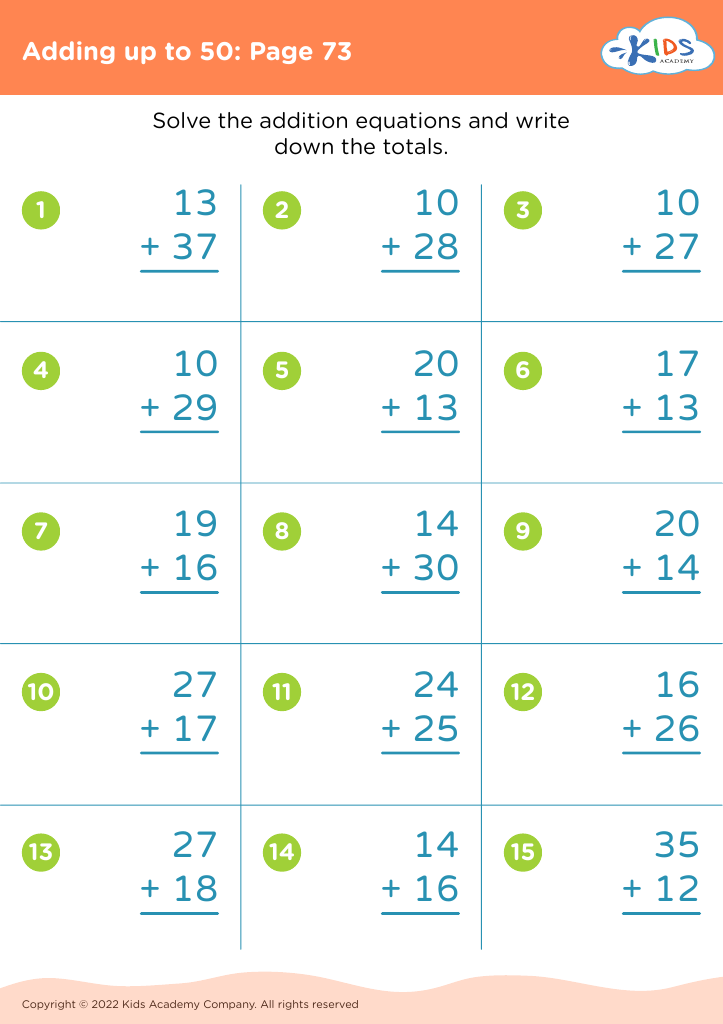
Adding up to 50: Page 73

Adding up to 50: Page 73

Adding up to 50: Page 73
Worksheet
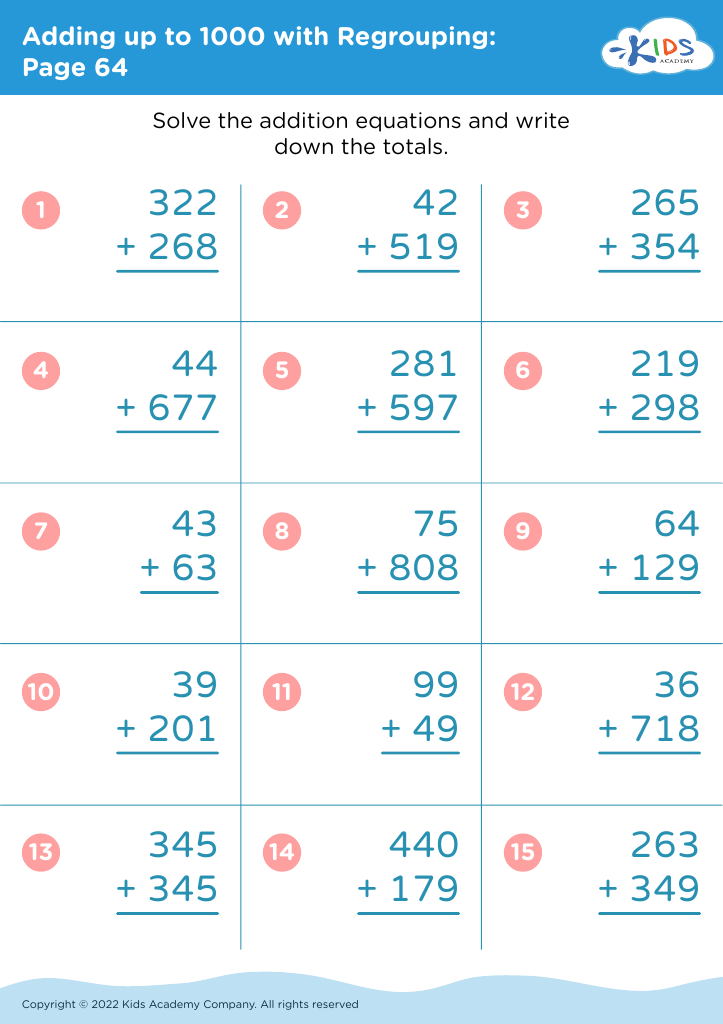
Adding up to 1000 with Regrouping: Page 64
Worksheet
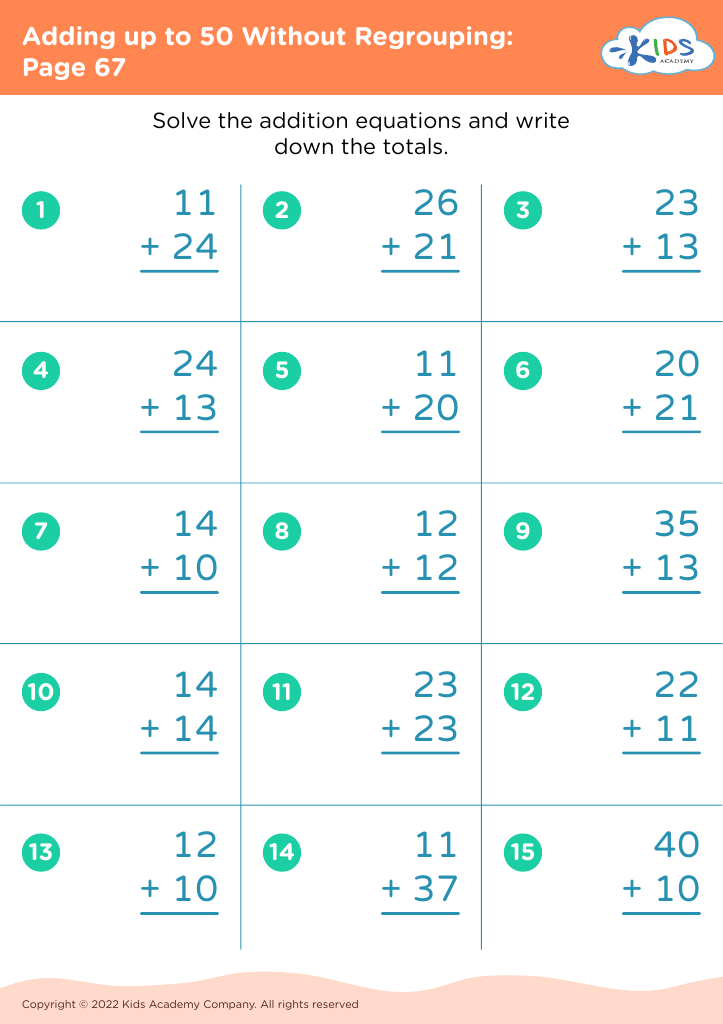
Adding up to 50 Without Regrouping: Page 67
Worksheet


Shape recognition and addition are foundational skills for children aged 6-8. Recognizing shapes helps kids develop critical visual and spatial awareness, which are essential for mathematics, art, and real-world problem-solving. When children understand different shapes—like circles, squares, and triangles—they improve their ability to identify patterns and make connections across various subjects. This skill fosters innovative thinking and creativity, enhancing their overall learning experience.

Addition, on the other hand, lays the groundwork for more advanced arithmetic. By introducing addition alongside shape recognition, teachers and parents can engage children in meaningful and interactive activities, promoting mathematical fluency. Young learners can visualize numbers by linking them with shapes, effectively making abstract concepts more tangible.

Caring about these early skills is crucial for parents and teachers because they directly influence a child's academic confidence and enthusiasm for learning. Children who build strong shape recognition and addition skills are more likely to excel in future math topics, making a solid foundation for lifelong learning. Additionally, these combined skills prepare children not just for academic success, but also for everyday tasks, enhancing problem-solving abilities and fostering a sense of accomplishment. Ultimately, investing in these foundational skills equips children for varied and rich personalized learning journeys.