Filters

158 filtered results

Clear all filters
Favorites
With answer key
Interactive

158 filtered results

Difficulty Level

Grade


Check out this FREE Trial Lesson on Addition for age 6-8!

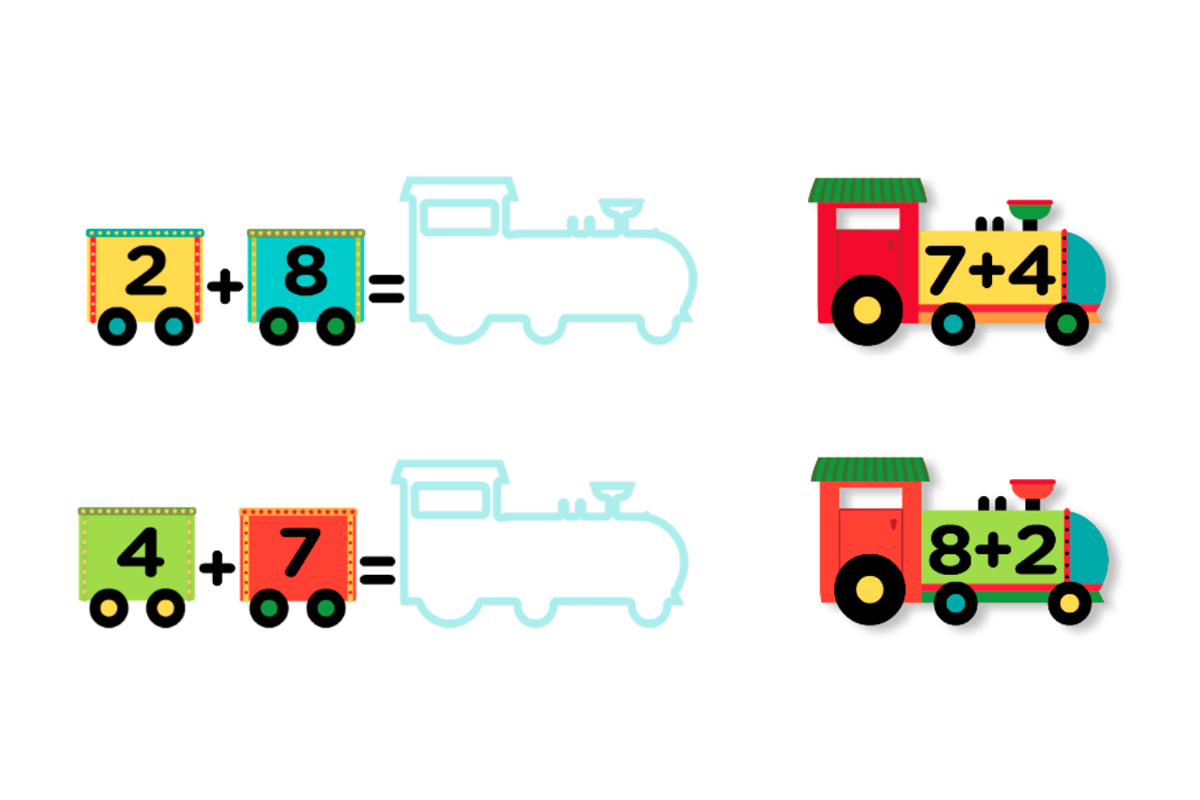
Match Objects that Fit Together

Favorites
With answer key
Interactive
  • 6-8
  • Understanding fractions
  • Addition
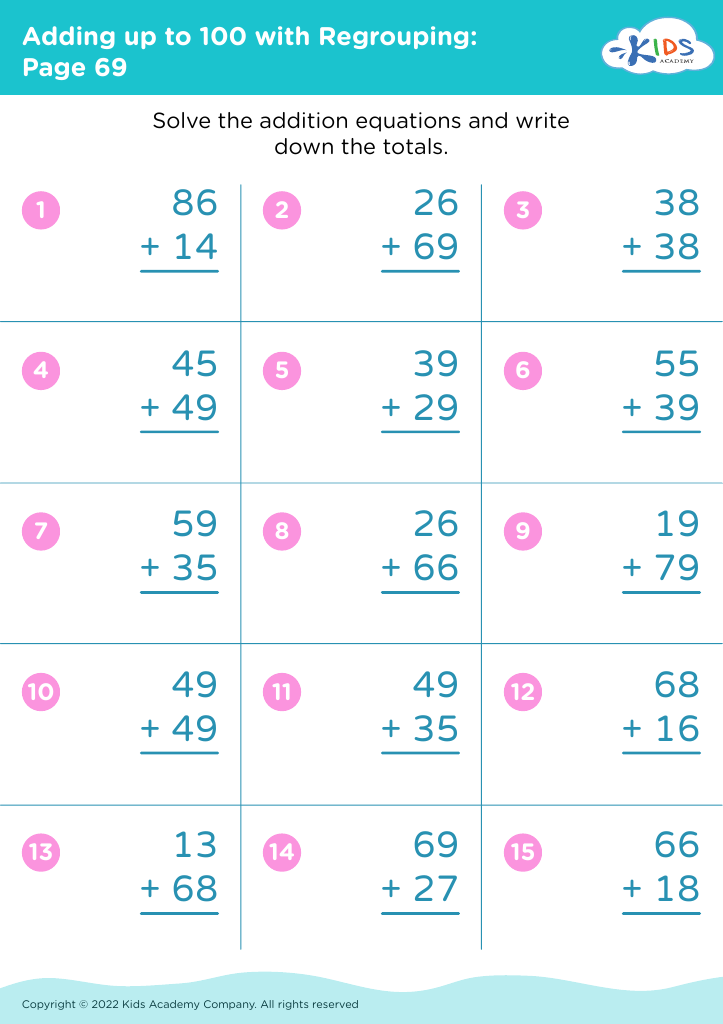
Adding up to 100 with Regrouping: Page 69
Worksheet
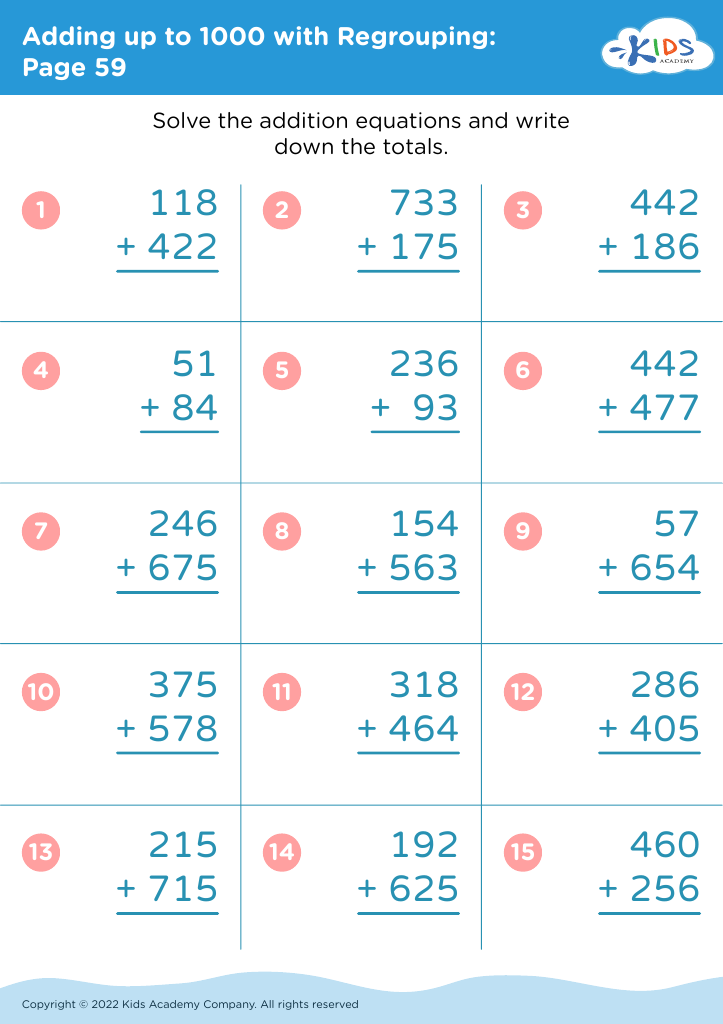
Adding up to 1000 with Regrouping: Page 59
Worksheet
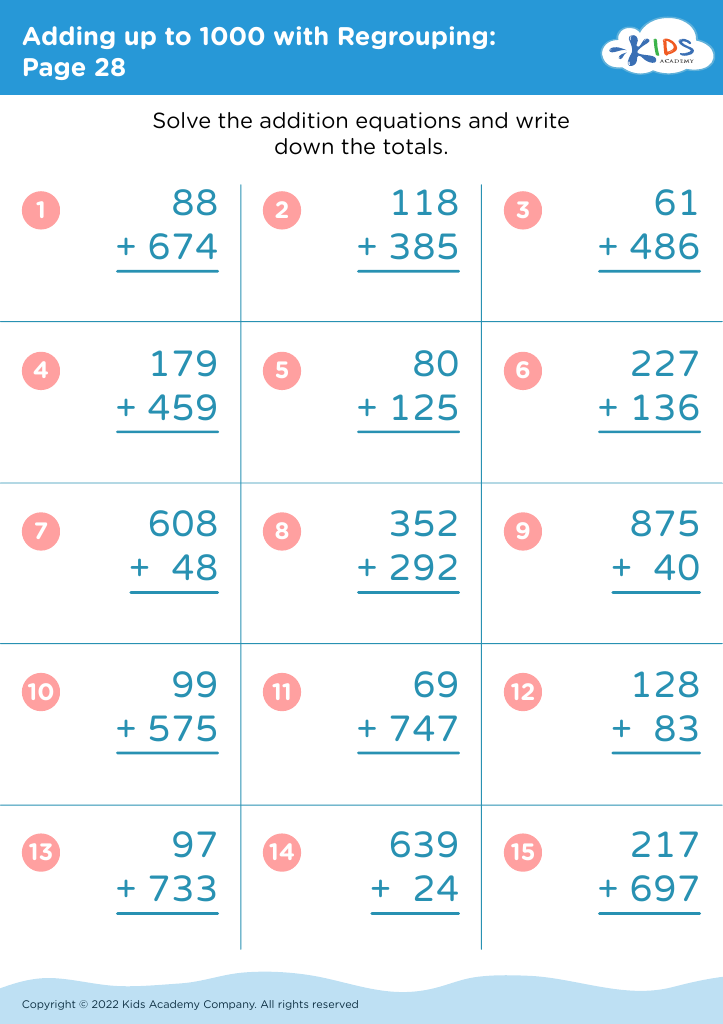
Adding up to 1000 with Regrouping: Page 28
Worksheet
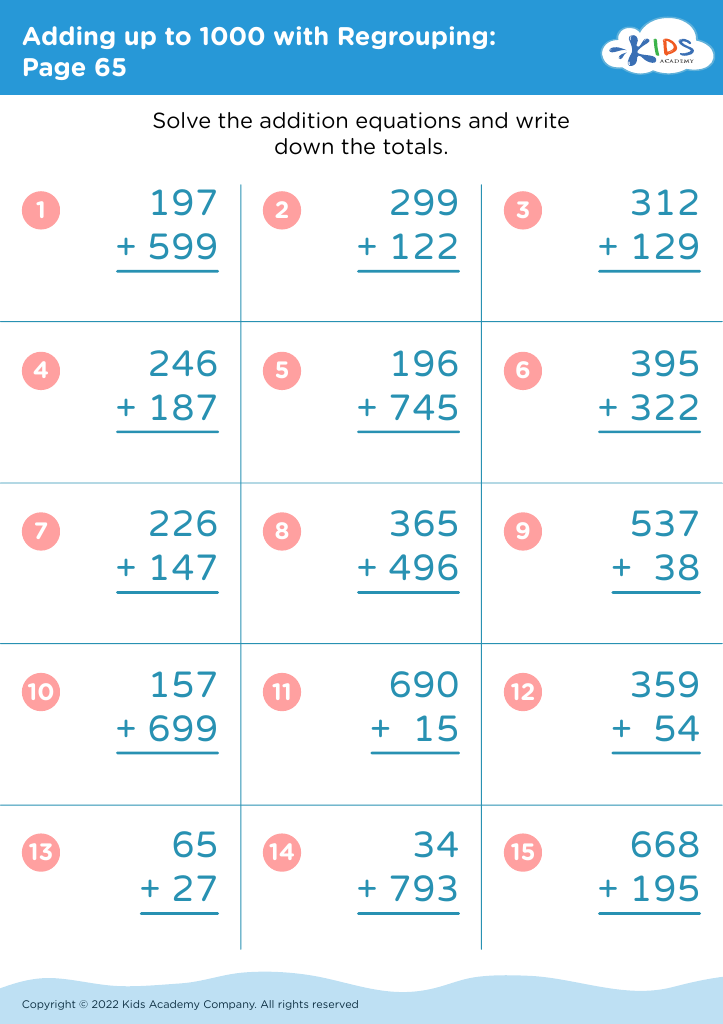
Adding up to 1000 with Regrouping: Page 65
Worksheet
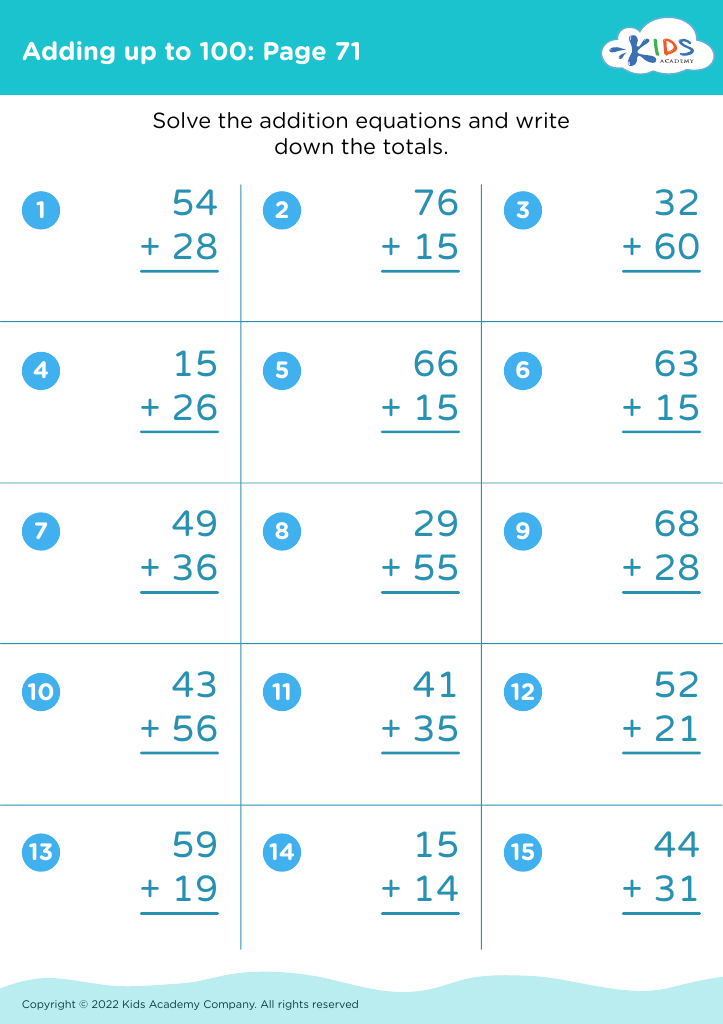
Adding up to 100: Page 71

Adding up to 100: Page 71

Adding up to 100: Page 71
Worksheet
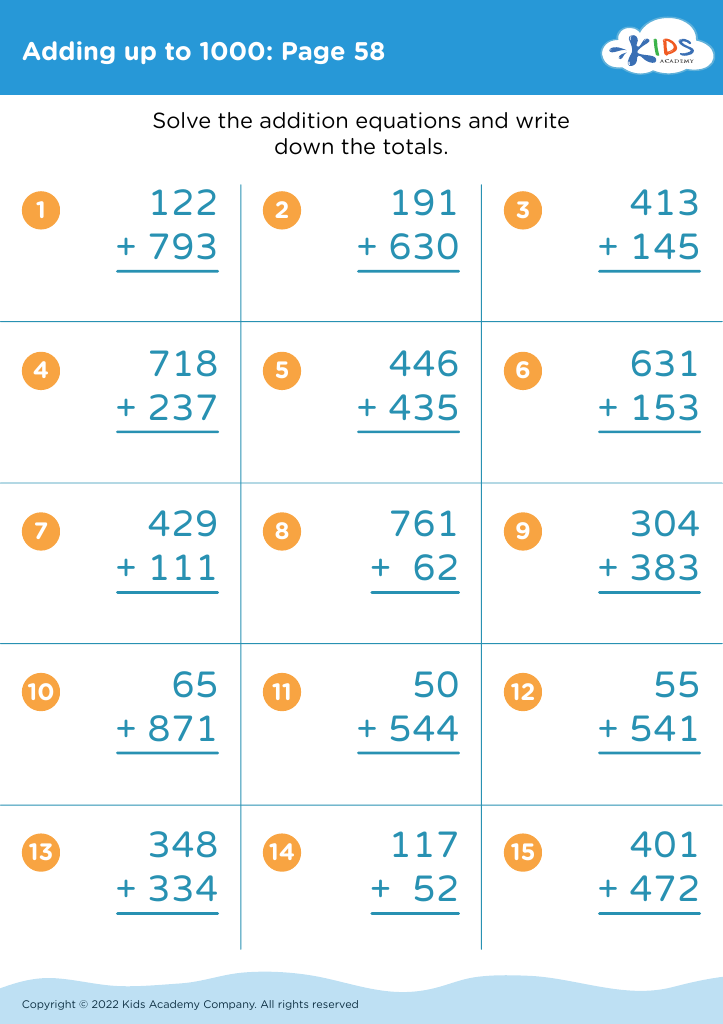
Adding up to 1000: Page 58

Adding up to 1000: Page 58

Adding up to 1000: Page 58
Worksheet
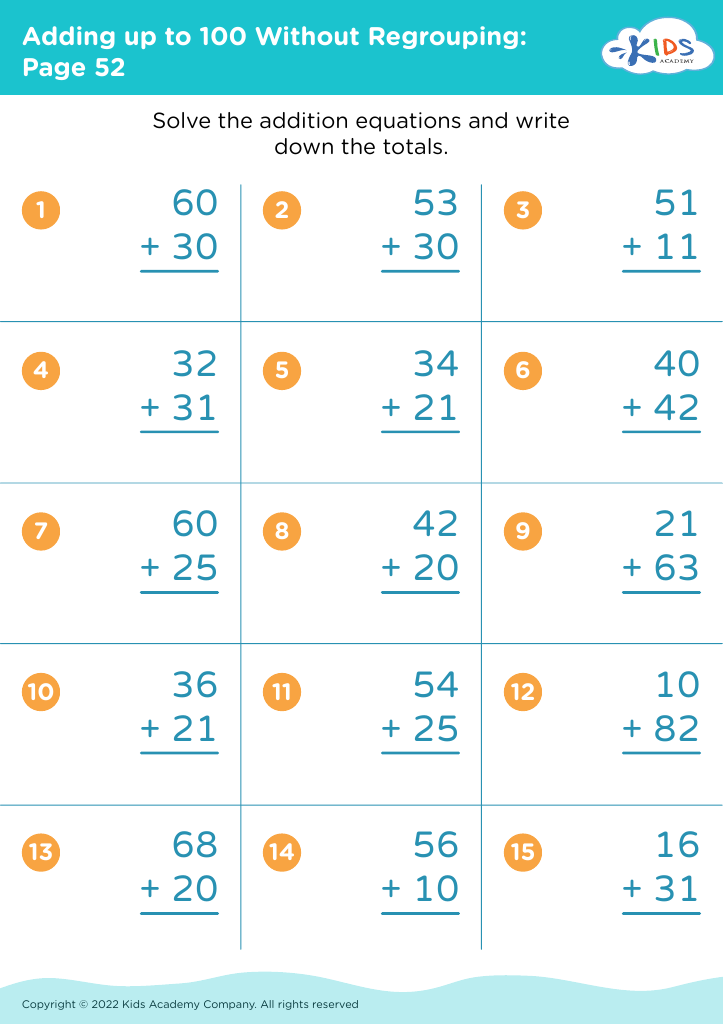
Adding up to 100 Without Regrouping: Page 52
Worksheet
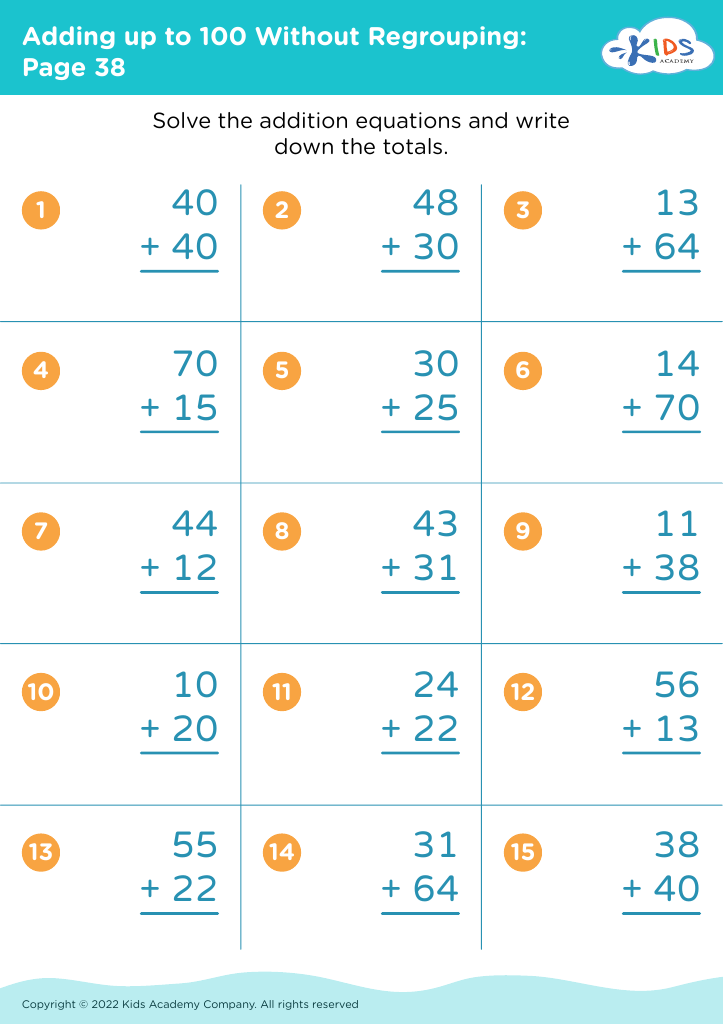
Adding up to 100 Without Regrouping: Page 38
Worksheet
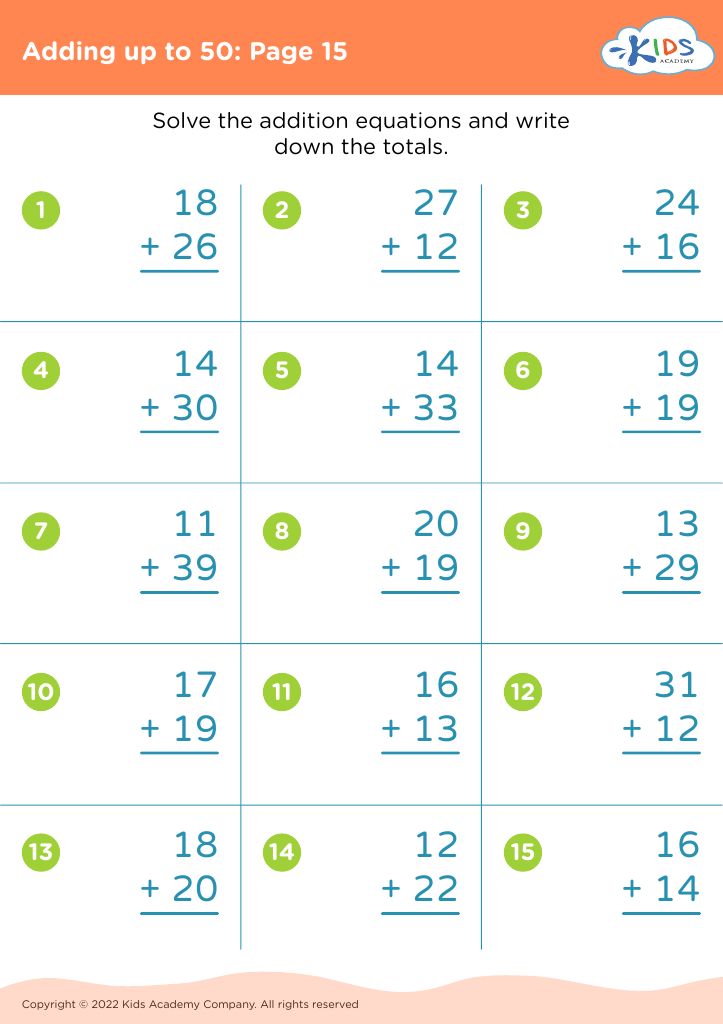
Adding up to 50: Page 15

Adding up to 50: Page 15

Adding up to 50: Page 15
Worksheet
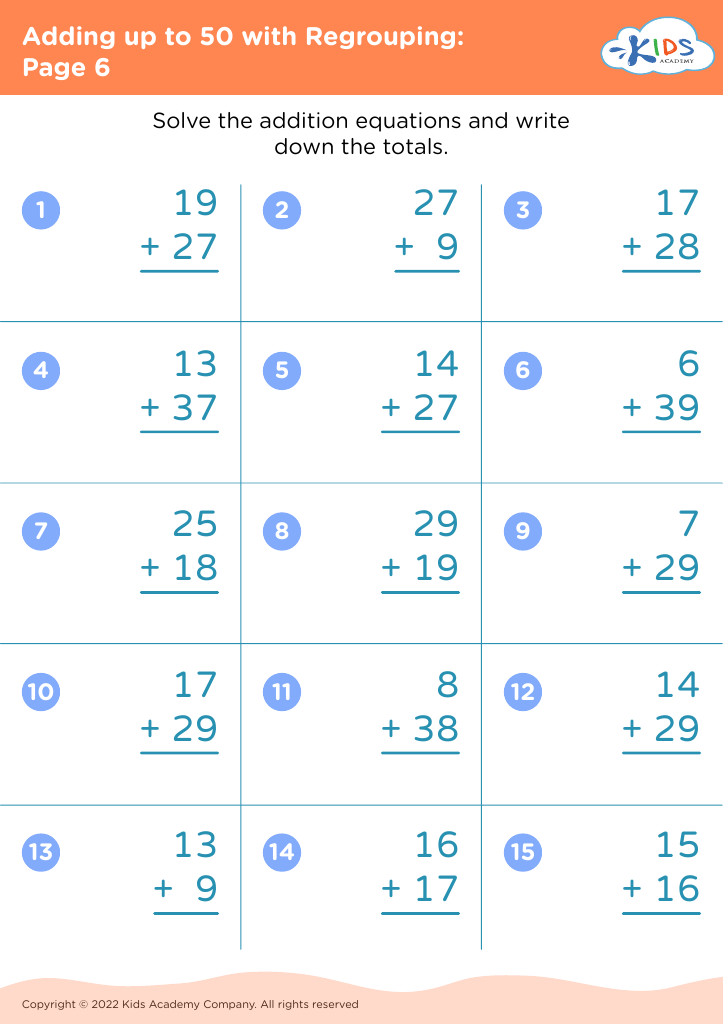
Adding up to 50 with Regrouping: Page 6
Worksheet
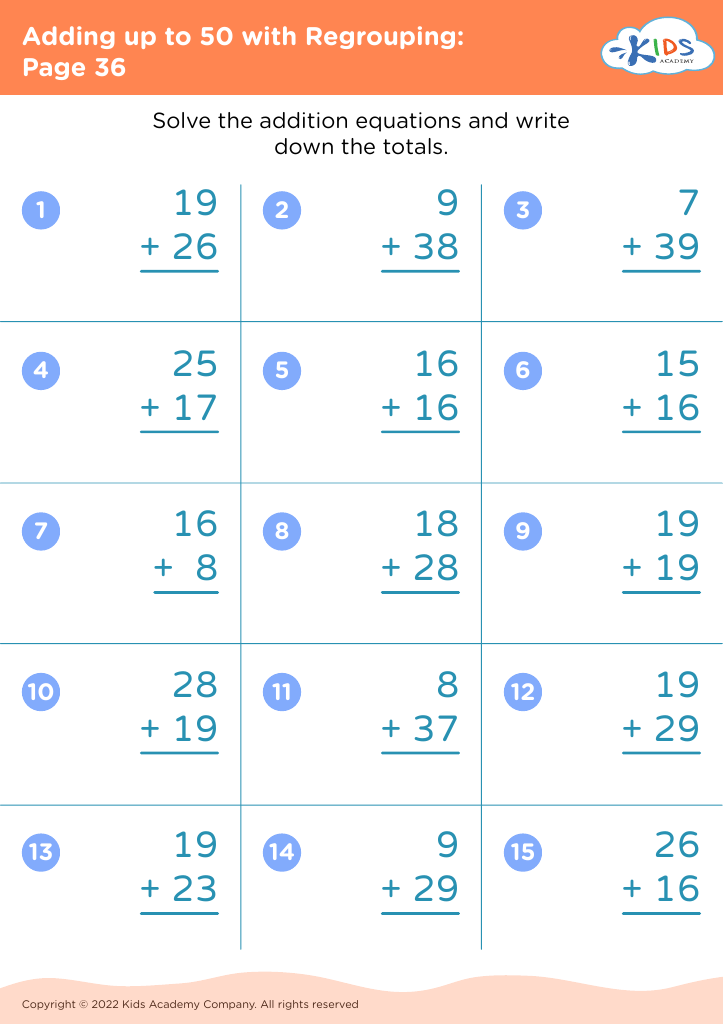
Adding up to 50 with Regrouping: Page 36
Worksheet
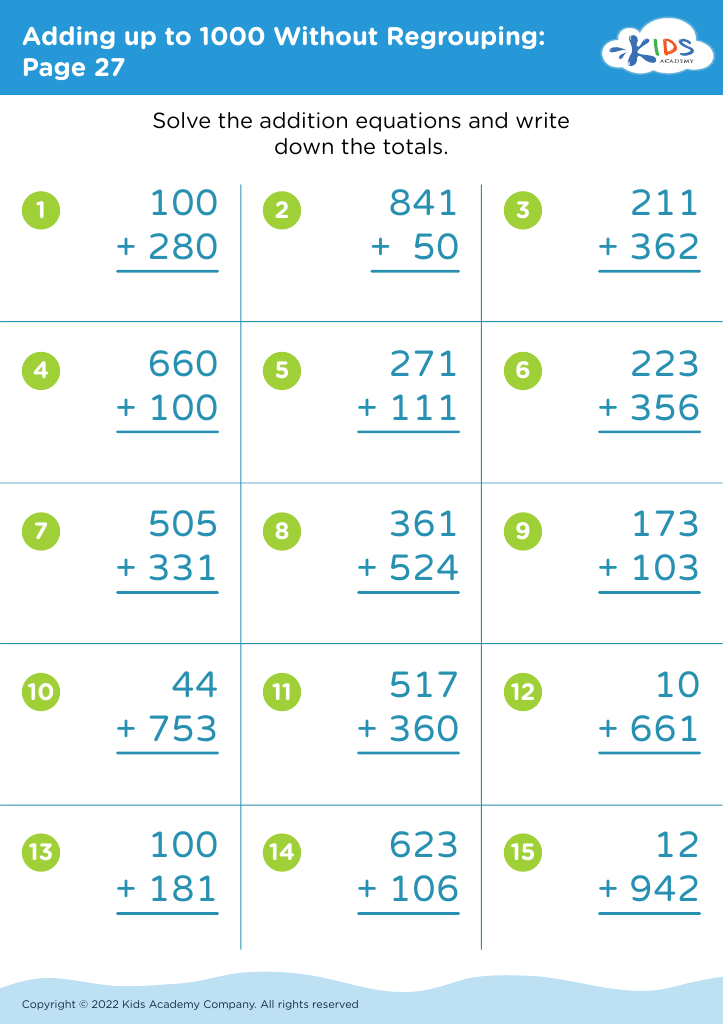
Adding up to 1000 Without Regrouping: Page 27
Worksheet
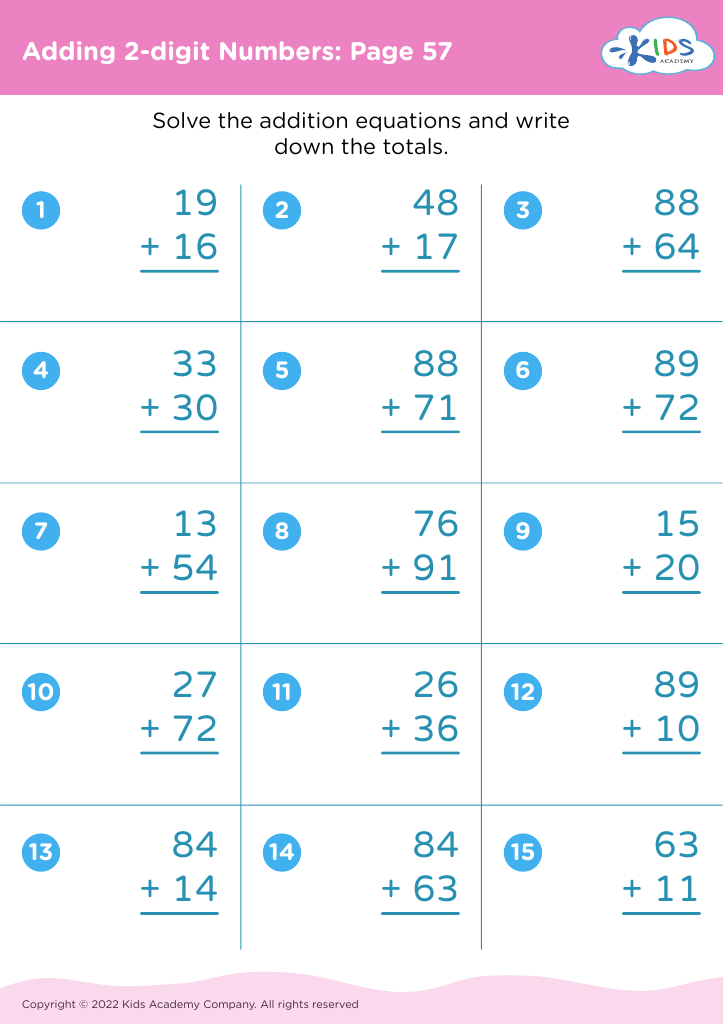
Adding 2-digit Numbers: Page 57

Adding 2-digit Numbers: Page 57

Adding 2-digit Numbers: Page 57
Worksheet
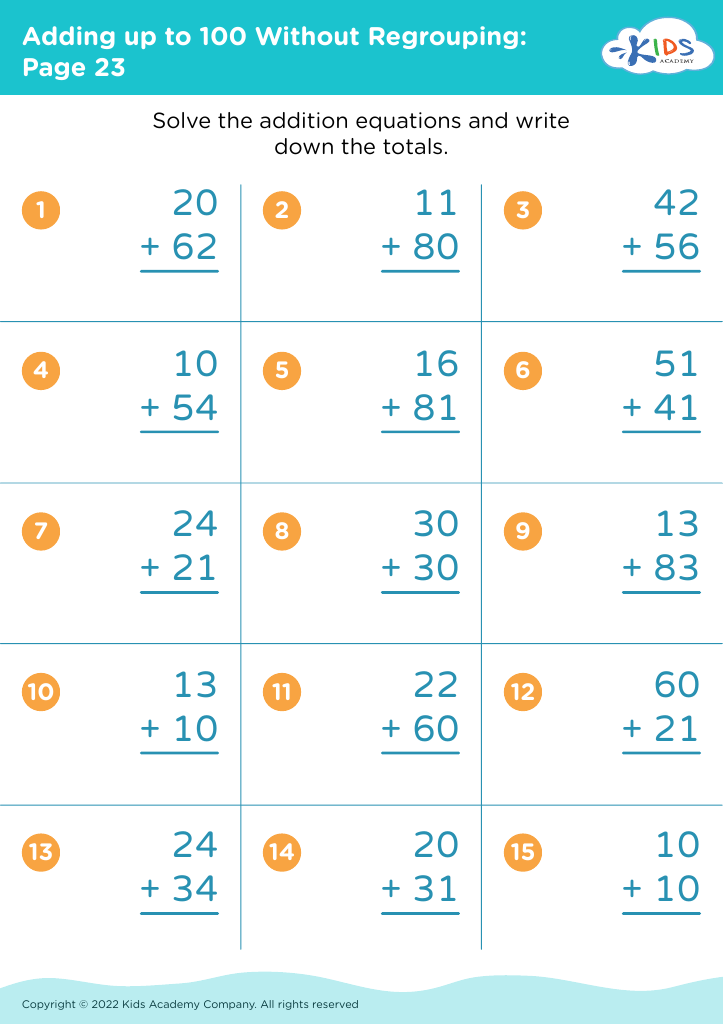
Adding up to 100 Without Regrouping: Page 23
Worksheet
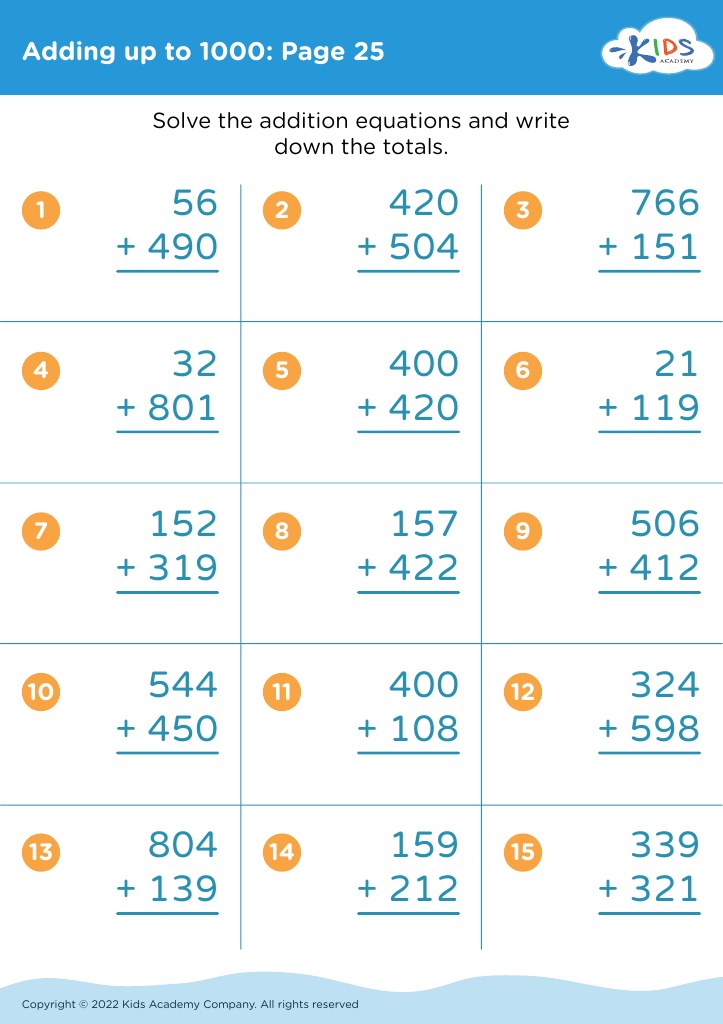
Adding up to 1000: Page 25

Adding up to 1000: Page 25

Adding up to 1000: Page 25
Worksheet
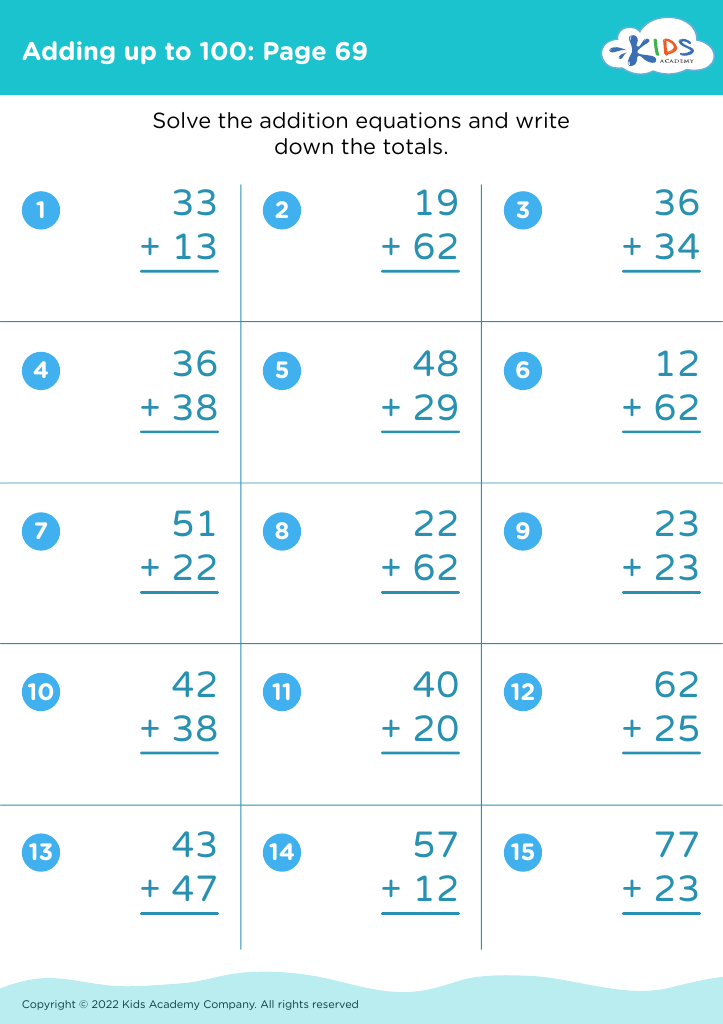
Adding up to 100: Page 69

Adding up to 100: Page 69

Adding up to 100: Page 69
Worksheet
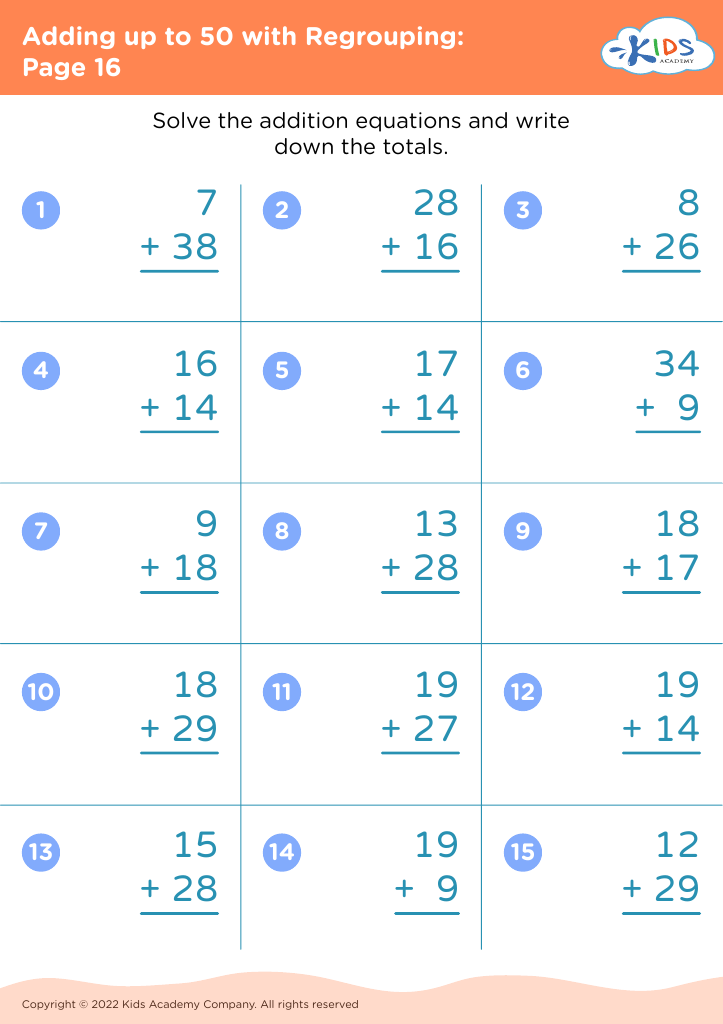
Adding up to 50 with Regrouping: Page 16
Worksheet
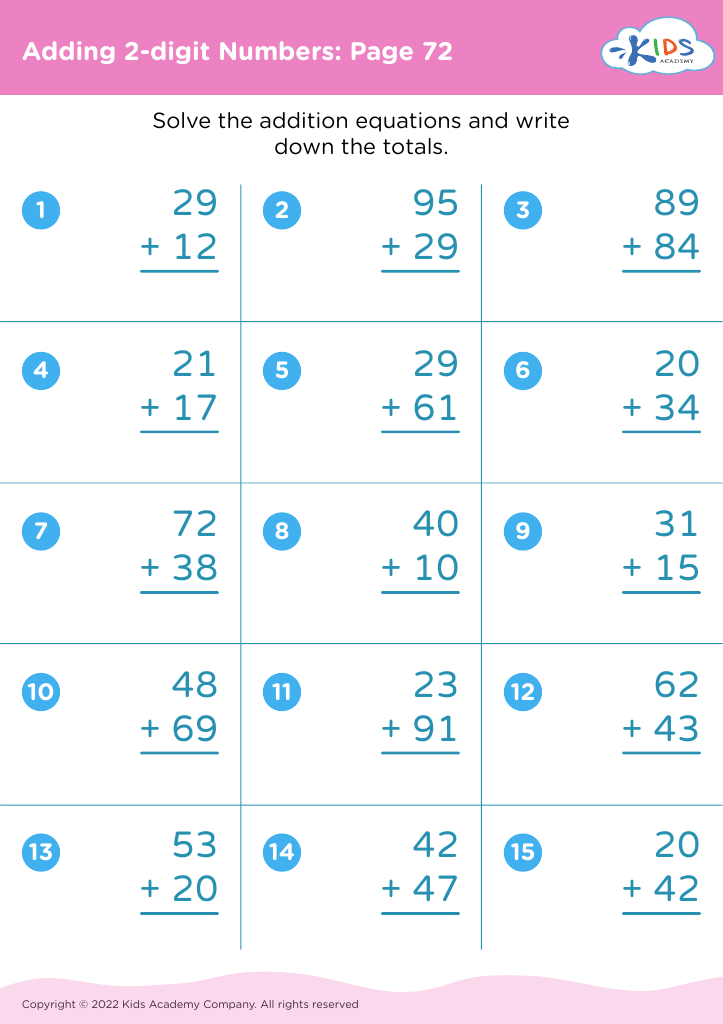
Adding 2-digit Numbers: Page 72

Adding 2-digit Numbers: Page 72

Adding 2-digit Numbers: Page 72
Worksheet
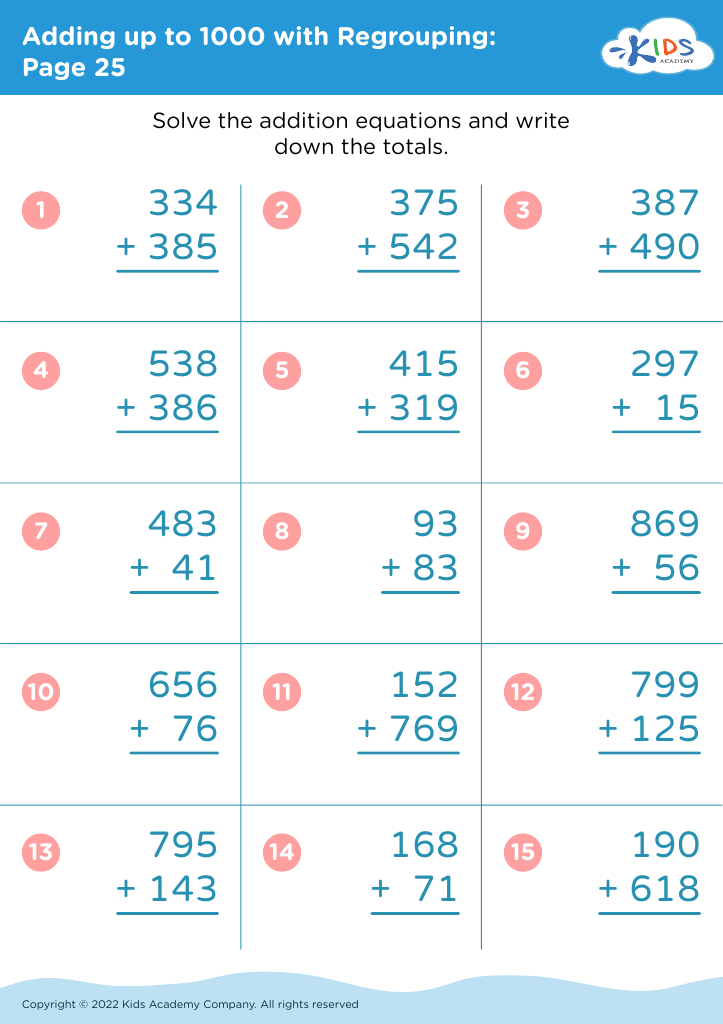
Adding up to 1000 with Regrouping: Page 25
Worksheet
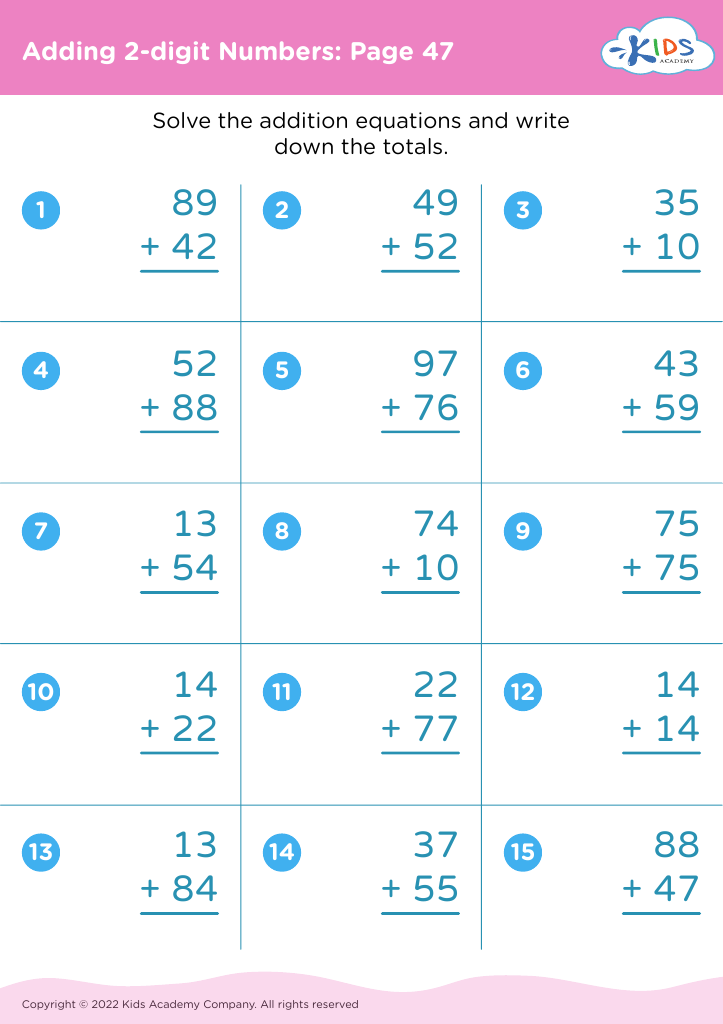
Adding 2-digit Numbers: Page 47

Adding 2-digit Numbers: Page 47

Adding 2-digit Numbers: Page 47
Worksheet
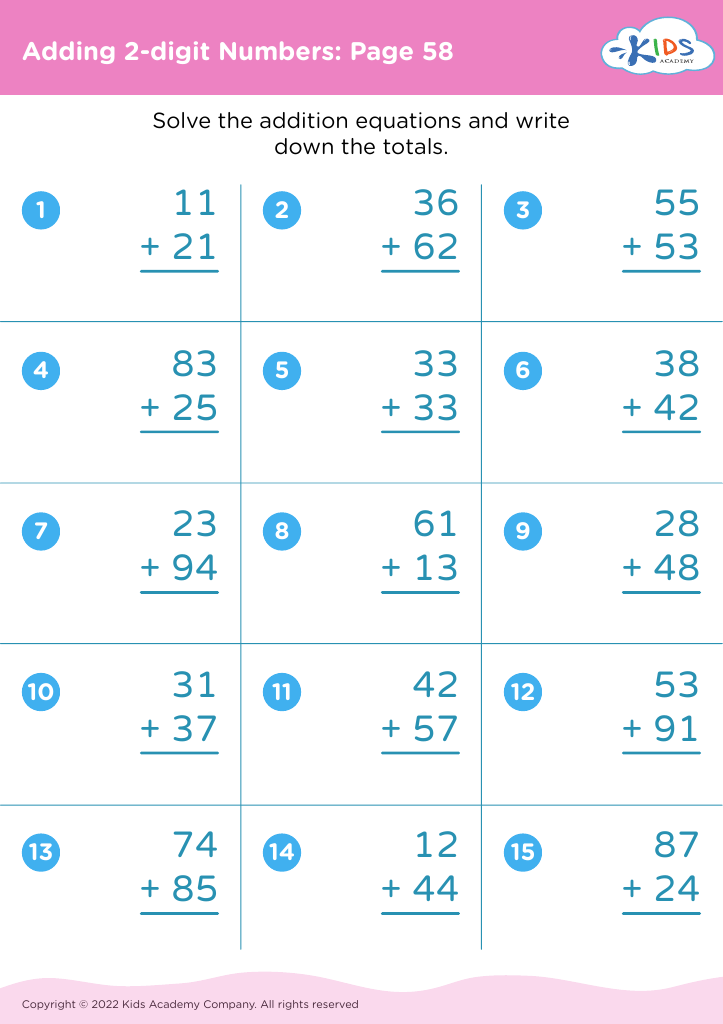
Adding 2-digit Numbers: Page 58

Adding 2-digit Numbers: Page 58

Adding 2-digit Numbers: Page 58
Worksheet
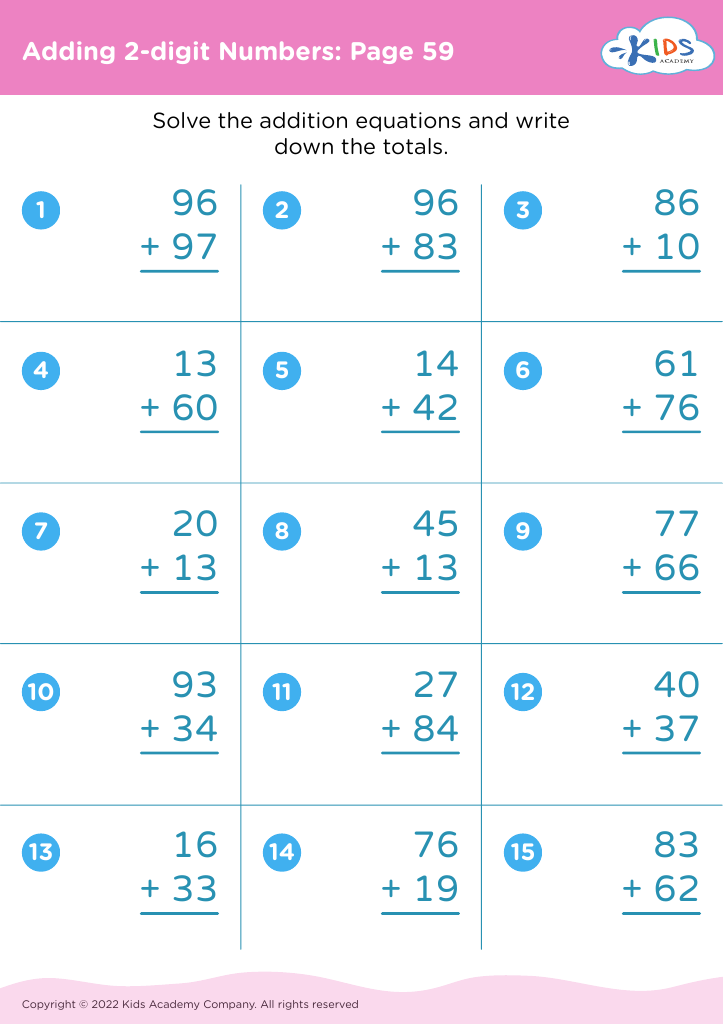
Adding 2-digit Numbers: Page 59

Adding 2-digit Numbers: Page 59

Adding 2-digit Numbers: Page 59
Worksheet
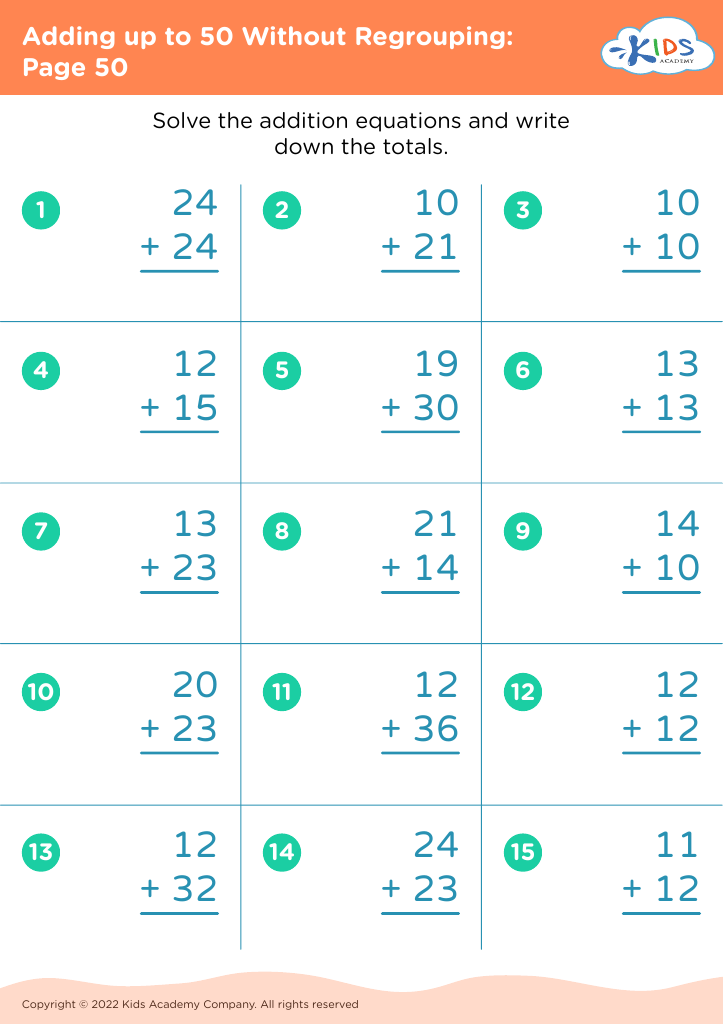
Adding up to 50 Without Regrouping: Page 50
Worksheet
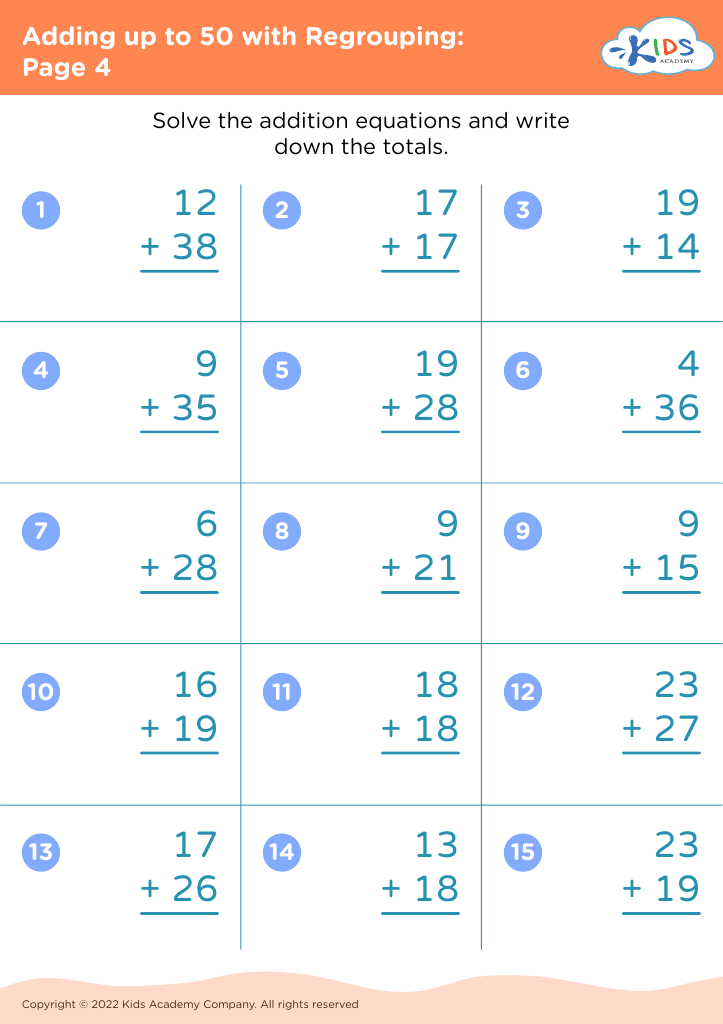
Adding up to 50 with Regrouping: Page 4
Worksheet


Understanding fractions and addition is crucial for children ages 6-8 because these concepts form the foundation for future mathematical learning. At this age, children are transitioning from whole numbers to more complex mathematical operations, and grasping the basics of fractions can significantly enhance their number sense.

When children learn about fractions, they begin to recognize relationships between parts and wholes. This understanding develops their ability to compare quantities, which is essential for more advanced math, including division and ratios. Adding fractions promotes critical thinking, as children must visualize the parts and understand how they combine to form a larger whole.

Moreover, mastering fractions and addition helps children build confidence in their math skills, reducing anxiety towards math in the future. It also encourages parents and teachers to engage in meaningful discussions about real-world applications, such as cooking or dividing items equally among friends, making math relatable and enjoyable.

By fostering these skills early on, parents and teachers can create a solid mathematical foundation, empowering children for success in higher-level mathematics and promoting a love for learning throughout their educational journey.