Basic counting skills Geometry Worksheets for Ages 6-8
3 filtered results
-
From - To
Enhance your child's mathematical foundation with our 'Basic Counting Skills Geometry Worksheets' designed for ages 6-8. These engaging and interactive worksheets focus on developing essential counting skills while introducing young learners to fundamental geometric concepts. Each worksheet features fun activities that encourage counting shapes, identifying patterns, and connecting numbers with geometry. Perfect for homeschooling or supplemental practice, our resources promote cognitive growth and improve problem-solving skills. Foster a love for math in your child and build their confidence with these thoughtfully crafted worksheets. Get ready to explore the exciting world of numbers and shapes together!
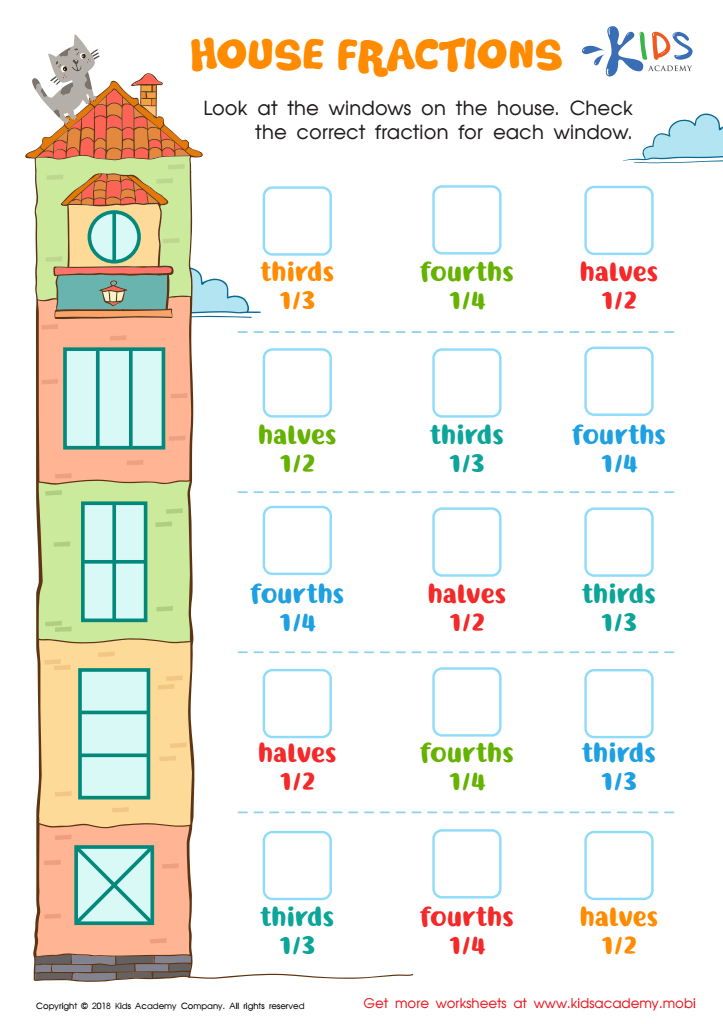
House Fractions Worksheet
 Assign to My Students











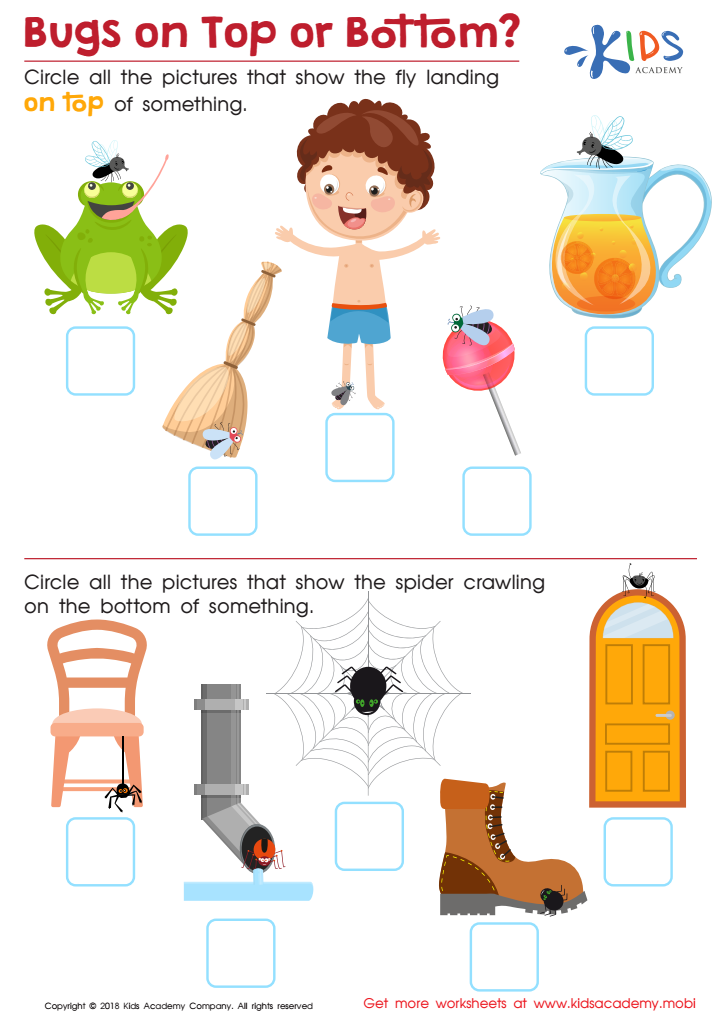
Bugs on Top or Bottom? Worksheet
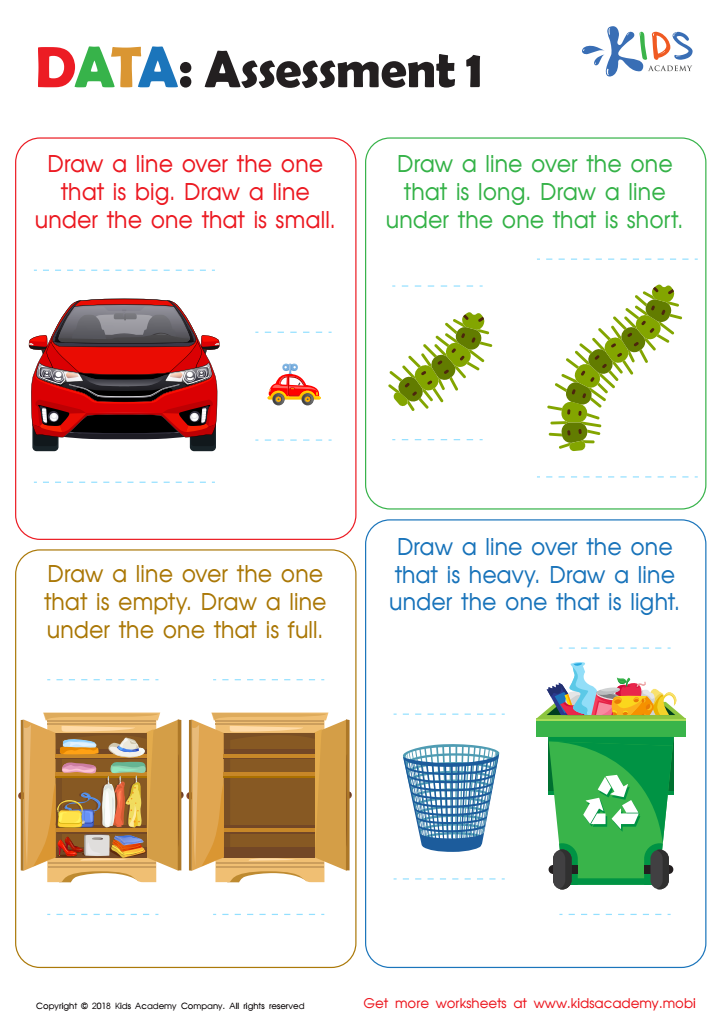
Data: Assessment 1 Worksheet








Basic counting skills and foundational geometry are essential for children aged 6-8 as they serve as building blocks for more complex mathematical concepts. At this age, children are developing their critical thinking and problem-solving capabilities, and a solid grasp of counting and geometry enhances these skills. Counting helps children understand quantity, sequence, and the concept of "more" and "less," facilitating early math literacy.
Geometry introduces children to shapes, spatial awareness, and the relationships between objects. Recognizing and identifying shapes in their environment fosters observational skills and enhances cognitive development. It also lays the groundwork for future studies in mathematics, science, and engineering. By engaging with basic geometric concepts such as symmetry, patterns, and measurements, children cultivate reasoning abilities and creativity.
Moreover, these skills improve their ability to communicate mathematically, helping them articulate thoughts and solutions in class. For parents and teachers, nurturing counting and geometry skills lays a strong foundation for academic success and everyday problem-solving abilities in real life. Ultimately, investing time in these fundamental skills encourages a love for learning and exploration, making math an enjoyable and essential part of children's educational journey.








