Problem-solving abilities Geometry Worksheets for Ages 6-8
5 filtered results
-
From - To
Enhance your child's problem-solving abilities with our Geometry Worksheets designed for ages 6-8. These engaging printable worksheets offer fun and challenging activities that develop essential math skills while fostering critical thinking. Each worksheet covers key geometrical concepts, including shapes, symmetry, and spatial reasoning. With carefully crafted problems, children can practice their analytical skills in a supportive, interactive environment. Perfect for both classroom use and homeschooling, our worksheets make learning geometry enjoyable and effective. Give your young learner the tools they need to excel in math with Kids Academy's expertly designed materials.
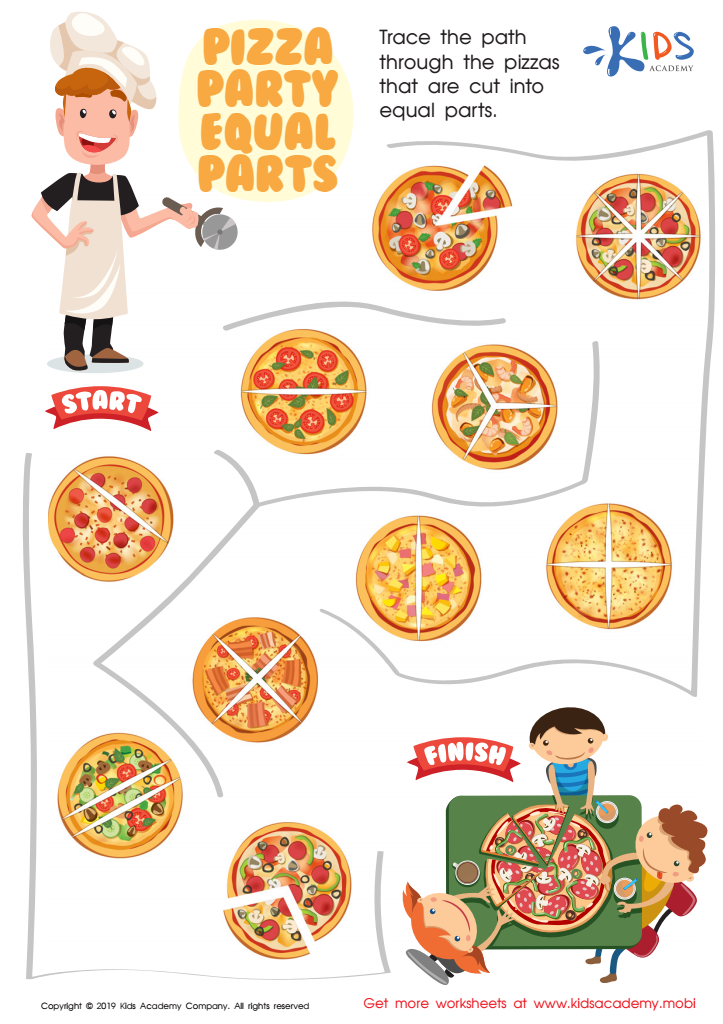
Pizza Party Equal Parts Worksheet
 Assign to My Students











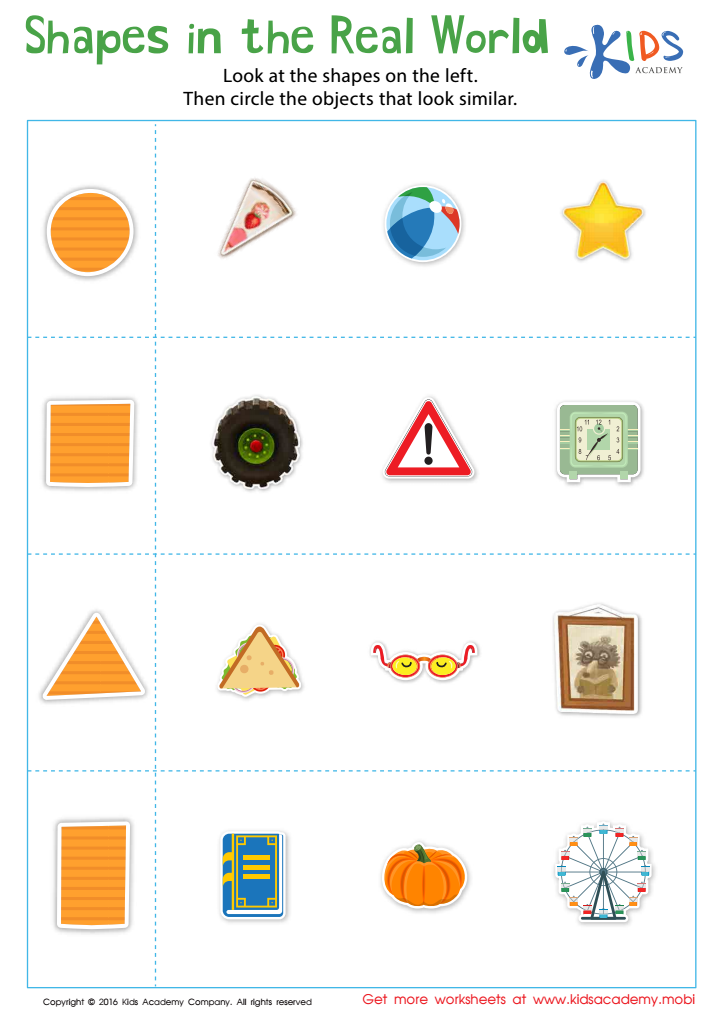
Shapes in the Real World Worksheet
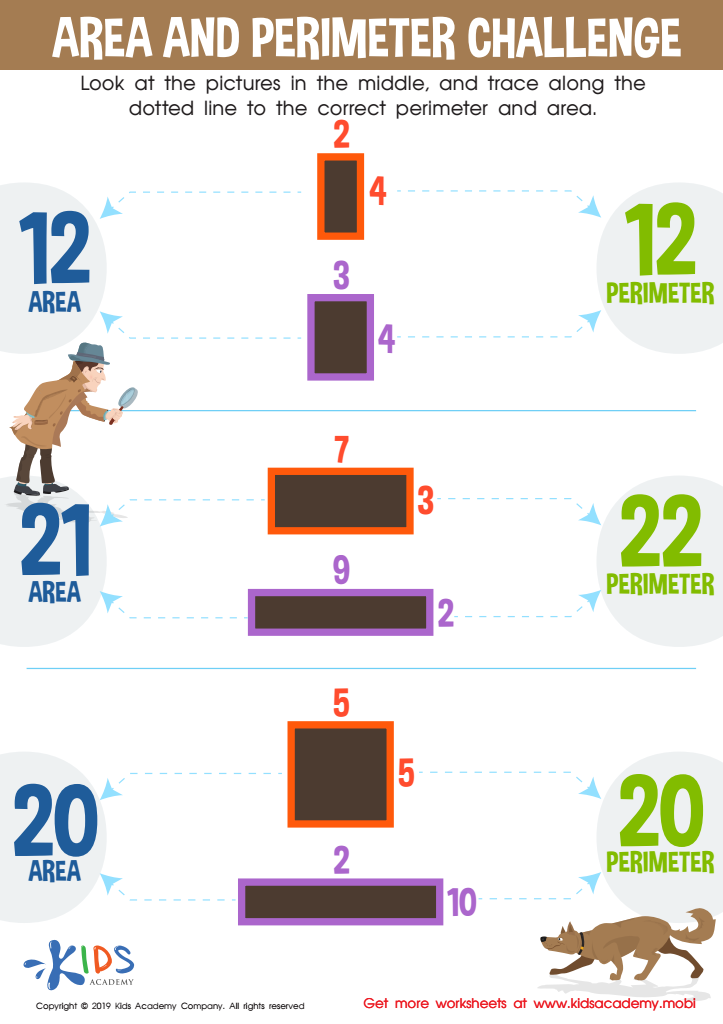
Area and Perimeter Challenge Worksheet
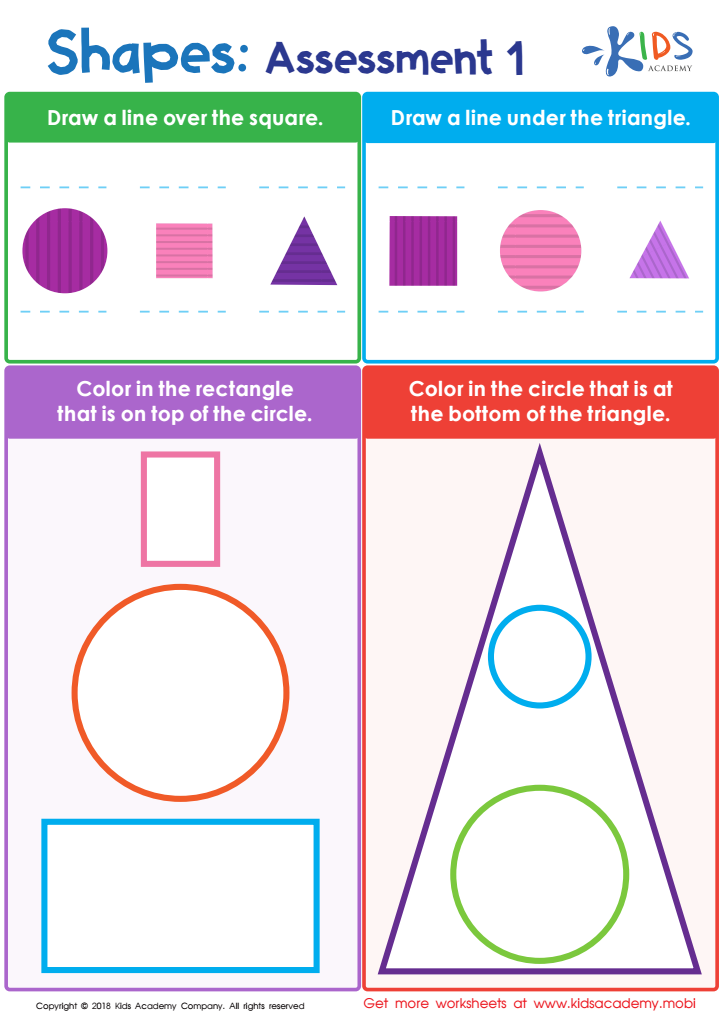
Shapes: Assessment 1 Worksheet
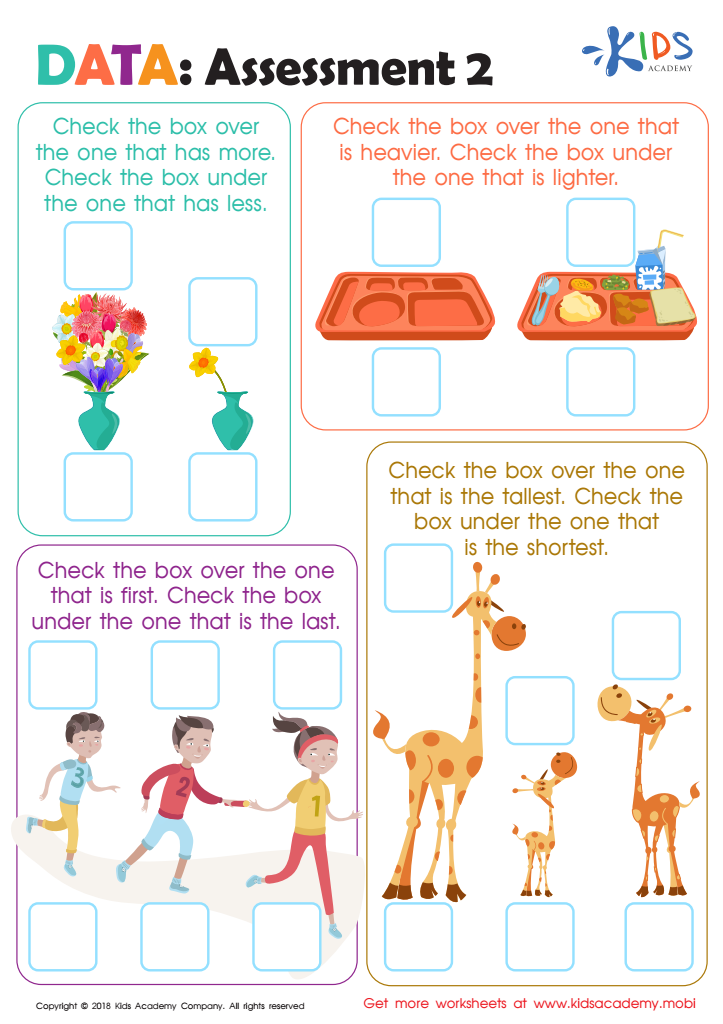
Data: Assessment 2 Worksheet








Problem-solving abilities in geometry for children ages 6-8 are crucial for their cognitive development and overall academic success. At this age, kids are naturally curious and eager to explore the world around them. Integrating geometry helps to harness that curiosity into productive learning by teaching them to recognize and work with shapes, patterns, and spatial relationships.
Firstly, problem-solving in geometry enhances critical thinking skills. When children encounter geometric problems, they learn to break down complex structures into simpler components, fostering analytical thinking. This skill is not only foundational for mathematics but also applicable in everyday situations and future academic pursuits.
Secondly, geometry helps build a strong mathematical foundation. Understanding basic geometric concepts like shapes, sizes, and spatial relationships prepares children for more advanced math topics. Early exposure sets the stage for future success in subjects like algebra, trigonometry, and calculus.
Thirdly, engaging with geometric problem-solving can boost children’s confidence. Successfully solving problems gives them a sense of accomplishment and can foster a lifelong love of learning.
Lastly, geometry supports the development of fine motor skills. Activities like drawing shapes, building with blocks, or using puzzle pieces enhance hand-eye coordination and dexterity.
Therefore, parents and teachers should prioritize geometric problem-solving to promote holistic development and cultivate important life-long skills.








