Visual Perception Skills Geometry Worksheets for Ages 6-8
3 filtered results
-
From - To
Enhance your child’s understanding of geometry with our engaging Visual Perception Skills worksheets, specifically designed for ages 6-8! These activities focus on developing essential visual skills such as shape recognition, spatial awareness, and the ability to interpret visual information. Our carefully crafted worksheets include fun exercises, puzzles, and illustrations that promote critical thinking and boost confidence in early math skills. Whether in the classroom or at home, these resources support young learners in mastering geometric concepts in a playful, interactive manner. Unlock your child's potential and make learning enjoyable with our Visual Perception Skills Geometry Worksheets today!
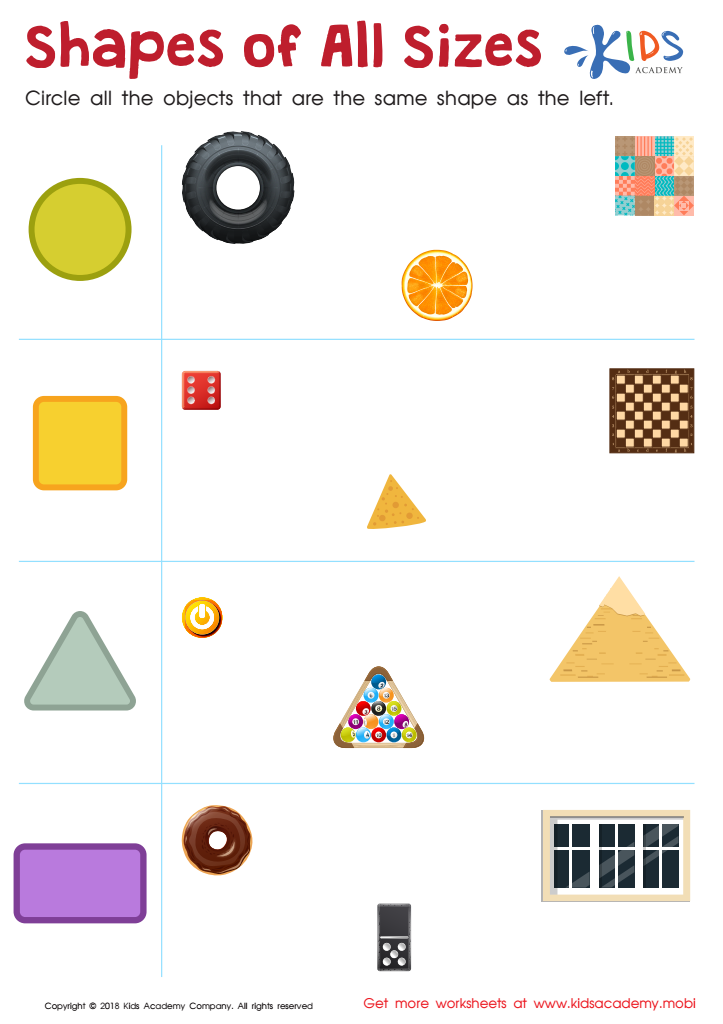
Shapes of All Sizes Worksheet
 Assign to My Students











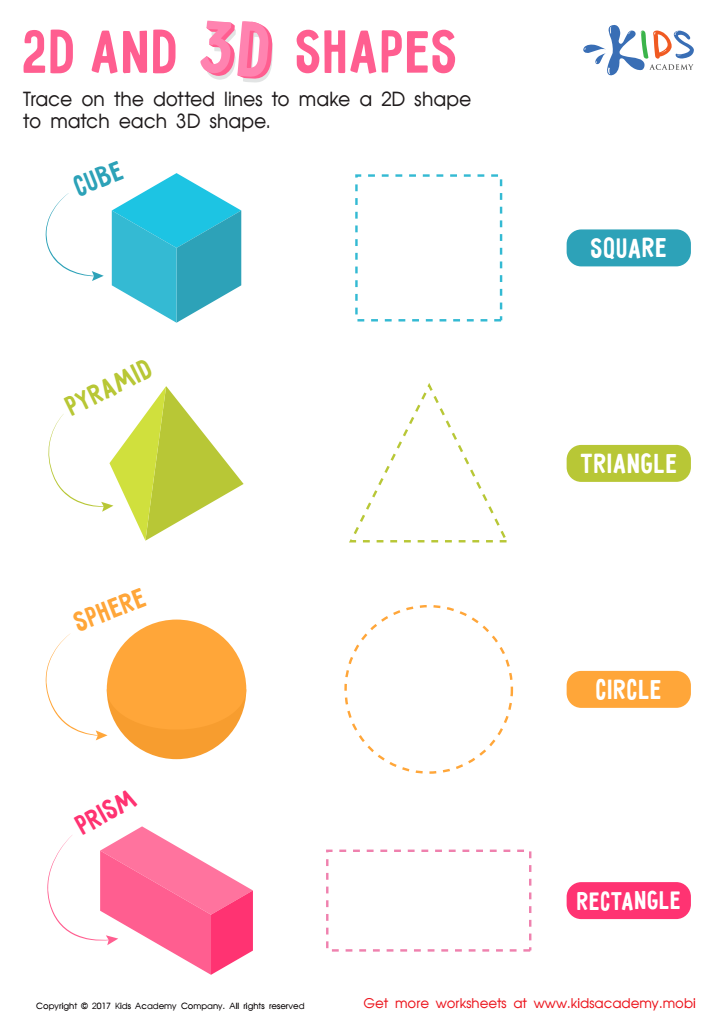
2D and 3D Shapes Worksheet
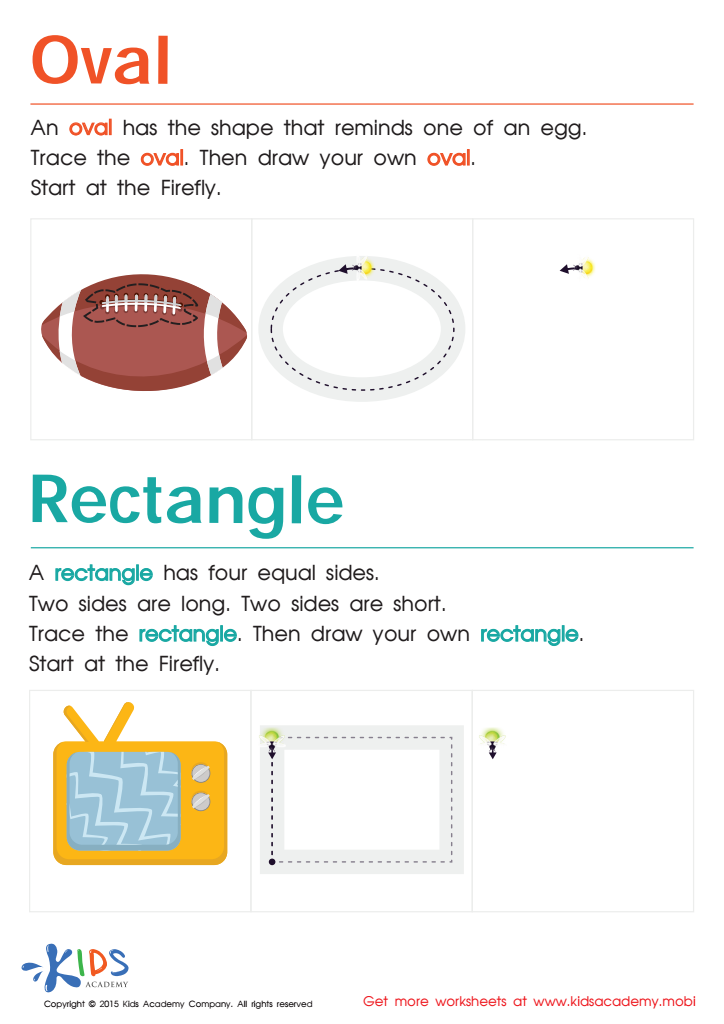
Easy Drawing of Ovals And Rectangles Worksheet








Visual perception skills are crucial for children aged 6-8 as they form the foundation for understanding geometry and spatial relationships. During this developmental stage, kids are naturally curious and actively learning about the world around them. Strengthening visual perception skills enhances their ability to recognize shapes, comprehend sizes, and identify patterns, which are essential aspects of geometry.
Teachers and parents should prioritize these skills because they significantly influence mathematical understanding, problem-solving abilities, and cognitive development. Children with strong visual perception are more adept at grasping abstract concepts and applying them to real-world scenarios. Furthermore, these skills can impact reading and writing, as recognizing letters and spatial arrangement is essential for literacy development.
Engaging children in activities that promote visual perception—like puzzles, drawing, and building with blocks—can foster creativity and critical thinking. By encouraging these skills early on, parents and teachers can help children build confidence in their math abilities, laying the groundwork for future academic success. Moreover, understanding geometric concepts supports children’s overall academic performance across subjects, propelling motivation and enthusiasm for learning. Quality early childhood education should address these skills to foster well-rounded, proficient learners.








