
Enhancing math skills Numbers Worksheets for Ages 6-8
7 filtered results
Difficulty Level
Grade
Age
-
From - To
Subject
Activity
Standards
Discover our engaging "Enhancing Math Skills Numbers Worksheets" designed specifically for children ages 6-8! These printable worksheets focus on building a strong foundation in mathematics by introducing essential concepts like counting, number recognition, and basic operations. Our interactive activities are tailored to make learning fun and enjoyable, fostering a love for math early on. Tailored to suit various learning levels, these worksheets help young learners develop confidence and proficiency in their math skills. Explore a collection of colorful, thematic worksheets that inspire creativity and critical thinking while reinforcing key concepts. Start enhancing your child's math journey today!
Favorites
With answer key
Interactive
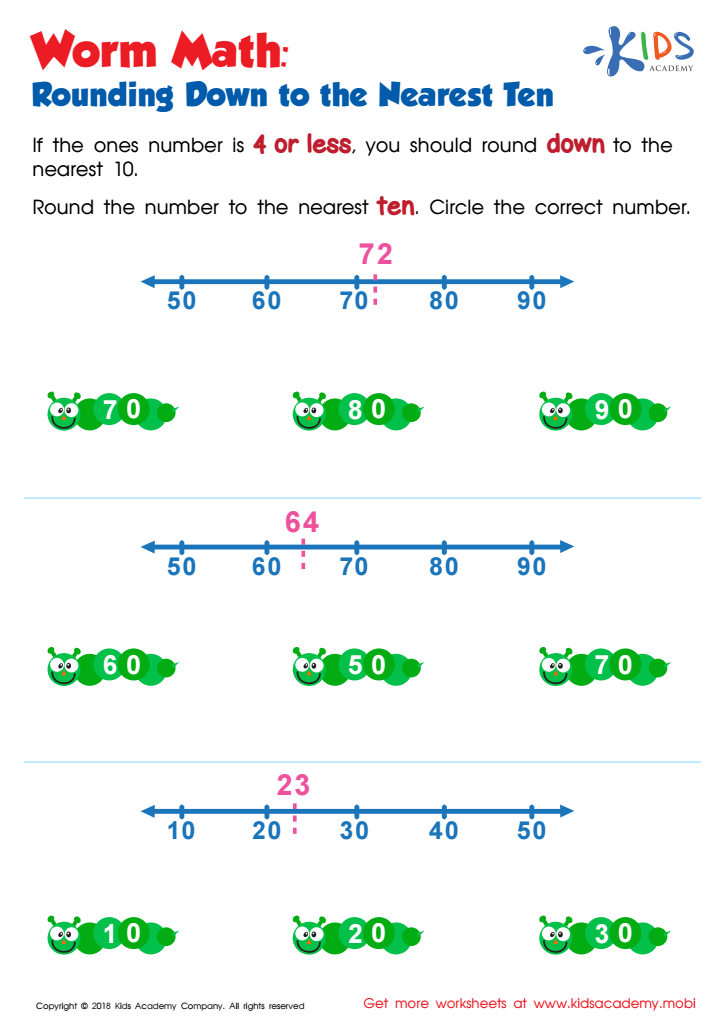
Worm Math Rounding Down to the Nearest Ten Worksheet
Look at the full of smiles worms carrying two-digit numbers. Is the number in the ones spot 4 or less? Round down to the nearest ten! Help kids learn the tricky concept of rounding with this math worksheet. Perfect for clearing up confusion and practicing rounding down to the nearest ten!
 Assign to My Students
Worm Math Rounding Down to the Nearest Ten Worksheet
Worksheet
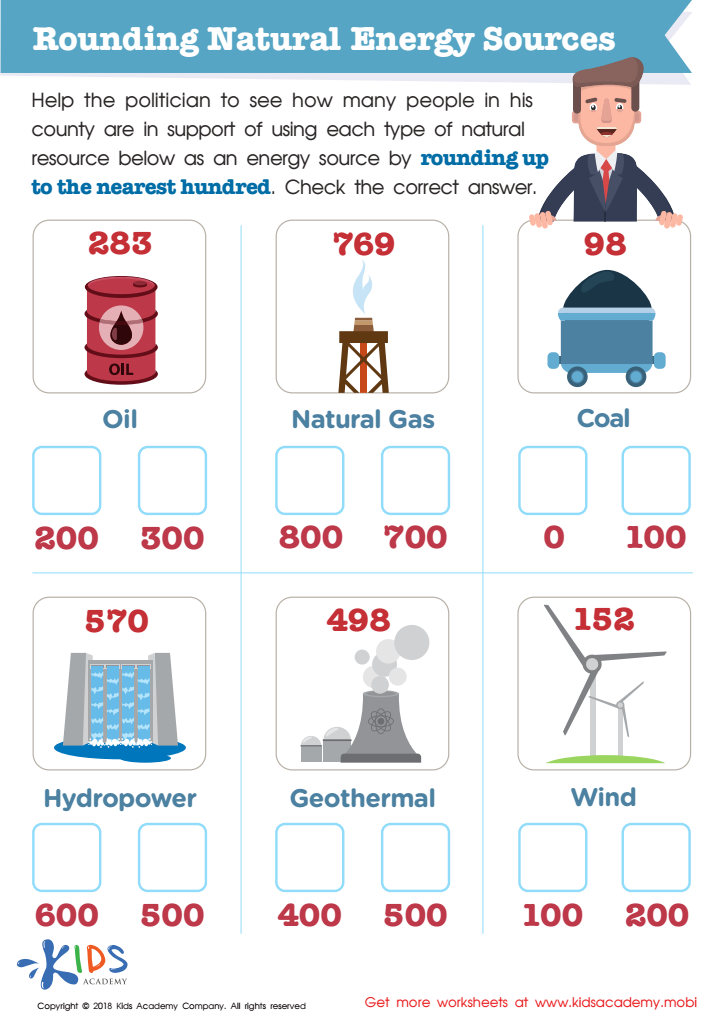
Rounding Natural Energy Sources Worksheet
Ask your kids what policies they would love to see if a politician is voted into power. Then, have them help the politician in this worksheet, downloading the PDF and rounding up the number of people to the nearest hundred in support of using different natural resources as an energy source. Guide them to the correct answer.
Rounding Natural Energy Sources Worksheet
Worksheet
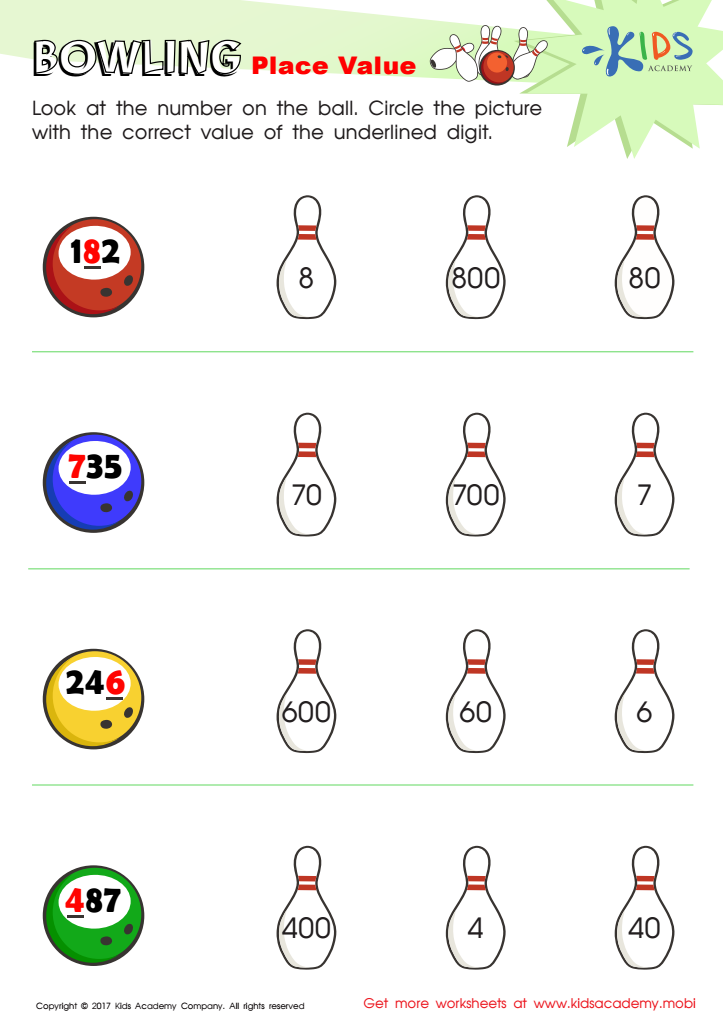
Place Value Worksheet
Try this place value worksheet to help your 2nd grader understand place value in a more meaningful way.
Place Value Worksheet
Worksheet
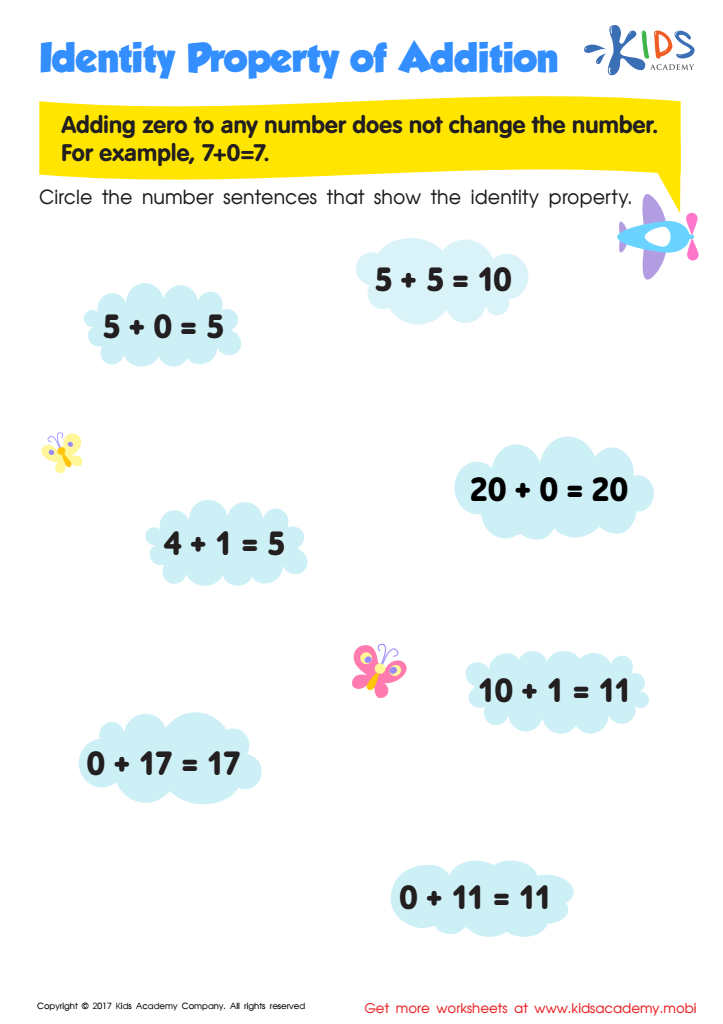
Identity Property of Addition Worksheet
Kids must learn the identity property of addition in math. It states that adding zero to an equation does not change the number. A great way to help kids understand this concept is with a Kids Academy worksheet. It encourages kids to identify which number sentences demonstrate the identity property of addition. Doing so builds vital mental math skills for fast addition.
Identity Property of Addition Worksheet
Worksheet
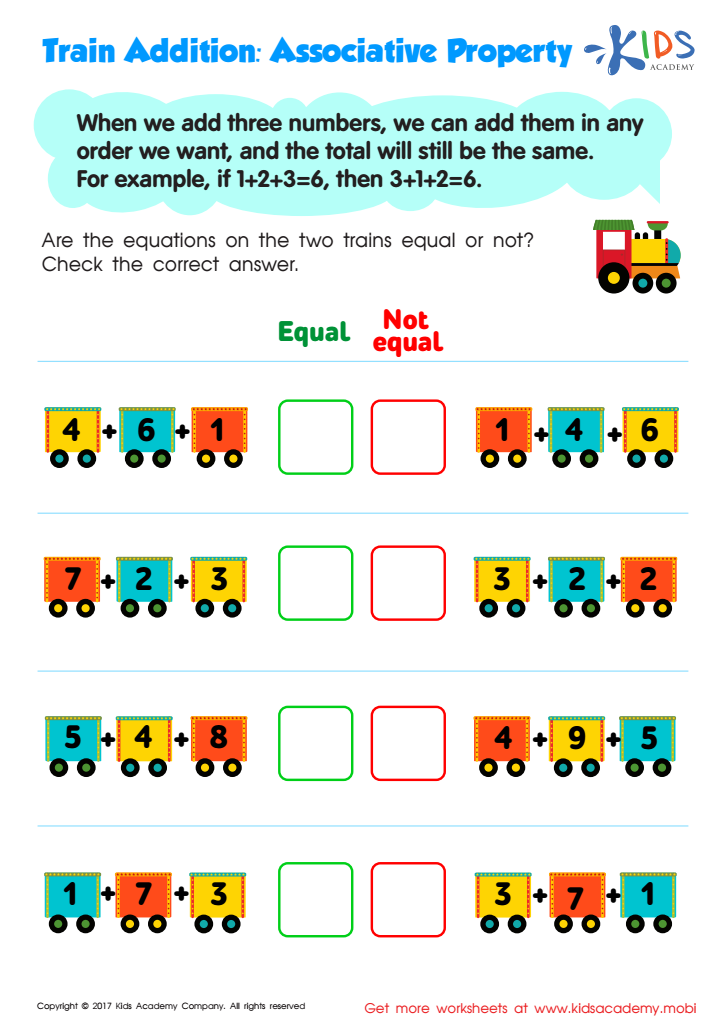
Train Addition: Associative Property Worksheet
The associative property of addition lets us add numbers in any order. Total will remain the same. Help kids practice this pre-algebra skill with a train-themed worksheet. It will help them understand if the equations are equal using this property.
Train Addition: Associative Property Worksheet
Worksheet
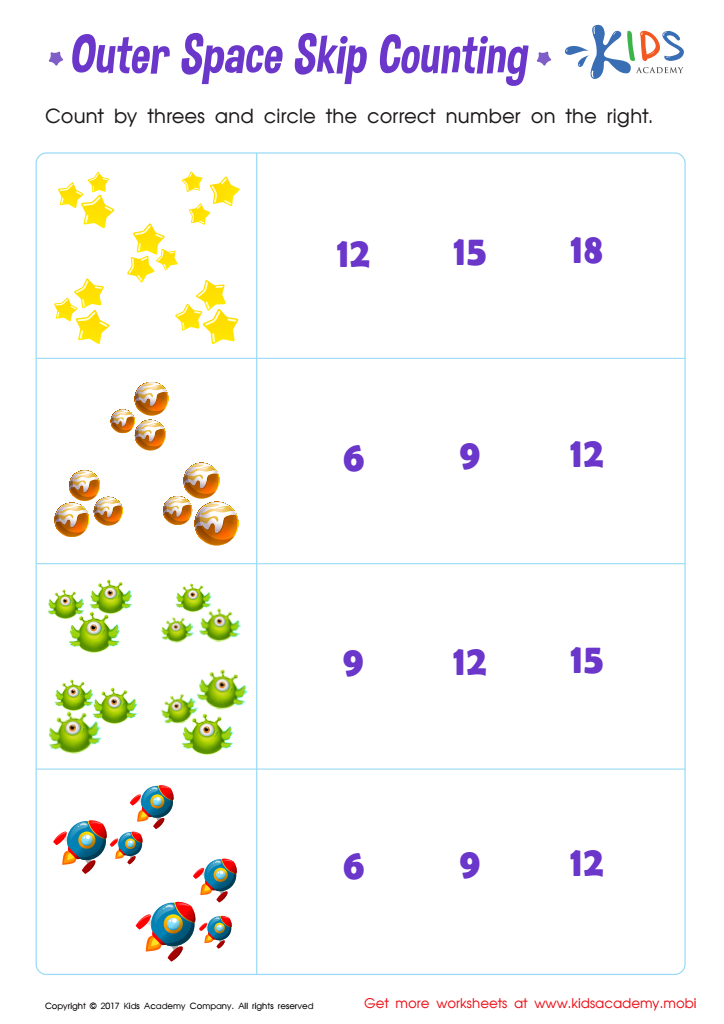
Skip Counting by 3s: Outer Space Skip Counting Printable
Want to set your child up for math success? Get them this printable worksheet that helps them practice counting in groups of 3’s, building a foundation for more advanced math skills. Skipping counting helps kids master logical reasoning and cognitive skills, making a connection between counting objects individually and in groups. The colorful images will keep them engaged and having fun - without realizing how hard they're working!
Skip Counting by 3s: Outer Space Skip Counting Printable
Worksheet
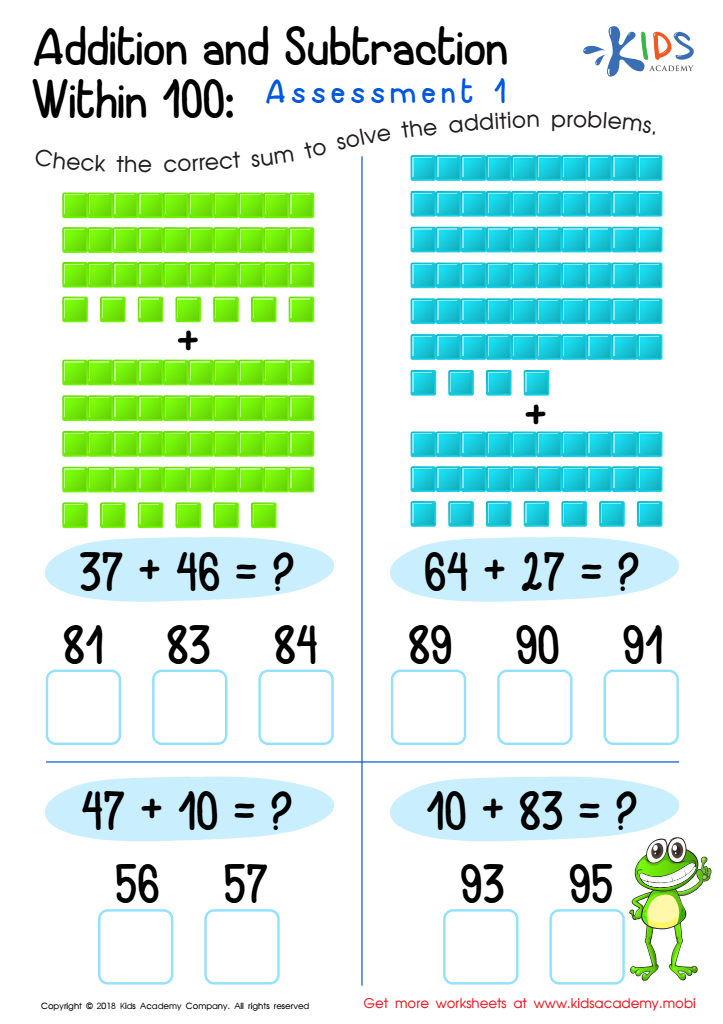
Addition and Subtraction Within 1: Assessment 1 Worksheet
Help your kids develop their math skills with this worksheet! Addition and subtraction can be daunting for young learners, but you can make it easier for them with this pdf. Use it to check the correct sum and help them solve the addition problems. This is a great way to get them ready to be future great mathematicians.
Addition and Subtraction Within 1: Assessment 1 Worksheet
Worksheet
Join Kids Academy for Free
Who is primarily going to use this learning content?








Enhancing math skills in children aged 6-8 is crucial for their cognitive and social development. During these formative years, children build foundational knowledge that will support their future learning. Strong math skills foster critical thinking, problem-solving abilities, and a sense of logic. These skills are not just essential for advanced math concepts but also influence a child's ability to navigate real-life situations, such as budgeting, measuring, and understanding time.
Furthermore, early math proficiency is closely linked to academic success across subjects. Research shows that students with solid early math foundations excel in other areas, including reading and science. This makes fostering a positive attitude towards math essential, as negative early experiences can lead to long-term anxiety and aversion to the subject.
Moreover, parents and teachers play a pivotal role in creating a supportive environment. Engaging children with interactive activities and real-world applications can make learning enjoyable, sparking curiosity and interest. Encouraging daily practice through fun games and discussions can solidify understanding and reinforce skills, setting the stage for future learning.
Ultimately, enhancing early math skills cultivates a generation ready to tackle challenges and contribute positively to society. It empowers children with the confidence and competence needed in an increasingly quantitative world.








