Comparing object weights Math Worksheets for Ages 6-8
3 filtered results
-
From - To
Discover our engaging "Comparing Object Weights Math Worksheets" designed for children ages 6-8. These printable worksheets help young learners develop essential math skills by comparing and contrasting the weights of various objects. Each page features colorful illustrations and clear instructions that make learning fun and effective. Perfect for both classroom and home use, our worksheets align with core educational standards, ensuring that your child builds a strong foundation in math. Boost their analytical thinking and problem-solving abilities while making math an enjoyable experience with our expertly crafted worksheets. Start their educational journey today!
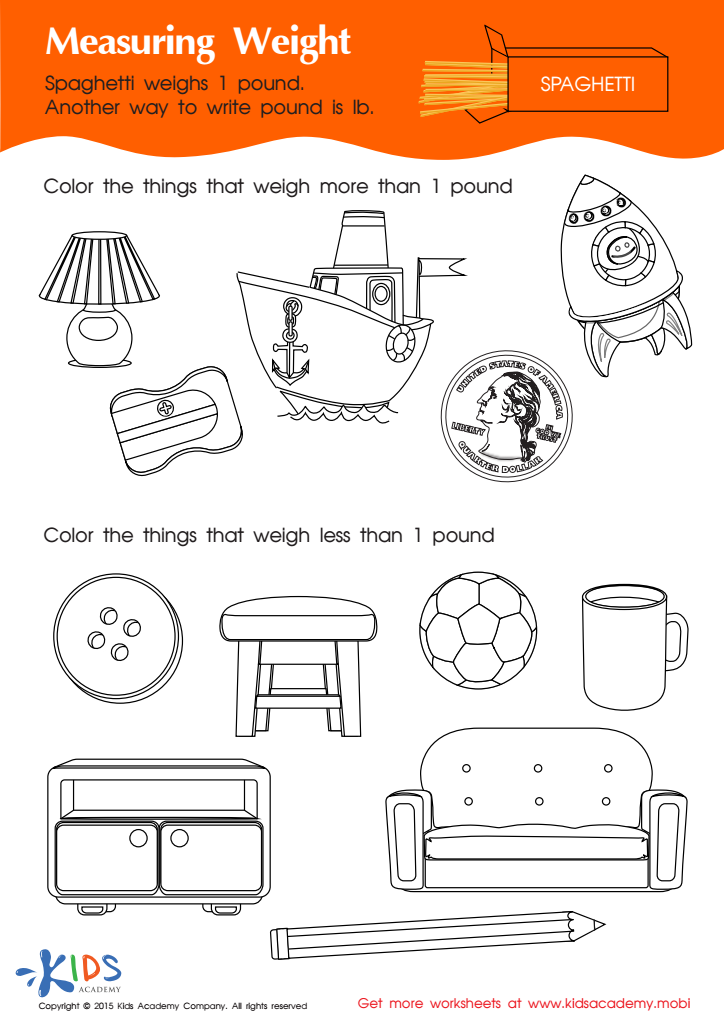
 Assign to My Students
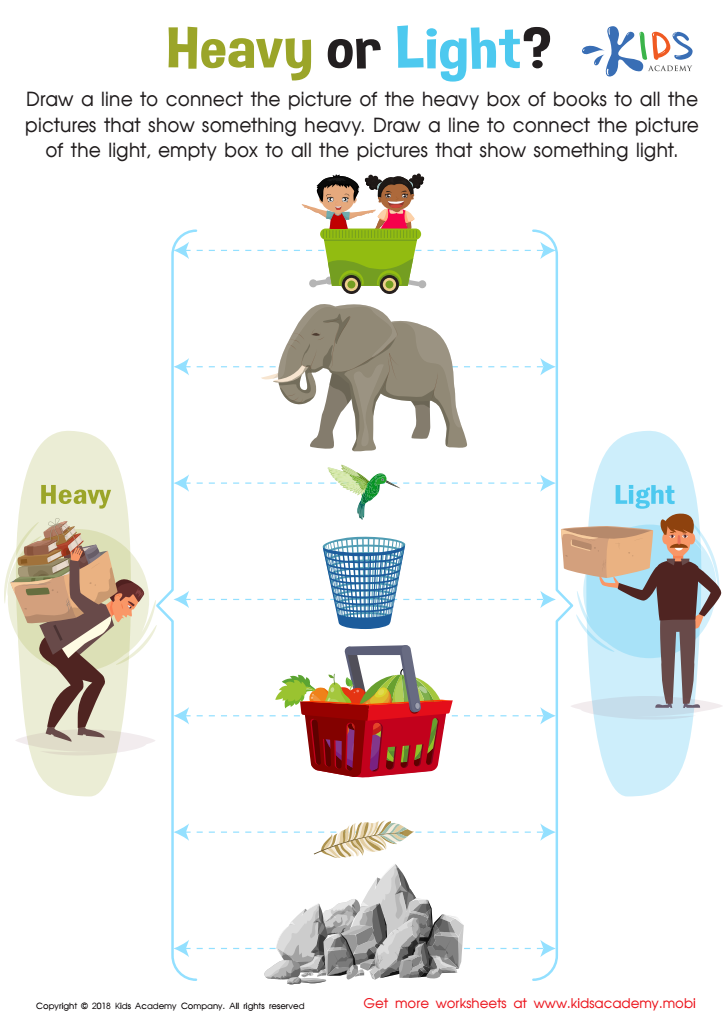
Heavy or Light? Worksheet
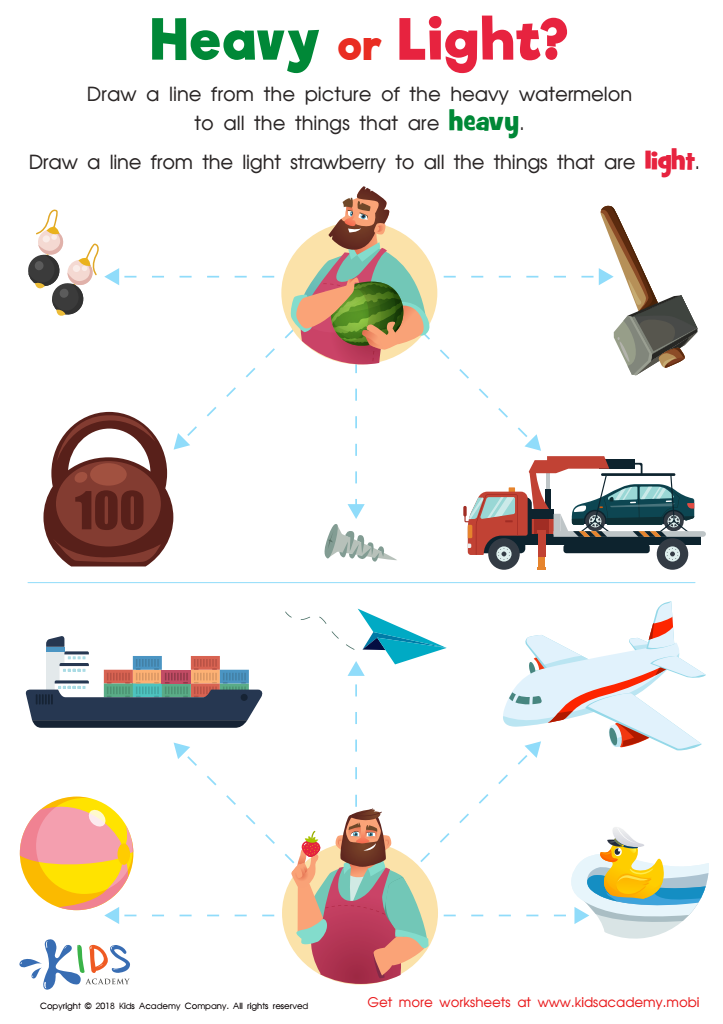
Heavy or Light? Worksheet





.jpg)


Comparing object weights is a fundamental math concept for children aged 6-8 because it fosters critical thinking, problem-solving skills, and a practical understanding of the world. At this age, kids are naturally curious and eager to explore their surroundings. When parents or teachers engage them in comparing weights, they promote hands-on learning through everyday objects. This practice helps children grasp basic measurement skills, such as using scales and understanding heavier and lighter, which are vital for more advanced math and science concepts.
Moreover, comparing object weights aids in the development of numerical reasoning as children learn to use units of measurement and introduce them to early data analysis. It also provides them with a spatial awareness of balance, symmetry, and forces. This concept helps in enhancing their vocabulary by familiarizing them with terms like "grams," "kilograms," and "weight," contributing to their overall language development.
Additionally, comparing weights encourages cooperative learning when done in group activities, aiding social skills and teamwork. It also supports cognitive development by teaching children to make estimations, provide logical explanations, and verify their predictions. Overall, understanding object weights lays a crucial foundation for future academic success and daily life problem-solving, making it a vital skill for young learners.








