
Comparing sizes Math Worksheets for Ages 6-8
11 filtered results
Difficulty Level
Grade
Age
-
From - To
Subject
Activity
Standards
Discover our engaging "Comparing Sizes Math Worksheets" designed for children aged 6-8! These worksheets help young learners develop essential skills in identifying and comparing the sizes of various objects. Through fun and interactive activities, kids can practice comparing lengths, heights, and weights while building their understanding of size differences. Perfect for classroom use or home practice, our worksheets encourage critical thinking and problem-solving skills. With colorful visuals and age-appropriate exercises, children will enjoy enhancing their math abilities while gaining confidence in their knowledge. Download our printable worksheets today and help your child explore the exciting world of comparing sizes!
Favorites
With answer key
Interactive
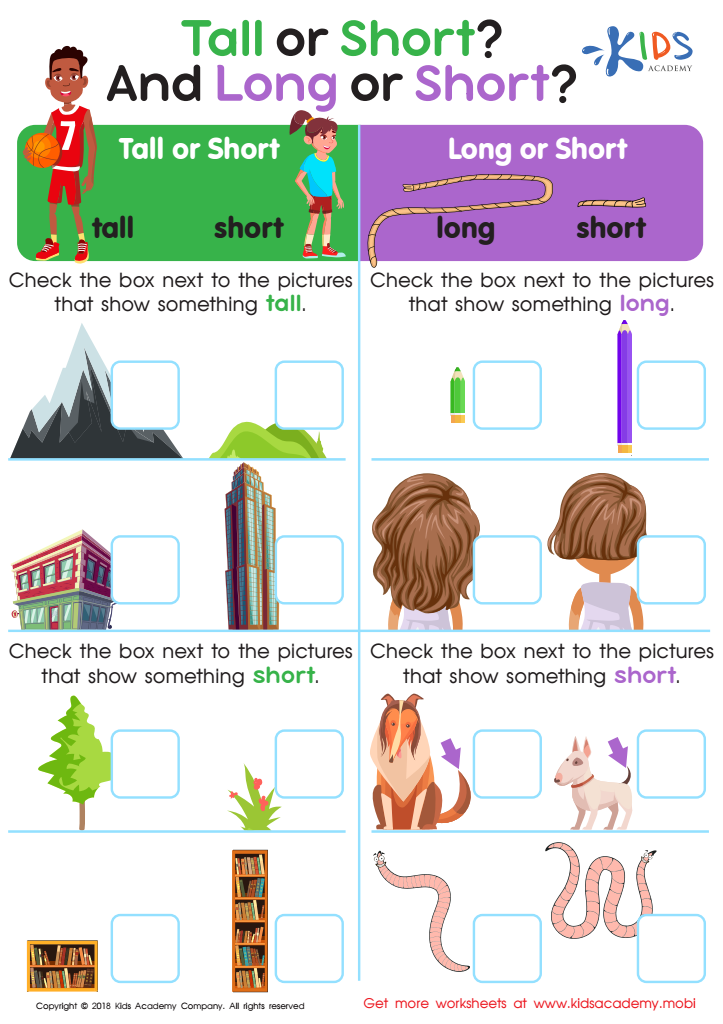
Tall or Short and Long or Short? Worksheet
This worksheet is fun and helpful for kids to understand the difference between height and length. With pictures of familiar objects, they can compare and choose the box with the right answer. This helps them gain skills and a better foundation for future measuring.
 Assign to My Students
Tall or Short and Long or Short? Worksheet
Worksheet
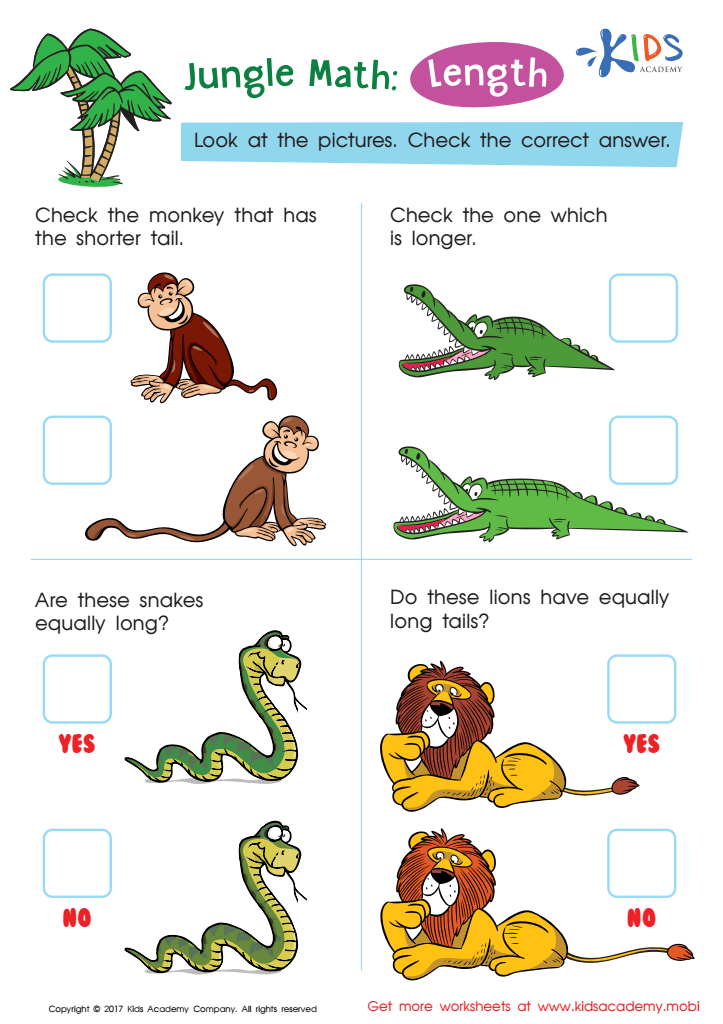
Which One Is Longer - Length Worksheet
Let's go to the jungle - kids get excited to practice math with animal-filled worksheets! This one is sure to have your pupil mastering length in no time.
Which One Is Longer - Length Worksheet
Worksheet
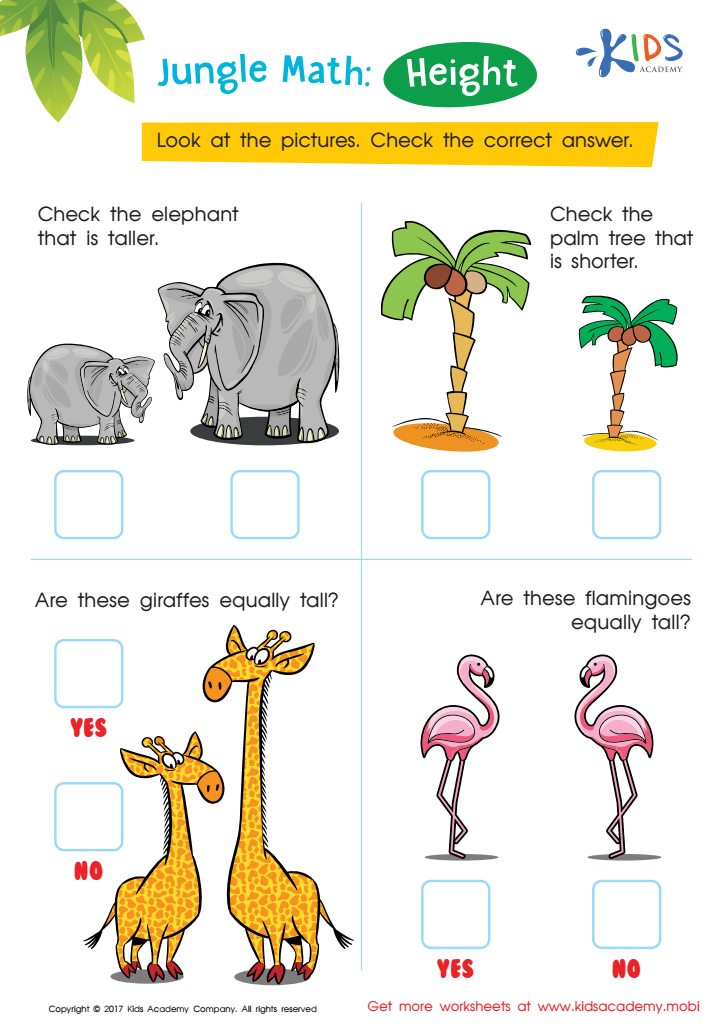
Which Is Taller Worksheet
Help your kindergartner learn about height with this fun worksheet! They'll love comparing zoo animals and deciding which are taller, shorter, or equal. It's a great way to practice math and have fun!
Which Is Taller Worksheet
Worksheet
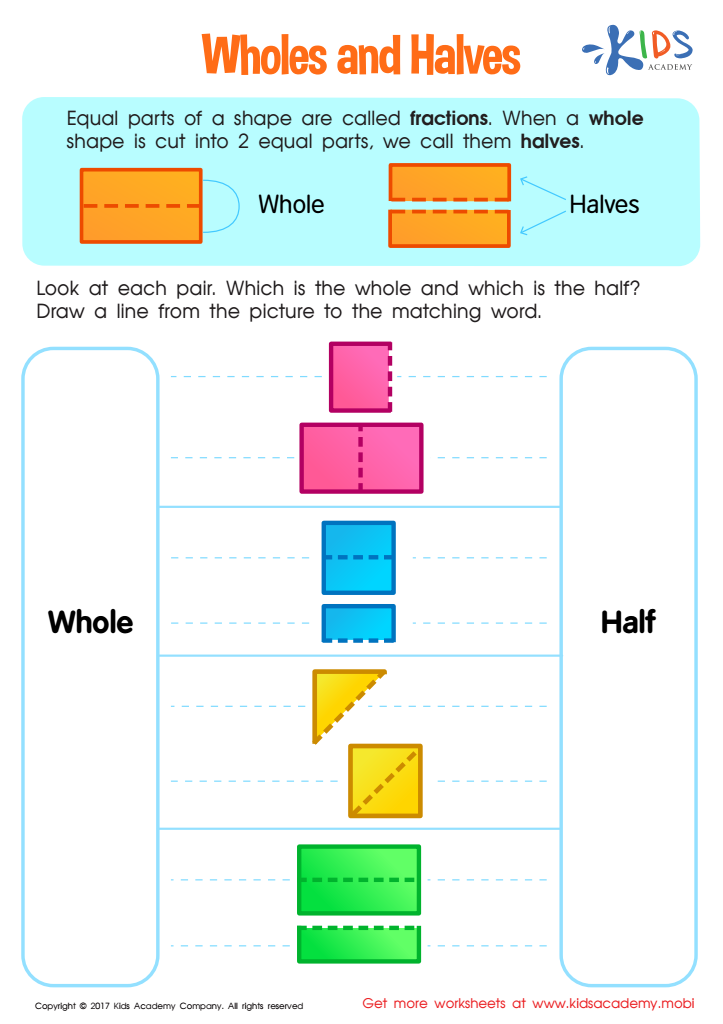
Wholes and Halves Worksheet
Students can feel overwhelmed with fractions. Help take the stress off by using a colorful worksheet to explain whole shapes and how to find halves. Ask them to identify the whole and point to the matching word for the half. A free printout can help guide them.
Wholes and Halves Worksheet
Worksheet
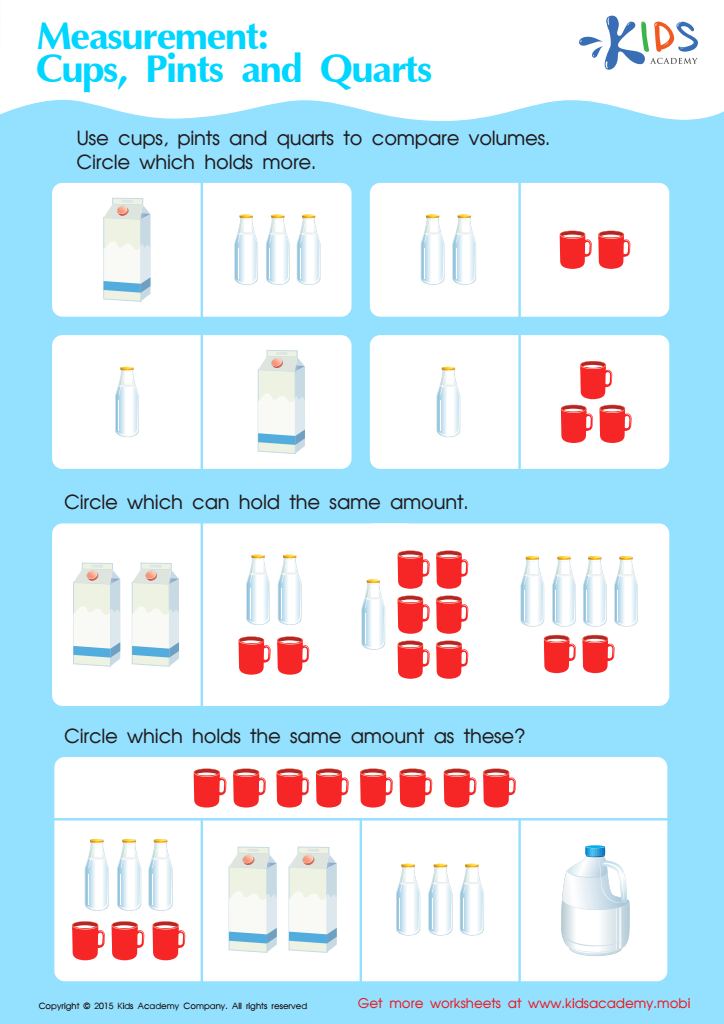
Measurement: Compare Volumes Worksheet
Compare volumes with Kids Academy and have fun! (80 words)
Practice measuring with Kids Academy and have fun! Compare volumes in pictures and circle which holds more. Keep learning with free math worksheets available on our website. Enjoy the process and have fun!
Measurement: Compare Volumes Worksheet
Worksheet
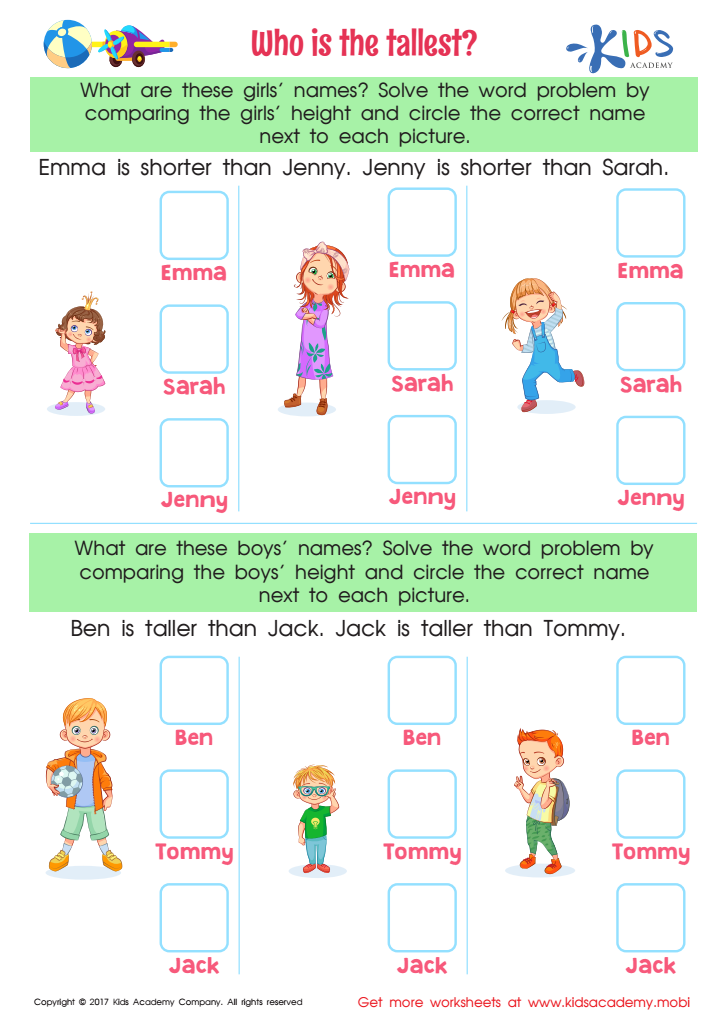
Who Tallest Printable
Help your child observe the kids in the worksheet and compare their heights to answer the question: Who is the Tallest? This is an excellent way for them to practice and better understand measurement concepts.
Who Tallest Printable
Worksheet
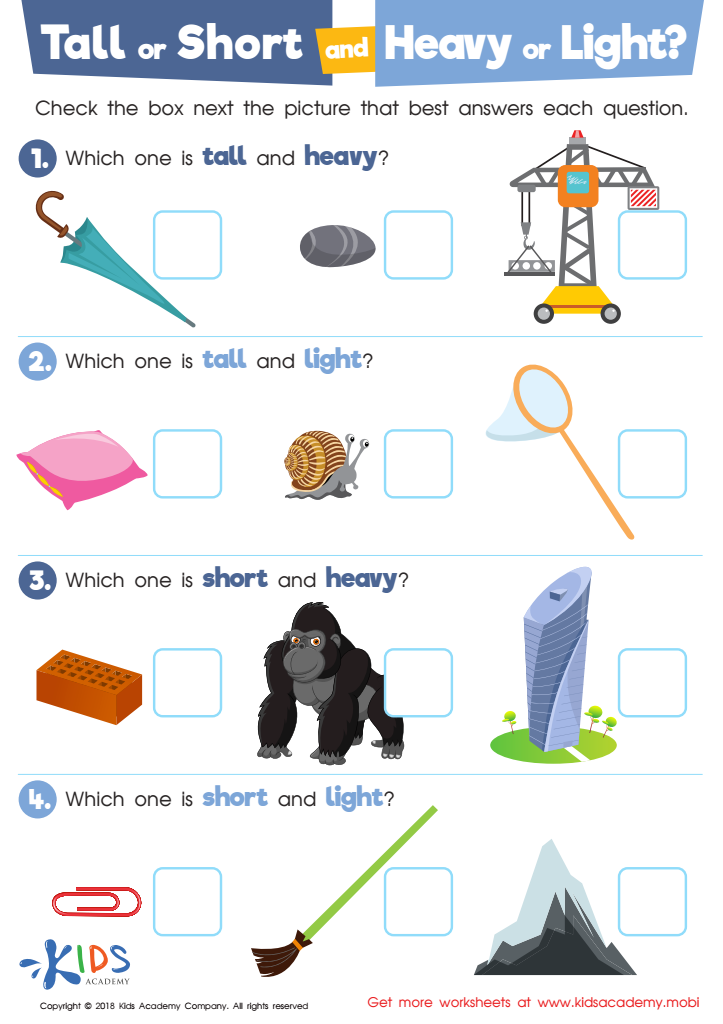
Tall or Short and Heavy or Light? Worksheet
Young children can find basic measurement concepts tricky. This PDF introduces them to the appropriate vocabulary for describing heavy, light, tall and short items, by using familiar pictures. It helps them accurately select which items fit each category.
Tall or Short and Heavy or Light? Worksheet
Worksheet
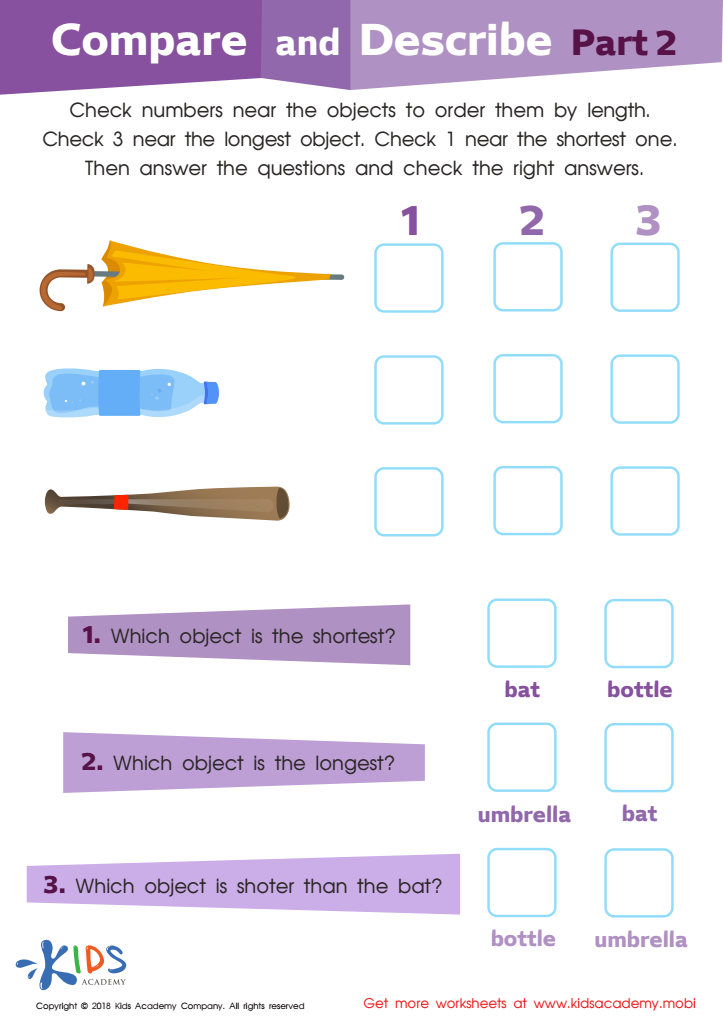
Compare and Describe: Part 2 Worksheet
Help kids hone their comparison skills with this fun measurement worksheet! Kids will sort objects by length and check off the boxes as they go. At the bottom, they'll read the questions and take a final look at the images to complete the exercise. An exciting way to learn measurement!
Compare and Describe: Part 2 Worksheet
Worksheet
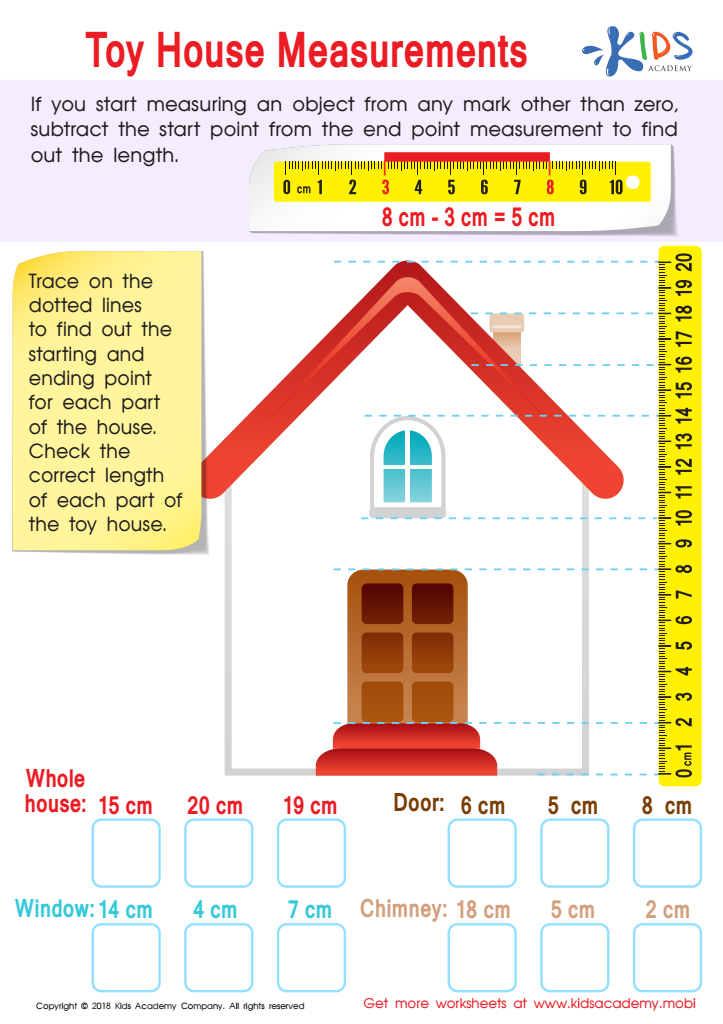
Toy House Measurements Worksheet
This worksheet requires math and measuring skills. When measuring an object from a non-zero starting point, subtract the start point from the end point to get the correct length. Kids must trace the dotted lines to get the right length for each part of the house.
Toy House Measurements Worksheet
Worksheet
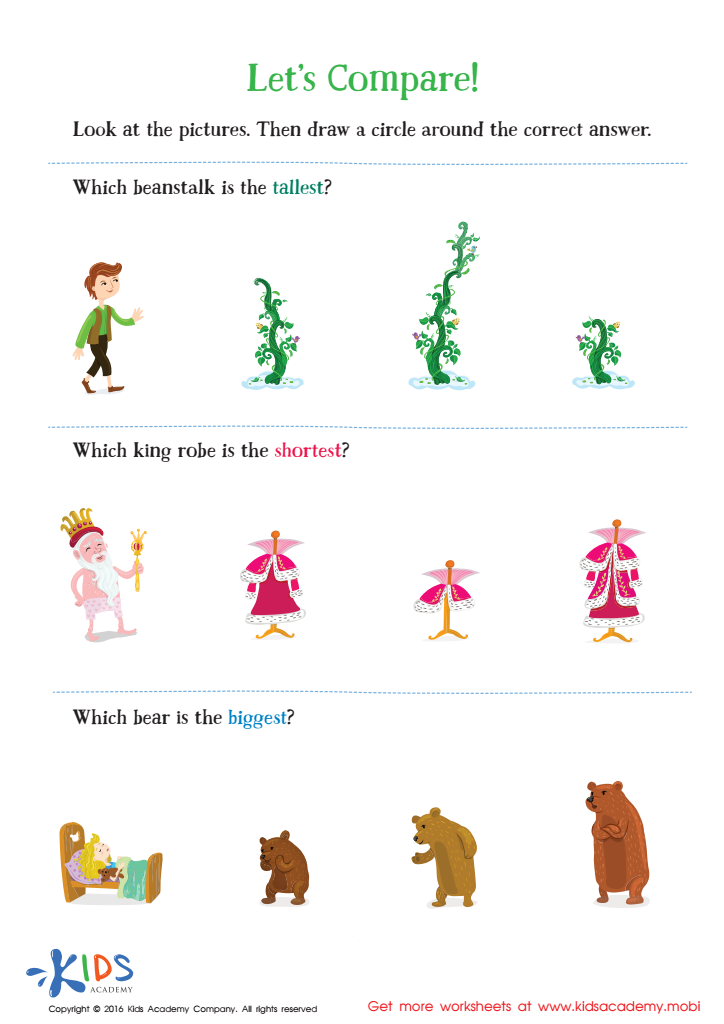
Fairy Tale Worksheet: Let's Compare
Preschoolers need to recognize different sizes of objects. This worksheet combines fun fairy tales with size practice, helping them read, problem solve, and sort through pictures. Your child will love the images and be eager to complete it. Enhance their learning by talking about the tales to build comprehension.
Fairy Tale Worksheet: Let's Compare
Worksheet
Join Kids Academy for Free
Who is primarily going to use this learning content?





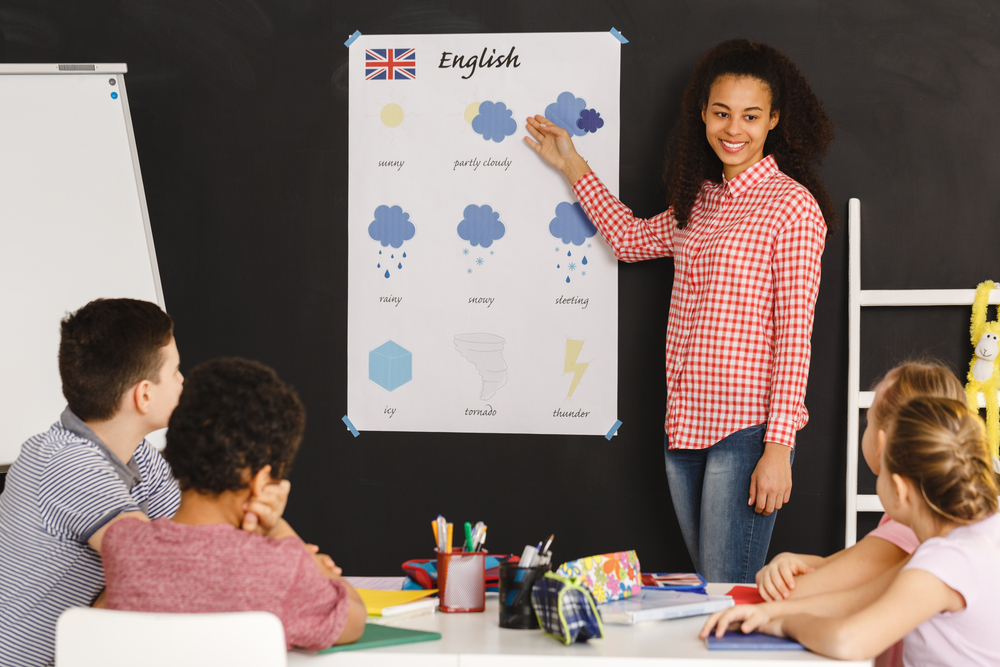


Comparing sizes is a fundamental mathematical concept for children ages 6-8, and parents and teachers should prioritize it for several reasons. First, this skill helps develop a child’s understanding of measurement, which is foundational for future math learning. By comparing sizes, children learn key vocabulary such as "bigger," "smaller," "taller," and "shorter," enhancing their verbal and cognitive skills.
Next, this concept fosters critical thinking and problem-solving abilities. As children compare objects, they engage in reasoning and logical thinking, skills essential for math and beyond. Moreover, comparing sizes nurtures observational skills, encouraging children to notice differences and similarities in the world around them.
Socially and emotionally, activities centered on size comparisons can enhance collaboration and communication. When children work in groups to measure and compare objects, they practice sharing ideas and articulating their thoughts.
Additionally, relating mathematical concepts to real-life situations, such as comparing heights of family members or sizes of animals, makes learning engaging and applicable. Ultimately, understanding and utilizing size comparison lays the groundwork for more advanced math topics, ensuring a strong educational foundation as children progress in their learning journey. Parents and teachers, therefore, play a crucial role in fostering these important skills.








