Unlock your child's potential with our meticulously crafted math worksheets designed for ages 6-8. These engaging activities target fundamental problem-solving skills, making learning both fun and effective. Each worksheet incorporates real-life scenarios to help students sharpen their analytical thinking, boost their confidence, and achieve higher academic performance. Aligning perfectly with the curriculum, these exercises challenge young minds to explore various strategies and conceptualize solutions creatively. Give your child a head start in math with resources designed to promote critical thinking and foster a lifelong love for learning. Join us and transform everyday learning into a captivating adventure!

Check out this FREE Trial Lesson on Math for age 6-8!

Making a Whole

Favorites
With answer key
Interactive
  • 6-8
  • Enhancing problem-solving skills
  • Math
Whole Shape from Fourths Worksheet

Whole Shape from Fourths Worksheet

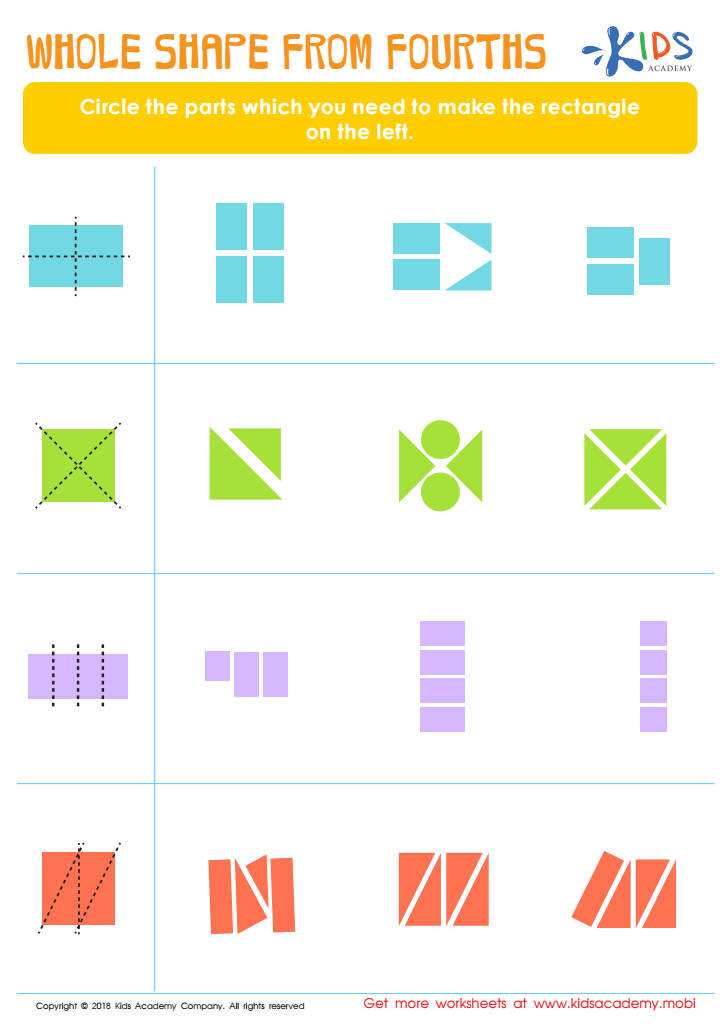
Have your kids circle the shapes that'll form the rectangle on the left. It'll test their knowledge of shapes and ability to put them together to make a new one. Ask them to look at the parts on the right and circle the ones that'll form the rectangle.
Whole Shape from Fourths Worksheet
Worksheet
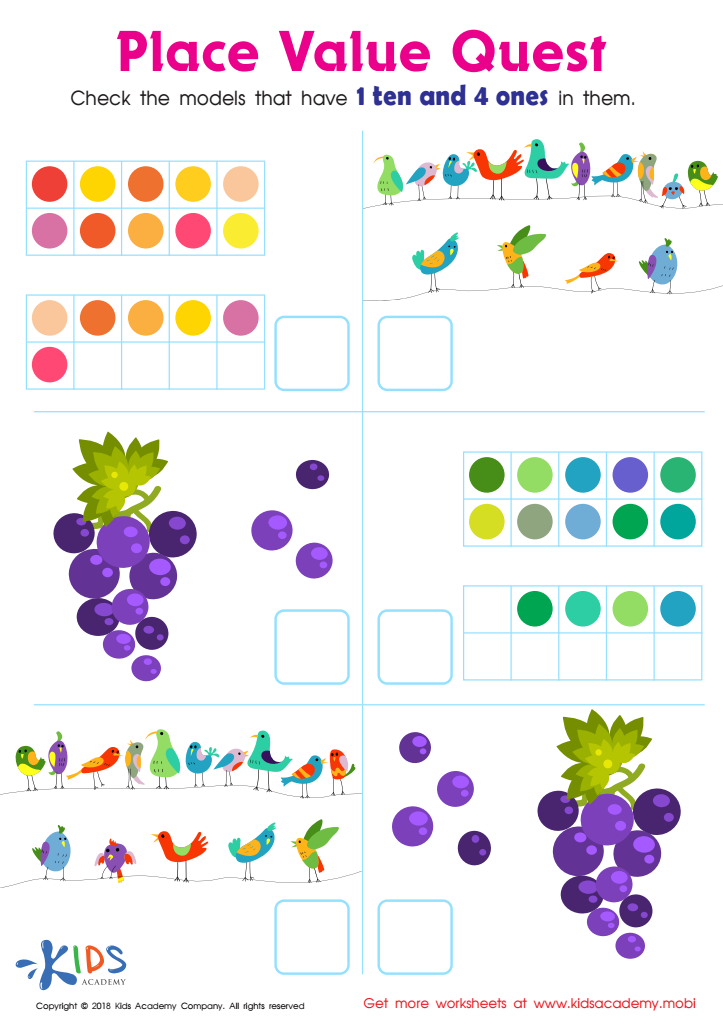
Place Value Quest Worksheet

Place Value Quest Worksheet

Help your child explore place value with this fun worksheet! They'll pick the set of images that have 1 ten and 4 ones from a selection of birds, grapes, and dots. Checking the boxes that contain the answer, your child will learn to count and identify tens and ones. A quick math practice page that's sure to be a hit!
Place Value Quest Worksheet
Worksheet
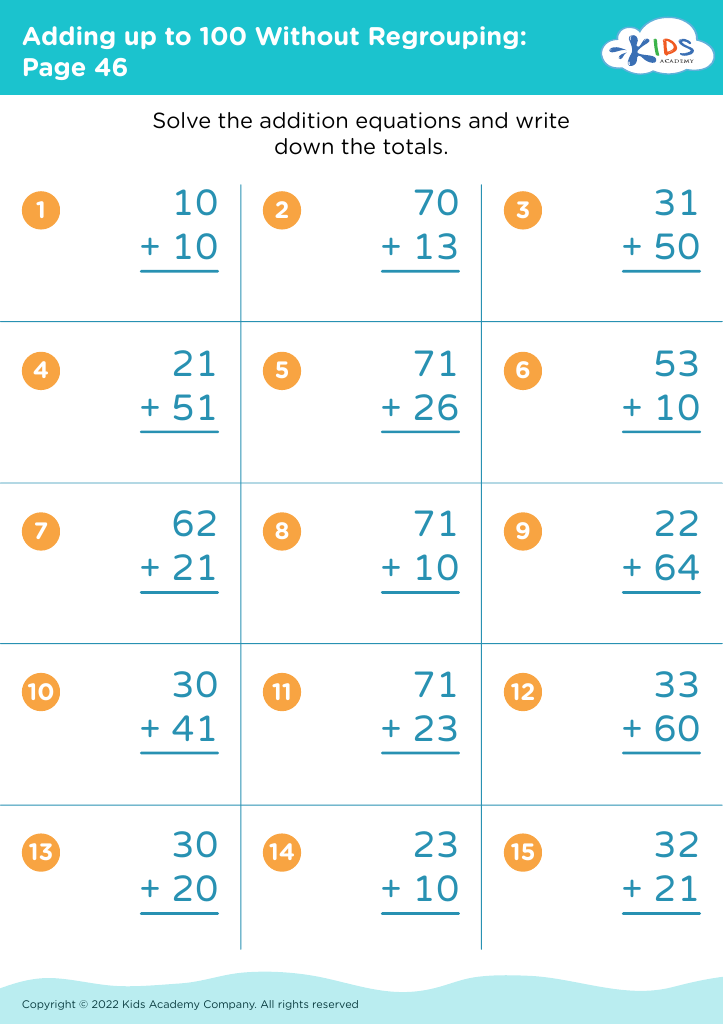
Adding up to 100 Without Regrouping: Page 46
Worksheet
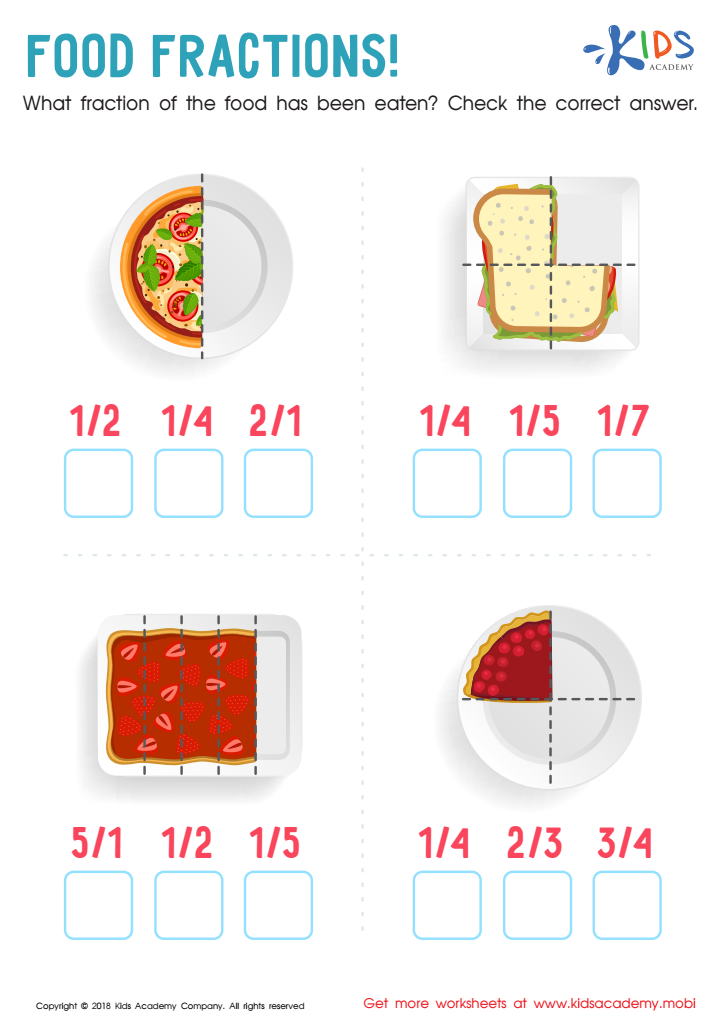
Food Fractions Worksheet

Food Fractions Worksheet

Test your child's understanding of fractions with this Food Fractions worksheet. Ask them to identify what fraction of the food in the four pictures has been eaten and select the correct answer from the options provided. See how well they understand your lessons!
Food Fractions Worksheet
Worksheet
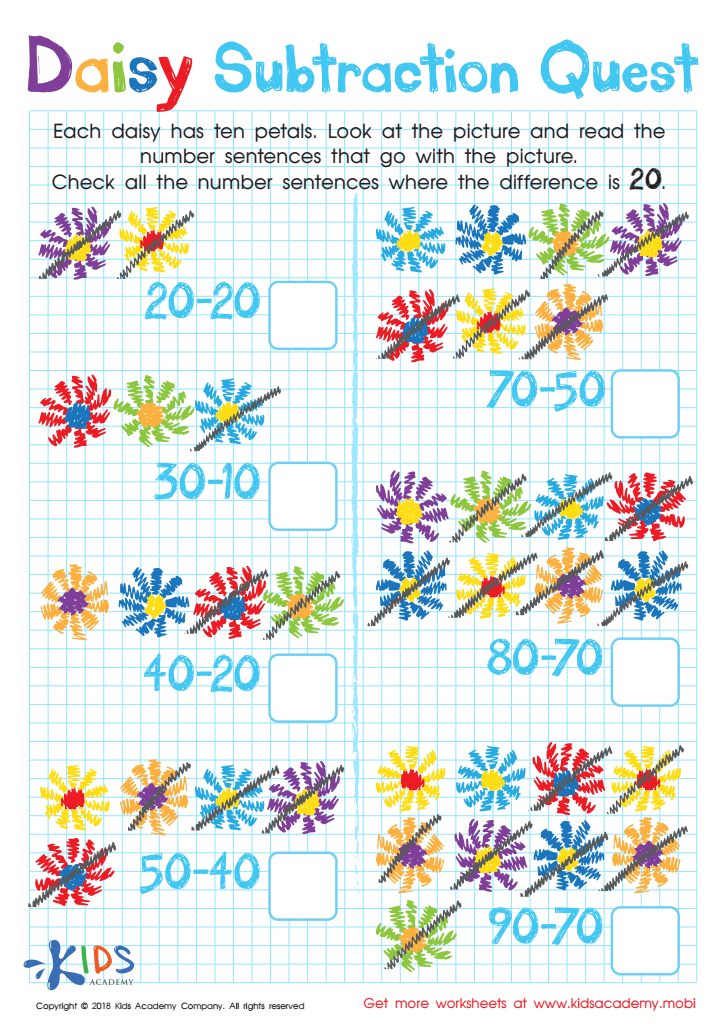
Daisy Subtraction Quest Worksheet
Daisy Subtraction Quest Worksheet

Ohh-la-la! These daisies are something special! With ten petals each, they're perfect for helping little math learners use tens to find number sentences that differ by 20. Our free worksheet is full of bright colors to engage and easy questions to strengthen math automaticity and confidence.
Daisy Subtraction Quest Worksheet
Worksheet
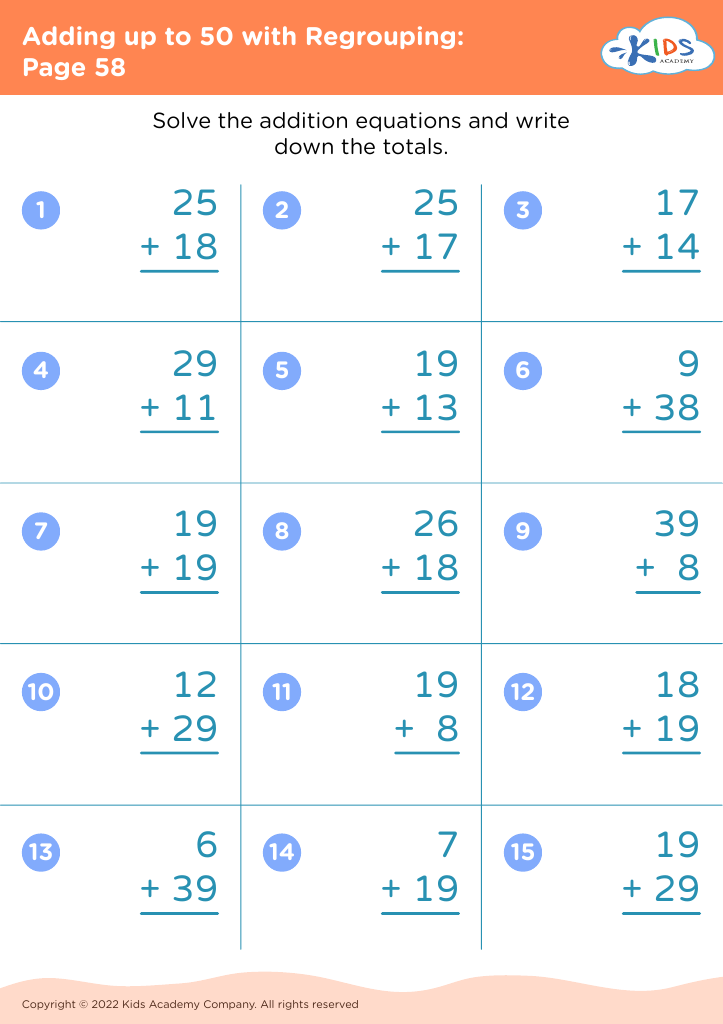
Adding up to 50 with Regrouping: Page 58
Worksheet
Tug of War: Commutative Property Worksheet
Tug of War: Commutative Property Worksheet

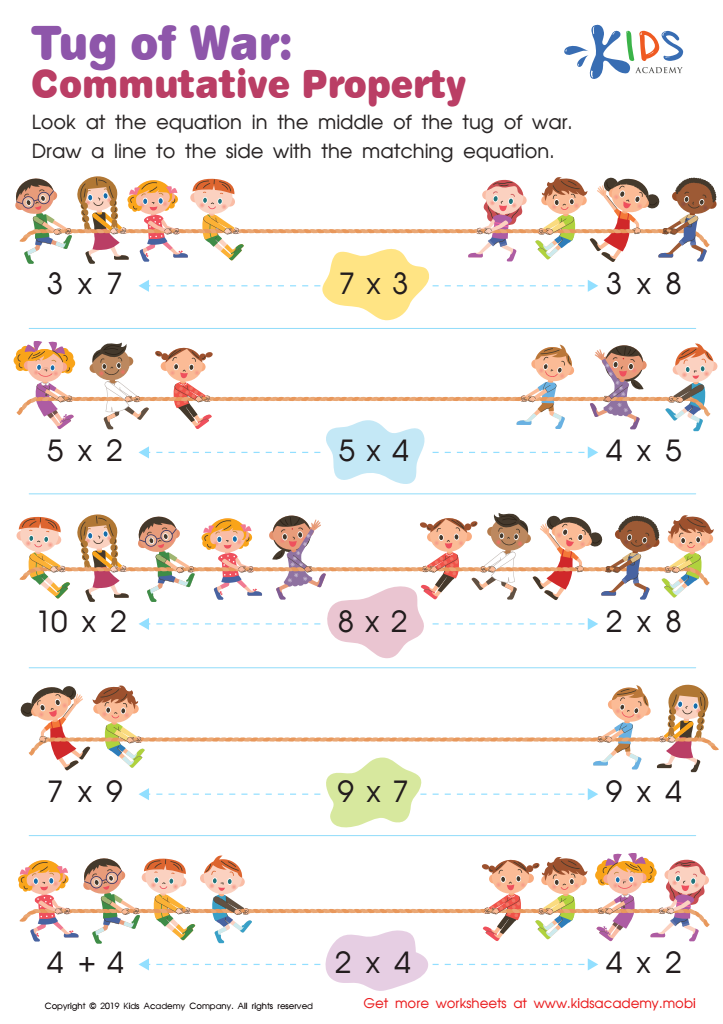
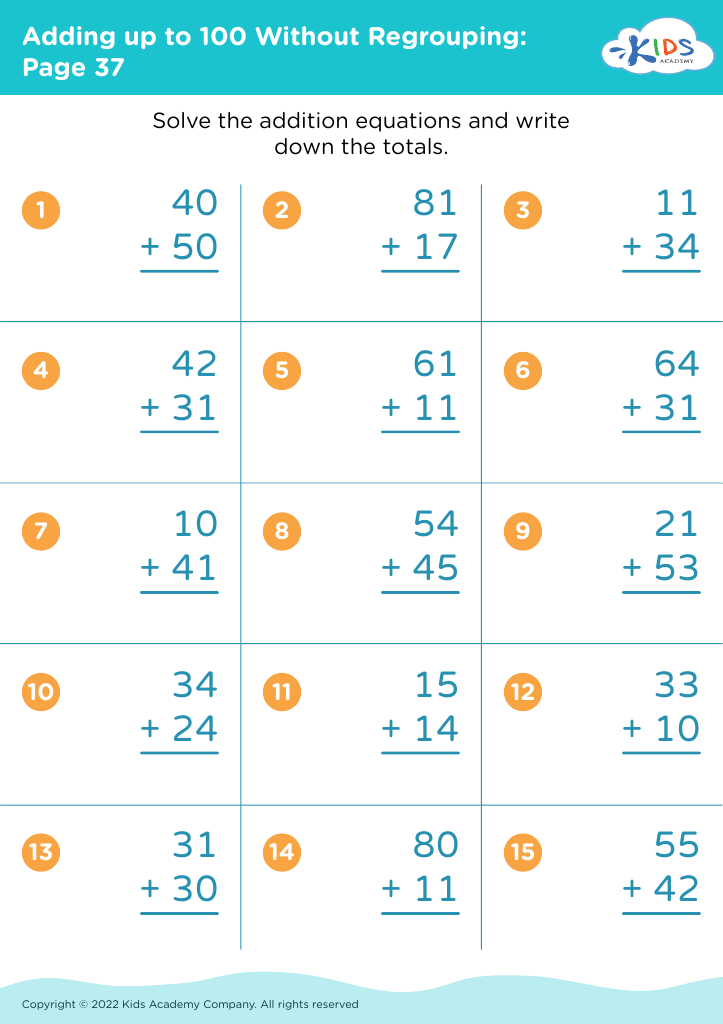
Tug of war is a great game to teach your child simple math. Explain the commutative property--it states that the product remains the same regardless of the order of factors. Use the equations in the middle of the worksheet and have your child draw a line to the corresponding equation. It's a fun and easy way to learn math.
Tug of War: Commutative Property Worksheet
Worksheet
Adding up to 100 Without Regrouping: Page 37
Worksheet
Bee maze rounding worksheet

Bee Maze Rounding Worksheet

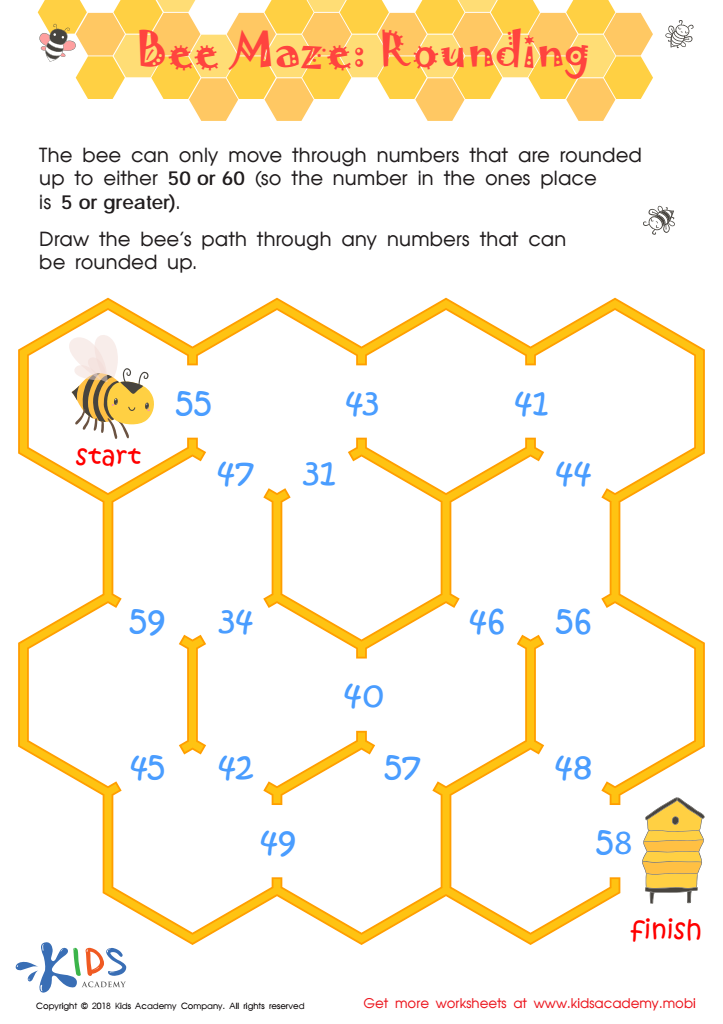
Round up the bee! Your child will practice rounding with this fun maze worksheet. Kids round up to 50 or 60, evaluating each number and guiding the bee to his home. Get ready for some thought-stretching fun!
Bee Maze Rounding Worksheet
Worksheet
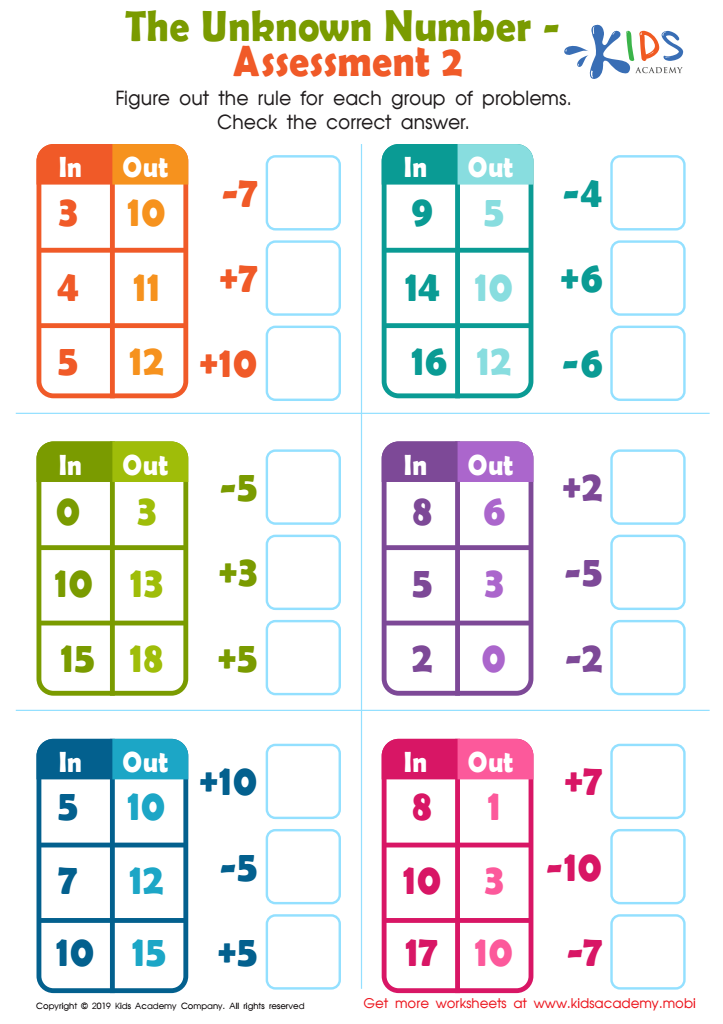
The Unknown Number - Assessment 2 Worksheet
The Unknown Number - Assessment 2 Worksheet

Help your kids to figure out the rule for each group of math problems. Check the right answer and show that there's nothing to be nervous about. Encourage them and use creative learning for better understanding of math. Constant practice is key.
The Unknown Number - Assessment 2 Worksheet
Worksheet
Adding up to 100: Page 53

Adding up to 100: Page 53

Adding up to 100: Page 53
Worksheet
Double Facts: Total Matching 2 Worksheet

Double Facts: Total Matching 2 Worksheet

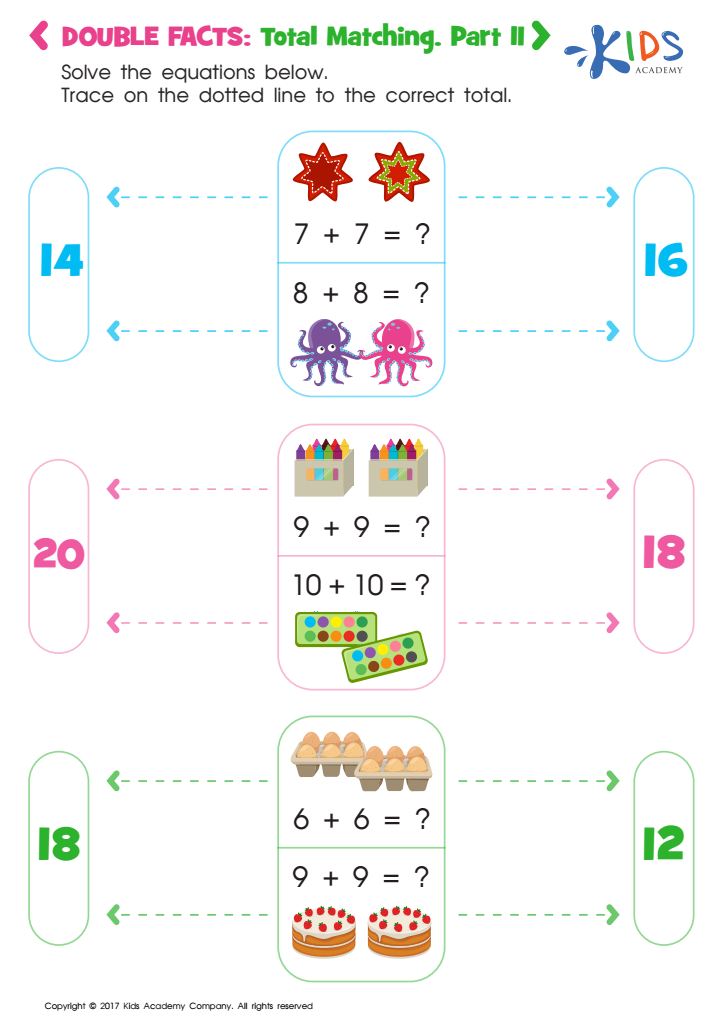
Having trouble with math? This printable worksheet is perfect for your child or student. It features simple addition problems that can be solved with your help. Trace the dotted line to the right answer and make counting numbers stress-free! Your young one will be solving math equations in no time.
Double Facts: Total Matching 2 Worksheet
Worksheet
Part, Part, Whole Worksheet


Part, Part, Whole Worksheet

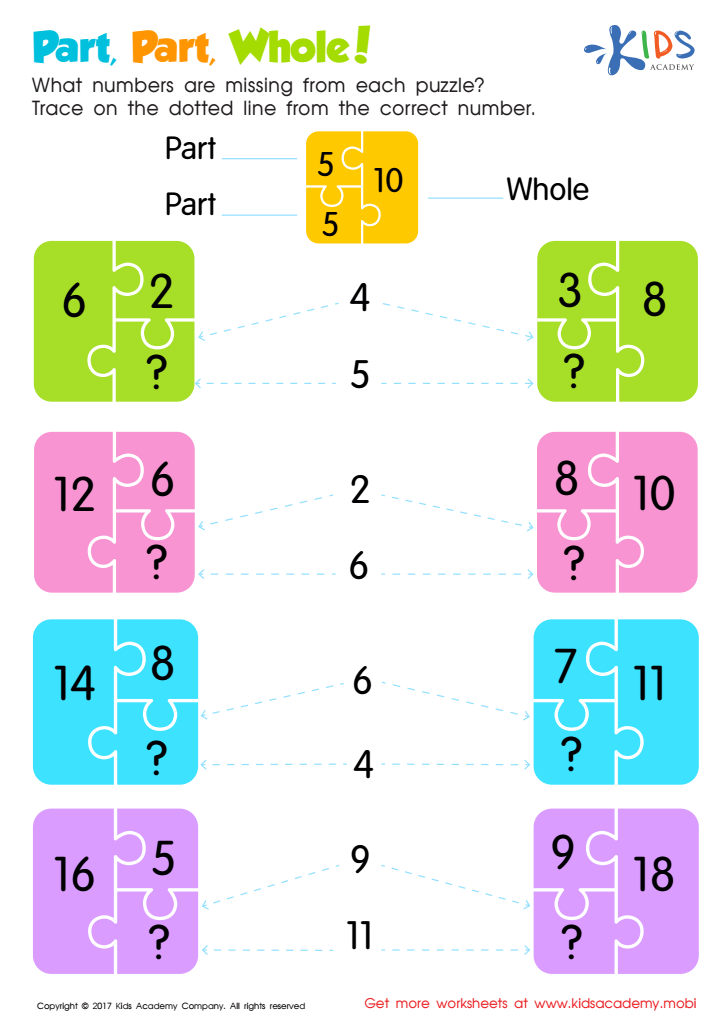
Help your child find the missing numbers in the puzzles. The worksheet combines fun and maths - stimulating the brain while keeping them engaged. Colourful pages will keep the learning enjoyable. Simple addition and subtraction will ensure they stay entertained.
Part, Part, Whole Worksheet
Worksheet


Enhancing problem-solving skills in math for children aged 6-8 is of paramount importance because it lays the foundation for critical thinking, logical reasoning, and cognitive development. At this early stage, children are developing the ability to understand and interact with the world around them. By focusing on problem-solving skills, parents and teachers help young learners foster a positive attitude towards math, which can significantly influence their future academic success.

Mathematical problem solving encourages children to think independently, approach challenges with confidence, and develop persistence when faced with difficulties. These skills are not only crucial for mathematics but are also applicable across all subjects and everyday life situations. Effective problem-solving requires students to analyze information, consider multiple strategies, and execute solutions systematically. This process cultivates patience and diligence, integral traits for comprehensive learning and personal growth.

Moreover, structured problem-solving activities stimulate neural connections in the brain, enhancing memory, attention, and overall mental agility. By nurturing these skills early on, parents and teachers can help children build a solid mathematical foundation, leading to higher levels of competence and interest in STEM (Science, Technology, Engineering, Math) fields. Overall, fostering problem-solving skills in young children equips them with lifelong tools for innovation and adaptive learning in an ever-evolving world.