Fine motor skills development Math Worksheets for Ages 6-8
7 filtered results
-
From - To
Enhance your child's fine motor skills and math proficiency with our specially designed worksheets for ages 6-8! Our engaging and interactive math worksheets incorporate fun activities that promote hand-eye coordination, dexterity, and concentration. Ideal for young learners, these resources help children master essential math concepts while simultaneously developing their fine motor skills. From tracing numbers to engaging in hands-on problem-solving tasks, each worksheet is crafted to make learning enjoyable and effective. Download our fine motor skills development math worksheets today and watch your child flourish in both math and their motor skills as they explore, learn, and have fun!

Trace The Circles Worksheet
 Assign to My Students
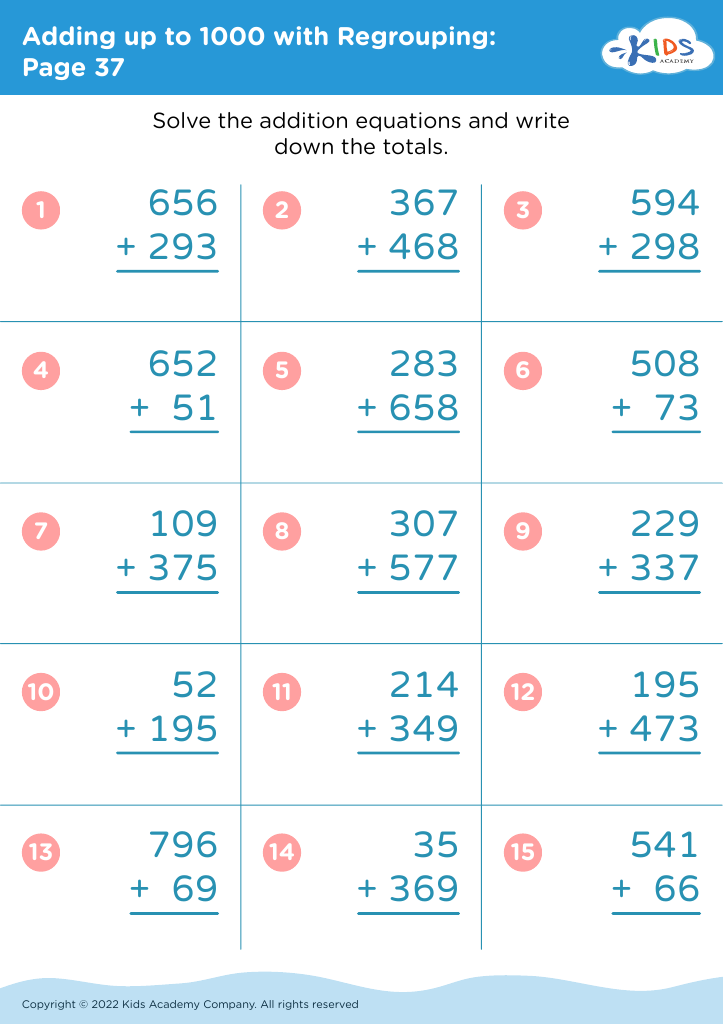
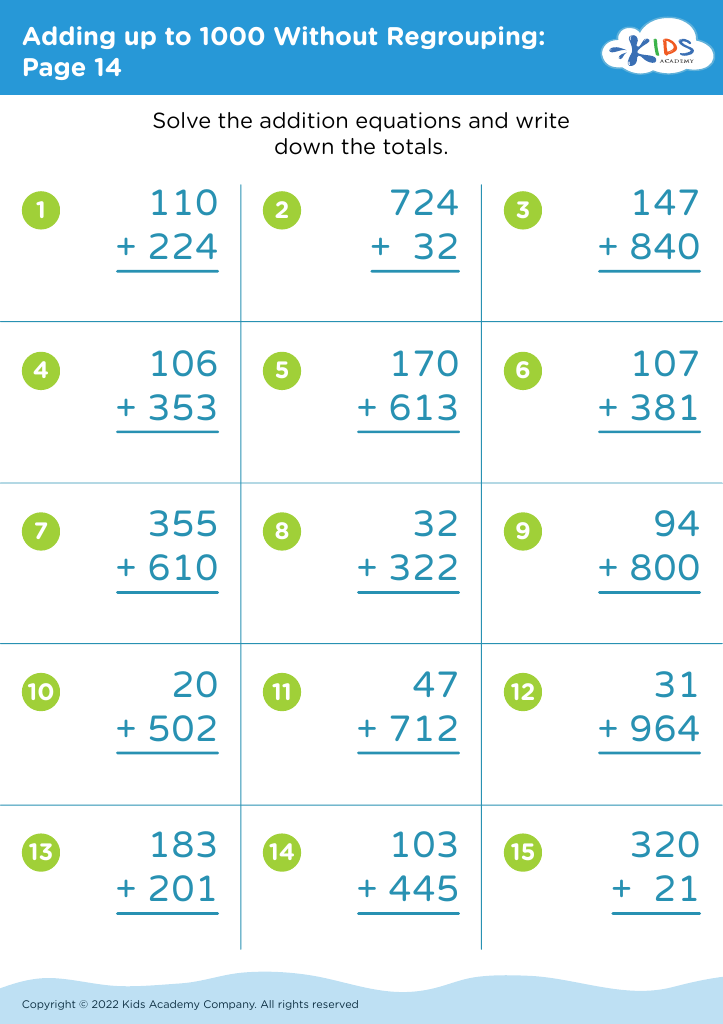
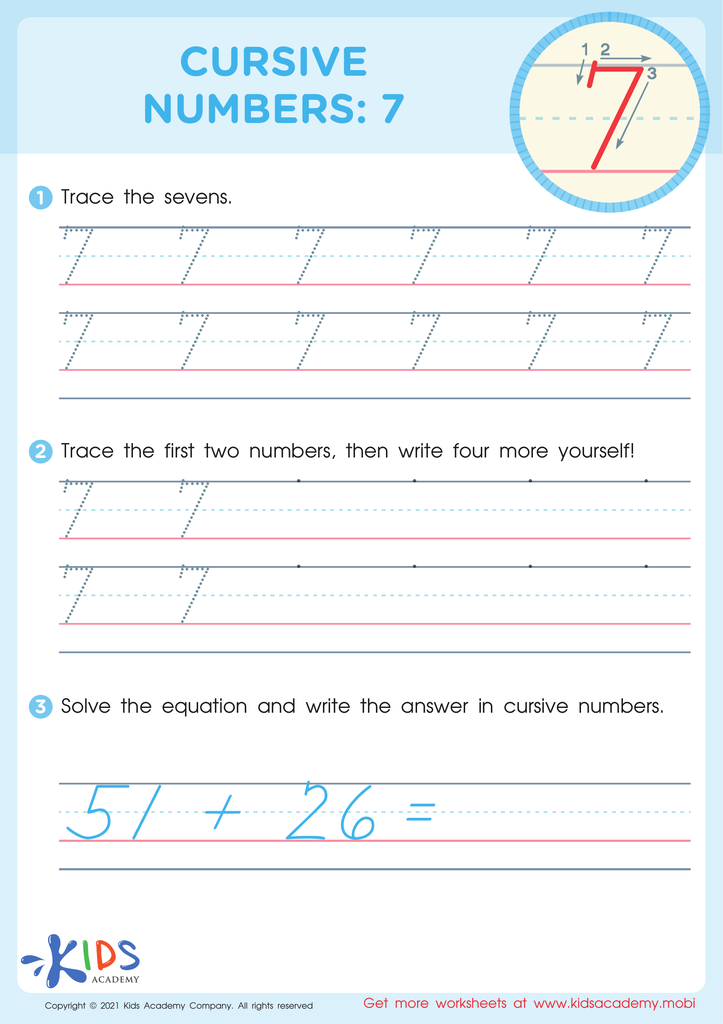
Cursive Numbers: 7 Worksheet
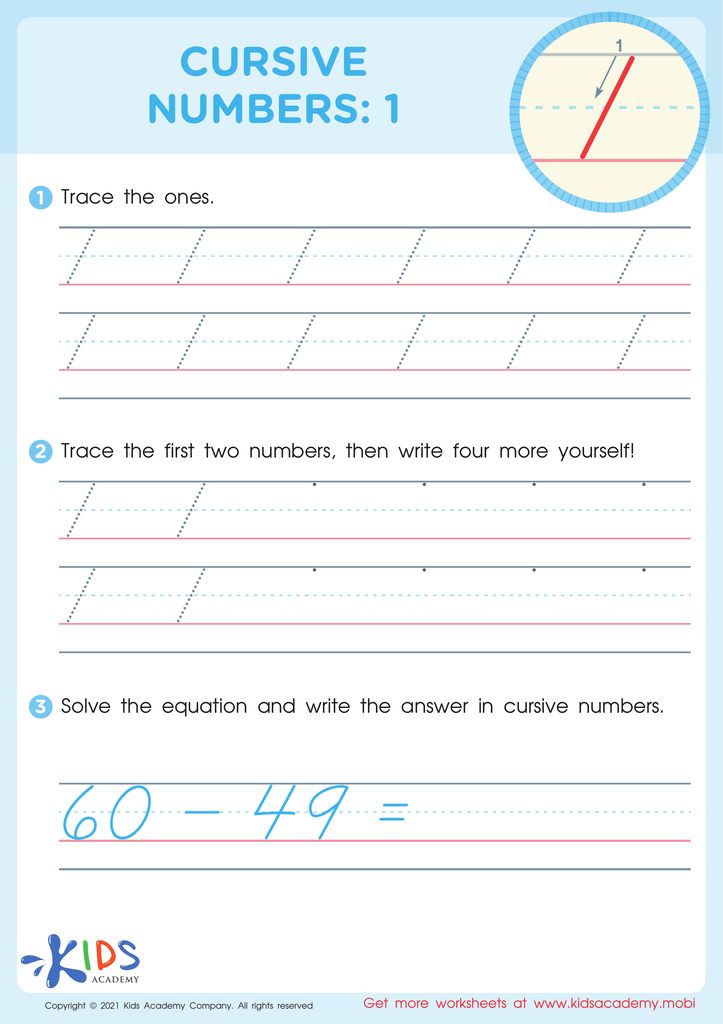
Cursive Numbers: 1 Worksheet
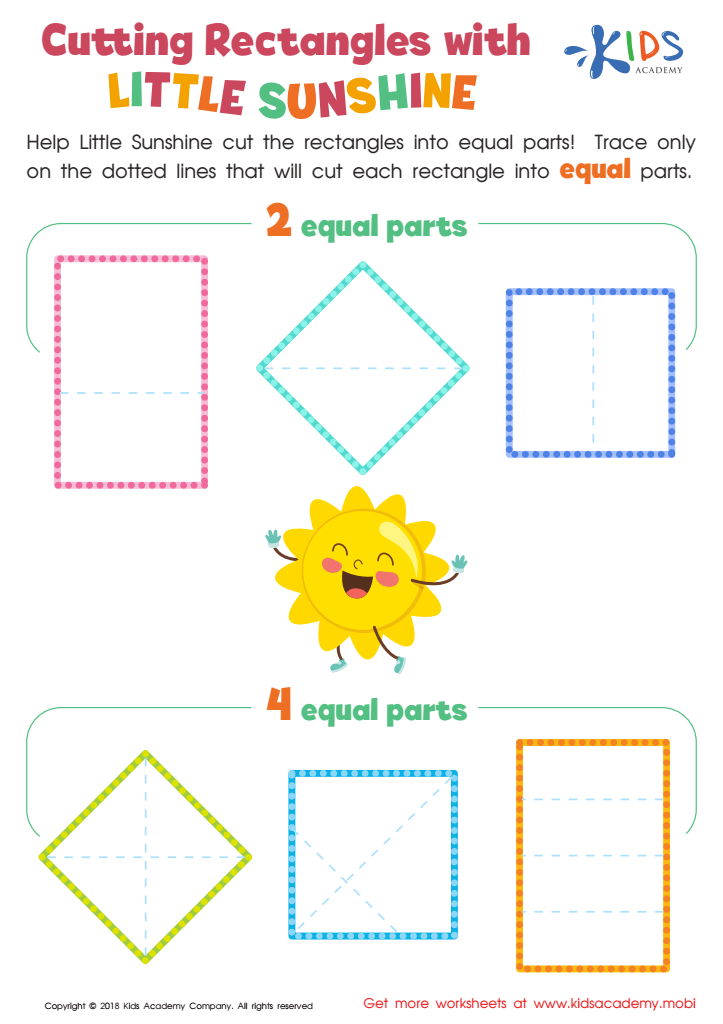
Cutting Rectangles with Little Sunshine Worksheet
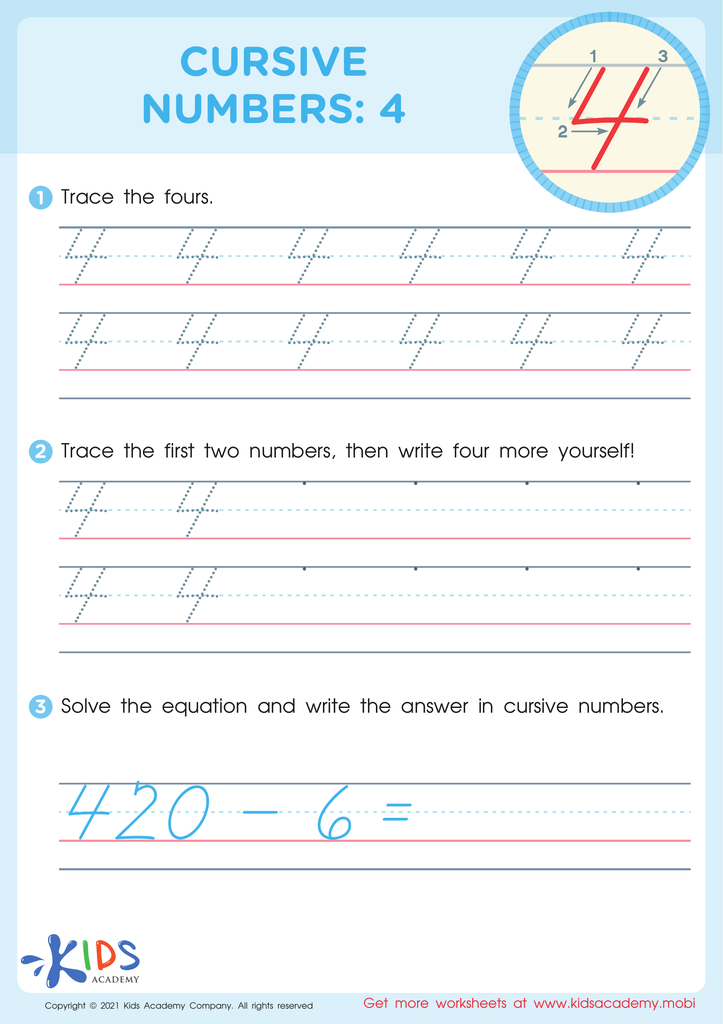
Cursive Numbers: 4 Worksheet





.jpg)


Fine motor skills development is crucial for children aged 6-8 as these skills impact various aspects of their learning, particularly in math. At this age, children transition from basic number recognition to more complex mathematical concepts, which require precise hand-eye coordination and dexterity. Activities such as counting objects, drawing shapes, and writing numbers rely heavily on fine motor skills.
Moreover, fine motor development fosters independence and confidence in children. When tasks like coloring within lines or manipulating small objects become easier, children are more likely to engage in math activities, enhancing their learning experience. Teachers and parents can incorporate fun and engaging practices—like using manipulatives for counting or incorporating games that require precision—to support this development.
Additionally, strong fine motor skills contribute to academic success beyond math. They lay the foundation for writing, arts, and science experiments—areas that equally rely on dexterous abilities. Therefore, investing time in developing fine motor skills is not just instrumental for immediate academic tasks but ensures a well-rounded skillset as children grow. Fostering these skills promotes not just math proficiency but also overall cognitive and physical development, making a significant impact on a child's educational journey.








