Filters

8 filtered results

Clear all filters
Favorites
With answer key
Interactive

8 filtered results

Difficulty Level

Grade


Enhance your child's observational skills with our engaging Math Worksheets for ages 6-8! Designed to improve critical thinking and visual perception, these worksheets provide fun activities that stimulate young minds. Children will discover shapes, patterns, and relationships through exciting exercises that encourage careful observation and comparison. Each worksheet is tailored to meet developmental milestones, making learning both effective and enjoyable. Whether at home or in the classroom, our interactive resources foster a love of math while building essential skills that lay the foundation for future learning. Explore our collection and watch your child's confidence and mathematical abilities grow today!

Check out this FREE Trial Lesson on Math for age 6-8!

Order objects and Describe your Findings

Favorites
With answer key
Interactive
  • 6-8
  • Observational skills
  • Math
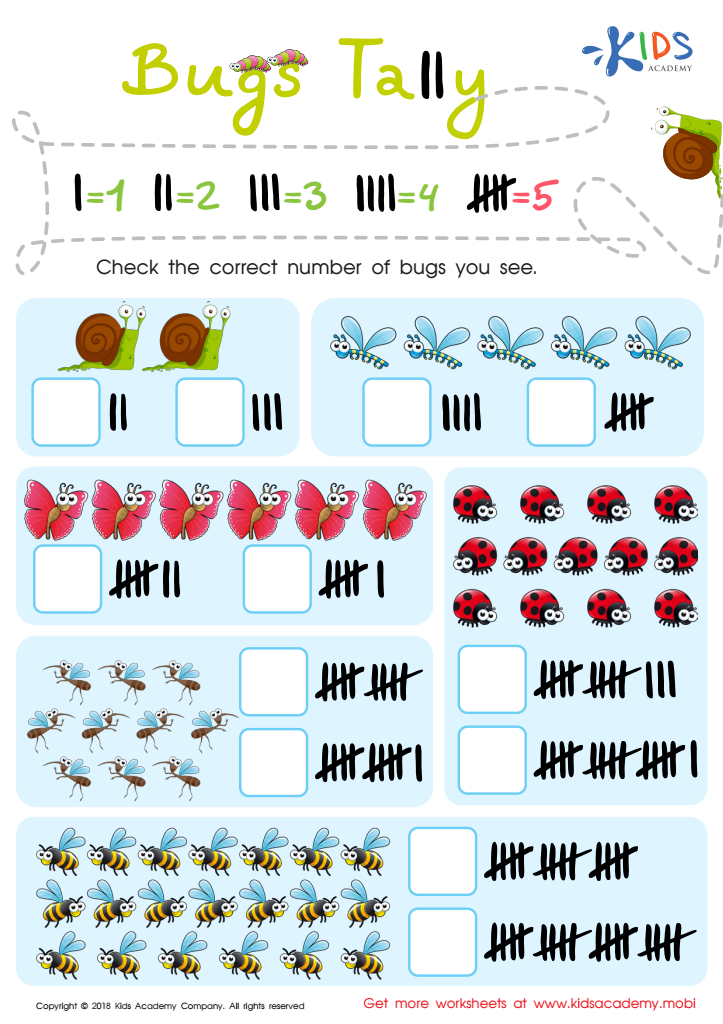
Bugs Tally Worksheet

Bugs Tally Worksheet

This fun worksheet uses friendly bugs to help young mathematicians learn numbers and tally marks. They'll gain real-world skills to help with adding, subtracting and counting. Representations will solidify number reasoning, aiding with game playing and more.
Bugs Tally Worksheet
Worksheet
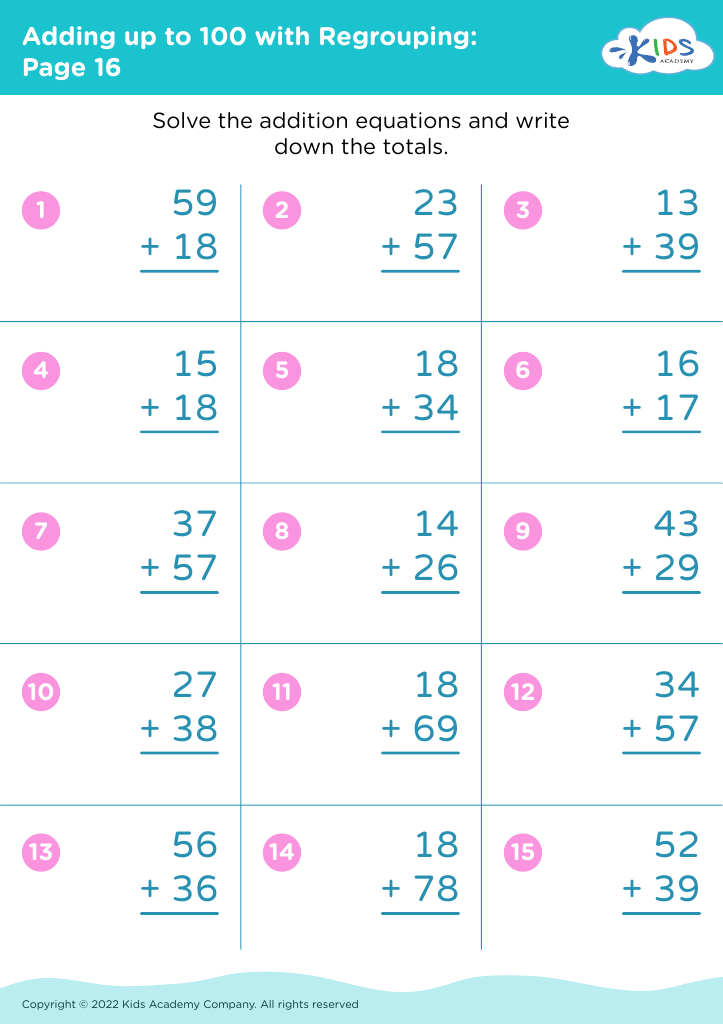
Adding up to 100 with Regrouping: Page 16
Worksheet
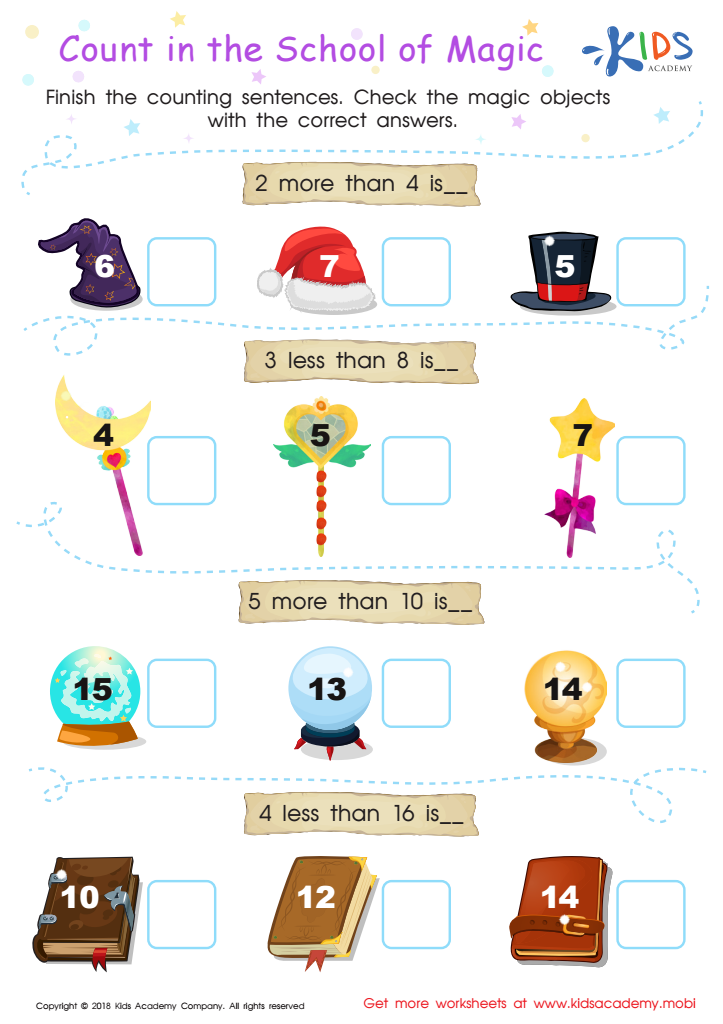
Count in the School of Magic Worksheet

Count in the School of Magic Worksheet

Your math learners can explore the School of Magic with this worksheet. They'll read equations with addition and subtraction numbers under 20, count back and forth to find the answer, then complete the counting sentences. Fun pictures and easy accuracy make it an enjoyable and successful learning experience.
Count in the School of Magic Worksheet
Worksheet
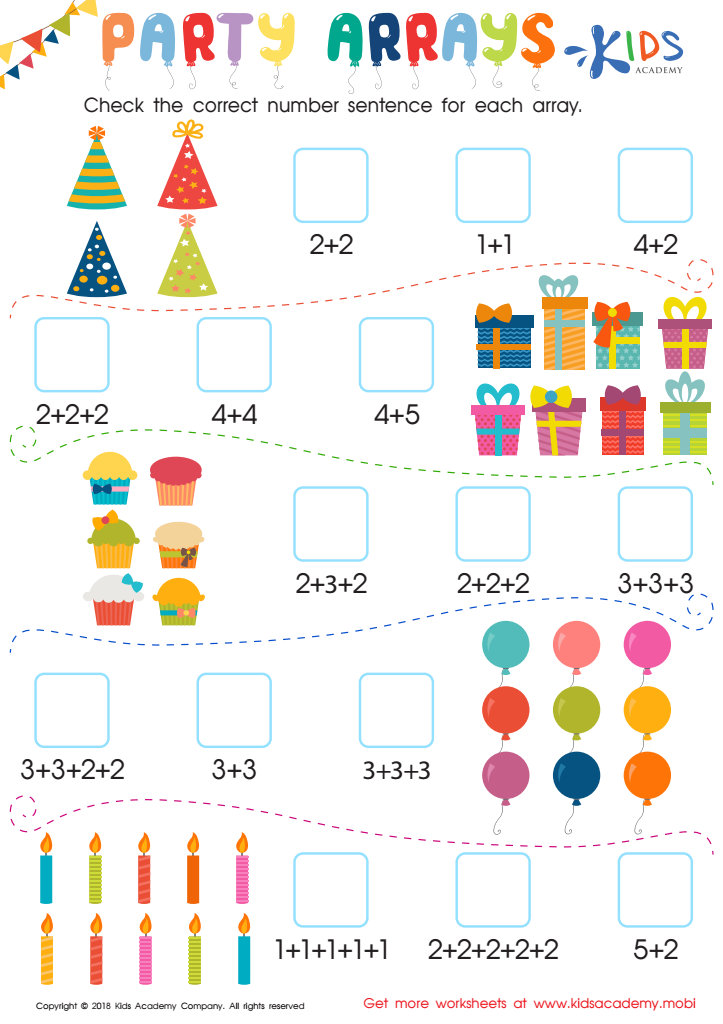
Party Arrays Worksheet

Party Arrays Worksheet

Help your child count the objects in each of the five arrays, then check the correct number sentence for each. This exercise will test their math skills and understanding of number sentences. Guide them to select the appropriate boxes.
Party Arrays Worksheet
Worksheet
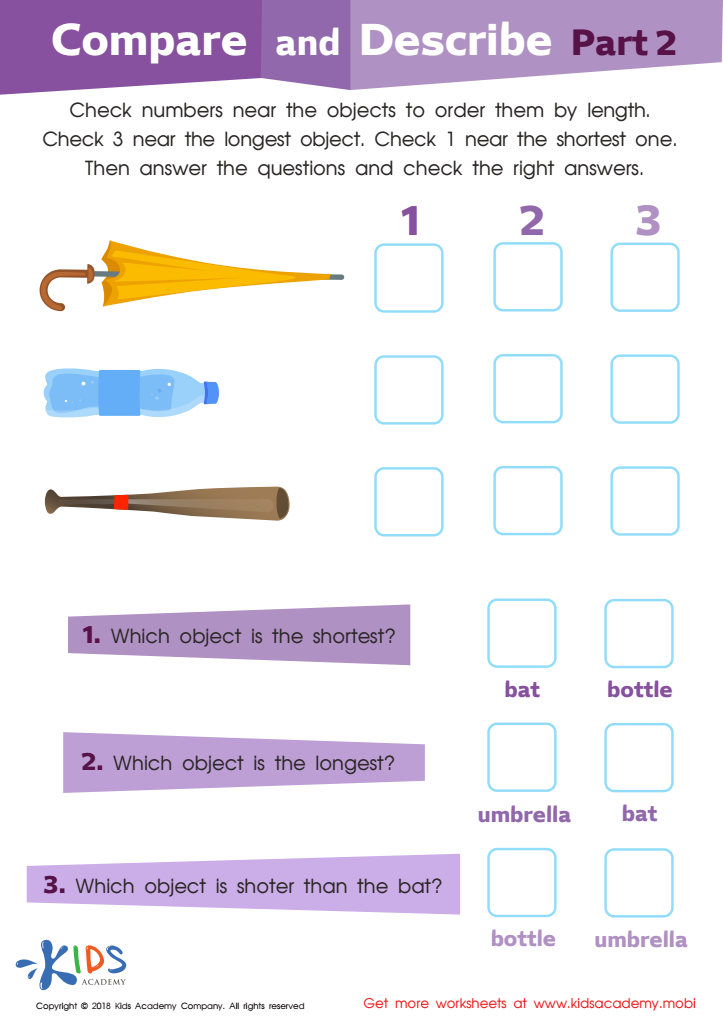
Compare and Describe: Part 2 Worksheet

Compare and Describe: Part 2 Worksheet

Help kids hone their comparison skills with this fun measurement worksheet! Kids will sort objects by length and check off the boxes as they go. At the bottom, they'll read the questions and take a final look at the images to complete the exercise. An exciting way to learn measurement!
Compare and Describe: Part 2 Worksheet
Worksheet
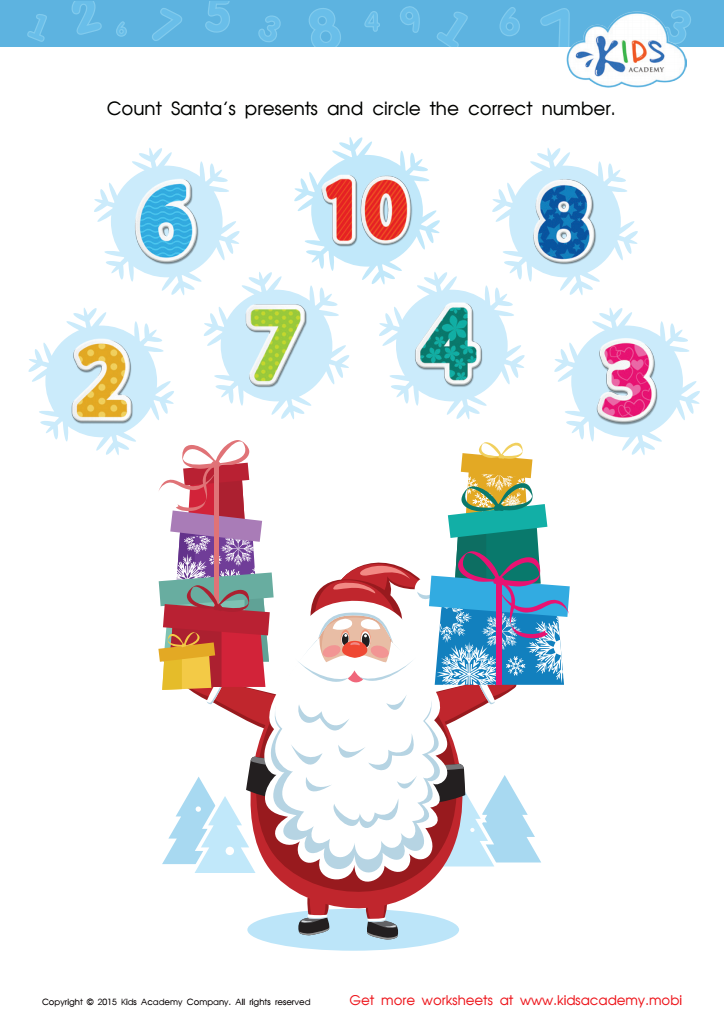
Math PDF Worksheet: Count Santa’s Presents

Count Santa's Presents Worksheet

With Kids Academy's free Christmas math worksheet, your kindergartener can help Santa count presents. The worksheet encourages recognizing and counting numbers, fostering the Christmas spirit. Print it out, have fun, and get ready to circle the right number! Get more math printables to learn numbers in a fun way.
Count Santa's Presents Worksheet
Worksheet
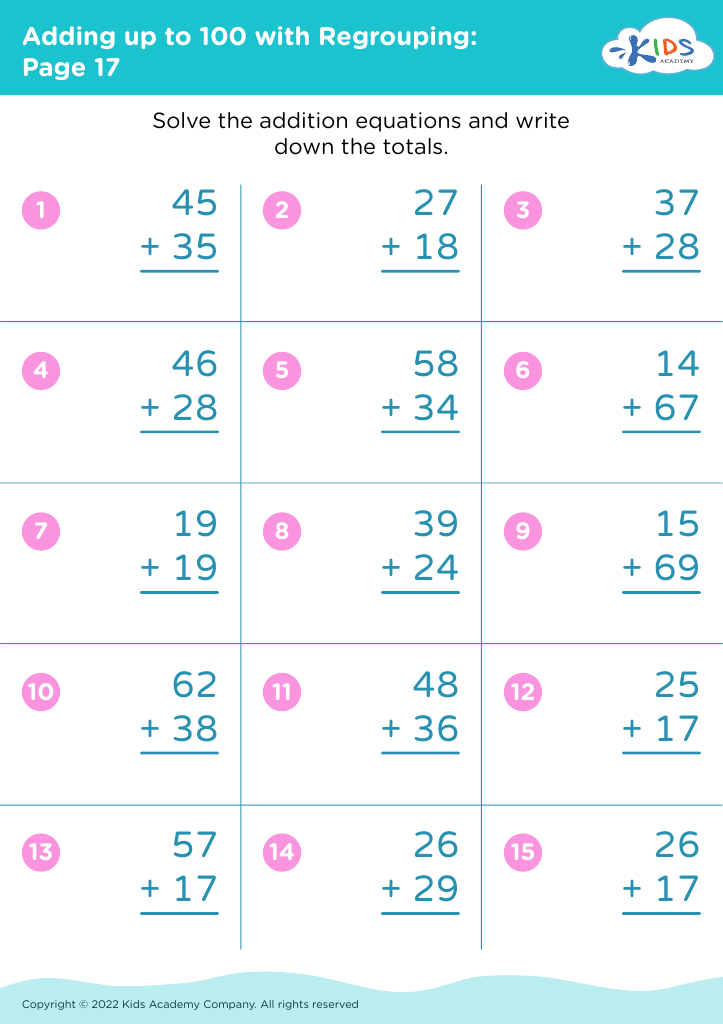
Adding up to 100 with Regrouping: Page 17
Worksheet
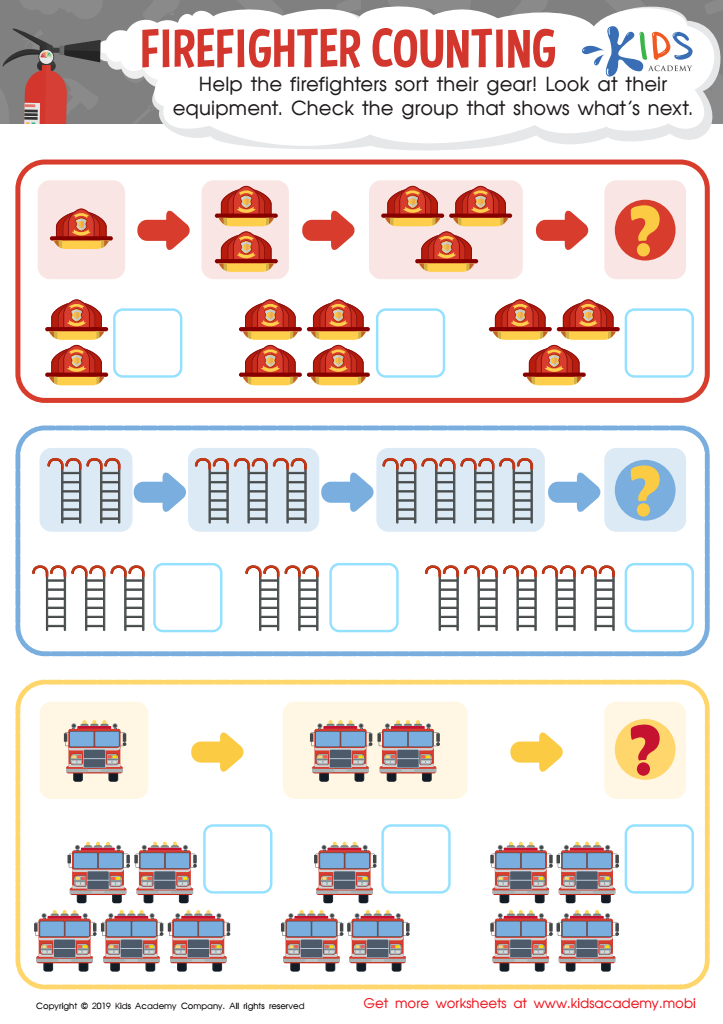
Firefighter Counting Worksheet


Firefighter Counting Worksheet
Firefighters are a vital part of any community. When a fire breaks out, they respond promptly to protect citizens and extinguish the blaze. Wearing specialized gear, they not only make the job easier, but safer too. Get your kids involved and help the firefighters sort their gear. Count the equipment, and check the group for the next steps.
Firefighter Counting Worksheet

Worksheet


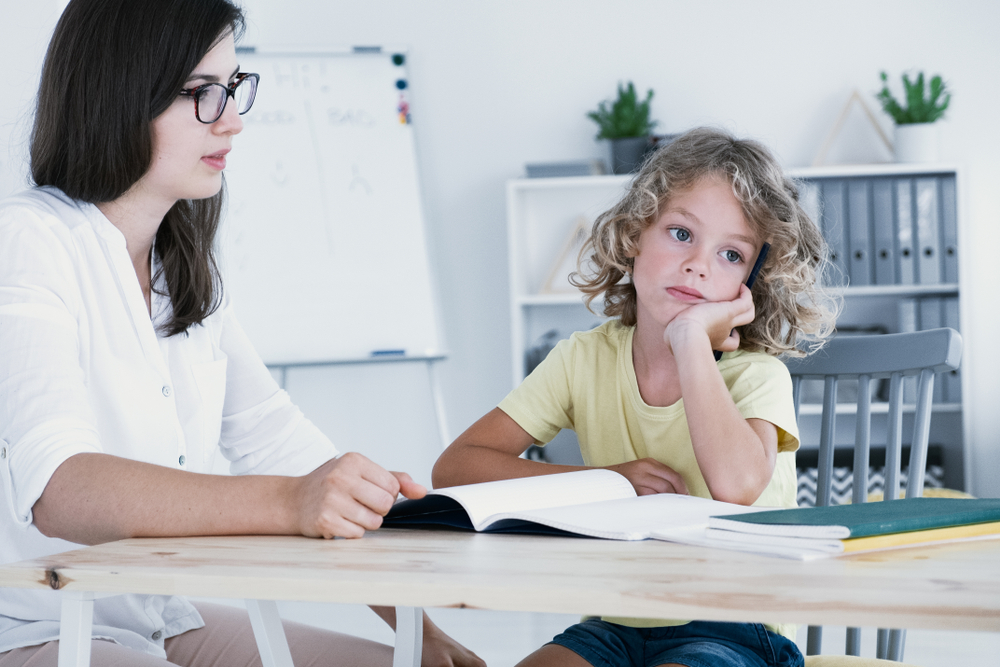
Observational skills in math for children aged 6-8 are crucial for several reasons. At this age, children are beginning to explore mathematical concepts beyond basic counting, and observational skills help them make sense of their surroundings and the relationships they observe. By honing these skills, children can better recognize patterns, shapes, and sizes, which form the foundation for more complex problems later on.

Parents and teachers should care about these skills because they play a significant role in developing critical thinking. When children learn to observe, they can engage in exploratory learning, encouraging them to ask questions and investigate problems independently. This leads to a deeper understanding of math concepts through real-life applications rather than rote memorization.

In addition, fostering observational skills promotes a positive attitude towards math. Children who feel confident in their ability to identify and analyze their surroundings are more likely to participate actively in math-related activities. Overall, prioritizing observational skills in math not only solidifies a child's mathematical foundation but also nurtures a lifelong appreciation for learning, curiosity, and problem-solving abilities essential for future academic and life challenges.