
Sorting skills Math Worksheets for Ages 6-8
16 filtered results
Difficulty Level
Grade
Age
-
From - To
Subject
Activity
Standards
Enhance your child's sorting skills with our engaging math worksheets designed for ages 6-8! These printable resources focus on developing early mathematical understanding through fun sorting activities. Kids will practice organizing objects, numbers, and shapes based on various attributes such as size, similar features, and more. Our worksheets encourage critical thinking, strengthen problem-solving abilities, and promote active learning. Perfect for classroom use or at-home practice, these sorting skills worksheets make math enjoyable and accessible. Give your child the tools they need to excel in math while fostering creativity and analytical skills. Get started today and watch their confidence soar!
Favorites
With answer key
Interactive
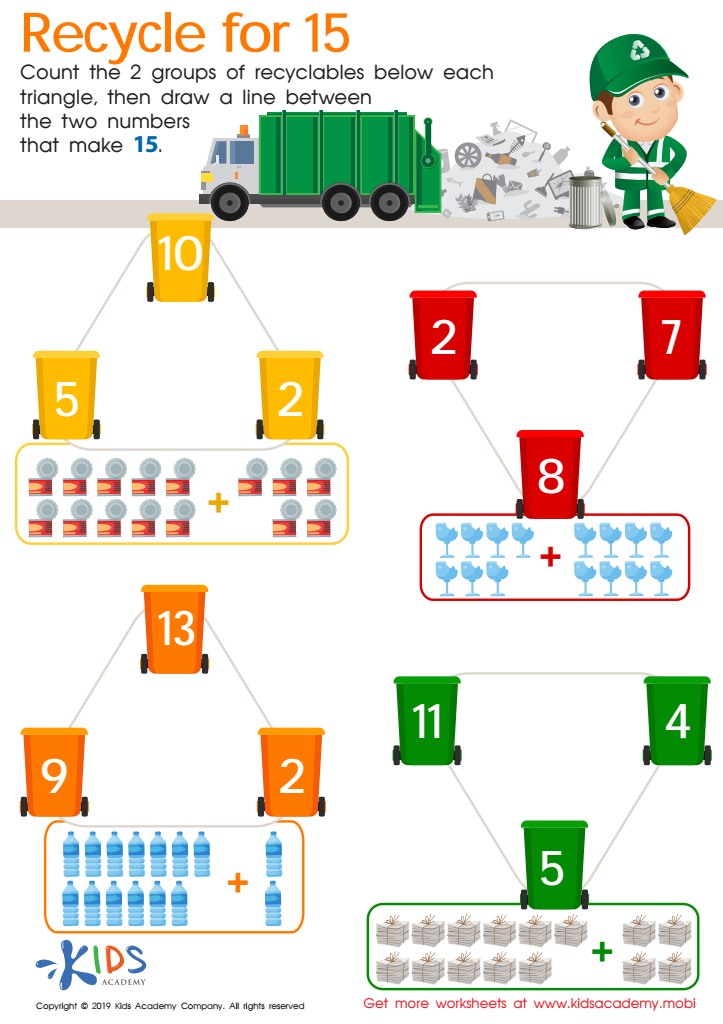
Recycle for 15 Worksheet
Recycle to help the planet! Have students count the recyclables and draw a line between the two numbers that make 15. This will help them understand the importance of recycling.
 Assign to My Students
Recycle for 15 Worksheet
Worksheet
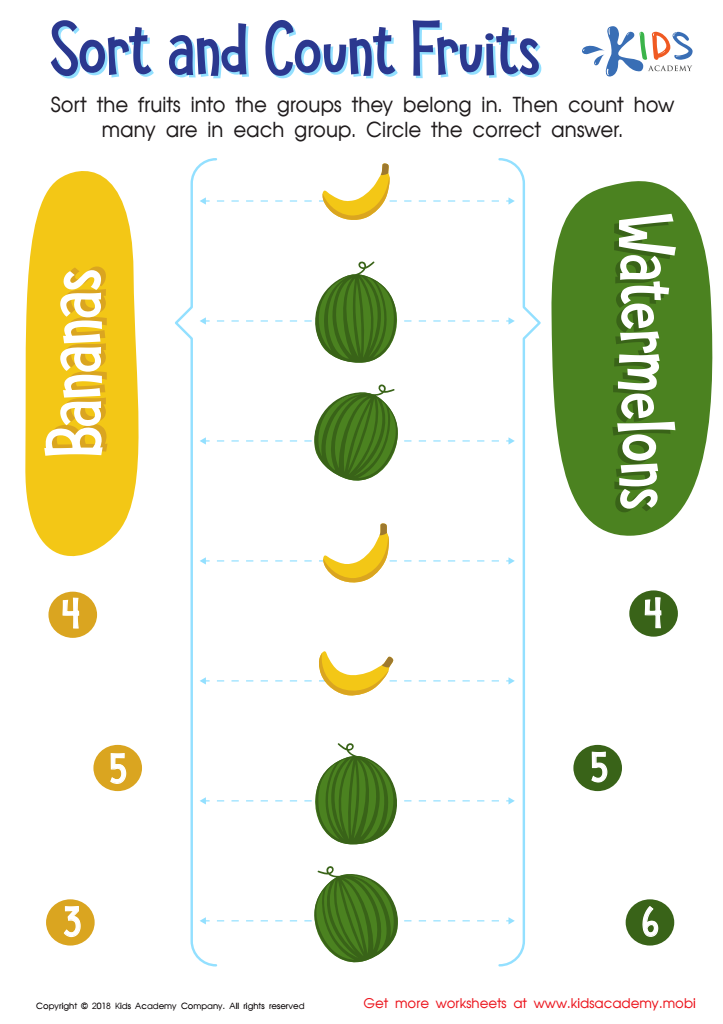
Sort and Count Fruits Worksheet
Allow your children to hone their critical thinking and number reasoning skills with this free worksheet. They'll sort, count, and trace fruits while learning basic number sense. A fun, delicious learning experience with familiar pictures they'll love.
Sort and Count Fruits Worksheet
Worksheet
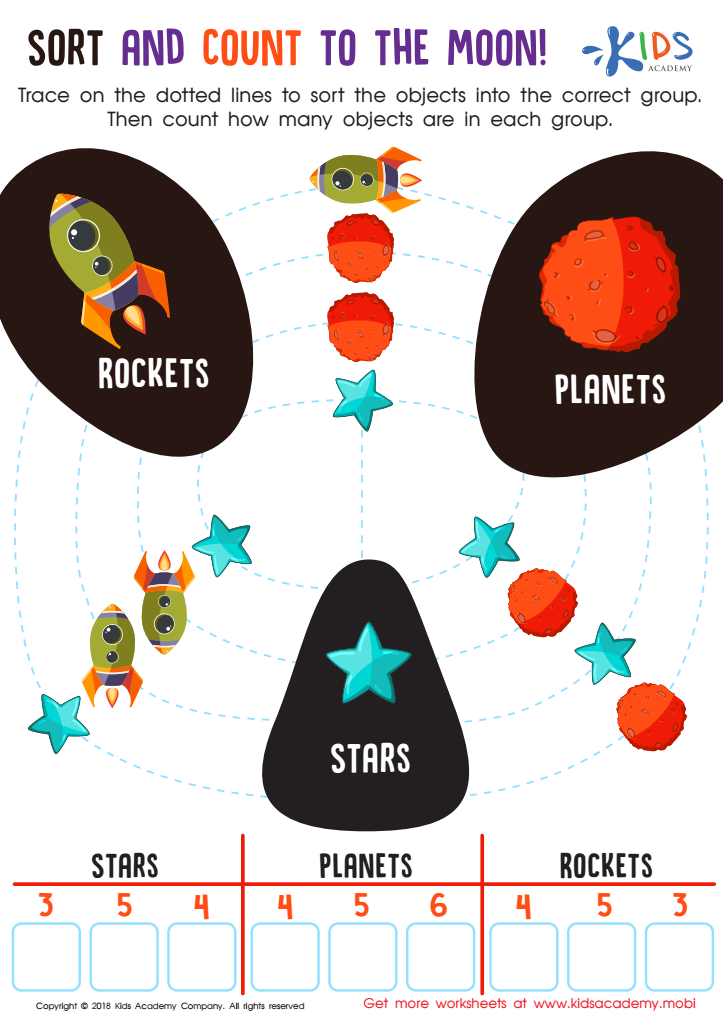
Sort and Count to the Moon Worksheet
Little space explorers will love counting, sorting and strengthening number sense with this galactic worksheet! They'll use traceable lines to sort pictures of stars, planets and rockets into categories according to properties. After sorting, they'll count each item and fill in the boxes. Bold pictures make it fun and build critical thinking skills.
Sort and Count to the Moon Worksheet
Worksheet
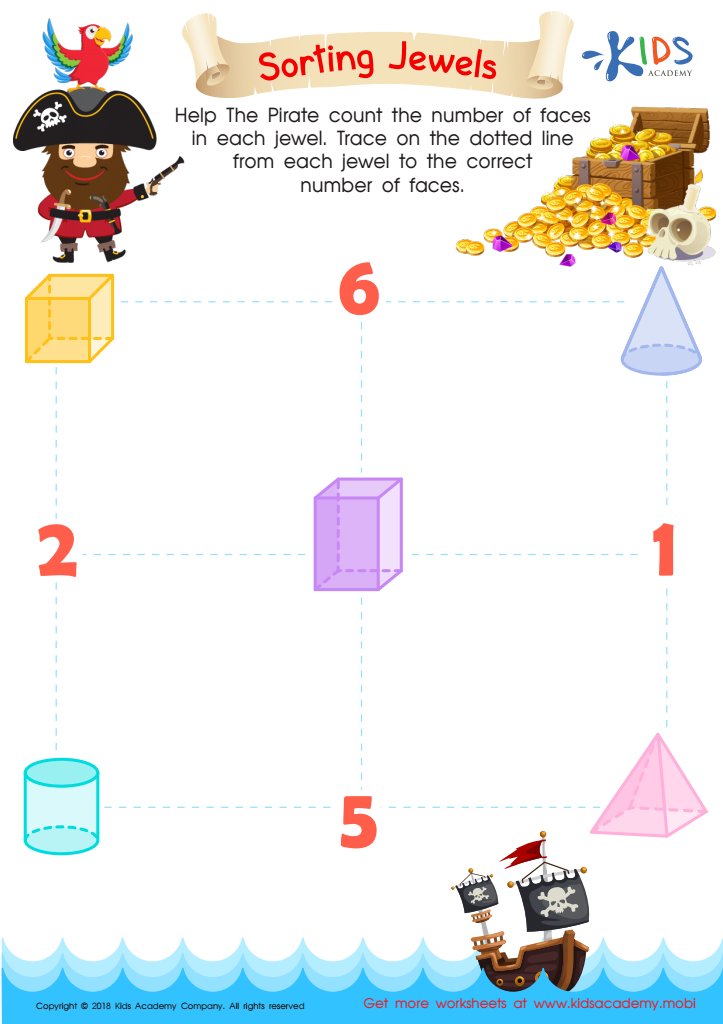
Sorting Jewels Worksheet
Help your kids explore their pirate fantasies with this tracing sheet. Ask them to count the number of faces in each jewel and then trace the dotted line to the correct number. How many faces does a rectangle have? What about a triangle and a cone? This fun worksheet is a great way to teach your kids the basics of identifying the number of faces on shapes.
Sorting Jewels Worksheet
Worksheet
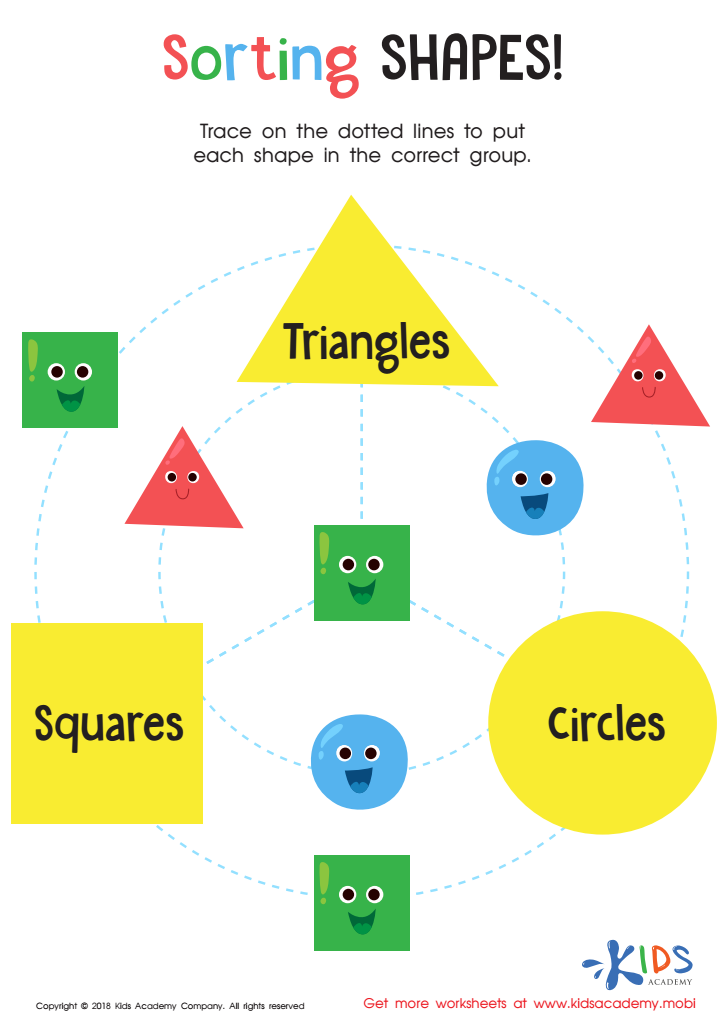
Sorting Shapes - Part 3 Worksheet
Download this fun PDF to help your kiddos recognize basic shapes like circles, squares, and triangles. It'll sharpen their fine motor skills as they trace and sort shapes by color, size, and sides. Your kids won't even realize they're learning with these cheery shapes!
Sorting Shapes - Part 3 Worksheet
Worksheet
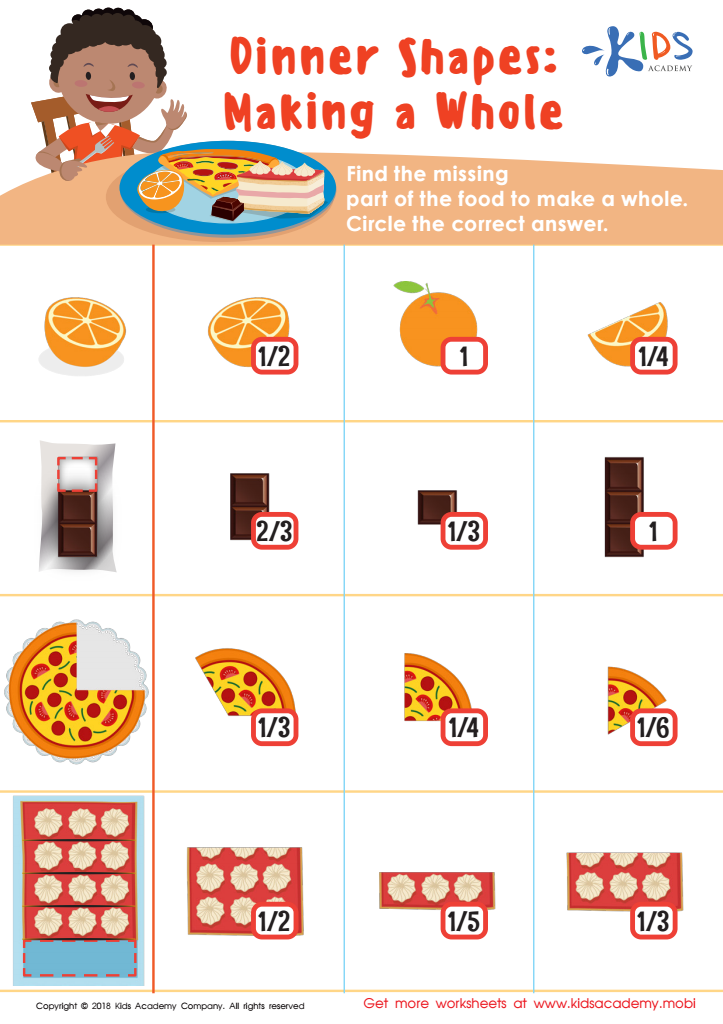
Dinner Shapes: Making a Whole Worksheet
Using food and snacks to stimulate learning and interest in topics is a great strategy. Fractions can prove tricky, but this worksheet can help your child become an expert. Have them look for the missing parts of the food to make a whole, then circle the answer.
Dinner Shapes: Making a Whole Worksheet
Worksheet
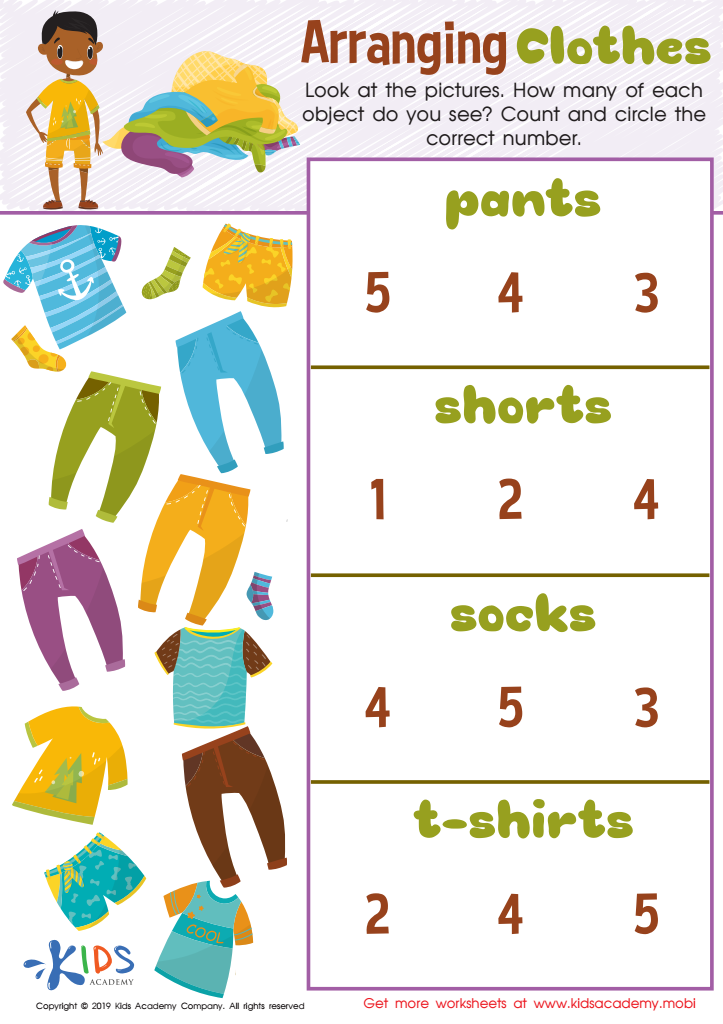
Arranging Clothes Worksheet
This worksheet uses familiar items, brightly colored to attract your kids. Ask them to name each item, then count them and circle the right number.
Arranging Clothes Worksheet
Worksheet
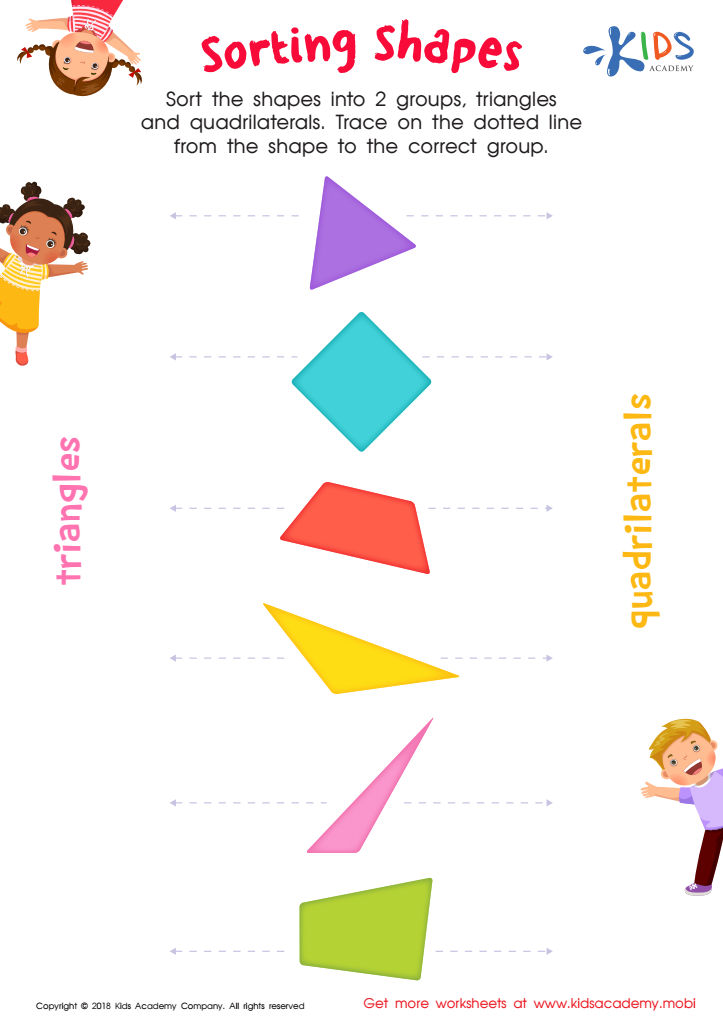
Sorting Shapes Worksheet
Before beginning, ensure your child is familiar with quadrilaterals (4 sides) and triangles (3 sides). This tracing exercise is easy: sort the shapes into the two groups and trace the dotted lines to the correct group.
Sorting Shapes Worksheet
Worksheet
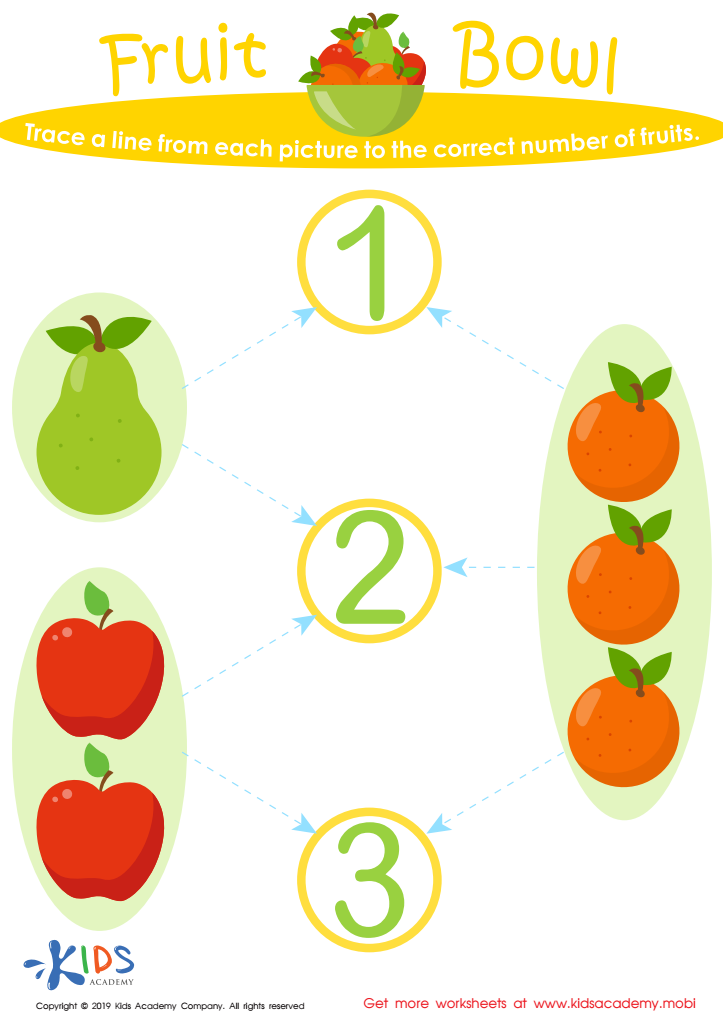
Fruit Bowl Worksheet
Kids love counting fruit! This fun math worksheet lets them count the number of fruit in each group and use the traceable lines to connect the correct number. It's a great way to learn one-to-one number representation, plus it's yummy and delicious!
Fruit Bowl Worksheet
Worksheet
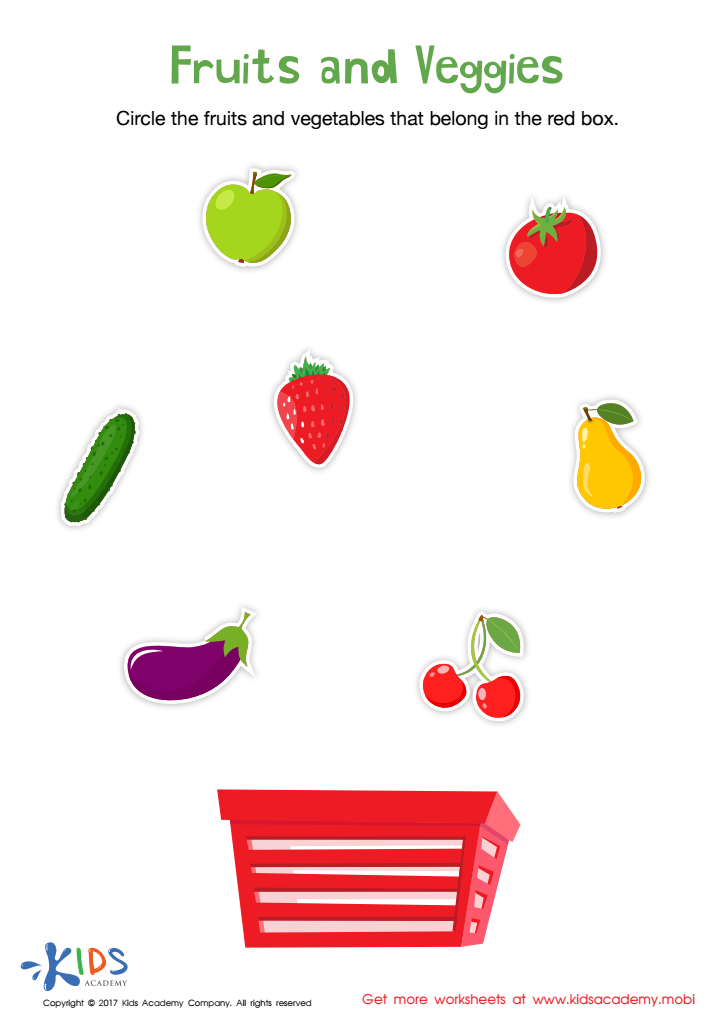
Classifying Fruits and Veggies by Color Sorting Worksheet
Worksheet
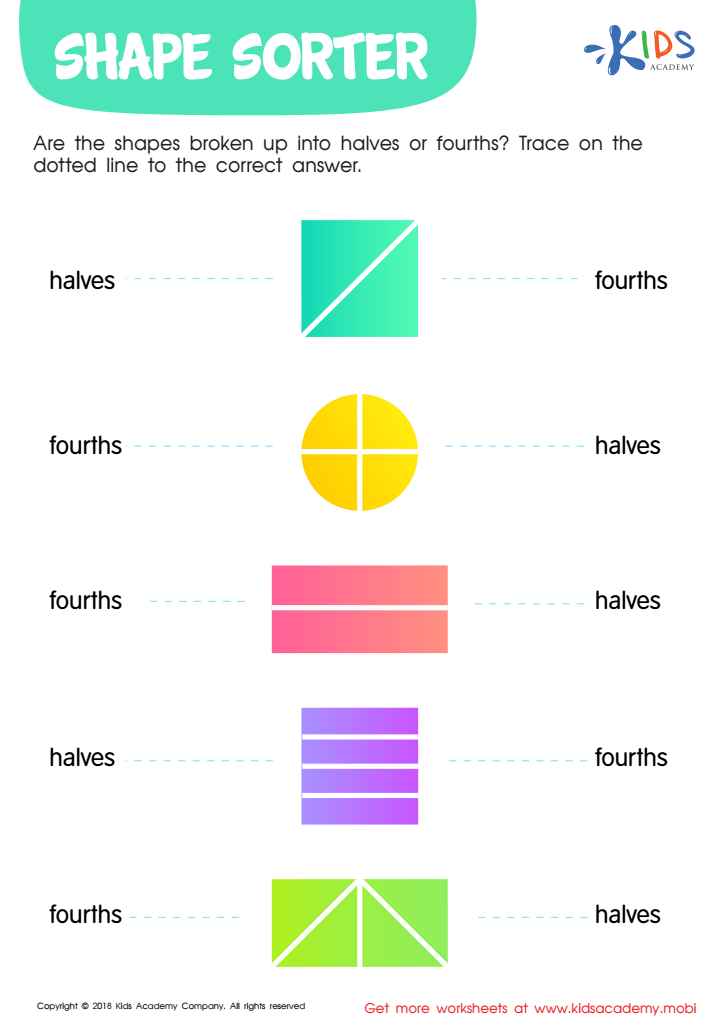
Shape Sorter Worksheet
Ask your child if they know halves and fourths. If not, explain that halves are when a shape is divided into two equal parts and fourths is when a shape is divided into four equal parts. Look through this worksheet with your child and let them trace the dotted lines to the correct answer to show whether the shapes are cut into halves or fourths.
Shape Sorter Worksheet
Worksheet
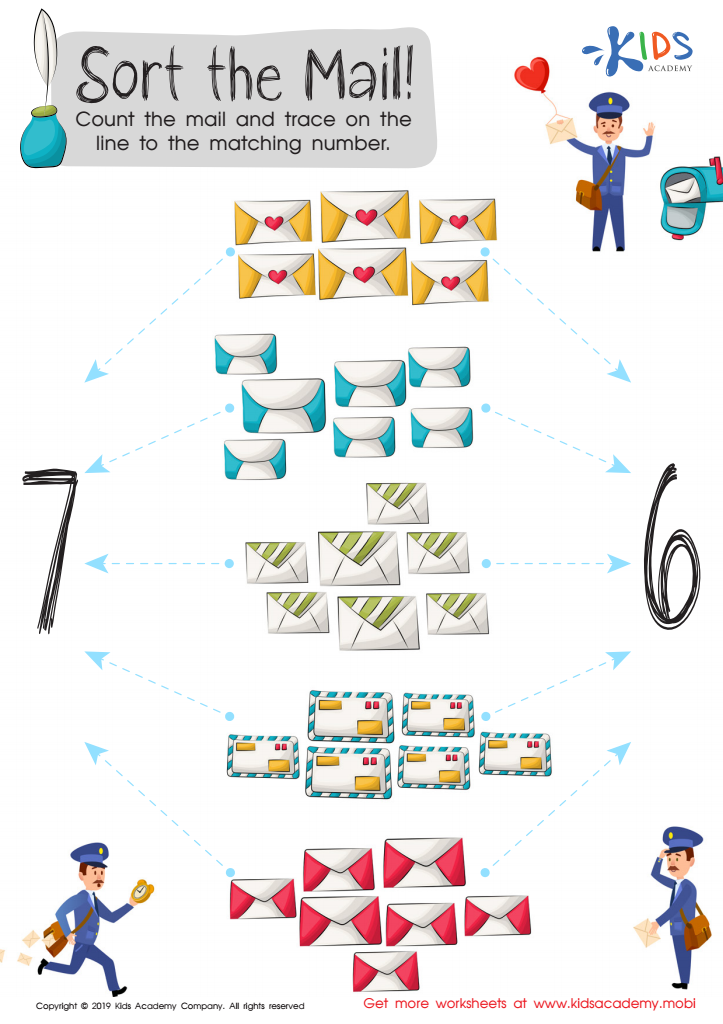
Sort the Mail Worksheet
Kids can learn number sense with one-to-one representation! This worksheet helps them connect groups of letters with the correct numbers by tracing the lines. They'll count and decide whether each group has 6 or 7 envelopes. This exercise gives children a better understanding of numerical representation.
Sort the Mail Worksheet
Worksheet
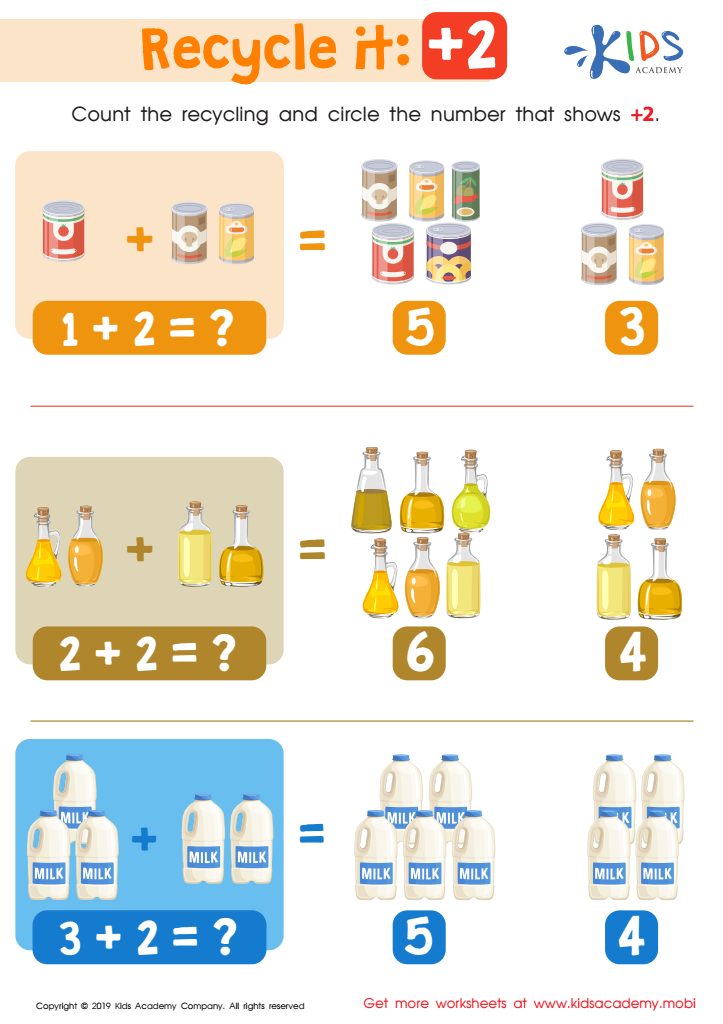
Recycle It: +2 Worksheet
Your kindergartners likely count everything they see, which is great for practice. Give them simple exercises such as in this worksheet to stimulate their minds. Ask them to count the recycling cans and then circle the number that shows +2.
Recycle It: +2 Worksheet
Worksheet
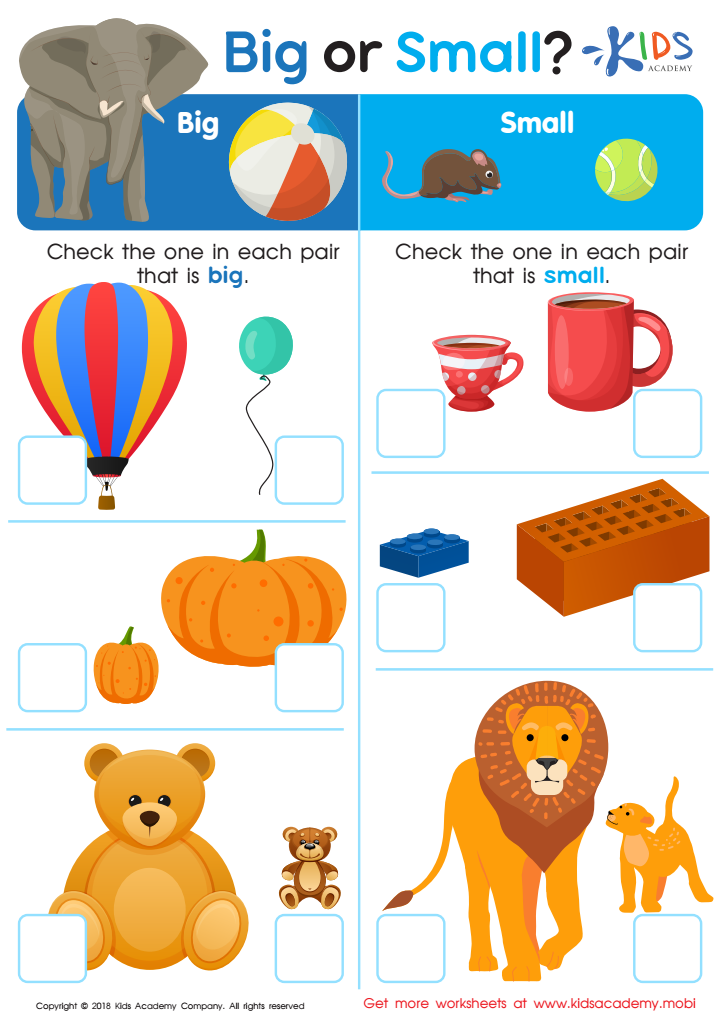
Big or Small? Worksheet
Kids need visuals to understand bigger and smaller concepts. This free PDF worksheet offers fun pictures that let them compare and gain a stronger understanding of sizes. Kids will enjoy it and won't realize they're learning since the pictures are so engaging. It's great preparation for future measurements.
Big or Small? Worksheet
Worksheet
Join Kids Academy for Free
Who is primarily going to use this learning content?






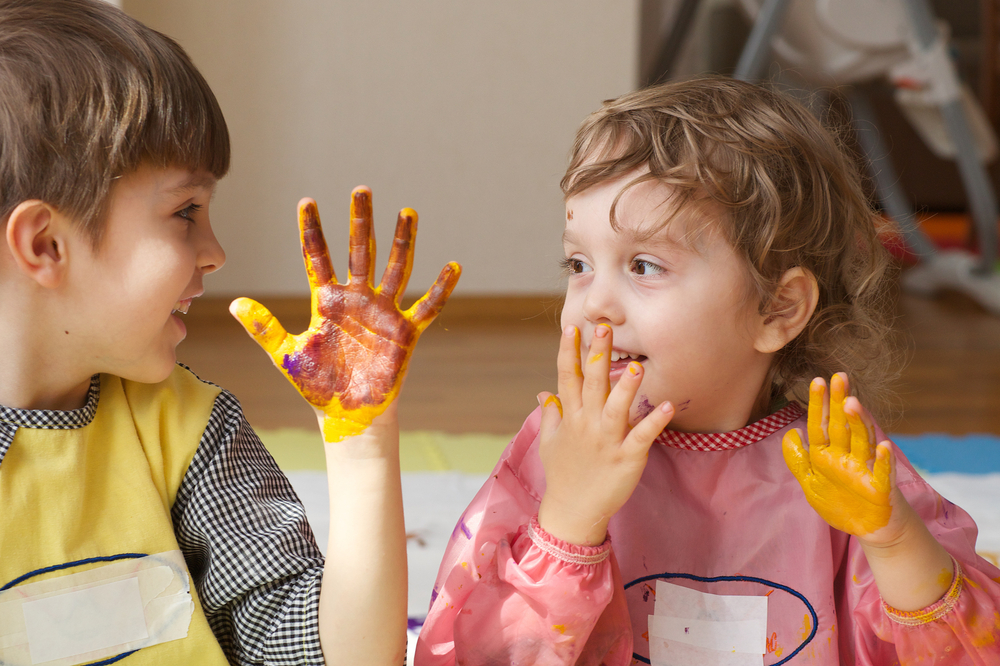
Sorting skills are vital foundations in early childhood mathematics, particularly for children aged 6-8. Understanding how to categorize and organize objects based on attributes such as size, shape, color, or function develops critical thinking and analytical skills. When parents and teachers prioritize these sorting activities, they foster basic mathematical concepts that pave the way for more complex ideas like patterns, classification, and categorization.
Sorting helps children learn to recognize similarities and differences, enhancing their observational skills and attention to detail. These skills, crucial in math, carry over to other subjects, promoting a well-rounded educational experience. Additionally, sorting encourages vocabulary development as children learn new descriptors and terminology related to their classifications.
Moreover, sorting activities can spark collaboration among peers during group activities, fostering social skills and communication. It allows children to express their reasoning and engage in problem-solving dialogue with others.
Furthermore, sorting can promote cognitive development, stimulating areas of the brain that contribute to logical reasoning and decision-making. By supporting sorting skills, parents and teachers are not just teaching about math; they are equipping children with life skills that will influence their lifelong learning and confidence in problem-solving.








