Understanding tens Math Worksheets for Ages 6-8
4 filtered results
-
From - To
Our "Understanding Tens Math Worksheets for Ages 6-8" provide young learners with a solid foundation in place value and counting by tens, essential for mastering early math skills. These worksheets feature engaging activities, colorful illustrations, and easy-to-follow instructions to make learning fun and effective. Designed to build confidence and proficiency, the exercises help kids recognize, write, and work with numbers up to 100. By using these well-crafted worksheets, children will improve their number sense and be better prepared for more advanced arithmetic. Ideal for both classroom and at-home learning, our worksheets are a great resource for first and second graders.
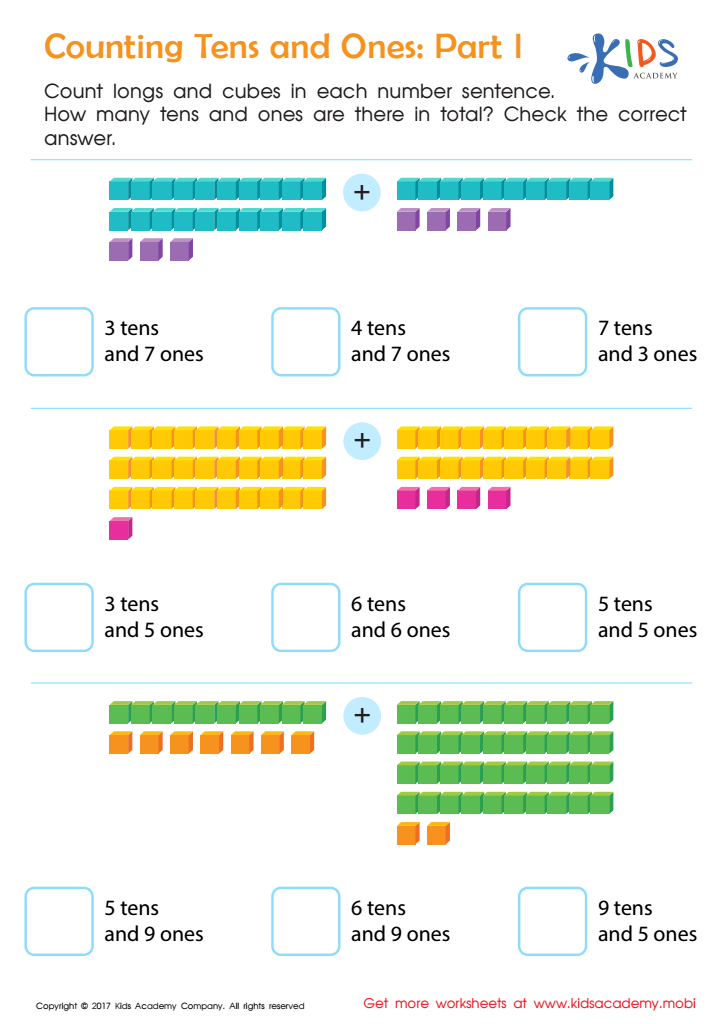
Counting Tens and Ones: Part 1 Worksheet
 Assign to My Students
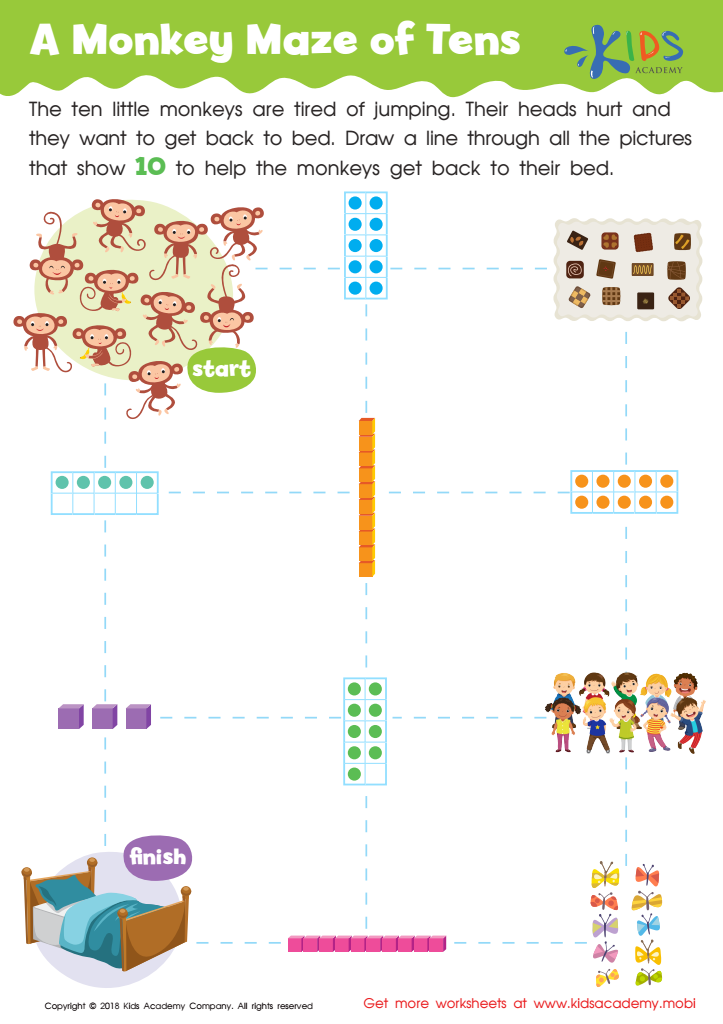
A Monkey Maze of Tens Worksheet
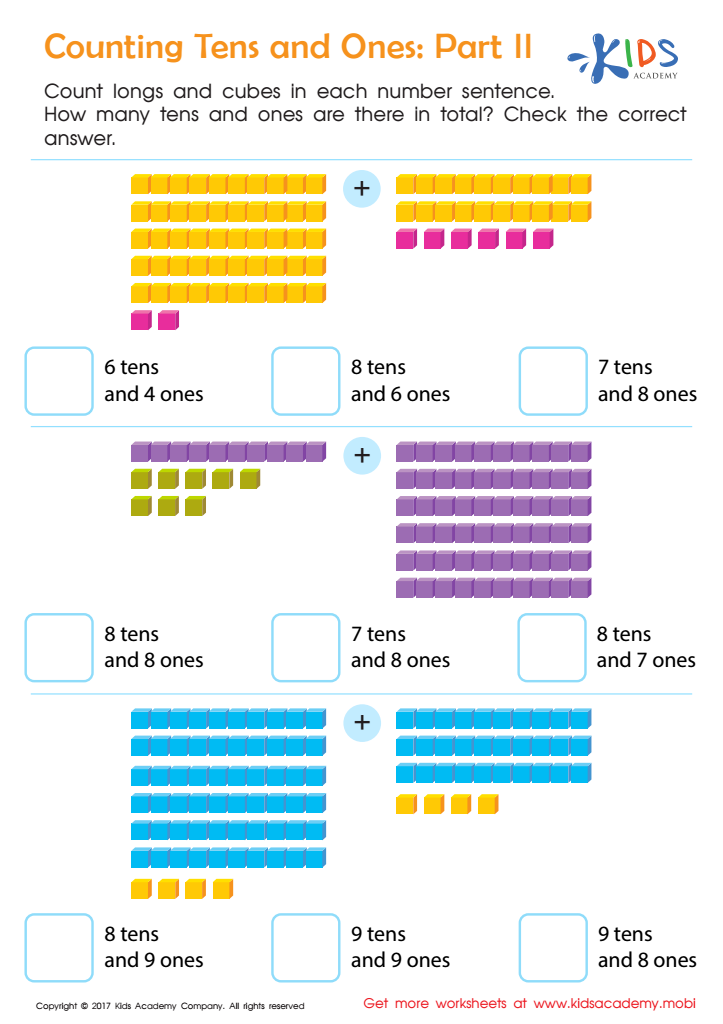
Counting Tens and Ones: Part 2 Worksheet
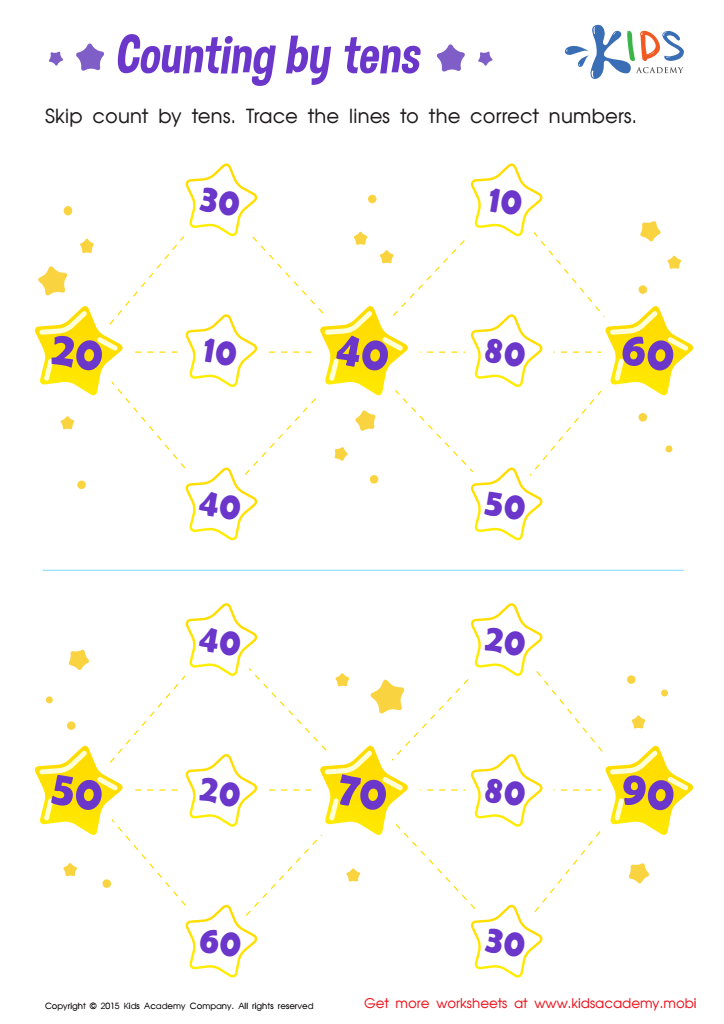
Learn Dozens: Counting by Tens Printable






Understanding the concept of tens is foundational for young learners, typically aged 6-8, as it sets the stage for all future math learning. At its core, the concept of tens is tied to place value, a crucial component of math that involves recognizing that the position of a digit in a number determines its value. This understanding helps children grasp the idea that numbers are composed of units (ones) and tens, which simplifies and streamlines more complex arithmetic tasks.
When children master the concept of tens, they develop stronger number sense, allowing them to see numbers in a more flexible and intuitive way. For example, recognizing that the number 42 is made up of 4 tens and 2 ones can help in operations like addition and subtraction by breaking these tasks down into more manageable chunks.
Furthermore, an early grasp of tens lays the groundwork for multiplication, division, and the eventual understanding of more advanced concepts like decimals and percentages. It promotes mental math skills and boosts overall confidence in mathematical ability. Hence, for both parents and teachers, investing time and effort into teaching and reinforcing the understanding of tens can greatly enhance a child's mathematical journey, making subsequent learning experiences less daunting and more rewarding.








