Basic Math Skills Measurement Worksheets for Ages 6-8
15 filtered results
-
From - To
Boost your child's confidence and skills in measurements with our engaging Basic Math Skills Measurement Worksheets, designed specifically for ages 6-8. These worksheets provide a fun and interactive way for young learners to explore essential concepts such as length, weight, volume, and time. Aligned with educational standards, our resources help students develop a solid foundation in math while enjoying colorful illustrations and practical exercises. Perfect for classroom use or at-home learning, these worksheets foster critical thinking and problem-solving skills. Download now to give your child an enjoyable and effective math learning experience! Perfect for early graders striving for success in math!
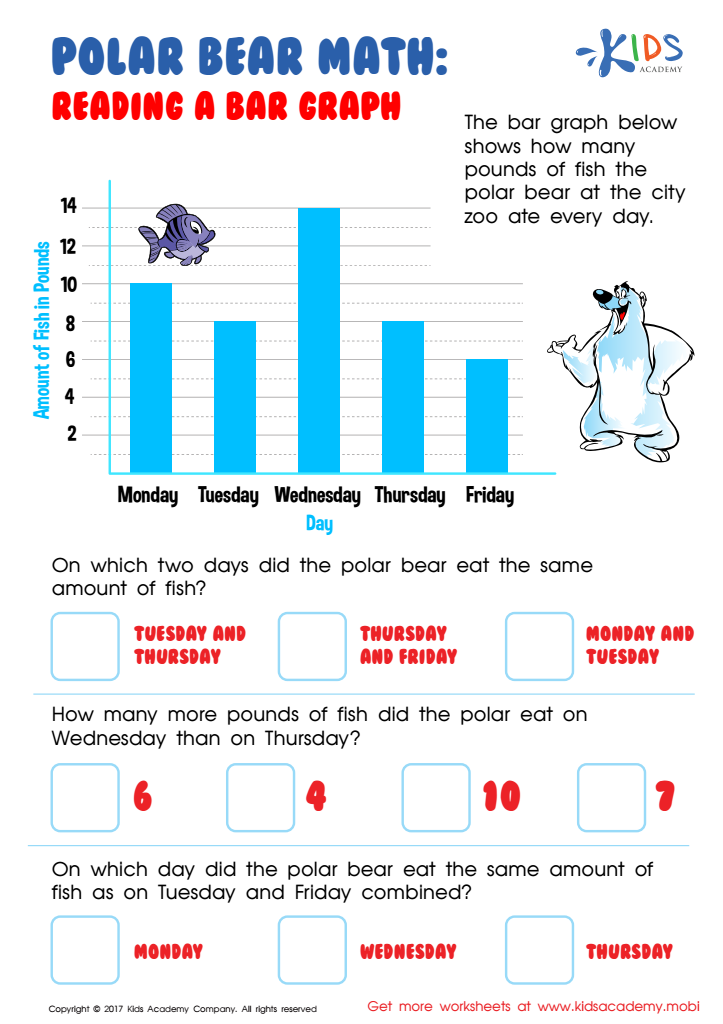
Reading Bar Graph Worksheet
 Assign to My Students
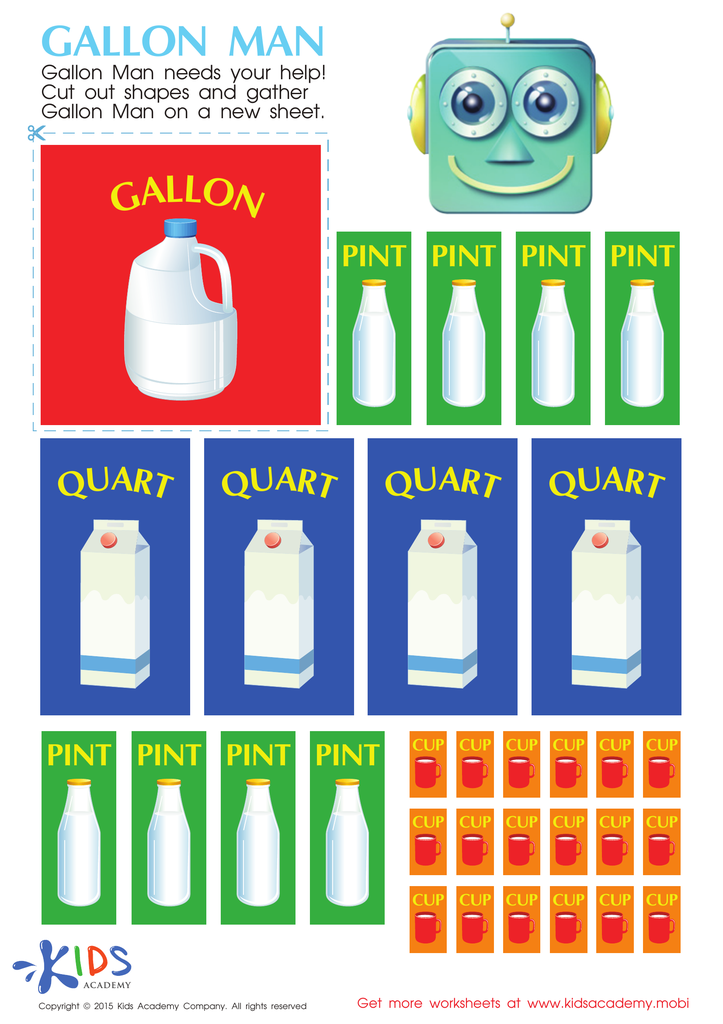
Cups, Pints and Quarts With Gallon Man Worksheet
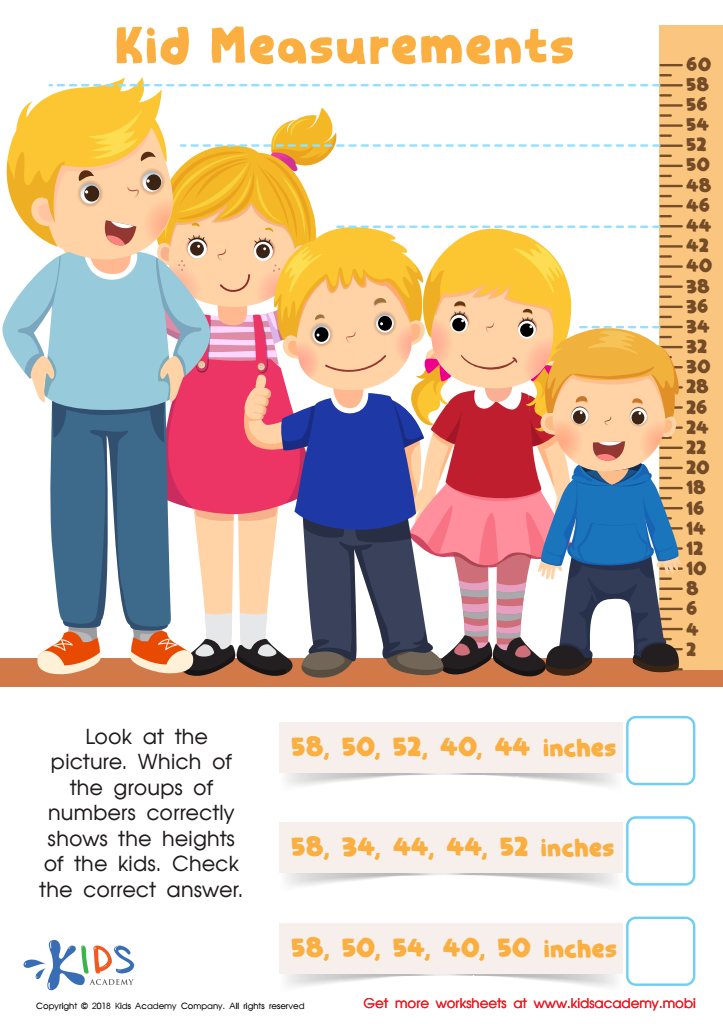
Kids Measurements Worksheet
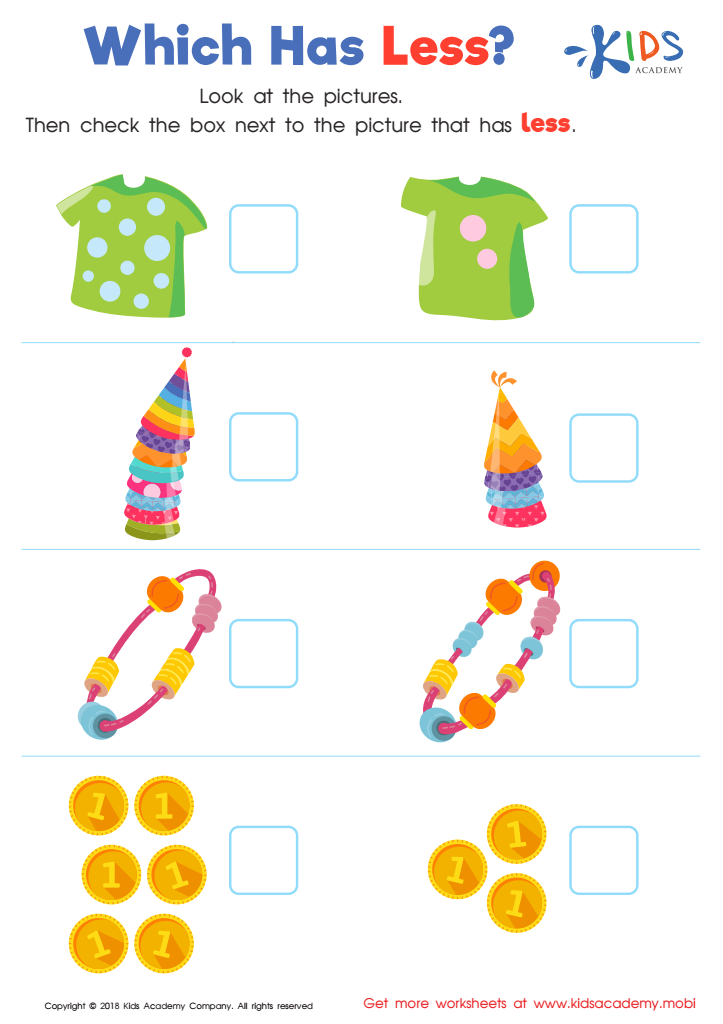
Which Has Less? Worksheet
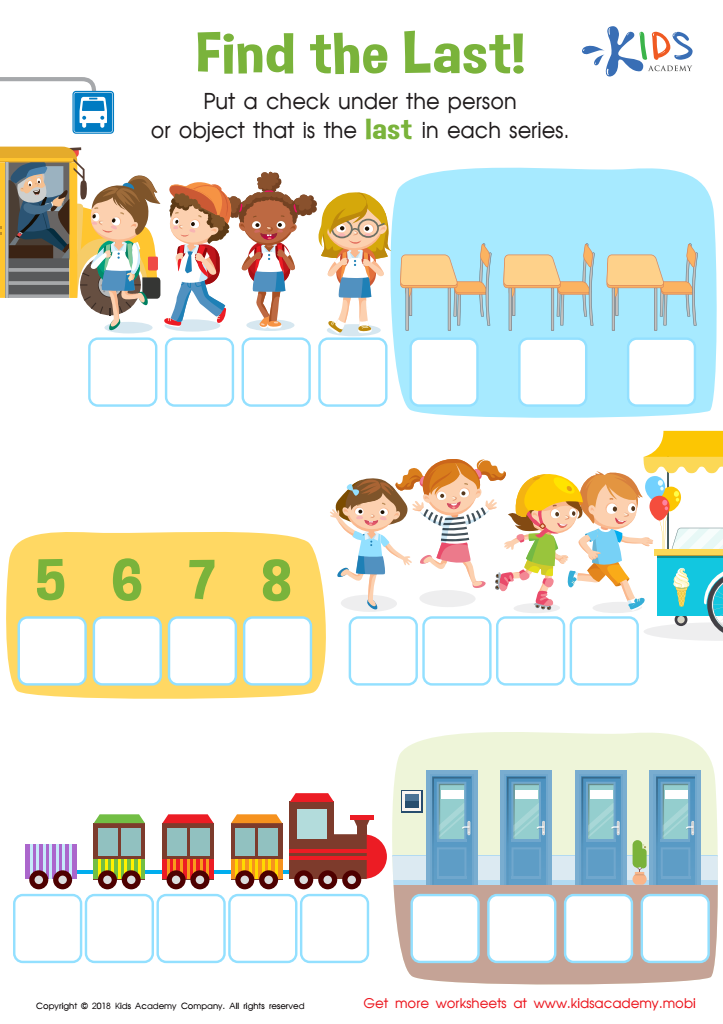
Find the Last! Worksheet
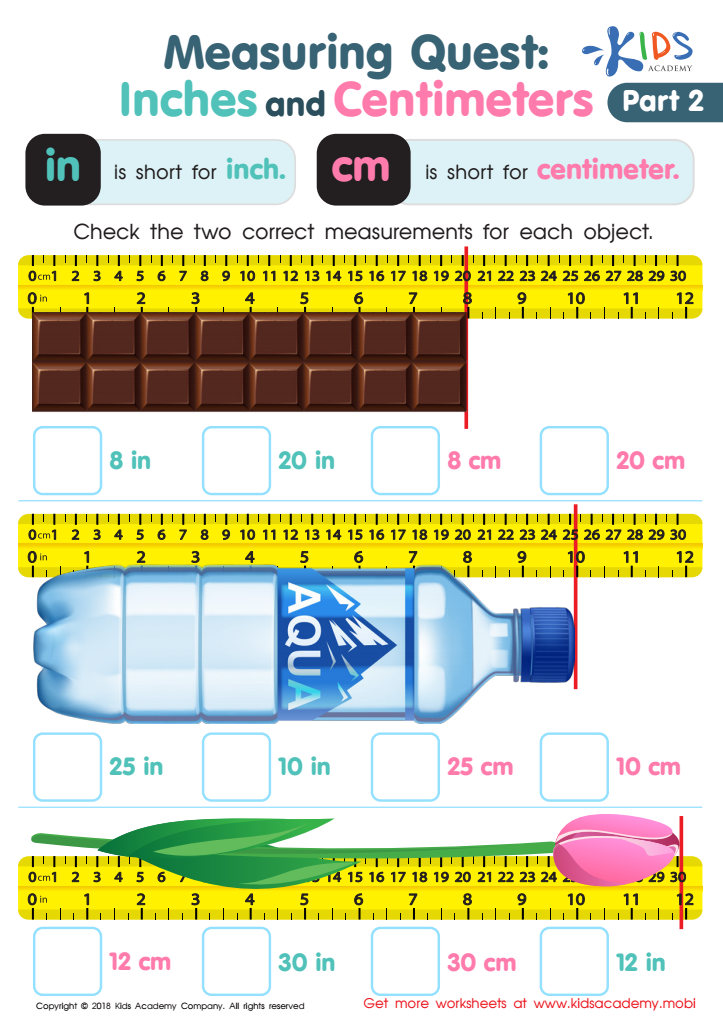
Measuring Quest: Inches and Centimeters - Part 2 Worksheet
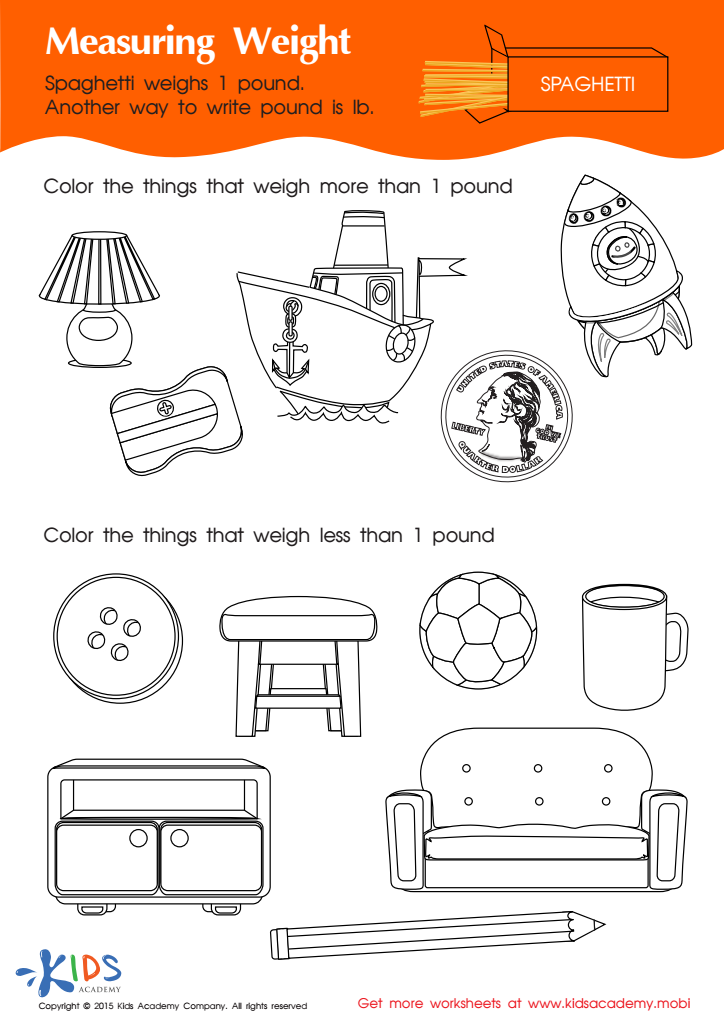
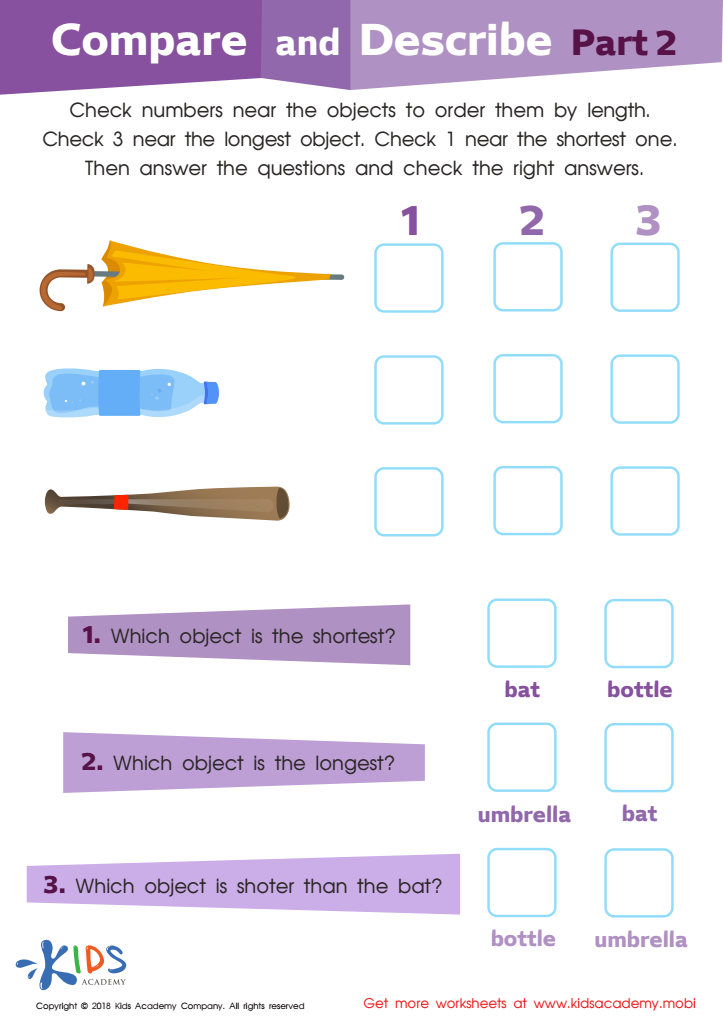
Compare and Describe: Part 2 Worksheet
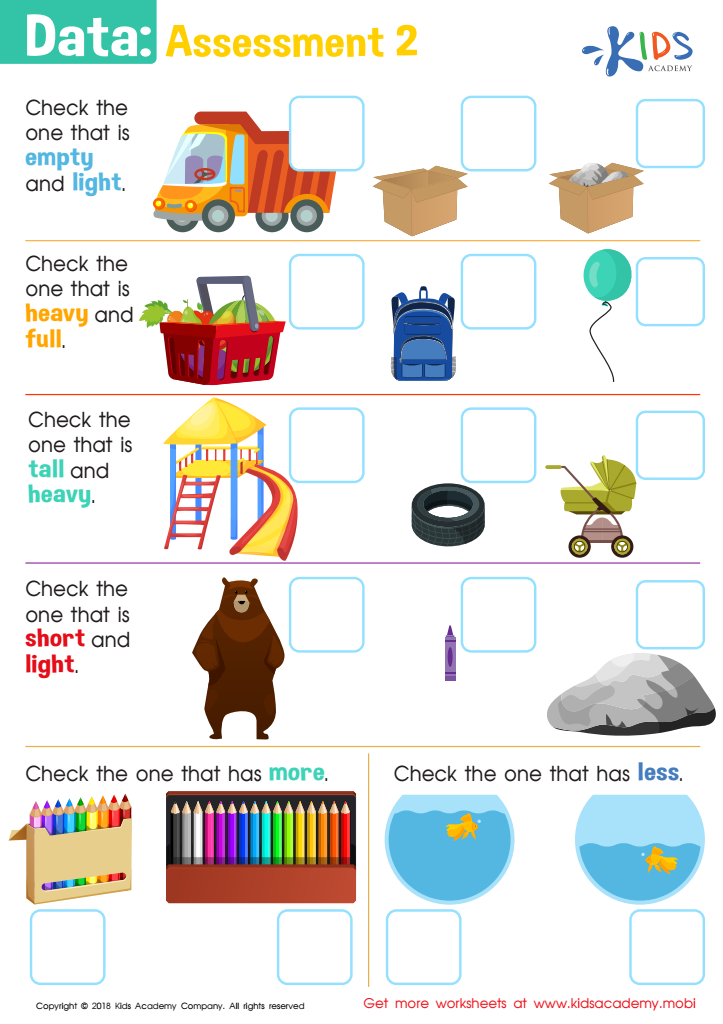
Data: Assessment 2 Worksheet
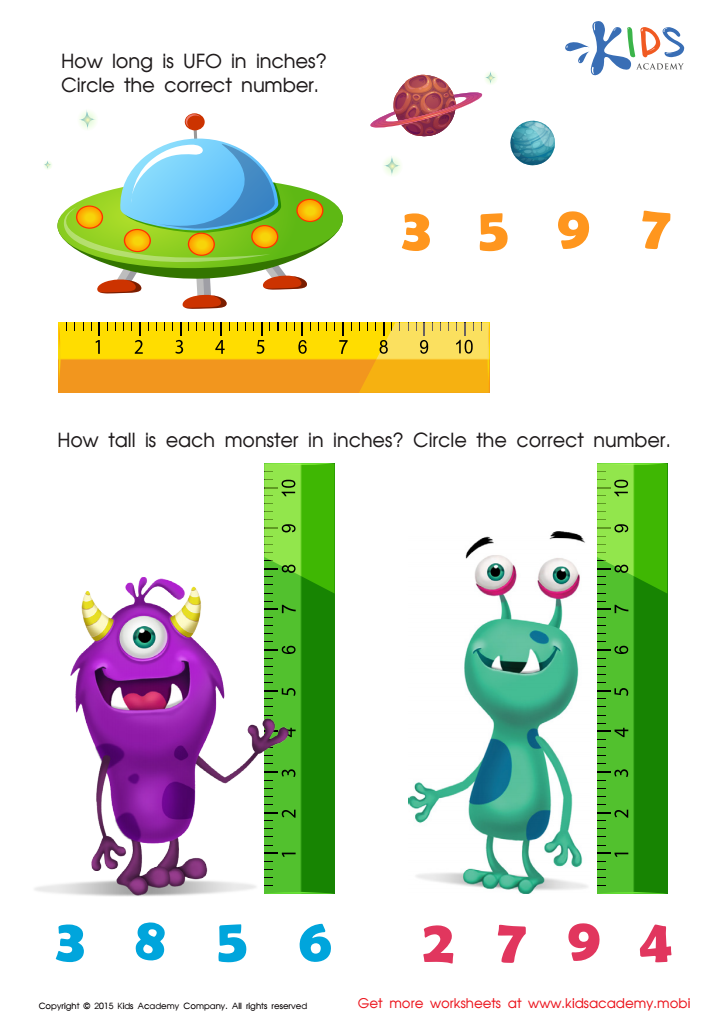
Measuring in Inches Worksheet
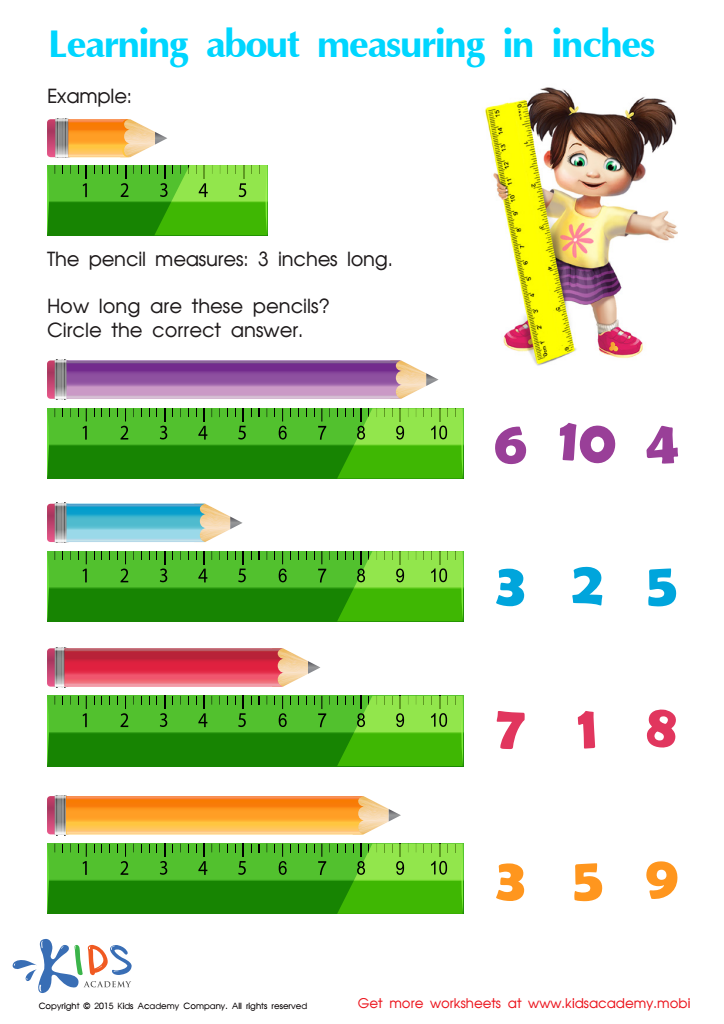
Learning About Measuring In Inches Printable
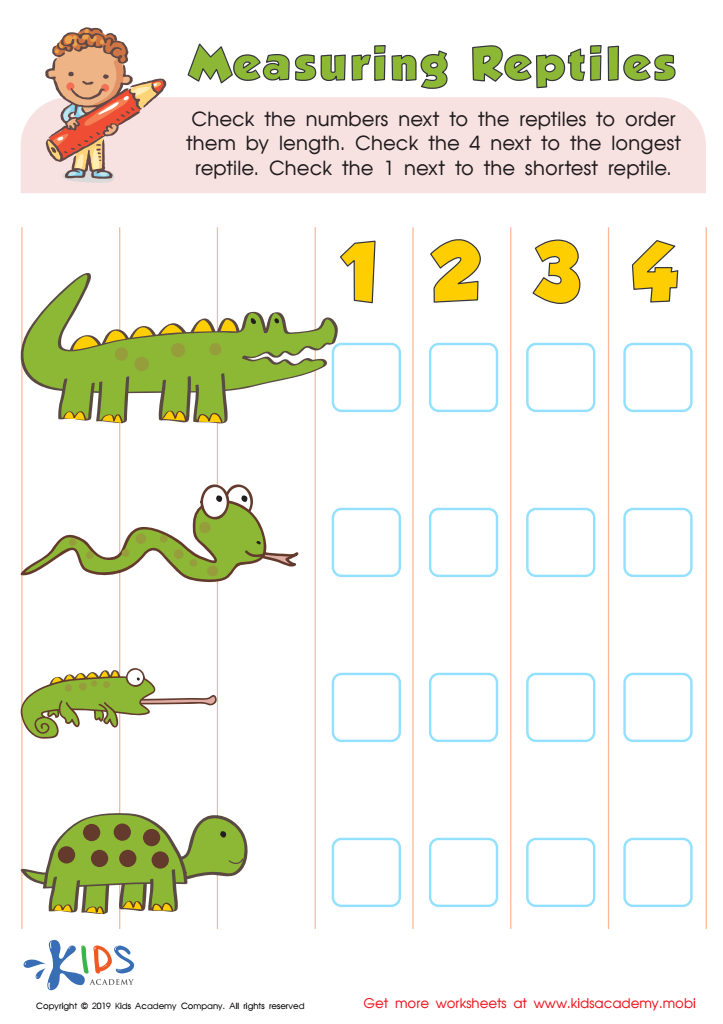
Measuring Reptiles Worksheet
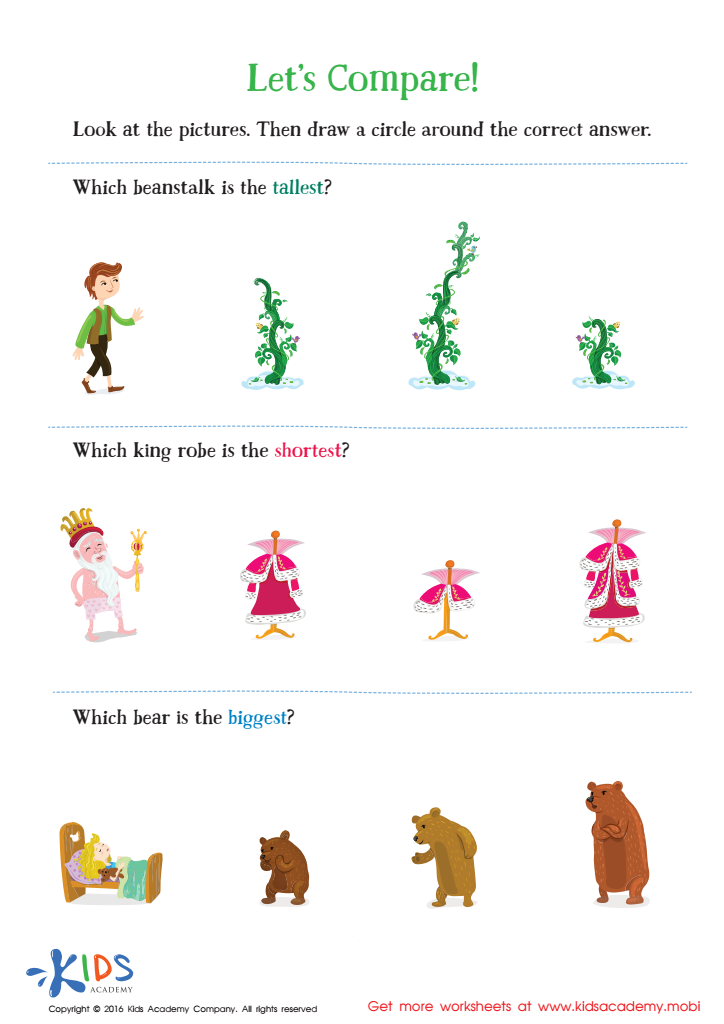
Fairy Tale Worksheet: Let's Compare
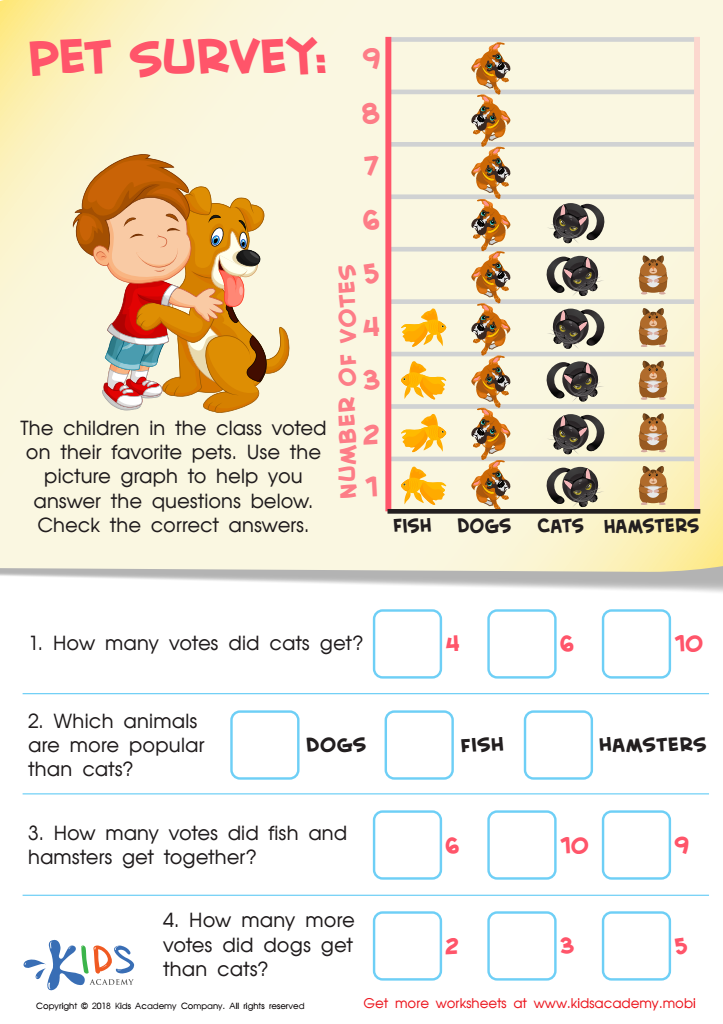
Pet Survey Worksheet
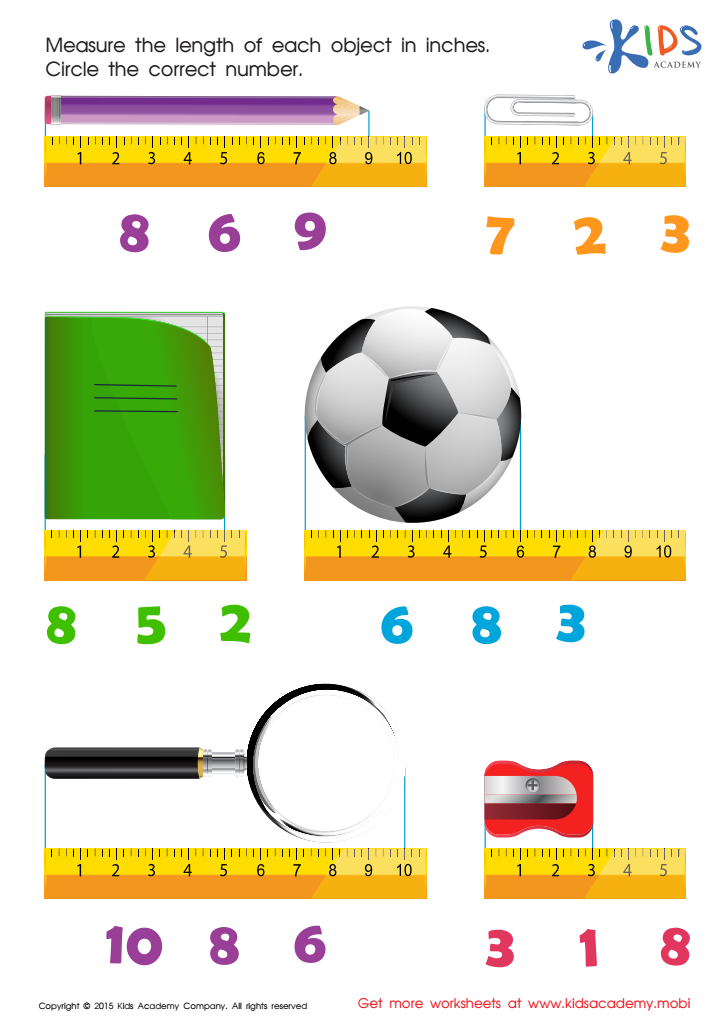
Learning measuring objects in inches Worksheet








Basic math skills in measurement are crucial for children ages 6-8, as they lay the foundation for more complex mathematical concepts and everyday applications. At this age, children are developing their critical thinking abilities, and understanding measurement helps foster these skills. Measurement teaches children how to compare sizes, lengths, weights, and volumes, which are essential for problem-solving and logical reasoning.
Additionally, learning measurement enhances children's spatial awareness and serves as an introduction to geometry. It encourages accuracy and precision, skills that are important not only in math but also in science and engineering as they progress in their education.
From a practical standpoint, mastering basic measurement allows children to engage in real-life activities, such as cooking, crafting, or even understanding time, which contributes to their independence and confidence. Parents and teachers should recognize that engaging in measurement activities can be enjoyable, integrating play with learning, ultimately fostering a positive attitude toward math.
Investing time and resources into developing these basic math skills not only equips children with academic tools but also prepares them for the everyday challenges they will face in life. Addressing measurement skills can significantly shape their future success in academic and non-academic settings.








