Multiplication Worksheets for Ages 6-8 - Page 5
104 filtered results
-
From - To
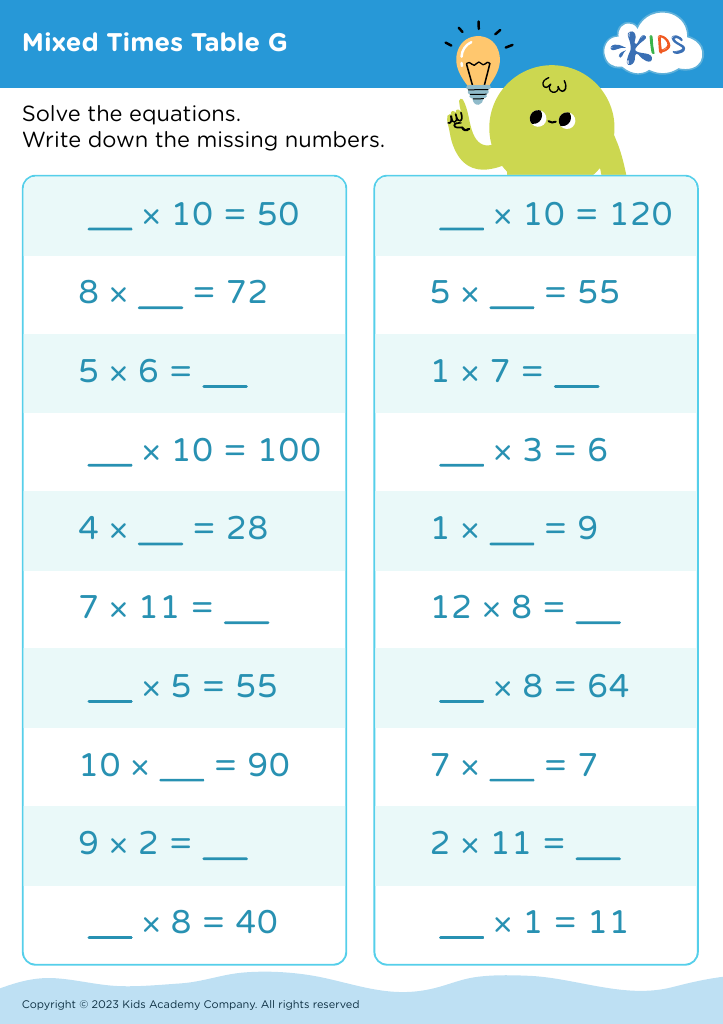
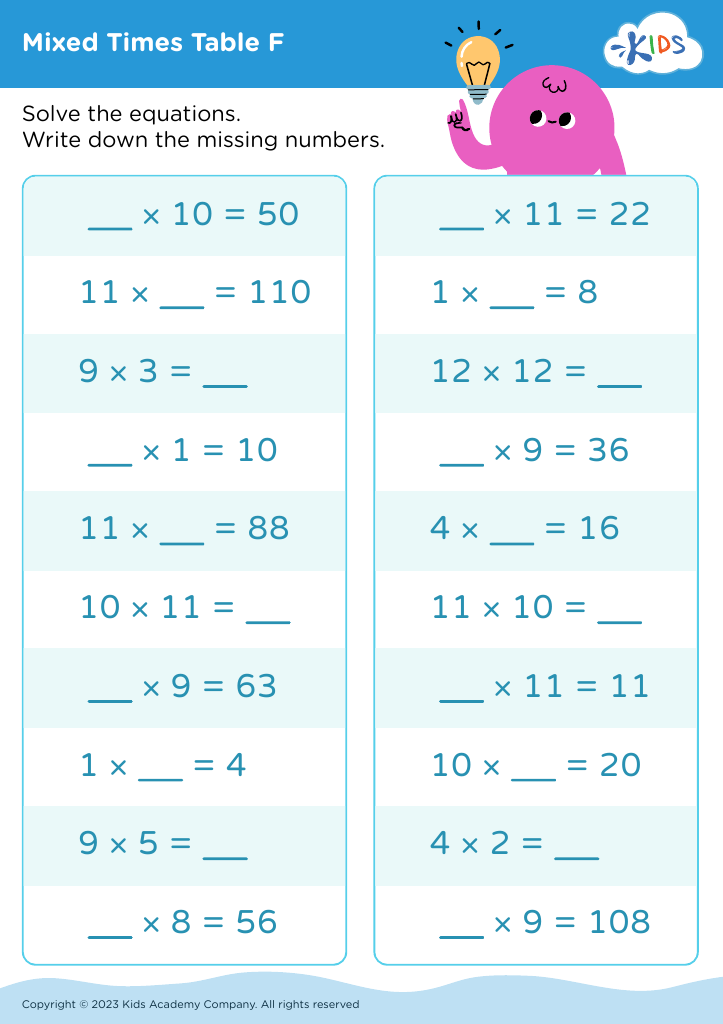
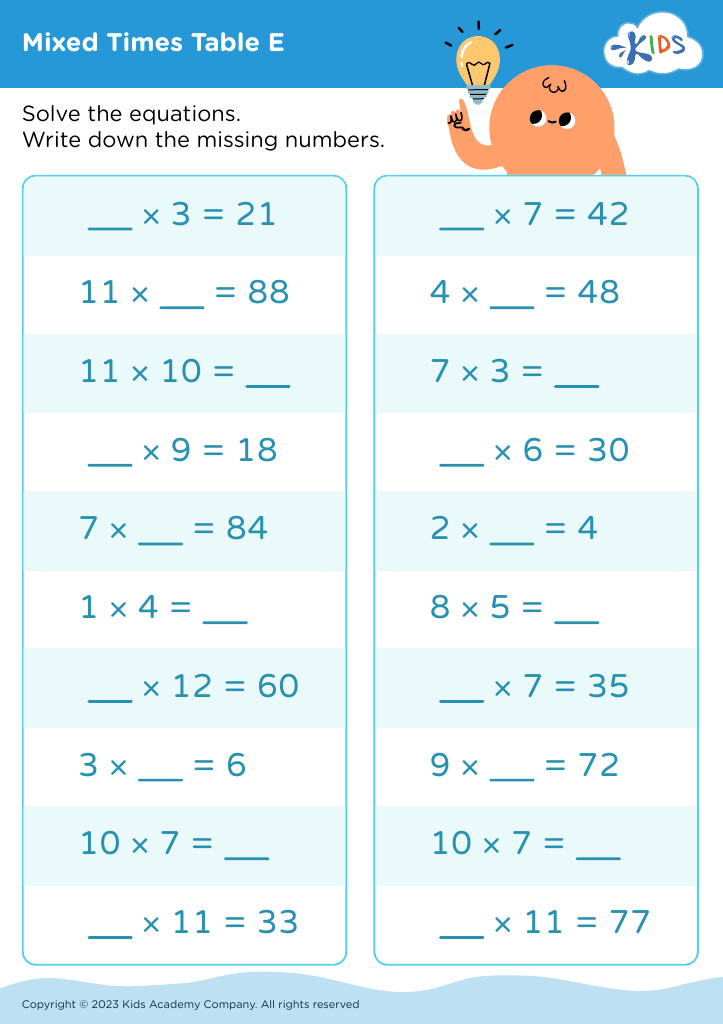
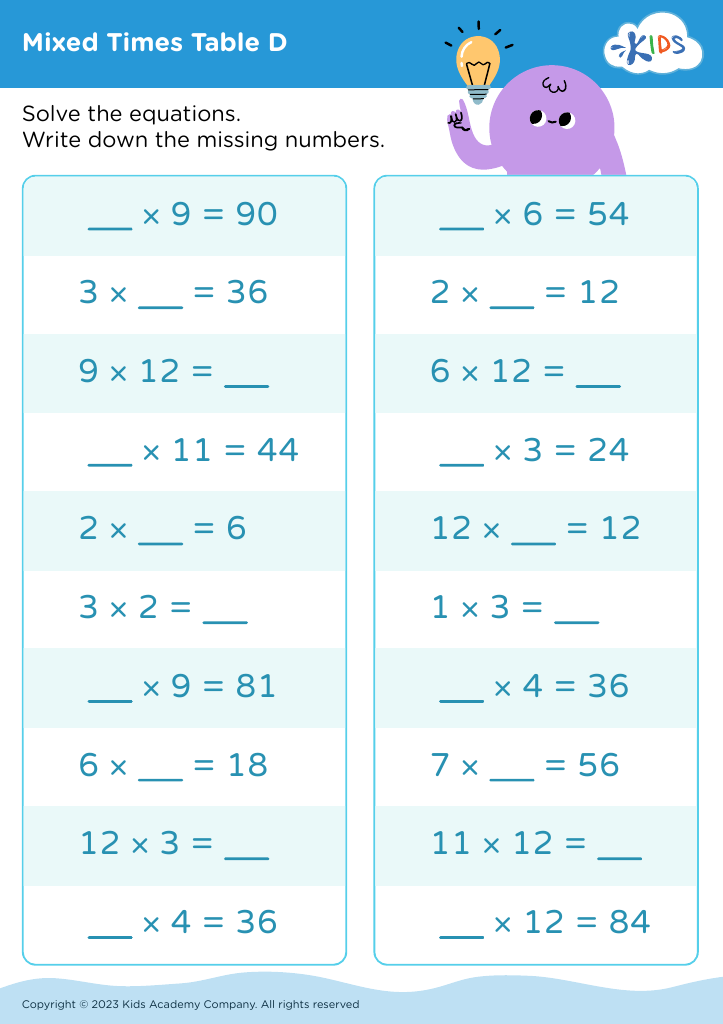
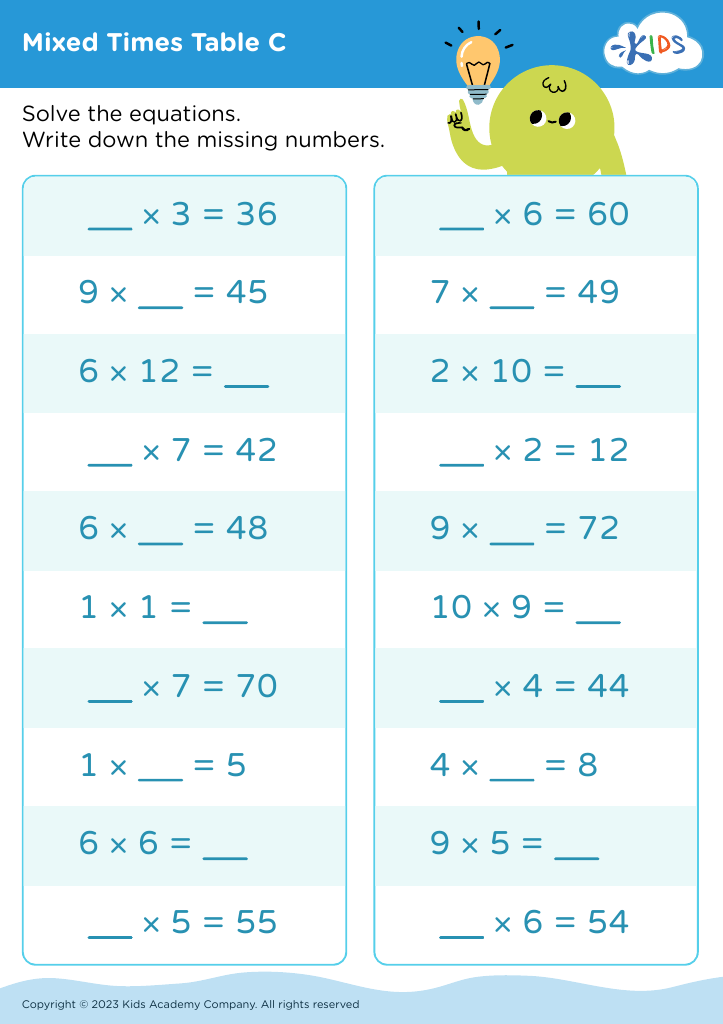
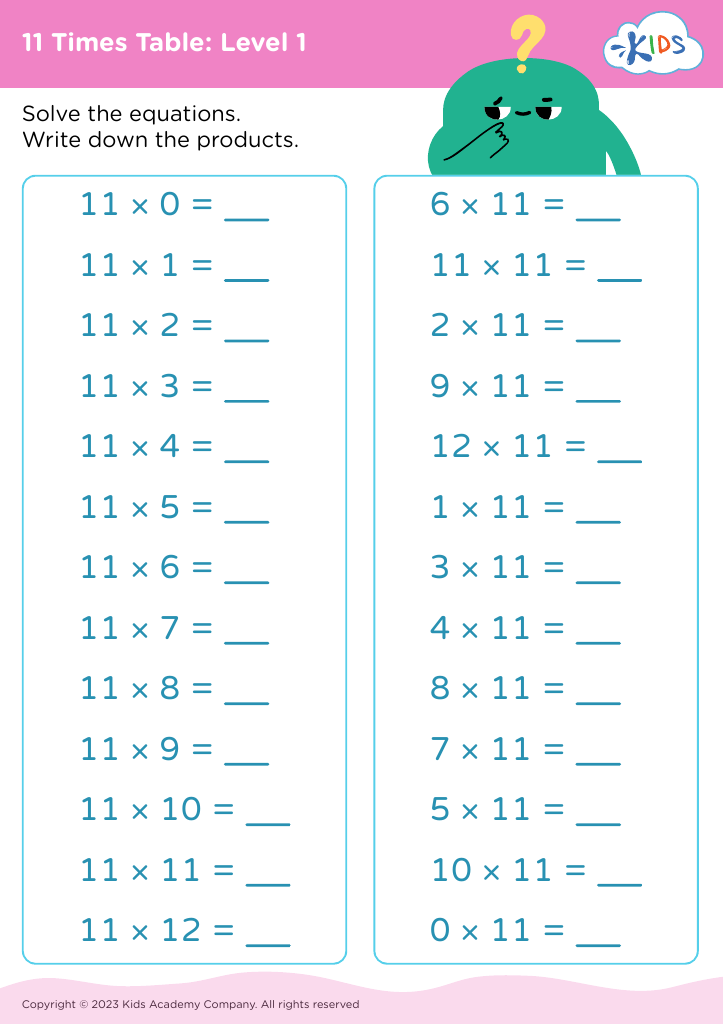
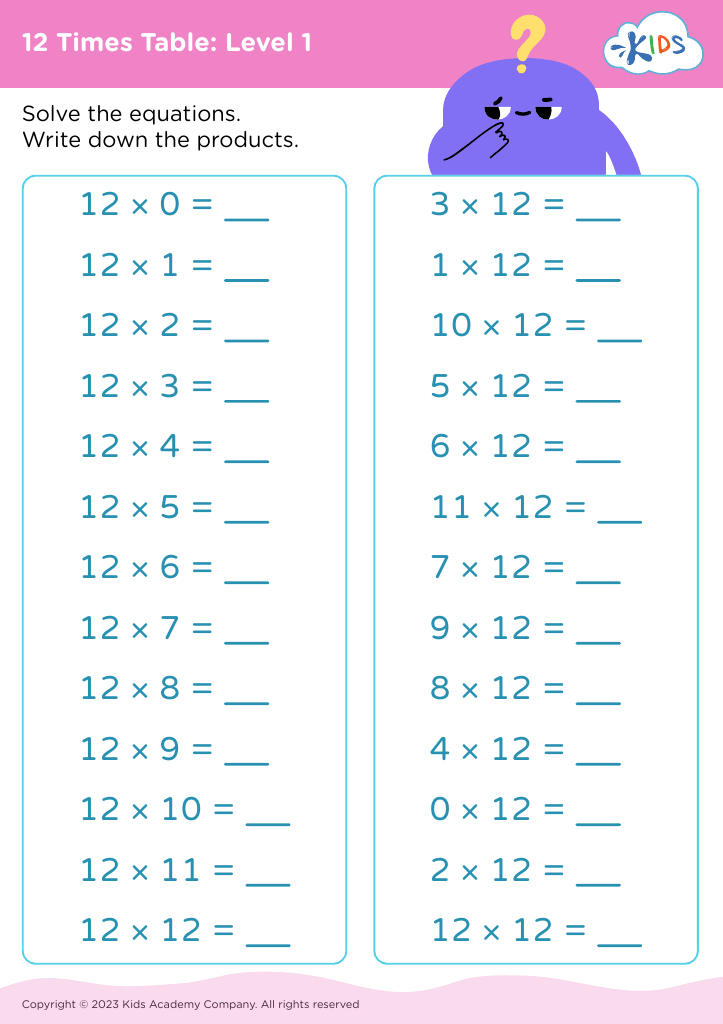
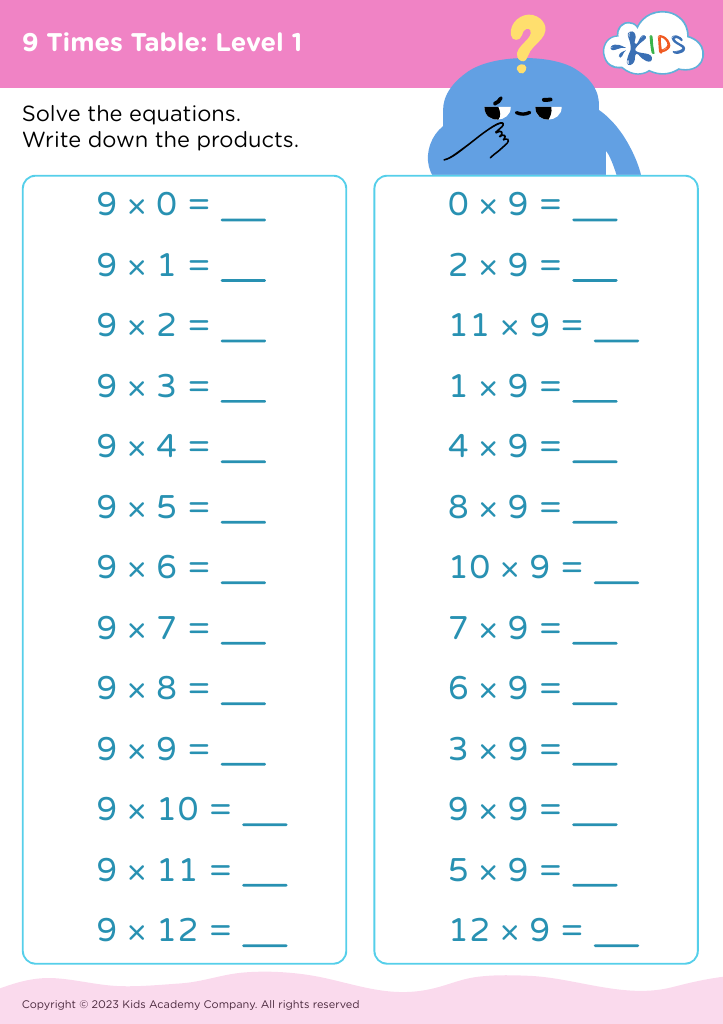







Multiplication is a fundamental building block in mathematics, particularly for children ages 6-8. Understanding multiplication provides a foundation for more advanced mathematical concepts, making it essential for parents and teachers to prioritize this skill. At this age, children are typically transitioning from simple addition and subtraction to more complex operations. Mastery of multiplication helps reinforce their number sense, promoting confidence and fluency in math.
When children grasp multiplication, they not only learn how to solve problems efficiently but also make connections to real-world scenarios, such as sharing and grouping. It prepares them for future mathematical learning, including division, fractions, and ratios. Furthermore, strong multiplication skills contribute to improved performance in subjects that rely on math, enhancing overall academic success.
Engaging in multiplication activities can also foster a positive attitude towards learning and problem-solving. As parents and teachers encourage practice through games, visual aids, and practical applications, they cultivate a supportive environment that promotes curiosity and resilience. By emphasizing multiplication in early education, caregivers set the stage for lifelong mathematical understanding and appreciation, equipping children with essential skills for both academic and everyday situations.








