Time Worksheets for Ages 6-8 - Page 2
25 filtered results
-
From - To
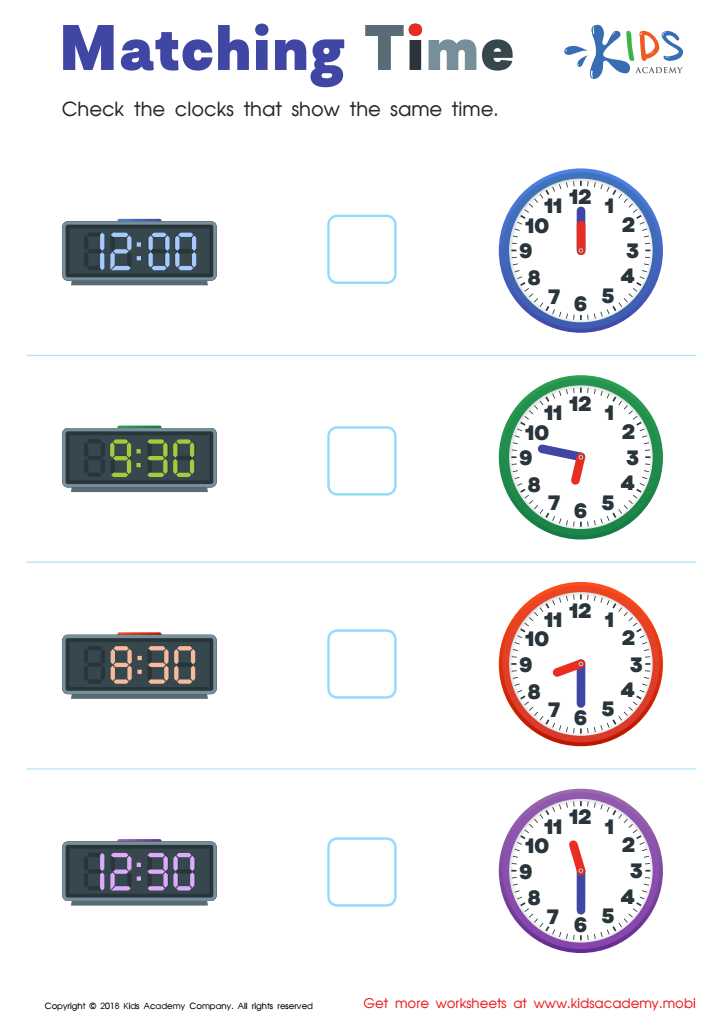
Matching Time Worksheet
 Assign to My Students




%20(1).jpg)


Time management is a crucial skill that serves as the foundation for a child’s future productivity and success. For children aged 6-8, learning to understand and manage time can have significant positive impacts on both academic and personal dimensions of their lives. At this formative stage, children are developing habits and patterns that can last a lifetime. Teaching them about time helps instill discipline and structure, which can make learning more efficient and enjoyable.
Knowing how to read the clock and understanding the concept of time intervals helps children become more independent and responsible. For instance, they learn when it's time to start and finish their homework, which promotes self-discipline and good study habits. Effective time management also reduces stress as children are less likely to feel rushed or overwhelmed by their schedules.
Moreover, time awareness connects directly to important life skills such as prioritizing tasks, setting goals, and assessing how much time different activities require. It encourages a sense of accomplishment and motivation when they complete tasks within set time frames. For teachers, this means a more organized classroom with smoother transitions between activities. For parents, well-managed time supports routines at home, leading to a more harmonious household. Hence, cultivating an understanding of time in children helps build a solid foundation for their future endeavors.








