Enhancing reading skills Reading Worksheets for Ages 6-8
3 filtered results
-
From - To
Unlock your child's reading potential with our expertly crafted Reading Worksheets designed for ages 6-8. Our engaging activities focus on enhancing key reading skills that build a strong literacy foundation. From phonics and vocabulary development to comprehension strategies, our worksheets make learning to read both fun and effective. Each exercise is crafted to cater to your child’s unique learning pace, aiming to boost confidence and proficiency. Start their journey towards reading success today with our thoughtfully designed resources that captivate and educate young learners. Join us in creating a love for reading that lasts a lifetime!
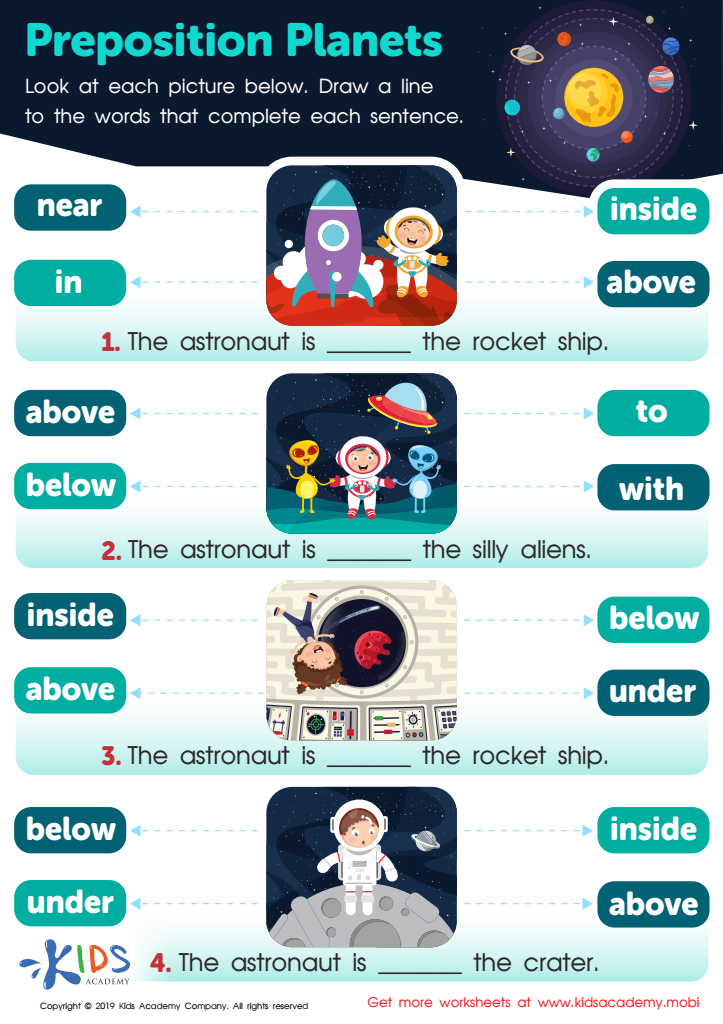
Preposition Planets Worksheet
 Assign to My Students

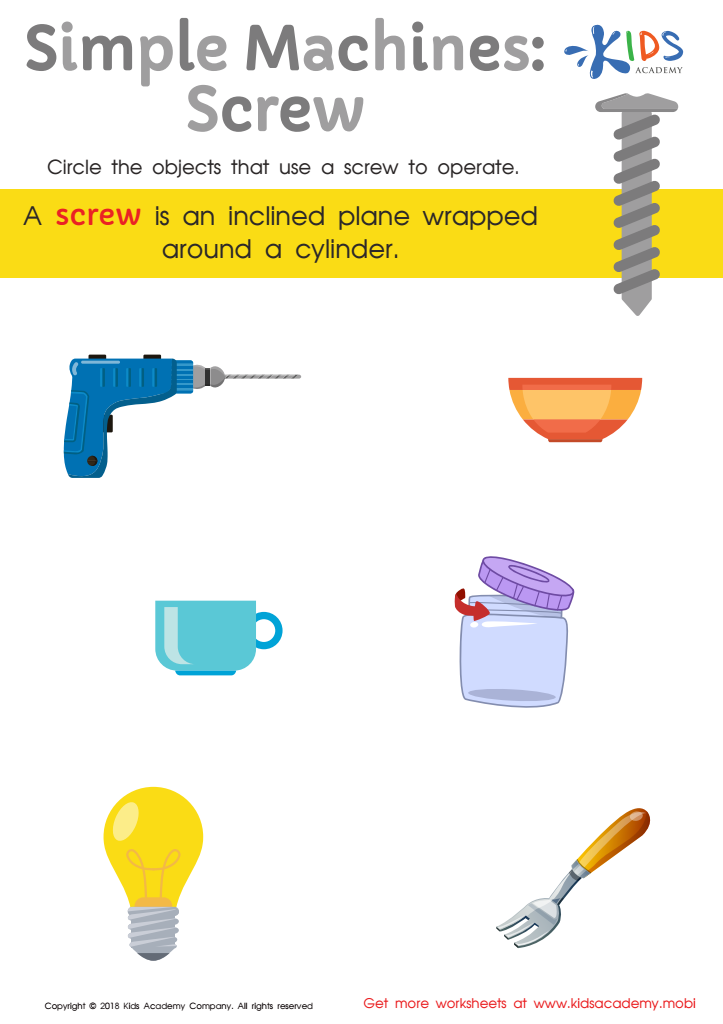
Simple Machines: Screw Worksheet







Enhancing reading skills for ages 6-8 is crucial because it forms the foundational bedrock for all future learning and cognitive development. At this formative stage, children transition from "learning to read" to "reading to learn." Proficient reading skills enable them to better understand the world around them, increasing their vocabulary, comprehension, and critical thinking skills. When parents and teachers invest in developing these skills, they build a child's confidence and self-esteem, which is vital for their academic and social success.
Moreover, strong reading abilities have a ripple effect on other academic subjects. For instance, understanding word problems in math or following complex instructions in science becomes more manageable with better reading skills. Early literacy sets the stage for a lifelong love of reading and learning, cultivating curiosity and imagination. When reading skills are not adequately developed, children may face difficulties that can result in frustration and a negative attitude towards learning as they progress in school.
By prioritizing reading development between ages 6 and 8, parents and teachers help children grasp essential phonemic awareness, fluency, and comprehension strategies, thereby providing them with tools that are indispensable both inside and outside the classroom. In this effort, parents and teachers lay the groundwork for well-rounded, knowledgeable, and empowered individuals.








