
Logical thinking Reading Worksheets for Ages 6-8
5 filtered results
Difficulty Level
Grade
Age
-
From - To
Subject
Activity
Standards
Nurture your child's critical thinking with our engaging Logical Thinking Reading Worksheets for ages 6-8. Designed to challenge young minds, these worksheets sharpen reasoning, comprehension, and problem-solving skills through fun, interactive reading activities. Perfect for both classroom and home use, each worksheet includes thought-provoking exercises tailored to develop logical connections and enhance cognitive abilities. Whether your child is identifying patterns, solving riddles, or understanding story sequences, our collection ensures a stimulating educational experience. Spark curiosity and boost your child's intellectual growth with Kids Academy's expertly crafted logical thinking worksheets!
Favorites
With answer key
Interactive
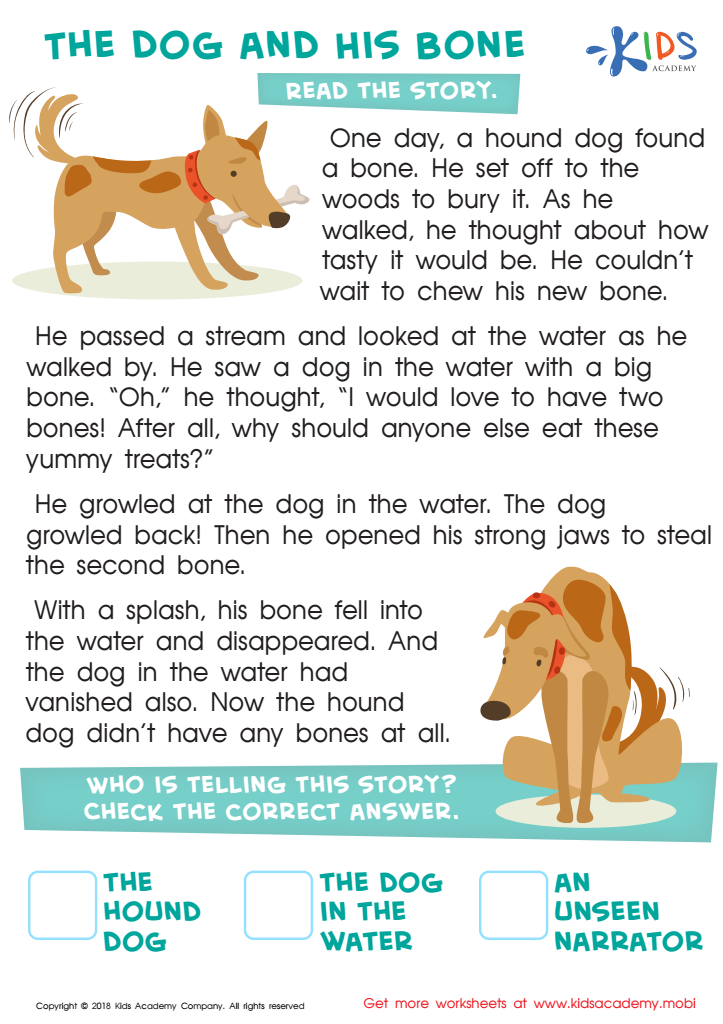
The Dog and His Bone Worksheet
Read the story of The Dog and His Bone to your kids, making sure they take in the details. Ask them the questions in this worksheet and help them check the answers. Encourage them to think carefully.
 Assign to My Students
The Dog and His Bone Worksheet
Worksheet
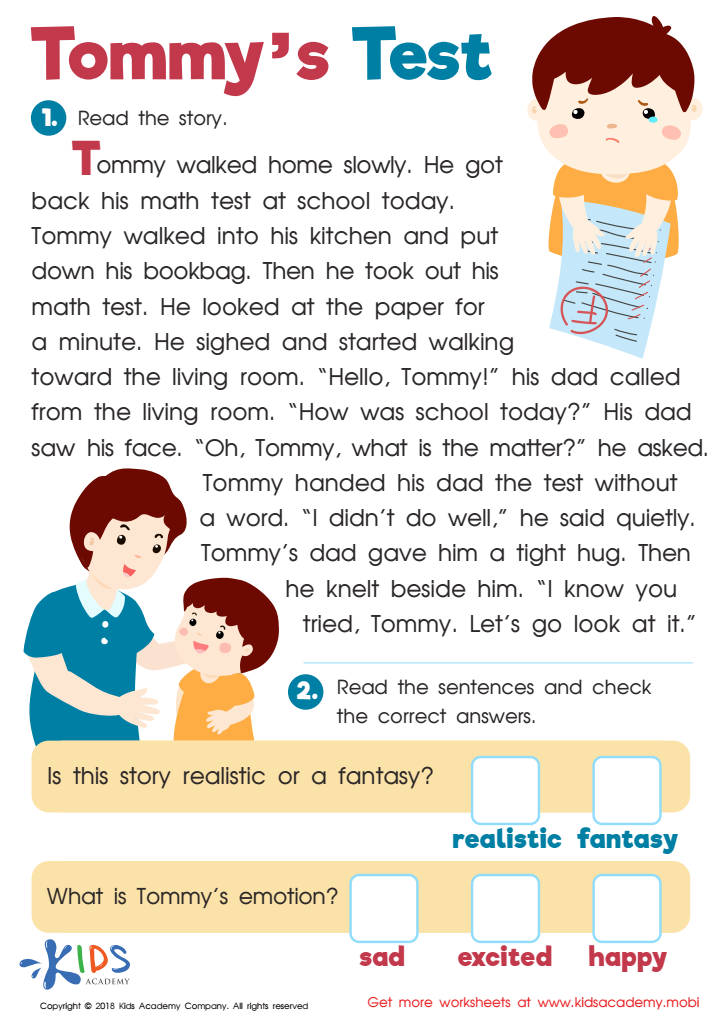
Tommys Test Worksheet
Reading short stories to your students builds a bond, teaches new words and lessons. Read the story aloud and then have them listen for details. Ask them the questions at the bottom and help them check the answers.
Tommys Test Worksheet
Worksheet
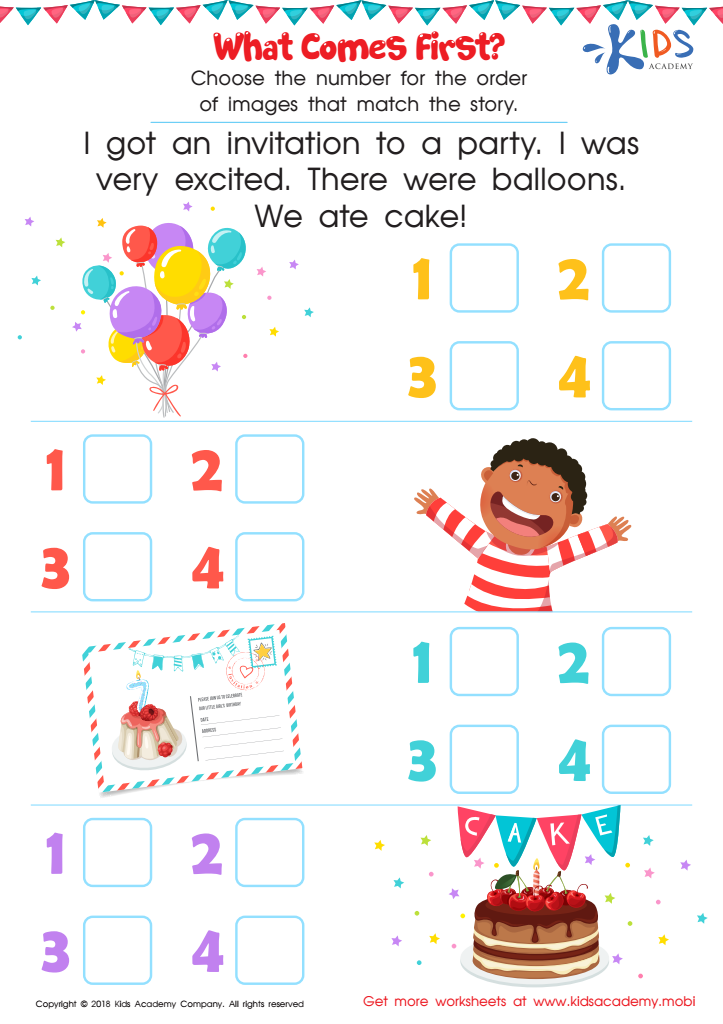
What Comes First Worksheet
Before you start, ask your child what they see in the picture. Read the story aloud together, then show them the images in order, numbered 1-5. Ask them to choose the numbers that match the story. Have fun and enjoy this party worksheet with your little one! (80 words)
What Comes First Worksheet
Worksheet
Join Kids Academy for Free
Who is primarily going to use this learning content?







Logical thinking during the early childhood years, particularly ages 6-8, is crucial for cognitive development. At this stage, children's brains are highly receptive to new information, and fostering logical thinking skills can set a strong foundation for future learning. Logical thinking reading exercises help children develop critical thinking abilities. They start learning how to identify patterns, make connections, and solve problems methodically.
Parents and teachers should care about logical thinking reading because it goes beyond reading comprehension; it empowers children to understand why things happen in a story and predict outcomes. These skills are not only applicable to academics but also to daily decision-making and social interactions. By incorporating logical thinking into reading, children learn to analyze sequential events, which enhances their ability to organize thoughts and express them clearly.
Moreover, engaging in logical thinking activities can boost children's confidence and independence. It encourages a growth mindset, teaching them that complex problems can be broken down and solved with patience and perseverance. This is crucial in building resilience and a positive attitude toward learning challenges. Ultimately, attention to logical thinking reading empowers children to become more analytical, better problem solvers, and lifelong learners.








