Moral understanding Reading Worksheets for Ages 6-8
6 filtered results
-
From - To
Discover our engaging Moral Understanding Reading Worksheets designed specifically for ages 6-8! These printable resources promote critical thinking and empathy as young learners explore fundamental moral concepts through captivating stories and comprehension exercises. Each worksheet encourages children to reflect on personal values, ethical dilemmas, and the importance of kindness and respect in relationships. Our user-friendly format makes it easy for teachers and parents to integrate moral lessons into early literacy activities. Foster a sense of empathy and help children develop a solid moral compass while enhancing their reading skills. Start nurturing thoughtful, compassionate readers today!
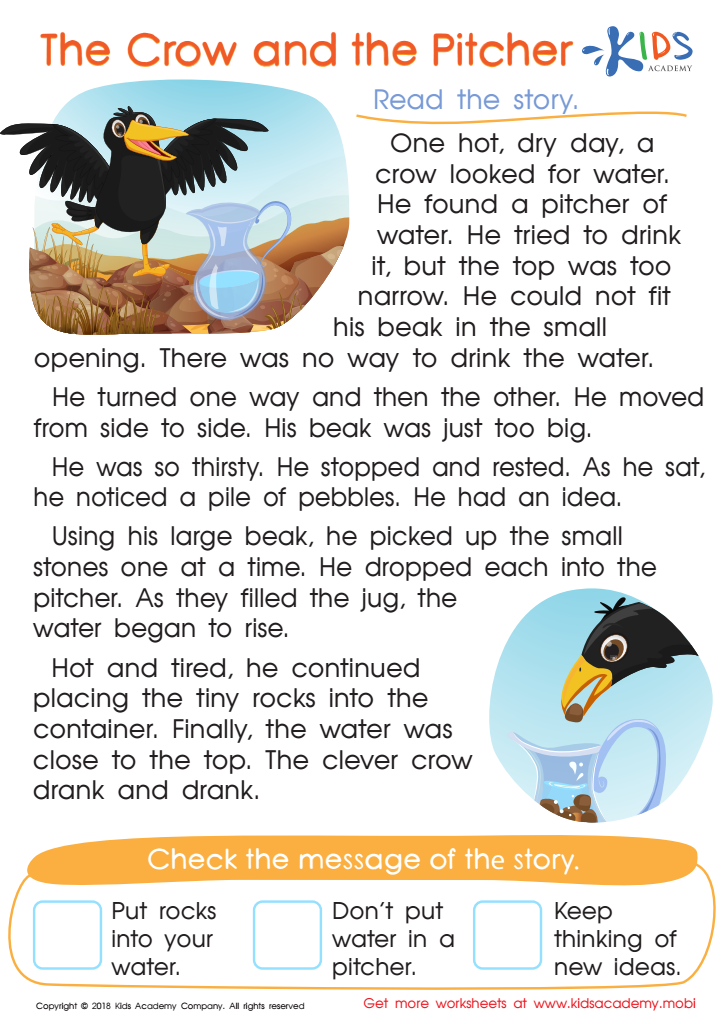
The Crow and the Pitcher Worksheet
 Assign to My Students
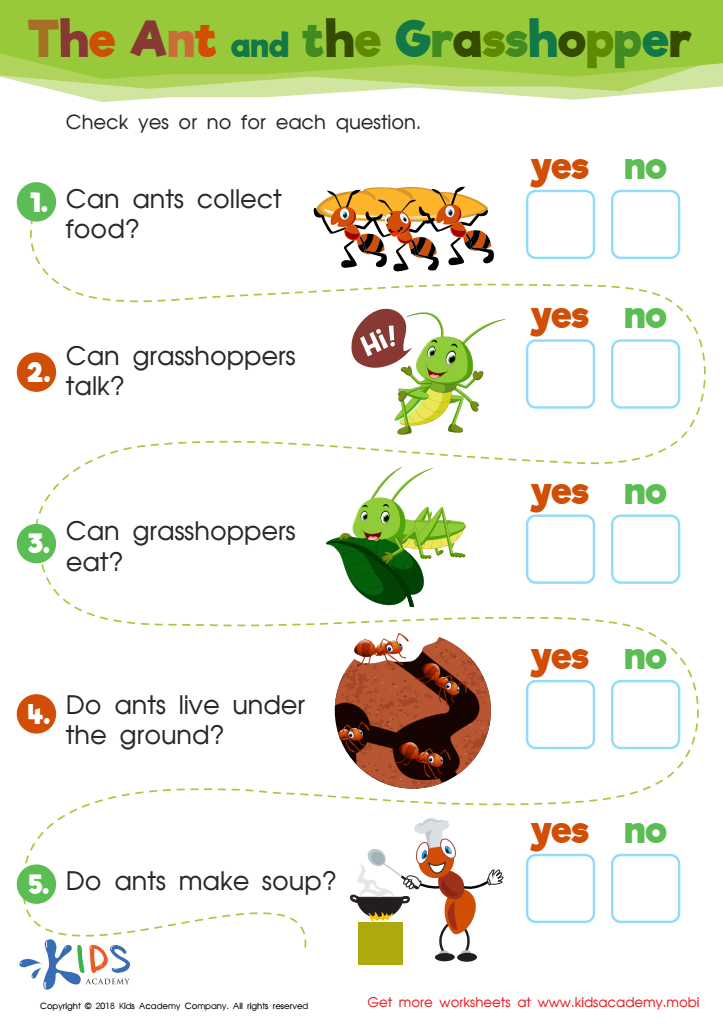
The Ant and The Grasshopper Worksheet
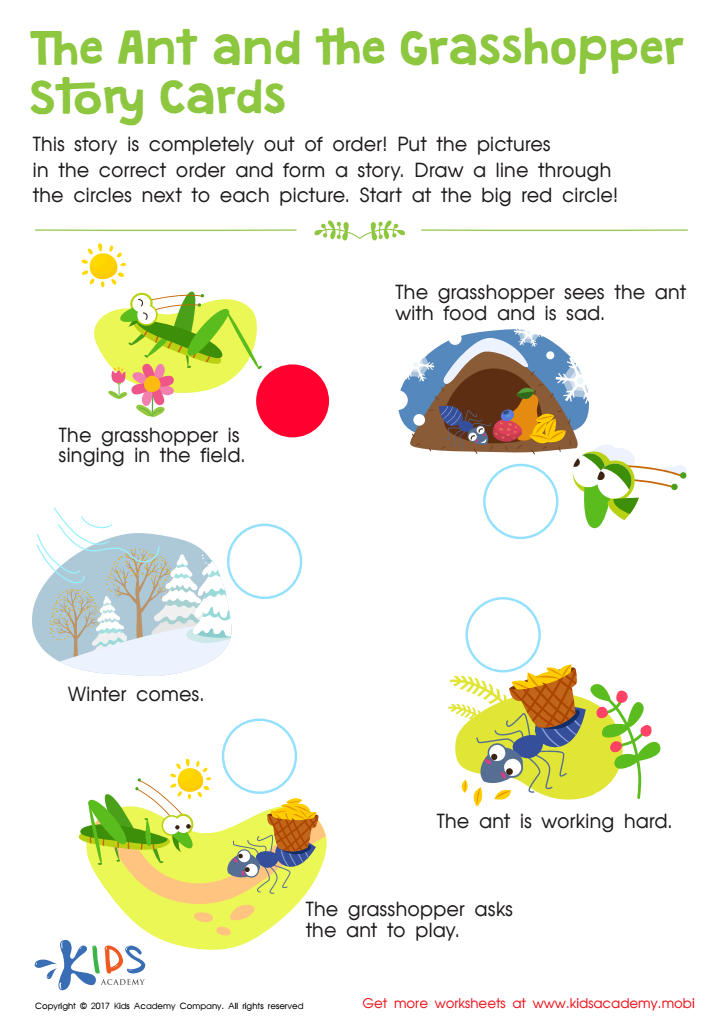
The Ant and The Grasshopper Worksheet
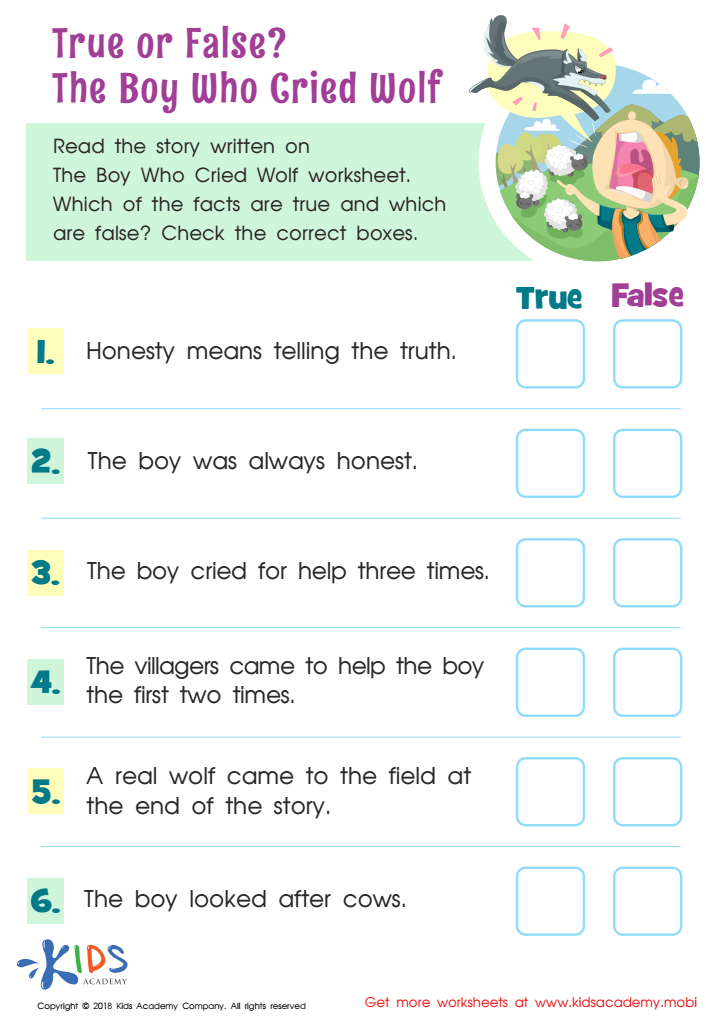
True or False? The Boy Who Cried Wolf Worksheet
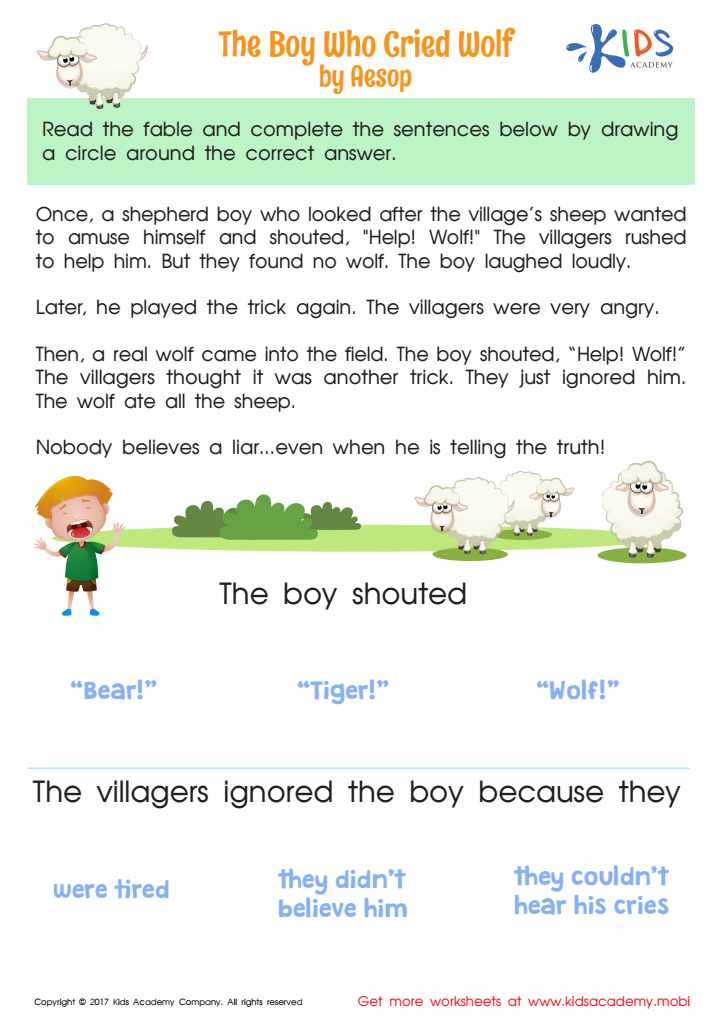
The Boy Who Cried Wolf Worksheet
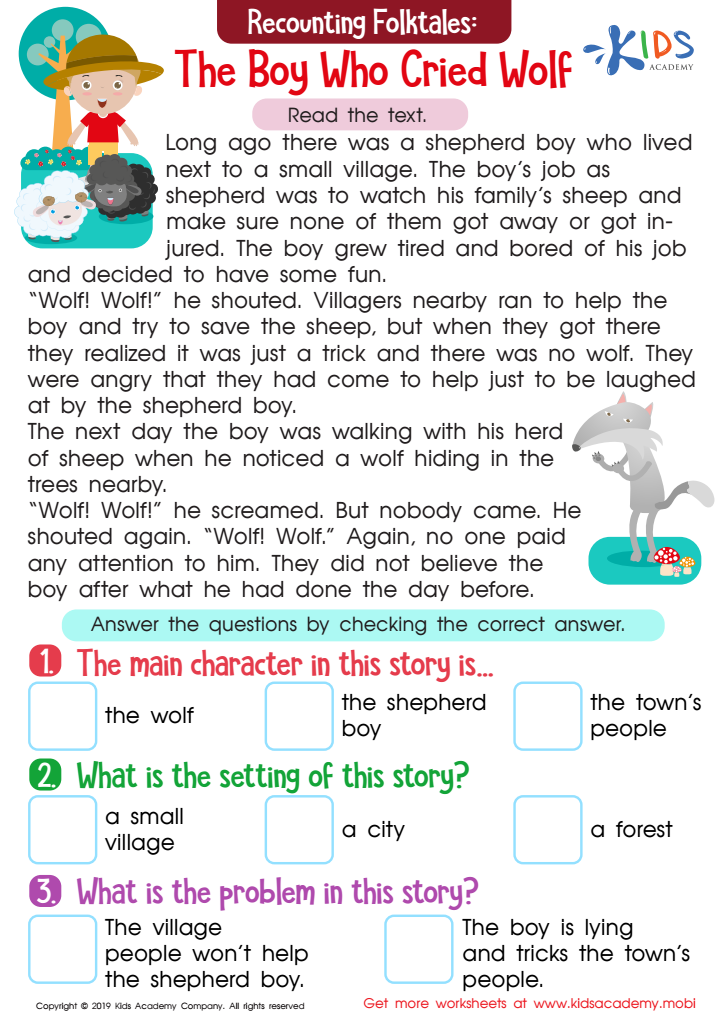
The Boy Who Cried Wolf Part 1 Worksheet



.jpg)


Parents and teachers should prioritize moral understanding in reading for ages 6-8 because this developmental stage is crucial for shaping children’s values and social behaviors. As children engage with stories, they encounter diverse characters and situations that often present ethical dilemmas and moral lessons. By discussing these narratives, educators and caregivers can help children learn to empathize, make decisions, and grasp the consequences of actions.
Moral understanding enhances social-emotional learning. Children start to recognize their feelings and the feelings of others, fostering important skills such as compassion and fairness. Engaging with moral themes in literature cultivates critical thinking; children learn to analyze situations, weigh choices, and appreciate different perspectives.
Furthermore, stories often reflect cultural and community values, providing young readers with a sense of identity and belonging. Teachers and parents can facilitate conversations around these themes, ensuring that children are not just passive readers but active moral thinkers.
Ultimately, instilling moral understanding through reading helps equip children with the foundational principles needed to navigate complex social relationships and ethical challenges as they grow. It lays the groundwork for responsible citizenship, nurturing a generation that values kindness, respect, and justice.








