Understanding Rhymes Reading Worksheets for Ages 6-8
3 filtered results
-
From - To
Discover our "Understanding Rhymes Reading Worksheets" designed specifically for children aged 6-8. These engaging and interactive resources help young learners develop essential reading skills through the fun and creative world of rhymes. With a variety of activities, including identifying rhyming words and completing sentences, kids will enhance their vocabulary and phonemic awareness while enjoying the process. Ideal for classroom settings or at-home learning, our worksheets provide a seamless blend of education and fun, fostering a love for reading from an early age. Explore our collection and help your child become a confident reader while mastering the joy of rhymes!
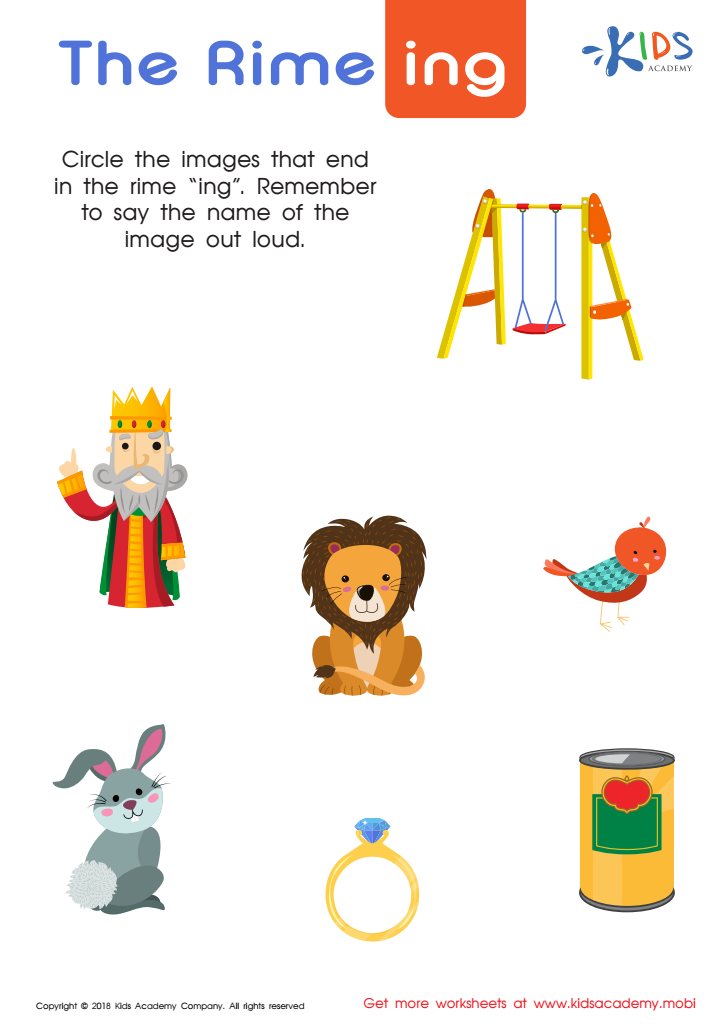
The Rime "ing" Worksheet
 Assign to My Students
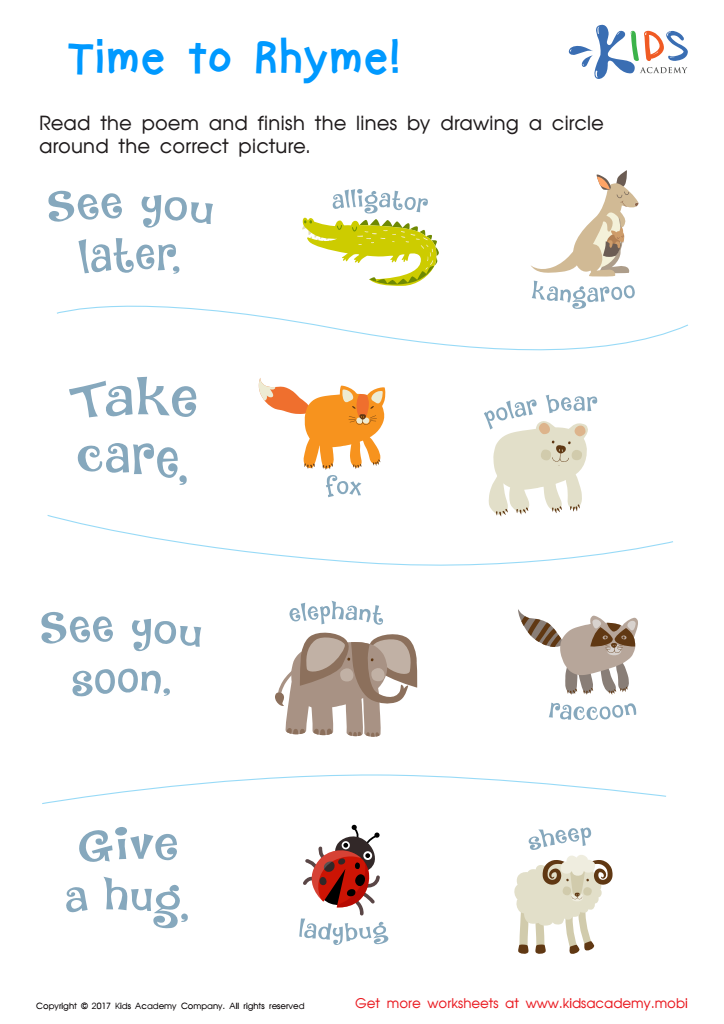
Time to Rhyme Rhyming Worksheet
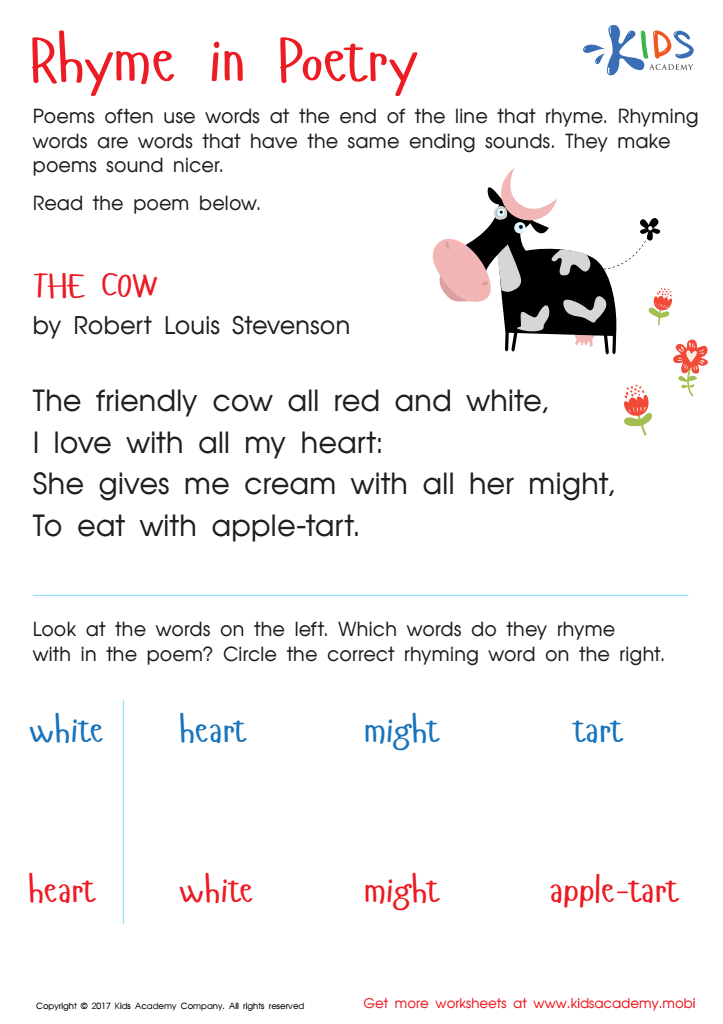
Rhyme In Poetry Worksheet


.jpg)





Understanding rhymes is vital for children aged 6-8 as it lays a strong foundation for their literacy development. Rhyming helps young learners recognize sound patterns and enhances phonemic awareness, which is crucial for reading success. When children engage with rhymes, they become more skilled at decoding words, enabling them to read more fluently and with greater comprehension.
Additionally, rhymes do more than just build reading skills; they foster a love for language and literature. Enjoying playful and rhythmic language makes reading a fun and engaging experience for children. This encourages them to explore books more often, positively impacting their vocabulary and overall language acquisition.
For parents and teachers, promoting rhyming activities—such as reading aloud, singing songs, or playing rhyming games—strengthens the bond between child and caregiver or teacher. It creates a supportive environment for learning, making it easier to introduce new words and concepts. Ultimately, focusing on understanding rhymes equips children not only with fundamental reading skills but also instills a lifelong appreciation for the beauty of language. This, in turn, contributes to their academic success and personal growth as confident communicators.








