Enhance your child's reading skills with our engaging Word Identification Reading Worksheets designed for ages 6-8! These printable worksheets help children recognize and understand new vocabulary through fun, interactive exercises. By identifying words in various contexts, children strengthen their reading comprehension and boost confidence in their literacy abilities. Our carefully crafted activities cater to different learning styles, featuring matching games, fill-in-the-blank exercises, and word searches that make learning enjoyable. Perfect for home or classroom use, these worksheets serve as a valuable resource for early-grade teachers and parents alike. Foster a love for reading while building essential word identification skills today!

Check out this FREE Trial Lesson on Reading for age 6-8!

Identify Irregular Past Tense Verbs Standard

Favorites
With answer key
Interactive
  • 6-8
  • Word identification
  • Reading
Learn to Spell Worksheet

Learn to Spell Worksheet

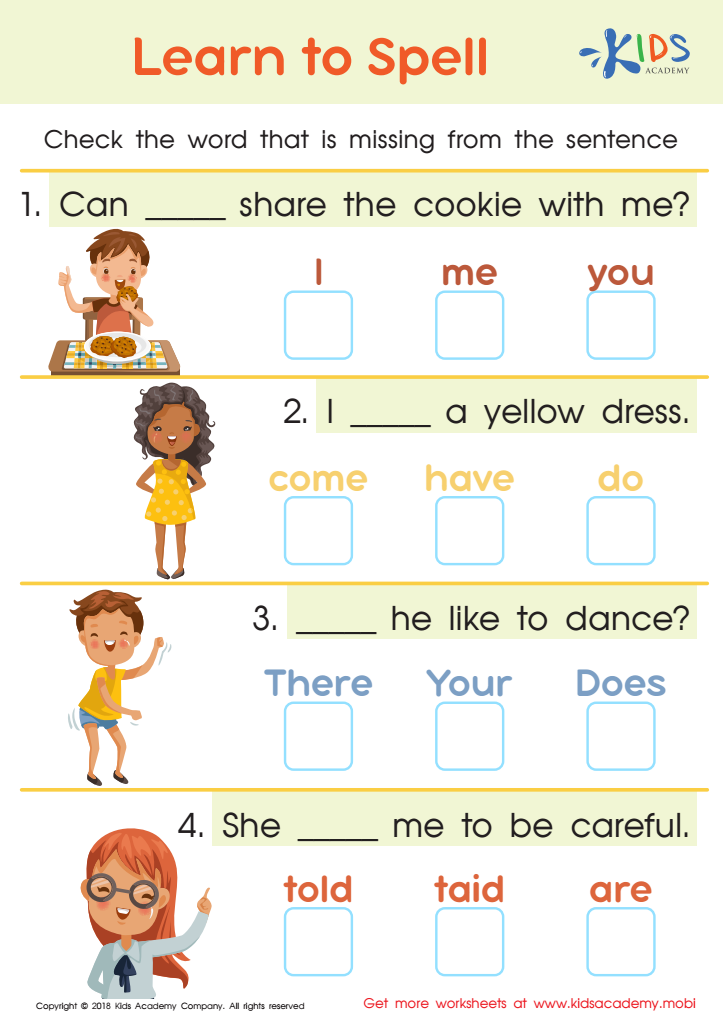
Help sharpen spelling skills with a simple worksheet. Read sentences aloud and show which word is missing. Ask students to pick the correct word from the options. Ensure they check the missing word for accuracy.
Learn to Spell Worksheet
Worksheet
Identify Individual Words Worksheet

Identify Individual Words Worksheet

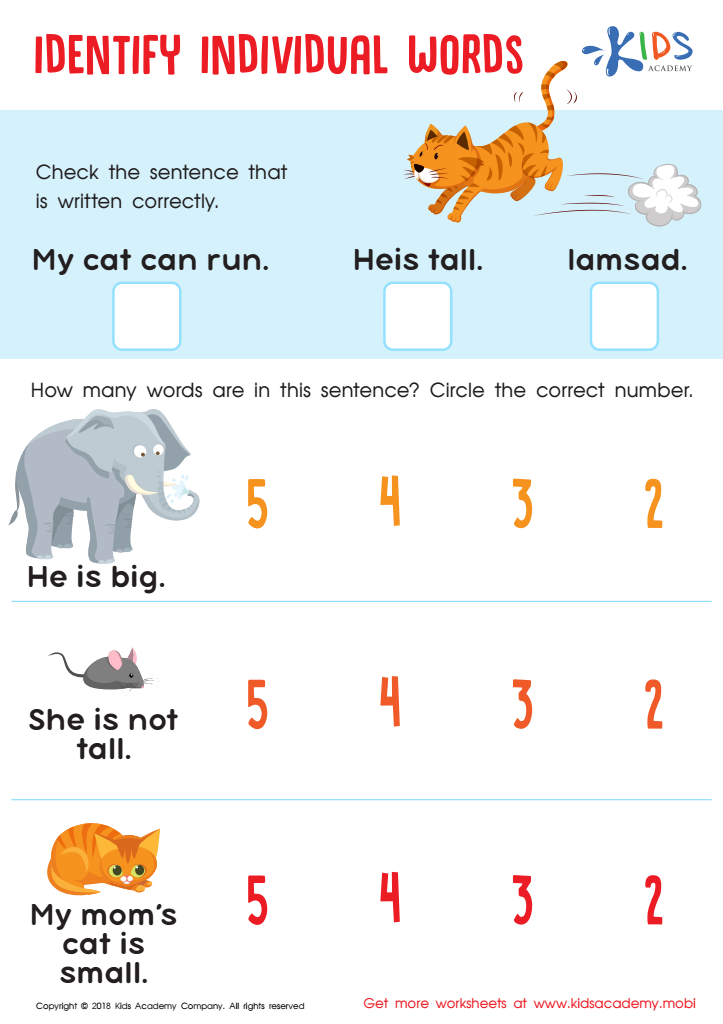
Does your child have trouble constructing sentences? Check out this worksheet! It will help them identify words that make up sentences and assess how well they can read and answer questions. The first part tests how well they can recognize a written sentence. The second part has them read questions and circle the correct number of words. Give it a try!
Identify Individual Words Worksheet
Worksheet
Phonics and Word Recognition: Assessment 1 Worksheet

Phonics and Word Recognition: Assessment 1 Worksheet

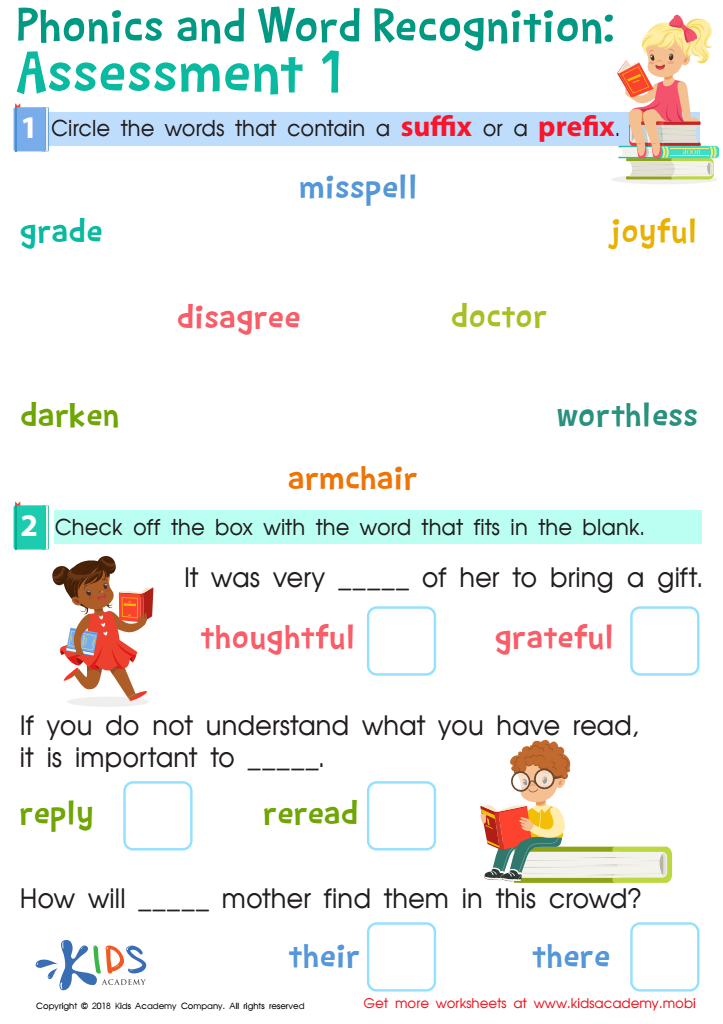
Explain prefixes (words added to start of another word to give it a new meaning) and suffixes (added to end of word to change its meaning) to your kids with examples like 'unhappy' (prefix) and 'forgetful' (suffix). Now, help your child complete this worksheet, including circling words and checking boxes.
Phonics and Word Recognition: Assessment 1 Worksheet
Worksheet
Reading: Prefix Search Worksheet

Reading: Prefix Search Worksheet

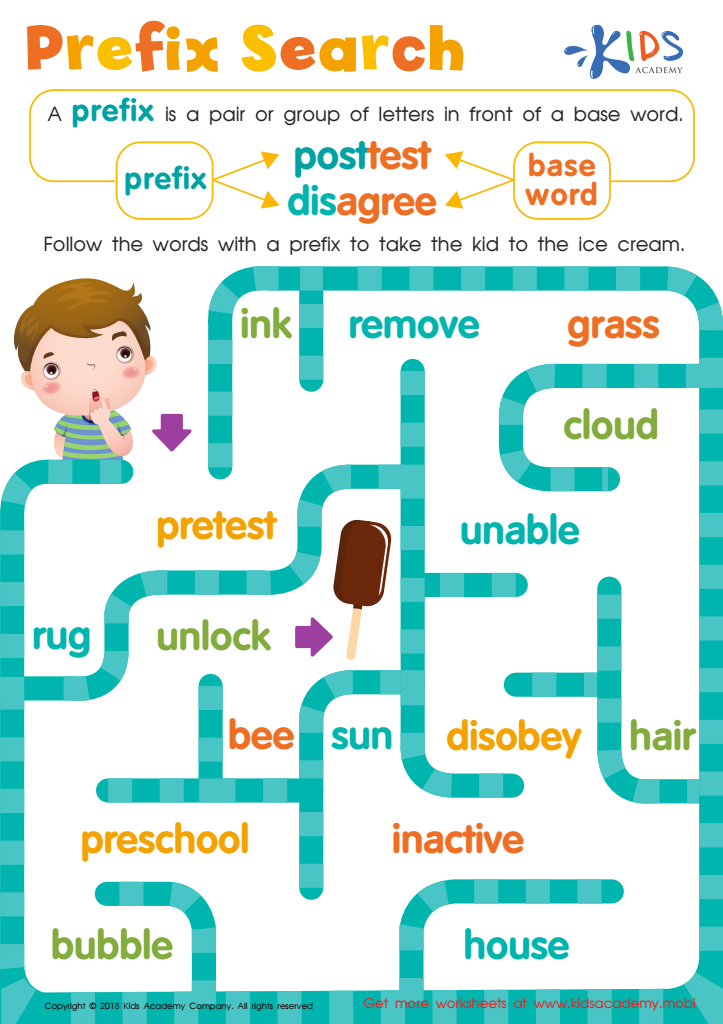
Maze your way through prefixes! This worksheet helps students practice reading new words with a prefix and figuring out the base word. An understanding of prefixes gives students the skills to comprehend new words. A fun and useful activity for the reading classroom!
Reading: Prefix Search Worksheet
Worksheet
Phonics and Word Recognition: Assessment 1 Worksheet

Phonics and Word Recognition: Assessment 1 Worksheet

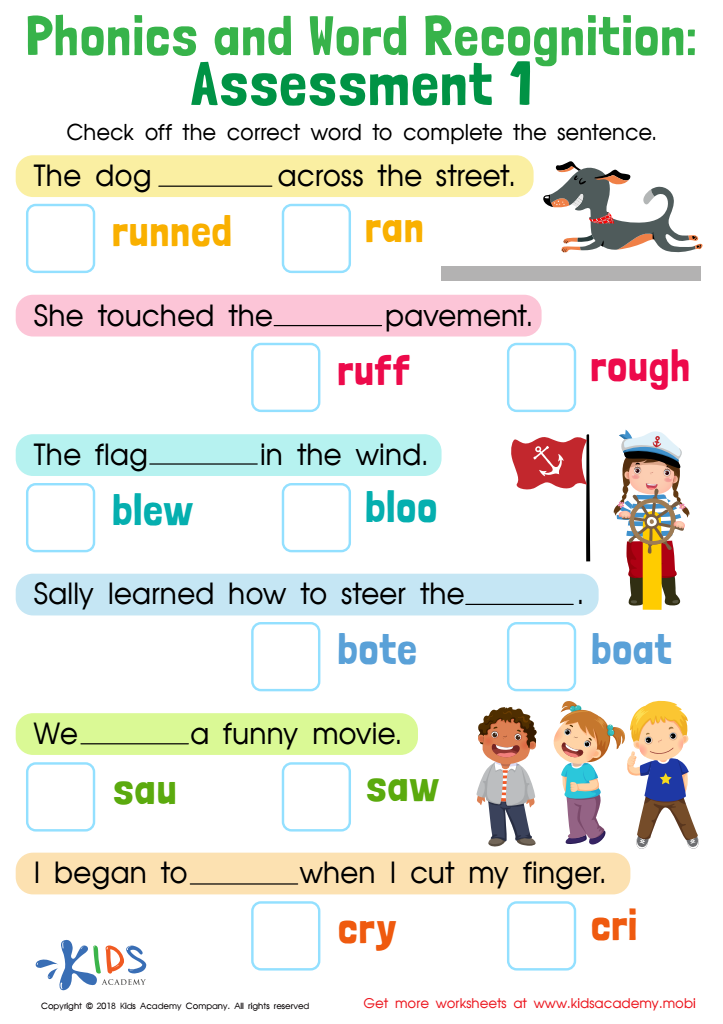
This worksheet tests phonetics and word recognition. Students should be familiar with past tense verbs. Read incomplete sentences, then read multiple options and help students select the correct one.
Phonics and Word Recognition: Assessment 1 Worksheet
Worksheet
Phonics and Word Recognition: Assessment 2 Worksheet

Phonics and Word Recognition: Assessment 2 Worksheet

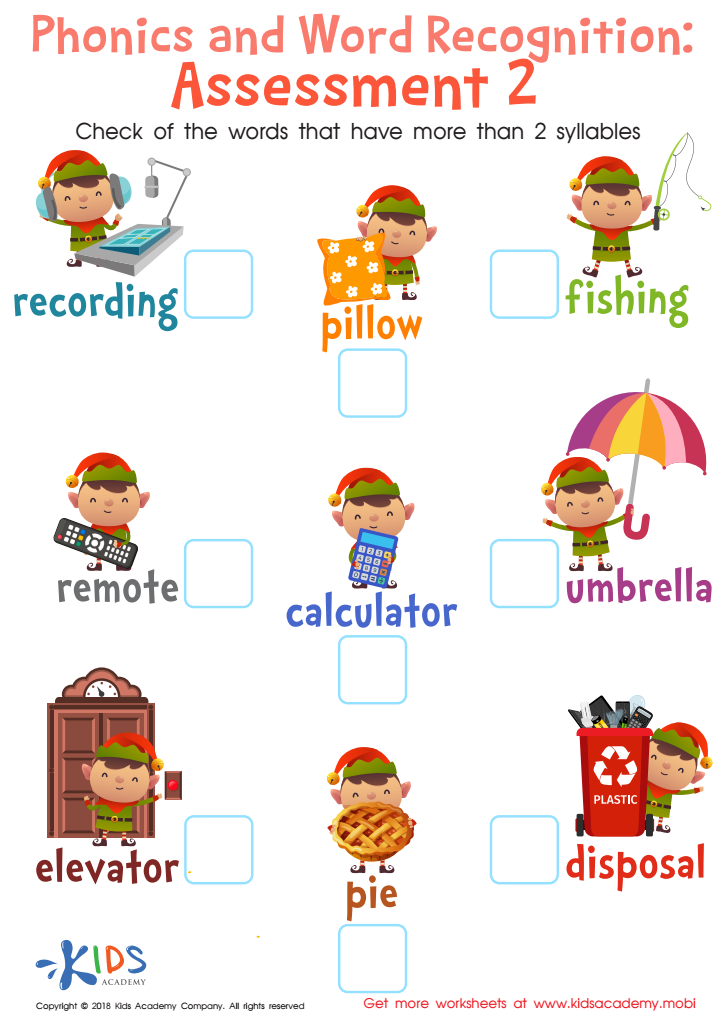
Help your kids learn proper pronunciation by counting syllables. Most words they'll encounter have 1-3 syllables, making them simple to say. Have them repeat the words in your worksheet after you. Focus on longer words with more than two syllables.
Phonics and Word Recognition: Assessment 2 Worksheet

Worksheet
Phonics and Word Recognition: Assessment 2


Phonics and Word Recognition: Assessment 2

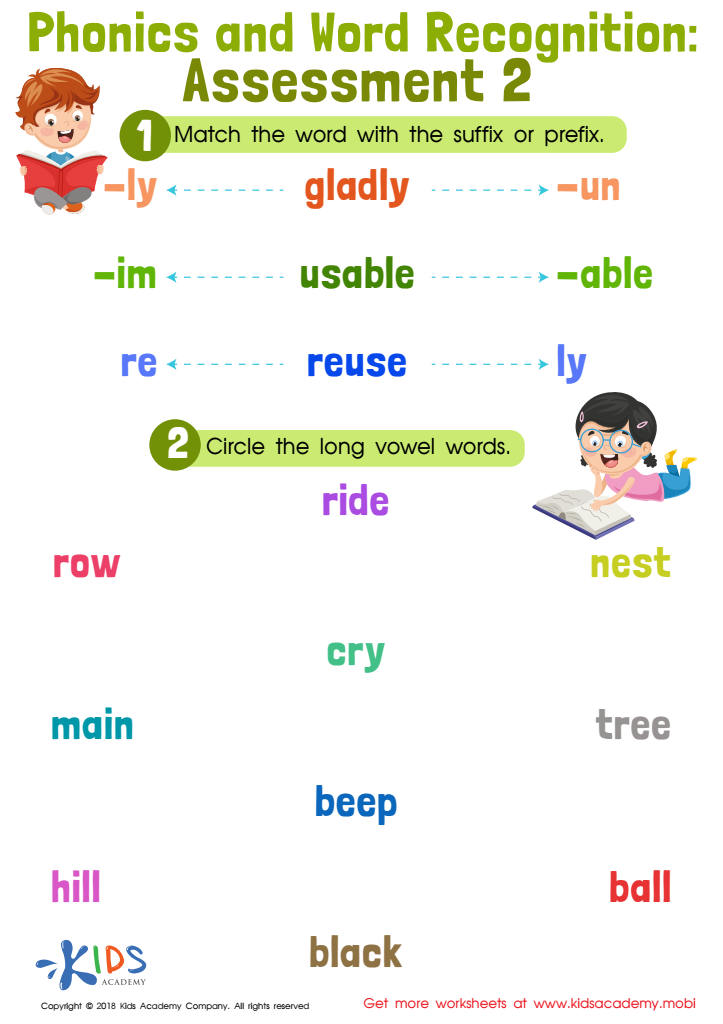
Give kids common examples of suffixes and prefixes, such as "un-," "unhappy," "ness," "happyness." Ask them to match each word in the word recognition exercise to the correct suffix or prefix. Test phonetic understanding by having them circle the long vowel sounds.
Phonics and Word Recognition: Assessment 2
Worksheet


Word identification is a critical skill for 6 to 8-year-olds as it lays the foundation for their reading development and overall academic success. This age group is at a pivotal stage in their literacy journey, where the transition from learning to read to reading to learn begins. Effective word identification helps children recognize, understand, and decode words effortlessly, which boosts their confidence and motivation to read.

For parents and teachers, supporting word identification is essential because it directly influences students’ comprehension and enjoyment of texts. Children who struggle with identifying words may become frustrated or disengaged, which can hinder their willingness to participate in classroom activities or enjoy reading at home. Furthermore, proficient word identification skills enhance vocabulary development, which is crucial for academic achievement across all subjects.

Additionally, fostering these skills early on can prevent reading difficulties later in life. By implementing fun, interactive strategies that encourage word recognition—such as phonics games, flashcards, and shared reading experiences—parents and teachers can create a supportive learning environment. This proactive approach helps children develop a lifelong passion for reading, critical thinking skills, and the ability to navigate an information-rich world, ultimately paving the way for future success.