Moral understanding Reading Comprehension Worksheets for Ages 6-8
5 filtered results
-
From - To
Foster the development of moral values and reading skills with our Moral Understanding Reading Comprehension Worksheets for ages 6-8. Carefully crafted to engage young minds, these worksheets combine captivating stories with thought-provoking questions to enhance children's comprehension abilities while instilling essential morals, such as honesty, kindness, and responsibility. Each worksheet is designed not only to improve literacy but also to encourage critical thinking and reflective discussions about ethical behavior. Parents and educators can leverage these resources to create enriching learning experiences that cultivate empathy, integrity, and a strong sense of right and wrong in young learners.
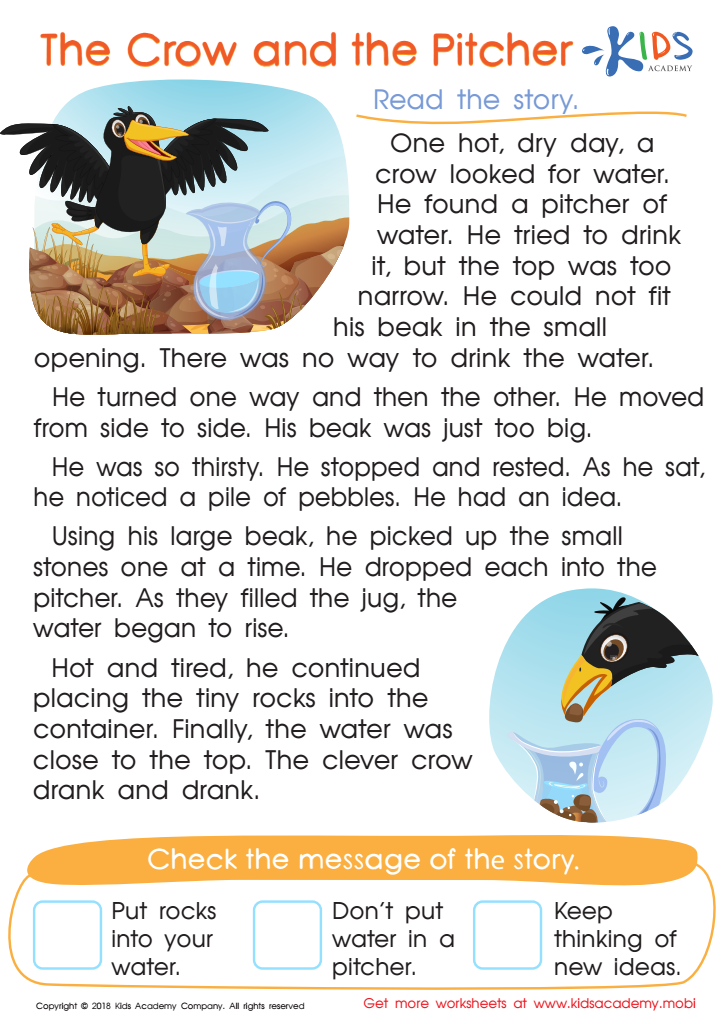
The Crow and the Pitcher Worksheet
 Assign to My Students
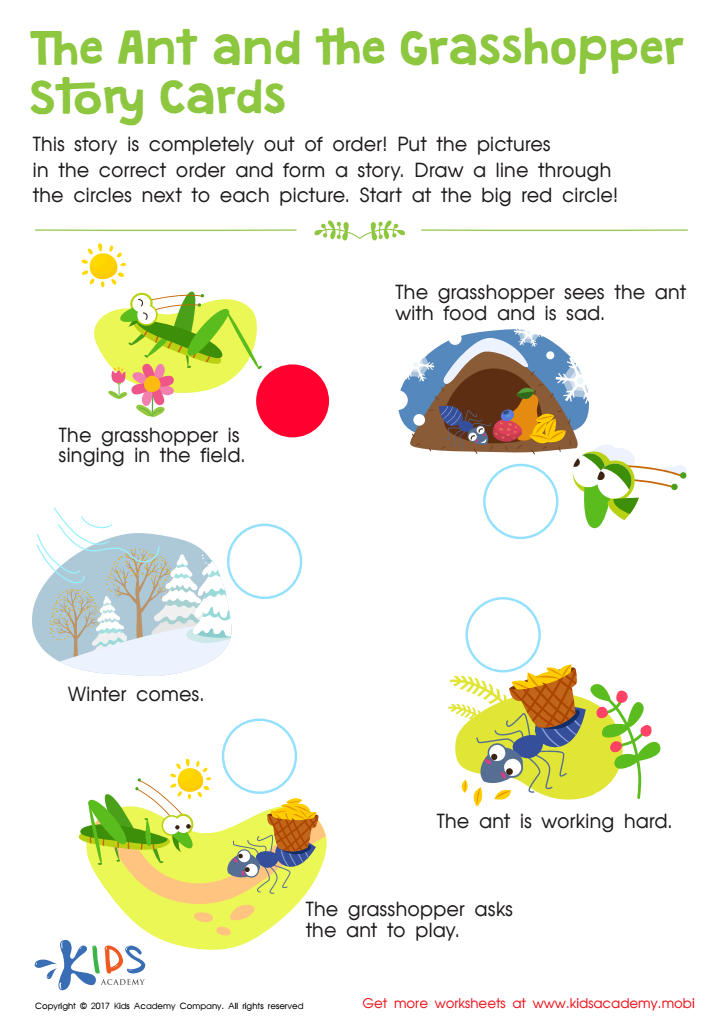
The Ant and The Grasshopper Worksheet
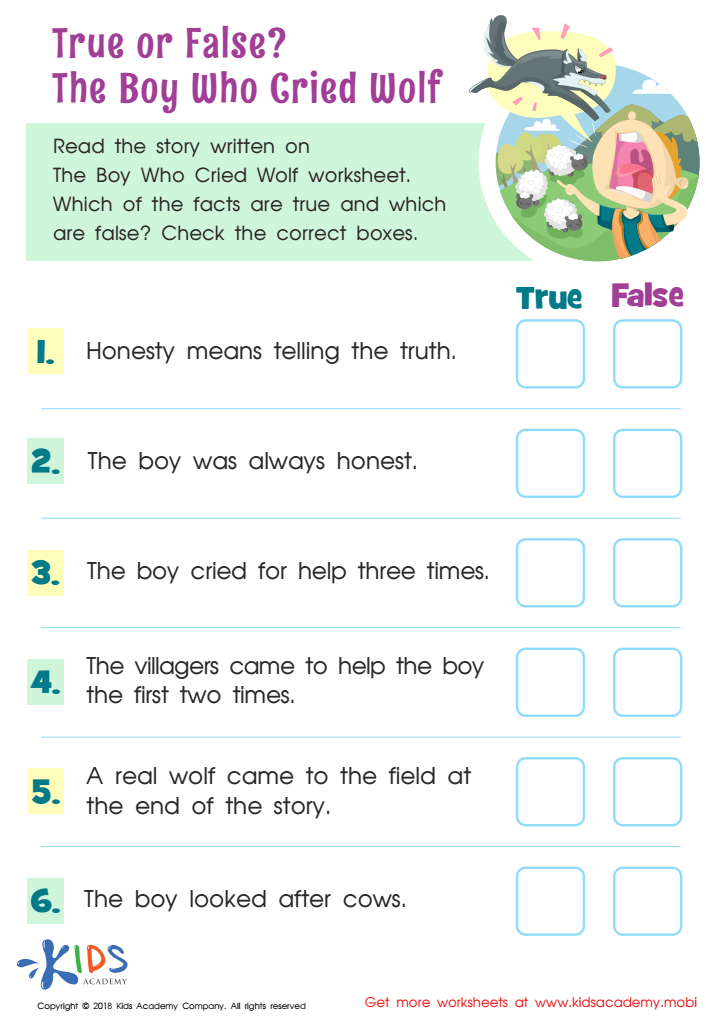
True or False? The Boy Who Cried Wolf Worksheet
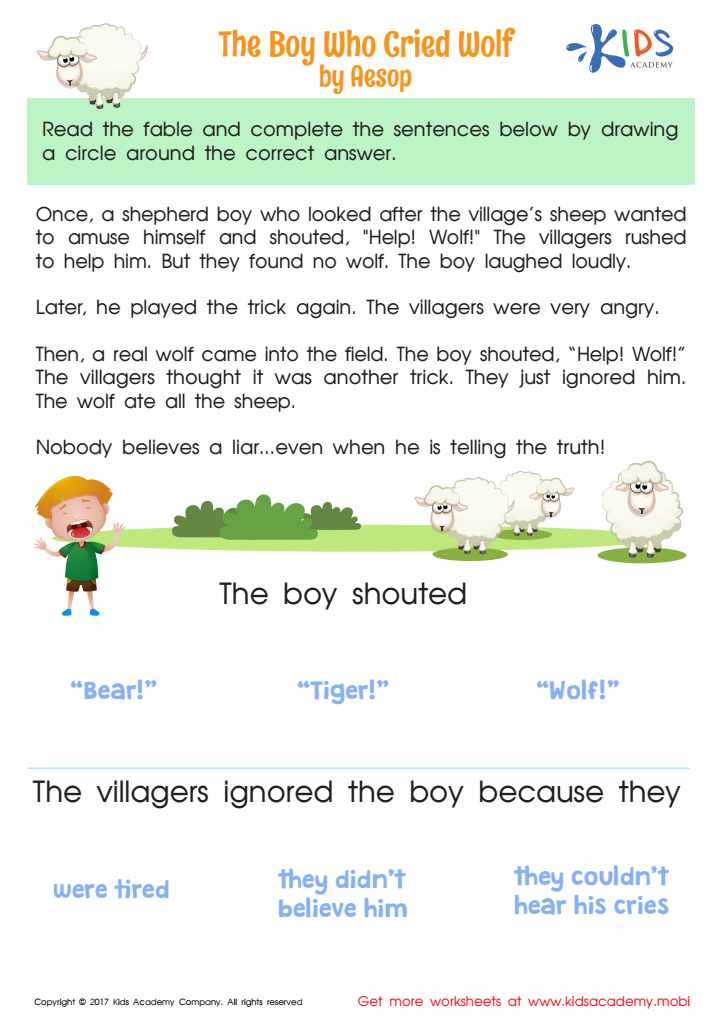
The Boy Who Cried Wolf Worksheet
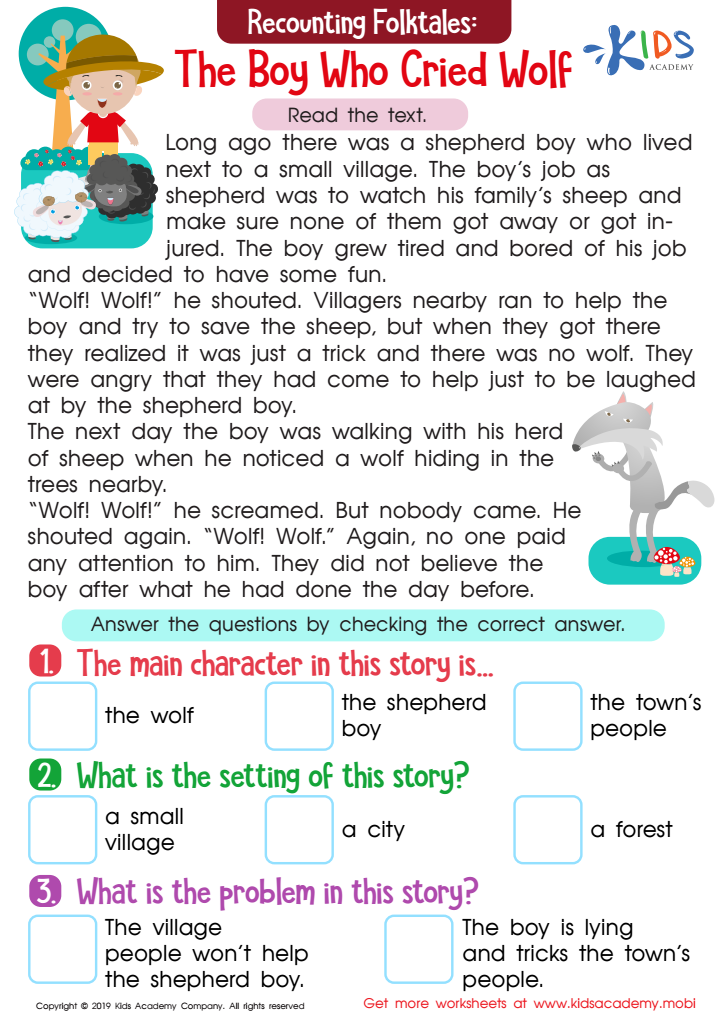
The Boy Who Cried Wolf Part 1 Worksheet








Moral understanding and reading comprehension are pivotal for children aged 6-8 as they navigate the formative years of their education. At this developmental stage, kids are not just learning how to read, but also building foundational skills that influence their behavior and understanding of the world. Integrating moral lessons in reading comprehension activities provides a double benefit, fostering cognitive and ethical growth simultaneously.
Focusing on moral understanding aids children in distinguishing right from wrong, honing empathy, and developing a sense of justice. Engaging with stories that incorporate moral dilemmas helps them to think critically and reflect on their own values and actions. When children read and discuss the choices characters make in these stories, they learn to anticipate the consequences of their actions in real life. This can positively influence their behavior both in school and at home, contributing to a harmonious learning environment and stronger family bonds.
Moreover, comprehension practices that delve into moral questions encourage deeper interactions with texts. This goes beyond basic literal understanding, pushing children to infer meanings, draw conclusions, and express their viewpoints—all paramount for academic success. Therefore, incorporating moral understanding in reading comprehension is crucial for nurturing well-rounded, thoughtful, and emotionally intelligent individuals.








