
Enhancing categorization skills Science Worksheets for Ages 6-8
4 filtered results
Difficulty Level
Grade
Age
-
From - To
Subject
Activity
Standards
Boost your child's scientific thinking with our "Enhancing Categorization Skills Science Worksheets" for ages 6-8. These worksheets help young learners improve their ability to classify and organize information, a fundamental skill in science education. The engaging activities challenge children to sort objects, identify patterns, and differentiate between categories through vivid illustrations and easy-to-follow instructions. Designed by education experts, our worksheets offer a fun and interactive approach to learning, ensuring that your child stays motivated and eager to explore scientific concepts. Perfect for classroom use or homeschooling, get ready to watch your little scientist thrive!
Favorites
With answer key
Interactive
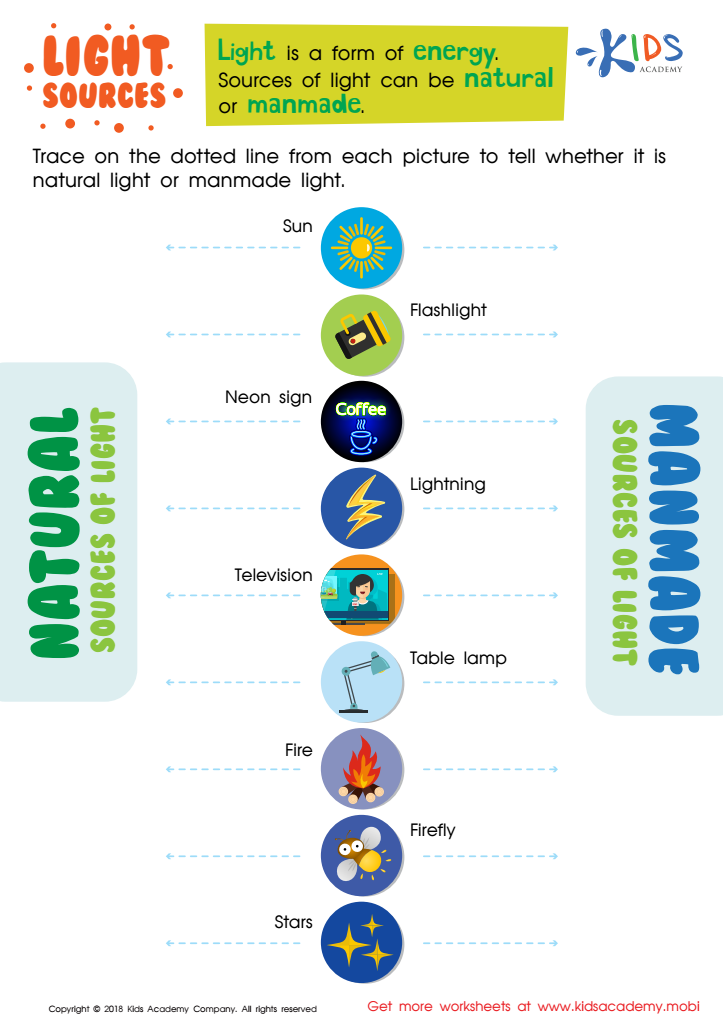
Natural and Manmade Light Sources Worksheet
Have your child learn about natural and manmade light sources with this fun worksheet! They'll distinguish the sun, fireflies and more as either natural or artificial sources. Brighten up their knowledge with this engaging activity!
 Assign to My Students
Natural and Manmade Light Sources Worksheet
Worksheet
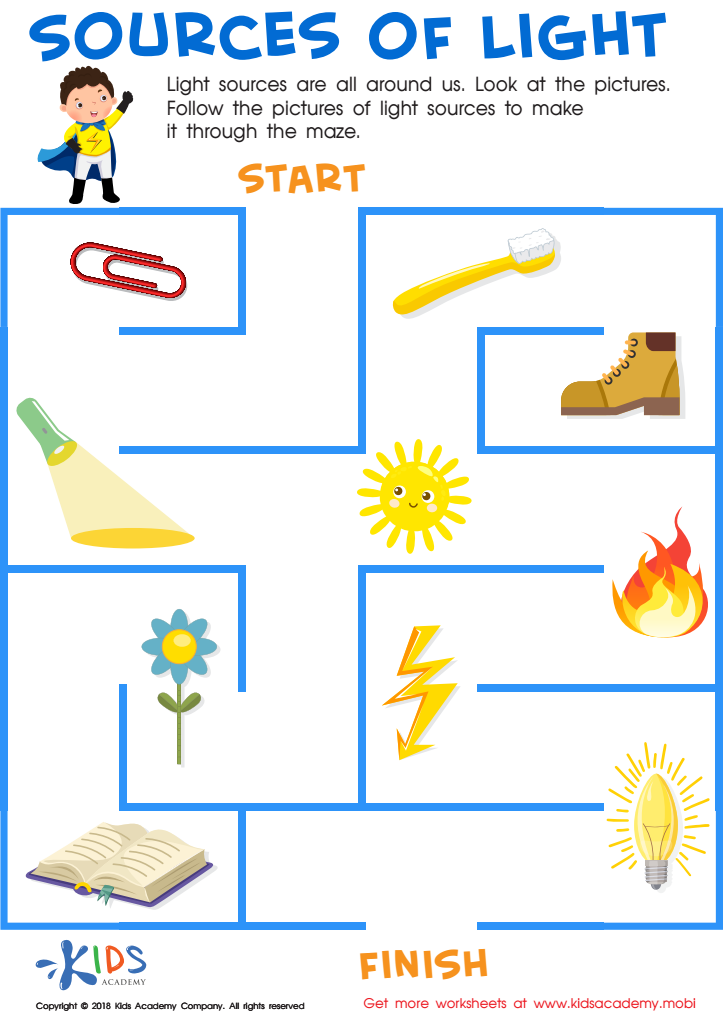
Sources of Light Worksheet
Help your child explore sources of light with this printout exercise. Ask them if they know the sun is the reason for day and night. Then point out other common light sources, then work together to guide them through the maze from start to finish.
Sources of Light Worksheet
Worksheet
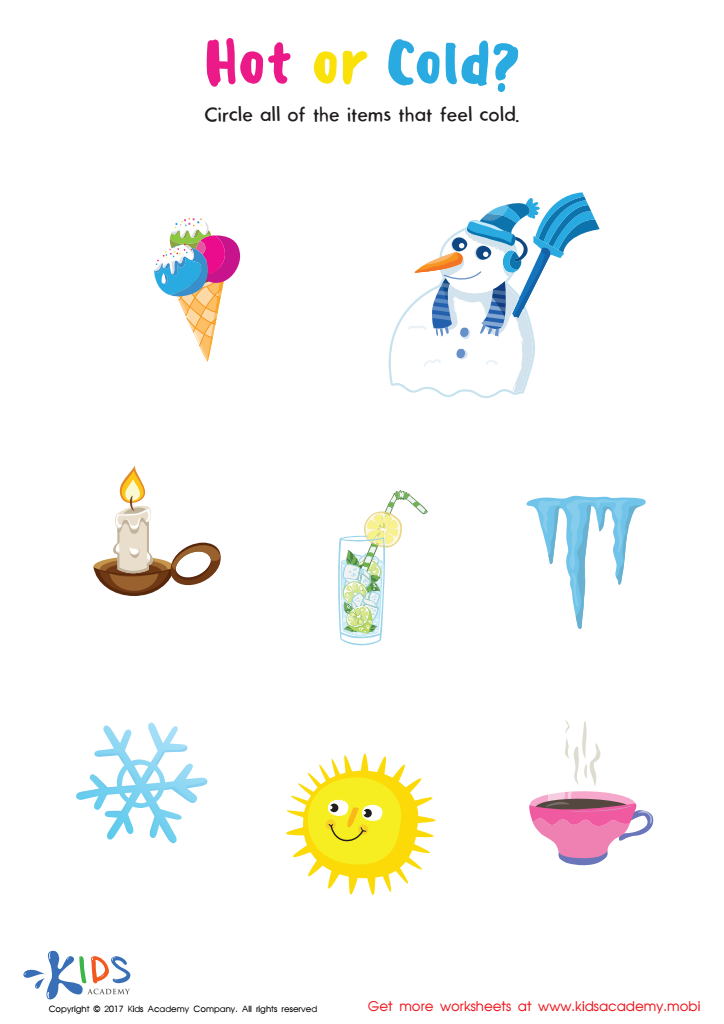
Hot or Cold Printable
Help your child stay safe with this hot or cold worksheet! It promotes problem solving skills and teaches the important concept of temperature differences. Plus, it’s fun! Get your child to learn by playing.
Hot or Cold Printable
Worksheet
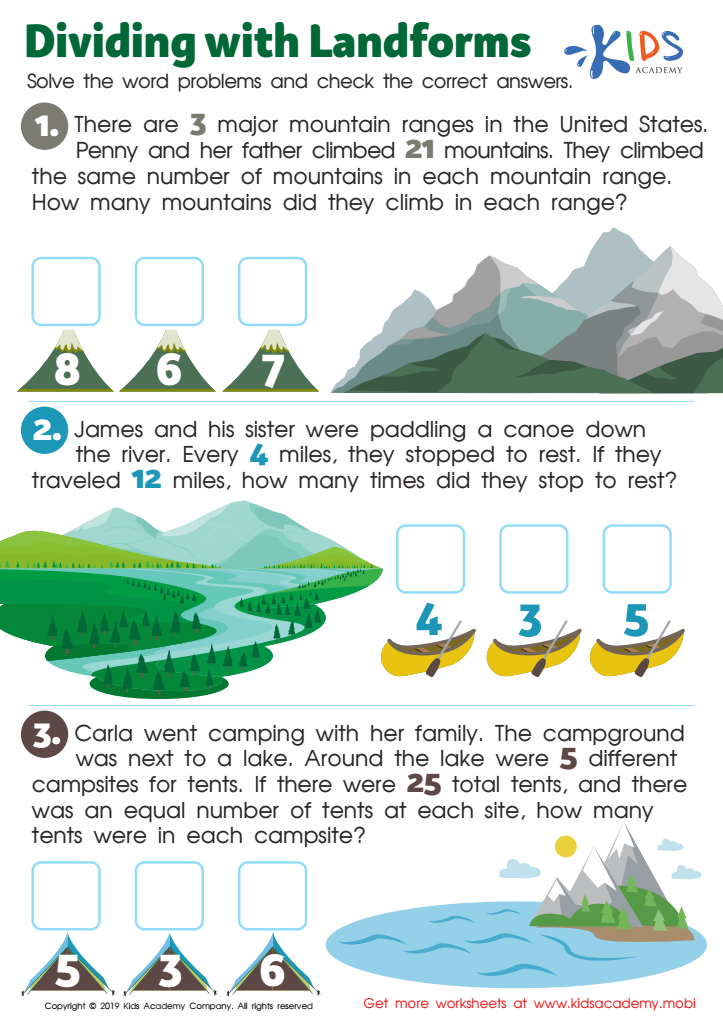
Dividing with Landforms
Mixing subjects to help your child learn is always nice. This worksheet combines landforms, problem-solving and division. The PDF highlights numbers, uses bold colors and provides pictures to help your child understand the questions and answer choices, making them feel empowered, not intimidated.
Dividing with Landforms
Worksheet
Learning Skills
Enhancing categorization skills
Understanding light sources
Improving critical thinking
Differentiating natural/man-made
Differentiating natural/artificial light
Differentiating hot vs cold
Improving observational skills
Understanding temperature concepts
Vocabulary Building
Critical thinking enhancement
Join Kids Academy for Free
Who is primarily going to use this learning content?





Enhancing categorization skills in science for children ages 6-8 is essential for their cognitive development and educational success. At this critical stage, children are naturally curious and developing their ability to make sense of the world around them. Categorization plays a pivotal role because it helps them organize and understand complex information by grouping similar objects, phenomena, or concepts together.
Teaching categorization in science can significantly boost critical thinking and problem-solving skills. It encourages children to observe, compare, and classify based on specific attributes such as size, shape, function, or living vs. non-living, which are foundational for scientific reasoning. This process also enhances memory and recall, making it easier for children to learn and retain vast amounts of new information.
Furthermore, strong categorization skills build the groundwork for more complex scientific concepts they will encounter as they grow older. When children learn to group and differentiate, they are better prepared for subjects like biology, chemistry, and physics that require breaking down and understanding categories and systems.
Lastly, fostering these skills encourages curiosity and a love of learning. Children gain confidence as they discover patterns and connections in the natural world, promoting a positive attitude towards science and education as a whole. Parents and teachers should prioritize this crucial cognitive skill to support holistic development and lifelong learning.







